Tag: 4 Stars Page 25 of 88

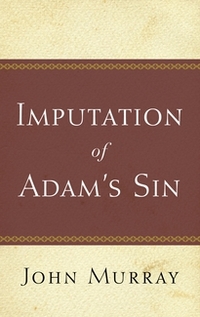
The Imputation of Adam’s Sin by John Murray: There’s a Good Deal of Theologizing in a Small Number of Pages Here.

The Imputation of Adam's SinThe Imputation of Adam’s Sin

by John Murray

DETAILS:
Publisher: P&R Books
Publication Date: August 31, 1977
Format: Paperback
Length: 95 pg.
Read Date: February 13, 2022
Support Independent Bookstores - Visit IndieBound.org

What’s The Imputation of Adam’s Sin About?

In four short chapters, John Murray examines the doctrine of the Imputation of Adam’s Sin—sketching out a few competing visions of the doctrine as well as laying out the particulars of it—the sin involved, the union between Adam and his posterity in it (from two different viewpoints), as well as the nature of the Imputaion itself.

He does this by examinings and exegeting Romans 5:12-19. More than 90 pages on those verses might seem overkill, but I can’t help but think that Murray was not getting as detailed as he wanted. It’s rather impressive to see him work all the areas I mentioned into this exegesis and interpretation.

So, what did I think about The Imputation of Adam’s Sin?

This was footnoted a couple of times in a book I read recently (probably Why Did Jesus Have to Live a Perfect Life? by Brandon D. Crowe), and I realized that despite seeing I don’t know how many references to it over the years, I’ve never gotten around to reading it. So, now I’ve fixed it. And I’m glad that I did. I learned a good deal more than I expected, and assume I’ll be coming back more than once to chew on this book.

This book is typical Murray—crisp, clear, concise, and convincing. Sure, there’s the drawback that his prose is dry and empty of all personality. The book doesn’t need them (and I’d think it strange to read Murray with it). I wouldn’t have minded a greater scope—like if there’d been another couple of passages to get this treatment other than Romans 5:12-19.

This is a great introduction to the idea of Imputation of Adam’s Sin and I strongly recommend it.


4 Stars

This post contains an affiliate link. If you purchase from it, I will get a small commission at no additional cost to you. As always, opinions are my own.

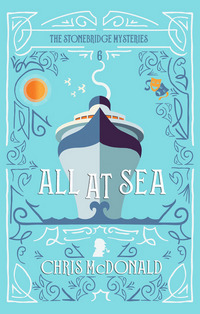
All At Sea by Chris McDonald: Adam and Colin on a Cruise with an Inevitable Bother

All At SeaAll At Sea

by Chris McDonald

DETAILS:
Series: The Stonebridge Mysteries, #6
Publisher: Red Dog Press
Publication Date: February 17, 2022
Format: eBook
Length: 96 pages
Read Date: February 17, 2022
Support Independent Bookstores - Visit IndieBound.org

Why Would They Say This?

It’s been 6 months since Christmas and Adam and Colin haven’t had the opportunity to show up the police since then. They even think about their crime-solving in the past tense.

Still, when circumstances put the two of them on a cruise to Italy before Adam’s wedding, his fiancé makes him promise to stay out of trouble. Adam says it’s his goal on a couple of occasions. It’s said so often that I could hear Toby Ziegler shouting:

Toby: You want to tempt the wrath of whatever from high atop the thing?
Sam: No.
Toby: Then go outside, turn around three times, and spit. What the hell is the matter with you?

Of course, Adam and Colin don’t have a fictional White House Communications Chief yelling at them and trouble finds them.

The Trouble

On their first night onboard, the duo attends a dinner for first-class passengers where they meet some of their fellow travelers, including an art dealer; a B-List film star (maybe a C-lister); an eccentric elderly woman traveling with a classic painting; and a young man in his early 20s who may not be as well-off as he seems.

Late that night, Colin finds the woman after she’d been attacked in her room and her painting had been stolen. Colin’s always been the more considerate of the pair, but given his profession, he seems more driven to help this victim. He promises they’ll find the painting and he spends the rest of the cruise concerned about her well-being.

Adam’s a little torn between looking for the thief and keeping his promise to Helena and staying out of trouble—naturally, curiosity (and the realization that they really have nothing better to do with their time on the ship) wins out and Adam gets in way over his head with the search for the painting. The fairly dynamic duo’s hunt takes them all over the luxury ship as well as to the streets of Barcelona and Lisbon, new territory for them, but in the end, their tenacity and cleverness help them as always.*

* Their habit of accusing almost every suspect until something sticks doesn’t hurt either.

A Theft? That’s What They’re Investigating?

Easy now, don’t worry. There is a murder, it just shows up far later in the book than we’re used to.

I was actually enjoying the lack of a corpse and was hoping we’d get all the way through a novella without one. If only for the sheer novelty. But once the body was discovered, I enjoyed what it meant for the plot—and it just felt strange to read a Stonebridge Mystery where everyone was alive.

So, what did I think about All At Sea?

I was excited to get the email yesterday morning with the link to my pre-order, so I could dive into this (no pun intended, but hey, I’ll take it). Any day spent with Adam and Colin is a good one in my book and this entry in The Stonebridge Mysteries did not disappoint.

At 96 pages, there’s not a lot to be said about All At Sea, beyond recommending it. This novella contained a couple of my favorite sentences by McDonald, some great characters in the suspect pool, and the most dangerous moment this series has had yet.

Would this work as a jumping-on point? Yeah, it’d work. I think you’re better served by starting from #1, especially as these are so short that it wouldn’t take much effort to catch up. But if you’re not up for that, you’ll get into the groove just fine from here. I’ll warn you—once you start with these, you won’t stop. Adam and Colin are addictive.


4 Stars

This post contains an affiliate link. If you purchase from it, I will get a small commission at no additional cost to you. As always, opinions are my own.


My thanks to Red Dog Press for the invitation to participate in this reveal and the materials they provided.

Red Dog Press

The Blood Tide by Neil Lancaster: A Gripping Sequel, Stronger than its Predecessor

The Blood TideThe Blood Tide

by Neil Lancaster

DETAILS:
Series: DS Max Craigie Scottish Crime Thrillers, #2
Publisher: HQ
Publication Date: February 23, 2022
Format: eARC
Length: 384 pgs.
Read Date: February 7-9, 2022

Dead Man’s Grave Spoilers Ahead

It’s impossible to talk about this sequel to Dead Man’s Grave without spoiling it. If you haven’t read that yet, go read my post about it and skip this post. (but thanks for the blog view, I always appreciate the visit)

What’s The Blood Tide About?

It’s been a few months (if we’re told specifically, I missed it) since Dead Man’s Grave, but not too long. Tam Hardie’s in prison for his crimes, his wife and kids are out of the country, and his syndicate is in trouble from without and within. The Policing Standards Reassurance Team, now established, is still trying to find Hardie’s remaining contact(s) in the police. On the personal side, Max Craigie’s wife has moved back in with him, and things are going well.

Basically, things are in a good place. This means it’s time for things to happen—a fisherman goes missing on a routine fishing trip (well, a routine something anyway), not long after that, an intelligence officer with the National Crime Agency commits suicide—and the only witness’s notes go missing, too. And then there’s another (apparent) suicide. There’s almost no reason for anyone to see a link between them—but once Max Craigie is shown the link, he’s able to convince the rest of his team and soon will get more proof.

This is where things get really dicey—and the Team is immersed in a case involving drugs, murder, corrupt officials—and at least one criminal in their own midst.

Characters

In the previous book, we got a pretty good handle on DS Max Craigie and DC Janie Calder. In this book, we get to know their boss, DI Ross Fraser better as he’s able to take a greater leadership role (since it’s not an off-the-books investigation anymore) and as we see him deal with problems in his home life.

We also get introduced to a new member of their team, and get to know her fairly well. I liked the fact that we didn’t come into this book with a greatly expanded team, and only added someone after this book’s action had started—it helps the readers to connect with everyone, and it’s also a nice touch of realism, if the team expands too quickly, it’d be more difficult to keep it to those who can be trusted.

Policing the Police

Max and his team operate far differently from the other fictional Scottish detective looking into Police Corruption that I’m familiar with—Malcolm Fox. There’s no way that Fox in his role with Complaints and Conduct would pursue a case this way (although by the end of his time with them, that had started to change, and he might be more open to it).

The Policing Standards Reassurance Team is a band of mavericks, or at least operate as a collective maverick—going back to their inception. They seem more effective running that way—although I do wonder about realism (for those who care about such things—and it’s more exciting to read about than a bunch of people being careful about paperwork.

So often reading what Max and Janie are going through, I wondered how they trust anyone in the Police service. It almost seems like luck when they have an operation go well without someone having leaked something to their target. Does that take a toll on people? I wonder if Lancaster will deal with that in the future.

So, what did I think about The Blood Tide?

It is really hard to talk about this in any kind of detail—the twists and reveals start early on and I fear I may have said a bit too much already.

I will say as someone who’s been reading Lancaster from the beginning, that it’s great to see his growth as an author—the writing, the characterization, the details in The Blood Tide is leagues beyond what his debut displayed. And I enjoyed his debut, and would’ve kept reading him if he kept producing books like it. It’s just so much easier to do when they’re as good as this one.

Along the same lines, there’s growth to this series—as ought to be expected. Dead Man’s Grave was about establishing this world, these characters, and their mission. Now we get to see them in action, we’re ready to see them at work, in danger, and taking on bigger challenges.

Do I recommend The Blood Tide? You bet—a good author getting better at his craft, a handful of strong characters, and a plot that’ll keep you guessing as it ratchets up the tension. Grab both of the DS Max Craigie thrillers and you’ll be in for a good time. The third book is due this autumn, which is too far away for my tastes.


4 Stars

Disclaimer: I received this eARC from HQ via NetGalley in exchange for this post—thanks to both for this.

Reposting Just ‘Cuz: Dead Man’s Grave by Neil Lancaster: The Debut of Your New Favorite Police Procedural Series

Last night, I fought the Tech, and the Tech won (if you imagine the Bobby Fuller Four singing that, it comes across better). So, instead of a post about The Blood Tide‘s ARC, I’m going to repost what I said about the first book in the series…Hopefully by next week, I can convince my laptop to submit to me, so I can .


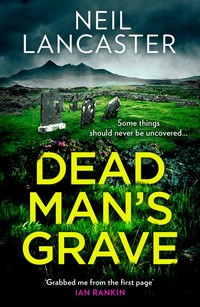
Dead Man’s Grave

Dead Man’s Grave

by Neil Lancaster
Series: DS Max Craigie Scottish Crime Thrillers, #1

Kindle Edition, 400 pg.
HQ Digital, 2021

Read: July 17-19, 2021

What’s Dead Man’s Grave About?

Tam “Peeler” Hardie has been the head of one of Scotland’s most powerful, most violent (you don’t want to know how he got that nickname*), crime families for decades. He’s looking at the end of his life and has an overwhelming desire to look into his family’s roots. This quest takes Hardie to an old, small graveyard near a small Scottish town. Thanks to a feud that goes back generations, he won’t leave that graveyard alive.

* Okay, you probably do in some twisted way—but I’m not going to go into it. Go buy the book.

It doesn’t take long before Hardie’s sons suspect something’s wrong—at the very least their father is missing (maybe kidnapped?). Now, if you’re the Scottish Police, the last thing you want is the Hardies to take it upon themselves to go looking for their father—they’re much more likely to start a war with some other criminal organizations than they are to find him. So DS Max Craigie and DC Janie Calder are assigned to the search, which will hopefully placate the sons for a little while.

Some good detecting by Craigie—and some better instincts—lead to the discovery of Hardie’s body—and some good fortune leads to a quick arrest. It’s soon after that when Craigie starts to notice something’s amiss with the investigation—it’s clear that the Hardies know more than they should, investigative lines are shut down by superiors, and Craigie’s aid is taken as interference, In fact, he’s put on leave when he won’t stop.

There’s something rotten afoot, and now the question is: can Craigie (with or without the aid of Calder, a new detective that he barely knows) find out what kind of corruption is meddling with this investigation and put a stop to it without risking their careers or lives?

DS Max Craigie and DC Janie Calder

In a very real sense, we’ve seen both of these characters before. He’s the cynical experienced detective who still has a sense of right and wrong; he’s not afraid to defy orders and go his own way to make sure the right people are arrested; his career has taken a toll on his health and family, but he’s driven by a sense of mission that he can’t shake. She’s a little odd and not that popular with the rest of the detectives—but she’s smart, she’s eager, she’s tech-savvy—and you don’t want to face off against her in a physical confrontation. But somehow Lancaster takes these very familiar types and makes them feel fresh—like he’s one of the first to try this combination of partners with these characteristics. Don’t ask me how he did that, but he did.

Even if it didn’t feel fresh—there’s a reason we’ve seen these characters paired in this way before: it works really well. Storytellers gravitate to them, readers respond well to them. Lancaster is a great example of someone who takes these characters and uses them right.

I really liked these characters, and can’t wait to see how Lancaster develops them. I predict it won’t be long before most readers of the series think of Calder as their favorite character. (and very likely has started already)

So, what did I think about Dead Man’s Grave?

It took me no time at all to be hooked by this novel–it starts off strong and improves from there. It was tense, well-plotted, and (mostly) well-paced. Add in Max and Janie and Dead Man’s Grave becomes a real winner—one of the better Crime Novels I’ve read this year.

One little complaint—the book wraps up too quickly, it was just a bit too difficult to believe that they met their objectives that speedily. But, by that time, you’re so into the story and characters that you’re willing to go with Lancaster. And the conclusion was so satisfying that the only reason I remember this gripe is that I wrote it down.

I strongly recommend this one to you—it’s the kind of book that makes me want to go and lower the stars on Lancaster’s earlier books because this is so much better than what he’d done before—there’s a depth, complexity, and richness to plot, character, and style that wasn’t there in the Tom Novak books (don’t get me wrong—I enjoyed each of them). If he’s stepped up his game this much in so short a time, Lancaster’s going to have a long and very satisfying career.


4 Stars

20 Books of Summer '21

Go Back to Where You Came From by Wajahat Ali: An All American Story

Go Back to Where You Came FromGo Back to Where You Came From:
And Other Helpful Recommendations
on How to Become American

by Wajahat Ali

DETAILS:
Publisher: W. W. Norton & Company
Publication Date: January 25, 2022
Format: Hardcover
Length: 231 pg.
Read Date: February 2-4, 2022
Support Independent Bookstores - Visit IndieBound.org

As the two towers fell, I was standing in my pajamas, staring at the TV, and I realized our lives had forever changed. There was a permanent fork in the road for my generation. A disruption in the timeline. A disturbance in the Force. For us, there would always be a pre—9/11 and a post—9/11 world. A few hours earlier, I had been a twenty-year-old senior still trying to figure out his major and serve as a board member of the Muslim Student Association of UC Berkeley. Instantly, I was transformed into an accidental activist, a global representative of 1.8 billion Muslims worldwide and a walking Wikipedia of 1,400 years of all things Islam.

I have to be perfect, because any flaw, mistake, errant word, or quote can and will be used against me and all my people in the court of public opinion. On the drop of a dime, I have to be an expert on the following topics: Islam, Quran, the Prophet Muhammad, Sharia, Iran, Iraq, Pakistan, India, Hamas, Hummus, Hezbollah, Arabic, Agrabah, Afghanistan, Al Qaeda, Al Aqsa, Aladdin, Salman Khan the Bollywood Actor, Salman Khan of the Khan Academy, and everything in between. I have to be able to explain them to a skeptical national audience, being sure not to say anything too radical or extreme, because that one mistake will be emblazoned on me like a scarlet letter and be used to beat up this thing called the “Muslim world.”

What’s Go Back to Where You Came From About?

From the Publisher’s Website:

“Go back to where you came from, you terrorist!”

This is just one of the many warm, lovely, and helpful tips that Wajahat Ali and other children of immigrants receive on a daily basis. Go back where, exactly? Fremont, California, where he grew up, but is now an unaffordable place to live? Or Pakistan, the country his parents left behind a half-century ago?
Growing up living the suburban American dream, young Wajahat devoured comic books (devoid of brown superheroes) and fielded well-intentioned advice from uncles and aunties. (“Become a doctor!”) He had turmeric stains under his fingernails, was accident-prone, suffered from OCD, and wore Husky pants, but he was as American as his neighbors, with roots all over the world. Then, while Ali was studying at University of California, Berkeley, 9/11 happened. Muslims replaced communists as America’s enemy #1, and he became an accidental spokesman and ambassador of all ordinary, unthreatening things Muslim-y.

Now a middle-aged dad, Ali has become one of the foremost and funniest public intellectuals in America. In Go Back to Where You Came From, he tackles the dangers of Islamophobia, white supremacy, and chocolate hummus, peppering personal stories with astute insights into national security, immigration, and pop culture. In this refreshingly bold, hopeful, and uproarious memoir, Ali offers indispensable lessons for cultivating a more compassionate, inclusive, and delicious America.

The Universality of Humor

Like with Native Americans in Nesteroff’s We Had a Little Real Estate Problem and Soviet-era Russians in Grechishkin’s Everything is Normal, one thing that Ali talks about is how often people are surprised that Muslims have senses of humor, that they enjoy laughing. A lot of that comes down to media representation—in the news, in our TV and movies, the typical depiction of Muslims is of angry, violent men—or those suffering because of them—or those in the middle of a serious religious observance. We don’t get to see a lot of people relaxing at home, enjoying a meal, or just hanging out.

I’m not sure why this is so hard for people to wrap their heads around—people of all backgrounds laugh. People find things funny. People are funny. These three books (and others, sure, but these are those I’ve talked about here) help readers remember that there’s a shared humanity in laughter (remembering that what’s funny varies a little bit from culture to culture), and I have to think that we’d all be better off to remember that and look for it as a starting point.

Cross-Cultural Hardship

Before he began to get into the details of the hardships that his cultural, ethnic, and religious background would bring on him in our culture, he talks about a challenge that crosses ethnic, religious, geographic, and political lines—he’s a southpaw.

True, there’s a particular accentuation for Muslims, but at the root is the inconvenience that all left-handed people put up with every day. I thought it was a rhetorically nice touch because it makes him universally relatable—it was also pretty funny.

So, what did I think about Go Back to Where You Came From?

Let me start by saying, I had no idea who Wajahat Ali was before this book—I may have seen him on a news show or five as a talking head—but, like most of those, he didn’t make enough of an impression for me to remember his name*. So I didn’t come into this book with any preconceived notions of what to expect, I wasn’t a fan already (or a detractor). All I knew was that Paul from Paul’s Picks had very positive things to say about the book (as he should have).

* I will absolutely take notice next time I see him in that role, however.

This was a great mix of memoir, social commentary, and satire—with a little sprinkling of a more general humor thrown in. The way he shifted between the genres was fairly seamless and quite effective—his own story (and that of his parents) were good illustrations of the societal ills he wanted to point to, and also it worked well occasionally as argumentum a minore ad maius.

I found myself reading large sections of this to whatever family member happened to be around when I read it (or I’d bookmark a section I thought someone might find almost as interesting as I did to read at them later)—there’s just so much good to be found here. The material about 9/11 and its aftermath was the most poignant—which kind of feels like a gimme sometimes, and some authors shouldn’t milk it. Given Ali’s subject matter, however, it was something he had to discuss and it was the book’s most powerful material.

Ali’s story is the kind that Americans love to tell and hear about success—even if his telling points to many of the flaws in our society. Through grit, determination, perseverance, and endurance, Ali pushes through all sorts of cultural, societal, legal, medical, and circumstantial challenges to arrive where he is. Because he believes in what we can be as a people, based on our (incredibly inconsistently applied and demonstrated) ideals and aspirations. It’s the kind of story we need to see, hear, and read more of.

Go Back to Where You Came From is a challenging read, it will make you uncomfortable, but it should also give you a little glimmer of hope. I strongly encourage you to read this.


4 Stars

This post contains an affiliate link. If you purchase from it, I will get a small commission at no additional cost to you. As always, opinions are my own.
Reposting Just Cuz: In Christ Alone: Living the Gospel Centered Life by Sinclair B. Ferguson

I’ve been thinking about this book lately, and last night, I was so knackered that I couldn’t writ anything, so, I figured that it’d be nice to revisit this. Maybe someone else might want to think about it a bit.

—–

In Christ Alone: Living the Gospel Centered Life
In Christ Alone: Living the Gospel Centered Life by Sinclair B. Ferguson

My rating: 4 of 5 stars

There’s not a lot of in-depth theology here, you won’t come away from this with a deep understanding of any one subject, or a few related ones. This is a compilation of fifty articles, grouped together by topic, which will enable you to gain a refresher on a spectrum of topics, or an introduction to ideas, concepts and texts that you want to come back to and study in the future. As such, it’s a really strong compilation and one that I’m glad I spent an afternoon with.

Don’t get me wrong — it’s not that I didn’t learn anything, or gain a deeper understanding of anything. But compared, say, to his The Holy Spirit or Pundits Folly, it’s (by design) not as in-depth. I thought his framing the book of Romans as a series of exchanges (e.g., man exchanging the truth of God for a lie; the gospel exchange of righteousness and justification instead of unrighteousness and condemnation) was very handy and something I’m trying to internalize. The chapters that followed it were a series of glimpses at the letter to the Hebrews, and now I want an entire book on that epistle by Ferguson.

In the section on “The Spirit of Christ,” he has a chapter called “When the Spirit Comes,” which is an examination of John 16:8-11.

And when he comes, he will convict the world concerning sin and righteousness and judgment: concerning sin, because they do not believe in me; concerning righteousness, because I go to the Father, and you will see me no longer; concerning judgment, because the ruler of this world is judged.

His thesis is that while, yes, there is a continuing relevance of these verses,

we miss their rich significance of we interpret them in a way that bypasses their historical context. In their original setting, these words constitute a prophecy of the Spirit’s work on the day of Pentecost (Acts 2:1 ff).
When we recognize this, we are able to fill out the content of the promise. But when we fail to recognize it, we are in danger of interpreting (and thus remolding and distorting) Scripture in the light of our own experience.

I’ve got to say, I’ve been guilty of this remolding and distorting until today, and will have to set to work on correcting my thinking.

On the whole, the book doesn’t feel too much like a collection if unrelated articles, rather than a book he set forth to write; and as such it doesn’t really suffer from being a compilation — though Part IV, “The Privileges of Grace,” is the weakest and most scattered. That said, the chapters from Part IV, “The Life of Faith” (on “Now faith is the assurance of things hoped for, the conviction of things not seen.”) and “‘The Greatest of All Protestant Heresies’?” (on the doctrine of assurance) were very helpful and thought-provoking. So even at its weakest, this book rewards the reader.

Part V, “A Life of Wisdom,” is really a section on sanctification. But instead of the approach that is usually employed here, Ferguson focuses on the more internal sanctification that needs to happen to result in the external fruit. All of which could use some extended treatment by this author. Particularly, I found the chapter on discernment rich and one that I need to return to for further meditation. His extended look at Psalm 131 to show how to cultivate contentment is, naturally, valuable — Ferguson’s always at his best when discussing the Psalter.

The final chapters center on the idea of spiritual warfare — not the flashy, type that characterize so much evangelical writing on the topic. But the quieter, more difficult, and (dare I say) more Biblical approach — focusing on our sin, our need for mortification, or own worldliness.

The closing chapter on Sabbath rest is far too brief, but excellent. He reminds us that the Sabbath in creation was a “time for Adam to listen to all the Father had to show and tell about the wonders of His creating work,” — a “Father’s Day” every week. Which, of course, was ruined by the Fall, redeemed by Christ and will be fully enjoyed every day in Glory. Practically,

this view of the Sabbath helps us regulate the whole week. Sunday is “Father’s Day,” and we have an appointment to meet Him. The child who asks, “How short can the meting be?” has a dysfunctional relationship problem — not an intellectual, theological problem. Something is amiss in his fellowship with God.

There’s a lot to be mined here for devotional use, as well as a spring-board for future study.

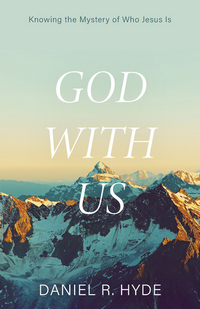
God with Us by Daniel R. Hyde: A Look at The Mystery of the Incarnation

God with UsGod with Us:
Knowing the Mystery
of Who Jesus Is

by Daniel R. Hyde

DETAILS:
Publisher: Reformation Heritage Books
Publication Date: June 29, 2021
Format: Paperback
Length: 155 pg.
Read Date: January 16, 2022
Support Independent Bookstores - Visit IndieBound.org

Machen powerfully stated, “Let us not deceive ourselves; a Jewish teacher of the first century can never satisfy the longing of our souls.” No mere man, however holy, can bring us into fellowship with God.

What is amazing in Scripture is that this is the case because God not only desired to give us grace that met our crimes against Him but that His grace would “super-abound” (hupereperisseusen) beyond our sins (Rom. 5:15-21). Only an infinite Savior could bring us an infinite grace. Had Christ not possessed the two natures of divinity and humanity in His one person, we would be without salvation.

What’s God with Us About?

Hyde begins his Introduction by talking about some of the problematic teachings he was introduced to as a young Christian as an example of the wide range of problematic teachings being promulgated throughout Evangelicalism (whatever that means).

The antidote for that is a better understanding of what the Bible teaches—as developed, defined, and defended by the Early Church. In five chapters he talks about the singularity of the Incarnation, helps the reader to understand the doctrine of the hypostatic union, and also clarifies understanding of Christ’s Human Nature and His Divine Nature. Why was it necessary for Christ to be both God and Man, and the benefits for believers that He was.

Hyde closes with a chapter comparing the Christ presented in the Qur’an and the Christ of the Bible as a means of applying the rest of the work.

So, what did I think about God with Us?

This is the Second Edition of this book, and Hyde refers to improvements he made, but without spending time reading both, I really couldn’t tell you what was changed. He does quote some hymns from The Trinity Psalter Hymnal, that wasn’t published when the first edition was, so I guess that would be a change (he may have cited some of those same hymns before, just from a different hymnal)—oddly, though, he didn’t update his Bavinck quotations from Our Reasonable Faith to The Wonderful Works of God.

Throughout Hyde’s footnotes refer to dense, heavy theological tomes, but he distills the points to easy-to-digest wording.

Not only does he provide good explanations of the teachings of the Early Church as they worked through these doctrines, but he also ties it into the Reformation churches to demonstrate their continuity with the Early Church. Hyde made particular use of the Belgic Confession, of the Three Forms of Unity, it’s the one I see cited the least, so that was nice to see.

The book as a whole was great—Hyde does yeoman’s service in laying out these doctrines in a clear and helpful manner. For me—this time through, at least—the most meaningful chapter was Chapter 6, “The Importance of this Mysterious Doctrine.” Faith, sanctification, worship, personal comfort, evangelism, and more are tied to and grounded by our understanding of the Incarnation, of God truly being one of us. Outside of reading the whole book, it’s a chapter to return to.

Do I recommend this book? Absolutely, for those new to the Christian faith and those who are not—a better understanding, or a refreshed understanding, of these vital truths is always called for and Hyde is a great guide through them.


4 Stars

This post contains an affiliate link. If you purchase from it, I will get a small commission at no additional cost to you. As always, opinions are my own.

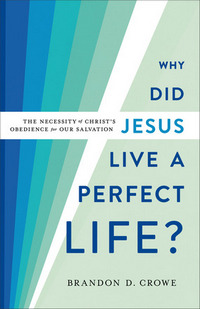
Why Did Jesus Have to Live a Perfect Life? by Brandon D. Crowe: Obedience that Actually Saves

Why Did Jesus Have to Live a Perfect Life?Why Did Jesus Live a Perfect Life?:
The Necessity of Christ’s Obedience for Our Salvation

by Brandon D. Crowe

DETAILS:
Publisher: Baker Academic
Publication Date: October 26, 2021
Format: Paperback
Length: 189 pg.
Read Date: December 19-26, 2021
Support Independent Bookstores - Visit IndieBound.org

What’s Why Did Jesus Have to Live a Perfect Life? About?

Crowe seeks to focus on this question:

Is perfect obediencce necessary for enternal life?

The question could be rephrased a number of ways; Is perfect obedience necessary for justification? Is perfect obedience necessary for salvation? Did Jesus have to be perfectly obedient in order to save us? And if so, why?

Obviously, he says it is necessary—noting that we’ll underplay and miss all of what Christ did on our behalf and that we’d end up putting too much importance on our own works.

After Crowe establishes the question and ensures that the reader understands the definitions he’s using for the key terms, he turns to the Biblical text for some exegetical looks at key texts. This is, as it should be, the bulk of the book. In the third part of the book, he moves on to practical application—given what’s been said about the necessity of Christ’s perfect obedience, what’s the place of/need of the obedience and good works of the believer?

So, what did I think about Why Did Jesus Have to Live a Perfect Life??

I appreciated Crowe’s approach to the topic of Christ’s obedience—and, as usual, found his study of the texts to be helpful and challenging. The place of works in the Christian life too often is pitted against the obedience of Christ, or tied to it in an unbiblical fashion–Crowe’s discussion was more than helpful and I wish I saw more works like it.

A couple of highlights from the book for me were that third part about obedience and the last chapter in the exegetical part. In that chapter, Crowe examines the connection between Jesus’s obedience and the resurrection. That discussion tied in nicely to his 2020 book, The Hope of Israel: The Resurrection of Christ in the Acts of the Apostles (one of those books I still think about).

This is a careful overview of the topic, and will reward a similarly careful read. By design, he doesn’t posit anything revolutionary or new—it’s a restatement and reminder of what Reformation churches have been teaching for centuries. Even so, it’s something we need to be reminded of.


4 Stars

This post contains an affiliate link. If you purchase from it, I will get a small commission at no additional cost to you. As always, opinions are my own.

A Private Investigation (Audiobook) by Peter Grainger, Gildart Jackson: A Change is Coming

A Private InvestigationA Private Investigation

by Peter Grainger, Gildart Jackson (Narrator)

DETAILS:
Series: A DC Smith Investigation, #8
Publisher: Tantor Audio
Publication Date: Nov 13, 2018
Format: Unabridged Audiobook
Length: 10 hrs., 40 min.
Read Date: December 13-15, 2022
Support Independent Bookstores - Visit IndieBound.org

But now, change is coming, and change is inevitable.

Except from vending machines.

What’s A Private Investigation About?

I haven’t really talked much about the Andretti case and the book that Jo Emerson is working on about the investigation—with Smith as a significant source. I haven’t talked much about Jo Emerson at all, either. Mostly because I wasn’t really sure where Grainger was going with this storyline. It’s the biggest case of Smith’s career, and in many ways defined it. It’s also the case that led to Chris Murray’s father leaving the police. There was a serial killer preying on young women. Smith and Murray stopped the killer, put him away years ago–—but questions have lingered.

But now, a young woman has gone missing in King’s Lake—so here in the last three weeks of Smith’s career, he’s pulled off the bench to take point on it—he’s headed a search for missing girls—no one else around has. At a certain point, Smith starts to see similarities between this missing girl and some of those related to the Andretti case. Then there’s an individual who popped up during both investigations. Suddenly the one man the police need to run things, the man who knows more about the Andretti case than anyone else alive is prevented from taking part in this new case. A logic that I don’t quite follow, but am sure it makes sense to someone.

Smith, however, keeps working the case—as off the radar as he can. What’s going to happen to him if he ignores an order or two at this point?

A Matter of Budget

It’s realistic, I’m sure, but there’s a lot of discussion about the budget for this investigation and what King’s Lake Central can spend on the search for this teen. While it’s come up before in this series—in almost every book—it’s very prominent here.

It’s also despair-inducing, while I understand that governments have to take this kind of thing into account—when a missing teen’s life could possibly be endangered, to think that the efforts to find her are governed by a financial report as much as—even more than—clues the investigation has picked up is hard to come to terms with.

Except for the cost of forensic tests, I don’t remember too many American procedurals hitting this point as hard as Grainger and other UK authors do (am thinking Rankin and Aaronovich in particular—even Paul Cornell’s <b>Shadow Police</b>series). I wonder if that’s more to do with the state of procedural fiction or if it’s the way different governments think about such things.

Smith’s Train of Thought

One of my favorite parts of these books is when we follow along with Smith’s Stream of Consciousness as he works through a part of a puzzle—or when he guides DC Chris Murray through something similar to help him build the same patterns. There’s something idiosyncratic about Smith’s thinking (although it never seems that way while listening, it seems like the only possible way to work through it) that is addicting.

We’re treated to multiple sessions of that this time out, and I thoroughly enjoyed them all. Even when I didn’t like the actions that Smith was taking after those trains of thought.

A Neat Cliffhanger that Time Ruined

This is slightly spoilery, unless you can do the very basic math. Still, feel free to skip to the next heading.

We all clear now? Last chance to skip ahead…

DC’s fate is very uncertain at the end of this book—it could very easily go either way, and with this very clearly the end of the series, it felt like Grainger was hinting in one direction.

However, this was published in late 2018, in 2021—book nine of the series came out (and there are some indications that Smith was a presence in at least the first of the Kings Lake Investigations series that came out after this book–I’ll be listening to that soon). This kind of kills the suspense for me—which is a shame, because that ending really could’ve gone either way and I’d have been going crazy if I listened to it new.

So, what did I think about A Private Investigation?

I’m so, so, so glad that we’ll get to hear what happens next with the group from King’s Lake Central in a new series. I don’t want to leave this world and these characters behind. I got too busy last year to stay on my schedule of listening to them, but I’m pretty sure that’s over.

This book was bittersweet, while the last book felt like the last gasp of DC Smith’s career, this definitely is. The case was compelling, the search for the girl was tense, and the emotions of Smith’s team—and Smith himself—were so well-depicted to make this a knockout of a book. But man…I just didn’t want to deal with Smith being done. Police procedurals don’t normally get that emotional for me—but several of these books have got me wrapped up in the characters’ lives–and this more than the rest.

This is absolutely, positively, not the book to start with for this series—almost any of the others would be, but the first would be best. But you absolutely, positively start this series if you haven’t yet. Jackson’s narration is outstanding, making the audiobooks my strongest recommendation, but I bet the charm of the characters would be evident in the print version as well.


4 Stars

This post contains an affiliate link. If you purchase from it, I will get a small commission at no additional cost to you. As always, opinions are my own.
God Dwells Among Us by G. K. Beale and Mitchell Kim: Eden, the Once and Future Temple

God Dwells Among UsGod Dwells Among Us:
A Biblical Theology of the Temple

by G. K. Beale, Mitchell Kim

DETAILS:
Series: Essential Studies in Biblical Theology
Publisher: IVP Academic
Publication Year: 2014, 2021 (in this format)
Format: Paperback
Length: 153
Read Date: January 2-10, 2022
Support Independent Bookstores - Visit IndieBound.org

What’s God Dwells Among Us About?

The book opens describing Eden as the first temple on Earth—the dwelling place of God on Earth, that Israel’s Tabernacle and Temple would mirror. After Adam and Eve failed their probation, their duties to the temple, by letting the serpent and sin pollute it. After establishing that, Beale and Kim show how Adam and Eve were to spread Eden—spread the worship and image of God—throughout the world.

This call is, while changed due to the Fall, reiterated to the Patriarchs, seen in the Tabernacle and Temple. The Prophets declare Eden’s restoration to come, and the new Temple is established in Christ and begins expanding through the Church. This new Temple is served by a kingdom of priests who serve those around them as they worship God. Eden, then, will be completely restored in the New Earth.

That’s 134 pages reduced to 136 words,* so obviously I’m leaving a lot out. But that’s the gist.

* How cool would that have been if I’d accidentally got that to 134 words?

The Last Two Chapters

I’m pretty sure that the last time I read this, I focused on chapters 1-9, the more theoretical and exegetical portions. This time—I appreciated and learned from those chapters, but these last two grabbed me.

Chapter 10, “‘Why Haven’t I Seen This Before?’: Seeing the Purpose of God’s Dwelling Place in Eden,” addresses an important question. How can believers who’ve spent years reading the Scriptures not have seen this? They sketch out some factors, like a difference in cosmology a defective understanding of the unity of the Biblical message, a weak view of typology, and a different understanding of what a “literal” fulfillment of prophecy entails. I thought this chapter and the hermeneutical ideas it put forward were very insightful.

The final chapter, “Concluding Practical Reflections: Foundational Convictions for Sacrificial Mission in the Temple” is notable not only for the practical, applicatory perspective; but also for the emphasis on missions. It’s important to see that this isn’t just theology, this is a call to a way of life. Too often books like this can seem to forget that (sometimes they actually do), there’s no way to think that about this book.

So, what did I think about God Dwells Among Us?

I said something earlier about reading this book before—it was originally published in 2014, and then re-released as part of the Essential Studies in Biblical Theology series. Somewhere I got the impression that it had been revised somewhat as part of being brought into the series—I think that was an error on my part. Oh well, it was good to re-read it anyway.

As the text pre-dates the series, it has a different feel than the others—I liked that about it.

This was accessible, approachable, and beneficial to life and mind. Beal and Kim are great at both shining a light on the text and bringing it to bear on the reader. This is one of the more useful and valuable entries in this really good series and I’m glad to recommend it to you.


4 Stars

This post contains an affiliate link. If you purchase from it, I will get a small commission at no additional cost to you. As always, opinions are my own.

Page 25 of 88

Powered by WordPress & Theme by Anders Norén