Tag: 4 Stars Page 26 of 88

And Your Enemies Closer (Audiobook) by Rob Parker, Warren Brown: Things Go From Bad to Worse (and Then Even Worse)

It’s entirely possible that this is barely coherent anymore, I’ve reworked this so many times to get at what I want to say (and am pretty sure I missed it still). As they say, perfect is the enemy of good—or at least the enemy of done. Hopefully, you get something out of it.


And Your Enemies CloserAnd Your Enemies Closer

by Rob Parker, Warren Brown (Narrator)

BOOK DETAILS:
Series: Thirty Miles Trilogy, Book 2
Publisher: Audible
Publication Year: 2021
Format: Audible Original
Length: 7 hrs., 3 min.
Read Date: January 6-7, 2022

What’s And Your Enemies Closer About?

I keep accidentally spoiling something when writing this section, so I’m just going to borrow Audible’s summary:

In the North West criminal underworld, a deal goes tragically wrong, resulting in war between the two main organised crime factions in the region. Shockwaves rock the 30-mile gap between Liverpool and Manchester – with retired detective Brendan Foley right in the middle of it all.

For Brendan, six months after his resignation, life is all different. His marriage is a mess, he’s working as a nightclub bouncer, his brother is still missing and he just can’t stop searching for the crime family that destroyed his life. And at last, he’s found them – and he’s got them bang to rights.

Iona Madison, his one-time partner and now successor as a DI in Warrington Police, is tasked with a body pulled from the River Mersey – a teen-age boy that went missing the previous year, which might bring her own conduct into question. Not only that, Brendan is feeding her information whether she likes it or not – and his unsanctioned activities are causing her headaches.

And now, there’s a price on his head. A million pounds, dead or alive.

And Your Enemies Closer is a serpentine race against time as Brendan and Iona must stay one step ahead of criminals at every corner, while trying to bring justice – in whatever form it takes, and whatever loyalties it might burn.

Things Change

When I posted about Far from the Tree, I’d said:

Foley comes across as the kind of cop you want to read about, the kind that you like to think you can find in police forces all over the world—sure, he needs some marriage counseling and needs to do some serious work when it comes to his kids. But who doesn’t have problems?

In the six months since he retired, all that has changed. Very understandably, Foley isn’t that guy anymore. He’s the kind of guy you fear you can find in police officers all over the world. Sure, that makes you wonder if he ever really was that guy—but I think he was, through sheer act of will maybe, but he was that guy. But that’s over—his marriage is on the ropes (to speak optimistically), he’s not the father he used to be. All he has room for is a mission—take down that crime family that had taken so much from him.

D.I. Madison’s changed, too. She’s still trying to prove to her superiors that she deserved the promotion. I really thought I got to know her as a character in the previous book, and I didn’t feel that way this time. Yes, she’s in it just as much—but it’s almost all work, no reflection. The time-frame for this book is much shorter than the last one, so we don’t have time to see her off-the-clock or in a quiet moment to think.

Another reason I think I might have had that reaction is the number of Point of View Characters is larger than the last time out, and those who aren’t Foley and Madison get more time. I could be very wrong about that—I’ve listened to a lot of books in the 16+ months between these two—but that’s the impression that I had. It makes for a richer and more developed story, but it came at the cost of at least Madison’s character.

Warren Brown

I don’t know much about Brown’s acting—he hasn’t done much widely available in the U.S. (at least legally), but I’ve really liked him when I have seen him. But, his work on this series is enough to make me start petitions for streaming services to start showing his stuff.

He brings these situations and people to life in a way that you can practically see them, it’s like you’re in the room with them. Getting the right narrator is always important when it comes to audiobooks—doubly so with things like Audible Originals that have no text version. Whoever got Brown to do this series did us all a favor.

So, what did I think about And Your Enemies Closer?

I didn’t enjoy this quite as much as the predecessor—but I’m pretty sure that has everything to do with this being the second installment in a trilogy. It’s just the way I am with trilogies.* I do wonder if some of it is also the way D.I. Madison was used here. On both counts, I fully expect that the close of this trilogy is going to leave me impressed and maybe even liking this a bit more than I do right now.

* With the possible exception of The Empire Strikes Back

Parker’s a great storyteller, and that’s on full display here. One example of that, I’ll try to keep it vague. Still, spoilerphobes might want to skip to the next paragraph. There’s someone early one that you realize is going to die before this book ends. Really, they might as well have been named Corpsey McCadaver. In just about every scene with them, I liked them more and more and grew more and more certain they’d die soon. But when it happened—I was totally caught off-guard, bolted upright in my char, and apparently made a sound audible in the next room. That’s storytelling.

I thought that the image of the mass grave from the beginning of Far from the Tree was the apex for disturbing images for the series. A big shock to get the ball rolling, and it’d be all down here from there. I don’t remember being that naïve and foolish, but man…Parker outdoes himself in creating one location in the book. I’m just glad the Smell-O-Vision technology hasn’t made its way to smartphones. Also, there’s a method of murder used here that I’ve never run across before, I’m dying to know if it’s real, but I don’t even know how to search for it online without going on the FBI’s radar. Seriously, the book is worth your time just to hear about it. I’m not sure the book is also worth the poor sleep you’ll get if you think too much about the method, however.

As I said before, there are many point-of-view characters running around in this novel, and I wouldn’t have complained about having more time with any of them. Other than Madison, we got enough time with them all, but I enjoyed each perspective enough that I could have taken at least one more scene with them all. I typically think less is more on the multiple-perspective novels, but this isn’t one of them. Both Parker and Brown handle all the voices really well.

Outside of Corpsey McCadaver, I couldn’t predict anything about this story. Parker keeps you on your toes and on the edge of your seat—he zigs when you expect him to zag. Or, he zags when you expect, but in a way that turns your expectations upside down.

Once again, Parker and Brown have delivered something brutal, unrelentingly gripping, and full of the unexpected. I can’t wait to see what they’ve got in store for #3.


3.5 Stars

The Curious Dispatch of Daniel Costello (Audiobook) by Chris McDonald, Stephen Armstrong (Narrator): The Atypical Cozy Mystery is Now an Audiobook

The Curious Dispatch of Daniel Costello (Audiobook)

The Curious Dispatch
of Daniel Costello (Audiobook)

by Chris McDonald, Stephen Armstrong (Narrator)
Series: The Stonebridge Mysteries, #1

Unabridged Audiobook, 2 hrs., 56 min.
Isis Audio, 2022

Read: January 10, 2022


I’ve been posting about this series all day (with more to come); on Monday, I called the text version of this one of my favorite reads of 2021…there’s not much to say about this that I haven’t already. But, for the record, here’s my original post about the book—if you don’t know anything about the book, you might want to give it a read.

So, Let’s Talk About the Audiobook

When it was announced that this was going to be released on audio this year, I was (naturally) curious. How was it going to translate to this medium? How would the narrator do at capturing the quirky flavor of this series?

Thankfully, the answer is pretty well. I figured there were two ways they could approach it: leaning into the comedic aspects of it and hamming it up a bit, or playing it straight and letting the text do all the heavy lifting. I’ve heard narrators taking both approaches, and I almost always prefer the latter, and that’s the case here.

Armstrong seems to be having fun with the material, but he’s not trying to convince the audience that the situations that Adam and Colin find themselves in are a little ridiculous, nor is he hitting anyone over the head with any of the comedy.

Stepping away from the audio experience for a moment, this is a clever little mystery—most (maybe all) of the clues are there for the reader to pick up and put together with (or before) Adam. For me, at least, this is what I want in this kind of story—a little bit of fair play so that I can match wits with the sleuth (amateur or not).

All in all, this is a very pleasant way to spend a couple of hours—Armstrong and McDonald are a great pairing, and the news today* that we get another five of these is very welcome. Now’s the time to start listening to these.

* Incidentally, I’d planned on posting this today before I was invited to have all these other Stonebridge posts today, I’m not that much of a sell-out.

4 Stars

Family Business by S.J. Rozan: Family Matters

Family Business

Family Business

by S. J. Rozan
Series: Lydia Chin & Bill Smith, #14

Hardcover, 289 pg.
Pegasus Books, 2021

Read: January 1-3, 2021
Grab a copy from your local indie bookstore!

“Big Brother Choi died.”

“Wow. What happened?”

“Massive heart attack. Not to worry, there.”

I hadn’t really been worried. It wasn’t likely Big Brother Choi had been rubbed out by a rival tong leader and a Chinatown tong war was about to start. Those ham-handed days were largely gone.

But Mary’s “there” implied something else, and I knew what it was, the reason Chris Chiang had called. A seismic shudder was about to move through the streets we’d grown up on.

Our high school physics prof had told us that nature abhors a vacuum.

So does power.

What’s Family Business About?

The core of this novel is focused on what’s going to happen to a real estate development in Chinatown. Which really doesn’t sound that exciting—but Rozan’s able to make you care. Also, this is not a run-of-the-mill real estate problem.

There’s a large-scale development headed towards Lydia’s neighborhood, whether anyone wants it or not. The only thing stopping it is that the owner of one building in the middle of the projected development refuses to sell. That owner is—er, was—Big Brother Choi, the head of a tong, who uses that building as his tong’s HQ.

So, yeah, a criminal enterprise is all that stands between a (seemingly) legal and successful businessman and the destruction of a neighborhood/way of life. And then the head of the tong dies (of natural causes), and everything could change.

Choi’s niece—the executor of his will—comes to Lydia and Bill to provide some security for her as she tries to exert her position vis-à-vis the building. A lot is riding on this one building, and everyone has an opinion: there are two factions within the tong vying to determine the future of the building (and, with it, the tong); the developer; and the neighborhood’s historical society–and it’s all up to her to decide. People on all sides of the issue are trying to pressure her into making a decision they’d prefer about the building–and some of the pressure could be pretty intimidating.

Especially when ranking members of the tong start dying—without natural causes like those that took out Choi. And then people start shooting at people tangentially connected to the niece and threatening them.

Lydia and Bill now have to keep the niece alive and unscathed while trying to discover who’s behind the shooting and the dead tong members.

The Lydia and Bill Relationship

There are several reasons that Lydia and Bill’s romantic relationship is one of my favorites in fiction, and I’m not going to try to enumerate them all. But probably my favorite part is that when they shifted from close friends/business associates to romantic partners the rest stayed pretty much the same. They deepened what was there, but didn’t radically change it.

Their flirting is a little more obvious—and Lydia’s less likely to cut it off. But they still have each other’s back, the mutual support and trust are still there. When they’re on the job, they’re on the job, not making goo-goo eyes at each other. Bill knows that Lydia is going to be reckless—and he doesn’t try to stop her any more than he did before, but he sure worries about her. Would that everyone in fiction who made that transition did so as well.

So, what did I think about Family Business?

As I’ve mentioned before (likely too often), while I think most of the Bill-narrated novels are technically superior, the Lydia-narrated novels are consistently the more entertaining. So I went into this with high expectations—and they were pretty much met.

I could go on about the flirting between Lydia and Bill, or talk about Lydia’s wit and narration, or how nice it was to see a minor character from several books ago show up. But that’s probably enough to indicate where I’m leaning with this post. There are a couple of points that I want to talk about a little, however.

I loved the way Lydia’s mom inserted herself into the investigation. I’ve said enough about the slow-burn in getting the romance to advance, but getting Lydia’s mother to stop actively disapproving of Lydia’s career and now getting involved?? I dare you to go back 13 books and try to predict that.

Like most people who read Detective Fiction, one of my great joys is being one or three steps ahead of the protagonist in putting the clues together. THere’s something so satisfying about being more clever than they are—and in getting your guess endorsed by the protagonist. But what’s better? Having the protagonist put all the pieces together in a way you didn’t see coming—and instantly realizing there was no other way to interpret the evidence. That mix of “X was really clever there” and “ugh, I’m such a dunce for not seeing that” is somehow gratifying. For me, at least, the solution

Still, I’m not sure the people that Lydia initially revealed the solution to were the best to hear that. I’m even less sure of her timing on the revelation. But it did lead to some of the more exciting parts of the book—so as a reader, I liked that. I just wish that Lydia would be more judicious at times.

This was my first novel of the year—it’s a pretty good way to start 2022, something as entertaining as this was can make a guy optimistic about the next twelve months. That’s probably a silly way to think about things, but I’m running with it.

Family Business is not only another strong entry in the series that will please fans, it (like almost all those before) would be a good entry point for someone curious about the series. So really, there’s no excuse to not pick it up. Go do so.


4 Stars

This post contains an affiliate link. If you purchase from it, I will get a small commission at no additional cost to you. As always, opinions are my own.

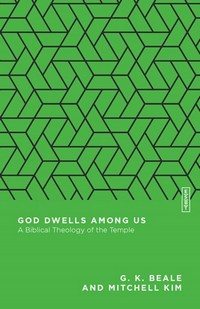
Anonymous by Elizabeth Breck: This PI Will Fill the Kinsey Millhone-Shaped Hole in Your Heart

Anonymous

Anonymous

by Elizabeth Breck
Series: Madison Kelly, #1

Hardcover, 309 pg.
Crooked Lane Books, 2020

Read: December 28-30, 2021
Grab a copy from your local indie bookstore!

The thing about being a private investigator was that she liked to investigate things. Madison had never been able to interpret whether she liked mysteries or she hated them; all she knew was that she was compelled to solve them.

What’s Anonymous About?

Madison Kelley is a freelance PI who has been between jobs for a while (we’re never told exactly why, a little touch that I loved more than I was annoyed by it being left dangling to tempt me). So she does what any mystery junkie would do when she’s not being paid to investigate—she listens to True Crime podcasts, and with her favorite focusing on a local investigation (or two, as we join the action it’s unsure if they’re connected) she spends a lot of time thinking about the case(s) and tweeting the hosts with her ideas.

Madison starts receiving threats telling her to stop her investigation. But she has no idea what investigation the threats are referring to—it can’t be her tweets to the podcast, can it?

Madison has to move from fan-interest in the crime to actually investigating it, just to find out who is threatening her. Assuming it’s not someone from a previous case, a prank, or a case of mistaken identity. I know I’m not in the evaluative portion yet, but I have to say that I don’t remember the last hook that got me like this one. So, so, clever.

Kinsey 2.0?

By page 10, I’d already put in my notes, “She’s Kinsey, but not.” The sentiment just grew. I’m not really suggesting that Breck designed Madison to be a Kinsey Millhone clone/knock-off, but if someone was to design a contemporary version of Grafton’s protagonist, the result would look just like Madison Kelley.

So here are just a few things that made me think of Kinsey over the course of the book: she’s from California (although Breck uses San Diego without a fake name); her PI work (up until this novel) has primarily been as an insurance investigator; she has a strange not-really-romantic relationship with a married cop; she’s not afraid to stand up for herself or to take on situations she might be wise to avoid; she refuses to let being a woman in a male-dominated field hold her back; she’s interested in romance but needs her space/independence. Frankly, a lot of these will apply to several other female PI’s—I realize that. But there’s just something about the way that Breck showed Madison to the reader that screamed Kinsey, but not.

How is she not Kinsey? A few quick notes (I expect this list will grow in subsequent novels—and could be longer now if I took more time to compile it/didn’t mind spoiling anything): Madison doesn’t once resort to/mention a Little Black Dress (and I don’t see her donning one), Madison eats so much better, she seems better with people naturally, I can’t imagine Kinsey listening to the 1980s equivalent of True Crime Podcasts—and being on Twitter? No way.

Investigative Tips

One of the best parts of Detective novels is when you get some insight into PI/Detective methods—sometimes it’s in a didactic way like Michael Westen would do on Burn Notice, sometimes it’s just in the narration like Archie Goodwin would do. It’s what convinces people like Harvey Mapes, Adam Whyte/Colin McLaughlin, Cat Caliban, or me that we can handle a murder investigation when one drops in our laps.

The descriptions of Madison tailing someone, noticing someone tailing her, shaking the tail, and so on are just great. I assume given Breck’s résumé that they’re authentic (and if I’m wrong, she pulls it off in such a way that you’d never know). Not only do you feel like you’re in the moment in a way you sometimes don’t when reading about someone tailing another car (even when reading really good novels), but you walk away convinced that you could follow a random stranger for a while without them noticing and seeking a restraining order against you.

She has Good Taste, Too

The coincidences were stacking up. Her favorite fictional detective, Nero Wolfe, always used to say, “In a world of cause and effect, all coincidences are suspect.” She agreed.

Like other detectives I’ve read recently, Madison reads Mystery/Detective Fiction—although it hits me, that I can only think of female detectives that fit this bill (or amateurs). Why is that? Are male detectives illiterate or are do they only read intellectual fare (see: Spenser)?

Anyway, I had noted that Madison had some good tastes in reading when I came across the above quotation—and knew we were going to be friends for a long time to come. Sure, I’d already decided to read the next novel by this point, but this cemented it. Nero Wolfe is her favorite? That’s worth me picking up at least three sequels.

So, what did I think about Anonymous?

Madison had had a supervisor at one of her first investigation jobs tell her, “Being a good investigator is fifty percent technique and fifty percent luck. And Madison, you have good luck.” She had thought about that a lot. She did have good luck.

Never underestimate luck—that’s pretty much always true of fictional detectives (private, police, or amateur)—at least Breck’s upfront about it.

This was my last novel of 2021, and what a novel to go out on! Madison’s a great character—who makes one pretty big error in judgment but is otherwise sharp as a tack. And you can’t beat her kind of luck.

I really liked Breck’s prose and pacing—she kept things moving while giving us enough background on Madison to really get a good feel for her (and I have to know more about the lawyer, Haley—I think she promises to be fun). Also, of all the ways to bring in True Crime podcasts and social media into detective fiction, this is my favorite.

Clearly, I had a blast with this. Anonymous starts with a killer hook, has enough twists and turns to keep things interesting and the reader invested, has some good emotional subplots, a great setting (and we get a decent feel for Madison’s little corner of it), and a bang-on ending. It’s hard to ask for more from a debut.

This post contains an affiliate link. If you purchase from it, I will get a small commission at no additional cost to you. As always, opinions are my own.

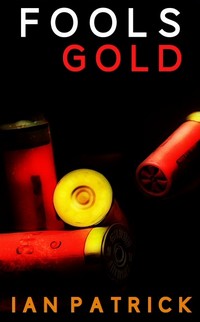
Fools Gold by Ian Patrick: The Batford Trilogy Ends with a Bang

Fools Gold

Fools Gold

by Ian Patrick
Series: Sam Batford, #3

Kindle Edition, 237 pg.
Fahrenheit Press, 2020

Read: August 25-26, 2021
Grab a copy from your local indie bookstore!

I love remote working. It means I can be where I need to be, doing what I need to do, when I need to do it. After that there’s whatever time’s left for police work. I don’t regard myself as a criminal. I’m just a disgruntled public servant supplementing my meagre living. Most criminals I despise but there are a few who break the mould.

I’m one of them, after all.

What’s Fools Gold About?

After recovering from Stoned Love, Batford’s thrown back into the field. This time, he’s answering directly to Klara Winter and she’s got two things on her mind—shutting down an armed robbery team and exposing Batford.

Batford has three missions—stopping the robbery team; finishing cleaning up after his former boss/mentor—including getting what cash he can; and staying clean in front of Winter. Note the qualifier there, clean “in front of” Winter, not clean.

Typical police procedural stuff, right?

The UC work is great—and Batford ends up finding more criminal activity than the police were aware of when the operation started. I don’t want to get into it, because it’s better for you to read it. But like so many of the police actions in Patrick’s works, it screams authenticity.

So, what did I think about Fools Gold?

There was a time the police were viewed as protectors and defenders. In a way that still applies: Terrorists denied their spoils, criminal networks disrupted, drugs and guns seized. I’m part of all that but no longer feel like crew on the good ship, Justice.

I’m pretty sure I’ve said something like this before, but it’s worth repeating. It takes a special skill to make readers get behind a crooked cop—a reader will accept a Bosch or a Rebus bending the rules a bit to get the murderer to confess or get convicted. But that’s not Batford. Well, okay, it is. But that’s not all that Batford does—while he gets results/arrests/stops whatever crime he’s been sent to investigate, he also makes sure he profits off it. And somehow Patrick gets his readers to hope Batford gets away with it. At least a little bit.

It drives me crazy—I want him to succeed and I hope he spends the rest of his life behind bars. You figure that out, I can’t.

Patrick’s prose here is as lean as ever—and once the momentum builds up, it doesn’t stop. There’s a ticking clock on Batford’s investigation, and it carries over to the novel. The action propels you from one scene to the next.

There’s real growth in Patrick’s plotting—with no disrespect intended to his previous work—but this feels so much tighter, he doesn’t waste a moment.

And that ending? I don’t have words for it. It’s both a great launching pad in the (seemingly unlikely) case that there’s a fourth Batford novel, and a great way to conclude the trilogy.

Get them all—this would work okay as a stand-alone, but as the end of a run? It’s great. It’s a trilogy that goes from strength to strength, and you’d be smart to pick it up.


4 Stars

This post contains an affiliate link. If you purchase from it, I will get a small commission at no additional cost to you. As always, opinions are my own.

Pure by Jo Perry: A Murder Mystery and So Much More

Pure

Pure

by Jo Perry

Paperback, 289 pg.
Fahrenheit Press, 2021

Read: October 6, 2021

Doctor Christiansen waited a moment after the final shudder and wheeze. “She’s gone,” he said and to make sure I understood, and added, “I and everyone here at Sunny Morning Elder Care Living are deeply sorry for your loss.”

Well, my aunt wasn’t “gone.” She was right there, her small, cold hand in mine.”

What’s Pure About?

Ascher Lieb, arrives at her dying aunt’s bedside too late to say goodbye, she’s not going to wake up again. But she’s present when they turn off the ventilator keeping her lungs working. Ascher returns to her aunt’s apartment to check on her dog and go through her belongings just in time for the facility to be quarantined with her in it.

This is the early days of COVID-19 in Los Angeles, and no one is playing around. Ascher has to present herself twice daily for temperature/symptom checks, where she’s given some food to supplement the groceries her aunt had left behind—which Ascher supplements, in turn by frequent use of delivery apps. With most of the U.S. now out of lockdown—or anything resembling it—it might be hard to remember the early days—sanitizing everything, masks, gloves, shutting yourself away from everyone you can. A lonely, isolating, claustrophobic existence—made the worse for Ascher as she’s alone in someone else’s house with few of her own possessions, just a dog who doesn’t understand why his owner isn’t coming home.

And I’m going on far too long—how do I summarize this? Gross over-simplification:
Ascher volunteers briefly at a Jewish Burial Society. She’s convinced there’s something suspicious about the death of one of the people she attends to. Driven by impulses and emotions she’s not sure she can identify, Ascher seeks to discover this woman’s identity and learn what caused her death.

Ascher also has to come to terms with her aunt’s death (which opens a can of worms about other deaths in her family, too), dodge the officials at her aunt’s facility while she’s breaking quarantine, try to hew close to COVID restrictions, deal with a bunch of personal issues arising from her being quarantined away from her apartment/roommate, cope with the dumpster fire that was 2020, and…there’s a possible (probable?) supernatural element, too. That sounds like a lot going on—and it is—but it never feels that way. At least for the reader—Ascher feels it.

“Everything Else”

The mystery at the core of this novel is a pretty good one—and Ascher’s not a sleuth by any means, her attempts at being an amateur sleuth are as amateur as they come. It’s worth reading Pure for this aspect alone.

But for me, it was the least interesting part of the novel. Everything else going on (except maybe the stuff with her roommate) was much more interesting and worthy of reflection. For one: Ascher’s reaction to death—her aunt’s and others—have shaped her more than she realizes. Her coming to grips with it, her seeing how death has affected important choices she’s made throughout her life—and seeing what she does with these realizations? That’s what separates Pure from other mystery novels.

So, what did I think about Pure?

This is a great novel, an immersive read—I had a hard time putting the book down, and a harder time not thinking about it when I had put it down. And I was on vacation when I read this—I had plenty of things to do, see and think about when I wasn’t reading. If I only had routine day-to-day things to think about, I’m not sure I’d have been able to focus on work/home life instead of the book.

The characters who aren’t Ascher are interesting enough—and there’s a couple I can think of that I would’ve liked to spend more time with. But that’s not possible in this book—Spring of 2020 was not a time to meet people and spend a lot of time with them. But your appreciation for this book is going to come down to what you think of Ascher and her actions.

This is a mystery novel about something—it’s more than a whodunit (assuming there was something for a “who” to have “dun”). It, like pretty much everything Perry writes, is about death and how we deal with it as humans (and one neurotic Mini-Pinscher). THere’s more to chew on, too, but that’d be telling…

It’s trite to say “this moved me.” But it did, and I can’t think of a better way to phrase it, so trite it is. Pure is the best thing I’ve read by Perry—it’s not the most entertaining, but it’s the best, and will likely stay with me in more detail than the rest. You won’t be sorry if you pick this up. You may regret not doing so. So, why take the chance?


4 Stars

We Had a Little Real Estate Problem (Audiobook) by Kliph Nesteroff: One of Those Books You Didn’t Know was Needed Until You Read It

We Had a Little Real Estate Problem

We Had a Little Real Estate Problem:
The Unheralded Story of
Native Americans and Comedy

by Kliph Nesteroff

Unabridged Audiobook, 9 hrs., 34 min.
Simon & Schuster Audio, 2021

Read: December 8-9, 2021
Grab a copy from your local indie bookstore!

What’s We Had a Little Real Estate Problem About?

This book sketches a broad history—roughly from the end of the 19th Century to the present—of Native Americans in comedy. He starts with things like wild west shows and circuses—where people like P. T. Barnum presented “authentic Indian” practices, but would define what was authentic for the people who’d do the performing, and would punish them if they did anything actually authentic. So right away, you know this is going to be a feel-good story.

In the early days of Movies and TV, it’s not much better for most—Indians were stereotyped and usually played by Whites. Sure, you’d get occasional people like Will Rogers as the exception. Nesteroff chronicles the struggles for representation from then up to “Iron Eyes” Cody (and beyond, I’m sure).

Then he sketches out the bright spots for Native Americans in the contemporary comedy scene, from stand-up to theater to TV writing. Nesteroff spent a lot of time on Charlie Hill’s life, career, and legacy—who made a lot of the contemporary advances possible. Frankly, he could’ve spent more time on it and kept me interested (although what he gave was sufficient). His interactions with Richard Pryor was fascinating.

Interspersed with the history are brief profiles of individual comedians/teams and their careers. So it’s not just a history of the industry, but we get spotlights on individuals, too. They were definitely the highlights of the book for me.

How Funny Was It?

Nesteroff kept the narration restrained—he’s a stand-up, so I’m sure his instincts were to perform (at least) a bit more than he did. But he read it the same way you’d read a book about productivity. I’d think that would be particularly difficult when he read a transcript or script from a comedy piece/interview. But even then—the material shone through and I found myself audibly chuckling frequently. Funny stuff is funny (would’ve been funnier in the original, I’m sure, but getting permissions necessary to do that would’ve made this audiobook too expensive to produce)

So, what did I think about We Had a Little Real Estate Problem?

I heard Marc Maron talk about this book a little on his podcast (but I haven’t gotten around to any of the episodes with the author), and it seemed like it’d be up my alley. I love hearing about the business of comedy and the people that are behind it. Focusing on this one story? Sounded like a great idea. And I think Nesteroff pulled it off.

I guess I would think as a history, it’s probably incomplete—but I’m not sure how you can do a comprehensive history of something like this.

I think the central premise of this—media depictions of Native Americans makes them conform too much to a stolid, serious, stoic type—or a tragic one. It’s hard to believe that encompasses any culture—much less the great number of Native American cultures in North America. To promote understanding between cultures in the US and Canada, we ought to see all aspects of them.

The profiles—either brief or extended (like Charlie Hill and Will Rogers)—were interesting enough to make me go check out samples (and sometimes more) of the work. The overall narrative was interesting and optimistic.

I think the book worked—if you’re at all interested in the behind-the-scenes of comedy, about those who make the movies/shows/stand-up you enjoy, you’ll probably think so, too.


4 Stars

2021 Library Love Challenge 2021 Audiobook Challenge

This post contains an affiliate link. If you purchase from it, I will get a small commission at no additional cost to you. As always, opinions are my own.
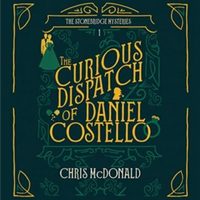
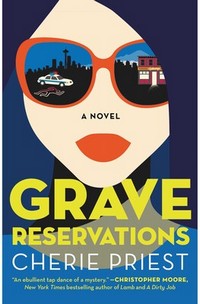
Grave Reservations by Cherie Priest: Move Over Shawn and Gus, It’s Time for the Real Deal

Grave Reservations

Grave Reservations

by Cherie Priest
Series: Booking Agents Series, #1

Hardcover, 289 pg.
Atria Books, 2021

Read: December 10-13
Grab a copy from your local indie bookstore!

“I’m not looking for a séance, Ms. Foley. I’m just telling you that I know there’s more to the world than what we can always see right in front of us. And I believe you when you tell me that you had a premonition, or a bad feeling, or a bad certainty—if that’s more like it. I believe you saved my life. Saved me a hell of a story and some smoke inhalation, that’s for damn sure. And now I want to hire you. Not to book any travel, and not to talk to my dead mother. I’ve got a case I’ve been beating my head against for a couple of years, and I’m all out of leads. I’m ready to try anything, which means I’m willing to try a psychic, Ms. Foley, I want you to help me solve a murder.”

What’s Grave Reservations About?

It’s pretty much about that quotation—Leda Foley is a travel agent* and self-described “inconsistent psychic.” Her intuition (or whatever you want to call it) leads her into changing the flight of a Seattle PD detective which prevents him from ending up in a plane that skidded off the runway during takeoff. Now he’s back in Seattle, grateful, and wants to use Leda to help him get a break on a cold case. Det. Grady isn’t that convinced this is going to work (Leda’s sure it won’t), but he doesn’t know what else to try.

* I’m as surprised as you to learn they still exist.

She agrees—not just because her agency is struggling and she needs pretty much any money she can earn, but because she wants to get on Det. Grady’s good side, because she wants his help on a cold case of her own—her fiancé was murdered and the police got nowhere with that investigation.

So, Leda, her bartender best friend, and Detective Gracy set out to see if her psychic abilities are at least a little more consistent than she thinks.

Leda’s Other Side Hustle

Leda’s had a large number of day jobs, none of which worked out for long. Her travel agency, Foley’s Far-Fetched Flights of Fancy, is an effort to make it on her own—and it’s pretty shaky. Leda also wants to strengthen and improve her psychic skills, so she gets on stage at a local bar for what she calls klairvoyant karaoke, but the bar’s owner prefers calling her a psychic psongstress.

Basically, she gets on stage, holds an object given to her by an audience member, and uses the impressions her abilities give her about the owner to sing a song that will be meaningful to the owner. In exchange, she gets free drinks. She’s gaining a little notoriety from this and the bar is having its most successful nights ever.

Tricky Tonal Balancing Act

This is not your typical murder mystery, that’s probably pretty clear. In her acknowledgments, Priest says she was aiming at “something lighter and funnier than my usual fare.” She hit what she aimed for. It’s comedic (sometimes very comedic), but not at a goofball level. It’s closer to Castle at its best. Or to stick to novel comparisons, think The Spellman Files (especially the slightly more serious last couple), Max Wirestone’s Dahlia Moss books or David Ahern’s Madam Tulip books. The latter is the best comparison (not just because Leda’s psychic abilities made me think of Derry more than a few times), but Leda’s friends remind me of Derry’s—but I threw in the others because too few people know anything about Madam Tulip.

Back to Grave Reservations—Priest walks the tightrope between too silly for a mystery and too serious for a story about a travel agent/inconsistent psychic–—which cannot be anywhere as easy as she makes it look. With all of the above comparisons, I occasionally wasn’t sure about the consistency of the tone (or the appropriateness of it when the creators weren’t on the top of their game). Priest didn’t have that problem at all. Which is a tribute to her skill.

So, what did I think about Grave Reservations?

I don’t have a lot to say here–it’s really good. Priest surrounds Leda and Det. Grady with a bunch of characters that bring the comedy on the personal side and suspects, victims, and witnesses that keep the serious side of the story working. Either set of characters make this a fun read—put them together and you have something special.

The mystery itself was pretty good—and having Leda’s abilities providing the leaps of logic that allow Grady to start looking in the right places is a great idea. Priest doesn’t have to “play fair” like most mystery novelists and she can just wave the Psychic ex Machina wand to get her out of tricky places.

Grave Reservations is a great bit of light escapist reading—and the way Priest set it up for a series suggests that we’ll be able to escape into this world for a little while longer. And we all could use something like that right now, can’t we?


4 Stars

2021 Library Love Challenge

This post contains an affiliate link. If you purchase from it, I will get a small commission at no additional cost to you. As always, opinions are my own.
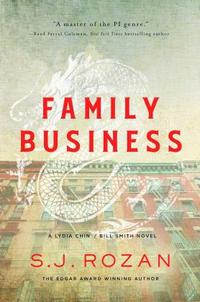
The Last Time She Died by Zoë Sharp: The First Novel in This Series Will Keep your Brain Spinning

The Last Time She Died

The Last Time She Died

by Zoë Sharp
Series: Blake & Byron Thrillers: Book 1

Kindle Edition, 384 pg.
Bookouture, 2021

Read: December 2-6, 2021
Grab a copy from your local indie bookstore!

What’s The Last Time She Died About?

I’m feeling pretty paranoid about what I’m going to write in this post, I don’t want to give anything away. It’d be really easy to do with this one, so I’ll just borrow this from Sharp’s website:

She came back on the day of her father’s funeral, ten years after she vanished. But she can’t be who she says she is…

When Blake disappeared as a teenager, on a cold dark night, her father never reported her missing. She is presumed dead.

Now, ten years later, a young woman with white-blonde hair sits comfortably in the family living room and smiles at the shocked faces around her.

“Don’t you recognise me?” she says. “I’m Blake.”

Detective John Byron isn’t sure whether she’s telling the truth. But as he investigates, he soon realises no one is happy to see her.

And the people who should be welcoming her back with open arms know she can’t be Blake. Because they killed her the night she vanished…

Didn’t they?

Lily

‘I’m Lily. Does this mean you’re sort of my sister? I’ve always wanted a sister. Well, I really wanted a kitten, but a sister would be nearly as good.’

At the root of everything in this novel are some deep and dark secrets—many of which will be brought out of the shadows–but there are several moments of light throughout. The brightest beam of light comes from Gideon Fitzroy’s twelve-year-old step-daughter, Lily.

She’s adorable—it jumps off of the page. She feels neglected by her mother and uncle, her older brother’s at that stage of adolescence where the last thing he wants to do is spend time with his little sister. So the prospect of having a brand-new, adult, sister? Lily’s awed by her. And then when Blake’s friendly with her, spends time with her? Lily’s devoted.

She doesn’t understand what’s going on—and is largely kept in the dark by her family. But she’s Blake’s biggest fan, no matter what that might mean for her family. There’s a sweetness to her that makes her future and welfare as important to the reader (at least this one) as Blake’s and Byron’s.

Byron +

Byron, considered solely, is an intriguing character—and I have a note or two about wanting to write about his psychology a bit. But I don’t think we have quite enough information yet to do the deep(ish) dive that I want to. Sure, not having that information is part of what makes him intriguing.

Where we really learn about him is from other characters and from his interactions with others. For example, PC Jane Hudson knew him as a trainee, and gained certain impressions of him, and shares them with her superiors, predecessor, and others (including the reader).

But it’s in his interactions with others that you really get to like him. With the pub’s skittish cleaner. He’s great at winning her over and getting her to talk. He’s got this wonderful banter with his superior that speaks to a long association/friendship and liked their conversations enough that I’d pay for a novella featuring them just meeting for tea and chatting. It’s probably there that I decided that I liked him as a person.

But in his conversations and interactions with Blake (and the way they both respond after each encounter) is where he really stands out. The two “get” each other in a way that just makes you want to read more, just to watch their verbal dance (and the choreography of what they don’t say is just as agile). We’re talking Poe and Tilly, Spenser and Hawk, Cormoran and Robin levels of chemistry here. It’s almost like there should be a series based on the pair.

Oh, wait…

So, what did I think about The Last Time She Died?

I’ve been reading Sharp’s Charlie Fox for over a decade, but I hadn’t read anything else by her. I’ve always suspected that was an error in judgment, and this certainly suggests that I’m right.

How many times since Martin Guerre* has the story of someone presumed dead come back and had to prove they weren’t an impostor? How many times have we read about a police detective with emotional and physical scars doing some off the books work because they can’t do anything else? How many stories of small-town secrets being exposed have been written? How many…well, you get the idea. This novel is full of ideas we’ve all seen more times than we can count. But Sharp shuffles them, remixes them, and presents them to the readers in a way that could almost convince you that you’ve never read/seen anything like it before.

* Sure. before that story, too.

How good is Sharp? The series is called Blake & Byron Thrillers—and yet you will wonder on more than one occasion if she’s actually Blake. And you may keep wondering after you finish the book.

So many of the characters really popped and will linger in the back of my mind for quite a while. I’m already impatient about getting answers to how Blake and Bryson will have another adventure together. I wouldn’t mind an update on some of the other characters, either—although it appears that Bryson’s new job will be taking him to a different part of the country.

The Last Time She Died is entertaining, twisty, tense, with just enough wit to keep you grinning. This is going to be a series to watch, readers, get started now.


4 Stars

This post contains an affiliate link. If you purchase from it, I will get a small commission at no additional cost to you. As always, opinions are my own.
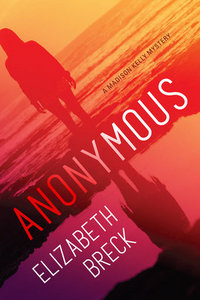
Time and Tide (Audiobook) by Peter Grainger, Gildart Jackson: The Times They Are a-Changin’

Time and Tide

Time and Tide

by Peter Grainger, Gildart Jackson (Narrator)
Series: A DC Smith Investigation #7

Unabridged Audiobook, 13 hrs., 29 min.
Tantor Audio, 2018

Read: May 7-11, 2021

What’s Time and Tide About?

A new DI has been named at King’s Lake—and it’s a person we’ve run into before—and it’s a bridge too far for DC Smith. He’s been thinking about retiring since the first book, and that thought’s been getting louder. He’d probably stick it out for a little longer if not for this new boss, but…so he turns in his papers and starts to prepare to leave.

But first, there’s a murder to solve. Smith sets out for what’s likely the last time with his team and their new DI to solve the case of a suspected figure in organized crime being murdered in a small tourist town.

Everyone tries to treat this as just a typical investigation, but the specter of Smith’s retirement looms over everything. This is Smith’s last chance to impart his training on his team—Chris Waters in particular. Waters is doing his best to prove to his mentor that he’s ready to fly solo (all the while trying to soak up anything he can). Smith’s also busy trying to put his team in the best positions for their career—even if their immediate future is under the DI that led him to resign.

Also, he should probably figure out what he’s going to do when he doesn’t have a job anymore.

So, what did I think about Time and Tide?

So, I know there are more books in the series, which takes a little sting out of it, but I wasn’t ready for Smith to leave Kings Lake.

I thought the story meandered a bit more than I’m used to, but it worked. It felt appropriate for the time. It’s not just Smith’s upcoming retirement, there’s a lot about changing of times, former careers/lives, the past defining people, and so on. It’s probably the most obvious that Grainger’s been about matching the themes of the plotlines, but I’m not going to complain.

Like I said, I know there are more books to come in the series, so it’s not an ending—or really the beginning of the end—it’s a transition novel. Things are going to change, and while I’m not necessarily a fan of change, I’m betting that Grainger’s going to pull it off. He’s doing so already.

On top of that, we get the typical wise and witty Smith with his very capable team unearthing secrets, and making sure the truth is revealed. Narrated by the man who continues to make these characters come to life and elevates the already well-written text. You really can’t go wrong with this series.


4 Stars

Page 26 of 88

Powered by WordPress & Theme by Anders Norén