

Tag: 4 Stars Page 27 of 88

PUB DAY REPOST: The Twelve Monotasks by Thatcher Wine: A Guide to Living a More Focused Life

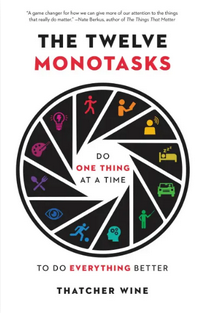
The Twelve Monotasks

The Twelve Monotasks:
Do One Thing at a Time
to Do Everything Better

by Thatcher Wine

eARC, 272 pg.
Little, Brown Spark, 2021

Read: November 22-23, 2021
Grab a copy from your local indie bookstore!

What’s The Twelve Monotasks About?

We live in a society that celebrates the multitaskers, those who seemingly do a half-dozen things at once—while posting about it on Twitter/Instagram/etc. We feel inadequate if we’re not at that level—and if we are, we should be pushing for more. Thatcher Wine wants to call us back—at least some of the time, not necessarily all the time–to a more straightforward, more focused (remember focus?) way of life and work. Arguably, this would be a healthier and less stressed way of life as well.

Using research from Neuroscience, Psychology, and insights from mindfulness practices, Wine outlines Twelve things to focus on—monotasks—Reading, Walking, Listening, Slppeing, Eating, Getting THere, Learning, Teaching, Playing, Seeing, Creating, and Thinking. After making his case of “The Art and Science of Monotasking,” Wine spends one chapter on each monotask, describing and defining it, showing its benefits, and giving some exercises to help the reader start practicing the task. He then gives a couple of wrap-up chapters—encouragements to practice these (and other monotasks) and reminders of the benefits.

A Few Highlights

I really like this idea—I know I need to focus more and this approach seems like a good way to build that ability.

Some of the chapters seemed more attractive to me, as well as easier to fit into at least my life—the Walking, Eating, Seeing, and Playing chapters really stood out. Oh, and, obviously, the Reading chapter—that’s a given, right? It was a great way to start that part of the book. I’m not saying I thought the others were a waste of time or anything, but I read these chapters and immediately identified how I could easily make that part of my life and what the benefits would be. I bet most readers will have a few chapters like that, too—ones that jump out at them as being good fits—their lists will vary from mine, but they’ll have theirs.

The chapters laying out the individual monotasks are arranged the same—by the third you know where you’re going to find what—the explanations, the benefits, the challenges, the practical exercises. It’s a firm outline and easy to use.

Overall, for me, one of the biggest selling points of the book is that it provides a different vocabulary for what’s likely a good idea. I’ve read a few books and taken a few classes on dealing with stress, emotional wellness, etc. lately—one recurring idea was mindfulness, being present, and so on. There was something about the language that bothered me. I liked the concepts, but the pseudo-spirituality/pseudo-psychological terms it was couched it didn’t sit right with me. I always felt like I was being silly in not being comfortable with them, but it was a real stumbling block for me. Now, Wine’s monotasking isn’t the same idea—but they’re compatible, really compatible. But his approach, his terminology comes without the touchy-feely connotation—making it more palatable to many readers (I can’t imagine I’m the only one).

A Few Problems

While there were a few chapters that jumped out at me as being easily useful and adopted, there were a few that didn’t seem that easy to work into my life—and I’m not sure that Wine convinced me would be that helpful for me: Travel, Thinking, and Teaching. It’s possible—maybe even likely—that once I do the exercises, I’ll change my mind.

For some of the monotasks (and those three are good examples, again, your results may vary), I really had to wonder how universally adoptable they’d be. For example—I commute alone, in the dark (one way)—I can’t do a lot of what he suggests in the Travel chapter. Some of the others seem more geared toward people like Wine—the self-employed, business owners, or managerial types—all with a degree of affluence. People who are at the low end of the corporate ladder, don’t have the freedom or ability to do a lot of this. It doesn’t take down the whole system, but it’s a chink in the armor.

On the more nitty-gritty end of things, there’s a lack of variety in personal anecdotes that Wine uses. There are three formative events in his life that he uses as the basis for observation, for personal examples, etc. Were I him, I’d probably base most things I say off of those same events/experiences. It just makes the reading seem repetitive. This isn’t an attack or a problem with the system he’s proposing, it just makes the reading a bit duller.

So, what did I think about The Twelve Monotasks?

As always, I’m trying not to evaluate the arguments or thesis—my goal is to talk about the reading experience. That said, if I was going to evaluate Wine’s arguments and proposed methods—it’d be a pretty positive assessment. This is definitely the kind of book I’m likely to return to, but more on that in a minute.

The problem with evaluating the reading experience is that I didn’t read it the way Wine intended. Once you get to Part II, “The Twelve Monotaks,” the reader is supposed to take them one chapter at a time. Read about the task, take in the guidance and practice it before moving on to the next. I didn’t have that kind of time between the publicist and today (even if I waited until release day, I wouldn’t have). But I can imagine how that would work—and it’d be better than plowing through it as I did.

But even plowing through without the breaks take each in turn with some practice, I got a pretty good idea of how it should work. It seems like a solid approach, one that’s not overwhelming either—rather than trying to work in 12 or so new disciplines into your life, go for one. And then another. It’s the camel nose in the tent approach. I can see that when I return to this in the coming months, slowly bringing in each task to my life is going to work much better than diving in and trying to add all twelve at once.

A lofty goal—helping people learn/relearn/recapture the ability to focus in a world full of distraction—and a common-sense approach to pursue it. It’s the makings of a good read—whether the method is successful or not is probably up to the reader. But Wine gives the tools in an attractive, easy-to-read manner.

Disclaimer: I received this eARC from Little, Brown & Co. via NetGalley in exchange for this post—thanks to both for this.


4 Stars

This post contains an affiliate link. If you purchase from it, I will get a small commission at no additional cost to you. As always, opinions are my own.

The Twelve Monotasks by Thatcher Wine: A Guide to Living a More Focused Life

The Twelve Monotasks

The Twelve Monotasks:
Do One Thing at a Time
to Do Everything Better

by Thatcher Wine

eARC, 272 pg.
Little, Brown Spark, 2021

Read: November 22-23, 2021
Grab a copy from your local indie bookstore!

What’s The Twelve Monotasks About?

We live in a society that celebrates the multitaskers, those who seemingly do a half-dozen things at once—while posting about it on Twitter/Instagram/etc. We feel inadequate if we’re not at that level—and if we are, we should be pushing for more. Thatcher Wine wants to call us back—at least some of the time, not necessarily all the time–to a more straightforward, more focused (remember focus?) way of life and work. Arguably, this would be a healthier and less stressed way of life as well.

Using research from Neuroscience, Psychology, and insights from mindfulness practices, Wine outlines Twelve things to focus on—monotasks—Reading, Walking, Listening, Slppeing, Eating, Getting THere, Learning, Teaching, Playing, Seeing, Creating, and Thinking. After making his case of “The Art and Science of Monotasking,” Wine spends one chapter on each monotask, describing and defining it, showing its benefits, and giving some exercises to help the reader start practicing the task. He then gives a couple of wrap-up chapters—encouragements to practice these (and other monotasks) and reminders of the benefits.

A Few Highlights

I really like this idea—I know I need to focus more and this approach seems like a good way to build that ability.

Some of the chapters seemed more attractive to me, as well as easier to fit into at least my life—the Walking, Eating, Seeing, and Playing chapters really stood out. Oh, and, obviously, the Reading chapter—that’s a given, right? It was a great way to start that part of the book. I’m not saying I thought the others were a waste of time or anything, but I read these chapters and immediately identified how I could easily make that part of my life and what the benefits would be. I bet most readers will have a few chapters like that, too—ones that jump out at them as being good fits—their lists will vary from mine, but they’ll have theirs.

The chapters laying out the individual monotasks are arranged the same—by the third you know where you’re going to find what—the explanations, the benefits, the challenges, the practical exercises. It’s a firm outline and easy to use.

Overall, for me, one of the biggest selling points of the book is that it provides a different vocabulary for what’s likely a good idea. I’ve read a few books and taken a few classes on dealing with stress, emotional wellness, etc. lately—one recurring idea was mindfulness, being present, and so on. There was something about the language that bothered me. I liked the concepts, but the pseudo-spirituality/pseudo-psychological terms it was couched it didn’t sit right with me. I always felt like I was being silly in not being comfortable with them, but it was a real stumbling block for me. Now, Wine’s monotasking isn’t the same idea—but they’re compatible, really compatible. But his approach, his terminology comes without the touchy-feely connotation—making it more palatable to many readers (I can’t imagine I’m the only one).

A Few Problems

While there were a few chapters that jumped out at me as being easily useful and adopted, there were a few that didn’t seem that easy to work into my life—and I’m not sure that Wine convinced me would be that helpful for me: Travel, Thinking, and Teaching. It’s possible—maybe even likely—that once I do the exercises, I’ll change my mind.

For some of the monotasks (and those three are good examples, again, your results may vary), I really had to wonder how universally adoptable they’d be. For example—I commute alone, in the dark (one way)—I can’t do a lot of what he suggests in the Travel chapter. Some of the others seem more geared toward people like Wine—the self-employed, business owners, or managerial types—all with a degree of affluence. People who are at the low end of the corporate ladder, don’t have the freedom or ability to do a lot of this. It doesn’t take down the whole system, but it’s a chink in the armor.

On the more nitty-gritty end of things, there’s a lack of variety in personal anecdotes that Wine uses. There are three formative events in his life that he uses as the basis for observation, for personal examples, etc. Were I him, I’d probably base most things I say off of those same events/experiences. It just makes the reading seem repetitive. This isn’t an attack or a problem with the system he’s proposing, it just makes the reading a bit duller.

So, what did I think about The Twelve Monotasks?

As always, I’m trying not to evaluate the arguments or thesis—my goal is to talk about the reading experience. That said, if I was going to evaluate Wine’s arguments and proposed methods—it’d be a pretty positive assessment. This is definitely the kind of book I’m likely to return to, but more on that in a minute.

The problem with evaluating the reading experience is that I didn’t read it the way Wine intended. Once you get to Part II, “The Twelve Monotaks,” the reader is supposed to take them one chapter at a time. Read about the task, take in the guidance and practice it before moving on to the next. I didn’t have that kind of time between the publicist and today (even if I waited until release day, I wouldn’t have). But I can imagine how that would work—and it’d be better than plowing through it as I did.

But even plowing through without the breaks take each in turn with some practice, I got a pretty good idea of how it should work. It seems like a solid approach, one that’s not overwhelming either—rather than trying to work in 12 or so new disciplines into your life, go for one. And then another. It’s the camel nose in the tent approach. I can see that when I return to this in the coming months, slowly bringing in each task to my life is going to work much better than diving in and trying to add all twelve at once.

A lofty goal—helping people learn/relearn/recapture the ability to focus in a world full of distraction—and a common-sense approach to pursue it. It’s the makings of a good read—whether the method is successful or not is probably up to the reader. But Wine gives the tools in an attractive, easy-to-read manner.

Disclaimer: I received this eARC from Little, Brown & Co. via NetGalley in exchange for this post—thanks to both for this.


4 Stars

This post contains an affiliate link. If you purchase from it, I will get a small commission at no additional cost to you. As always, opinions are my own.
PUB DAY REPOST: Dead Mercy by Noelle Holten: An Apt Title for A Grim Thriller

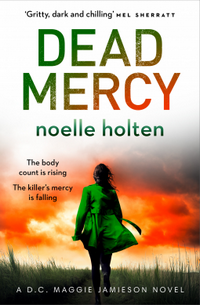
Dead Mercy

Dead Mercy

by Noelle Holten
Series: DC Maggie Jamieson, #5

eARC, 416 pg.
One More Chapter, 2021

Read: October 4-5, 2021

What’s Dead Mercy About?

The closing chapter of Dead Secret set this up (as Holten is so good about doing): a business has gone up in fire and a body has been found inside—possibly the body of someone Maggie’s worked with in Probation. From the start, this case has its hooks in Maggie.

It’s soon decided that the body was the source of the fire—and before the victim had been set ablaze, he’d been restrained and had teeth pulled. The killer had wanted to punish him, not just kill him.

Soon another victim is discovered—and the team has to race to find a connection so they can prevent anyone else from suffering this fate.

When the link is finally discovered, it suggests potential new victims as well as several suspects. It also shines a bright light on a striking failure of the criminal justice system.

Bethany and Kat

Back when I talked about Book 3, Dead Perfect, I wrote that they were overworking PC Bethany Lambert, “Miscellaneous errands, thankless tasks, things requiring technological expertise, and more fall to her. I lost track of how many things Maggie threw her way to do—on top of her own assignments. I have multiple notes about how they’re working this woman to death.” They’ve yet to let up on her—however, it’s talked about both as the way she likes to work and as something other people are concerned about. This is efficiently done—the characters around her get to be observant and sympathetic, and they can continue to throw too much work at her so Holten doesn’t have to create 2-3 more characters to keep the stories moving at that pace.

Dead Perfect was also where DC Kat Everett was added to the team—she’s better integrated into the action over the last couple of books now and I really enjoy her. I’m ready to read a spin-off series focusing on her now, either in her same assignment or transferred somewhere. Her brashness would make for a fun protagonist (not that Maggie isn’t brash, but hers is a side-effect of her impetuousness).

A Refreshing Approach

With most police procedurals you get the maverick, lone-wolf detective—maybe with a couple of people they trust. Or (particularly with UK-based procedurals), you get a focus on a detective squad. With the Maggie Jamieson books, we get a good look at her squad, probation services, and other social services.

Not just as a drop-in for a convenient bit of information, either. But characters that matter, there’s interconnectedness between the groups and it’s good to see the flow of information (formally, informally, unauthorized) informing the investigations. I like seeing that approach, and I like to think it reflects reality far more than any lone-wolf thumbing their nose at regulations.

Although, the pathologist still seeming to hold a grudge over one of her staff being (justifiably) questioned a while back seems to be petty. Which, so it’s not all super-professional and mutually helpful.

Let’s Hope This Is Fiction

Not every author spends too much time on the motivation behind the killings, but an author that gives a believable motivation separates their work from the pack. This is another of those areas that Holten excels in.

Yes, this is a work of fiction. Yes, things are heightened. But when you read this, there’s going to be a voice in the back of your head saying, “I could see that happening.”

Not only that, there’s a pretty good chance that you’re going to be a little conflicted about the crimes. Odds are, you’re not going to be hoping that Maggie and her team fail, or that the killer (killers?) gets away with it. Buuuut…once you understand the motive pushing the killer(s), you may not feel that bad about what happens to the victims.

So, what did I think about Dead Mercy?

Holten’s got this down now—the characters and world are well established, as are the relationships in them. Despite the relatively brief chronology between books 1-5, there’s been some decent character growth on several points, too. So a new Maggie Jamieson thriller is a chance to spend some time catching up with new acquaintances while getting to go for a pretty intense ride as those acquaintances try to stop a brutal killer.

Okay, maybe that’s not the ideal way to catch up and check in on anyone, but it’s a pretty exciting read.

Crime Reads had that piece a couple of weeks ago discussing “all crime is cyber crime,” which was ringing in my ears as I read this. This very visceral series of murders is evidence to support that thesis—cyber-policing wasn’t enough to stop the series, either, but it played its part. Holten’s always been good at balancing the computer-work and the boots-on-the-ground policing but might have outdone herself here.

The accent does fall on the physical world, of course, given the nature of the crimes. If your stomach doesn’t church a little at the description of the murders (likely both as they’re happening and as the pathologist breaks them down), you’re made of pretty stern stuff. Thankfully, Holten’s narration doesn’t ever seem to relish in the disturbing details as too many do.

Basically, this is a top-notch thriller with a lot for the reader to chew on as they’re burning through the pages.

It does appear that this is going to be the last Maggie Jamieson book–at least for a while. I’m hoping it’s just a break, and we get back to Maggie and the rest of the Major and Organised Crime Department soon. If not? These five books are a great set and I (again) strongly recommend them to you.

Disclaimer: I received this eARC from HarperCollins UK via NetGalley in exchange for this post — thanks to both for this.


4 Stars

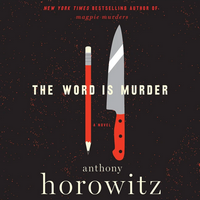
The Word Is Murder (Audiobook) by Anthony Horowitz, Rory Kinnear: A Great Start to an Unique Take on a Holmes/Watson Duo

The Word Is Murder

The Word Is Murder

by Anthony Horowitz, Rory Kinnear (Narrator)
Series: A Hawthorne and Horowitz Mystery, #1

Unabridged Audiobook, 9 hrs. and 2 min.
HarperAudio, 2018

Read: August 30-31, 2021
Grab a copy from your local indie bookstore!

What’s The Word Is Murder About?

The setup here is that a former police detective, Daniel Hawthorne, is doing some work as a consulting detective and as a consultant for TV. He’s one of the consultants on Anthony Horowitz’s show, in fact. And now he comes to Horowitz with a proposal, Horowitz should follow him around on some of his cases, watch him at work and write True Crime books about it, with the two splitting the profits.

Horowitz is hesitant but is talked into the deal. And regrets it almost immediately—and would probably walk away from the deal if he wasn’t intrigued by Hawthorne (who he really didn’t know at all until this point) and the case.

It’s hard to say if the murder case is the “A Story” or the “B Story” in this novel—I think it’s the A, with the storyline focusing on the writing of Horowitz’s first Hawthorne book as the B Story. But it’d be easy to argue the other way—which really doesn’t matter, I’m just bringing it up to describe how the novel works.

I should probably talk about the murder case, though—it’s pretty clever. A wealthy woman (also the mother of a famous actor) goes to a funeral parlor and starts making arrangements for her funeral. A few hours later, she’s murdered. It’s not as if she predicted her death (maybe not, anyway, that’s to be determined), just the kind of freaky coincidence that gets the attention of journalists, consulting detectives, and spy novelists looking for a new project.

It’s not just a good hook—plenty of twists, turns, intrigue, and colorful suspects follow.

Not the Most Flattering Depictions

When you first meet him, you think that Hawthorne’s probably just a misunderstood guy because of a combination of his brusque manner and genius. You may even think that this work with Horowitz may lead to a redemptive arc, a rehabilitation arc, or something. But as the book goes on, the less convinced I was of any of that. I think he’s just a foul sort of person who’s really good at something. By most measures, he’s not a good sort of person—but those are frequently fun characters.

Horowitz really doesn’t come across much better. I remember in junior high when I came across a handful of mysteries that Steve Allen (yeah, that one) wrote and I couldn’t help but wonder why someone would write himself so unflatteringly. I eventually sussed it out and by the time I got to Kinky Friedman’s mysteries, I expected it. See also, Brent Spiner’s new book. Horowitz fits into that scheme—he’s bright enough but doesn’t have the stomach, the instincts, or cynicism to handle a murder investigation on his own—which is fitting, he’s a writer, not a detective. He’s a good Watson figure to Hawthorne—even while it’s clear that he wants to do better.

How was the Narration?

I’ve listened to interviews with Horowitz before, but I halfway wonder if I listened to another one and it didn’t sound like Rory Kinnear if I’d believe it was him. Kinnear did a great job embodying the narration and characters–he’s definitely the kind of narrator I’d want to listen to again.

So, what did I think about The Word Is Murder?

This was a fun mystery—you put any PI/PI duo in the mystery part of the story and it would’ve worked well*, it’s just so well-conceived. Not surprisingly at all, Horowitz can construct a strong mystery/story and he does that here. I’m ready to read/listen to something like that any day. The victim, the suspects, the various motives, the red herrings, and the ultimate reveal provide everything you want.

* In my mind, that’s a compliment to the design of the story. I’m not sure it reads that way when it’s read.

What makes this distinct is the characters of Hawthorne and Horowitz—how they interact with each other and the suspects. Their new business relationship and its ups and downs over the course of the novel make this more than just a good PI story and turn it into a series that you’re going to want to come back to.

And you will want to. I’m glad there are at least two more and am looking forward to diving in.

This post contains an affiliate link. If you purchase from it, I will get a small commission at no additional cost to you. As always, opinions are my own.
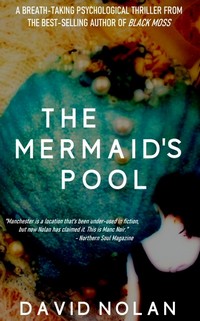
The Mermaid’s Pool by David Nolan: Nolan Delivers Another Dose of Manc Noir

The Mermaid's Pool

The Mermaid’s Pool

by David Nolan
Series: Manc Noir Book 2

Kindle Edition, 192 pg.
Fahrenheit Press, 2020

Read: August 20-23, 2021
Grab a copy from your local indie bookstore!

‘Wow,’ the young man deadpanned. ‘Nazi cops. Absolute shocker.’

‘Is that how you see it?’ Smithdown asked.

‘Yes, I do. And it appears that I’m entirely right.’

‘This is the bit when I tell you about a few bad apples isn’t it? About what a great lot we all are – on the whole; just good people doing a tough job as best we can? But under the circumstances, I’m going to say nowt. I don’t know what I know anymore. Or who.’ Smithdown looked around the darkening landscape. ‘I’m a bit lost, to be honest.’

What’s The Mermaid’s Pool About?

The predecessor to this novel, Black Moss, took place in two different timelines—the first was April of 1990. This book takes place two years earlier, and involves (to one degree or another) two of the characters from Black Moss, and shows them starting on the path that leads them to where they were in the second storyline of 2016.

Which is a long-winded way of saying it’s a prequel.

There are (essentially) two separate storylines.

Storyline A

The first involves a missing mother—Naomi’s daughter has been put in children’s care home after her boyfriend slapped her. Soon after this, Naomi’s hand is found by a man walking his dog. Smithdown focuses on the boyfriend as the culprit, but needs to know if Naomi’s still alive, too.

This case takes him to a nearby town where another grizzly discovery has been made—near a lake (subject of many urban legends), a mutilated body has been found.

Storyline B

Immigrants from Bangladesh and Pakistan are being attacked in the night, creating—practically overnight—a spike in racial tensions between the two communities.

As Smithdown and other detectives try to put a stop to these attacks, he starts to believe that there’s something going on that is trying to take advantage of—and is perhaps stoking—this tension as it mounts to near-riotous levels.

So, what did I think about The Mermaid’s Pool?

Of course, it’s not just the two storylines at work—they’re intermingled and there are a couple of more personal subplots involving Smithdown and his family. But let’s keep things simple and pretend that the storylines are hermetically sealed from one another.

In my imaginary world, if you could excise Storyline B; tweak A so it’s not dependent on B; or create an easier-to-believe B, and keep the personal subplots—you’d have yourself a winner. Most of B is great—but at a certain point, it just jumps too far and I can’t buy it. I’ve seen similar things tried by other authors—Robert B. Parker and Rob Parker jump to mind.*

* I’m at a loss for other examples at the moment, but Nolan’s not the first non-Parker to try.

That said, while I had checked out on that story working for me as soon as I saw where Nolan was going—I was gripped by it. How was he going to pull off a satisfying resolution while balancing the smaller story of one presumed-dead woman in the middle of this? I was on the edge of my seat and rolling my eyes simultaneously.

And it’s a shame I felt this way because, underneath all of this, Nolan was painting a gripping picture about hate—hate in many varied forms—and how that hate can shape and harm a community, how it can corrupt noble institutions, and twist individuals of all backgrounds. And I was too distracted to be able to spend as much time musing on that as I think I should have.

Is there some light in all of the hate? Some hope? Yes, some. But as with Black Moss, Nolan makes you hunt for it. Maybe so you value it more.


4 Stars

This post contains an affiliate link. If you purchase from it, I will get a small commission at no additional cost to you. As always, opinions are my own.
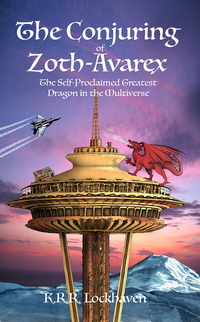
The Conjuring of Zoth-Avarex: The Self-Proclaimed Greatest Dragon in the Multiverse by K.R.R. Lockhaven: So Preoccupied with Whether They Could, They Didn’t Stop to Think If They Should…

The Conjuring of Zoth-Avarex

The Conjuring of Zoth-Avarex:
The Self-Proclaimed Greatest
Dragon in the Multiverse

by K.R.R. Lockhaven

Kindle Edition, 306 pg.
BookBaby, 2021

Read: October 23-25, 2021
Grab a copy from your local indie bookstore!

“We’ve had years and years of preparations to ensure everything will run smooth. We have learned from the mistakes of the past and will use that knowledge to make better mistakes in the future. Er. . . to avoid those mistakes altogether.”

What’s The Conjuring of Zoth-Avarex About?

Harris Reed is fresh out of magical training school and arrives at the Site to begin his career as a conjurer—he couldn’t be more excited about it. He’d grown up on fantasy literature and movies, and in college finds out that so much of what he’d dreamed about is actually true. Not only that, he can be part of the incredibly secret world.

What he discovers is a corporate culture that basically mimics that which is in the mundane world (Harris would use the adjective “Muggle,” he’s that kind of nerd). Petty rivalries, careerists focused on climbing the ladder, budget issues, inter-department squabbles, and a devotion to bureaucracy over the well-being of the employees—or common sense.

Harris and his fellow graduates have been brought to the Site to add some last-minute power to a long-term project set to launch on their second day of work, which sounds exciting to them all.

What they don’t know is that the project is summoning a dragon into this world from another universe. To you and I, this might sound as dumb as John Hammond’s plan for a park full of dinosaurs, but the managers of the Site (and the U. S. Military, which expects to be the eventual recipient of said dragon) don’t see it that way. It turns out that, in comparison, Hammond looks like a safety-conscious genius—it takes less than one sentence for the dragon to show that the humans have no control over him. He kills one staff member, snatches a woman that Harris knew from school, and flies off.

Zoth-Avarex takes Silvia to the top of the Space Needle and makes it his base. He brought Silvia along because he needs a princess in addition to his treasure. There’s no threat implied to her (as long as she doesn’t try to escape)—he basically wants to keep her safe and pamper her. It doesn’t keep this from being a horrible experience for her, but it sure could be much worse.

On their first day, Harris has befriended (or tried to) Siliva, her fiancé, and her sister. The three of them quickly realize that Management and the military are going to be of little use in getting Silvia back, and decide to take matters into their own hands in the tradition of fantasy protagonists everywhere. They get support and a little guidance from Silvia and Harris’s direct supervisor, as well as a long-term employee who’s got his heart set on retirement.

Eddie

One of the first people that Harris meets on campus is a conjurer just days away from retirement. He’s named Eddie, but might as well be named Dr. Perry Cox. Eddie’s a legend on the Site for some heroics back in the ’70s but is now an iconoclastic grump. The kind of guy every office has one or two of—they’ve been around forever and understand the way things work in ways that management doesn’t. They also don’t care about anything anymore and aren’t afraid to show it. He gives the new hires a hard time but actually gives good advice and assistance.

I personally love to get to know those figures and try to learn as much as I can from them (and have likely taken on that role a time or two), maybe that’s why Eddie resonated with me so much. He was hands-down my favorite character—he’s one of those supporting characters that could overshadow the protagonists if used too much, but Lockhaven doesn’t let that happen. Which is probably good, too much of him could’ve hurt the novel.

Footnotes

I am a sucker for a good (generally comedic) use of footnotes in novels—it’s not something I see often, but when I do, there’s a high correlation between their presence and a novel I enjoy.* Lockhaven nails the practice—they give him an added vehicle for jokes and help add to the reader’s understanding of the world and some characters. He also includes one note that’s so long could be a Steinbeck-ian intercalary chapter. It takes a certain audacity to try that, and it paid off.

* See Lisa Lutz, Thomas Lennon, Josh Bazell.

Satire

The book is primarily a fantasy adventure, but throughout—sometimes more pronounced than others—it’s also a workplace satire. As such it’s a winner—even if the fantasy storylines and broader comic bits didn’t work, I’d be pretty positive about this book for the workplace satire alone.

Like Harris, Lockhaven is pretty clearly someone who has drunk deeply from Fantasy fiction. At once he celebrates tropes, themes, and ideas from all sorts of Fantasy—and pokes fun at them. If he just ridiculed them (as several tropes and themes deserve), it’d likely come across as mean-spirited and wouldn’t be that entertaining. If all he did was unleash his favorite tropes to use in telling his story, it’s be unoriginal and clichéd. Mixing avoids the pitfalls and makes for an entertaining read.

So, what did I think about The Conjuring of Zoth-Avarex?

“Well, Bill, I know the answer to life is simply to live with love. Well, actually it’s forty- two, but you humans can’t comprehend that.” The dragon paused wistfully. “I know the best things in life are free. But the birds and bees can have all of that. I need gold! Gold! And to hang here with my beautiful maiden. That’s all I want in this crazy mixed-up world.”

It’s de rigueur when talking about a humorous work of Fantasy or SF to invoke Pratchett, Adams, and Asprin, and it’s de rigueur when I talk about that kind of fiction that I go out of my way to not do that. It’s easy this time because I find them completely inapplicable. On the other hand, TCoZA:TSPGDitM brought to mind: John Scalzi (I’m thinking Agent to the Stars and The Android’s Dream), Scott Meyer (Magic 2.0 series), Joe Zieja (Epic Failure Trilogy), and Eoin Colfer (Highfire). You put those works in a blender and pulse for 30 seconds and you’re going to get something akin to this book.

* Actually, does anyone Asprin anymore? I probably need to update my references.

This would be an easy book for me to go on too long about—I’d love to spend a few paragraphs on Zoth-Avarex alone. But it’s best experienced rather than being told about.

Most of the Independently published Humorous/Light Fantasy that I’ve come across hasn’t worked for me—at least not as much as I wanted it to. Either on the humor front or the story front. But Lockhaven nailed it, I’m happy to say. I laughed—audibly and hard—a couple of times, I chuckled and grinned a lot. I thought the relationships between the characters worked well, and I enjoyed the characters you’re supposed to enjoy and was annoyed by the ones that are supposed to bother you. This is largely one of those novels whose journey is more important than the destination—but I enjoyed the way Lockhaven wrapped things up, too.

In short, I had a lot of fun with this and expect that you will, too. Give this one a try.


4 Stars

This post contains an affiliate link. If you purchase from it, I will get a small commission at no additional cost to you. As always, opinions are my own.
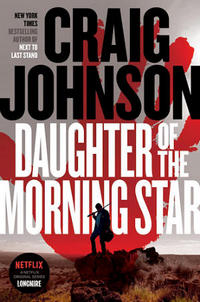
Daughter of the Morning Star by Craig Johnson: A Cheyenne boogeyman, A Recalcitrant Teen Sports Star, and a Wyoming Sheriff

Daughter of the Morning Star

Daughter of the Morning Star

by Craig Johnson
Series: Walt Longmire, #17

Hardcover, 322 pg.
Viking, 2021

Read: September 28-29, 2021
Grab a copy from your local indie bookstore!

“Everybody thinks the dead of the night is the scary time, but it’s not. The time of danger for the living is the time of change, from day into night or night into day, when the world isn’t sure what it is or what it wants to be.”

What’s Daughter of the Morning Star About?

Midway through the last novel, Next to Last Stand, Walt and Henry stop by a High School Girl’s Basketball game to watch Lolo Long’s niece, Jaya “Longshot” Long, do what she does best. But they don’t stop by to enjoy the game, really, they’re there because Lolo wants help. Jaya’s been receiving death threats and there’s only so much an aunt can do (even if that aunt is a Tribal Police Chief).

This is where we pick up now—the threats are real, repeated, and don’t seem to be a prank. Adding to the danger is the fact that Jaya’s older sister disappeared the prior year under suspicious circumstances. There’s no need to think the two are linked, but Walt has to consider the possibility.

If nothing else, Lolo hopes that bringing Walt into the investigation(s) will draw attention to him—he tends to get people watching and talking about his escapades, and hopefully, his involvement will get enough people interested in what’s going on to generate some leads.

There are plenty of suspects—on the reservation and off—for both the threats and the disappearance, so Walt and Henry have their hands full.

A Recurring Question

“I’m sorry, but I don’t believe in the things you believe in, Henry.”

He nodded. “I know that, but I respect your belief in humanity, if for only one reason.”

“What’s that?”

“It makes you very resolute.”

“Is that a compliment?”

“Sometimes.”

There is a strong possible supernatural thread running through this novel. I’m not going to do justice to explaining the particular spirits that are suspected to be at work in this book, but there’s a real sense of hazard around them. And a lot of what Walt encounters during these events cannot be easily explained by something other than a spiritual force.

Of course, this isn’t the first time that this concept has been explored in the Longmire books. I don’t have hard numbers on it (I expect someone on the Internet does), but I’d guess that it’s a little less than one-half of them that feature this in a significant way.

And for all his protesting (see above), I’m not so sure that Walt doesn’t believe most of what Henry does. If your actions are an expression of your beliefs, he sure seems to. Not simply his actions over the course of this novel, there’s just about every other novel in the series—look at everything involving Virgil White Buffalo, for example (but there are several other pieces of evidence). Given both his background, what his wife believed, and his lack of knowledge about the details of Cheyenne beliefs, I can believe that Walt’s hesitant to claim that belief, but he sure does walk the walk.

Of course, there’s this observation Walt makes:

Funny how your attitude about spirituality could change when the chips were down.

A Sobering Beginning And Unfortunate Coincidence

In the midst of all the media coverage surrounding the search for Gabby Petito this summer, one of the things I frequently saw was people listing the statistics surrounding the numbers of missing Native American women every year.

The Acknowledgements in the front of this book listed similar statistics regarding missing and murdered Native American women, which are partially where Johnson drew the idea for this novel from. These numbers are repeated in the text itself, too.

This isn’t the first time that Johnson has used Walt’s case to comment on something in the news (or something that should be), but an accident of timing made this novel particularly germane.

Missing Friends

The downside to a Longmire book that takes place outside of Absaroka County is that most of the Sheriff’s department and the residents of Durant aren’t in the book. We didn’t get Sancho, Ruby, or Lucian (for example). And Vic was largely absent as well—but was well used for little time she was around.

I get the need to have Walt do things outside of Durant/Absaroka County to prevent Durant from becoming Murder Central, U.S.A. (it’s likely the most murder-filled town/county in Wyoming), but I really wish it didn’t involve leaving so many of the characters out of the books.

Here’s hoping that #18 brings them all back.

So, what did I think about Daughter of the Morning Star?

I thought some of the basketball material in the book (particularly the further in the novel we got) was a little eye-roll-inducing. It was just too much for a cynical guy like me. But somehow Johnson made it work.

There’s a lot said about hope in Daughter of the Morning Star–mostly about its absence. But, as hope tends to do, it shows up in the unlikeliest of places and in the midst of the darkest times. When this book is finished, there’s no happily ever afters promised (as usual for this series), but there’ve been moments of triumph, and maybe a dawning of hope for some.

This is really the most entertaining Longmire book in quite a while. When Johnson is on his game, he’s great. And that’s what we got here. Readers new and old will find a lot to be satisfied with here.


4 Stars

This post contains an affiliate link. If you purchase from it, I will get a small commission at no additional cost to you. As always, opinions are my own.
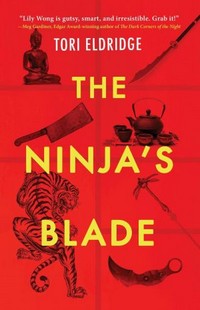
The Ninja’s Blade by Tori Eldridge: The Ninja Daughter is Back in a Darker Thriller

The Ninja’s Blade

The Ninja’s Blade

by Tori Eldridge
Series: Lily Wong, #2

Paperback, 317 pg.
Agora Books, 2020

Read: August 4, 2021
Grab a copy from your local indie bookstore!

What’s The Ninja’s Blade About?

I have abandoned this post five times since early August because of this section—I’ve written three that were too detailed (and therefore too long to read) and two that were too vague (and therefore too, well, vague to be any good). So, fine. I give up. Here’s what’s on Eldridge’s website about it:

In THE NINJA’S BLADE, Lily Wong―a Chinese-Norwegian modern-day ninja―has more trouble than she was bargaining for when controlling grandparents arrive in Los Angeles from Hong Kong at the same time she goes undercover in the dangerous world of youth sex trafficking. As she hunts for a kidnapped prostitution victim, a missing high school girl, and a sociopathic trafficker, the surviving members of a murderous street gang hunt for her.
Life would be easier if Lily knew who to trust. But when victims are villains, villains are victims, and even family is plotting against her, easy is not an option. All Lily can do is follow the trail wherever it leads: through a high school campus polarized by racial tension or the secret back rooms of a barber/tattoo/brothel or the soul-crushing stretch of Long Beach Boulevard known as The Blade.
She relies on her ninja skills to deceive and infiltrate, rescue and kill―whatever is necessary to free the girls from their literal and figurative slavery. If only those same skills could keep Lily’s conniving grandparents from hijacking her future.

Words Matter

I could not stop thinking about Robert B. Parker’s Ceremony/Taming a Seahorse/ Hundred-Dollar Baby and any number of similar books by him (and others) featuring P.I.s looking for particular prostitutes. Many of these I’d considered treating the women in question with sensitivity and respect. But I’m starting to think they could’ve done better.

Of course, whatever social workers the P.I.s encountered weren’t the same people Lily encountered. Lily was told in no uncertain terms that it’s not child/teen prostitution, but commercial sexual exploitation, and if she wanted to get anywhere with that agency, she’d adjust her language. Not only is it a language thing—but it reframes the activity. And the criminal culpability of those involved.

You can see its effect on Lily from that point on in the novel, if anything it probably made her more determined.

Lily’s Personal Life

Ask Peter Parker, it’s hard being a vigilante without your family finding out. The Ninja Daughter showed Lily’s skill in keeping that from her family, but it wasn’t easy. Add in trying to date—something Lily hasn’t successfully done since the night her sister died—and you’ve yet another bit of trouble.

Lily finds herself liking Daniel, but can’t make herself make time for him. Until her grandparents intervene, and suddenly, there’s one more plate for Lily to keep spinning.

But the fact that her grandparents are involved in her life is the big thing—they’ve come to visit from Hong Kong to check up on their business. Lily’s mother runs the LA/American branch of the family’s corporation.

Their presence changes—at least temporarily—the dynamic between Lily and her mother. Instead of the fairly antagonistic relationship we saw last time, there’s an alliance of sorts. Lily becomes as much of the supportive, obedient daughter as she can. Her mother’s stress level is through the roof, feeling like every decision she makes and has made—personal and professional—is being weighed and found wanting. So Lily does what she can to take the pressure off—she spends time with them, allows them to meddle in her life (rather than her mom’s), and so on.

I really appreciated this—mutual affection, familial bonds, and so on were present in The Ninja Daughter, but we got to see them in action here. It keeps Ma from being merely an obstacle to Lily’s mission and turns her into a character (that is frequently an inadvertent obstacle to Lily’s mission, sure—but that’s different).

The Fallout From The Ninja Daughter

Lily’s character is defined by her reaction to the trauma and guilt over her sister’s murder. But in The Ninja’s Blade, she has a fresh batch of trauma to deal with. The events of The Ninja Daughter have done some significant damage to her psyche (to paint with a broad brush, Eldridge does a better, and more subtle job of depicting it—don’t let my need for pithiness fool you).

She doubts herself, second-guesses her choices, makes costly errors, and this causes problems for her in the midst of battle (literal or figurative)—and for what Lily’s trying to do, this could be fatal. It’s also making things difficult for her outside of her work.

It’s not like she can seek out a counselor or anything—it’s not like she can tell a lot of people what caused the trauma. So it’s up to Lily—with some help from Stan and Aleisha at the shelter—to work through this.

So, what did I think about The Ninja’s Blade?

Eldridge here takes what was a strong adventure series with heart and a social conscience and improves it here—adding psychological depth, more layers to the protagonist, developing the characters of those around her, and showing that there are real risks and consequences for the protagonist. This isn’t a Reacher-like series, things that happen to Lily matter and will have a lasting impact on the character.

I really enjoyed this book—there’s enough humor and action to make sure this stays entertaining, and the darkness and complexity of the world add weightiness to the novel so that it doesn’t become a disposable thriller.

I strongly recommend this one to you and think it would serve alright as a jumping-on point, but I think you’d be better off jumping back to the prior novel. But starting with this one and then backtracking would work, too. Just do yourself a favor and pick these up.

20 Books of Summer '21

This post contains an affiliate link. If you purchase from it, I will get a small commission at no additional cost to you. As always, opinions are my own.
PUB DAY REPOST: It’s a Wonderful Woof by Spencer Quinn: Chet’s on the Search for a Missing PI

It's a Wonderful Woof

It’s a Wonderful Woof

by Spencer Quinn
Series: Chet and Bernie, #12

eARC, 272 pg.
Forge Books, 2021

Read: September 13-14, 2021
Grab a copy from your local indie bookstore!

What’s It’s a Wonderful Woof About?

Someone comes to the Little Detective Agency to hire them, but it’s just not the kind of case that calls for Bernie’s strengths, but he knows just the right guy for the job, Victor Klovsky. The two had recently run into each other on different cases, and Bernie’s been reminded that Victor isn’t cut out for the more, shall we say, physically demanding cases—but he’s great at the stuff you can do behind a desk, which is what this case calls for.

Also, I think Bernie feels sorry for the guy and thinks he can do him a favor by sending work his way to make up for the way things went during that recent encounter.

You know what they say about roads and best intentions, though. It’s not long before Victor has gone missing—a very concerned mother (who has less confidence in his abilities than Bernie does) hires Chet and Bernie to find him. It turns out that not only Victor is missing, but his client is, too.

There’s nothing about this case that suggests a cushy desk job anymore—a strong sense of violence surrounds the disappearances—and other elements of the case as it develops. Can Chet and Bernie sniff out what happened to them, and what the relationship is between these disappearances, Mary and Joseph fleeing to Egypt, Caravaggio, and an old Spanish mission?

Relationship Issues

This is news to no one that has read one book in this series, but Bernie’s not good at relationships. Expressing himself to a woman he cares about is not a skill he possesses (I’m sure Chet would differ with me here, but I stand by it).

His current relationship is still pretty new—and seems to be going pretty well. But that’s all stuff that happened since Tender is the Bite. It doesn’t take him too long to mess things up with Weatherly. Both his reaction to this throughout the novel and the way it started felt different than the way he’d put his foot into it with Suzi (but not completely). The relationships between Bernie and the two women are notably different—which is a relief, too often in situations like this it feels like a duplicate of a previous romance.

A Very Bernie Christmas?

It would be very easy to forget that this is a Christmas/Holiday Themed novel—I did more than once, and I was expressly looking to see how Quinn dealt with it.

However, when the holidays do come up? It’s great. There’s a Hannukah scene that I just loved, and…well there are a couple of great other scenes about the holidays, but my no-spoiler policy stops me from getting into those.

Language Choice

This isn’t a big deal—I don’t want to make a proverbial mountain out of anything. But it struck me that Bernie’s language is a bit stronger than usual. I don’t want to take the time and do word counts or anything—I’m lazy and I’m not going to buy e-copies just to document this point. This book is still PG-13, but it jumped out at me and struck me as different—and I’m curious about it.

So, what did I think about It’s a Wonderful Woof?

I had a blast with this—there was a time 5 or 6 books ago, that my interest in the series waned a bit—I still enjoyed the books, but they didn’t grab me the way the initial novels did. That’s gone, and I have to wonder what was wrong with me—Quinn and Chet are as fresh and entertaining now as they were in Dog Gone It.

There’s heart, there’s excitement, there’s humor, there’s the devotion that only a dog can have for their human, and you even can even learn a little bit about art history. Throw in a little holiday magic and you’ve got yourself another winner in this series.

Go read this—which readers of this series probably don’t need me to say. But if you haven’t read any before, this functions well enough as a jumping-on point, just be prepared to make some time for the previous 11 novels. You’re going to want to read them all.

Disclaimer: I received this eARC from Macmillan-Tor/Forge via NetGalley in exchange for this post—thanks to both for this.


4 Stars

This post contains an affiliate link. If you purchase from it, I will get a small commission at no additional cost to you. As always, opinions are my own.
Pub Day Repost: Best in Snow by David Rosenfelt: Tara Digs Up Trouble for Andy

Best in Snow

Best in Snow

by David Rosenfelt
Series: Andy Carpenter, #24

eARC, 320 pg.
Minotaur Books, 2021

Read: September 10, 2021
Grab a copy from your local indie bookstore!

What’s Best in Snow About?

After a snowstorm dumps a healthy amount of snow on the ground, Andy takes his dogs for a walk. Tara, his beloved golden retriever goes digging in that snow and uncovers a body. Not just any body, it turns out, but the mayor.

The evidence points to a reporter that used to work for Andy’s friend, Vince, at his paper. Despite this scandal that he kicked off last year centering on the mayor, Vince believes him and supports him the best he can. One way Vince supports the reporter is that he gets Andy to defend him.

Also, instead of Andy taking in the suspect’s dog for the duration of the trial, Vince does it this time. Vince is not a dog person—he’s not much of a people person, either, so readers can imagine how his housing the dog will go.

Comfort Food

I’m pretty sure I’ve said this (or something like it) before—it’s hard to track in a 24 book series just what I’ve said. But these Andy Carpenter books literary comfort food. You know what you’re going to get, you know you like it, and it just makes you feel good.

For example, you know when it gets to the part about jury deliberation, Andy’s going to say and do a few things. And it’s just as enjoyable to see him say that in this book as it was 20+ books ago.

That said? Rosenfelt managed to surprise me a couple of times and did some stuff in the courtroom that I haven’t seen from him before.

Holiday Content

In the last few years that Rosenfelt has been doing these Christmas-y themed books, I’ve always been mildly surprised at how low little “Holiday Content” there is in the book. This one seemed to be the lightest on Christmas/New Year’s material.

Yeah, the weather and dates help ground the action and show how fast things are moving in terms of the trial. But there’s not much more to it than that. Basically, this is just an excuse to get another Andy Carpenter book this year. And I’m fine with that.

So, what did I think about Best in Snow?

I really enjoyed this—the case was a good puzzle. The courtroom antics and strategies were up to Rosenfelt’s usual standards (maybe a little better than some). The little bit of action that crept in (mostly involving Marcus) was great, too.

The members of Andy’s team were as entertaining as usual and, of course, so were the dogs (including Vince’s new charge).

If you’re a long-time reader of the series, you know what you’re going to get here—with a couple of surprises. If you haven’t tried this series yet, you really should—this is as good a place as any. But once you start, you’ll have a hard time stopping. That’s not a warning, that’s an assurance.

Disclaimer: I received this eARC from St. Martin’s Press via NetGalley in exchange for this post—thanks to both for this.


4 Stars

This post contains an affiliate link. If you purchase from it, I will get a small commission at no additional cost to you. As always, opinions are my own.

Page 27 of 88

Powered by WordPress & Theme by Anders Norén
