Tag: 4 Stars Page 31 of 88

Creature Feature (Audiobook) by Steven Paul Leiva, Seamus Dever, and Juliana Dever ★ ★ ★ ★ A 1950s Monster Movie Comes to Life in a 1960s Midwest Town

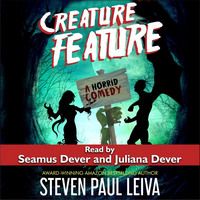
Creature Feature Tour Banner

Creature Feature

Creature Feature

by Steven Paul Leiva, Narrated by Seamus Dever and Juliana Dever

Unabridged Audiobook, 4 hrs. 23 min.
2021

Read: June 8, 2021

What’s Creature Feature About?

It’s the early 1960s and Kathy Anderson has put her aspirations of Broadway stardom on hold in favor of a steady paycheck for a few years. She’s spent those years as Vivacia, the Vampire Woman—Chicago’s version of Vampira/Elvira, Mistress of the Dark—hosting monster movies on a local television station. But she’s had enough of that, it’s time to get back to being a serious actress. She quits and plans to head to New York and get back to the career she dreamed of.

But first, she heads home to Placidville. She plans on spending some time with her parents and the people she grew up around. When she arrives, her parents are acting a bit strange—actually, everyone (literally everyone) in town is acting strange. And everyone from her parents, to her parents’ friends, to random people she meets on the street, to the town’s hunky new mayor are major Vivacia fans. It’s almost too much for Kathy—but what puts her over the edge is her best friend’s dorky brother who keeps showing up to insist that something is wrong, and only he can help her see it.

The next thing that Kathy knows, she’s in the middle of something reminiscent of one of the movies from Vivacia’s House of Horrors, struggling to survive and hopefully saving the world as we know it.

Judging by the official description, that’s really all that I feel free to say—I had a few other notes along those lines, but…I don’t want to give anything else away. That’s enough of the setup, though, to pique your interest, I think. The tone is a tricky one—the threat is real, Kathy is in serious trouble—but the whole thing is told in a comedic tone. You’re supposed to find it silly while you’re hoping that Kathy susses out what’s going on, you chuckle when she’s running for her life.

The Audiobook Experience

As this post is part of the Audiobook tour, I should focus on that for a little bit. Which is great—because this is a great match of material and medium. I’d have no problem believing that this was written as an audiobook exclusively, it’s perfectly fitting.

A lot of that is due to Seamus Dever’s narration. He hits the tone just right—he’s close to going over-the-top without ever slipping into parody. It’s clearly funny material, but he plays it straight. Still, he sounds like he’s having fun—and it’s hard not to join in. And Juliana Dever nails the character of Kathy (and her alter ego).

At the same time, the approach to this audiobook still feels odd. Seamus handles almost all the voice duties—narration and every character’s dialogue that isn’t Kathy/Vivacia. Juliana handles only Kathy/Vivacia’s dialogue (and announces the chapters). I haven’t come across this way of dividing the duties before and it struck me as odd. But—after the first couple of minutes I got used to it, and it works.

I’m not sure that the special effects added much to the experience—maybe even detracted from it. In particular, the reverb/echo effect added to Juliana’s voice when she was reading Kathy’s thoughts, just got on my nerves. It’s only done a few times and doesn’t hurt things much, but it was distracting.

So, what did I think about Creature Feature?

I think maybe the easiest way to think about this is as a short novel written by Ed Wood. But where Wood would be earnest and sincere in telling this story, Leiva is going for laughs. It’s a Classic B-Movie Monster story but told in a way where the goofiness is intentional and designed for laughs, not as a scare that misses its mark.

The characters are probably a bit more fleshed out than the genre requires, the setting is great, the execution is really well done—both with the text, but especially in audio production. I think if I’d read the print version, I’d be handing out 3 Stars for this, but the Devers took this to another level.

In the end, either version is going to keep you entertained for a few hours and make you curious about other things that Leiva has written. Give this one a shot folks, I think you’ll be glad you did.


4 Stars

My thanks to Let’s Talk Promotions and Psst…Promotions for the invitation to participate in this tour and the materials (including a copy of the audiobook) they provided.

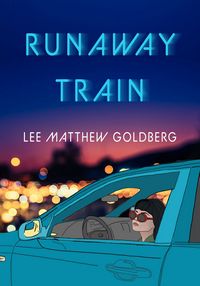
Runaway Train by Lee Matthew Goldberg: It’s Just Easier than Dealing with the Pain

Runaway Train

Runaway Train

by Lee Matthew Goldberg
Series: Runaway Train, #1

eARC, 296 pg.
Wise Wolf Books, 2021

Read: May 31-June 1, 2021
Grab a copy from your local indie bookstore!

What’s Runaway Train About?

Following the shocking death of her sister at 17 (from a brain aneurysm), sixteen-year-old Nico is spiraling out of control. Never the best student, and far more interested in being everything her high-achieving, popular sister wasn’t, Nico’s focus is on getting high, listening to as much grunge as she can, and fantasizing about meeting Kurt Cobain (who would fall for her, leave Courtney, and the rest would be history).

When things at home—which haven’t been good for a long time—take a turn for the worse, Nico is at the end of her rope and doesn’t know what to do. Her best friends talk her into leaving home and hitting the road, to go cross things off her bucket list before her own aneurysm cuts her life tragically short. Although they’d decided to run away together, Winter and Jeremy leave her in the lurch—Winter tells her that she needs this trip to hit rock bottom so she can pick up the pieces left by Kristen’s death (although I think this is largely a lie, and Winter just doesn’t have the courage to go through with it, but this sure sounds good).

So she packs up her teal blue Hyundai Excel with some essentials, a lot of batteries, her Walkman, and her father’s gas card and takes a trip up the California coast on the way up to Seattle, to see what the grunge scene is “really like,” cross some things off that bucket list, and hopefully get the chance to tell Cobain what his songs have meant to her.

Here’s where I get some egg on my face—I know Goldberg’s primarily a thriller writer, and assumed* that this would be one, too. That shortly after Nico left L.A. something would happen and this would become a thriller, with Nico doing all she could to stay alive and/or evade the police while on the run from something/someone/multiple someones. But no, that’s it. It’s the story of a girl living in her Hyundai trying to put the pieces of herself together.

* and you know what happens when you assume…

90s Referencepalooza

The first sentence of the book includes the date October 31, 1993. But then, as if Goldberg isn’t sure that his readers will understand that he means it, he hits you over and over and over with references to the early 1990s. There are over a dozen references in the first 3% of the book. And there are multiple stretches of the book that are like it. They eventually taper off, but it takes a while before Goldberg seems to think that he’s established the setting.

Now I enjoyed almost every one of the references and thought they really grounded things. But it also felt like overkill. Like he didn’t trust his audience to remember that these events took place in 1993 and 1994. Although it’s just as likely, maybe more likely, that Goldberg was having so much fun with them that he didn’t want to cut any of the references. And I get that, I really do. But I think it might have carried more punch if he’d been a little less effusive with them.

Embracing the Ambiguity, Pt. 2

A couple of months back, I wrote about a book that included elements that could be supernatural or they could be an expression of the protagonist’s PTSD. I mentioned at the time how that writer leaving it up to the reader to decide was a great idea, how it’s more effective that we don’t really know which it is.

And here I’m repeating myself—there’s something that happens to Nico several times in the book that could be a product of her subconscious or could be a supernatural event. I initially ascribed it to a psychological phenomenon—trauma, or grief, or something. I think it’s written so that you think it’s a physiological thing. But at some point, I joked to myself, “Unless, of course, it is a ghost.” And then I couldn’t talk myself out of the joke—it really, really could be a ghost. Or it could be a manifestation of Nico’s subconscious. I could defend either position from the text, I think. And I really liked that.

So, what did I think about Runaway Train?

I really got swept up in this story and with Nico’s journey. How does your heart not go out to a girl in that much pain? A dead sister, parents who aren’t dealing well with her, friends (more important to you than family at this stage of life) basically shoving her out the door on her own. and a strong sense of your own impending death? She doesn’t just hit rock bottom, she ultimately throws herself at it. But also, there’s an element of envy for the reader—you wanted to have the guts/folly to do something like Nico does at that age, and even now (however much older you are than her), you’d like to have the ability to do that.

Put those two elements together? How do you not have a warm spot in your heart for this book?

Yes, it’s clearly fiction. Yes, it’s heightened and only semi-plausible—both the high points and the low. But…it feels real. I can absolutely believe that I could sit down with Nico or Evan (since he’s from this area) today over a cup of coffee and hear them tell me about this time in their life.

I was more than a little surprised to see that there’s going to be a sequel to this. Typically, coming-of-age novels are one-and-done. But I’m on board—I want to see what the next chapter is for Nico. I can’t imagine all her problems were worked through in this book, and as much progress as she made (and looks to continue making), there’s no way that the work is done and I’m looking forward to seeing her continue it.

I absolutely recommend this to you—like its central character and her musical idol, Runaway Train is occasionally a mess, but there’s a heart to it. There’s an ineffable quality that’s going to make you want to pay attention to it and see how it can shine.

Disclaimer: I received this novel from the author in exchange for my honest opinion.


4 Stars

This post contains an affiliate link. If you purchase from it, I will get a small commission at no additional cost to you. As always, opinions are my own.

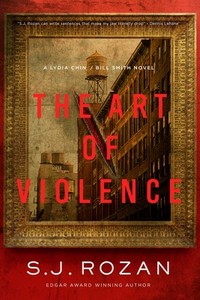
The Art of Violence by S. J. Rozan: Bill Smith is Hired to Prove His Client IS a Murderer

The Art of Violence

The Art of Violence

by S. J. Rozan
Series: Lydia Chin & Bill Smith, #13

Hardcover, 275 pg.
Pegasus Crime, 2020

Read: April 7-8, 2021
Grab a copy from your local indie bookstore!

… he said, “Aren’t you going to tell me I’m not the serial killer type?”

“I don’t know that.”

“I guess in some weird way that’s a compliment.”

“It’s not. Why did you come here, Sam? Anyone else, I might think he was trying to impress me, but not you.”

“I’m not the type?” A sly smile.

“I hope you didn’t come for help leaving town, laying low, something like that. If you killed those women, you know I’m going to have to turn you in.”

“Good luck.”

“I have the guns,” I reminded him.

“You won’t need them but they won’t help. I already tried it.”

“Tried what?”

“Turning myself in. The detective told me to get lost. She said I wasn’t the type.

What’s The Art of Violence About?

Five years ago, Sam Tabor was sentenced to prison following a homicide. Bill Smith worked for Sam’s lawyer during the case, and was convinced Sam should’ve been put in a treatment center instead of prison—but Sam refused.

Now that he’s been “discovered” as an important artist, several agents and arts worked to get him released from prison. That happened a few weeks ago, and now two women have been killed. Sam’s convinced that he’s the killer, although he doesn’t remember killing these women—or even encountering them. He hires BIll to prove that he did commit the murders, so he can be sent back to prison for life where he can’t hurt anyone. Bill’s skeptical (as is the investigating detective) about Sam’s guilt, but takes the case so he can make sure Sam’s treated right and that his fears are investigated correctly.

So instead of looking for evidence to exonerate Sam, Bill’s looking for things to implicate him (technically, Bill’s still looking for ways to exonerate him, too). This is a very strange reason to hire a PI, and I loved this premise.

PI/Client Relations

Most people in Sam’s life treat him as two things—a murderer with psychological issues and an artistic genius (with shades of a cash cow). His brother and sister-in-law see him as a burden/obligation as well as a murderer with psychological issues. The police are looking for an excuse to lock him up again, hopefully for forever this time.

Bill Smith (and later, Lydia), on the other hand, treats him as a person. He doesn’t dance around Sam’s past, but Bill has always figured he’d paid a dearer price for that than warranted. He doesn’t want Sam to be railroaded by a vengeful detective or his own guilt. He certainly has no ideas about taking advantage of Sam’s wealth, status, or fame. He simply wants to find out what happened to these women.

In this light, Bill reminded me of Elvis Cole with Peter Alan Nelsen and Spenser with the various sports stars he’s worked for or Jill Joyce. They’re clients first and foremost, people who deserve to be treated right—and being celebrities is so far down the list of things they care about, that it almost doesn’t matter. Bill stands in good company there, and something about that way of dealing with a VIP has always appealed to me.

The Role of Art

Lydia and Bill find themselves involved in a crime involving the art world yet again, I can’t think of another detective that spends as much time in this world as these two. Typically, novels focusing on artists, galleries, and so on don’t do much for me. But the way this pair brushes up against this world, not only do I not mind, I find it appealing. I can see why Rozan or other authors find this world appealing.

One of Sam’s few friends in this particular case is a photographer. As hard as it is to give the flavor or an impression of a painting in prose, it seems more difficult to capture a photograph (aside from saying “it was a photo of X”), and Rozan doesn’t spend a lot of time describing individual photographs but she does a great job on the subject and tone of them, instead. I’m pretty glad that there were no pictures included I’m not sure I could’ve taken it (the novel’s title gives a hint about the direction of the photos). A picture may be worth a thousand words, but Rozan doesn’t need that many to get the reader to have the reaction she needs.

By now, it was half past eight. Traffic choked the streets, and pedestrians wove complex patterns on the sidewalks. All traces of last night’s mist had burned away under the April sun. The slanting whiteness of the light, the thin freshness of the day, dazzled me.

Lydia’s suggested any number of times that I consider changing my ways, getting up earlier, taking this in more often. She thinks it’s laziness and old habs that keep me from it. But she’s wrong. This unsullied light, this bright vision, they’re beautiful, but they’re false. They paint over the truth. They promise something they can’t deliver. It’s not until the day gets older, wearier, that it stops making the effort to lie.

The Subtle Slow Burn

Rozan says so little about the non-P. I. relationship between Bill and Lydia, and yet says so much. It’s been clear how Bill has felt about Lydia since the first book in the series, but it’s been a little harder to read Lydia. And Rozan hasn’t been as forthcoming as other mystery novelists when it comes to that sort of thing—and by other, I mean “every other one I can think of.” The Lydia/Bill romance arc is definitely a “less is more” kind of thing. Which is pretty much how Lydia would prefer it, I think.

I’d really prefer that she was less circumspect about it, but I really appreciate her approach to it. Which seems like a contradiction, but it’s not. If I were calling the shots, we’d get a lot more detail about what’s going on between them—and how long that’s been the case. That said, the way that Rozan plays with the audience’s desires/expectations, and instead just gives the reader hints, winks, and nudges work so well. Not just because it is so clearly what Lydia would like and leaves it all to the reader to piece things together. Yet, there have been developments in the relationship and we learn a lot about it (at least by Ronzan’s standards) in this book.

Yet again, the angel on my right shoulder told me to call Grimaldi, and the guy on the other side said I’d get more accomplished on my own. The right-side guy wanted to know if this was about getting things accomplished, or if it was personal. The left-side guy told him to guess.

So, what did I think about The Art of Violence?

The fact that this is the thirteenth book in the series that I’ve read, you probably have a pretty good idea of what I was thinking going in—I fully expected to like this one and I did.

First off, it’s from Bill’s perspective this time, and those usually feel a little different, and we get different details reported than we would have were the shoe on the other foot. I always enjoy the bouncing back and forth between the two narrators. Particularly if the police are involved, Bill has a strange relationship with the police, and it’s always good to see.

There’s a good puzzle to chew on here*, while watching Bill make a nuisance of himself with the people in Sam’s life who are convinced they’re far too good to deal with a P.I. Lydia’s around to smooth things over a bit, but not enough. It’s a dynamic I don’t imagine I’ll get tired of seeing. The (too few) scenes where it’s just Bill and Lydia talking to each other, are again, the highlight of the novel—I’ve said it before, I’ll say it again I don’t care what these two are talking about I’ll gladly read it. The Art of Violence would make a good jumping-on point to this series (almost all of them would be, come to think of it).

* Okay, I pegged the guilty party pretty early on, but not all the whys and hows involved. This is about the journey Bill and Lydia take to get the answers, more than it is the puzzle. Either way, the book scored pretty high on those).

These are characters you like to see in action, with a client who’s more interesting than most of those in a P.I. novel. you get a couple of good surprises out of Lydia’s mom, too. There’s really a lot to commend this book, as is to be expected from this series. You should give it a try.


4 Stars

2021 Library Love Challenge

This post contains an affiliate link. If you purchase from it, I will get a small commission at no additional cost to you. As always, opinions are my own.


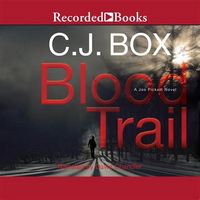
Blood Trail (Audiobook) by C. J. Box, David Chandler: Who Hunts the Hunters?

Blood Trail

Blood Trail

by C. J. Box, David Chandler (Narrator)
Series: Joe Pickett, #8

Unabridged Audiobook, 9 hrs, 5 mins.
Recorded Books, 2008

Read: February 10-12, 2021
Grab a copy from your local indie bookstore!

What’s Blood Trail About?

Since Governor Rulon re-hired Joe Pickett and made him sort of a Game Warden-at-Large, his life has improved—he and Marybeth have their own home, no longer living in State housing, or at his father-in-law’s. Nor is he really as subject to the whims of Randy Pope, his director. But there’s a price to be paid for this: he’s pretty much at Rulon’s beck and call.

This time, thankfully, he’s called to his former territory—a hunter has been found dead. It’s the beginning of Elk Season, so it’s not that surprising. But…this isn’t your typical dead hunter. This man has been shot and field dressed like an elk. Joe’s garnered a reputation for stumbling into a solution for things like this, and Rulon needs that quickly—people are getting antsy about the killings and pressure is mounting to cancel Elk Season (which would have horrible consequences on Wyoming’s economy). Joe’s been named to a task force with the FBI, and the local sheriff. Not only are they out to preserve hunting season, but they also need to head off a mounting anti-hunting protest movement that is taking advantage of this situation.

Randy Pope decides that this is important enough that he comes to supervise Joe personally—and takes an oddly active and proactive role in fieldwork (which no one has ever accused him of being fit for). I don’t know about anyone else who reads this series, but there isn’t a time that Randy Pope has been around when I haven’t wanted Joe to punch him in the nose (or Marybeth, or Sheridan even), and that’s taken to the nth degree for most of this book.

So not only does Joe have to find a killer (not really his job, ubt he seems good at it) for political and social reasons, he has to put up with antagonism from local law enforcement who resent his role, get micromanaged by an officious twerp who is even less suited for this than he is, and he ends up having to deal with two individuals from his past that he’d rather expected never to have to deal with again over the course of the investigation. I’m not going to identify these people, but neither Joe or Marybeth are prepared to have them in their lives again, frankly, I wasn’t ready either.

We Should Talk About Nate

I get into a spoiler in a vague way here. Feel free to skip to the next header.

For various and sundry spoilery reasons, Joe decides that he needs Nate Romanowski’s tracking help. Now, Nate’s been in FBI custody for a few months, ever since the FBI double-crossed Joe at the end of Free Fire. Given the urgent nature of things, Rulon is able to finagle a release into Joe’s custody.

And then Nate ditches Joe for days. Joe, the good friend, covers for him (he’s also covering for himself and his own ability to maintain custody). Sure, he ultimately comes back and pitches in. But it’s pretty clear he didn’t need that much time to do his thing—I get that Nate has his own way of working and that Nate isn’t that terribly concerned with people who aren’t him (what does he care if someone’s killing hunters?)—but he should care about his friend and the deal that got him out of custody, right?

I lost a lot of sympathy for Nate here. And a good deal for Joe, too, later in the book when it comes to Nate.

A Low-Stakes Antagonist

Now that Joe lives in town, in a normal house with a yard and no need to consult a government budget officer for upkeep on his home, it falls to Joe to take care of things. He has a neighbor now (I forget his name, one of the hazards of audiobooks is that I can’t look it up easily). This man is retired and is far too concerned with his own yard and upkeep, and carries that over to Joe’s.

We don’t spend a lot of time with him, but it’s easy to see that he’s a burr in Joe’s side—a constant problem, a constant annoyance. Sure, Joe’s off working for the governor and trying to stop a killer, but surely he could take the time to mow his lawn, like a decent citizen.

This book needed a little lightness, and this crank delivers it.

A Word About the Narration

At this point, I really don’t know what to say about David Chandler, he’s great at this.

However, ,I have one thing to say. For most of the book, I assumed the killer was one of two people. And despite the fact that we get the killer’s POV frequently, it was still pretty unclear which one of the two it was (assuming I was right). Until about halfway through in one scene, Chandler makes 1 choice when he reads one line. And we “hear” the character in a voice Chandler would use for that character, not just the generic Killer’s POV voice he’d been using throughout. And then I knew exactly who it was.

I understand why he made that choice. But, man. It ruined things a little bit for me.

So, what did I think about Blood Trail?

This was, hands down, my favorite entry in the series. The tension, the huge character events, the motive for the crime, and the way it ended…I can’t explain all my reasoning without ruining the novel.

But man…this is the standard I’ll be judging books in this series by. Is it going to be that impactful for new readers? No, but it would work as a jumping-on point if you’re not in the mood to read the seven previous books.

Blood Trail is a great entry in this solid series, with entries like this, it’s easy to see why it’s lasted for twenty-one (so far) books. Check it out.


4 Stars

2021 Library Love Challenge 2021 Audiobook Challenge

This post contains an affiliate link. If you purchase from it, I will get a small commission at no additional cost to you. As always, opinions are my own.

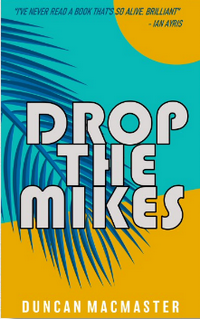
Drop the Mikes by Duncan MacMaster: The Scrawny, Geeky, Jessica Fletcher-esque Kirby Baxter find Trouble in a Caribbean Paradise

Drop the Mikes

Drop the Mikes

by Duncan MacMaster
Series: Kirby Baxter, #3

Paperback, 243 pg.
Fahrenheit Press, 2016

Read: March 29-30, 2021

“Mathilda, my wife, says that archaeology runs in your family.”

“My parents are archaeologists,” said Baxter with a nod. “They teach, and every summer they go to digs in Europe or the Middle East.”

“They’re pretty respected,” said West, “what do they think about their son the cartoonist, turned detective?”

“I don’t think they ever fully understood what I do,”said Baxter. “In fact, most days, I don’t fully understand what I do.”

A Little Bit about Kirby Baxter

Before I get into this book, let me give a quick run-down of the series. Kirby Baxter is a comic book artist/writer. A few years ago, he came into a lot of money and took some time for himself in Europe. Kirby has the kind of eye for observation and powers of deduction comparable to Shawn Spencer or Adrian Monk (you could include several incarnations of Holmes, etc., too—but Shawn and Monk are closer in tone to this series). While in Europe, he found himself in situations where he could use those gifts to help solve some crimes—this got him a bodyguard, valet, assistant, or whatever, named Gustav, and both of them were made official Interpol consultants.

His talent(?) for being in the general vicinity of crimes continued once he got back to the States and he’s ended up helping the police in various cities with murders and other crimes. He’s frequently helped in this by the aforementioned Gustav; his girlfriend, Molly; her gossip-blogger cousin, Shelly; and his friend and colorist, Mitch Mandelbaum.

What’s Drop the Mikes About?

As a thanks for a bit of deduction that saved a New York Hotel a lot of money and even more bad publicity, Kirby and his friends (Molly Mitch, Gustav and Gustav’s girlfriend, Miriam) were given the opportunity to spend two weeks in some villas at a resort that’s about to open on a Caribbean island. Sounds like a fun little getaway, right?

Kirby Baxter doesn’t get those anymore. But we’ll get to that in a minute.

At the same time they arrive on the island, so do many other people—these people are largely young, with a lot of money, and/or are social media “influencers.” They’re on the island of a big luxury music festival to help promote a new product from a company called HÿpStar. Except the festival didn’t have any musicians (their checks bounced), or food (same), or decent places for the attendees to stay (you probably have guessed why by now).*

* If you’re thinking, this sounds a lot like Fyre Festival, give yourself a pat on the back.

Before the situation can totally deteriorate with the festival, the right-hand man to the organizer is found murdered. So you have thousands of disgruntled festival-goers, all with a reason to be angry with the victim, with almost every one of them trying to get off the island as fast as possible. It’s a bit much for the small island police force—thankfully, there’s a renowned detective in the neighborhood.

So Kirby and his friends have their vacation cut short.

The Hÿp Festival

I think I was largely offline for whatever reason about the time the whole Fyre Festival thing happened, and I missed most of the early hubbub, and then when I started to become aware of it, I didn’t exert a whole lot of effort into it. I’ve picked up a thing or two in the years since then, but that’s about it. So while I’d like to say something about the way that MacMaster satirizes The Fyre Festival, but I can’t. Seems outlandish and crooked enough.

But I can say that some of the more outlandish characters are hilariously drawn—like the influencer who cannot help speaking in text-speak acronyms, like “Double-you-tee-eff” or “Ess-em-aitch.” I appreciated MacMaster not using the acronyms themselves but going the extra mile and spelling out the letters, it added just enough to make her ridiculously charming. Carting around a ceramic Buddha statue and calling it her “Good luck Gandhi” was borderline-too-much, but I found it amusing every time it came up, so I’m not going to criticize it.

Too Much Going On

The two earlier Kirby Baxter books had a lot going on—several characters, each with their own arcs intertwined with the others—and that’s repeated here as expected. But this time it felt like there were too many other characters and their arcs running around—it wasn’t confusing or anything (we’ve all seen that before, this isn’t one for that list), but to do an adequate job for each of those, MacMaster had to use Kirby less.

But also, his friends—his self-labeled Scooby Gang—are running around doing their own thing while he’s looking into the murder (some are acting independently to help, others are working along with him), and that ends up taking time away from Kirby getting to shine. Sure, (to refer to that other Scooby Gang) we all know Fred, Velma, and Daphne have to look for clues on their own—either paired up or on their own—but the viewers came to see Scooby and Shaggy (possibly Scrappy-Do, too) and the more time we spend with Fred and his ascot doing things the less we see Scooby and Shaggy and the less entertaining the episode is. The same applies here. Molly’s great doing her own thing. Ditto for Miriam—and even Mitch is pretty darn amusing and got to do things we don’t normally associate with him. I’m all in favor of it, but Kirby was off-screen too much of this book.

A Small Gift for Long-Time MacMaster Fans

Readers of MacMaster’s other series, the Jake Mooney books, might recognize this particular part of the Caribbean, as it was the setting for Hack (and if you don’t recognize it, that’s okay, a couple of characters will make sure you get the connection).

It’s one of those things that won’t bother you if you don’t get the references as you read, but if you do, you’ll appreciate the ties between the two.

Now, what are the odds we can get Jake and Kirby working the same mystery from different angles?

Baxter had long thought that the adventures that afflicted his life the last few years had immunized him from ever feeling shocked, or surprised. It was one of the very rare instances where he was very, very wrong.

So, what did I think about Drop the Mikes?

Drop the Mikes is 243 pages of pure enjoyment. It’s that simple. You have Kirby being geeky and almost supernaturally-clever self. You get Molly and Gustav doing their usual thing. Mitch gets to be repulsive yet endearing—and even a little heroic, and we get to meet Miranda, the librarian who could be an action star if she really wanted to.

Throw in a handful or two of whacky characters, the disaster of the Hÿp Festival, a couple of murders, financial hijinks, another couple of crimes that really have nothing to do with the Festival outside of location—and you just can’t stop turning the pages to see what MacMaster has left up his sleeve.

These books are like ice cream or pizza—even if the one you’re eating isn’t as good as others you’ve had, they’re still ice cream or pizza, and you’d rather be eating them than just about anything else. I strongly recommend this book—and the rest in the series, too—well, anything with Duncan MacMaster’s name on it. I can’t think of another book this year that I’ve had as much fun reading as this one. And I bet there won’t be many in the 7+ months yet to come.


4 Stars

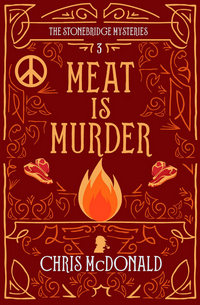
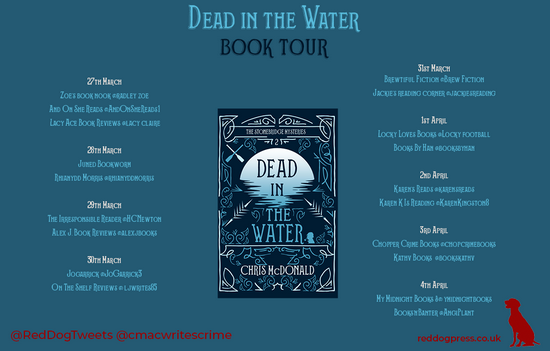
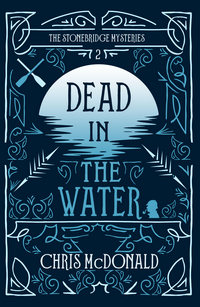
Dead in the Water by Chris McDonald: These Amateur Detectives Start to Look a Little Less Amateur

Dead in the Water

Dead in the Water

by Chris McDonald
Series: The Stonebridge Mysteries, #2

eARC, 105 pg.
Red Dog Press, 2021

Read: March 25, 2021

What’s Dead in the Water About?

Rivalries between small towns are nothing new, and when they can find their focus in a small—and relatively meaningless—athletic competition, they can take on an intensity that belies their significance. Add a cash award on top of a long-standing rivalry? All bets are off. That’s exactly what happened between the neighboring towns of Stonebridge and Meadowfield with the annual Stonebridge Regatta.

Things get a little tenser this particular year when the captain of the Stonebridge team (who was not particularly liked by his team, but he still was one of their own) is found dead in the water. The authorities concluded it was an accidental drowning, but his widow doesn’t accept that conclusion. Matthew Henderson was far too cautious around the water for something like that to happen.

Elena Henderson is an old friend of Adam Whyte’s mother, and like many people in Stonebridge was familiar with his recent success in finding the murderer of his friend. She asks him to look into her husband’s death for her. So Adam recruits his friend Colin to come along for another adventure and the two see if they can find that kind of success again.

Too Much Character Growth?

Part of the charm of The Curious Dispatch of Daniel Costello was how much Adam’s confidence exceeded his (and Colin’s) ability, and yet they somehow blundered onto the solution. They’re clever obviously, but they’re amateurs and they acted that way.

In the ensuing month, their success and fleeting local fame were the push that Adam needed to get off his mother’s couch and get serious about life (for at least a while). Not only that, but when approached by the widow, Adam’s reflexive reaction was to know that he wasn’t qualified. He feels bad for her and wants to help, so he agrees to look into it. While that may really be the right reaction, the realistic reaction, but we don’t turn to this kind of thing for realism, do we? A month of personal growth is enough to banish his overconfidence?

Now, these are things I thought of when sitting down to write this post, and not things that came up when I was reading. In the moment, I was just curious about finding out who killed Henderson and enjoying Adam and Colin. That’s the important part—it worked while reading, and only made me wonder in retrospect. Also, I’m not opposed to these two growing up—I just wonder about the pacing of it.

And also, Adam’s still a clueless and self-focused twerp when it comes to dealing with his mother, so, it’s not like he’s suddenly grown up—and there are plenty of ways his maturity can stumble in future installments if McDonald doesn’t want him to be well-adjusted.

The Sherlock/Watson-ish nature of the relationship that Adam foisted on Colin is pretty much gone—at least in the typical Holmes feel. To stick with those two as exemplars, in this novella, Adam and Colin function largely like Holmes and Watson in the last couple of Elementary seasons. Not quite equals, but close to it—Adam’s still expected to do the big thinking, but the labor and thinking pretty equally divided. It’s easier to see the two being friends this way, rather than Colin being pushed around by Adam like it frequently seemed in the previous adventure.

So, what did I think about Dead in the Water?

Like its predecessor Dead in the Water is a quick and enjoyable read, not quite as comic this time—but there were plenty of grins and chuckles to be found. Colin’s undercover work on the rival town’s rowing team, in particular, comes to mind there, as does a tip of the cap to one of McDonald’s podcast co-hosts (Adam has a comic highlight—with a bonus Narnia quip that I probably laughed out loud at—but I can’t even allude to it without ruining it).

I guessed the killer pretty quickly, but it didn’t affect my enjoyment that much. It was a well-constructed whodunit that provided plenty of opportunities for the reader to pick up on things that Adam missed (and vice versa).

One of the advantages of the novella-length is that McDonald has no opportunity to let “dull parts” step in. Everything that happens propels the story forward or gives us what we need for the characters. Lean prose and not a wasted word keep things moving for the reader and help to keep this as pure fun. I’m absolutely ready to return to Stonebridge to see if these two can find yet another murder in this small town.


4 Stars

Red Dog Press
My thanks to Red Dog Press for the invitation to participate in this tour and the materials (including a copy of the novella) provided.

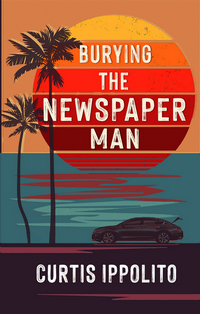
Burying the Newspaper Man by Curtis Ippolito: A Young Police Officer’s Past Comes Back to Haunt Him


Burying The Newspaper Man

Burying The Newspaper Man

by Curtis Ippolito

eARC, 244 pg.
Red Dog Press, 2021

Read: March 10-11, 2021

What’s Burying The Newspaper Man About?

I’m going to lean heavily on the Publisher’s Description here, because this is one of those books that I’m afraid to say anything about. “This is a book about a police officer who finds something that disturbs him. This officer used to be a child and things happened. Now he has to deal with his life.” Just doesn’t sound all that interesting, right?

Marcus Kemp is a beat cop in San Diego who has a knack for discovering stolen cars. The book opens with him discovering his fortieth of the year—a record-setting pace that should crush his previous record. It’s a fairly upbeat opening that should make anyone worried—in this car he discovers a dead body. Decades ago, when he was growing up in Texas, the man in the car trunk repeatedly sexually abused Marcus.

Marcus knows he should inform the detectives who come to the scene that he knows who the victim is, that there’s a tie between them—and that he can possibly point at a motive for the killing. But he doesn’t do that. Instead, he starts an off-the-books investigation of his own into finding the killer. Not to bring the killer to justice, but to help him avoid arrest.

He ends up lying to his lieutenant, abuses his office, breaks I don’t know how many laws (he loses count, too)—putting his career and his freedom at risk—for the opportunity to aid and abet this man’s killer.

A Matter of Focus

In a book that ostensibly is about a cop hunting a murderer, the novel isn’t all that interested in the killer. It’s primarily interested in one of the cops hunting for the killer. The emphasis is on both what happened to Marcus as a child and how he’s dealing with it in the shadow of his abuser’s killer. We get a long look at the events leading up to the abuse—Marcus’s already troubled home life, his friends, and then choices that put him in repeated contact with the abuser.

The other emphasis is what Marcus goes through after finding the body. In the intervening years, he’d stopped thinking about the abuse. But once he recognized the body, he can’t stop thinking about it. He begins to see how so many of his choices are made because of the abuse, what it’s done to the way he thinks, the way he acts, and his relationships now.

This isn’t to say that Marcus’s hunt for the killer is unimportant, but it’s of tertiary importance at best. Thanks to a lucky break or two—scratch that, thanks to Marcus taking advantage of a lucky break or two, it’s a fairly uncomplicated hunt. But that’s the only thing lacking complication in the novel. As Marcus isn’t officially investigating or looking for an arrest, he doesn’t have to adhere to a typical protocol (even the curtailed protocol we let fictional heroes get away with). It’s striking how little we learn about the killer throughout the novel. It’s not a typical choice, but it works really well in these circumstances.

So, what did I think about Burying The Newspaper Man?

This isn’t at all what I expected from the novel. It’s richer, it’s deeper, and better realized than I expected (whether or not that’s fair, it’s true). Yes, there’s a lot of psychological trauma and depictions of Marcus’ trying to cope—but there’s some great action, too.

Aside from that, there are some great descriptions of life in San Diego—you can feel the atmosphere around the beach, in Marcus’s neighborhood. Ippolito gave us enough local character to ground the action—and a little extra, too. There’s even a nice flashback to a San Diego Comic-Con to further establish the setting and show us a non-professional side of Marcus beyond the abuse survivor.

I fear Ippolito rushed through the denouement, it could’ve easily lasted 3-4x as long as it did while holding the audience’s attention. But that’s not the style of Burying the Newspaper Man. Ippolito isn’t about answering all our questions, he focuses on what he thinks is most important, and if you agree with him, all the better.

There are enough “atypical Crime Fiction” elements to this book to appeal to readers that don’t usually touch Crime Fiction. There are enough “typical Crime Fiction” elements to appeal to die-hard fans of the genre. It’s the former that adds depth to this novel that you’re not used to, but that serves to make this more emotionally satisfying, and possibly genre-expanding.

Whichever camp you fall into—Crime Fiction reader or not, I recommend this novel to you—ignore the genre and just enjoy something well done.


4 Stars


Red Dog Press
My thanks to Red Dog Press for the invitation to participate in this tour and the materials (including a copy of the novella) provided.

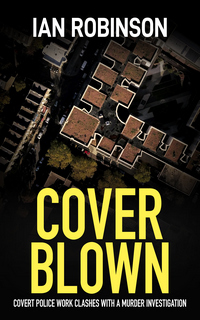
Cover Blown by Ian Robinson: DI Nash’s Professional Worlds Collide

Cover Blown

Cover Blown

by Ian Robinson
Series: DI Nash and DS Moretti, #2

Kindle Edition, 185 pg.
The Book Folks, 2021

Read: February 24-25, 2021

What’s Cover Blown About?

Fresh off the events of Latent Damage DI Nash’s team dives into a new murder case. Two women have been murdered in clearly connected events, sadly, that’s the only thing that seems to connect them (well, that and they’re cat owners, but does that count?). Nash and Moretti are quickly stymied by the strange circumstances around the cases.

Meanwhile, Nash is helping out an undercover unit on the side. She’s as disciplined as possible with this, keeping her priority on the homicides, but she occasionally has to step away, leaving Moretti to direct the team’s efforts. At some point (and I’m only saying this because it’s in the publisher’s description), evidence is uncovered that indicates DI Nash had been in communication with both victims.

A Thought About DI Nash

I like Nash—watching her juggle the murder cases and the undercover operation is something you don’t get to see often in procedurals (particularly from someone of her rank). We haven’t (so far) gotten too deep with her and what makes her tick—but I like what we’ve seen so far, she’s an interesting character. Which is all I’m looking for—an interesting and compelling character.

That said, I wouldn’t want her as a boss. She’s mercurial, she seems to manage primarily through threats, and while she’ll come through or her team when the chips are down, it’d be good to see her do that before I got to that stage (she’s also better at looking out for them with outsiders than among themselves).

Basically, I like reading about her but wouldn’t want to work for/with her. There’s part of me that hopes she grows into a better manager as the series progresses—but I also enjoy seeing someone successful and flawed.

So, what did I think about Cover Blown?

While this is the Nash and Moretti series, in the first book, there was a definite emphasis on Moretti. This book focused on Nash—I really hope this balancing act continues (think Lydia Chin/Bill Smith books by S. J. Rozan, but in the third person), it’s a good way to tell the duo’s story (and the team’s) without the perspective becoming stale or allowing one character to take over.

The dialogue issues I had in the first book were either absent or so rare in this installment that they never bugged me—and that goes for some of the other stumbles I thought were made in Latent Damage—it feels like Robinson’s more comfortable in this new voice, this new world, and that’s good news for the reader.

The procedural element of this novel is one of the strengths, the sheer effort involved in making the slightest progress in a murder inquiry is something to behold. With these books, Robinson is blending the murder team, the work of those who handle informants, and an undercover unit, which is another layer of difficulty to portray well, and Robinson nails that. I can’t remember if I talked much about it in the post about the last book, but this team spends a lot of time and effort on avenues that don’t ultimately lead where they want to go. I love seeing that—particularly (and I expect realistically) when they end up turning up other criminal activity.

Good characters, fascinating cases, a couple of exciting moments, and an all-around entertaining novel. I’d encourage you to grab hop on to this series here at the beginning—this is a keeper.


4 Stars

Tales from the Folly by Ben Aaronovitch: Entertaining Quick Dips into the Rivers of London

I’m reposting this one because I thought of it during What Abigail Did That Summer because Abigail gets to shine a little bit in this collection—and because it was short Rivers of London stories, just like the (fairly long) novella).


Tales from the Folly

Tales from the Folly: A Rivers of London Short Story Collection

by Ben Aaronovitch
Series: The Rivers of London

Kindle Edition, 139 pg.
JABberwocky Literary Agency, Inc., 2020

Read: August 1-3, 2020


If asked, I’d have thought I posted about this book weeks ago, so imagine my surprise this past weekend when I saw this title still on my “To Be Written” list when I was checking for something else. Better late than never…

What are the Tales from the Folly?

The subtitle pretty much gives it away, really. These are shorter works set in the Rivers of London series. The Folly is the unofficial name for the recognized British magical organization, following in the first formal study of magic made by Sir Isaac Newton (no known relation, but that doesn’t stop me from claiming him as an uncle), it’s currently formally organized as the Special Assessment Unit of the Metropolitan Police. The Folly is also the nickname for their headquarters. Either use works for this collection.

There are seven short stores (or one novella and six short stories) told from Peter Grant’s perspective—just like the series. Then there are four stories from the point of view of other characters in the series and three “moments” (Aaronovitch’s term for “something that is more of a mood than a story, something that will last a page or two and conjure an atmosphere).

Peter Grant Stories

Obviously, this is Peter’s series (at least so far…), so he gets the bulk of the space. Most of these take place around the time of the first few books in the series, but at different stages of Peter’s development. I enjoyed them all and most of them are good enough to justify the purchase price on their own.

I can’t put my finger on why, exactly, but the first story “The Home Crowd Advantage” is my favorite. It’s about a French practitioner who got up to no good during the 1948 London Games who revisits the scene of the crime in 2012 when rookie apprentice Peter Grant is the only one around to deal with him.

The last entry in this section is the novella, A Rare Book of Cunning Device that I talked about when it was released as an Audible Original in 2017. It’s rare for me to go from hearing a work to reading it, so it was interesting that way. I enjoyed it just as much this time around, but I think Holdbrook-Smith’s voice is a better one for this series than whatever is echoing around in my skull.

Everyone Else

The fact that Aaronovitch is able to tell stories outside of Peter’s perspective shows the strength of the series in my book, he’s built the world and the characters out enough that they can carry the weight of a narrative for at least a little bit.

We get a story from the perspective of one of the Rivers, one from Abigail’s perspective that will warm the cockles of your heart (and maybe make you a little sad for a bit), a nice one featuring Vanessa Sommer from Germany (making me hope we get back to Germany for another novel soon), the answer about what happened to the River Lugg after Foxglove Summer. Then there are the moments, one featuring Nightengale, one with Reynolds and one with Sommer’s pal Tobias Winter years before The October Man

So, what did I think about Tales from the Folly?

That’s easy, I thought it was great. I’d buy volume 2 tomorrow, and volume 3 next month. If Aaronovitch wrote that quickly, anyway. They’re like the comic series in a way—a nice way to spend some time in this universe without having to put in the time of a novel.

The collection covered the gamut of emotions and types of story typical of the series with Aaronovitch’s evident charm and skill. It’s a must for every Rivers of London fan.


4 Stars

REPOST: Foxglove Summer by Ben Aaronovitch

So the plan was, read What Abigail Did That Summer by Ben Aaronovitch on Monday and post about it Tuesday. What happened was: read What Abigail Did That Summer Monday, do some parenting things and have no energy left for anything else. Whoops. So, I’m going to repost a couple of Rivers of London books I thought of while reading the upcoming novella and we’ll try again tomorrow. This novel explains why Peter wasn’t around to give Abigail a hand (not that she’d have asked for it).


Foxglove SummerFoxglove Summer

by Ben Aaronovitch
Series: The Rivers of London, #5


Mass Market Paperback, 323 pg.
Daw Books, 2015
Read: January 9 – 10, 2014

“Hail the conquering hero,” said Beverly and held up her bottle to clink.
Sic transit Gloria mundi,” I said, because it was the first thing that came into my head — we clinked and drank. It could have been worse. I could have said, “Valar Morghulis” instead.

It’s always a pleasure to spend some time in the pages of a Peter Grant/The Rivers of London novel, but Foxglove Summer is probably the most pleasurable entry in the series since Midnight Riot (The Rivers of London for non-US types). I’m not sure I can put my finger on why that’s the case, but that’s not something I’m going to worry about. Unlike Peter’s mother, who

never saw a gift horse that she wouldn’t take down to the vet to have its mouth X-rayed — if only so she could establish its resale value.

Two young girls have vanished in a small village slightly north of London, and Peter’s sent to make sure that the (supposedly) no longer active wizard in the area had nothing to do with it. Having done so, he decides to stick around and see if he can help with some of the routine/mundane work needed.

Naturally — well, I should say, Supernaturally, it’s not long before The Powers That Be ask him to see if there’s an angle to the case that’s more up his alley than theirs. Peter finds some undeniable evidence of magic at work and things get going from there.

Nothing against London — but loved this breath of fresh air in this novel. For example, Peter’s dealing with different superior officers to not want to deal with magic/supernatural — these don’t have the antagonism that usually shows up in London, they just don’t want anything to do with it. The town is full of interesting types — including traveling fair ride owners, tavern keepers, farmers, and vacationing journalists.

As always with this series, the sheer amount of British Police acronyms and assumed knowledge of structure and procedures are a hurdle many US readers won’t want to try (I’ve been told this by a few who I’ve tried to get to read these books) — it’s a little effort, and easily worth it to overcome.

My major — only? — gripe is that Peter’s not making a lot of progress with his magic, he seems to be pretty much where he was three novels back. Yes, he’s more confident, yes, he’s able to apply his knowledge of magic with some good old-fashioned police ingenuity — but his abilities and skills are still rookie-level. Without Beverly as magic back-up, he’d be in trouble. The two of them — plus one local cop out of his depth, but committed to work — are able to handle things.

Yeah, it was nice not to focus on Lesley and the Faceless One (which isn’t to say their shadows don’t loom over a good chunk of the book), but it’s clear that they’ll be back in a really big way soon. Which I’m looking forward to, as nice as it was to have this mental palate cleanser here. Foxglove Summer was great mix of police procedural, Urban Fantasy and Folklore — both traditional and contemporary (the area’s obsession with UFOs is great) — with Aaronovitch’s deft humor, pop culture references and tight plotting. We’ve got ourselves a winner here.

—–

4 Stars

Page 31 of 88

Powered by WordPress & Theme by Anders Norén