Tag: 4 Stars Page 38 of 88

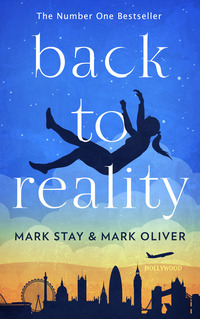
Back to Reality: A Novel (Audiobook) by Mark Stay & Mark Oliver, Kim Bretton: A Parallel Universe/Body Swap Story Story Full of Laughs and Heart


Back to Reality

Back to Reality

by Mark Stay & Mark Oliver, Kim Bretton (Narrator)

Unabridged Audiobook, 10 hrs., 6 Min.
The Bestseller Experiment, 2019

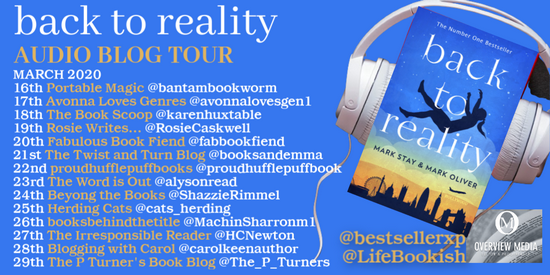
Read: March 19-25, 2020


Oh, boy… how do I talk about this? I thought about calling this a bundle of joy, but that means something else. A bundle of audio joy, maybe? This was just so much fun that I want to start with that. If you’re looking to have a good time, this is a book for you.

If you read the Book Spotlight I just posted, you’ve got a good idea about the plot (and if you haven’t read the Spotlight, why not?). But for the sake of completeness here’s the gist: connected by something across the multiple parallel universes, two versions (one 18 and one almost 2 decades older) of one woman swap bodies for a few days. The older version works in PR, is the mother of a teen who can’t stand her, with marriage problems. The younger version is a pop star on the verge of breaking through in the ’90s. If they don’t swap back, there’s every sign that they won’t survive in this new world. But how can they do that?

That sounds sort of intriguing, I hope. But the book never really feels like that kind of Fringe-inspired take on a Back to the Future/Freaky Friday mashup, because of the voice, the style and approach of Stay and Oliver—which is characterized by humor and heart. It’s like early-Rainbow Rowell/Jennifer Weiner/Emily Giffin/Sophie Kinsella. These are strong women in very strange circumstances, surrounded by interesting characters responding to unbelievable situations.

We meet Jo on a night out with people from the office, which turns into an alcohol-fueled karaoke sensation (Jo has a fantastic voice, but a lot of stage fright). I enjoyed this chapter so much that I probably could’ve written 3-4 paragraphs about it alone and would’ve read an entire book about this woman’s life (especially because what happens to her in the next couple of chapters deserved a complete novel to see her respond to). It took me a little longer to get invested in “Yolo” (the 90’s version), but I came around and started rooting for her, too.

I am not the target audience for this (note the authors I mentioned above—some of which I only know through my wife’s description). And there were a few times I asked myself why I was listening to this—each time, I decided I was enjoying myself enough that I didn’t care if this was my typical read or not. There’s just a hint of SF, a dollop of Time Travel (more like jumping between parallel universes), and a healthy amount of “women’s commercial fiction.” This is a recipe for a wonderful literary dessert.

I’ll frequently (maybe too frequently?) talk about an audiobook narrator bringing the text to life. And Kim Bretton does that. But she does more than that—she fills it with life. Dynamic, energetic, vibrant…are just some of the adjectives that spring to mind. I was very happy when I just looked over her other audiobook credits and saw a couple of titles I was already thinking about—if she’s doing them, I’m giving them a try. (although, if I never hear her do another American male accent, I’d be more than okay).

Funny, sweet, amusing, heartfelt, laugh-inducing, touching, comic, imaginative—and did I mention humorous? This is 606 minutes of pure entertainment. I really encourage you to put this in your ear-holes. It’d probably work almost as well in print—Bretton’s great, but she has to have something to work with—but in audio? It’s close to a must-listen.


4 Stars

My thanks to Overview Media for the invitation to participate in this tour and the materials (including a copy of the novel) they provided.

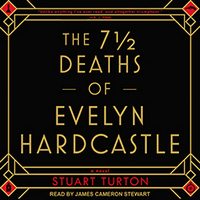
A Few Quick Thoughts about The 7 ½ Deaths of Evelyn Hardcastle (Audiobook) by Stuart Turton, James Cameron Stewart

The 7 ½ Deaths of Evelyn Hardcastle

The 7 ½ Deaths of Evelyn Hardcastle

by Stuart Turton, James Cameron Stewart (Narrator)

Unabridged Audiobook, 17 hrs., 4 min.
Tantor Audio, 2018

Read: March 6-19, 2020
Grab a copy from your local indie bookstore!

Too little information and you’re blind, too much and you’re blinded.

If I said everything I wanted to here, I’d blind you with too much information.

In the interest of A. Time and 2. Not wanting to overwhelm you with anything but mostly III. I don’t want to take away the impact that reading/listening to this would bring to you. So…I’m going to be brief.

Let’s start with the publisher’s description:

The Rules of Blackheath

Evelyn Hardcastle will be murdered at 11:00 p.m.

There are eight days, and eight witnesses for you to inhabit.

We will only let you escape once you tell us the name of the killer.

Understood? Then let’s begin…

***

Evelyn Hardcastle will die. Every day until Aiden Bishop can identify her killer and break the cycle. But every time the day begins again, Aiden wakes up in the body of a different guest. And some of his hosts are more helpful than others.

For fans of Claire North and Kate Atkinson, The 71/2 Deaths of Evelyn Hardcastle is a breathlessly addictive novel that follows one man’s race against time to find a killer—but an astonishing time-turning twist means that nothing and no one are quite what they seem.

When I grabbed this audiobook, I remembered less than 1 percent of what I’d read about it. I just remembered bloggers loving it. Also, it was on Chirp, so…you know, cheap, and I needed something to listen to. So without even reading the blurb again, I grabbed it.

What a mind-bending book. I’ve seen comparisons to Clue (the movie, not the game), Agatha Christie, Groundhog Day, and Quantum Leap—I’d add Knives Out. Those comparisons are all apt. Add those things with some incredibly brilliant writing—there are sentences here that justify the expense and/or time involved just to hear/read them. Throw in a clever, clever book and it’s a real winner.

It’s sort of a fantasy. It’s a very old school mystery. It’s impossible to encapsulate. The themes explored include:
bullet Identity
bullet Memory
bullet Vengence
bullet Corruption (inner and public)
bullet Forgiveness
bullet Redemption

Stewart’s narration was pretty solid—occasionally I wondered about his choices for female voices—but all in all he kept me engaged and entertained.

I thought the book dragged a bit from time to time, but it’s hard to think of anything Turton really could’ve cut/rearranged to help that–and the large portion that didn’t drag made up for the rest easily. To say that the plot is intricate is to undersell it, I don’t remember the last book I read that was quite this intricate and well-constructed. It’s truly impressive, thoroughly entertaining, and completely provocative.

Listen to it, read it, whatever…put it on your list and you’ll be glad you did.


4 Stars

This post contains an affiliate link. If you purchase from it, I will get a small commission at no additional cost to you. As always, opinions are my own.

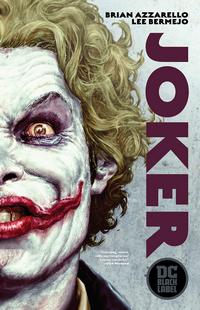
Joker by Brian Azzarello, Lee Bermejo (Illustrator): One night in Gotham and the tough guys tumble

Joker

Joker

by Brian Azzarello, Lee Bermejo (Illustrator)

Paperback, 144 pg.
DC Comics, 2019 (DC Black Label Edition)

Read: March 18, 2020
Grab a copy from your local indie bookstore!

That’s what he is, I guess: a disease that infected Gotham City…

…of which there is no cure.

The Joker is inexplicably released from Arkham and he quickly discovers that he’s broke. And well, he might be insane, but he’s not crazy enough to let people get away with that. The Penguin, The Riddler, Two Face, etc. are to blame. As far as he’s concerned anyway.

With the help (at least presence) of his new henchman, Johnny Frost, Joker sets off to get his property back, to get a little revenge, and generally wreak havoc. You know, as you would if you were the Clown Prince of Crime.

That’s really all I’m going to say—it’s bloody, it’s depraved, it’s dark, it’s twisted. It’s not revolutionary, it’s not a reinvention of the Joker. It’s a good story about the character that’s been a favorite of readers for decades.

Oh, sure, the Dark Knight puts in an appearance—but it’s at the end, and he’s not even brought up for most of the book. Then he’s there and things go the way they usually do when he shows up.

The art? Hoo-boy. It’s something else. It’s…visceral is the best word I can come up with it. Even if you don’t like it, I don’t see where you can’t have a strong opinion of it—I find it striking, memorable…and visceral.

I really enjoyed this one and highly recommend it to any comic reader, or anyone who wants to see what the world of Batman can look like in the original medium instead of film.


4 Stars

2020 Library Love Challenge

This post contains an affiliate link. If you purchase from it, I will get a small commission at no additional cost to you. As always, opinions are my own.

Madam Tulip and the Serpent’s Tree by David Ahern: It Made me Happy to See that Derry and her Fortune-Telling Alter-Ego are Back

Madam Tulip and the Serpent's Tree

Madam Tulip and the Serpent’s Tree

by David Ahern
Series: Madam Tulip, #4

eARC, 258 pg.
Malin Press, 2020

Read: February 26-27, 2020

Derry frowned. ‘Why is everything so complicated?’

Bruce thought about that. He shrugged. ‘‘ Cos we’re not dead?’

This is a mystery novel that’s hard to talk about—because for the longest time, it’s not a mystery novel at all it’s a novel about a couple of under-employed actors, their rising TV star friend, and an insecure pop star. I want to stress that this isn’t a complaint, it’s a description. By the point that it becomes a mystery novel*, you’re already invested in all the characters and the situations so everything becomes heightened.

* Sure, we all knew it was going to become a mystery novel because that’s what the Madam Tulip books are. But there were at least three ways it could’ve become one before the murder is discovered.

For those new to this series, Derry O’Donnell is a young Irish-American actress in Dublin. Her best friend, Bella, has got a new and regular gig on TV and her career seems to be going somewhere. Meanwhile, Derry and her pal Bruce are still looking for their big break. And Madam Tulip? Well…

Madam Tulip was her fortune-teller alter ego whom Derry had created as a means of making some cash on the side. A woman of indeterminate age and exotic dress, skilled in Tarot and card reading, Madam Tulip was the perfect act for celebrity events. She wasn’t even an imposter or any kind of fraud. Derry was, after all the daughter of a seventh son of a seventh son. But too often, Madam Tulip had led Derry into situations she would rather have avoided and the company of people best left to their own devious devices.

That last sentence is a very understated way of describing the series. Like Jessica Fletcher, dead bodies have a tendency to turn up when Madam Tulip is nearby. This time, thanks to some of Bella’s machinations (as well as a favor from an old friend), Derry is going to be working at the birthday party of a pop star. Before the weekend is over, Derry finds herself as a confidante to the star and (separately) another member of the band. Their manager is trying to get Derry to be his informant, if he can’t get her to influence (via Madam Tulip) the singer.

Derry’s torn between wanting to help everyone but the manager (but she, Bella and Bruce need the manager for something they’re trying) and wanting to leave them all to their own devices. because they’re all a bit too much. But she really can’t get away from it all—especially when a murder is discovered.

The mystery aside, the most intriguing part of this novel to me is the way that Derry thinks of Tulip—and how it changes from the beginning of the book to the end. I don’t think I can discuss it without spoiling something, so I’ll just say that I didn’t see it coming, and really like the way that Ahern dealt with it.

There’s a sweet little romantic story that gets just the right amount of attention and space. And I now realize that I don’t have much else to say about it—I liked this guy for Derry.

Since Day One, I’ve thought that Derry’s father, Jacko, could be the stand-out character of the series with the capability of stealing every scene he’s in. It’d be really easy to overuse him. Ahern hasn’t done that the way that I can imagine it’d be easy to do so far. In fact, I’d argue that he underused Jacko in this volume. He’s decided it’s time to publish his memoirs—which will include “a tell-all exposé” of the art world—an idea that terrifies Derry’s mother (and makes for fun reading). He’s even hired a ghostwriter and expects to publish soon. I liked his storyline, but thought it ended a bit abruptly. But that’s really just me being disappointed that we didn’t get more of Jacko—because it was executed just right.

Derry’s pal Bruce, struggling actor, former SEAL, jack-of-all-trades (it seems) is (again) a real highlight of the book. He continues to be Ranger to Derry’s Stephanie Plum—just without the money, the team or the flirtation (and the post-flirtation stuff). I really enjoy him as a character—not just when he’s pulling Derry’s bacon out of the fire, but for the nice, quiet moments of friendship and support. If Ahern decides to give Tulip a break and focus on Bruce for a book or two, I’d be in the front of the line for that.

This is the best one yet in this series—yeah, I said that in my post about #3, Madam Tulip and the Bones of Chance, too—it was true then and it’s true now. There’s more depth to the characters, more subtlety to the story—and even some of the story beats that should be expected by now (because Ahern’s used them in every book) took me by surprise. It’s just a pleasure to read one of these books—Madam Tulip and the Serpent’s Tree was a little oasis of enjoyment in the midst of a stressful week for me, and I relished retreating to it.

I’d been eagerly checking Ahern’s website off and on for news about this release before he emailed me about it. I like this world, I look forward to spending time with these characters, and the Serpent’s Tree not only solidified these feelings it intensified them. These are fun mysteries, and the little touch of the supernatural (which takes on different nuances in each book) helps keep them fresh. Would this work as a jumping-on point? Yup. Any of them would—take the plunge, you’ll be glad you did.


4 Stars

Disclaimer: I received a copy of this novel from the author in exchange for my honest opinion, which is what you just read. The opinions expressed are my own.

Venators: Magic Unleashed (Audiobook): This Introduction to a Fantasy Series Continues to Entertain on my Third Time Through


Venators: Magic Unleashed

Venators: Magic Unleashed

by Devri Walls, Daniel Thomas May (Narrator)
Series: Venators, #1

Unabridged Audiobook, 10 hrs., 20 mins.
Tantor Media, 2020

Read: February 26-27, 2020
Grab a copy from your local indie bookstore!


When I saw that The Write Reads was doing one of their Ultimate Blog Tours for this book, I jumped to volunteer without thinking—sure, I’d be more than happy to help Walls promote her book. Shortly after I committed, however, I started to have second thoughts. What on earth, am I going to be able to say? I talked about the first edition of the novel back in ’16 and then again with the second, retitled, and improved edition last year. How is it possible to do anything but rehash what I’d said before? Then, Walls announced that an audiobook edition was going to be released. Phew.

If you remember what I said about the post last year*, you can skip the next seven paragraphs, because I’m going to basically plagiarize myself for a bit until I talk about Daniel Thomas May’s work.

* No, I can’t imagine anyone does, I didn’t. It’s just a joke.

This is a portal fantasy about a world called Eon, populated by humans, elves, vampires, werewolves, elves, dragons, etc. There are connections between Earth and Eon, allowing travel between the two—although they’re not as strong as they once were. It turns out some humans from Earth have a certain invulnerability to the kinds of magic employed by the various races (like a werewolf or vampire bite, but not, say, an invulnerability to a werewolf tearing off their head). Thee humans also have other enhanced physical attributes allowing them to go toe-to-toe in combat with members of these races. Which has made these humans a powerful force for good, and a potentially tyrannical force as well. Eon’s known more of the latter lately, which has led to a lack of recruitment.

But now, society’s on the verge of collapse into chaos, warring tribes trying to wipe out other races in a fight for dominance, and the end of law. So some people have taken it upon themselves to reintroduce these humans, Venators, to Eon. Enter Tate, a warrior who is convinced that Venators are the key to Eon’s survival—he’s been to Earth before, and now returns to bring back some people he observed then. Six years ago, he encountered a young teen named Grey Malteer—who was forever changed by their brief encounter. Now in college, Grey is about as well-read in the lore of the supernatural and weird as is possible for someone to be while stuck on Earth and not being known as a crackpot (although he’s regarded as pretty eccentric, probably well on his way to crack-pot status).

An acquaintance of his from childhood, now attending the same college, Rune Jenkins is repulsed by the same things that Grey is focused on (while also drawn to them). Rune is totally unprepared to accept that the supernatural is anything but wild fiction until she’s attacked by goblins and rescued by a large blue man (the aforementioned Tate). Which really can only make her a believer—or drive her to some sort of psychotic break. Thankfully, she goes with the former. Tate brings Rune and Grey into Eon and sets before them the calling of Venator.

To oversimplify things: from here out, the two are introduced to this world, the beings that populate it, the political realities that govern it (and see them only as pawns), and they begin to embrace their new identities, while engaging in a brief battle or two. While Rune and Grey are introduced to all this, so is the reader—and it’s clearly the point of this book—to bring the reader and these two into Eon, give us all a taste of what’s to come and help us get to know the players. There is a clear plotline and definite story here—don’t get me wrong—but the major function is to provide a foundation for things to come.

The book would have to be a lot longer to serve as anything other than an introduction—the ruling council alone is made up of enough characters we’d need a few more chapters to really get to know them and their goals—although they can be summed up in lust for power and influence for themselves and their race to the possible detriment of every other council member/race. Then you throw in Tate; his allies (however temporary) the vampire Veridia and the shapeshifter Beltran; the two humans; and the council’s enemy, Zio—and really, you’ve got enough players that you really can only skim the surface within 354 pages.

We get to know Grey and Rune enough to see they’re well-developed and three-dimensional, and many of the rest show signs of being that developed, but we don’t get to see that fully displayed—but we see enough to know that given the opportunity, the characters will be easily fleshed out. One thing I noted in particular while reading this is just how many seeds Walls planted in the characters and situations to come back to in future installments. This foundation is built in such a way that several books can be built on it—it’s really impressive to note.

Yes, this is written for the YA market, so there’s a bit more action than others might use. There’s a focus on certain kinds of emotional beats, and that sort of thing. But it’s more of an accent to the storytelling than other writers would’ve made it. For some reason, Mercedes Lackey’s Hunter series and Brandon Mull’s Beyonders Trilogy come to mind as I think about similar series—but the YA-ness of both of those comes through more strongly than it does with this book.

So, how does this translate into audio? Very well. I’ll admit that it took me a while to get into May’s narration. For some reason, I’d expected a female narrator—someone like Kathleen McInerney, Khristine Hvam, or Lorelei King—so May threw me a little. Which isn’t a reflection on him, just on my preconceived notions. And I thought the initial chapters were a little rough—it seems like it took him a bit to “get into” the bok. But I think that’s a characteristic of the novel itself, it doesn’t really take off until the humans leave Earth.

Once there, the book—and the narration—settle in. The Venators find a sense of calm on Eon that they’ve been denied on Earth, and it’s May captures that—but what really sealed the deal for me was his portrayal of the vampire Verida—it sounded like he had extra long teeth that he had to talk through. From there, it was smooth sailing. Tashara and Beltran were a couple of the other highlights—most of the Council were captured well, also. I’m not suggesting that he didn’t do a fine job with Tate, Grey or Rune—it’s just those others seemed a bit more interesting (and Tate’s accent seemed to wander around awhile before becoming consistent).

May narrates with a good energy, a nice pace, and shows the text to be what it is—very approachable. I had no problem sticking with him and didn’t want to speed up the narration or skip ahead or anything else. He captures the tone of the book, the emotions of the moments, and the characters. All in all, it’s exactly what you want in an audiobook.

On this tour, we were encouraged to ask Devri Walls a question as part of our posts, so here’s the one that kept coming to me while I listened: Why are the Venators immune to Vampire Bites, Werewolf Bites, but not at all immune to succubi, incubi, [Book 2 Spoilery things]? I have a theory, but I’d like to hear it from the horse’s mouth (if for no other reason than my theory is probably wrong).

I ended up rating it a little higher this time—I’m not sure if it’s because I’m more familiar with the material so I can appreciate the little things more, if it was May’s narration, me just being in a generous mood, or what. Or it’s just me being inconsistent. Eh, whatever. It’s a fun little story. It is a foundation-setting kind of story, introducing the world, the magic system, the fantasy races, and many characters, so we don’t get too deep with anything. But now that things are established, the path is clear for more subtle, more layered storytelling to come.

In Print (electronic or paper) or on Audiobook, this is a solid YA fantasy that’s sure to please. Go get it for your own enjoyment and so TPTB continue to let her produce these books.


4 Stars

This post contains an affiliate link. If you purchase from it, I will get a small commission at no additional cost to you. As always, opinions are my own.


My thanks to The Write Reads for the invitation to participate in this tour and the materials they provided.

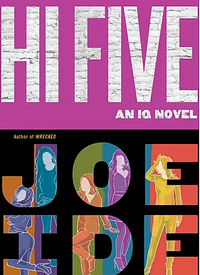
Hi Five by Joe Ide: A Criminal for a Client, an Unreliable Witness, and a Larger Number than Usual that Want Him Dead. IQ has his work cut out for him.

Hi Five

Hi Five

by Joe Ide
Series: IQ, #4

Hardcover, 339 pg.https://www.mulhollandbooks.com/titles/joe-ide/hi-five/9780316509534/
Mulholland Books, 2020

Read: February 10-16, 2020

Grab a copy from your local indie bookstore!


Isaiah has tried to move on after the heartbreak of Wrecked, and has a new girlfriend. This is unfortunate for her—not because IQ is a bad boyfriend or anything—it’s just that when a low-life gun dealer needs Isaiah to investigate something for him, he threatens the poor girl to insure that Isaiah will do it.

What he needs Isaiah to do is clear his daughter of murder. She’s the only witness to the event, but can’t give the police (or our hero) much information about it, despite being in the same room as the murder. Why? Well (and this feels like spoiling something, but it’s on the book jacket), she has Dissociative Identity Disorder (DID)—what we used to call Multiple Personality Disorder—and given the stress and danger presented by a man being shot in her shop, Christina wasn’t “there” for most of what happened. Now, did her father bother mentioning this to Isaiah? Nope. but he thankfully figures that out fairly quickly. So now our intrepid investigator has to look into a murder with an eyewitness/prime suspect who didn’t see anything, and who can’t convince anyone who did see something to say something—and if he doesn’t succeed, someone he cares about will pay the penalty (and he assumes he’ll pay, too).

This is such a fantastic idea for a murder case—it could easily be a sloppily executed idea, but if someone does their homework and does a responsible job depicting DID, this is a wonderful fodder for drama. Please, if there are other examples of mystery writers doing this, fill up the comments with titles. I’d love to read other versions of this—and can’t believe that Ide’s the first to do this.

Most authors would be content to fully develop this idea and run with it for the whole novel. But not Ide. In fact, as interesting as it is, the murder case is not the most interesting thing about Hi Five. I’m pretty sure that’s impressive. To take a concept like that and say, “well, sure, but what’s important is the trouble that Isaiah finds himself in because of the investigation.” That’s bad enough, but Isaiah has recently run afoul of a gang of white supremacists after gang violence has hit someone that Isaiah and Dodson (particularly Dodson) respect and admire.

Oh, and Grace is back.

Ide also finds a way to work in some lighter stories and even a little sweetness. And the book never feels crowded, and everything gets dealt with in the space it needs. Sure, I’d have preferred to spend more time dealing with Christina and her “alters,” but that’s a personal taste thing. I’m a sucker for a good DID story. But what Ide wanted to focus on justifies cutting that storyline some of the space I’d prefer it get.

The tension is high and Isaiah has never seemed more human and fallible (including when he was being waterboarded because of some foolish moves).

Some of the reviews I’ve read about this book seem to think that Ide’s wrapping up the series here. I can see why they’d say that, Hi Five could certainly serve as a fitting end to the series. but it seems to e that Ide has more he wants to say. The way he left things with Isaiah points to a triumphant return. Also, toward the end of the novel, something pretty significant happens to Deondra and I just don’t see Ide leaving things where he did and just walking away—the scene is extraneous unless he’s coming back to follow up on it. I hope I’m reading things right, but if I’m not, this is a solid way to go out.

This is not my favorite of the series, but it is so, so good, that it doesn’t bother me too much. It’s just a pleasure to be back in this prose, in this world, with most of these characters. A great mystery (with a better hook), some great character development, a client you can’t help but loathe—but a subject that you’ll pull for (and want to see more of). Hi Five is just one more proof that Joe Ide is one of the best writers in the genre right now. This is a decent entry to start with, but you’d be better off starting with IQ. But honestly, just grab the nearest book by Ide and enjoy.


4 Stars

2020 Library Love Challenge
This post contains an affiliate link. If you purchase from it, I will get a small commission at no additional cost to you. As always, opinions are my own.

Not Dressed by Matthew Hanover: If this book doesn’t bring a smile to your face, something’s broken

Not Dressed

Not Dressed

by Matthew Hanover
Series: Wallflowers, #2

eARC
2020

Read: January 3-6, 2019

“Hey there, Jake. This should be fun, right?”…

“I guess,” I say.

“You don’t sound too excited,” she says as she takes a hair tie off her wrist and pulls her disheveled hair back into a ponytail.

“Yeah, well. I’m not good at dancing.”

“Obviously! That’s why you’re here. Same as me. I’m probably just as bad as you. But we’ll learn together, okay?”

“Okay.”

Darmok and Jalad at Tanagra,” she says.

“I…have no idea what that means.”

“It’s from Star Trek…Actually, Star Trek: The Next Generation. It means we’ll work together to solve a common problem. In this case, the problem is learning how to dance.”

“I gotcha. So, you’re like…a Trekkie?”

“Was my sweatshirt not a big enough clue?”

“No, I just—”

“You’re not a Star Wars fan, are you? If you are, you’ll have to find a different partner.”

Jake Evans is our protagonist—he’s a decent enough guy, who could probably use some maturing (which means he’s like 90% of guys in their twenties). He’s got a great girlfriend (although the relationship seems a bit rocky when we meet him) and is second-guessing his chosen career (partially because he has a horrid employer, and partially because architecture isn’t the career he thought it would be). There are signs that he’d be a pretty fun guy to hang out with, but when the book opens he’s got a pretty good-sized cloud over his head between the girl and the gig.

Lindsay’s his long-time girlfriend. She works in radio and is very passionate about her job. She’s enjoying a little bit of success, and has a hard time relating to Jake’s struggles. She’s the producer and in-all-but-name on-air sidekick to a Boston-area conservative talk show host, who calls her “Lefty Lindsay.” (don’t worry, politics are absent from the book!) At least when the book opens, I really didn’t see why the two of them were a couple. There’s a good chance that neither of them rembered at that point, either, it had been so long.

Two things about their relationship provide most of the initial conflict for the plot. First, due to some financial hits they’ve taken recently, Lindsay has taken some modeling gigs to make some extra money. She did it back in college, which was recent enough that she still had connections. Why didn’t Jake do something to make extra money? He’s having a hard enough time finding a replacement full-time job that it didn’t seem like a good idea to try to add another job search to his plate. Besides, Lindsay’s moonlighting is profitable enough. What she neglects to mention to Jake is that this modeling is for art classes at a local college. And, well, none of these artists-in-training are working on fashion degrees—clothing gets in the way of what they’re learning to draw/paint/sculpt. Jake’s an open-minded kind of guy, except when it comes to this, it’s not pretty when he finds out (although it’s a pretty amusing scene for readers when he does).

Meanwhile, Jake’s sister’s wedding is coming up and Lindsay has decided the two of them need to learn to dance before it. Besides, it’s a fun activity for the two of them—they never go out mid-week anymore, and their relationship could use a boost. So she signs them up for a dance class, and then tells Jake about it after she paid for it, so he pretty much has to agree to it, but isn’t really that interested. So she basically promises him sex if he goes. Which pretty much seals the deal. But then Lindsay’s show gets moved to a new (and better) time slot. So, in addition to not being able to make the class, the couple will hardly see each other during the week. Her plan is that Jake will go, and then on the weekend, teach her the moves (he insists on getting his payment in advance for this).

Jake hates this new plan, and is convinced that he’s going to be stuck dancing with the instructor (after he and the reader meets this instructor, no one thinks this is going to be fun for him). Thankfully, just before class starts, Kaylee walks in. You read her opening dialogue up above. She’s a few years younger than Jake, taking some time out from college to figure out what she wants to do with her life, and is a major geek. She’s almost a Manic Pixie Dream Girl, but doesn’t fit the category in a few ways (I’m only using that term because I’m afraid this post is getting too long and I want to pick up the pace). She’s also my favorite character of 2020 so far (granted, that would mean more if it wasn’t January 13th).

Kaylee and Jake strike up a nice little friendship during the class, and pretty soon, he’s going so he has an excuse to hang out with her. The two of them are fun together—she’s socially awkward and embarrassed to be herself, Jake tries to shake her out of that, and even encourages her to let her Geek-Flag fly (even if he doesn’t get any of it). Meanwhile, she’s encouraging about his job hunt (as opposed to Lindsay, who mostly nags or wants him to find a way to succeed where he is), and gets him to be a little less angst-y about his life. I like Jake more when he’s in friend with Kaylee-mode over guy with Lindsay-mode. But what do I know? I have a tendency to pick people the protagonists don’t in these situations (I won’t provide examples because I’d expose myself to too much ridicule).

The one last bit of Jake’s life we need to talk about is his job. It’s horrible. He has a nice group of work-friends who band together for mutual support (and complaints), but the atmosphere at work is toxic, and their superiors would be enough to turn anyone against their chosen field. For example, in the first chapter, Jake’s two-year anniversary with the company happens and he asks his boss about scheduling his annual review (which will hopefully involve a raise, which he could really use). His boss stammers and suggests an alternate date, nine months away. Yeah, Jake’s bad attitude toward work makes a little sense, doesn’t it?

I worked as a draftsman at an architecture firm some years ago, and while the atmosphere there wasn’t at all what Jake experienced, Hanover did do a great job of capturing the kind of work and personalities that I saw—which doesn’t really match the typical depiction of architects in fiction. I liked that bit of realism. (I asked Hanover about that in an upcoming Q&A, but I haven’t read his responses yet, looking forward to seeing where that authenticity came from).

Getting back to Jake’s life—what we have here is a stagnant (at best) relationship that’s got a couple of pretty big things to work through; a job situation that needs addressing; and a new friend that is really the only positive thing in his life. Jake’s life is basically begging to be shaken up, is Kaylee going to help instigate that?

There’s something about Hanover’s style that I can’t express, but I wish I could. This book (like last year’s Not Famous) is effortless to read. When I started this book, it was late in the day and I thought I’d just stick a toe in the water, maybe read about 10% of it. Before I knew it, I was about a third into the book (and were it not for the time of day, I’d have probably finished it in one sitting!). It’s funny, it’s sweet, it’s infectious, it’s engaging as anything I can remember. I cared about these characters and got invested in their lives faster than I typically do.

Jonathan Tropper tends to have certain character types that show up in every novel—particularly the wise sister/friend-who-might-as-well-be-sister* (many authors do this kind of thing, I know, but Tropper is who I thought of when I was reading this book). Hanover shows signs of the same thing—sisters play a big role in both of his novels to date. He doesn’t use them the same way that Tropper does, don’t get me wrong, but his male protagonists are more honest and open about their emotional lives because of sisters. This is neither good or bad, it’s just a trait that he may have—it’s something I’ll be looking for next time. (again, see the Q&A for more on this topic). I like that there’s someone who can draw this out of a character without the need for alcohol, drugs or trauma—also, that he bares his soul first to someone who isn’t a love interest.

* There are other types that Tropper utilizes constantly, too, if I ever get around to my big re-read of his corpus, I’ll end up compiling a chart.

There’s a bit of conventional wisdom discussed here that I didn’t know before reading this book.

“You realize that dancing is basically foreplay, right?”

“So I’ve heard.” [Jake replies]

Four chapters later:

“Because dancing is, like, totally foreplay, you know.”

“Why does everyone keep saying that?” [Jake asks]

I counted someone telling that to Jake four times (with at least one more allusion). Is this really a thing that everyone thinks/says? I may need to cancel some of my daughter’s plans for the next 20 years…

I’d forgotten that Hanover had said there’d be a link between Not Famous and this book. It’s small, and if you haven’t read his other novel, you won’t miss anything. But if you have, you’ll enjoy the brief catch-up you get about the lives of the protagonists of that novel. It brought a big grin to my face.

There was a slight flavor of Nick Hornby wanna-be-ness to Not Famous that’s not present here. Instead, what Hanover has done is take that same voice and put it to use telling a story that’s all him (while being the kind of thing that Hornby readers will appreciate). I do think that Hanover could go a bit deeper in his characterizations (I have very little sense about Jake apart from work/Lindsay) and his plots could add a little more complexity. I’m looking for a few degrees of depth/complexity, not much. But that doesn’t stop me from loving this world and characters, and it doesn’t keep me from encouraging you all to grab this book when it releases next month.

This heart-warming tale about being who you are and finding acceptance for it is a real winner. Adorkable, irresistible, and just fun—Not Dressed is sure to please (if you are so led, book is available for pre-order). I don’t know what Not Description is next for Hanover, but I’m already eager to read it.

Disclaimer: I received a copy of this book from the author in exchange for my honest opinion and this post. I appreciate the book, but it didn’t sway what I had to say.



4 Stars

QualityLand by Marc-Uwe Kling, Jamie Lee Searle (Translator): George Orwell Goes Shopping

QualityLand

QualityLand

by Marc-Uwe Kling, Jamie Lee Searle (Translator)

eARC, 352 pg.
Orion Books, 2020

Read: February 13-15, 2020

Grab a copy from your local indie bookstore!


When you boil it down, QualityLand is simply the epic tale of a man trying to return something he didn’t order (and doesn’t want) to an online retailer. Peter Jobless’s tale involves a paranoid hacker, a blackmail scheme, an armed stand-off, a smitten sex-bot, a TV news panel show, a revolutionary tablet computer, swaying a presidential election, and a revival of interest in the films of Jennifer Aniston. We’ve all been there, right?

There’s no way I could describe the plot in a way to do it justice—so we’ll stick with the broad sweep. Before much gets underway story-wise, there’s a lot of set up required. When the dominoes start to fall in earnest, they go quickly. But so much of the book is devoted to setting them up, establishing/explaining the culture, government and everyday life of the QualityLand’s citizenry.

Here’s the best part about the set-up time: it’s totally worth it, and the way the dominoes are being placed is enjoyable/entertaining enough that even if the results were duds, I wouldn’t really have minded all that much. The icing on the cake is that the plot works well (we’ve all seen too many examples of elaborate worldbuilding that accompany a story that’s not worth it).

This is a world given over to algorithms, a world where the algorithms of various retail entities know so much about their customers that they no longer have to wait for a customer to order something to provide it—no, the algorithm will know what you’re going to want and will deliver it before you know you want it.

Not only are all your possessions provided for you in this manner, the algorithm decides what kind of career you will pursue, but it will also guide and govern your romantic life, your health care, and so on and so on.

It even gets into politics—so much so that during the course of this novel, there is an android running for president—because, we’re told repeatedly (mostly by the candidate), “machines don’t make mistakes.” An android chief of state (the theory goes) will better all of society because the android will know what’s needed.

At each step of the way, as each aspect of society is introduced and explained, as each character appears for the first time, it’s done in a way that will make you grin, chuckle, or laugh. The world is so zany, so…out there—and yet, completely recognizable as a natural progression of our world/society/culture.

Unlike so many satirical novels, the ending of this novel doesn’t get out of control. The plotlines come to natural conclusions and resolve in a satisfying way.

The characters—from the Everyman Peter Jobless, to the campaign manager (she can give Malcolm Tucker some lessons on the use of words as weapons), to the history teacher’s trouble-maker daughter (in-person to public officials or in online comments), to Peter’s collection of electronic companions—are wonderful. They’re a little better rounded than I’m used to in satires.

There’s a wonderful playful quality to the language, making the whole thing a barrelful of fun. I’m assuming that Searle captured the feel of the original in that, and did a great job. There’s an acronym that’s used a couple of times, that I think may be funny in the original, but doesn’t translate into anything (at least as far as I can see). That one thing aside, the ability to make a translated text feel so natural, so easy is no small feat.

QualityLand is a fun read t’s a thought-provoking read, it is (occasionally) a frightening read as you realize how close to this dystopia we are (and how fast we’re running to it). I strongly recommend this one.


4 Stars


My thanks to Tracy Fenton and Compulsive Readers for the invitation to participate in this tour and the materials (including a copy of the novel) provided.


This post contains an affiliate link. If you purchase from it, I will get a small commission at no additional cost to you. As always, opinions are my own.

Reposting Just Cuz: Guilty Minds by Joseph Finder

My plan for today was to post about the new Nick Heller novel: House on Fire by Joseph Finder. But one thing led to another, and . . . well, that just didn’t happen (and I’m not sure when it will). Instead, I’ll be revisiting my posts about the first three in this thriller series. The first two have already been posted, and here’s the third.


Guilty MindsGuilty Minds

by Joseph Finder
Series: Nick Heller, #3

eARC, 400 pg.
Dutton, 2016

Read: June 1-2, 2016

The evil that men do lives after them;
The good is oft interred with their bones:
               – Julius Caesar, Act 3, scene ii

Everyone’s favorite private spy, Nick Heller, is back. This Jack Reacher with a budget gets hired to head off a scandal that may threaten the career of the Chief Justice of the Supreme Court. He’s not hired by the Justice, of course, but by a powerful friend. Washington, D.C. being Washington, D. C. not only does the Justice have powerful friends, he has powerful enemies. Heller assumes that they’re behind the scandal breaking on the gossip website, and sets his sites on not only stopping them but exposing them.

There’s more going on than even someone with Heller’s instincts expect — what seems like a pretty routine case (with high stakes) turns into something with life or death stakes. Not shocking, it’s why we read these things.

I love the way that Heller’s mind works — watching him prepare (even quickly) to break into an apartment, or take out a group of kidnappers is one of the highlights of these books. What’s even better is that his hacker can’t do everything. His buddies/colleagues make blunders. What’s more, Heller makes mistakes — errors in judgement, letting personal biases get in the way, bad assumptions. Sure, Heller’s super-human (it’s why we read him), but he’s not perfect. It’s his reaction to the mistakes, his recalculations, his new plans that separate Heller from a lot of these characters who are a little more perfect.

There’s a twist or two, people who aren’t what they seem (in good and bad ways for Heller), and some solid fight scenes (with and without weapons). Pretty much just what you want in a thriller. I’m not sure that I’m crazy about the resolution or the epilogue, but I don’t mind them and honestly I can’t think of a better way for things to play out (and before that, I had just that one complaint). So, I guess a great 380 or so pages, followed by a decent 20.

It took less than a page or two (hard to tell on my screen) to remember what I liked about the style of this series, Heller’s voice, and his crew (although this book relied less on his regular supporting cast than the previous two). If I quoted every snappy line from the first chapter, you’d stop reading this post as tl;dr (and the publisher would come after me) — and things got better from there. Great internal dialogue. Finder writes lean prose without an inch of fat, but it’s not dry, not lacking anything — it’s full of personality and intelligence. There was one thread that seemed pretty important that Finder just abandoned, which is odd for him. Still, anytime you get an action hero quipping about coffee, I’m going to pay attention.

I had coffee. I took one sip and put it down. It tasted like something brewed by someone who disapproved of coffee.

I appreciated the observation about airport/tarmac security, and just with that Heller had spent more time with that. Maybe in the fourth book?

Smooth prose, good action, well-paced, and just a fun story. A real pleasure to read from beginning to end.

I received this book from Net Galley in return for the above thoughts. Thanks to Net Galley and Dutton for the good read. As it was an ARC, there’s a chance that the quotation above might not be in the published version, I’ll try to confirm as soon as I can next month.

—–

4 Stars

Reposting Just Cuz: Buried Secrets by Joseph Finder

My plan for today was to post about the new Nick Heller novel: House on Fire by Joseph Finder. But one thing led to another, and . . . well, that just didn’t happen (and I’m not sure when it will). Instead, I’ll be revisiting my posts about the first three in this thriller series. This is the second in the series, so the first has already been posted, and the next is on the way, but first: Buried Secrets


Buried SecretsBuried Secrets

by Joseph Finder
Series: Nick Heller, #2

Hardcover, 386 pg.
St. Martin’s Press, 2011
Read: April 13, 2015

Private Spy, Private Investigator, Private Vengeance-Taker, whatever you want to call him, Nick Heller one of the best — he’s tough, he’s resourceful, troubled kids like him and he quotes The Punisher. Who doesn’t love that?

Heller’s relocated himself, his computer wiz, and his nephew to Boston since we saw him last, setting up shop marketing his peculiar trade. True to form, he’s pretty picky about who he accepts as a client, but there is one who he can’t turn away. Marshall Marcus, the richest man in Boston, was a lifeline for Heller’s mother after his father’s prison sentence was handed down. Now he needs a lifeline — actually, his 17 year old daughter does. She’s been kidnapped and will be executed if her father doesn’t give the men responsible exactly what they want.

The kidnapping itself, and the way Alexa is being held captive aren’t that novel — most readers who’ve watched a police procedural or two in the last few years will have seen one or two scenarios like it. But Finder does make it distinctive by making the man holding her into a particularly sick and evil man. Thankfully, we don’t spend so much time with Dragomir that the reader sympathizes with him, or starts to like him (à la Dr. Lecter). What he’s doing to Alexa is just wrong — as is pretty much everything that has led up to this point in his life.

Nick’s not just up against this twisted man — and those behind him — he also has to contend with a client who continually lies to him, an FBI official that seems to be blocking his efforts, and more than one person who isn’t who they say they are. Thankfully, he has Dorothy, his old military friends, international intelligence contacts, and a different FBI agent backing him.

There’s less action (as defined by explosions, gunplay, fights, etc.) than in Vanished, but it’s more suspenseful. In Vanished, it wasn’t until the closing pages that you had any idea what was happening with the victim — but here, there’s never any doubt about what’s going on with her, and what’s going to happen to her if Nick doesn’t put the pieces together. Soon. Which isn’t to say it’s all-thriller-all-the-time, there’s moments where Nick and the reader catch their breath. Even a couple moments of levity (Nick’s narrative voice helps a lot on that front) — his observation, “Veganism is apparently the paramilitary wing of vegetarianism” helped set the tone. Dorothy’s eventual use of the word “Pepsi” to close a chapter made me chuckle audibly (you’ll get it when you read this).

I should probably add that this book includes one of the grosser character deaths I’ve read in the last couple of years. Didn’t bother me much, he had it coming.

We get to see a bit more of Nick’s life and backstory this time. He’s a better-rounded character now. It’d have been easy to see him as a workaholic who had no contact with anyone outside of work and his nephew before. But that’s clearly not the case now. There’s not much more to him — but there used to be, and getting that glimpse helps you care a bit.

It’s taught, it’s a page turner, it’s a “I can always sleep later” kind of read. Man, oh man, I hope Finder has at least one other Heller adventure up his sleeve.
4 Stars

Page 38 of 88

Powered by WordPress & Theme by Anders Norén