Tag: 4 Stars Page 39 of 88

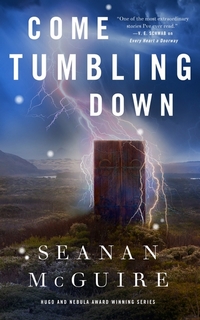
Come Tumbling Down by Seanan McGuire: Jack and Jill’s Final (?) Showdown in the Moors

Come Tumbling Down

Come Tumbling Down

by Seanan McGuire
Series: Wayward Children, #5

Hardcover, 206 pg.
Tor Books, 2020

Read: January 8-10, 2020
Grab a copy from your local indie bookstore!

Eleanor West’s Home for Wayward Children was an island of misfit toys, a place to put the unfinished stories and the broken wanderers who could butcher a deer and string a bow but no longer remembered what to do with indoor plumbing. It was also, more importantly, a holding pen for heroes. Whatever they might have become when they’d been cast out of their chosen homes, they’d been heroes once, each in their own ways. And they did not forget.

I wanted to do an Opening Lines post for this book, but I couldn’t decide where to stop—maybe around page 6 (which is a little too long for that kind of post). Seriously, it took less than a page for me to fall in love with this book.

It’s a typical day at Eleanor West’s School for Wayward Children (assuming such a thing exists) when a door appears, but instead of someone getting to go to their “home,” two figures emerge. One is a complete stranger, the other is Jack. Well, sort of. Close enough for our purposes here.

Things on the Moors have gotten to a crisis point where only one of the Wolcott twins can survive—Jack or Jill. Jill has struck first and things are dire. Jack recruits a couple of her friends and classmates to return with her (she was relatively certain she could return them to the school) to aid her in confronting her sister. They used to be heroes, they will be heroes again—as often as needed—much to Eleanor’s chagrin.

Once in the Moors, a dark and nasty place to be sure, dangers that no one (save maybe Jack) could’ve predicted present themselves and threaten the lives of the students in horrible and chilling ways. Culminating in what appears to be a final encounter for the sisters.

I love the way that McGuire writes these books, and Come Tumbling Down is no exception. It is full of the typical whimsical, fantastic and nigh-poetic language and ideas. If you’ve read a Wayward Children book before, you know what I’m talking about. If you haven’t . . . it’s hard to tell you. Here’s a sample or two:

“This is terrible . . . I mean we knew it was going to be trouble . . . but this is bonus terrible. This is the awful sprinkles on the sundae of doom.”

“A little knowledge never hurt anybody,” said Sumi.

“Perhaps not. But a great deal of knowledge can do a great deal of harm, and I’m long past the point of having only a little knowledge.”

Sumi was Sumi. Spending time with her was like trying to form a close personal relationship with a cloud of butterflies. Pretty—dazzling, even—but not exactly companionable. And some of the butterflies had knives, and that was where the metaphor collapsed.

Jill had always been the more dangerous, less predictable Wolcott, for all that she was the one who dressed in pastel colors and lace and sometimes remembered that people like it when you smiled. Something about the way she’d wrapped her horror move heart in ribbons and bows had reminded him of a corpse that hadn’t been properly embalmed like she was pretty on the outside and rotten on the inside. Terrifying and subtly wrong.

“wrapped her horror movie heart in ribbons and bows” is pretty much worth the purchase price of the book.

I’m glad that I enjoy—relish, really—the language like I do, because there’s not a lot of plot or action here. There’s enough, but there’s an awful lot of talk both around and before the action really gets underway. That’s not a wholly bad thing, and I enjoyed all of it, it just seemed self-indulgent.

It felt to me that McGuire’s reached the point of diminishing returns with this one, it’s been one too many trips to the Moors and it’s time for other Wayward Children to get the focus. Thankfully, that seems to be the plan.

I don’t think this would be a great introduction to this series (but it would function okay that way) if you’re not going to read them all in order, I feel safe in saying that it needs to be read after Down Among the Sticks and Bones. This is a good way to return to the world and revisit some of these characters. I can’t wait to see what happens in the next volume.


4 Stars

This post contains an affiliate link. If you purchase from it, I will get a small commission at no additional cost to you. As always, opinions are my own.

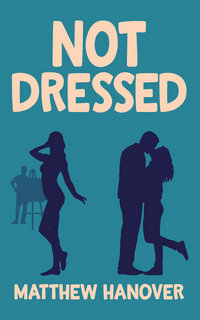
Not Dressed by Matthew Hanover: If this book doesn’t bring a smile to your face, something’s broken

Not Dressed

Not Dressed

by Matthew Hanover
Series: Wallflowers, #2

eARC
2020

Read: January 3-6, 2019

“Hey there, Jake. This should be fun, right?”…

“I guess,” I say.

“You don’t sound too excited,” she says as she takes a hair tie off her wrist and pulls her disheveled hair back into a ponytail.

“Yeah, well. I’m not good at dancing.”

“Obviously! That’s why you’re here. Same as me. I’m probably just as bad as you. But we’ll learn together, okay?”

“Okay.”

Darmok and Jalad at Tanagra,” she says.

“I…have no idea what that means.”

“It’s from Star Trek…Actually, Star Trek: The Next Generation. It means we’ll work together to solve a common problem. In this case, the problem is learning how to dance.”

“I gotcha. So, you’re like…a Trekkie?”

“Was my sweatshirt not a big enough clue?”

“No, I just—”

“You’re not a Star Wars fan, are you? If you are, you’ll have to find a different partner.”

Jake Evans is our protagonist—he’s a decent enough guy, who could probably use some maturing (which means he’s like 90% of guys in their twenties). He’s got a great girlfriend (although the relationship seems a bit rocky when we meet him) and is second-guessing his chosen career (partially because he has a horrid employer, and partially because architecture isn’t the career he thought it would be). There are signs that he’d be a pretty fun guy to hang out with, but when the book opens he’s got a pretty good-sized cloud over his head between the girl and the gig.

Lindsay’s his long-time girlfriend. She works in radio and is very passionate about her job. She’s enjoying a little bit of success, and has a hard time relating to Jake’s struggles. She’s the producer and in-all-but-name on-air sidekick to a Boston-area conservative talk show host, who calls her “Lefty Lindsay.” (don’t worry, politics are absent from the book!) At least when the book opens, I really didn’t see why the two of them were a couple. There’s a good chance that neither of them rembered at that point, either, it had been so long.

Two things about their relationship provide most of the initial conflict for the plot. First, due to some financial hits they’ve taken recently, Lindsay has taken some modeling gigs to make some extra money. She did it back in college, which was recent enough that she still had connections. Why didn’t Jake do something to make extra money? He’s having a hard enough time finding a replacement full-time job that it didn’t seem like a good idea to try to add another job search to his plate. Besides, Lindsay’s moonlighting is profitable enough. What she neglects to mention to Jake is that this modeling is for art classes at a local college. And, well, none of these artists-in-training are working on fashion degrees—clothing gets in the way of what they’re learning to draw/paint/sculpt. Jake’s an open-minded kind of guy, except when it comes to this, it’s not pretty when he finds out (although it’s a pretty amusing scene for readers when he does).

Meanwhile, Jake’s sister’s wedding is coming up and Lindsay has decided the two of them need to learn to dance before it. Besides, it’s a fun activity for the two of them—they never go out mid-week anymore, and their relationship could use a boost. So she signs them up for a dance class, and then tells Jake about it after she paid for it, so he pretty much has to agree to it, but isn’t really that interested. So she basically promises him sex if he goes. Which pretty much seals the deal. But then Lindsay’s show gets moved to a new (and better) time slot. So, in addition to not being able to make the class, the couple will hardly see each other during the week. Her plan is that Jake will go, and then on the weekend, teach her the moves (he insists on getting his payment in advance for this).

Jake hates this new plan, and is convinced that he’s going to be stuck dancing with the instructor (after he and the reader meets this instructor, no one thinks this is going to be fun for him). Thankfully, just before class starts, Kaylee walks in. You read her opening dialogue up above. She’s a few years younger than Jake, taking some time out from college to figure out what she wants to do with her life, and is a major geek. She’s almost a Manic Pixie Dream Girl, but doesn’t fit the category in a few ways (I’m only using that term because I’m afraid this post is getting too long and I want to pick up the pace). She’s also my favorite character of 2020 so far (granted, that would mean more if it wasn’t January 13th).

Kaylee and Jake strike up a nice little friendship during the class, and pretty soon, he’s going so he has an excuse to hang out with her. The two of them are fun together—she’s socially awkward and embarrassed to be herself, Jake tries to shake her out of that, and even encourages her to let her Geek-Flag fly (even if he doesn’t get any of it). Meanwhile, she’s encouraging about his job hunt (as opposed to Lindsay, who mostly nags or wants him to find a way to succeed where he is), and gets him to be a little less angst-y about his life. I like Jake more when he’s in friend with Kaylee-mode over guy with Lindsay-mode. But what do I know? I have a tendency to pick people the protagonists don’t in these situations (I won’t provide examples because I’d expose myself to too much ridicule).

The one last bit of Jake’s life we need to talk about is his job. It’s horrible. He has a nice group of work-friends who band together for mutual support (and complaints), but the atmosphere at work is toxic, and their superiors would be enough to turn anyone against their chosen field. For example, in the first chapter, Jake’s two-year anniversary with the company happens and he asks his boss about scheduling his annual review (which will hopefully involve a raise, which he could really use). His boss stammers and suggests an alternate date, nine months away. Yeah, Jake’s bad attitude toward work makes a little sense, doesn’t it?

I worked as a draftsman at an architecture firm some years ago, and while the atmosphere there wasn’t at all what Jake experienced, Hanover did do a great job of capturing the kind of work and personalities that I saw—which doesn’t really match the typical depiction of architects in fiction. I liked that bit of realism. (I asked Hanover about that in an upcoming Q&A, but I haven’t read his responses yet, looking forward to seeing where that authenticity came from).

Getting back to Jake’s life—what we have here is a stagnant (at best) relationship that’s got a couple of pretty big things to work through; a job situation that needs addressing; and a new friend that is really the only positive thing in his life. Jake’s life is basically begging to be shaken up, is Kaylee going to help instigate that?

There’s something about Hanover’s style that I can’t express, but I wish I could. This book (like last year’s Not Famous) is effortless to read. When I started this book, it was late in the day and I thought I’d just stick a toe in the water, maybe read about 10% of it. Before I knew it, I was about a third into the book (and were it not for the time of day, I’d have probably finished it in one sitting!). It’s funny, it’s sweet, it’s infectious, it’s engaging as anything I can remember. I cared about these characters and got invested in their lives faster than I typically do.

Jonathan Tropper tends to have certain character types that show up in every novel—particularly the wise sister/friend-who-might-as-well-be-sister* (many authors do this kind of thing, I know, but Tropper is who I thought of when I was reading this book). Hanover shows signs of the same thing—sisters play a big role in both of his novels to date. He doesn’t use them the same way that Tropper does, don’t get me wrong, but his male protagonists are more honest and open about their emotional lives because of sisters. This is neither good or bad, it’s just a trait that he may have—it’s something I’ll be looking for next time. (again, see the Q&A for more on this topic). I like that there’s someone who can draw this out of a character without the need for alcohol, drugs or trauma—also, that he bares his soul first to someone who isn’t a love interest.

* There are other types that Tropper utilizes constantly, too, if I ever get around to my big re-read of his corpus, I’ll end up compiling a chart.

There’s a bit of conventional wisdom discussed here that I didn’t know before reading this book.

“You realize that dancing is basically foreplay, right?”

“So I’ve heard.” [Jake replies]

Four chapters later:

“Because dancing is, like, totally foreplay, you know.”

“Why does everyone keep saying that?” [Jake asks]

I counted someone telling that to Jake four times (with at least one more allusion). Is this really a thing that everyone thinks/says? I may need to cancel some of my daughter’s plans for the next 20 years…

I’d forgotten that Hanover had said there’d be a link between Not Famous and this book. It’s small, and if you haven’t read his other novel, you won’t miss anything. But if you have, you’ll enjoy the brief catch-up you get about the lives of the protagonists of that novel. It brought a big grin to my face.

There was a slight flavor of Nick Hornby wanna-be-ness to Not Famous that’s not present here. Instead, what Hanover has done is take that same voice and put it to use telling a story that’s all him (while being the kind of thing that Hornby readers will appreciate). I do think that Hanover could go a bit deeper in his characterizations (I have very little sense about Jake apart from work/Lindsay) and his plots could add a little more complexity. I’m looking for a few degrees of depth/complexity, not much. But that doesn’t stop me from loving this world and characters, and it doesn’t keep me from encouraging you all to grab this book when it releases next month.

This heart-warming tale about being who you are and finding acceptance for it is a real winner. Adorkable, irresistible, and just fun—Not Dressed is sure to please (if you are so led, book is available for pre-order). I don’t know what Not Description is next for Hanover, but I’m already eager to read it.

Disclaimer: I received a copy of this book from the author in exchange for my honest opinion and this post. I appreciate the book, but it didn’t sway what I had to say.



4 Stars

My Favorite 2019 Non-Fiction Reads

Like every single year, I didn’t read as much Non-Fiction as I meant to—but I did read a decent amount, more than I did in 2018 (by a whole percentage point, so…). These are the best of the bunch.

(alphabetical by author)

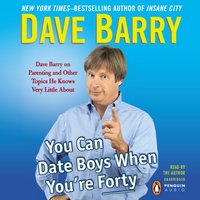
You Can Date Boys When You're FortyYou Can Date Boys When You’re Forty: Dave Barry on Parenting and Other Topics He Knows Very Little About

by Dave Barry

My original post
Barry at his near-best. This reminded me for the first time in a few years why I became a life-long devotee in high school. I could relate to a lot of it, and what I couldn’t was just funny. His reaction to Fifty Shades was a highlight—the chapter about his family’s trip to Israel was fantastic, funny and moving.

4 Stars

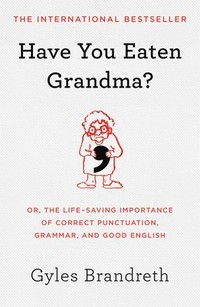
Have You Eaten Grandma?Have You Eaten Grandma?: Or, the Life-Saving Importance of Correct Punctuation, Grammar, and Good English

by Gyles Brandreth

My original post
I remembered rating this higher, but I’m not going to second-guess myself now. I’ll steal from my original conclusion for this: It’s the kind of thing that my college-bound daughter could use on her dorm bookshelf (and will probably find), and I know more than a few people who find themselves writing reports and the like for work who could use something like that. If you need help, might as well have a good time while you’re at it—and Have You Eaten Grandma is just the thing.

3.5 Stars

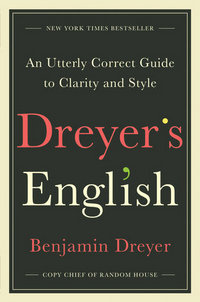
Dreyer’s EnglishDreyer’s English: An Utterly Correct Guide to Clarity and Style

by Benjamin Dreyer

I haven’t written a post about this yet, but it’s a great book. I can see why it was so popular this year—so much so that it got its own card game! The only more useful book I read in 2019 was the next one on the list. I’m not sure if I read something that made me laugh more. Fun, smart, incredibly quotable, and a resource you’ll return to time and time again.

5 Stars

How Not to DieHow Not to Die: Discover the Foods Scientifically Proven to Prevent and Reverse Disease

by Michael Greger M.D. FACLM, Gene Stone

My original post
One of the doctors that I’m seeing this year recommended this book to me, and it’s literally been a life-changer. This is an information-packed resource. But it’s not dry—Greger tells this with humanity, wit and concern. It’s a great combination of theory and practice.

4 Stars

The Art of WarThe Art of War: A New Translation

by Sun Tzu, James Trapp (Translator)

My original post
The classic text about military strategy—a great combination of psychology and management. It’s simple and profound, and approachable enough that there’s no excuse for not reading it.

5 Stars

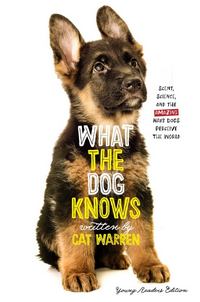
What the Dog Knows Young Readers EditionWhat the Dog Knows Young Readers Edition: Scent, Science, and the Amazing Ways Dogs Perceive the World

by Cat Warren, Patricia J. Wynne (Illustrator)

My original post
I loved the “adult” version of this a couple of years ago, and this is just as good—but edited so that middle-grade readers can tackle this exploration of the life of Working Dogs and their handlers.

4 Stars

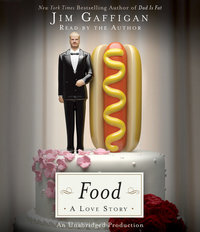
Food: A Love Story by Jim Gaffigan (Audiobook): Gaffigan’s Tribute to the Topic that Defines his Comedy

Food: A Love Story

Food: A Love Story

by Jim Gaffigan

Unabridged Audiobook, 7 hrs., 17 min.
Random House Audio, 2014

Read: December 11-13, 2019


This is largely what I said about the book in 2015, but I have a few more thoughts about Gaffigan’s book on parenting, Jim Gaffigan offers a book on his true strength: food.

As with Dad is Fat, a lot of this is material I’ve seen/heard elsewhere, but most of it isn’t. There’s more than enough original material to satisfy even those who’re familiar with has specials. I think, so anyway—I don’t have an encyclopedic knowledge of Gaffigan’s material, as much as my children want me to (I wouldn’t mind it, either).

On the whole, this is about what foods, dishes, and practices he likes—but he breaks it up with things he can’t stomach or understand. Sometimes, like with the chapter on Reuben sandwiches, he handles both.

The chapters on Coffee, Steak, Doughnuts, Breakfast, Hot Dogs and Bacon stand out particularly for me. Although the pair “Nobody Really Likes Fruit” and “Even Fewer People Like Vegetables” really amused me, even beyond the great titles.

Actually, there’s really nothing that didn’t amuse me.

Naturally, there’s an entire chapter devoted to Hot Pockets. That’s all I’m going to say about that, it speaks for itself.

Because the book is pretty tightly focused, there are two ways I’d recommend to read this book: in one setting, or broken up into tiny chunks over several days. There’s a danger of things getting repetitive that either of those tacks reduces.

I’m going to limit myself to just a few highlights, there’s quotable material on almost every page:

A.1. was always on the table when my dad would grill steaks. It seems everyone I knew had that same thin bottle of A.1. It always felt like it was empty right before it flooded your steak. Ironically, the empty-feeling bottle never seemed to run out. I think most people still have the same bottle of A.1. that they had in 1989. Once I looked at the back of a bottle of A.1. and was not surprised to find that one of the ingredients was “magic.”

Of course I am aware that doughnuts are bad, horrible things to eat, and according to my health-nut wife, they are not appropriate for a trail mix. I’ve repeatedly tried to explain to Jeannie that I’m on a different trail. Mine leads to the emergency room. Trail mixes have nuts, and my favorite nut is most definitely a doughnut.

In my opinion, however, the line of the book has nothing to do with food:

Bill Shakespeare himself, another actor who did some writing…

Listening to Gaffigan added a little more to the experience—sure, it’s easy to imagine him saying the same things, it’s another one to hear him do it. It’s not a superior experience to reading the book, but it’s an added flavor that makes it fresh even on the second exposure.

I’ve spent the last few months trying to change my eating habits, which made enjoying this celebration of unhealthy eating a little personally ironic (particularly for the 35 minutes I spent on a treadmill), but it still made me laugh. If you’re the kind of person who eats food, has opinions on it, and likes to laugh, pick yourself up a copy.


4 Stars

2019 Library Love Challenge<Humor Reading Challenge 2019

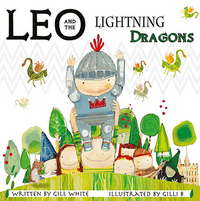
Leo & The Lightning Dragons by Gill White, Gilli B: An Adorable Book about a Very Brave Knight

Leo & The Lightning Dragons

Leo & The Lightning Dragons

by Gill White, Gilli B (Illustrator)

Kindle Edition, 36 pg.
Fledgling Press, 2019

Read: December 17, 2019


Leo is a very brave knight battling a different kind of dragon—his foes attack him from the inside where he cannot hide from them. He has a lot of people willing to help him, and several do their best, but this is a fight that Leo has to do on his own—so he musters up the courage and the confidence to get the job done with their support.

Gilli B is absolutely the right illustrator for this book! Her style brought it to life—I love her depiction of Lightning Dragons, I doubt that’s the approach many artists would’ve taken with them. Her chimerical pictures capture the spirit of the book beyond those, too. Delightful work.

If you’ve read anything about this book, you know how hard it would be to saying anything that’s not positive about the book. But I’m going to—it’s too short. I’m not looking for much, but we need a little more—just a couple of pages. There wouldn’t even need to be much text, some illustrations might do the trick. Leo’s got a tough battle to fight, and it’s over a bit too quickly, which makes it seem too easy. And there’s no way that Leo’s Lightning Dragons (fictional or not) are easily vanquished. How White can accomplish that without running afoul of the book’s overwhelming positivity, I’m not sure. I just think the subject deserves it.

Do the pluses outweigh my criticism? Oh yes. It’s a great book and I’m so glad I read it. The rhymes are cute, the story is very positive, great illustrations and the imagery of the Lightning Dragon fighting inside Leo is a great way to get the idea of epilepsy across to a picture book reader. A good story that should provide a springboard for a discussion with children about this condition and how hard it has to be for people to deal with. This is definitely one to pick up for your young reader.


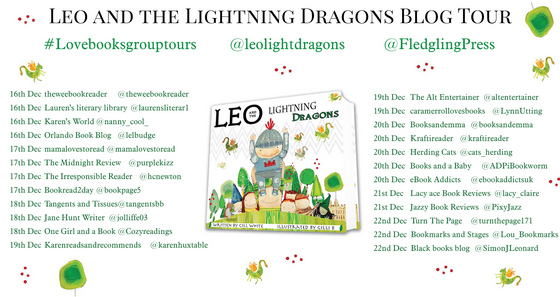
My thanks to Love Books Group for the invitation to participate in this tour and the materials they provided.

Love Books Group

What the Dog Knows Young Readers Edition By Cat Warren, Patricia J. Wynne: A MG Version of Great Book about Man’s Best Friend

What the Dog Knows Young Readers Edition

What the Dog Knows Young Readers Edition: Scent, Science, and the Amazing Ways Dogs Perceive the World

by Cat Warren, Patricia J. Wynne (Illustrator)

Hardcover, 325 pg.
Simon & Schuster Books for Young Readers, 2019

Read: December 4-5, 2019

Grab a copy from your local indie bookstore!


I wasn’t sure what to expect from a Young Reader’s Edition of this book, was it going to be dumbed down? Was it going to be a soup-to-nuts rewrite of the book, telling the story in a cutsie fashion? Or . . . well, I don’t have a third idea, but you get my opinion. But what we got was the same book (as near as I can tell, it’s been 4+ years), just pared down—not dumbed-down or anything. But a lot of the detail has been removed, every chapter boiled down to its essence. Simplified, yes, more accessible for younger readers than the dense “adult” text, but it’s the same book at the end of the day.

After the end of the text, there’s a section directing the readers to some more information and a Young Readers Info section of Warren’s website.

As it’s so similar, I’m just going to use a lot of what I wrote back in 2015 to talk about the book, sorry for the re-run (I’ll focus on this edition in a few paragraphs).

Warren was a journalist, is now a professor, and knows her way around a sentence. She clearly cares about the subject and has invested a lot of time and effort into getting to know it, her style is engaging and charming (I was chuckling within a couple of pages), and she doesn’t mind showing her own failings and weaknesses.

Warren basically covers three topics: there’s the science and history of using working dogs (of all sorts of breeds, not to mention pigs(!), birds, and even cats) to find cadavers, drugs, bombs, etc.; there’s the memoir of her involvement with cadaver dogs via her German Shepherd, Solo; and anecdotes of other cadaver dogs and trainers that she’s encountered/learned from/watched in action.

The history and science of dogs/other animals being used for their sense of smell, is probably the most fascinating part of this book, but it’d be really easy for the material to be too dry to bother with—Warren’s voice keeps that from happening. I think it’s terrific that at the end of the day, no one knows what it is about the smell of the human body that dogs sense—she’ll explain it better than me, but that’s the kernel the story. I just really enjoy it when the best and the brightest have to shrug and say, “I don’t know.” The chapter she spends on the future of dogs and/or digital replacements is good for similar reasons. Actually, I could just keep listing little facts/factoids/ideas here, but I don’t want to steal Warren’s thunder.

The best part of the book—the part that I found most interesting, and most frustratingly small—is the Warren’s story about getting Solo, discovering he had just too much energy and personality, and needing to find an outlet for it all. Which is followed by the trials and tribulations of a newbie cadaver dog handler and her pup-in-training, growing into a capable working dog. Anyone who has a dog lover as a Facebook friend knows just how easy it is for someone’s stories about their dog to get to the point where you can’t stand to hear another*. Somehow, Warren avoids this totally—not an easy feat. It probably helps that dog does far more fascinating things than just hiking through the woods or chasing a ball.

* Of course, your friends don’t have dogs as cool as mine. Let me tell you a little bit about her . . .

The stories about the others—her friends, colleagues, teachers, etc.—round out the book. It’s not just about Warren and Solo, it’s not just about the military/police efforts with training animals—it’s about dedicated volunteers, K-9 officers and dogs all over the country (and the world) making a difference. In places and ways you wouldn’t expect. Really? Sending in one guy and his dogs into Vietnam decades later to search for POW/MIA? Also, seeing how different dogs act differently, yet get the same job done was mind-boggling. Especially for dogs trained together/by the same person, you’d think they’d act similarly.

I imagine it’s to spotlight the work of others, to not brag about Solo too much, to talk about things that she and her dog haven’t done/seen/smelled—or whatever reason there is, I wanted more Solo. A lot more. I have no problem with the rest of the book, it’s just that there’s not enough Solo (or Coda, her younger dog).

This new edition features some illustrations and instructional graphics. There were a couple that I wondered about the placement of, but they were all helpful, eye-catching and attractive. They added to, instead of distracting from, the text. Good stuff.

A fascinating, entertaining, and educational book—can’t ask for much more than that.


4 Stars

2019 Library Love Challenge

This post contains an affiliate link. If you purchase from it, I will get a small commission at no additional cost to you. As always, opinions are my own.

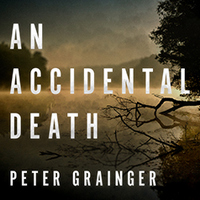
An Accidental Death (Audiobook) by Peter Grainger, Gildart Jackson: A Bit of Routine Paperwork with Anything but Routine Results

An Accidental Death

An Accidental Death

by Peter Grainger, Gildart Jackson (Narrator)
Series: A DC Smith Investigation, #1

Unabridged Audiobook, 6 hrs., 52 min.
Tantor Audio, 2016

Read: November 18-19, 2019

‘When you’re in front of a promotion board, one of the favourite questions is ‘So what motivates you in your daily work, Chris?’

‘Promotion? I’ll be relieved if I get through my six months. So what’s the correct answer?’

‘Oh, there are lots, you can buy them in books. But you could think about this,’ and Smith nodded towards the little group still standing at the graveside. ‘I’m just not sure how you put it into words.’

‘Revenge? Justice?’

‘For the victim – for Wayne Fletcher? Not how I see it, he’s beyond all that. Death’s the end of all. But look at the misery we’ve seen today. And it’s endless, it goes on rippling back and forwards through all these lives forever. I don’t know about justice. I’ve never seen myself on a white charger, righting wrongs – but we have to catch people so that they can’t create all this again. And so that other people get the message – you will be caught, you will pay. We never know how many selfish acts we prevent when we show people the consequences, but we have to keep showing them the consequences. These are the consequences.’

Smith had raised a hand, palm open towards the new grave.

Here we meet Detective Sergeant D. C. Smith—which isn’t At. All. confusing when listening to an audiobook, “I thought he was a DS, why is everyone calling him DC?” (thankfully, Grainger explains it after a bit). He’s a still-grieving widower, a long-serving detective, who has some sort of Intelligence experience in his past, has been of a higher rank, and has broken at least one near-legendary case years before. You wouldn’t think this résumé would be a type, but I’ve read about three Detective Sergeants this year that fit that description. That’s not a criticism, it’s just odd. DC Smith is my favorite exemplar of this type.

DC Smith is fresh off a brief leave in the aftermath of some case that was clearly divisive in the detective squad—and we never learn the details about it (which is frustrating, yet oddly compelling, and I almost hope we never learn the details about it), and is assigned to a new DI. Alison Reeve used to be a protégé of Smith’s, making things a bit awkward, but she also trusts him a lot more than other superiors seem to. He doesn’t have a team at the moment but gets to train a fresh DC, Chris Waters. Waters is an excellent device to get readers to see how Smith thinks/acts, because he has to keep explaining to Waters why he’s doing what he does.

For his first few days back, Reeve hands Smith some busy work including an anti-drugs presentation at some schools (quick aside—I loved his presentation, reminiscent of Bill Hick’s bit about the “this is your brain on drugs”) and a final sign-off on the paperwork about an accidental death. There’s a note on the autopsy that niggles at Smith and he starts looking into the accident. The initial investigation and paperwork were done just right, but . . .

Smith remembers a former colleague saying:

If you’re going to start turning over stones, you’ve got to turn them all over, every bloody one, even the littlest pebble…

Nevertheless, Smith starts turning over stones. And then more stones and more. Before he knows it, Smith and Waters find themselves mixed up in something nobody could’ve predicted—international intrigue, military secrets, family secrets, political pressure, and so on.

All leading to a great conclusion/face-off that will show off new sides of Smith (and show Waters’ mettle), with a postscript that seems predictable (but I’m not sure it was supposed to be)—but ties off the novel so nicely that I don’t care.

I’ve listened to one other book narrated by Gildart Jackson (Fated by Benedict Jacka), and while I thought he did fine with that one, he really seemed to connect with the character and the way he handled the narration and character voice seemed to fit the words/tone perfectly. I almost think I couldn’t read a future book in this series in print, I might have to come back for more.

There’s something about this one that got under my skin more than a typical procedural does—it’s maybe DC Smith, it’s maybe Grainger’s style (there’s a lot of subtle humor in a dark text)—it’s a Gestalt thing, I think. I really dug it.

Early on, Smith tells a couple of Fletcher’s friends:

‘As much as we might like this just to be about the facts, it never is. It never can be because people are always more complicated than facts.

Not only is that a catchy little bon mot, having a character who bases his work on it is about as good as “Everyone Counts or Nobody Counts” for his readers. An Accidental Death is a compelling read exploring an event that is more complicated than just facts and that’ll leave you wanting to come back for more.

This is checking off the “A book recommended by someone you trust.” box from the While I Was Reading Challenge, so I should probably mention that my friend, Micah, has been telling me to read these books (he additionally recommended the audiobooks, which is why I went audio with this one) since December 2017 (according to Goodreads). I really should’ve listened to him long before this. Not only does he have great taste, he’s a great photographer, take a moment to stop by his spiffy website and see.


4 Stars

✔ A book recommended by someone you trust.

LetsReadIndie Reading Challenge2019 Cloak & Dagger Challenge

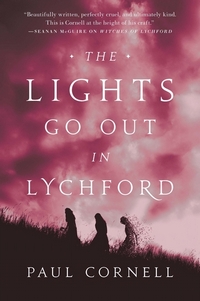
The Lights Go Out in Lychford by Paul Cornell: The Stakes and Tension are High in the Penultimate Lychford Novella

The Lights Go Out in Lychford

The Lights Go Out in Lychford

by Paul Cornell
Series: Witches of Lychford, #4

Kindle Edition, 144 pg.
Tor/Forge, 2019

Read: November 19, 2019


Oh, man…I was so glad to be back in this world. Lychford, a tiny little English town that acts as the border between this world and realities beyond our understanding, is a wonderfully conceived and executed setting—just getting to spend time here again was a blast.

I’ve tried three times now to describe this, and I just can’t without letting something slip. So, what’s the publisher say?

The borders of Lychford are crumbling. Other realities threaten to seep into the otherwise quiet village, and the resident wise woman is struggling to remain wise. The local magic shop owner and the local priest are having troubles of their own.
And a mysterious stranger is on hand to offer a solution to everyone’s problems. No cost, no strings (she says).
But as everyone knows, free wishes from strangers rarely come without a price . . .

Judith’s struggle with the effects of aging on her mind—and the way that her use of magic has accelerated them—is wonderfully depicted. Of course, it’s not just Judith dealing with her fading capabilities—her apprentice, her friend and her son also go through a lot trying to help her. This might be the best part of the book.

Autumn is working herself to exhaustion—not to mention loneliness and poverty—trying to rush her preparation for taking over for Judith. She’s also driven by the grave errors of the last book that have really put Lychford in danger.

Something about this one had me on tenterhooks throughout. There’ve been threats to Lynchford and/or the trio of protagonists before, but it all seemed much more likely this time.

The conclusion was simply fantastic and heart-wrenching—with a last line that will drive you to the online bookstore of your choice to try to order the conclusion immediately.

Can you read this without having read the previous entries in the series? Yeah, I guess you could. Cornell provides enough backstory to muddle through. Should you? Nope. I don’t think you’d appreciate everything the way it should be appreciated. Should you read the previous 3 novellas? Yes, and then read this and join me in waiting for the fifth and final one next year.


4 Stars

The Night Fire by Michael Connelly: A Superfluity of Cases Hampers Connelly’s Latest

The Night Fire

The Night Fire

by Michael Connelly
Series: Harry Bosch, #22/Renée Ballard, #3

Hardcover, 405 pg.
Little, Brown and Company, 2019

Read: November 1-4, 2019

…I’m not sure how much I can be involved.”

“You’re dumping this case on me. You changed my radio station and dumped the case on me.”

“No, I want to help and I will help. John Jack mentored me. He taught me the rule, you know?”

“What rule?”

“To take every case personally.”

“What?”

“Take every case personally and you get angry. It builds a fire. It gives you the edge you need to go the distance every time out.”

Ballard thought about that. She understood what he was saying but knew it was a dangerous way to live and work.

“He said ‘every case’?” she asked.

“‘Every case,'” Bosch said.

In The Night Fire Michael Connelly gives one more piece of evidence that yes, you can occasionally have too much of a good thing. We’ve got a little bit of a Mickey Haller case, something that Bosch works mostly on his own, something that Bosch and Ballard work together, a case that Ballard works mostly on her own, and then a hint of something else that Bosch primarily does solo. Plus there’s something about Bosch’s personal life and a dash of Maddie’s life. Which is all a lot to ask out of 405 pages.

It’s plenty to ask out of 650 pages, come to think of it. But anyway, let’s take a look, shall we?

Haller was drafted to defend an indigent man accused of murdering a judge, and is doing okay in the trial, but not well enough with things coming to an end. Bosch watched a little bit of the trial, waiting to talk to his half-brother and something strikes him wrong. So he takes a look at the files and gives Haller to think about. But it’s clear to Bosch that the LAPD isn’t going to act on anything they turn up, they’ve got their man. So if anyone’s going to expose the judge’s killer, it’s going to be Bosch. While it’s to be expected that the detectives that arrested Haller’s client would resent Bosch’s involvement with the defense—but Ballard is antagonistic toward the idea as well. Just because these two respect each other and can work with each other, they’re not clones, they don’t agree on a lot.

Ballard’s called to the scene of a homeless camp, where someone had burned to death in a tent fire. She’s just there as a precaution, in case the LAFD decides it’s arson (and therefore homicide) instead of an accident. Having been brushed off—and afraid that the LAFD will do the same to the case—she takes a little time to turn up enough evidence to justify treating the case as a homicide. Then she was promptly removed from the case, so her old team at RHD could work it. Naturally, like every character Connelly has ever created, Ballard walks away, right? Yeah, I can’t type that with a straight face—she cuts a corner or two and works the case herself, making better progress than anyone else does, too. This brings her into contact with her old antagonist, now-Captain Olivas. He’s close to retirement, and it’ll be interesting to see what happens to her career after that.

But what gets the majority of the attention of the novel is the case that the Ballard and Bosch work together—Harry’s mentor (and father figure) has died and left him a murder book from 1990 that he’d, um, “borrowed” when he retired. John Jack wasn’t assigned to the case in 1990, it’s unclear that he did anything in 2000 when he took the file home. Bosch has no idea why he had it, but convinces Ballard to read it over and look into the case. They start working it, bringing them into contact with retired and not-retired gang members, digging up the past, and the question about why John Jack had taken the file.

Watching Connelly balance these mysteries/storylines is a treat—he does a great job of moving forward with each of them while bouncing back and forth between. I do think each case could’ve used 10-20% time than he gave them. But I could be wrong. They all wrap up satisfactorily, and There’s not a lot of time given for anything that isn’t case related, but we get a little bit. Both the personal material for Bosch (which is what he was waiting in court to talk to Haller about) and what we learn about Maddie make me really wonder what’s around their corners—and it appears we won’t learn anything in 2020 (unless we get a bit of an update in the Haller novel next year). Ballard’s material is always about her work primarily, but we do learn a little more about her life between her father’s death and her time with LAPD. I’m glad that Connelly hasn’t given us her whole biography, but man…what we have been given just makes me want more. Clearly, he’s making sure that fans of all three characters are going to have to come back for more as soon as he produces it.

I appreciated the discussion Bosch and Ballard had about some actions at the end of Dark Sacred Night, I have a friend who will rant at the drop of a hat about Ballard’s choices there (and I trust my email/text messages will get another one when he reads this post). I don’t think this conversation will satisfy him, but it’s good to see the pair acknowledge mistakes they made. While I don’t think either of them do anything quite as misguided in this book, but they both make a couple of reckless moves. Bosch’s always had a little bit of dirt on/leverage with superiors (even some history) to give him some coverage when he gets reckless. Ballard doesn’t. So when she goes maverick, it’s more nerve-wracking than it is when Bosch did/does it. A nice little bit of character work, and a good distinction between the two characters.

There’s a moment in every Michael Connelly novel, no matter how good it is, where something just clicks and suddenly I’m more invested in it than I am in almost any other book. I think I’ve talked about it before, but when That Moment hits—there’s nothing better. I get that with a lot of Thrillers/Mysteries (and even some books in other genres), but never as consistently as I do with Connelly. I knew that moment had hit when my phone told me it was time to put the book down and go into my office and I audibly groaned. How was I supposed to focus on anything else when Bosch and Ballard were on the hunt?

Lastly, and this is very likely going to be only a problem I had. Several right-hand pages in my copy that have very faint—practically missing—letters. It’s like it’d been left in the sun too long, or like when an inkjet printer is running out of ink. Please tell me that Little, Brown has better equipment than I do.

This isn’t the best Connelly can do, but man…it’s so good. Solidly put together, we get to spend time with all our favorites and it hits every button it’s supposed to. Connelly is one of the best around—The Night Fire shows why.


4 Stars

2019 Cloak & Dagger Challenge

Hands Up by Stephen Clark: The Aftermath of a Police Shooting Seen from Multiple Angles

Hands Up

Hands Up

by Stephen Clark

Kindle Edition, 292 pg.
Wido Publishing, 2019

Read: November 5, 2019

“If you want to survive as a cop on these streets, then you need to check your conscience at the door. Sometimes there’s casualties. But if we don’t do whatever it takes to get the bad guy, then we could end up like your dad”

About a month ago, I posted about N. Lombardi, Jr.’s Justice Gone, and as I started to write this post, I noticed I was about to write something very similar here. But why re-invent the wheel? I’m just going to repeat the first few sentences (don’t worry, I get original after that).

I’ve mentioned before here that after I decide to read a book I forget what its about (if I even know) to keep myself coming from being disappointed by preconceived notions. It worked this time, I really had no idea what it was about when I opened it on my Kindle last week.

Which made the opening pages, featuring the killing of an innocent and unarmed black teen by the police, as shocking as they could’ve been. But they also led me to believe I was in for a grim, adult version of The Hate U Give.

That I’ve used that idea twice in a month says a few things to me, including: 1. Angie Thomas has clearly taken up residence in a corner of my mind (welcome, Angie, sorry for the clutter); 2. the fact that I keep running into novels about the police killing innocents says something about our cultural moment (and it’s not positive); and 3. thankfully, all three of these authors run with the concept in very different directions.

Lombardi quickly becomes about other killings (prompted by the police’s unjust actions and the officers not facing any consequences), Thomas focuses on what happens to the witness of the shooting (but includes what happens to the family of the victim and the city in the aftermath), Clark focuses on the aftermath of the killing on the victim’s family and the officer who pulled the trigger ending Tyrell Wakefield’s life.

Let’s start with that officer, Ryan Quinn, shall we? We meet him in the opening pages, working to reassure himself that he’s not a murderer as he prepares to give a statement about the shooting. He’s been a part of the Philadelphia Police Department for 8 months at this time. His partner, Sgt. Greg Byrnes knew Ryan’s father when he was an officer, too. And after Ryan’s dad was killed on the job, Byrnes has acted as a surrogate father. It’s because of Byrnes that Ryan was in a position where he had to make that fatal choice, and it’s Byrnes that guides him through the aftermath (for good or ill, I’ll let the reader decide).

Clark makes the very uncomfortable choice (for the reader, and I can only imagine for the author) of making Ryan the only first-person narrator of this book. Early on, I resented having to be in his head through all of this—especially as I learned just how sketchy the circumstances around the shooting (and what Byrnes did afterward) were. I didn’t want to be that close to this man’s thoughts at this time, I didn’t want to find him sympathetic, I didn’t want to pull for him at all through this process. Which is exactly the reaction I think that Clark wants. It’s uncomfortable by design.

The shooting affects Ryan, his family and his fiancé. He starts having panic attacks, getting professional help, and taking steps to become a different person on the one hand, while trying to keep his job, avoid prosecution, and rescue his career on the other hand. Too many authors would make him a complete villain or a misunderstood hero. Clark does neither. Or maybe he does both. Either way, Ryan is depicted in a very believable way.

One complaint with Ryan: throughout the book, Ryan thinks of his mother by her first name. I found that distracting at best. I can’t help but wonder if Clark changed him from third-person to first late in the process and forgot to change that to “Mom” (or an equivalent) in the editing process.

As far as Byrnes? Ugh. Clark clearly wants the reader to not trust him, not like him, and wish that Ryan would get away from his influence. He succeeded in all of that with me. He’s not a cartoonish racist cop or anything, he’s just a horrible person.

Now, on to Tyrell’s family. We first meet his sister Jade minutes before she discovers what had happened to him. She then has to break the news to her mother. Their grief and anger feels real, it feels raw, and you can’t help but share their desire for justice and their pain.

Jade’s our second protagonist and from the moment we meet her up until the very end of the book, she’s the one you really identify with, pull for, and agree with almost every step of the way. If Clark had put her in another novel, I’d really enjoy spending time with her as a character instead of watching her in the tumultuous days of anger and grief.

She’s a bartender, and one day Ryan comes into her bar for a few drinks. She recognizes him, he has no idea about Tyrell’s family. Things get interesting from there.

The third protagonist in the book is Tyrell’s estranged father who comes back to Philadelphia after a decade or so away when he gets the news.

Kelly saw his son for the first time in ten years, lying still in a casket, he could feel his heart breaking. He knew he could never get back all the time he lost with him. But if only he could have five minutes. Five minutes to catch up on his life. Five minutes to pass on his wisdom. Five minutes to tell him how much he loved him. Kelly just sat in the pew, staring at his son’s body in silence.

Now, Kelly’s a major complication that this family didn’t need at this time. Initially, I was very sympathetic toward him and wasn’t sure that Jade (and the others, but primarily Jade) were giving him a fair shake. Jade’s openly hostile toward her father—even when others warm to him. It didn’t take me long, though, to get on Jade’s side and start to wonder about Kelly (and Clark did a nice, subtle job with his character).

Each protagonist’s storyline takes on turns that you might not expect going into the book—Kelly and Ryan do a lot in a short amount of time and their characters change and develop. Everything that happens—even though much of it has nothing directly to do with the shooting happens in the shadow of Tyrell’s killing. It colors every conversation, every event, every reaction. In time Jade, Ryan, Kelly and the others will be able to move past this and do other things with their lives. But none of that happens now.

There’s some stuff with Kelly and Jade at the end that made me think about rating this lower, but in the end, Clark pulled it off (and more than once I wondered if he could). Kelly makes some choices that I initially thought unnecessarily complicated a pretty full plot, and I’m still not sure that Jade would have done what she did (and I’m less sure I should accept her explanation of it). But the more space I give those events, and the more I mull about Clark’s resolution, the better I feel about them. But I’m primarily giving this rating for what happens in the first 80 or so percent of the book.

Also, some of my reactions (still) to what happened in this book are so visceral that I’ve got to give Clark the credit for that. This is a much more even work than his first novel (which I liked, but had reservations about), but shares his talent for taking people who should be antagonistic toward each other, untrusting, and disinclined to to build any sort of relationship with each other—and helping them see the common humanity in each other and moving on past their differences. I’m a sucker for that kind of thing, as long as it’s not done in a cheesy, “A Very Special Episode of…” kind of way. Which, I want to stress is why I like Clark’s approach.

It’s not a perfect book, but it’s a good one—with some powerful moments that are dealt with skillfully. I encourage you to check out Clark’s work and join me in waiting to see what he’ll do next.


4 Stars

LetsReadIndie Reading Challenge2019 Cloak & Dagger Challenge

Page 39 of 88

Powered by WordPress & Theme by Anders Norén