Tag: 4 Stars Page 49 of 88

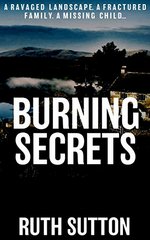
Burning Secrets by Ruth Sutton: A Child Abduction Sets Off a Disturbing Chain of Events


Burning SecretsBurning Secrets

by Ruth Sutton

Kindle Edition, 264 pg.
Fahrenheit Press, 2018

Read: October 2 – 3, 2018

For a book that clocks in at 264 pages, Sutton packed in a lot of story. I’m having difficulty deciding what to focus on, I’ve got to say. If only all authors could present a guy with such problems . . .

This book starts off with a child abduction — a child, Helen Helsop, that we get to know a little bit before she’s abducted. Immediately I groaned, because the last thing I wanted to deal with is a book about a little girl getting snatched and then dealing with whatever abuse is looming. Without spoiling much, let me assure you — nothing like that happens. This is not that kind of kidnapped child story. This doesn’t mean that she’s been taken for benign or even beneficial reasons, however.

Helen hasn’t been living at home — she’s been staying with family in town so she can attend school. Because theirs is a farming community — predominately, or at least heavily, a dairy and cattle area, and this is 2001 — the height of the Foot and Mouth crisis. I’ll be honest, as an American in a pre-social media age, I didn’t have a strong grasp on the effect this had on smaller farmers — I just never was exposed to it. I got what it meant on the national/industry front, but didn’t think much more about it. If I had, it would’ve been obvious just how much this would decimate a community, an individual family, and why this was such a horrible crisis. Anyway, back to Helen — she hasn’t had a good time of it in this temporary home and is easily persuaded to leave. It’s hours (of course) before anyone notices that she’s missing, and even then, most of her family doesn’t believe she’s actually missing.

Before that, thankfully, the police are called in — we focus on DC Maureen Pritchard — a well-known fixture in the community (not as well-known as her father, however) and the newly-arrived DS Anna Penrose. There’s a little professional jealousy between the two — Pritchard envies another woman in a position she was denied and Penrose would love the acceptance and respect her fellow officers seem to have for Pritchard. But largely, they can put that aside to focus on Helen. It’s obvious from the start that the foster family and Helen’s actual family are both holding back from the police, but it’s hard to tell if it’s germane to the case, or if it’s just things that no one wants to share with outsiders.

This is all so compellingly told — the layers that Sutton is working on are something to behold. She’s excellent at revealing more and more about Pritchard and Penrose while they’re uncovering more about Helen’s life and whoever took her. You could make the case (I think you’d be wrong, but you can make it) that the mystery in this novel takes a back seat to the drama surrounding the women and their superiors. Initially, probably because we meet her first, I was pulling for Pritchard to solve the case, rescue the girl and save the day to put Penrose in her place. But soon, I just wanted the two of them to knock off the nonsense and just work together — preferably by being open with each other about what’s going on. I won’t say if I was ultimately satisfied in that desire, but I can say that Sutton deals with their relationship in a way that is absolutely believable and realistic — a very satisfactory job.

The greatest impediment to the search for Helen isn’t the fact that the family is hiding something(s), the difficulty in tracking down a person of interest, the cleverness of the kidnapper, finding a particular van in a decent size, getting a straight answer out of scared kids with overbearing/concerned parents interfering (for nefarious reasons or unintentionally), or any of the other absolutely understandable and inevitable roadblocks. Instead, it’s Detective Inspector Stanley Bell — he’s too focused on the budget and on impressing his DCI, not that we can forget his obvious misogyny and blatant racism. It’d have been easy for Sutton to leave him as a buffoon, an obstacle, a foil for Pritchard and Penrose — but she doesn’t, there are times when he seems to be a perfectly capable police officer. But those times are the minority — it is fun to watch his subordinates play him to get their way, Penrose learns from Pritchard’s example quickly on this front.

If I tried to talk about the kidnapper, I’d spoil it — if I tried to talk about Helen’s family, I’d fail. I can’t summarize what Sutton did there (I was reductionistic enough with the police — and I’d still be reductionistic if I’d included everything I wanted to say about them) — I’ve known men like her father and older brother. I could feel their pain, their frustration — with their life in general, even before Helen’s abduction, which just seemed like the next-to-last straw for them. Between Foot and Mouth, general hardships (physical and financial) related to this lifestyle, too much alcohol, and a wife who wants more than all this — it’s just too much for people to take.

The depiction of Helen is really strong, as well — she is a scared twelve year-old doing the best she can in a horrible circumstance. At some point the police don’t understand why she did X in a situation. I wanted to yell at them, “because she’s a scared little kid!” Of course, she’s not going to act like a rational adult. (The other thing I had a hard time buying was that given the emphasis the officers put on local knowledge, was that it was the outsider who understood the importance of getting his cows milked to a dairy farmer)

I’ve gone on too long, and haven’t said nearly enough. So let’s hit the important things as I try to wrap up.As I said at the outset — this is not a typical kidnapping novel. Every assumption you make early on in the book will prove to be mistaken, but it all feels organic, it all seemed natural. This isn’t one of those books where you can see the author moving pieces around to achieve her ends. I have no doubt she did — but I couldn’t see it. There’s some good action, some very clever policework, and a strong psychological-thriller bent to parts of this as well. There’s a strong Perry Mason-esque quality to the strategy the police employed at the end, which I appreciated. Burning Secrets ticks almost every box a mystery-fan will have on their list.

This is a novel about family secrets, family problems — all families, on some level, I’m sure. There are strong threads about options various women take to take care of their families and themselves — what lengths they may go to, what shortcuts they may take, what hard choices they may make — to secure happiness, health, or survival. This is a novel about change — individual and societal — how difficult that is. But none of these themes detract from a heart-stopping and heart-breaking story about a kidnapping and the consequences radiating from it. All in less than 300 pages — not a bad feat.

I have no idea if Sutton intends to write more about these characters (there’s every reason to think she will, given her track record) — but I’d love to spend more time with them. If Penrose and Pritchard can turn their détente into some sort of working understanding, or better, a real partnership, they’d be a fantastic combination (for drama, they’d still be interesting if they don’t form any closer relationship, but it wouldn’t be as fun to read). Sutton does have a pretty hefty backlist, and I should try to dive in — and you should, too. Start with this, though, it’ll whet your appetite for the rest.

—–

4 Stars
My thanks to damppebbles blog tours for the invitation to participate in this tour and the materials they provided.

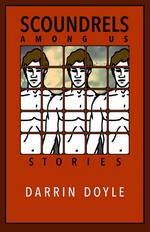

Scoundrels Among Us by Darrin Doyle: An Impressive Array of Short Fiction

I thought I had another week to get this up in time for the release — which was actually two days ago. This is why I’m supposed to trust what I write down (and consult that frequently) rather than what I remember.

Scoundrels Among UsScoundrels Among Us

by Darrin Doyle

PDF, 284 pg.
Tortoise Books, 2018

Read: July 24 – August 6, 2018


The trouble I often have when talking about collections of short stories is just how to do talk about the collection as a whole. After tossing around some ideas, I think the easiest way to sum up my reaction to these stories is with his simple question: What was he thinking?!?!

Now sometimes I asked that question incredulously, sometimes in awe, sometimes in confusion, sometimes in bafflement, sometimes all of the above. But I kept asking it. Some of these are incredibly short, some are on the longer side — told from a variety of perspectives and in a variety of tones. So beyond my one question, I don’t know how to address them collectively. I won’t go into detail on them all individually (that’s just too many), but let’s take a look at some that stood out.

The collection starts with “Insert Name,” a story about the struggles of nonuplets growing up and then transitioning to adulthood in a very unexpected way. It impressed me, and made it clear that this wasn’t going to be a run-of-the-mill short story collection. By the time I got to the sixth entry, “Dangling Joe,” I knew a couple of things — Doyle’s mind doesn’t work the way most people’s does, and that I needed to toss out every expectation I had when I started each story. Whatever I was starting was going to be different from what had come before, and I needed to be ready for that.

The highlight of the book is “If the Invisible Man Dies and Nobody Sees it, Does He Really Die?” This is impossible to describe, but brilliant. He does so many things in this story — in addition to telling a compelling story — that I can’t sum it up easily. Give me 15 pages or so, and I’d be willing to give it a shot. It’s one of the best things I’ve read this year.

My notes on “Twilford Baines, Buck Hunter Unbounded” were simple, “that’s really good.” I just re-read it to see if I could expand on that, and no, I really can’t. It’s a story about a man hunting deer, who is forced into some concentrated self-reflection, and it’s really good. Re-reading it tempted me to push this off another day to re-read most of the stories, actually.

“Slice of Moon” was a great read, but personally frustrating. I think if you read it, you’ll agree. I can’t think of anything else to say without ruining it. If not for “Invisible Man,” it’d be my favorite story in the collection (given how annoyed he made me with it, however, maybe it was more effective than “Invisible Man,”).

I invoked Flannery O’Conner recently, and hesitate to do it again, however, I’m compelled to. Except for the explicit sexual content (which wasn’t really necessary), “Reborn” could’ve come from the pages of Everything That Rises Must Converge. It was powerful and strange and I’m glad I got to read it.

Were there some in this collection that didn’t work for me? Yes. There were some real clunkers — but there was nothing I wasn’t glad to read. As usual, some of the stories that didn’t work for me will work for you. And the one’s that sent me over the moon won’t do much for you (you’ll be wrong most of the time there — especially if you don’t love “If the Invisible Man Dies and Nobody Sees it, Does He Really Die?”). One thing I think everyone who picks this up will agree is: Darrin Doyle is a great writer and you should read his stories. You’ll probably also ask yourself “What was he thinking?” more than once. Go grab it.

Disclaimer: I was provided with a review copy of this collection in return for my honest thoughts and this post — which I appreciate..

—–

4 Stars

In the Year of Our Lord by Sinclair Ferguson: Sinclair Ferguson brings out the heart as well as the life of Church History

In the Year of Our LordIn the Year of Our Lord: Reflections on Twenty Centuries of Church History

by Sinclair Ferguson

eARC, 229 pg.
Reformation Trust Publishing, 2018
Read: August 26 – September 16, 2018
The seeds of this book were first published in a book Ferguson co-authored called, Church History 101: The Highlights of Twenty Centuries — he’s now taken those chapters, done more research (being retired has freed up some time for him to do some reading), and expanded that into this great survey of Church History.

After a stirring (yes, really) introduction that lays out the purpose of this volume, why the study of Church History is important and what can be gained from even the figures from Church History that may disagree with — Ferguson dives in to his survey. I really can’t say enough good about this introduction — which feels odd, that’s not supposed to be the best part of a book (and it isn’t, actually — but it’s good enough that it really could be). The body of the book is twenty chapters — in case you couldn’t guess, that’s one chapter for each completed century Anno Domini (and Ferguson is committed to the usage of that).

Each chapter starts with an excerpt from a noted piece of writing from the century in question — like The Martyrdom of Polycarp, On the Incarnation, Gottschalk;s Shorter Confession concerning Double Predestination, and Savonarola’s The Triumph of the Cross (noted, not necessarily commonly known, obviously). Following that Ferguson summarizes the events of that century — focusing on particular figures or movements that stand out. Most of these will be at least familiar to the reader by name, if not for activities and attributes. Then he closes the chapter with some words of application to the contemporary Church and a hymn from that century — most of those hymns I was totally unfamiliar with, and am so glad I was exposed to them.

The core of the chapters, the history of that century — as summarized as it may be — is so helpful. I’ve taken classes covering a lot of those chapters — and read enough on my own that I was pretty familiar with the material covered. But I learned something about even those eras and individuals I’ve studied extensively — maybe not a lot, but enough to justify the time. And even those things that were primarily review for me were well worth reading — the story of our family is one we should hear over and over again and this book is a prime example of what we need to hear.

But what about those who haven’t taken the classes, or haven’t had that much exposure to Church History outside of the last century — or maybe the first couple of centuries? This book is even better for them. It’s primarily intended as an introduction to Church History, and it excels at being one. First of all, it gives you the good bird’s eye view from the day after the last chapter of Acts to the present. Which is a perspective that’s all too easy to lose in the details — we’ve got to see the forest. But the trees are also important — and Ferguson gives enough detail (while remembering that these are brief summary chapters) that the reader can get a handle on a particular century and learn enough that they can pursue what they’re interested in. I know from reading that Celtic monasticism is something that I want to read more about (and not just by rereading Thomas Cahill), but that there are other things from that period that don’t spark my interest in the same way. Some people will react that way to Gregory I or Thomas Chalmers or something else — and Ferguson has provided the reader with enough to start on to feel comfortable pursuing that interest.

Whether for review or as an introduction — the meat of this book is just what the doctor ordered.

Even if the history wasn’t that helpful, Ferguson’s application and the hymn made the book worthwhile. Sometimes that application is comforting, sometimes it’s challenging — it’s always helpful. And the bonus of having that hymn? That’s a wonderful, devotional way to bring history to life — that’s the same Lord, the same faith being proclaimed in these words. Loved that. Starting the chapters with a doctrinally rich (if occasionally problematic) excerpt reminds us that our faith is first and foremost about truth, about ideas — but those find expression in the heart and life of the believer — as seen in the hymns.

Yes, it’s a weakness that this book focuses on the Western Church — particularly that represented in the English, Scottish and American branches. Ferguson admits that at the beginning, but that’s his tradition, that’s his background — and that’s the background for most of his, readers, too — so it’s what’s most relevant. To go beyond that would result in a tome unwieldy and not that handy for his audience (as great as it would be to see).

The structure of head (excerpt), life (history) and heart (hymn) is a fantastic outline for this book — and everything hung on that outline is clearly-written, helpful to the Christian and relevant (if only to say “don’t be like that.”) Ferguson knocked it out of the park with this one, and I can’t recommended it highly enough. Great for personal use, family devotion, Sunday Schools, Home Schools — you name it, there’s someone who can benefit from this book.

Disclaimer: I received this eARC from Reformation Trust Publishing via NetGalley in exchange for this post — thanks to both for this.

—–

4 Stars

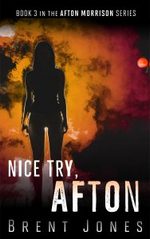
Nice Try, Afton by Brent Jones: Afton’s life gets stranger, more violent, and more open?

Nice Try, AftonNice Try, Afton

by Brent Jones
Series: Afton Morrison, Book 3

Kindle Edition, 111 pg.
2018
Read: July 18, 2018

           I could’ve screamed, knowing that I was the only person in the room working toward a peaceful resolution. Me, Afton Morrison, the disturbed murderess, suggesting that everyone take a deep breath, and find an answer that didn’t include violence.

Things have gone from bad to worse for Afton Morrison, the would-be murderess — not only is she being framed for a murder she didn’t commit, but didn’t; her home has been violated; her understanding of her childhood and family has been shattered; and so many buildings in her town have been burned over the last few days that the police have ordered a lockdown.

Again, this is hard to talk about without spoiling Book 1 and/or 2, so I’ll dodge it. Afton’s pushed about to her limit — maybe past it. And pushes herself in new ways. Ultimately, she embraces the violent tendencies that almost pushed her into her first kill back in Book 1 and sets out to put an end to the chaos that surrounds her home town and threatens to burn it all to the ground.

There is a hand-to-hand fight scene toward the end of the novella that was fantastic. I’d stack it up against Child, Sharp, Finder, or the like any day.

Beyond that there’s some compelling character-focused material. There’s some interesting discussion between the characters on the eternal nature/nurture debate. Afton gets very self-reflective — and maybe grows a little as a result. The emotional beats between the Afton and her family/friends (or the closest things she ahs to friends) are deeper than I expected, and hard-earned.

I’ve enjoyed and appreciated the series to this point, but Jones has found a new gear here, and has produced something markedly better than the rest. I’m not sure what he did here that was better — but every scene, every character, every thing, every theme is better written, better focused, sharper — if part 4 lives up to this, it’s going to be a great ending.

—–

4 Stars

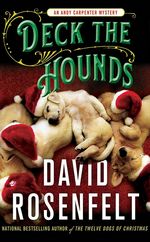
Deck the Hounds by David Rosenfelt: Another Christmas Tale (Tail?) for Andy Carpenter, Another Win for Rosenfelt

Deck the HoundsDeck the Hounds

by David Rosenfelt
Series: Andy Carpenter, #18

eARC, 368 pg.
Minotaur Books, 2018
Read: September 11 – 13, 2018

Andy Carpenter sees a homeless man with a dog on the street, gives the man some money and a gift card for dog food (naturally, the dog gets more than the man, because it’s Andy Carpenter) and has a brief conversation with him. Not long after that, that same man is on the news — he’d been attacked by a stranger and his dog defended him. Which resulted in the dog being put in the pound. Laurie’s filled with pre-Christmas spirit and insists that Andy help out. So he uses his rescue foundation to get custody of the dog and moves the pair into the apartment over his garage.

How heartwarming is this? Clearly, this is fodder for a Christmas/holiday story. But it’s also an Andy Carpenter story, so naturally, after Andy does a newspaper interview about the man — giving his name — he’s arrested for murder. No one was more surprised by this move than Andy’s guest, Don. Not only has Don never heard of the victim, he was unaware that he was wanted by the police. Laurie’s pre-Christmas spirit is still strong, so she talks him into defending the man. It helps that he’s innocent, a dog lover, and an educated, articulate vet with PTSD. The PTSD aspect of the story was told with sensitivity and tact. It didn’t feel tacked on to make the character more sympathetic, but it grounded him in reality and may help to inform some readers about the prices that too many vets are paying.

There is another storyline — seemingly unrelated — running through the novel. Obviously, it’s going to tie into Andy’s case, but it takes a long time for that to happen. This gives the reader multiple opportunities to guess how the two are connected (and multiple opportunities to be wrong. I guessed what was happening in that story pretty easily, and I think most people who read a lot of legal thrillers will. But how it connects to the main story will likely leave most readers as surprised as I was (surprised, and then filled with a strong sense of, “well, naturally, what else could it be?”).

The usual gang is back and in their prime form — Hike is back to his full-time dour self; Ricky is a cute kid; Laurie provides the moral center; Pete is a good cop who continually underestimates Andy’s clients; Sam is a wizard with computers in a way that probably defies reality Marcus is his super-hero best here, and possibly faces his biggest challenge yet (I thoroughly enjoyed this scene). What better way to spend a holiday (or at least a book set around one) than with a bunch of friends like these have become over the years?

Andy spent more time in the courtroom in this book than he has lately — it seemed to me, anyway, I didn’t do a page count. His courtroom antics and cross-examinations are what drew me to the character in the first place, so this is the stuff in these books I most look forward to. Rosenfelt brought his A-game to the courtroom events here, and I loved it. As far as mysteries go, this in one of the most satisfying cases that Rosenfelt has brought us in years.

In my post about the previous “holiday special” I said that I really don’t like it when long-running series do a holiday special — yet, The Twelve Dogs of Christmas and Deck the Hounds have been my favorite installments in the last couple of years in this series. Maybe that means this Grinch’s heart is growing a couple of sizes, or maybe it’s that Rosenfelt is inspired to work harder in these. My guess? It’s the clients — the Andy Carpenter books are at their best when they focus on the client, not on some large conspiracy. These holiday books have the kind of clients you spend time on, that the reader gets invested in — and therefore, Andy gets to shine in defending them.

Whatever the reason, this is a sure-fire win for Andy Carpenter fans. Particularly if you don’t mind a little Christmas celebration (or, if you’re like Laurie, and insist on commemorating the holiday for months).

Disclaimer: I received this eARC from St. Martin’s Press via NetGalley in exchange for this post — thanks to both for this.

—–

4 Stars

Darkside Earther by Bradley Horner: A Sweet Story of First Love Wrapped in a SF Shell

Darkside EartherDarkside Earther

by Bradley Horner
Series: Darkside Earther, #1

Kindle Edition, 221 pg.
2018
Read: September 1 – 3, 2018

I really didn’t think it could get any better than this.

But as with all tales of happiness, there’s always a floating cloud of crap over our heads just waiting for the touch of gravity to send it falling.

Axel is a not a typical teen, but he’s not a-typical. Hundreds years in the future, he lives on a massive space station in orbit above Earth. His parents are people of influence and importance on the station, and he’s being raised to join them. But that’s not at all what he wants. He’s a middling student, at best, all he really wants to do is make art and fall in love — hopefully with one particular girl from his classes. Maybe play a few video games (they’re far more immersive than anything we can possibly come up with — and are called something else, but they’re essentially what I used to play on an Intellivision).

Helen doesn’t have his artistic inclinations or abilities, but she shares his political apathy, his love of video games, his odd sense of humor and other interests (I was tempted to say that she shares his obsession with her appearance, but that’s not entirely fair to her). Her family is historically (and currently) a pretty Big Deal on Earth. Her immediate family is on this space station in part to work on behalf of the people on Earth. I don’t have as strong of a sense of her as I do Axel — at least not one I could express. That’s primarily on me — but it’s also part of the book, it’s Axel’s story, and we know him much better.

The book begins spending a little time with their courtship after setting the stage — it’s very easy to get caught up in the happiness and forget about that floating cloud of crap. Then they hit a pretty major road-bump — and then just when you get caught up in their clever ways around their obstacles, life for everyone on the station plunges into chaos.

Some bar owner once said, “it doesn’t take much to see that the problems of … little people don’t amount to a hill of beans in this crazy world” with an eye to the horrors of World War II around him. Axel and Helen have a bigger conflict, and more suffering, around them — and their problems are even smaller in comparison. But that won’t stop you from being drawn to their plight (and their joy, determination, and courage, too). What these two (and their friends) go through is enough to derail relationships, families, movements — and while you’d understand why both of them would bail on their romance, you can’t help but root for these crazy kids.

It would’ve been understandable, and so very easy, to turn the parents into the villains of the piece — even just one set. But Horner resisted that, and even has Axel realizing they’re all just doing what they think is right and best — even if that’s diametrically opposed to what their children want/believe.

This isn’t technically YA, but it’s YA-friendly. Maybe even MG-friendly, come to think of it. It’s suitable for SF readers of all ages, let’s just say. Horner writes like the best SF writers used to in a way that’s approachable and appealing to all audiences. I wish more did that. I could say a lot about the science of the space station — and the cultures created by it, both in orbit and on the ground; or the politics; or the technology; the human biology . . . basically the SF-ness of it. I’m not going to, because of time, space required — and frankly, the human elements, the characters are what counts.

I wasn’t that sure this book was going to work for me, but I’m glad I gave it a chance, because this thing won me over (pretty quickly, I should add) — it had to be Axel and his way of looking at life that drew me in and then pretty much everything else kept me there. It’s hopeful, almost optimistic (given the harshness of the reality of humanity’s situation, that’s an accomplishment), you can enjoy huge swaths of it. It’s a love story, it’s the beginning of a SF epic, and you will fall under its spell if you give it half a chance. There are some big ideas here, but it’s a pretty small story, where people and their feelings are more important (and more interesting) than conflict, technological wonders, and everything else.

—–

4 Stars

Marked by Benedict Jacka: Alex Verus takes some of the biggest risks of his life

MarkedMarked

by Benedict Jacka
Series: Alex Verus, #9

Mass Market Paperback, 310 pg.
Ace Books, 2018
Read: July 5 – 9, 2018

“So who was it this time?” Anne asked as I walked over to inspect the device.

“I can see the future not the past.” The bomb was a stack of plastique packed into the gym bag, the wires ending in contacts stuck into the blocks. It was crude but powerful, enough to blow apart the house, the victim, and anyone else unlucky enough to be within thirty feet or so of the front door. “I suppose I could get Sonder or someone to track down whoever it was, but honestly, I don’t think it’s worth it.”

“It feels a little bit strange that you don’t even bother identifying the people trying to kill you anymore.”

“Who has that kind of time?”

This is one of those books that I wait so long for (not that it was delayed, I simply couldn’t wait to read it) and then after reading it, the draft has spent too many days open with out words filling the space. I don’t know why — I had and have many opinions about what transpired here, but can’t seem to get them out. So, let’s start with the publisher’s blurb and see if that helps:

           Mage Alex Verus is hanging on by a thread in the ninth urban fantasy novel from the national bestselling author of Burned.

When Mage Alex Verus ends up with a position on the Light Council, no one is happy, least of all him. But Alex is starting to realize that if he wants to protect his friends, he’ll need to become a power player himself. His first order of business is to track down dangerous magical items unleashed into the world by Dark Mages.

But when the Council decides they need his help in negotiating with the perpetrators, Alex will have to use all his cunning and magic to strike a deal–and stop the rising tension between the Council, the Dark Mages, and the adept community from turning into a bloodbath.

This is not a book for someone to jump into this series with; I guess, technically it could work — but man . . . there’s just so much you wouldn’t get. But for those who’ve dipped their toes in the water — or have fully submerged themselves in the deep end — this is going to scratch that itch.

Typically, there are more balls in the air than you can easily track — there’s all the new political moves and movers that Alex has to contend with, his continuing efforts to prove to former friends and allies that he’s trustworthy (well, that he shouldn’t be intensely distrusted anyway), there’s a rising sense among the adepts that they need to organize — and Alex is dumbfounded that none of the Light mages seem to see this as something worth paying attention to — and then there’s Richard’s continuing efforts to disrupt Alex’s life. And then there’s all the stuff that Alex hasn’t figured out that’s going on around him yet.

Due to the political office (however temporary) that he finds himself in, and the nature of the threats he’s facing down — this is one of the least personal stories in the series. At the same time, Alex is driven to risk more of himself to save his friends and maybe even save a foe.

I don’t know how to talk about this without spoiling much. I can tell you that as nice as it is for Arachne not to have all the answers — I wanted more of her and that the rest of Alex’s friends get to shine in ways they normally don’t. Also, given where things end, I’m already impatient to get my hands on the next one.

So, I don’t have much to say, but it’s good. Alex Verus fans should grab it, and people who aren’t yet, should check into the series and catch up.

—–

4 Stars

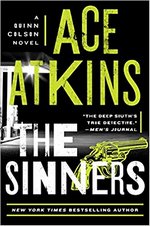
The Sinners by Ace Atkins: Atkins’ take on the Dukes of Hazzard(??) is another stellar installment in the Quinn Colson series.

The SinnersThe Sinners

by Ace Atkins
Series: Quinn Colson, #8


Hardcover, 365 pg.
G.P. Putnam’s Sons, 2018

Read: September 4 -5, 2018

They sat there in silence for a bit, enjoying the warm breeze, the empty, quite sounds of the hot wind through the trees. He and Boom could be together for a long while without saying a damn word, same as it had been hunting and fishing when they were kids. They didn’t feel the need to fill that silence with: bunch of empty-headed talk.

“This place is a lot different from when you got back,” Boom said.

“People in town said for me to burn the house down,” Quinn said.

“Took us two days just to clear out your uncle’s trash,“ Boom said. “Nothing good in here but some old records and guns.”

“And a suede coat and a bottle of Fine bourbon from Johnny Stagg.”

Boom nodded, silent again for a while. Quinn drank his beer watching Hondo, now just a flitting dark speck among the cows as he worked them a little, letting them know who was in charge. Nearly ten years Quinn’d been back and he wasn’t sure he’d made a damn bit of difference.

On the one hand, it’s easy to argue that with Quinn — even just one of the seven preceding novels would tell you that. But, it’s easy to see where he’d get to thinking that way — Tibbehah County is a very much poster child for The More Things Change, The More They Stay The Same Club. The Sinners is full of nice little moments like this — quiet, reflective moments with Quinn and Boom, Quinn and Lilly, Quinn and Maggie. While it’d be easy (and understandable) to focus on the storylines featuring the Pritchards or Boom Kimbrough — the heart of this novel is in these moments. You want to know what Quinn Colson, or this series is about? Focus on these conversations, the quiet in the midst of the storms.

But that doesn’t mean we should ignore the storms.

The first story (not in the book, but here) focuses on Boom Kimbrough, Quinn’s oldest friend. Unwelcome at his old job keeping the Sheriff Department’s vehicles running (among other things), thanks to the county supervisor we met in last year’s The Fallen, Boom’s moved on to doing some interstate trucking. Convinced (wrongly?) that a black man with one arm isn’t going to be hired by anyone else, he’s stuck with one particular company. And once he becomes suspicious about the cargo he’s sometimes carrying, he’s ready to quit — but despondent and frustrated about what he’ll do as an alternative. His boss doesn’t want him to leave — and uses a couple of tough looking employees to convey that to Boom (Boom’s not the only one they’ll threaten — Fannie Hathcock is also a target). Clearly, they don’t know enough about Boom, and before you know it, Quinn is informed about it all. Which brings in FBI agent, Nat Wilkins (more about her in a second). Things get hairy from there. This is the secondary story — and gets that kind of space — but it’s really the more interesting of the two major plots, mostly because it’s what forces Fannie and the Dixie Mafia toughs to get involved in the other story.

The major plotline involves the anti-Bo and Luke Duke. Tyler and Cody Pritchard are a couple of good ol’ boys concerned with racing their stock car, women, and growing/selling the best weed in The South. Things are going fine for them, by and large: they race, they grow and sell, which funds the racing, enabling them to attract women. Sure, they’ve double-crossed Fannie a bit, but that’s really nothing major. Until their Uncle Heath gets out of prison after doing 25 for his part in laying the groundwork of their marijuana growing. Heath, too, is an anti-Duke. He got caught, for one, and he’s not in the habit of keeping his nephews out of trouble, in fact, he makes things worse for them and spurs them into bigger and worse crimes than they’d been accustomed to.

Now, long-time readers will have done the math here — Heath did 25 years, Quinn’s been around for almost 10, having taken over for . . . that’s right, his Uncle, Hamp Beckett. Hamp and Heath apparently were quite the cat and mouse for a while (Hamp perhaps being spurred on by his “Boss Hogg,” Johnny Stagg — I swear I’m done with the Dukes now) until he finally got the goods on Heath and sent him away. That story kicks off this book and is a great way to open. To say that Heath has got a chip on his shoulder toward Hamp and his nephew would be understating things a wee bit.

So we’ve got Heath dragging his nephews into bigger and badder felonies, making them targets for the Dixie Mafia, who are having troubles with things at Fannie’s, and one of their transportation venues is being scrutinized thanks to Boom. Oh, yeah, and Quinn and Maggie are a couple of weeks away from tying the knot and Quinn’s mother is becoming a pest about the ceremony and reception. It’s set to be a good time in Tibbehah.

This is told with Atkins’ typical skill, eye for detail, good timing and atmosphere. It’s hard to find something new to comment on. One thing I really appreciated was how clever he had Quinn act when it came to putting the pieces together. We’re all accustomed (especially in film or television) for the police to be close to figuring things out, but needing a vital piece of information from an unconscious, unavailable, or non-communicative witness until the last second. By the time the unconscious witness woke up and started providing the clues and identities needed to put anyone away for their crimes, Quinn had already sussed it out and was in the middle of making the necessary moves. One more Hazzard reference, I lied, get over it — Quinn is very much the anti-Sheriff Rosco P. Coltrane.

I spent so much time feeling bad for Tyler and Cody — they aren’t characters I’d typically like. There’s little to commend them — they’re not that bright, not that talented, not that nice, I can’t imagine why any woman would want to spend time with them (not that we have proof that any do), and seem destined to lead quiet little lives of no consequence. But once their uncle forces them into things, I just wanted them to find a way back to their petty little pot farm.

I spent more than a little time worried for Fannie, too. She’s as despicable as they come, too, but as characters go, I like having her around. The way she’s treated by her superiors shows how tentative her situation is — and Quinn could be facing someone worse than her or Stagg pretty soon.

Speaking of worries — I spent most of the novel very concerned about the health, well-being and longevity of a character that’s been around since The Ranger. I don’t think for a second that Atkins feels the need to keep any one of these characters alive. Frankly, it’s be easy to make the Quinn Colson novels the Tibbehah County Chronicles or the Lilly Virgil novels — no one is safe, including Quinn. Making it very easy for me to spend a lot of time worried about someone I like. Obviously, I won’t tell you how right I was on that front — but I wasn’t wrong.

Naturally, Atkins gets the characters right. You know from the beginning how worthless Heath Pritchard is, how nasty the Dixie Mafia toughs are, how lame the Pritchard boys would be without prodding (lame, but amusing). We meet new federal officer here — Agent Nat Wilkins. I’m glad that Quinn isn’t wholly dependent on the DEA Agent (whose name escapes me for the moment) for outside support anymore. But more than that, I’m glad that Wilkins is who we get to see in this role. She’s brash, she’s smart, she’s fun — she really isn’t like any Law Enforcement type we’ve met in this series to date. I’m sure we’ll see her again, hopefully soon. I’m not saying I need to see her next year, but if I don’t see her again by 2020, Atkins can expect me to lead an online riot.

It was good to spend time back in this troubled county, checking in with our old friends and some new ones (I’m really liking Maggie, and hope she sticks around). As much as I enjoyed Atkins’, Old Black Magic, I think this is his better work this year. As satisfied as I was with the story, I’m already impatiently waiting for the next installment — between how much I liked The Sinners and the way that Fannie’s last line promised to make the next book a doozy, it can’t come soon enough.

—–

4 Stars

2018 Library Love Challenge

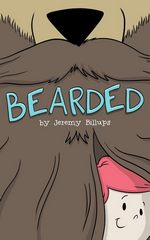
Bearded by Jeremy Billups: A Charming Picture Book about a Bearded Bear

Bearded

by Jeremy Billups
Hardcover, 34 pg.
Billups Creative, LLC, 2015
Read: September 5, 2018
Picture books about bears are everywhere — I have a hard time believing many kids get out of the picture book stage without exposure to at least 4 of them (and that’s before they’re at the Pooh or Paddington stage). But how many of those bears have been bearded?

Enter Jeremy Billups and his little book.

This is the story of a little red-haired girl (no, not that one) traveling the world with her bearded bear, having all sorts of adventures and meeting a bunch of different animals. There really isn’t a lesson, moral or much of a plot — just a bunch of quick looks at the pair. A few quick lines and a picture on each pair of pages.

The art is simple and arresting. They just pop off the page — this is one of those times I wish I had the necessary vocabulary to describe why I like the drawings, but I don’t. I bought a print of what turns out to be page 16 before I even picked up the book to flip through. I’ve bought a handful of prints this year, and it’s my absolute favorite — I like it even more now that I’ve read the book. Also, if you ever see a better picture of someone making buffalo wings, I’ll eat my hat.

Oh, and the endorsements on the back cover are a lot of fun. If that doesn’t convince you to try it out, I can’t imagine what will.

Great art, cute story, fun rhymes — everything you want in a picture book. Even better — animals with beards are the best animals that aren’t dogs. This is a charming little book that’s sure to please.

—–

4 Stars

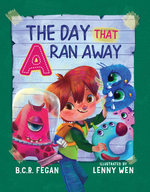
The Day That A Ran Away by B.C.R. Fegan, Lenny Wen: The Best Reasons (Excuses?) Schoolwork wasn’t Done that I’ve Ever Read

The Day That A Ran AwayThe Day That A Ran Away

by B.C.R. Fegan, Lenny Wen (Illustrator)

Kindle Edition, 32 pg.
TaleBlade Press, 2018
Read: July 9, 2018

Things are going bad for poor Jet — his teacher has noticed that he hasn’t finished his assignment of writing out the Alphabet. So he explains to Mrs. May that he did, in fact, do it, but . . . well, did you read the title? A ran away.

From there, Jet goes on to explain why each letter isn’t on his paper. D was scared, I just didn’t want to, something nefarious might have gone on with L, and so on. Each letter gets its own page with a fantastic picture personification and a line or two describing (in rhyme) why that letter didn’t make it onto the work.

Wen’s art is never not delightful, but I really enjoyed this one and have flipped through it a couple of times just to look at the drawings — I love the T and O characters in particular. I’m not sure I can describe it, it might take away from the value if I could — but T’s teeth are about the best bit of art I’ve seen this month. The details he fills the pages with are wonderful, eye-catching and will entertain adults as much as kids.

I’m a little surprised that I’ve become, at this stage in my life (my kids are teenagers or older) to become a fan of picture book creators — but these two have turned me into one. This book demonstrates why. Typical of Fegan and Wen, The Day A Ran Away this is imaginative, fun, and well-written. I cannot imagine a child of picture book age (and maybe a little older) not being entranced by the art, there’s plenty going on for parents/others to point out, and a story that’s fun enough to read that someone wouldn’t mind repeating a few dozen times — which is more important than non-parents can realize.

Disclaimer: I received a copy of this book from the publisher in exchange for my honest opinions about this book.

—–

4 Stars

Page 49 of 88

Powered by WordPress & Theme by Anders Norén