Tag: 4 Stars Page 48 of 88

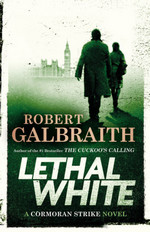
Some quick thoughts on Lethal White by Robert Galbraith

Lethal WhiteLethal White

by Robert Galbraith
Series: Cormoran Strike, #4

Hardcover, 647 pg.
Mulholland Books, 2018
Read: September 19 – 26, 2018

I just don’t have the patience or energy to give Lethal White the kind of post I want to. So let me be brief — this picks up minutes after the end of Career of Evil and we spend a few pages with Strike and Robin trying to have an actual conversation at her wedding. It almost goes well, but between Matthew, her family, Strike’s drinking . . . yeah, well. It was a good start.

Then eleven months and change fly by and we get to the thick of the novel (pun absolutely not intended, but very fitting), so let’s cut to the Publisher’s Blurb to sum that up.

           “I seen a kid killed…He strangled it, up by the horse.”

When Billy, a troubled young man, comes to private eye Cormoran Strike’s office to ask for his help investigating a crime he thinks he witnessed as a child, Strike is left deeply unsettled. While Billy is obviously mentally distressed, and cannot remember many concrete details, there is something sincere about him and his story. But before Strike can question him further, Billy bolts from his office in a panic.

Trying to get to the bottom of Billy’s story, Strike and Robin Ellacott–once his assistant, now a partner in the agency-set off on a twisting trail that leads them through the backstreets of London, into a secretive inner sanctum within Parliament, and to a beautiful but sinister manor house deep in the countryside.

And during this labyrinthine investigation, Strike’s own life is far from straightforward: his newfound fame as a private eye means he can no longer operate behind the scenes as he once did. Plus, his relationship with his former assistant is more fraught than it ever has been-Robin is now invaluable to Strike in the business, but their personal relationship is much, much trickier than that.

The most epic Robert Galbraith novel yet, Lethal White is both a gripping mystery and a page-turning next instalment [sic] in the ongoing story of Cormoran Strike and Robin Ellacott.

If by “most epic Robert Galbraith novel yet,” they mean the longest, well, yeah. That’s certainly the case. Wow, this thing was long — you can argue bloated, even. At the same time — while lamenting the week it took me to get through this — I don’t know what I’d cut if given the opportunity. Everything I’ve thought could be lost, can’t be without ruining something else. It’s real a testament to Galbraith’s skill that there’s really nothing wasted, everything sets up something else.

But man, I wish that wasn’t the case. And, yeah, fill up the comment section with how I’m wrong about that, I’m more than willing to be convinced.

But what makes all of the work worth it? The scenes where Strike and Robin work together, think through things together, or even just talk like friends together. In short — Strike and Robin together. It doesn’t happen enough — and, honestly, there’s some sloppy, soap opera-ish machinations keeping that from happening the way it should (well, okay, the way I want it to). I honestly don’t care one way or the other if they ever get together (as inevitable as it seems) — I just want them working together.

The other great thing is the way that the events of Career of Evil have impacted Robin and the way she’s reacting to that impact. I don’t want to say more, but I loved this.

Lastly, the nature of the murders at the core of the book stand in sharp contrast to some of the murders in earlier Strike novels. Some novelists get stuck in a rut and all the murderers/motives/methods become variations on a theme — each one more extreme than the previous. Galbraith dodges that here, and that pleases me a lot.

There’s a lot more that could be discussed — and I hope others do (or inspire me with a comment to do so). Good mystery, good character development (some well overdue), I enjoyed all of the characters, etc., etc. But I’ll leave it at that — I’m glad we got another book, and am looking forward to the next already. I just hope it’s a little leaner.

—–

4 Stars

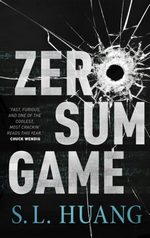
Zero Sum Game by S.L. Huang: A Healthy Dose of SF Peanut Butter in this Thriller’s Chocolate Results in a Very Tasty Book

Zero Sum GameZero Sum Game

by S.L. Huang
Series: Cas Russell, #1

Hardcover, 334 pg.
Tor Books, 2018
Read: October 22 – 26, 2018

           “I’m really good at math,” I said. Too good. “That’s all.”

I’m not sure how many times I stopped reading this book to ask, “What did I just read?” Not because I’m too dense to comprehend the words on the pages, but Huang’s work was so audacious, so confident, so imaginative that i couldn’t believe it.

Cas Russell retrieves things — all sorts of things. We don’t get details, but it’s safe to say that things like legalities, procedures and technicalities don’t enter into her Cas’ thinking. When this book opens, she’s retrieving a person — which is not typical for her, nor that easy. But Cas does it, but before she returns that person to her family, she goes the extra mile to keep the retrieved person safe (she doesn’t want to have to get her again).

This ends up plunging Cas into a world of deceit, conspiracies, secret organizations, and some of the most mind-bending situations I can remember reading.

Here’s what separates Cas from most of the action/suspense heroes we have today — that line above about being good at math. She’s some sort of genius — maybe beyond that — at math. She looks at a situation — say, getting punched in the face — and while the fist is coming at her, calculates things (velocity, force, angles) rapidly enough to know how to adjust herself to lessen the blow and the injury to herself minimal and how best to counter the attack in such a way to put down her opponent. The same goes for shooting someone, using a knife, jumping into a building, etc., etc. The math is everywhere — but Huang deals with it in such a way that even an English major like myself can see it, appreciate it, and not get put off by it.

I’m not sure that makes sense. Let me try this — I don’t know if you watched the recent Luc Besson movie, Lucy, where Scarlett Johansson plays some sort of hyper-intelligent woman who is a near-unstoppable one-woman army, it’s kind of like that — but more successful. Or maybe think Bradley Cooper in Limitless, but without the pills.

Throw that kind of thing into a gritty, twisty world of damaged PI’s, hackers, dubious government agencies and drug cartels — and you’ve got an idea about what this book holds. It’s a little SF, it’s a lot of Thriller — an action-packed winner. I don’t want to talk more about it — the characters other than Cas are fascinating. I’d be more than happy to spend more time with all of them — there’s a very mysterious figure named Rio that I really want to know a whole lot more about, but I think I prefer not knowing — he works so well wrapped in mystery. This would’ve been a fantastic stand-alone, but I’m excited to see that this is listed as the first in a series. Sign me up for a handful of these right now.

I thoroughly enjoyed this book — it all worked wonderfully. There was one thing I cracked up at (it was funny, character revealing and oh-so-original) and when I made a note about it, I noticed that I was on page 69. I’ve never tried the Page 69 Challenge, where you decide whether to read a new book based on reading that page first, because that just seems annoying. But if I’d tried it with Zero Sum Game, it’d have worked for me.

For a first-time novelist (especially one with a math degree), Huang delivers a fantastic, assured read that’s almost sure to please. Give it a shot and you’ll see why I struggled to explain why you want to read this, while thinking that you really should.

—–

4 Stars

2018 Library Love Challenge

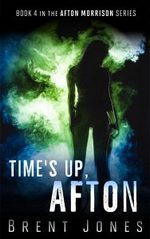
Time’s Up, Afton by Brent Jones: Jones Wraps Things Up with a Suspenseful and Successful Conclusion

Time's Up, AftonTime’s Up, Afton

by Brent Jones
Series: Afton Morrison, Book 4

Kindle Edition, 142 pg.
2018

Read: October 29, 2018

She tugged at the edges of her apron, giving me a facetious and halfhearted curtsy. “We all wear masks, Afton. Sometimes it’s worth finding out what’s hiding underneath.”

Tia’s words to her unexpected friend encapsulate the core of this book — we find out what’s underneath several masks. But first we’ve got to tie up some plotlines, see the fall-out and repercussions of the third installment (well, all of them, but the third particularly), and deal with a a few more grisly deaths.

This picks up right after Nice Try, Afton where we see Afton try to come up with an explanation that anyone will believe for the bloodbath surrounding her. From there, she has to design and implement her endgame to — once and for all — stop her tormentor before she leaves town.

This volume is really Afton pulling back the mask little by little to those around her — library patrons, her brother, friends, and even herself. While that occurs, she learns a lot about her brother, friends, and her enemies. A lot makes sense that didn’t before — even if you didn’t realize it needed the explanation until you got it.

I was less than satisfied with what was hidden under one mask — but not enough that it ruined things for me. And, hey it leaves a door open (at least a crack) for Jones to use if he wants to return to Afton’s world. So I’m really not going to complain.

I’m going to keep this short because I’m afraid I’ll spill something if I keep going. This ends up nowhere near where I thought it was going when I finished Go Home, Afton some four months ago — it’s far better. I really encourage you all to pick these novellas up. Some interesting characters, some very compelling action scenes, and a story that will take you places you don’t expect.

—–

4 Stars

She Rides Shotgun by Jordan Harper: A Gripping Thriller, A Touching Father-Daughter Story, a Special Kind of Crime Novel

She Rides ShotgunShe Rides Shotgun

by Jordan Harper

Hardcover, 257 pg.
Ecco, 2017
Read: August 7 – 8, 2018

This is one of those books where you want to sit and talk about it for a couple of hours — recapping and dissecting the events, analyzing, and speculating about what happens after the book ends; or you don’t want to say anything beyond “just read it, I don’t want to ruin anything for you.” I could absolutely relish the former, but I’m going to hew closer to the latter. Harper’s better to read on this than me, anyway.

So, here’s the official blurb to keep me from slipping:

           Eleven-year-old Polly McClusky is shy, too old for the teddy bear she carries with her everywhere, when she is unexpectedly reunited with her father, Nate, fresh out of jail and driving a stolen car. He takes her from the front of her school into a world of robbery, violence, and the constant threat of death. And he does it to save her life.

Nate made dangerous enemies in prison—a gang called Aryan Steel has put out a bounty on his head, counting on its members on the outside to finish him off. They’ve already murdered his ex-wife, Polly’s mother. And Polly is their next target.

Nate and Polly’s lives soon become a series of narrow misses, of evading the bad guys and the police, of sleepless nights in motels. Out on the lam, Polly is forced to grow up early: with barely any time to mourn her mother, she must learn how to take a punch and pull off a drug-house heist. She finds herself transforming from a shy little girl into a true fighter. Nate, in turn, learns what it’s like to love fiercely and unconditionally—a love he’s never quite felt before. But can their powerful bond transcend the dangerous existence he’s carved out for them? Will they ever be able to live an honest life, free of fear?

She Rides Shotgun is a gripping and emotionally wrenching novel that upends even our most long-held expectations about heroes, villains, and victims. Nate takes Polly to save her life, but in the end it may very well be Polly who saves him.

The thing to remember about Nate — he might be trying to be a good father, he may want to be a good father and act a certain way for Polly. But he’s not a good guy. He’s not a paragon of virtue, he’s not a reputable citizen. He’s a criminal — and not an entirely successful criminal, with almost zero parenting skills. But man, he wants to try. Expect some heroics, but remember he’s no Nick Mason, Jack Reacher or the like.

Polly? I don’t know what to say about her. If you can read a few chapters of this and not fall in love with this little girl, want to adopt her and protect her from all this madness? Something’s broken in you. She’ll win your affections, you’ll root for her, you’ll pity her, you’ll hope she survives this all intact.

There were a couple of other stand-out characters — I’d get into them, but it doesn’t matter. Your appreciation for this book comes down to this: what do you think about Nate and Polly and what they go through?

This is a tense thriller, with more than your typical emotional moments for the genre. Harper delivers both with equal skill and aplomb. As horrible as so much of this plot was — this was a real pleasure to read, from cover to cover.

I first heard about this novel — and author, come to think of it — on Episode 33 of Two Crime Writers And A Microphone, you might want to check it out.

—–

4 Stars

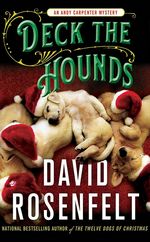
Pub Day Repost: Deck the Hounds by David Rosenfelt: Another Christmas Tale (Tail?) for Andy Carpenter, Another Win for Rosenfelt

Deck the HoundsDeck the Hounds

by David Rosenfelt
Series: Andy Carpenter, #18
eARC, 368 pg.
Minotaur Books, 2018
Read: September 11 – 13, 2018

Andy Carpenter sees a homeless man with a dog on the street, gives the man some money and a gift card for dog food (naturally, the dog gets more than the man, because it’s Andy Carpenter) and has a brief conversation with him. Not long after that, that same man is on the news — he’d been attacked by a stranger and his dog defended him. Which resulted in the dog being put in the pound. Laurie’s filled with pre-Christmas spirit and insists that Andy help out. So he uses his rescue foundation to get custody of the dog and moves the pair into the apartment over his garage.

How heartwarming is this? Clearly, this is fodder for a Christmas/holiday story. But it’s also an Andy Carpenter story, so naturally, after Andy does a newspaper interview about the man — giving his name — he’s arrested for murder. No one was more surprised by this move than Andy’s guest, Don. Not only has Don never heard of the victim, he was unaware that he was wanted by the police. Laurie’s pre-Christmas spirit is still strong, so she talks him into defending the man. It helps that he’s innocent, a dog lover, and an educated, articulate vet with PTSD. The PTSD aspect of the story was told with sensitivity and tact. It didn’t feel tacked on to make the character more sympathetic, but it grounded him in reality and may help to inform some readers about the prices that too many vets are paying.

There is another storyline — seemingly unrelated — running through the novel. Obviously, it’s going to tie into Andy’s case, but it takes a long time for that to happen. This gives the reader multiple opportunities to guess how the two are connected (and multiple opportunities to be wrong. I guessed what was happening in that story pretty easily, and I think most people who read a lot of legal thrillers will. But how it connects to the main story will likely leave most readers as surprised as I was (surprised, and then filled with a strong sense of, “well, naturally, what else could it be?”).

The usual gang is back and in their prime form — Hike is back to his full-time dour self; Ricky is a cute kid; Laurie provides the moral center; Pete is a good cop who continually underestimates Andy’s clients; Sam is a wizard with computers in a way that probably defies reality Marcus is his super-hero best here, and possibly faces his biggest challenge yet (I thoroughly enjoyed this scene). What better way to spend a holiday (or at least a book set around one) than with a bunch of friends like these have become over the years?

Andy spent more time in the courtroom in this book than he has lately — it seemed to me, anyway, I didn’t do a page count. His courtroom antics and cross-examinations are what drew me to the character in the first place, so this is the stuff in these books I most look forward to. Rosenfelt brought his A-game to the courtroom events here, and I loved it. As far as mysteries go, this in one of the most satisfying cases that Rosenfelt has brought us in years.

In my post about the previous “holiday special” I said that I really don’t like it when long-running series do a holiday special — yet, The Twelve Dogs of Christmas and Deck the Hounds have been my favorite installments in the last couple of years in this series. Maybe that means this Grinch’s heart is growing a couple of sizes, or maybe it’s that Rosenfelt is inspired to work harder in these. My guess? It’s the clients — the Andy Carpenter books are at their best when they focus on the client, not on some large conspiracy. These holiday books have the kind of clients you spend time on, that the reader gets invested in — and therefore, Andy gets to shine in defending them.

Whatever the reason, this is a sure-fire win for Andy Carpenter fans. Particularly if you don’t mind a little Christmas celebration (or, if you’re like Laurie, and insist on commemorating the holiday for months).

Disclaimer: I received this eARC from St. Martin’s Press via NetGalley in exchange for this post — thanks to both for this.

—–

4 Stars

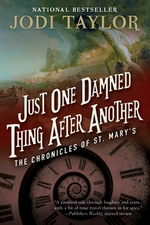
Just One Damned Thing After Another by Jodi Taylor: A Delightfully Charming and Fun Time-Travel Epic Kicks Off

 Just One Damned Thing After Another Just One Damned Thing After Another

by Jodi Taylor
Series: The Chronicles of St. Mary’s, #1

Paperback, 480 pg.
Night Shade Books, 2016
Read: July 30, 2018

Thinking carefully is something that happens to other people.

I lost my notes to this book, which is annoying me greatly. So I’m going to be a bit more vague than I want to be.

I could tell from the first couple of pages that I was going to have a great time with this book — our narrator is Dr. Madeline “Max” Maxwell, a specialist in ancient history. She is charming, engaging, brash, and funny. She’s a few more things, too, but let’s leave it there. Essentially, she’s a delight — it almost doesn’t matter what setting you put her in, what story you tell with her — I’m in.

Thankfully, Taylor puts her in a crazy novel, one perfectly suited for her. When we meet her, Max is being recruited by a former mentor to join St Mary’s Institute of Historical Research, a very strange research facility. These historians get their hands dirty in their research in the ways that no other facility on Earth can manage — they have time machines to take them to whatever point in time they’re studying so they can see ad experience history first-hand.

Sounds great, doesn’t it? But things go awry — in spectacularly bad fashion. But, for these Historians, where there’s tea, there’s hope. Using wit, sheer determination, and a little luck Max and her new colleagues will have to find a way to meet these new and dangerous challenges.

There’s a lot more action and fighting than you’d think given that the book is about Historians and the Technicians who work with them. There’s a lot of humor, some pathos, a little love — and a little more sex than I’d prefer (thankfully most of it happens “off screen,” but not all of it). The plot is impossible to summarize well — it bounces around from point to point like a ball in a pinball machine. This is not a complaint, this is a description. Months will go by in a paragraph (or less) and then things will slow down for the events of a day or two. These are Time Travelers, after all, they can squeeze a lot of activity into a short period of time.

There are some other great characters here, too. Max has wonderful, loyal and capable allies (who happen to be interesting to read about); she has fantastic antagonists — the kind of characters you can relish your annoyance/anger/moral superiority over; her friends are interesting, he love interest is about as fun as you could ask for, and is charming enough in his own right.

I wish I’d had the time to write this up when the book was fresher in my mind — or if I’d not lost my notes. This book deserved a bit more from me. Basically, this book — between characters, circumstances, plot and tone is what I’d hoped for from the Tuesday Next books. I have no idea if Taylor can keep up the freshness of the voice, the zaniness of the plot, and the engaging quality of the characters (particularly Max) — it’ll be tough to do. But I’m looking forward to finding out. I had a blast reading this one, and can’t imagine that Taylor’s charm wouldn’t win over at least 87% of those who give this a try.

—–

4 Stars

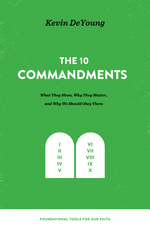
The Ten Commandments by Kevin DeYoung: A Warm, Engaging Study of God’s Revealed Will

The Ten CommandmentsThe Ten Commandments: What They Mean, Why They Matter, and Why We Should Obey Them

by Kevin DeYoung

eARC, 208 pg.
Crossway, 2018
Read: September 23, 2018

My initial thought when I saw this book was: do we need another popular-level work on The Ten Commandments? We’ve got so many already, like: Ryken’s Written in Stone, Horton’s The Law of Perfect Freedom, Packer’s Growing in Christ. We’ve got Douma’s, Watson’s and Durham’s (newly republished) on the heavier end of the spectrum, too. Why bring out a new book by DeYoung? Still, I was intrigued, so I requested a copy.

Not too surprisingly, I’m glad I did. This is typical DeYoung: a strong, affectionate, orthodox take on the Law delivered in a very accessible and affable manner. He made me think, he made me reconsider a thing or two, and he reminded me of a few things I needed reminding of.

He begins this work against the framework of the secular “anything goes” point of view, where everything certainly does not go — as much as we as a culture might rail against an external source of morality — there are things that simply cannot be said or done. Giving us a choice between humanity’s unwritten, assumed code — or God’s revealed will. DeYoung then goes on to list reasons for the study as well as the following of God’s Law.

The other important groundwork comes from the midst of his very strong chapter on the First Commandment in which he describes the role of the Law for New Covenant believers. It’s still applicable, still binding — just in a different manner. I think this could’ve been developed more — maybe in its own chapter, but what we got here was good. I do particularly appreciate his metaphor of transposition. The Law in the New Covenant is the same for believers as it was in the Old, it’s just in a different key.

Following the introduction where he lays out his framework, DeYoung turns to consider the commandments individually. This is the bulk of — and the heart of — the book, with a chapter devoted to each commandment. If the book has any value, it’ll be found here, and there’s a lot of it to be found. I briefly considered summarizing each chapter, but why steal his thunder. Also, he’s not carving out anything new here, so there’s little need. What’s new is his expression of the timeless truths, his way of explaining and applying them. If you want a quick summary of what he’ll say about each commandment read The Heidelberg Catechism questions 92-115 or the Westminster Shorter Catechism questions 39-85, and you’ll get a pretty good idea.

Instead, I’ll just comment on a few highlights and a couple of problems I had (your mileage may vary). I found his comments regarding the Fourth Commandment to be helpful, but hesitant — in his effort to not be legalistic, or overly dogmatic, he comes across as wishy-washy. I appreciated most of what he had to say about the Second Commandment, but again, he’s hesitant enough in some of his application to stumble a bit. Which is not to say that the bulk of those chapters weren’t good and helpful — they were. I think he could’ve been more consistently so.

Conversely, the chapters on the Eighth and Tenth commandments were incredibly helpful. If you ask me, these two are where the American Church and American Christians stumble more often than we realize (or care about). Publicly, Protestants are expounding so much energy on certain applications of the Sixth and Seventh commandments that one would be tempted to think that 8-10 are concerns of the past. DeYoung doesn’t let the reader think that for an instant, and if you don’t come away from these chapters with a good dose of conviction of your own sin, you probably didn’t read it too closely.

The chapter on the Third Commandment was invaluable also. It’s far too easy for Western Christians to reduce this to “don’t be a potty mouth” and far too hard for us to really get what the importance of “name of the Lord” is. DeYoung does a yeoman’s job on both fronts and does a good job expounding the meaning of this commandment.

You’ll never walk away from any of these chapters thinking that DeYoung is writing a hellfire and brimstone jeremiad against the Church, you, or anyone. He’s sharply critical of a lot of general culture, and individual inclinations, but that’s to be expected. There’s conviction and inspiration both to be found in these pages — all delivered in DeYoung’s warm, almost conversational, style — a strong blend of wit and charm with the steel in his words. I won’t get into it, but his chapter on the Third Commandment contains one of the funniest anecdotes (more in the telling than the story) I’ve read from him. Ignoring his content for a moment, his writing style is what will keep me coming back to DeYoung’s books for years to come.

I think I’ve said before, I’m not a big one for study/discussion questions in books — I like to think the engaged reader doesn’t need them and someone leading a discussion/study of a book will be clever enough to come up with their own. But, I’m obviously swimming against the tide on this because publishers keep printing them. That said, on the whole, this is a pretty good set of questions and would help someone who likes those kind of questions for their own use or for those using the book in Family Worship, Sunday School, or Bible Study.

In the end, my question, do we need another popular-level book on The Ten Commandments? Is answered yes: we need frequent — constant — reminders of the revealed will we’ve been called to obey, so we never stop striving for that perfection and never cease calling on the Spirit’s assistance. We also need to remember how great our sin and misery are so that we constantly live lives of repentance. So bring on DeYoung’s good summary. And others as well — and we need to read them, as well as the older popular-level works. And then we need to push ourselves and read some of the less-popular level ones as well.

This is a good, short set of meditations and reflections on the perfect law, the law of liberty for a contemporary audience. It’s approachable, it’s warm, it’s pointed, and it’s Gospel-centered. It’s not perfect, but it’s good. It functions well as a refresher for those who need one, and a good starting point for their own study of The Ten Commandments. I’m buying a copy (at least one) for my personal library and will be encouraging my household to read it — and anyone else who asks.

Disclaimer: I received this eARC from Crossway via NetGalley in exchange for this post — thanks to both for this.

—–

4 Stars

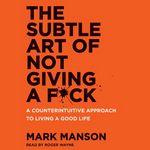
The Subtle Art of Not Giving a F*ck (Audiobook) by Mark Manson, Roger Wayne: A Mix of Common Sense, Cynicism, Self-Aggrandizement, Clever Writing, and a Great Narrator

The Subtle Art of Not Giving a F*ck (Audiobook)The Subtle Art of Not Giving a F*ck: A Counterintuitive Approach to Living a Good Life

by Mark Manson, Roger Wayne (Narrator)

Unabridged Audiobook, 5 hrs., 17 min.
HarperAudio, 2016

Read: October 1, 2018

I’d seen this book around, and let my eyes slide right off given the title. Clearly, it wasn’t for me. Then a couple of months ago, I heard it referenced in a couple of podcast interviews (no, I don’t remember who talked about it — but at least one of them said something thoughtful about it) and my cubicle-mate listened to it at the same time and seemed to enjoy it. So I figured I’d give it a shot. I’m very glad I did, really.

I’m also glad that HarperCollins’ website gives such a thorough blurb about the book, which will save me so much time — so let’s take a moment to read what they said:

           In this generation-defining self-help guide, a superstar blogger cuts through the crap to show us how to stop trying to be “positive” all the time so that we can truly become better, happier people.

For decades, we’ve been told that positive thinking is the key to a happy, rich life. “F**k positivity,” Mark Manson says. “Let’s be honest, shit is f**ked and we have to live with it.” In his wildly popular Internet blog, Manson doesn’t sugarcoat or equivocate. He tells it like it is—a dose of raw, refreshing, honest truth that is sorely lacking today. The Subtle Art of Not Giving a F**k is his antidote to the coddling, let’s-all-feel-good mindset that has infected modern society and spoiled a generation, rewarding them with gold medals just for showing up.

Manson makes the argument, backed both by academic research and well-timed poop jokes, that improving our lives hinges not on our ability to turn lemons into lemonade, but on learning to stomach lemons better. Human beings are flawed and limited—”not everybody can be extraordinary, there are winners and losers in society, and some of it is not fair or your fault.” Manson advises us to get to know our limitations and accept them. Once we embrace our fears, faults, and uncertainties, once we stop running and avoiding and start confronting painful truths, we can begin to find the courage, perseverance, honesty, responsibility, curiosity, and forgiveness we seek.

There are only so many things we can give a f**k about so we need to figure out which ones really matter, Manson makes clear. While money is nice, caring about what you do with your life is better, because true wealth is about experience. A much-needed grab-you-by-the-shoulders-and-look-you-in-the-eye moment of real-talk, filled with entertaining stories and profane, ruthless humor, The Subtle Art of Not Giving a F**k is a refreshing slap for a generation to help them lead contented, grounded lives.

Sure, some of that is overblown — its point is to sell you the book, right? But, by and large, that’s a good summary of the book’s highlights. Manson’s point isn’t to stop giving a f*ck period, it’s to give fewer f*cks in general and to make sure the f*cks you give are for the right/important stuff in life. That’s pretty basic, but pretty easily ignored advice: everything seems important, but not everything is. Focus on the important stuff, care about that, and let the rest go — if it works out, great. I’m not sure if this is different from Carlson’s book Don’t Sweat the Small Stuff — but it probably has more laughs and profanity.

Manson is entirely too impressed with himself (or at least he comes across that way), and he never convinces me that there’s a reason to heed his advice over anyone else’s. But on the whole, what he says makes a lot of sense. Do I think that ultimately, this is all a house of cards that won’t stand intense scrutiny? Yup. But I think that of every bit of man-made advice — Manson’s is more amusingly delivered than most, and won’t get the devotee into too much trouble if they apply this recklessly.

Roger Wayne’s narration elevates the entire thing — there’s not a moment that I don’t confuse his voice for Manson’s. It felt like I was attending one of the most intense self-help seminars in history and that Manson got going and just wouldn’t stop (not that anyone tried to make him). Wayne added voices (his Disappointment Panda voice is the best character I’ve heard in an audiobook since Luke Daniel’s take on Hearne’s Oberon), flair and a sense of passion to the text. When Manson approached poignancy, Wayne made it all the more so. Fantastic work.

I’d probably give this 3-stars if I’d read the text — amusing, thought-provoking, with some good advice. But, you add in Wayne’s narration? I’ve got to bump it up to 4. Seriously, he’s just that good. This isn’t a book for everyone (I know several readers of this blog that should avoid it just for the language), but for those who are capable of sorting out the wheat from the chaff — this is a fun and potentially helpful read.

—–

4 Stars2018 Library Love Challenge

Burning Secrets by Ruth Sutton: A Child Abduction Sets Off a Disturbing Chain of Events


Burning SecretsBurning Secrets

by Ruth Sutton

Kindle Edition, 264 pg.
Fahrenheit Press, 2018

Read: October 2 – 3, 2018

For a book that clocks in at 264 pages, Sutton packed in a lot of story. I’m having difficulty deciding what to focus on, I’ve got to say. If only all authors could present a guy with such problems . . .

This book starts off with a child abduction — a child, Helen Helsop, that we get to know a little bit before she’s abducted. Immediately I groaned, because the last thing I wanted to deal with is a book about a little girl getting snatched and then dealing with whatever abuse is looming. Without spoiling much, let me assure you — nothing like that happens. This is not that kind of kidnapped child story. This doesn’t mean that she’s been taken for benign or even beneficial reasons, however.

Helen hasn’t been living at home — she’s been staying with family in town so she can attend school. Because theirs is a farming community — predominately, or at least heavily, a dairy and cattle area, and this is 2001 — the height of the Foot and Mouth crisis. I’ll be honest, as an American in a pre-social media age, I didn’t have a strong grasp on the effect this had on smaller farmers — I just never was exposed to it. I got what it meant on the national/industry front, but didn’t think much more about it. If I had, it would’ve been obvious just how much this would decimate a community, an individual family, and why this was such a horrible crisis. Anyway, back to Helen — she hasn’t had a good time of it in this temporary home and is easily persuaded to leave. It’s hours (of course) before anyone notices that she’s missing, and even then, most of her family doesn’t believe she’s actually missing.

Before that, thankfully, the police are called in — we focus on DC Maureen Pritchard — a well-known fixture in the community (not as well-known as her father, however) and the newly-arrived DS Anna Penrose. There’s a little professional jealousy between the two — Pritchard envies another woman in a position she was denied and Penrose would love the acceptance and respect her fellow officers seem to have for Pritchard. But largely, they can put that aside to focus on Helen. It’s obvious from the start that the foster family and Helen’s actual family are both holding back from the police, but it’s hard to tell if it’s germane to the case, or if it’s just things that no one wants to share with outsiders.

This is all so compellingly told — the layers that Sutton is working on are something to behold. She’s excellent at revealing more and more about Pritchard and Penrose while they’re uncovering more about Helen’s life and whoever took her. You could make the case (I think you’d be wrong, but you can make it) that the mystery in this novel takes a back seat to the drama surrounding the women and their superiors. Initially, probably because we meet her first, I was pulling for Pritchard to solve the case, rescue the girl and save the day to put Penrose in her place. But soon, I just wanted the two of them to knock off the nonsense and just work together — preferably by being open with each other about what’s going on. I won’t say if I was ultimately satisfied in that desire, but I can say that Sutton deals with their relationship in a way that is absolutely believable and realistic — a very satisfactory job.

The greatest impediment to the search for Helen isn’t the fact that the family is hiding something(s), the difficulty in tracking down a person of interest, the cleverness of the kidnapper, finding a particular van in a decent size, getting a straight answer out of scared kids with overbearing/concerned parents interfering (for nefarious reasons or unintentionally), or any of the other absolutely understandable and inevitable roadblocks. Instead, it’s Detective Inspector Stanley Bell — he’s too focused on the budget and on impressing his DCI, not that we can forget his obvious misogyny and blatant racism. It’d have been easy for Sutton to leave him as a buffoon, an obstacle, a foil for Pritchard and Penrose — but she doesn’t, there are times when he seems to be a perfectly capable police officer. But those times are the minority — it is fun to watch his subordinates play him to get their way, Penrose learns from Pritchard’s example quickly on this front.

If I tried to talk about the kidnapper, I’d spoil it — if I tried to talk about Helen’s family, I’d fail. I can’t summarize what Sutton did there (I was reductionistic enough with the police — and I’d still be reductionistic if I’d included everything I wanted to say about them) — I’ve known men like her father and older brother. I could feel their pain, their frustration — with their life in general, even before Helen’s abduction, which just seemed like the next-to-last straw for them. Between Foot and Mouth, general hardships (physical and financial) related to this lifestyle, too much alcohol, and a wife who wants more than all this — it’s just too much for people to take.

The depiction of Helen is really strong, as well — she is a scared twelve year-old doing the best she can in a horrible circumstance. At some point the police don’t understand why she did X in a situation. I wanted to yell at them, “because she’s a scared little kid!” Of course, she’s not going to act like a rational adult. (The other thing I had a hard time buying was that given the emphasis the officers put on local knowledge, was that it was the outsider who understood the importance of getting his cows milked to a dairy farmer)

I’ve gone on too long, and haven’t said nearly enough. So let’s hit the important things as I try to wrap up.As I said at the outset — this is not a typical kidnapping novel. Every assumption you make early on in the book will prove to be mistaken, but it all feels organic, it all seemed natural. This isn’t one of those books where you can see the author moving pieces around to achieve her ends. I have no doubt she did — but I couldn’t see it. There’s some good action, some very clever policework, and a strong psychological-thriller bent to parts of this as well. There’s a strong Perry Mason-esque quality to the strategy the police employed at the end, which I appreciated. Burning Secrets ticks almost every box a mystery-fan will have on their list.

This is a novel about family secrets, family problems — all families, on some level, I’m sure. There are strong threads about options various women take to take care of their families and themselves — what lengths they may go to, what shortcuts they may take, what hard choices they may make — to secure happiness, health, or survival. This is a novel about change — individual and societal — how difficult that is. But none of these themes detract from a heart-stopping and heart-breaking story about a kidnapping and the consequences radiating from it. All in less than 300 pages — not a bad feat.

I have no idea if Sutton intends to write more about these characters (there’s every reason to think she will, given her track record) — but I’d love to spend more time with them. If Penrose and Pritchard can turn their détente into some sort of working understanding, or better, a real partnership, they’d be a fantastic combination (for drama, they’d still be interesting if they don’t form any closer relationship, but it wouldn’t be as fun to read). Sutton does have a pretty hefty backlist, and I should try to dive in — and you should, too. Start with this, though, it’ll whet your appetite for the rest.

—–

4 Stars
My thanks to damppebbles blog tours for the invitation to participate in this tour and the materials they provided.

Scoundrels Among Us by Darrin Doyle: An Impressive Array of Short Fiction

I thought I had another week to get this up in time for the release — which was actually two days ago. This is why I’m supposed to trust what I write down (and consult that frequently) rather than what I remember.

Scoundrels Among UsScoundrels Among Us

by Darrin Doyle

PDF, 284 pg.
Tortoise Books, 2018

Read: July 24 – August 6, 2018


The trouble I often have when talking about collections of short stories is just how to do talk about the collection as a whole. After tossing around some ideas, I think the easiest way to sum up my reaction to these stories is with his simple question: What was he thinking?!?!

Now sometimes I asked that question incredulously, sometimes in awe, sometimes in confusion, sometimes in bafflement, sometimes all of the above. But I kept asking it. Some of these are incredibly short, some are on the longer side — told from a variety of perspectives and in a variety of tones. So beyond my one question, I don’t know how to address them collectively. I won’t go into detail on them all individually (that’s just too many), but let’s take a look at some that stood out.

The collection starts with “Insert Name,” a story about the struggles of nonuplets growing up and then transitioning to adulthood in a very unexpected way. It impressed me, and made it clear that this wasn’t going to be a run-of-the-mill short story collection. By the time I got to the sixth entry, “Dangling Joe,” I knew a couple of things — Doyle’s mind doesn’t work the way most people’s does, and that I needed to toss out every expectation I had when I started each story. Whatever I was starting was going to be different from what had come before, and I needed to be ready for that.

The highlight of the book is “If the Invisible Man Dies and Nobody Sees it, Does He Really Die?” This is impossible to describe, but brilliant. He does so many things in this story — in addition to telling a compelling story — that I can’t sum it up easily. Give me 15 pages or so, and I’d be willing to give it a shot. It’s one of the best things I’ve read this year.

My notes on “Twilford Baines, Buck Hunter Unbounded” were simple, “that’s really good.” I just re-read it to see if I could expand on that, and no, I really can’t. It’s a story about a man hunting deer, who is forced into some concentrated self-reflection, and it’s really good. Re-reading it tempted me to push this off another day to re-read most of the stories, actually.

“Slice of Moon” was a great read, but personally frustrating. I think if you read it, you’ll agree. I can’t think of anything else to say without ruining it. If not for “Invisible Man,” it’d be my favorite story in the collection (given how annoyed he made me with it, however, maybe it was more effective than “Invisible Man,”).

I invoked Flannery O’Conner recently, and hesitate to do it again, however, I’m compelled to. Except for the explicit sexual content (which wasn’t really necessary), “Reborn” could’ve come from the pages of Everything That Rises Must Converge. It was powerful and strange and I’m glad I got to read it.

Were there some in this collection that didn’t work for me? Yes. There were some real clunkers — but there was nothing I wasn’t glad to read. As usual, some of the stories that didn’t work for me will work for you. And the one’s that sent me over the moon won’t do much for you (you’ll be wrong most of the time there — especially if you don’t love “If the Invisible Man Dies and Nobody Sees it, Does He Really Die?”). One thing I think everyone who picks this up will agree is: Darrin Doyle is a great writer and you should read his stories. You’ll probably also ask yourself “What was he thinking?” more than once. Go grab it.

Disclaimer: I was provided with a review copy of this collection in return for my honest thoughts and this post — which I appreciate..

—–

4 Stars

Page 48 of 88

Powered by WordPress & Theme by Anders Norén