Tag: 4 Stars Page 52 of 88

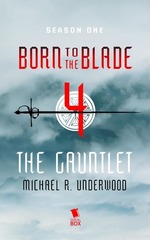
Born to the Blade 1.4: The Gauntlet by Michael Underwood: Kris’ opportunity finally knocks in the most satisfying episode yet.

The GauntletThe Gauntlet

by Michael R. Underwood
Series: Born to the Blade, #1.4

Kindle Edition, 53 pg.
Serial Box, 2018
Read: May 10, 2018
Since Episode One, we’ve been waiting for this: Kris Denn of Rumika facing the gauntlet. A series of 6 duels against the members of the Warders Circle of Twaa-Fei to gain a seat at the table for Rumika. Failure here means a decade (or so) before the next potential warder from Rumika has an opportunity. That’s pretty much the whole episode in a nutshell — can Kris make it?

Ultimately, I don’t think anyone will be shocked at the outcome — it’s about the journey, how the outcome is reached. Underwood nails it. A couple of weeks ago, I linked to a piece he wrote about how fight scenes can reveal character (he also tweeted about it this week), and this episode is him displaying that theory in practice. It really works — not only do we get a better idea about who Kris is, but we get a better understanding of the other Warders. Sure, we may not actually learn anything about Lavinia and Ojo — we just get more evidence of what we already know — but there are other duels.

This is longer than the previous two episodes — and it helped. The extra length gave things a chance to happen. I assume that’s not something we’ll see next week, but I can hope, right?

I’ve liked the previous episodes enough to justify the purchase of the season and to keep going, but I just flat-out liked this one. Good fight scenes, good character moments and the plot moves ahead. Where this goes next, I’m not sure, but having concluded this initial arc, I’m ready to see it. These authors took their time establishing this world, and carefully built up to this point and what lies beyond. I’m looking forward to see what else comes on this foundation.

—–

4 Stars

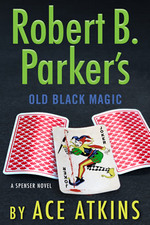
Robert B. Parker’s Old Black Magic by Ace Atkins: Atkins delivers a solid dose of Old Boston Magic

Old Black MagicRobert B. Parker’s Old Black Magic

by Ace Atkins
Series: Spenser, #46

Hardcover, 319 pg.
G.P. Putnam’s Sons, 2018
Read: May 2 – 3, 2018

Wow. The Forty-Sixth Spenser novel. Atkins’ seventh, too — it’s hard to believe. I can still remember some of these as clearly as if I read them yesterday — I’m a little vague on some of them, I have to admit (sorry Bad Business and Painted Ladies), but by and large, this is one of those series that’s defined me as a reader. This is one of those that in years to come that I’m going to remember pretty clearly, too, I’m glad to report.

Also, I’m pretty sure that 46 books in, nothing I say here is going to get the series a new reader. Still, I want to talk about it some.

So here’s the pitch: Locke, an older P.I. and friend/associate of Spenser, comes to him for help — he’d like Spenser to take over one of his cases, as she’s fighting a losing battle with a medical problem. Twenty years ago, a Boston museum was robbed — two paintings and one Picasso sketch were stolen. The Boston Police, the FBI and he have turned over every rock they can think of, he’s traveled the word just to find them. But he’s gotten no where — but there’s some new information coming to light — and with the statute of limitations about to kick in, there’s probably no better time to find the painting then now. Spenser agree and plunges right into the hunt.

Whether you’re Spenser or Nero Wolfe, the worst type of client has to be a committee or board* — a committee that’s not entirely sure they want you to work for them is even worse. The museum committee is led by a classic stuffed shirt, Spenser’s always fun to read when he’s antagonizing the pompous. We’ve also got another Spenser trope — a tough, no-nonsense, hard-to-impress client that Spenser slowly wins over — in the museum director. Putting the two of those together is a good combination. The committee has their own replacement for Locke — an anti-Spenser. British, polished, cultured (he’s probably forgotten more about art than Spenser has ever known), not obviously prone to violence, with an approach to this case that’s very different from Spenser’s. As much as I disliked him, I wish we’d gotten a little more time with him.

This is a novel largely dependent on the non-regular characters — clients, witnesses, sources, suspects. There’s no Hawk, no Sixkill, limited Susan, not enough Pearl — so who does Spenser talk to? Henry (a little more than usual), Frank, Quirk, and Rita — and a couple of chats with Vinnie Morris. Things are still not good with Vinnie, but there might be room in that direction — and common enemies can help a lot. Given the Gino Fish connection, of course we have to have a lot of Vinnie.

Spenser’s approach to this case is classic — he goes around talking to every witness, suspect that he can — annoying some, charming some, learning a very little. Then he moves on to the next and the next, and then circles back to the first. Prying a little more, and a little more. This is a very talk-y book. There’s the threat of violence — and even some actual violence — but most of the actual violence was associated with the original burglars, so we hear about it, but don’t see it. Atkin’s solid take on Parker-dialgoue means that this is a fast, fun read. And that’s fine with me.

Back when Robert B. Parker was writing multiple series, one of the fun aspects was watching characters from one series (typically the longer-running, Spenser books) show up in one of the others. Watching Capt. Healy’s interactions with Jesse Stone, for example, provided an interesting counter-point to the way Healy and Spenser got along. Now that there are three authors actively writing the Spenser-verse series, there’s an added twist to that. Recently (long enough ago that I don’t feel too bad saying it), Reed Farrel Coleman killed off Gino Fish. There are huge chunks of this book that are little else than seeing the effects of that death in Boston’s criminal society (for lack of a better term).

How do we get to Gino Fish? When it comes to Art Crimes — especially higher-end stuff — and the resulting fencing, at that time in Boston everything came through Gino’s fingers. Between the references to the late Gino and the fact that the crime in question took place two decades ago, there’s a lot of history covered here as Spenser talks to various criminals/criminal associates while hunting for these paintings. I do mean a lot of history — going back to events in Mortal Stakes (my first encounter with the series) and characters from The Godwulf Manuscript (the first in the series). Yes, there’s a certain element of this being fan-service-y nostalgia on Atkins part. As a serviced-fan, I’m not complaining. But I think it’s more, it’s the kind of series that Parker and Atkins have given us — one that is very aware of its past and draws on it always. (there’s an interesting contrast to be made with the Jesse Stone series on this front).

If you’re looking at this as a mystery novel, or focusing on the plot — I’m not sure how successful it is (better than many, but I’m not sure it’s up to Atkins’ typical standards). But, if you look at it as some time with old friends — Spenser primarily, but even Quirk, Belson, Henry, etc. — it gets better, especially if you’ve got as much history with these characters as many readers do. Throw in the atmosphere, the perfect voice, the longer-term character moves, and you’ve got yourself a heckuva read. Spenser #46 is as entertaining as you could ask for and I’m already looking forward to #47.


* Yes, it bothers me that I can only come up with two names for this truncated list. I can’t imagine that other P. I.’s are immune to this kind of client, but I can’t think of another example. I’ll probably lose sleep over this memory failure.

—–

4 Stars

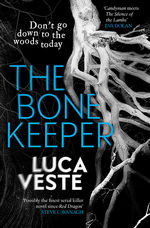
The Bone Keeper by Luca Veste: When an Urban Legend becomes Urban News

The Bone KeeperThe Bone Keeper

by Luca Veste

Paperback, 421 pg.
Simon & Schuster, 2018

Read: April 17 – 19, 2018

One, two, Freddy’s coming for you
Three, four, better lock your door
Five, six, grab your crucifix
Seven, eight, gonna stay up late
Nine, ten, never sleep again

(that’s not from this book, it’s from The Nightmare on Elm Street movies — but you’re so clever, you probably didn’t need me to say that)

I’ve never been a horror movie guy — but I watched a couple of the Elm Street movies as a kid, mostly because my younger sister was obsessed by them. Still, if I sang this song, played a bit of either The Fat Boys or DJ Jazzy Jeff and the Fresh Prince’s songs about the movies (the musical bit), she would get freaked out. Something about that song immediately tapped into the fear of that movie for her (and made it very easy for her older brother to torment her).

I mention that because the Bone Keeper — an Urban Legend, a bogeyman story — has his own song that kids throughout all of Liverpool know and have known for decades/generations. He’s a supernatural being, living in the woods near/around the city who captures kids and adults, kills them and keeps their bones (hence the name). Clearly just a story to be told around campfires, etc. Right? One more way for older brothers, cousins, etc. to torment their younger friends and relations.

But when an injured, bleeding, and disoriented woman comes stumbling out of the woods singing that song, everyone (police, media, social media users) starts wondering — is the Bone Keeper real after all?

DC Louise Henderson and DS Paul Slater are officially skeptical (okay, more than skeptical) about the Bone Keeper’s involvement in the attack on the woman as they begin their investigation. Finding bodies in the area near where she was probably attacked (and inexplicably escaped), with strange symbols carved into nearby trees only fuels the speculation — and perhaps gets at least one of the detectives thinking that maybe they were too quick to write off the “out of the box” suspect.

As the investigation continues, the options are (at least for the reader, even if Henderson and Slater can’t think this way): there’s a deranged serial killer out there taking advantage of the Bone Keeper legend to mask his crimes; there’s a deranged serial killer out there that thinks he’s a supernatural creature, killing people; or there’s a supernatural being out there killing people. Veste writes this in such a way that every option is a valid conclusion up until the moment he has to make it clear just what’s been going on.

Like the Elm Street movies, The Bone Keeper isn’t my kind of book — but I gave it a shot anyway. I’m so glad I did. It was gripping, it was addictive, there are many other adjectives I could use here, but they don’t seem to be adequate. Let’s say that it’s the kind of book you read in the waiting room of your doctor’s office and hope that he’s running late (I was able to read enough to get to an acceptable stopping point so I didn’t resent him being pretty much on time).

I cannot talk about this book the way I want to — I’d ruin everything. I’ve deleted several sentences (or at least the beginnings of several sentences) already — and I’ve not typed a few others. Take the premise above and imagine the best way to tell that story — that’s precisely what Veste has given us.

The opening chapter is one of the creepiest that I can remember reading — and things only move quickly from there until the action-packed conclusion and almost-as-creepy coda. Haunted characters, haunted families, haunted woods — in at least one sense. The Bone Keeper‘s characters and setting are rife with opportunity and material for Veste to use to tell his story of a literal walking nightmare. A police procedural that brushes up against the horror genre — this is a thriller that’ll stay with you for a while (I’m not sure how long it’ll stay with me, but I can tell you I’m avoiding places rich with trees for the foreseeable future).

—–

4 Stars

Jimbo Yojimbo by David W. Barbee is strange, bizarre, funny, tragic and will make you say “ew” a lot.

Jimbo YojimboJimbo Yojimbo

by David W. Barbee

Kindle Edition, 154 pg.
Eraserhead Books, 2018
Read: April 14 – 16, 2018

           “Ready to make it official?” said his father.

Jimbo closed his cuttlefish eyes and prayed the revenge vow.

Let me kill ‘em, he thought. Let me exist only to punish them that wronged me, for such is the pain of my life that only the pleasure of their death will weigh it equal. Amen.

“Now that’s what I’m talking about,” his dead father said.

Who doesn’t like a good revenge story? Especially one featuring swords and blood and gladiator-like battles, and surgically-enhanced hybrid warriors, and warlord chefs, and . . . oh, man. I don’t know how to summarize this one, I really don’t. So let me just steal from the publisher:

           From the author of Bacon Fried Bastard and A Town Called Suckhole, comes a countrified samurai epic in the vein of Squidbillies if directed by Akira Kurosawa.

A flood of frogs drowned the cities and gunked up all the guns. Now an evil restaurant chain called the Buddha Gump Shrimp Company rules a finger-licking shogunate of seafood mutants and murderous redneck swordsmen like Jimbo Yojimbo. Jimbo wants revenge on the Company for killing his family and stitching a cuttlefish to his face. After a daring escape, he will hack his way through hordes of crawdad soldiers, a church of quacking gun nuts on a jihad, and Bushido Budnick, the master chef who rules them all. But with every step he takes, Jimbo Yojimbo’s sweet revenge will surely begin to taste like shit gumbo.

JIMBO YOJIMBO is [a] fast-paced post-apocalyptic redneck samurai tale of love, revenge, and a whole lotta mutant sumbitches.

I’ve read plenty of imaginative works over the last couple of years where I asked myself “what did I just read?” Typically, that was because as imaginative as the novel might have been, the author didn’t relay the information too well and I just couldn’t follow it (I usually didn’t feel like I missed much). With this book, every time I asked something like, “Did he just say this cult was called the Holy Quackers?” I’d have to answer with, “Giant figures, wearing tattered camouflage kimonos and rubber boots, with giant duck bills on their face? Yup, he did say that.” As strange, as out there, as bizarre as the trappings got — the story made complete sense. It wasn’t overly complicated, it wasn’t overly messy, it was really a straight-forward revenge tale. Just one that felt like it was the offspring of any two randomly selected sentences from My Cousin, My Gastroenterologist.

Strip away everything and you’re looking at a tale of a guy who was betrayed by his wife and watched his father be butchered by a megalomaniacal dictator, who just wants to rescue his daughter from that dictator’s clutches (and, sure, maybe overthrow the government while he’s at it) while being pursued by his wife and his arch-enemy (who happens to be fixated on his wife, too). It’s a basic story, decently developed and told — effective enough to entertain. But, once you add in the humor, the voice, the panache, the multiple cults, the hybrid warriors, the very strange world all this takes place in — and the tale becomes dazzling.

And you buy it — you buy all of it. Including the fact that Bushido Budnick can create entirely new species in his lab, but can’t figure out how to take guns work anymore because science is hard or something. I’m not even sure it’s that your disbelief is suspended, the book’s just so cool that your disbelief says: “Who cares? I’m not Neil deGrasse Tyson. Just turn the page ‘cuz I want to see what’s next.”

The fight scenes are disturbing, and bloody and . . . you’ll say “ew” frequently. There’s one fight near the end that just might be the grossest thing I read in 2018. There’s another that’s as close as you’ll get to the Bride v the Crazy 88s in The House of Blue Leaves in print (just with robots, warriors with crawdad claws for hands, a samurai with sea anemones attached to his head in place of hair, and so on).

I’m tempted to just list off some of the stranger and/or cooler ideas that are given life in these pages, like the cult that “worshipped ideas and facts, and their relics were strange, ancient items that had mostly turned soggy in the flood: books. . . building a small army of highly literate and lethal fanatics dedicated to discovering and protecting that which would outlive them all: the untouchable truth of knowledge.” But I won’t — just trust me, there are plenty. This book is like the Mos Eisley cantina scene — something strange and interesting to look at everywhere, with a bit of violence and a bit of business going on in the midst of it all.

I’m in danger of going on too long here and I’m pretty sure I’m repeating myself — if you like bizarre settings, stories told with panache and boldness, and don’t mind a good bit of violence along the way — get this. David W. Barbee is the real thing, I’ve got to get more of his work soon.

Disclaimer: I was provided a copy of this in exchange for my honest opinion — I greatly appreciate it (the book wouldn’t have appeared on my radar if not for that), but it didn’t make an impact on my opinion (beyond giving me something to have an opinion about).

—–

4 Stars

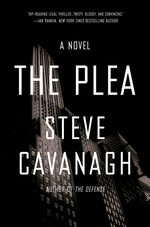
The Plea by Steve Cavanagh is a dynamite legal thriller

The PleaThe Plea

by Steve Cavanagh
Series: Eddie Flynn, #2

Hardcover, 358 pg.
Flatiron Books, 2016 (2018 for US Edition)
Read: April 10 – 12, 2017

Lawyers don’t usually question whether or not a client is telling truth. That way lies madness. You do what you have to and trust the system. So, the guilty plead guilty. The innocent fight their case and the jury decides. If a by-product of that process is the emergence of the truth, then so be it, but the truth is not the aim of the process. The verdict is the aim. Truth has no place in the trial because no one is concerned with finding it, least of all the lawyers or the judge.

If that’s not cynical enough for you, try this:

I saw through Dell’s game. It was a familiar one. It’s a game the justice system plays every single day in America–because sometimes it simply doesn’t matter if you’re really innocent of the crime; the only smart move is to plead guilty and make a deal for a lesser sentence.

“You want me to read the new evidence and tell David that irrespective of his innocence, he will definitely be convicted and his only choice is to plead guilty and make a deal to cut his sentence.”

“Bingo,” said Dell.

Happens all the time. I’ve done it myself. Innocent people often don’t want to take the chance of losing and doing fifteen or twenty years when they could make a deal and be out in two. It’s mathematics–not justice, but that’s the reality.

Don’t worry — this book is not a diatribe about the shortcomings of the American judicial system (as appropriate as one might be), little comments like that are just a little bit of flavoring accenting the story, grounding it in the real world despite the craziness filling the book.

Eddie Flynn, for those new to the character, is a con man who went straight and then went to Law School. Following that, he made a couple big mistakes — one cost him the career he had built, the other cost him his family. He’s in the process of rebuilding both — no easy task — but you have to root for the guy trying to recover.

Eddie’s approached (okay, ambushed) by the FBI, who wants Eddie to take on a new client, David Child. Child’s a tech billionaire accused of murdering his girlfriend, and the FBI wants Eddie to convince him to plead to the charges. Then he needs to convince Eddie to help the FBI take down the law firm that currently represents him — and is laundering money on a mind-boggling scale. If Eddie refuses? The FBI has enough evidence to put Eddie’s ex away for a long time (did I mention that she works for the aforementioned firm, totally unaware that she’s incriminated in the laundering?).

So, somehow Eddie has to separate Child from his current counsel, replace them, and then persuade Child to work with the FBI — within a couple of days. No easy task. Then Eddie becomes convinced that Child is innocent. Which complicates things tremendously. So how does Eddie clear Child, keep his wife out of jail and help the FBI take down the laundering lawyers? Well, it’ll take every bit of his old tricks, and maybe a few new ones.

I’m not a huge legal thriller guy — never read a Grisham — but when you give me a compelling character (particularly a defense attorney) like Eddie Flynn, I’m in. Watching Eddie navigate through the tricky waters of the system — including jail guards, court staff, judges, prosecutors — is a blast. This was like a serious version of the Andy Carpenter books. I would like to see Eddie take on a client he because he wanted to for a change, but that’s not a complaint about this book, it’d just be nice to see.

Sure, it’s your appreciation for Eddie Flynn that’ll determine if you like this book or not, but he’s not the only character to focus on — there’s David Child himself, who is interestingly drawn — he’s a fairly typical computer-genius character, socially awkward, etc. Typical, yes, but used well. My only complaint about Child’s associate, Holly, is that we didn’t get more of her (not that Cavanagh could’ve easily fit more of her in). The villains? Nasty, vile people — believable (with one possible exception, but I liked him enough I don’t care) — all of them were well used, well drawn and just what the doctor ordered.

The Plea isn’t perfect: I figured out the whodunit almost instantly, but it took a little while to get the details of the howdunit right — and Cavanagh fooled me a little bit on that one. But that didn’t detract from the book at all — the fun is in watching Eddie and the rest scramble to survive this horrible situation and figure things out. The plot moves at a relentless pace — which is a cliché, I realize, but I challenge you to come up with another way to describe this plot. Eddie can barely get a moment to rest and think, and when you’re reading this, you feel like you can’t either.

Characters you can’t help but root for (or, in some cases, against), a fast-moving plot, with just enough twists, turns and hurdles. This one’ll grab you by the collar and drag you along as it rushes to the dramatic conclusion (not that you’ll be fighting against it, but the dragging will help you keep up). Keep yours eyes peeled for Steve Cavanagh and Eddie Flynn, they’re something to watch.

—–

4 Stars

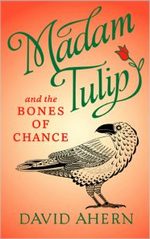
Pub Day Repost: Madam Tulip and the Bones of Chance by David Ahern

Madam Tulip and the Bones of ChanceMadam Tulip and the Bones of Chance

by David Ahern
Series: Madam Tulip, #3Kindle Edition, 368 pg.
Malin Press, 2018
Read: March 5 – 6, 2018

Many people doubt psychic powers exist, but the doubters do not include actors. Everyone in showbusiness knows that as soon as one actor learns of a casting, actors of all ages, ethnicities, creeds and genders are instantly aware of every detail. Einstein claimed that faster-than-light communication is impossible. Einstein was not an actor.

But not even the actors that Derry, Bruce and Bella knew had an inkling of the dash of good fortune heading toward Derry and Bruce — they were given roles in a movie without the need to audition, if they could get themselves to Northern Scotland and Derry might have to give a reading or two. For readers new to this, Derry played the role of Madam Tulip on occasion — giving psychic readings at parties and the like. Derry was initially reluctant to take the role, but she needed the work — and Bruce only got his job if she took hers.

So they find themselves in Scotland — a land not necessarily ready for or welcoming toward people making a film. Which almost describes the director, too. He’s clearly nuts — and not in the genius filmmaker kind of way. Many of the other professionals on set did seem to know what they’re doing, which went a long way to keeping the production running. But mostly, the antics on the set made for good comedy. Derry is given a set of bones on set to add to her gypsy character’s fortune telling routine in the historical drama.

While practicing with the bones, Derry starts to have visions, we’ll get into that later, but it’s clear that she’s gotten herself into more than meets the eye (again).

The most striking and interesting people in the book aren’t on the film set — believe it or not. As the blurb on the back says,

A millionaire banker, a film producer with a mysterious past, a gun-loving wife, a PA with her eyes on Hollywood, a handsome and charming estate manager—each has a secret to share and a request for Madam Tulip.

As usual, Derry’s desire to help people and natural nosiness gets her involved in these people’s lives (okay, she might have less altruistic motives about the estate manager). And that’s before someone tries to kill her and/or one of her new friends. Once that happens, Derry can’t help but dive into finding out what’s going on. Madam Tulip may be able to guide the direction she goes, but it’s Derry’s on cleverness that will carry the day.

In Madam Tulip, her father seems to actually believe that she had some psychic ability, otherwise it seems like a lark, something she does for giggles. But in book 2, it seemed possible that she might actually have some abilities, but there wasn’t much in the novel that was more than a hint or suggestion that she did. But here? That hint, that suggestion is gone — she sees things when she rolls the bones, her Tarot readings do say a lot that’s true (and future) about the person she’s reading the cards for. I think I liked it better when the reader wasn’t sure if she had gifts or not, honestly — but only a little bit.

I’ve been a fan of this series since chapter two or three of the first book, so you’re not getting anything really objective here (not that you ever do). But this is the best that Ahern’s done yet — there’s plenty of good comedic writing (there are lines I tried to shoehorn into this, but couldn’t, that made me laugh out loud), a mystery you can’t really guess the solution to, a little peril, a dash of romance and some fun characters. That’s not even counting Derry and Bruce. Bones of Chance is a strong entry in the series that will please fans, but it’s also a decent jumping on point for new readers. Basically anyone who enjoys light mysteries with a touch of something extra should have fun with this book.

There are times that I fear my enthusiasm towards a book doesn’t come through, and I usually don’t know how to achieve that better — this is one such time. I found myself grinning frequently while reading this — I chuckled, I even laughed out loud. I had a few theories about the trouble that Derry was getting herself into, and failed with almost all of them (a sign of a good mystery/thriller, if you ask me). If you’re not picking up my enthusiasm, that’s on me, just trust me that it’s there.
Disclaimer: I received this eARC from the author in exchange for my honest opinion..

—–

4 Stars

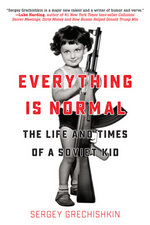
Everything is Normal by Sergey Grechishkin

Everything is NormalEverything is Normal: The Life and Times of a Soviet Kid

by Sergey Grechishkin

Kindle Edition, 336 pg.
Inkshares, 2018
Read: March 19 – 26, 2018

I would spend hours by the balcony window, watching smoke rise from the power station chimneys on the horizon and listening to the suburban trains chug by in the distance. Most of my memories of that time coalesce into a sense of timeless boredom. But after my first taste of bubble gum, something new began to mix with my malaise: jealousy of the kids in faraway countries who could chew such gum every day.

This is the kind of thing that you expect a memoir of growing up in the Soviet Union to be full of — a grim skyline, yearning for something unobtainable, a general malaise. But in Sergey Grechishkin’s book, you don’t get a lot of that — yes, it’s there, to be sure (how could it not be?), but there’s so much more.

Grechishkin writes with a vivacity, a thorough-going sense of humor, a spark of hope that you don’t expect — and are frequently surprised by. He doesn’t paint a rosy picture of the USSR in the 70s and 80s, but he paints a picture of a life with hope. The book focuses on his childhood — particularly school ages — we get a little before, we see him briefly in University, with a hint or two about what happens next. But primarily we’re looking at his time in school. This coincides with the time of Leonid Brezhnev (at least the tail end) through the early days of Mikhail Gorbachev, with all the changes those days entailed. It’s not an incredibly political book — but it’d be difficult to discuss life under these various leaders without mentioning them and the way each government was different from the previous.

A word about the humor — which is all over. We’re not talking Yakov Smirnoff, first off. Secondly we’re not talking about anything that makes light of the hardships, or denies them. But comments that can talk about the hardships in a way that is above to find the humor in the human condition or something else we can all relate to: like

So many Soviet friendships and even families have been formed while standing in lines.

Nothing major — just a quick smile as you read. At other times, he’ll deliver a hard truth about life in the USSR through a joke. Like here, when describing how they couldn’t process the appearance of Western athletes on TV during the 1980 Olympics criticizing their governments:

For those lucky Soviet citizens who were allowed to cross the border, any sort of misbehaving while abroad or giving the slightest hint at being unhappy with the Soviet workers’ paradise would mean no more trips anywhere except to camping locations in eastern Siberia.

You laugh, and then you realize that he’s talking about a harsh or sad reality while you’re laughing. I don’t know how many times I’d think about something being funny or actually be chuckling at something when I’d catch myself, because I realize what he’s actually getting at.

The jokes slow down as he ages and the narration becomes less universal and more particular to his life — looming chances of being sent to Afghanistan, and other harder realities of adulthood on the horizon. It’s still there, it’s just deployed less.

While narrating his life, Grechishkin is able to describe living conditions, schooling, medical care, shopping, food, friendships, family life, dating, Western movies, crime, the role of alcohol in society, political dissidents, and so much more. I enjoyed his discussing the experience of reading George Orwell (via photocopy) or listening to Western pop music — learning that LPs were “pressed at underground labs onto discarded plastic X-ray images.” You can do that? That sounds cool (and low-fidelity). Almost everything in the book seems just the way you’d expect it, if you stopped to think of it — but from Grechishkin’s life experience it seems more real.

This is one of those books that you want to keep talking and talking and talking about — but I can’t, nor should I. You need to read this for yourself. If only because Grechishkin can do a better job telling his story than I can. You really don’t think that this is the kind of book you can enjoy — but it is..

Did I have a happy childhood? Well, it was what it was. From a nutritional and a relationship standpoint, it wasn’t particularly great. But it also wasn’t awful or tragic. It was, when I look back on it now, normal.

Normal was a word that showed up more than once in my notes — despite everything around him, his childhood seemed normal (and its only now that I remember tat the word is in the title). I’m not saying that I’d trade places with him, his life was not easy — or that there weren’t kids in Leningrad who suffered more forms of deprivation or oppression (not to mention kids in less well-off areas in the USSR). But on the whole, he had a childhood thanks to a caring family, a good school, and good friends. Everything is Normal shows how against a bleak background, a normal life can be possible. It does so with heart, perspective, humor and a gift for story-telling. Exactly the kind of memoir that will stay with you long after you finish the book. Highly recommended.

Disclaimer: I received this book from Inkshares in exchange for this post and my honest opinion.

—–

4 Stars

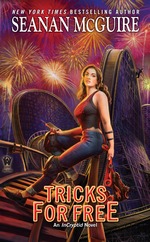
Tricks for Free by Seanan McGuire

Tricks for FreeTricks for Free

by Seanan McGuire
Series: InCryptid, #7

Mass Market Paperback, 346 pg.
DAW Books, 2018

Read: March 13 – 17, 2018

           There are people who say you never really escape from high school, you just keep finding it in different forms, over and over again, until it finally kills you. Those people are assholes, and should not be allowed in polite company. That doesn’t mean they’re wrong.
           The room seemed even larger without the safety of the elevator behind me. I took a few hesitant steps forward, wishing I had a knife, or better yet, twenty knives, or better yet, twenty knives and a brick of C-4. Plastic explosives are a strange and dangerous security blanket, but they tend to make whatever’s scaring me go away quickly, so I’m in favor.

Whenever possible, frequent/regular readers know, I like to start off these posts with a quotation from the book that sums up the feel, the character, or just makes me smile. I couldn’t decide this time what to go with, so I used both — one from a flashback to high school which is just perfect for everyone who views it as something they survived, and the other that captures Annie’s voice oh-so-well.

Because of [Spoilers Redacted] at the end of Magic for Nothing, Annie’s on the run and on her own. Her family doesn’t know where she is (and hasn’t heard directly from her to keep it that way), her friends know nothing — she doesn’t even have a single Aeslin mouse with her. She could not possibly be more alone in the world. She lucks into a job at Lowryland — an amusement park near DisneyWorld — thanks to running into a teammate from high school who is an executive there. It’s not a glamorous job — she works in knick-knack shops, does clean up, works in food kiosks, etc. for far too little money. But there’s enough people around that she can hide in and almost no spell or anything the Covenant (or anyone else) tries to use to find her will work in that setting.

She’s living in the employee apartments near the park with a couple of cryptids. One is from her old Roller Derby team, who, as luck would have it, started working for Lowryland around the same time. The other roommate is a Pliny’s Gorgon, working as a resident at the Lowryland hospital. Tying this book back to Half-Off Ragnorack is a nice touch (and works out well for other reasons). It’s not the best life, but she’s content enough, she’s safe enough, and there are good people in her life.

Until things start to go wrong at the park, some magic users discover that she’s hiding there (they’re also hiding from the Covenant, so that works out), and people are getting hurt. Making this a question of can Annie stop whatever’s going on at the park without revealing herself to the Covenant and putting her friends in danger?

So there’s the setup — does McGuire pull it off? Yeah, stupid question. She does and she does it well.

First, she nails Annie’s emotional state — probably better than she does Verity’s often. Annie’s in a very vulnerable place — emotionally, psychologically, physically — and you can feel that.

           I went very still as it struck me that, tight now,l was living like a cryptid. l was hiding from people who wanted to do me harm as much because of who 1 was as because of anything I’d done. That was normal — being a Price meant I‘d had a bounty on my head horn the day l was born — but the isolation that came with it was new. The need to view everyone around me as a potential danger, to hide, it was all new, and it burned. There were dragons working all over Lowryland, and while none of them were part of my personal clique of Mean Girls, none of them knew my name either. It wasn’t safe. It might never be safe again, not until we’d found a way to end the danger posed by the Covenant — and that was something we’d been trying to accomplish for generations.

That vulnerability runs throughout this book — even when Annie’s at her most “rah-rah, we can do this, team” she’s very aware that everything is seconds away from disaster. This brings a richness of character to Annie that Alex and Verity don’t have (at least not to the same extent), if you ask me, this brings Annie into Toby Daye territory and elevates this series as a whole because of it.

You may have noticed a repeated use of the word luck above — that’s purposeful. Luck, as a concept, permeates these pages. It’s not a very clear concept to most of the characters, but it gets clarified by [Spoilers Redacted]. As one more magical system in this world that has a variety of them — that overlap, run parallel, and make a general mish-mash of things, it’s great. I think it’s a clever addition and I enjoyed watching it play out here, and anticipate continuing to affect things down the road.

The major flaw comes in how Annie pulls things off — in humble opinion. Throughout the book, there’s a warning given Annie — don’t do X. Beauty isn’t supposed to go in that part of the castle, Egon warns Ray and Venkman against crossing the streams, Annie needs to not do X. You know that all of those things will end up happening before the story’s done. Here’s my problem: it’s too easy for her to do it she makes the choice too quickly — and I’m not sure it was necessary when she did it (it may have been, this may have been a rare-stumble for McGuire where she didn’t make it clear that things were just that dire). I do know that if it’s something Annie felt the need for here, Verity sure should’ve done it back Chaos Choreography. But whatever, I’m over it — I just want to see how it plays out in the future.

One highlight for that I really can’t get into without ruining the first twelve chapters — but there’s a conversation in Chapter 13 catching up every character in Annie’s little circle with who’s who, what’s going on right now and since the last time they talked (hours or months ago), etc. This conversation just might be my favorite thing of March — reading or in Real Life™ — and it’s been a very good month. It’s just a pure joy to read.

By the way, the lack of Aeslin mice absolutely is felt throughout the book — the absence is supposed to make things feel strange, and it does. But never fear — there’s a novella starring the mice from Magic for Nothing at the back of this book. I hope when I have time to read it that it makes up for their absence.

Oh, and there’s a Priscilla Spencer map of Lowryland. Because what isn’t made better by a Priscilla Spencer map?

This is a great addition to a very fun series that adds some good depth to things, sets up our characters for a lot of trouble, and moves the series’ story as a whole down an interesting path. The next book also features Annie, but I’m sure we get back to Alex or Verity soon, and I can’t wait to see how these books without them affect their lives.

—–

4 Stars

Don’t Ever Look Behind Door 32 by B.C.R. Fegan, Lenny Wen

Don't Ever Look Behind Door 32Don’t Ever Look Behind Door 32

by B.C.R. Fegan, Lenny Wen (Illustrator)

Kindle Edition, 32 pg.
TaleBlade Press, 2018

Read: March 10, 2018

I was excited — yes, really — to get the email from TaleBlade asking if I’d like a copy of this book. Fegan/Wen’s previous book, Henry and the Hidden Treasure, was one of my favorite books of last year. Could they live up to that one? Thankfully, they could at least come close.

In these pages, Mr. Nicholas Noo takes two children on a tour of “the magical Hotel of Hoo” showing them all the wonderful things in store and repeatedly warning them, “Don’t Ever Look Behind Door 32.” He shows what’s behind every other door in between the warnings, most of which is wonderful, some of which is just . . . odd (which I prefer, really). Unlike Disney’s Beast, however, Hoo does more than tell the children not to go somewhere, he ultimately tells them why they shouldn’t go there.

I can’t tell you what a pleasant change that is — even if this book is intended for kids — to get a book where a character just tells the others characters everything they need to know to react in a responsible manner. But this isn’t the place for that rant (as tempting as it is).

This book isn’t as good as last year’s Henry and the Hidden Treasure but it’s close — the last page or so of Henry was a sweet note, this ended with a reveal/punchline. Is it bad? No — not at all, it’s just not as good in my eyes. That said, a punchline ending isn’t going to satisfy even a 3-4 year old on the 32nd read through (at least not on its own), but Fegan and Wen don’t rely on that — the book is full of jokes, clever lines, visual wonder, and lots of things to pay attention to along the way.

Sure, you want the book to be appealing to kids, but the real key to success for a kid’s book is appealing to parents/grandparents/caregivers. They’re the ones who have to read, reread, rereread, and rereread again these things. Dr. Seuss and Sandra Boyton enjoy long-lived success because adults enjoy reading them. I think I judge books like this on this standard, but I rarely do it self-consciously. This is one of those books that adults can have fun with even on the fourth “just one more time” of the night. Which has nothing to do with the big reveal at the end, but the trip you take along the way.

Wen’s art is just delightful. Really — the colors are vibrant, the characters look great, there’s something extra to grab your eye on every page. (which is also great for adult readers)

I’d say something neat about the typeface — it’s part of the look of the book, it’s fair game. But I say anything beyond “even the typeface is great looking” I’ll show I have no idea what I’m talking about, so that’s all I’m going to say there.

I can honestly say that I never envisioned having this much to say about a 32 page book, but once I got started, I couldn’t really stop. I really dug this book, you will, too — especially if you have kids to read it to.

Disclaimer: I received a copy of this book from the publisher in exchange for my honest opinions about this book.

—–

4 Stars

Madam Tulip and the Bones of Chance by David Ahern

Madam Tulip and the Bones of ChanceMadam Tulip and the Bones of Chance

by David Ahern
Series: Madam Tulip, #3

Kindle Edition, 368 pg.
Malin Press, 2018

Read: March 5 – 6, 2018

Many people doubt psychic powers exist, but the doubters do not include actors. Everyone in showbusiness knows that as soon as one actor learns of a casting, actors of all ages, ethnicities, creeds and genders are instantly aware of every detail. Einstein claimed that faster-than-light communication is impossible. Einstein was not an actor.

But not even the actors that Derry, Bruce and Bella knew had an inkling of the dash of good fortune heading toward Derry and Bruce — they were given roles in a movie without the need to audition, if they could get themselves to Northern Scotland and Derry might have to give a reading or two. For readers new to this, Derry played the role of Madam Tulip on occasion — giving psychic readings at parties and the like. Derry was initially reluctant to take the role, but she needed the work — and Bruce only got his job if she took hers.

So they find themselves in Scotland — a land not necessarily ready for or welcoming toward people making a film. Which almost describes the director, too. He’s clearly nuts — and not in the genius filmmaker kind of way. Many of the other professionals on set did seem to know what they’re doing, which went a long way to keeping the production running. But mostly, the antics on the set made for good comedy. Derry is given a set of bones on set to add to her gypsy character’s fortune telling routine in the historical drama.

While practicing with the bones, Derry starts to have visions, we’ll get into that later, but it’s clear that she’s gotten herself into more than meets the eye (again).

The most striking and interesting people in the book aren’t on the film set — believe it or not. As the blurb on the back says,

A millionaire banker, a film producer with a mysterious past, a gun-loving wife, a PA with her eyes on Hollywood, a handsome and charming estate manager—each has a secret to share and a request for Madam Tulip.

As usual, Derry’s desire to help people and natural nosiness gets her involved in these people’s lives (okay, she might have less altruistic motives about the estate manager). And that’s before someone tries to kill her and/or one of her new friends. Once that happens, Derry can’t help but dive into finding out what’s going on. Madam Tulip may be able to guide the direction she goes, but it’s Derry’s on cleverness that will carry the day.

In Madam Tulip, her father seems to actually believe that she had some psychic ability, otherwise it seems like a lark, something she does for giggles. But in book 2, it seemed possible that she might actually have some abilities, but there wasn’t much in the novel that was more than a hint or suggestion that she did. But here? That hint, that suggestion is gone — she sees things when she rolls the bones, her Tarot readings do say a lot that’s true (and future) about the person she’s reading the cards for. I think I liked it better when the reader wasn’t sure if she had gifts or not, honestly — but only a little bit.

I’ve been a fan of this series since chapter two or three of the first book, so you’re not getting anything really objective here (not that you ever do). But this is the best that Ahern’s done yet — there’s plenty of good comedic writing (there are lines I tried to shoehorn into this, but couldn’t, that made me laugh out loud), a mystery you can’t really guess the solution to, a little peril, a dash of romance and some fun characters. That’s not even counting Derry and Bruce. Bones of Chance is a strong entry in the series that will please fans, but it’s also a decent jumping on point for new readers. Basically anyone who enjoys light mysteries with a touch of something extra should have fun with this book.

There are times that I fear my enthusiasm towards a book doesn’t come through, and I usually don’t know how to achieve that better — this is one such time. I found myself grinning frequently while reading this — I chuckled, I even laughed out loud. I had a few theories about the trouble that Derry was getting herself into, and failed with almost all of them (a sign of a good mystery/thriller, if you ask me). If you’re not picking up my enthusiasm, that’s on me, just trust me that it’s there.
Disclaimer: I received this eARC from the author in exchange for my honest opinion..

—–

4 Stars

Page 52 of 88

Powered by WordPress & Theme by Anders Norén