Tag: 4 Stars Page 56 of 88

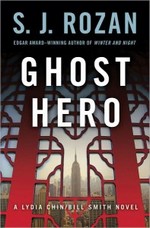
Ghost Hero by S. J. Rozan

Ghost HeroGhost Hero

by SJ Rozan
Series: Lydia Chin & Bill Smith, #11

Hardcover, 325 pg.
Minotaur Books, 2011

Read: October 13 – 16, 2017


So, Lydia Chin is approached by a potential client who is clearly lying about his identity about some paintings that are rumored to be in New York, and potentially on sale soon. This client really wants to establish a name for himself in Contemporary Chinese Art, and owning these paintings — preferably before they go on sale — will go a long way toward that. Here’s the trick, no one knows if they really do exist, or where they might be. Still the rumors persist, and in the “where there’s smoke, there’s fire” kind of thinking, they’ve got to exist. The trick is that the artist was killed in the Tiananmen Square protests of 1989. The client wants her to find them, prove they’re real (ideally), and help him get the leg up on the competition.

Like I said, Lydia doesn’t trust the man, and doesn’t understand why he picked her, but his cash is good and she’s curious (about him, the paintings, why he might want the paintings). So she takes the case, but doesn’t know where to start. Luckily, her partner, Bill Smith knows just the guy to talk to — another Chinese PI. Second generation ABC, from the Midwest, Jack Lee has an art degree and mostly looks into stolen and questionable art. Really, he’s the ideal PI to look for these paintings — and it turns out that someone else thought so, too and already hired him to do that. The three decide to work together on this, each playing to their own strengths.

From there, they dive deep into the New York Art Scene — at least those that brush up against Chinese Art — there are people who care about art, people who care about influence and money, and those who really, really care about art. Some care so much that Jack Lee gets shot at more than once. There are other threats as well — the idea that Chau might still be alive is a pretty hot political topic, and various governmental entities seem interested in what Lydia is up to.

The case is pretty interesting — and the various people that the trio interacts with are so interesting, so colorful, occasionally so despicable. The solution that Lydia cooks up is worthy of Blackadder’s Baldrick, but I kind of liked it. It works as a solution in a novel (I hope nothing like this would happen in real life). The ultimate reveal was a bit too obvious, but I still enjoyed it — and the rest of the mystery made up for it.

I’ve said time and time again, I love reading the back-and-forth between Lydia and Bill — adding Jack to that seems like a gamble. Thankfully, it worked wonderfully, he fits in with the two of them so wonderfully well that you wish he’d been around for a couple of novels previously to this. It almost doesn’t matter if the plot behind the book was entertaining, just get the three of these guys around a beverage or two and it’s worth it.

On the one hand, I’m kind of with Lydia in not understanding why someone would come to her to look for this — art isn’t her thing. On the other hand, she dealt with art dealers in China Trade, Chinese heirlooms in Reflecting the Sky, missing jewels in The Shanghai Moon (which yeah, is sort of precious minerals, but the art aspect of the Moon seems as/more important than the gems). So it’s not like she’s an utter novice. Sure, going to Bill Smith or Matt Scudder would seem like a bad move — but Lydia’s a good choice for this case (not as obvious a choice as Jack Lee, I grant you). And how could I not think of another PI in New York?

There was one thing I was disappointed in: I was truly hoping/expecting that this book would contain a clue (if not more) about why this was the last book to be published in the series — and given the 6 years that have passed since then, it seems pretty likely that this was it for the series. I’m assuming that it wasn’t planned, but can’t find any information about it (which means that someone’s going to come along in half an hour with a link to 15,000 words about the reason for this.) Update: A few hours after posting this, Rozan assured me that the series is not over, which is great to hear

A fun, fast-paced read that is enjoyable, engaging and all around entertaining — which is pretty much a great way to describe any novel from Lydia Chin’s point of view. Give this one a shot and then pick up the others (or pick up the others, and then this one — either way).

—–

4 Stars

2017 Library Love Challenge

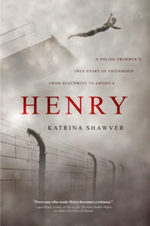
Henry by Katrina Shawver

Henry: A Polish Swimmer's True Story of Friendship from Auschwitz to AmericaHenry: A Polish Swimmer’s True Story of Friendship from Auschwitz to America

by Katrina Shawver
eARC, 381 pg.
Koehler Books, 2017
Read: October 11 – 13, 2017

Looking for something for her Arizona Republic column, Katrina Shawver found and interviewed Henry Zguda, a octogenarian, who’d been a competitive swimmer in Poland who’d spent three years in Auschwitz and Buchenwald. The interview struck a chord with her and she soon returned to his home to propose they write a book about his experiences.

This book is the result of a series of interviews Shawver conducted with Henry, her own research (including trips to the original sites), and some letters, photographs, etc. that Henry provided (some of which Henry pilfered from Auscwitz’ records some time after the war!). We get an idea what life was like in Poland before Hitler invaded and began to destroy the nation and its citizens — then we get several chapters detailing his life in the camps. Following that, we get a brief look at his life in Poland after the war and when the Communists took over, followed by his life in America after that — meeting his wife and living a life that many of us would envy. The bulk of the book is told using transcripts (with a little editing) of interview tapes with Henry, so the reader can “hear” his voice telling his stories. Shawver will stitch together the memories with details and pictures, as well as with bits of her trip to Poland and the camps there. We are also treated to a glance at the friendship that develops between Henry, Shawver and Henry’s wife through the production of the book.

More than once while reading it, I thought about how much I was enjoying the read — and then I felt guilty and wrong for doing so. This was a book about someone who lived through Auschwitz and Buchenwald, how dare I find it charming and want to read more (not for information, or to have a better idea what atrocities were committed). I’ve watched (and read the transcript) Claude Lanzmann’s Shoah (for one example), and never once thought about cracking a smile. I certainly never wanted to spend more time with the subjects. This is all because of the way that Shawver told Henry’s story, and Henry’s own voice. I did learn a lot — I should stress. For example, there was mail back and forth between the prisoners and family (for those that were willing to give the Nazis an address for their family), Henry at one point looks at some letters from prisoners online, checking not for names, but numbers he recognizes. Or the idea that there were light periods in the labor duty — not out of mercy, compassion or anything, but because the guards got time off, and there was no one to make the prisoners work.

The subtitle does tell us that it’s a story of friendship — several friendships, actually. Without his friends, Henry’s story would have likely been much shorter, with very different ending. It’s easy to assume that others could say that because of Henry, as well. There’s also the story of the brief friendship of Henry and Shawvver, without her, we wouldn’t have this book. There were some moments early on that I thought that Shawvver might be giving us too much about her in the book, but I got used to it and understood why she chose that. In the end her “presence” in the book’s unfolding helps the reader learn to appreciate Henry the man,not just Henry the historical figure.

This is a deceptively easy read, the conversational tone of Henry’s segments, particularly, are engaging and you’re hearing someone tell you great stories of his youth. Until you stop and listen to what he’s talking about, then you’re horrified (and relieved, sickened, inspired, and more). Shawver should be commended for the way she kept the disparate elements in this book balanced while never undercutting the horrible reality that Henry survived.

This is something that everyone should read — it’s too easy to hear about the Holocaust, about the concentration camps, and everything else and think of them as historical events, statistics. But reading this (or books like it), helps you to see that this happened to people — not just people who suffered there — but people who had lives before and after this horror. If we can remember that it was about people hurting people, nothing more abstract, maybe there’s hope we won’t repeat this kind of thing.

Disclaimer: I received a copy of this book from the author in exchange for my honest opinion.

—–

4 Stars

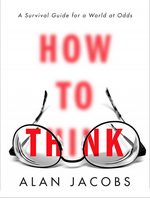
Pub Day Repost: How to Think by Alan Jacobs

How to Think: A Survival Guide for a World at OddsHow to Think: A Survival Guide for a World at Odds

by Alan Jacobs
Uncorrected Proof, 156 pg.
Convergent Books, 2017

Read: October 3, 2017

I haven’t read any of them, but over the last few years I’ve seen a pretty good number of books about human thinking processes — how it works, how it can/can’t be changed, and how this can/may/should change the way we approach decision-making, etc. (it’s not that I’m uninterested, there’s only so much time). Unlike me, Alan Jacobs has read many of these — and one thing he notes, that while these books are great on the science of human cognition, there’s also an art to it. Enter this book.

The sub-title is “A Survival Guide for a World at Odds.” Now, while it’s clear that our society is quite divided, I honestly don’t think that the world is really all that much more divided than we’ve been before — even in this society. However, I think it’s safe to say that we’re much more open and aggressive about the divisions that exists, and far less inclined to listen to the other side(s). Jacobs’ writing can help his readers bridge some of the divisions with those they interact with (not every one will want to, I’m sure, but they could try if they want to). I almost think that this book could be called How to Disagree instead, because so much of the book (but not all of it) is about how to disagree with others like civil, empathetic, adults, looking to change minds (or have our own be changed); not simply to attack someone or win an argument.

Jacobs begins by showing what strategies, devices, etc. we all already use in our thinking (taken largely from common sense/experience or all the science-y books mentioned above), and then as we’re aware of these, he shows how we can improve them. Building on ideas from one chapter to the next and showing how something we learned already can inform what he’s discussing now, these are not individual essays, but a cumulative case. I find it difficult to give examples for just that reason — his is a carefully laid out argument, and summarizing some of my favorite components would do little justice to those parts and not work that well out of context. So, I’ll keep it vague. He addresses how the idea of “thinking for oneself” is impossible, how it’s problematic to have an “open mind” always, the importance of waiting, of not having to address everything, and how it’s vital to keep a diverse selection of thoughtful people in your life.

Jacobs doesn’t only draw from social sciences and philosophers (but he does, and frequently — in an accessible way), he cites and draws from Robin Sloan, Walter White, C. S. Lewis, George Orwell and many others. He does so in a way that illustrates his points, strengthens and furthers his arguments. (I point this out, because I just finished a book that seemed only to do this kind of thing to lengthen chapters — no light was added, just space taken up). While readers from High School on up can feel as if the ideas are stretching their minds, the writing will not — Jacobs (as always) is good at convincing the reader they can handle bigger ideas.

Frankly, I wish this book (or one much like it) was required reading for anyone wanting a social media account — I’ve been telling all sorts of people to read it for a few days now, and I probably won’t stop anytime soon. How to Think is helpful, insightful, entertaining, wise, and — dare I say? — thought-provoking. Go get it.

Disclaimer: I received this copy from a Goodreads Giveaway.

—–

4 Stars

How to Think by Alan Jacobs

How to Think: A Survival Guide for a World at OddsHow to Think: A Survival Guide for a World at Odds

by Alan Jacobs
Uncorrected Proof, 156 pg.
Convergent Books, 2017

Read: October 3, 2017

I haven’t read any of them, but over the last few years I’ve seen a pretty good number of books about human thinking processes — how it works, how it can/can’t be changed, and how this can/may/should change the way we approach decision-making, etc. (it’s not that I’m uninterested, there’s only so much time). Unlike me, Alan Jacobs has read many of these — and one thing he notes, that while these books are great on the science of human cognition, there’s also an art to it. Enter this book.

The sub-title is “A Survival Guide for a World at Odds.” Now, while it’s clear that our society is quite divided, I honestly don’t think that the world is really all that much more divided than we’ve been before — even in this society. However, I think it’s safe to say that we’re much more open and aggressive about the divisions that exists, and far less inclined to listen to the other side(s). Jacobs’ writing can help his readers bridge some of the divisions with those they interact with (not every one will want to, I’m sure, but they could try if they want to). I almost think that this book could be called How to Disagree instead, because so much of the book (but not all of it) is about how to disagree with others like civil, empathetic, adults, looking to change minds (or have our own be changed); not simply to attack someone or win an argument.

Jacobs begins by showing what strategies, devices, etc. we all already use in our thinking (taken largely from common sense/experience or all the science-y books mentioned above), and then as we’re aware of these, he shows how we can improve them. Building on ideas from one chapter to the next and showing how something we learned already can inform what he’s discussing now, these are not individual essays, but a cumulative case. I find it difficult to give examples for just that reason — his is a carefully laid out argument, and summarizing some of my favorite components would do little justice to those parts and not work that well out of context. So, I’ll keep it vague. He addresses how the idea of “thinking for oneself” is impossible, how it’s problematic to have an “open mind” always, the importance of waiting, of not having to address everything, and how it’s vital to keep a diverse selection of thoughtful people in your life.

Jacobs doesn’t only draw from social sciences and philosophers (but he does, and frequently — in an accessible way), he cites and draws from Robin Sloan, Walter White, C. S. Lewis, George Orwell and many others. He does so in a way that illustrates his points, strengthens and furthers his arguments. (I point this out, because I just finished a book that seemed only to do this kind of thing to lengthen chapters — no light was added, just space taken up). While readers from High School on up can feel as if the ideas are stretching their minds, the writing will not — Jacobs (as always) is good at convincing the reader they can handle bigger ideas.

Frankly, I wish this book (or one much like it) was required reading for anyone wanting a social media account — I’ve been telling all sorts of people to read it for a few days now, and I probably won’t stop anytime soon. How to Think is helpful, insightful, entertaining, wise, and — dare I say? — thought-provoking. Go get it.

Disclaimer: I received this copy from a Goodreads Giveaway.

—–

4 Stars

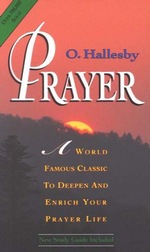
Prayer by Ole Hallsby

PrayerPrayer

by Ole Hallesby

Papberback, 176 pg.
1994 (originally 1931), Augsburg Fortress

Read: September 3 – 10, 2017


The section from Calvin’s Institutes on prayer is fantastic, Wistsius’ book is incredibly helpful, Luther’s little A Simple Way is pretty good, as is Matthew Henry’s Method, but none of them have been as much help as this little book by Norweign Lutheran Ole Hallesby (at least that’s my guess, I’ve had years to chew on those others, only a couple of weeks for Hallesby). I heard of the book briefly on an episode of Christ the Center this summer, and then they devoted an entire episode to it later — I was halfway through the book when that second episode was posted, thankfully, they didn’t say anything that spoiled the ending. If not for those podcast episodes, I probably would’ve gone my whole life without ever hearing of this book. That would’ve been a shame.

He doesn’t set out to write a comprehensive book on the subject, or a systematized theology of prayer, but to present “a few simple rules for the benefit of souls who are fainting at prayer.” It’s not much of a rule book, thankfully, as much as it wants to be — more like a collection of helpful suggestions.

Hallesby describes two things that make up the attitude of prayer — helplessness and faith. Faith that Jesus can and will answer our prayers and a realization that we are helpless and need him to even pray. What he writes about helplessness is worth the price of the book alone. I think it’s changed the way I pray already. I would quote a bit of it here — and I started to, but I wasn’t sure where I’d stop. So let me just encourage you to grab the book.

I also really appreciated his discussion of how we “think we must help God to fulfill our prayer,” by giving Him lists of suggestions for how to and times when He can answer us. Instead, we are to faithfully pour out our need to Him, and then trust that He will answer as He sees best. I’d really never thought of it in those terms but we really can end up trying to tell God the best way to go about helping us — which flies in the face of our admitted helplessness in a given situation.

Hallesby covers the work of prayer, the struggles we may have in it, some suggestions for how to learn to pray better, as well as giving some answers to common questions about prayer (that seem to be the same questions I hear others having almost 100 years after this book was written, probably questions believers had 100 years before that, too). Throughout the book, you get a strong sense of a pastoral heart behind the words and advice, which makes it all much easier to heed.

It’s not a perfect book by any means — most of my problems have to do with the fact that I’m not a Lutheran, nor a Pietist. So, anything that leans too heavily on those traditions/characteristics are obviously going to at least raise my eyebrows, but on the whole those aspects of the book are quibbles. For example, his definition of prayer involves letting God help us, or his aversion to pre-written prayers (that one has many allies in my own tradition, so it is more of a note than anything). More substantial concerns are his utter lack of reference to — much less use of — the Psalms or the Lord’s Prayer. A book on prayer that doesn’t even touch on those is mind-boggling. None of these concerns or quibbles detract too much from the book — and they’re certainly outweighed by the help the book gives.

Pound-for-pound, the best book on the subject I’ve read. Easy to read, encouraging, convicting and insightful. Highly recommended.

—–

4 Stars

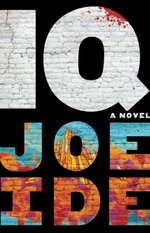
IQ by Joe Ide

IQIQ

by Joe Ide
Series: IQ, #1

Hardcover, 321 pg.
Mulholland Books, 2016

Read: September 18 – 19, 2017


The book opens with a criminal in the making, and a very slapstick-y incident. But even while grinning about that, you get the sense that this character isn’t going to be good for more laughs. He’s not — but thankfully, we don’t have to spend a lot of time on him, because Isaiah Quintabe (a.k.a. IQ) finishes his blossoming criminal career. Which is very effective way to introduce Isaiah, the unlicensed investigator, and his world to readers.

After this, we spend some more time with our modern-day Sherlock of South Central LA. He needs money, not another case that he takes on in return for some homemade cookies or something, he’s got a couple of big bills heading his way and requires cash to take care of things. His need for an infusion of cash forces him to align himself with a former friend (there’s a very good reason for that “former”) with a tie to a well-paying client. The client is a famous rapper who is convinced that someone is trying to kill him — he happens to be right, I should add, which makes the book a lot more interesting. (obviously, an investigator looking into a paranoid delusion isn’t going to be as action-packed as one looking into a person actually trying to kill someone). This investigation will bring Isaiah and Dodson into the not-as-lucrative-as-it-used-to-be music industry, into marital problems, petty jealousies, and a whole lot closer to pit bulls than at least one of them wants to be. The case is at once a showcase for Isaiah’s talents and something almost too complex for him.

We also get a series of flashbacks to the events that set Isaiah on this path, how he honed his natural abilities and inclinations to become the man he his — an unlicensed PI that helps out people in his neighborhood, many of whom wouldn’t turn to the authorities. So often with a Sherlock-type character, we just get the finished product — the Great Detective at the height of his powers, knowing all sorts of arcane information. But Ide shows us how Isaiah gets this information, how he earned it, improved his reasoning and observation skills. Also the why behind it all — why didn’t Isaiah take his genius into something that would make him more money? Why does he stay where he is? The flashbacks also show us Dodson and Isaiah meeting and falling out.

The two stories intertwine and are pretty equally intriguing, which is a real bonus.

There’s what seems to be an authenticity to the world Ide portrays — honestly, what do I know about the realities of LA? But it sure feels real, so either way, I guess Ide did his job. The characters — all of them, the good, the bad, the creepy, the slimy and everyone else are wonderfully conceived and executed. The crimes depicted are varied sophisticated (making them worth Isaiah’s time) — and at least one method of assassination is something I’ve never seen before. Ide does a great job of balancing the moods at work, the grim, the hopeful, the silly and all points in between.

There’s a passage in this book that is one of the best brief pieces of writing I’ve read this year, period. As I reread it (at least 5 times), I kept thinking of the Fiction Writing professors I had in college that would’ve made us study it for at least one class session. It’s during the “origin” portion, where Isaiah’s Geometry teacher is explaining inductive reasoning — these four paragraphs give you a strong character, setting, tone, a minor character (and even a brief storyline), a good idea what she looks like, her past, her relationship with her husband — and you get a good working definition of inductive reasoning, too! It’s really great.

This year (most recently, last week), I’ve also talked about another modern Sherlock — Victor Locke. How would I compare the two of these? There’s some similarities, and more than a few differences. At the end of the day, Victor Locke is a lot more amusing and entertaining. Isaiah, on the other hand, I could believe was real (I know he’s not, don’t worry). Isaiah is driven, he’s brilliant, he’s proud, he’s haunted, he has no obvious addictions (phew! wonderful change), he’s a bit more grounded than your typical Holmes-type. Dodson is the least John Watson-y Watson-figure you’ve ever seen, more of a hindrance than an assistant. Thankfully, also he’s not a narrator, and I’m not sure I could’ve handled a book from his point-of-view. It’s hard to summarize, but he works really well in this role.

I thoroughly enjoyed this book from beginning to end, with not a dull moment in between. Isaiah Quintabe is a keeper, and I’m already counting the days until his next book.

—–

4 Stars
2017 Library Love Challenge

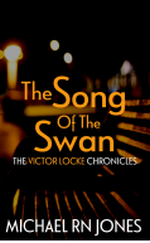
The Song of The Swan by Michael RN Jones

The Song of The SwanThe Song of The Swan

by Michael RN Jones
Series: The Victor Locke Chronicles, #2

Kindle Edition, 306 pg.
Fahrenheit Press, 2017

Read: September 13 – 14, 2017

On ending the sentence, his face dropped. “Oh,” he exhaled, “that’s it. I’ve just had one of those TV detective moments.”

“What d’you mean?”

“You know. When some tiny and unrelated fact, like a car door slamming or an answerphone machine flicking on, makes the whole case drop into place. It happens to Jonathan Creek and Adrian Monk all the time…”

In The Accidental Detective, we met Victor Locke and his court-appointed psychologist, Dr. Jonathan Doyle — a modern-day Holmes and Watson in a collection of stories that were partially a tribute, partially a pastiche, partially an update and entirely entertaining. This second episodic novel/short story collection continues in that vein.

This book opens with Doyle and Locke being arrested for bank robbery, which is not really what I’d expected. It’s, as is the case with many of the stories in this book, a chance for Doyle to stretch his investigatory skills and do a lot of the work. The two are not equal partners in any sense, but it’s nice to see that Doyle is more than just the sidekick (see Archie Goodwin and Joan Watson for other examples of this kind of relationship).

Not only is Doyle on his way to becoming a proper investigator, his write-ups of the cases are gaining him a greater degree of notoriety. I particularly enjoyed watching various characters go out of their way to fawn over him — or try to work their way into his writings.

At the same time, Doyle is wondering how well he actually knows his friend — and frequently discovers the answer is, “not that well.” At the same time, everyone (including Locke himself) regards him as the world’s expert on Victor Locke. Locke is just fun to watch in the varied situations he places himself in. As much as I appreciated Doyle’s larger role in things, I missed Locke when he wasn’t “on screen.” There’s a greater depth to the character than we’ve seen previously (or maybe I just missed it last time — that’s possible)

I’ve talked a lot about the characters and not much about the cases — there are two reasons for this, primarily, you read things like this for the characters. Secondly, Jones can tell you about the cases in a much more interesting way than I can. I’ll just say that they’re clever, enjoyable and Holmesian (in the best sense).

I’ve gotta say, I didn’t like the ending. I thought it was well done, it flowed organically from the events leading up to it, it fit the characters, it was earned — and so on. I just didn’t like it.

I enjoyed The Accidental Detective and if The Song of the Swan had been more of the same, I’d have been satisfied. But, Jones kicked everything up a notch — Locke was stranger, more clever, and funnier; Doyle was a better version of the guy we’d met previously, and the crimes were more interesting. All in all, a fun read, a great way to spend a few hours and one of those sequels that delivers on the promise of the first. Heartily recommended.

—–

4 Stars

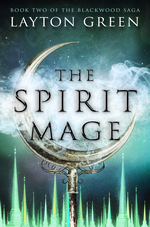
The Spirit Mage by Layton Green

The Spirit MageThe Spirit Mage

by Layton Green
Series: The Blackwood Saga, #2

eARC, 386 pg.
Cloaked Traveler Press, 2017

Read: September 9 – 12, 2017


Picking up so soon after the end of The Brothers Three that it might as well just be the next chapter, The Spirit Mage continues the story of The Blackwood brothers and their companions (most of them, anyway).

There are essentially four storylines at work in these pages. There’s one focusing on the villains here — the wizards running the campaign against the rebels, the Romani, the “common born” who aren’t content to stay that way — and a spirit creature invoked to find the sword that Will’s been carrying.

Speaking of Will, he and Caleb find themselves — and Caleb’s ex, Yasmina — in the necromancer’s castle. Will and Caleb are set on returning to New Victoria to try to find a way home. Meanwhile, they have to convince Yasmina that this very strange dream is real. Soon after they set out, they are captured by slavers and are headed towards mines that no one has ever escaped from.

Meanwhile, their brother Val was escorted back to Urfe where things got immediately interesting — just in case the reader might be tempted to think that his story was going to be a repeat of The Brothers Three, Green establishes right off that such will not be the case. Anyway, the only way that Val can determine to find his brothers is to actually figure out how to use the magic he’s been trying to master. So he enrolls in the Abbey — a wizarding training college. He befriends a few wizards, gets involved in some pretty serious extra-curricular activities.

Mala disappeared during their party’s assault on the castle with a majitsu — her story is easily the least predictable, and hardest to summarize without spoiling. It’s not as interesting on the whole (primarily because we’re used to focusing on the brothers), but man, when it gets weird, it gets weird.

The Brothers Three was your basic Portal Fantasy — a little different, because most of those feature much younger characters (or at least most that I’ve read). This book was more of your typical fantasy novel — wizard in training, heroes on a quest that goes awry. It’s that the central characters don’t belong in the world. I didn’t like Val as much has his brothers last time out, but I really enjoyed his story (as stupid as he frequently was). Will and Caleb I enjoyed as much as before — maybe more. I thought Yasmina was a great addition to the series, and the way she fits into the world was a big plus.

Mala’s story didn’t end the way I thought it would, but really it had to end the way it did. The same could be said for Val’s, actually. Will and Caleb’s ended like I expected (phew! I’m one for three). Thankfully, they were all brought to satisfying points — in one case, as satisfying as a cliffhanger can be. At this point I’m pretty sure I know how things will end up, but I have no clue how Green will pull it off. I can’t wait to see, though.

It’s hard to think of this as a separate book than The Brothers Three, really. By the time book 3 comes out, I’m not sure I’ll be able to tell you the difference between the two (okay, that’s not totally true — but it seems like it). Which makes it a little difficult to evaluate differently than its predecessor. Basically, if you liked the first book in the series, you’ll like this one. If not, well, this won’t change your mind. If you haven’t read The Brothers Three, you really should.

It’s honestly a little frustrating to me that I can’t think of much to say about this — but it’s so consistent with the last book that I’m going to sum things up in this post the same way I did with the other book: The Spirit Mageis well-written, skillfully structured, and well-paced — there are some nice turns of phrase throughout the novel, too. Green is the real thing, giving the readers a good story, great characters, an interesting world (or pair of them), in a well-written package. After these two books, I think I can say that this is going to turn out to be one of my favorite fantasy series in a while.

Disclaimer: I was provided with this copy for an honest review by the author.

—–

4 Stars

Summer Knight (Audiobook) by Jim Butcher, James Marsters

Summer Knight (Audiobook)Summer Knight

by Jim Butcher, James Marsters (Narrator)
Series: The Dresden Files, #4
Unabridged Audiobook, 11 hrs and 12 mins
Buzzy Multimedia Publishing Corp., 2009

Read: August 23 – 25, 2017


So, we get more information on the White Council (not just the vague references in the first couple of books and our buddy Morgan the Warden), as well as our introduction to the Fae Courts. Throw in everything we learned about Marcone in book 2, vampires in book 3, and what we’re about to learn in book 5 and we’ll have fully established the world of Harry Dresden. And wow, what a world.

But I’m getting ahead of myself. We start off with dealing with the war Harry was tricked into instigating in the last book, he’s got assassins after him — but thankfully, Billy’s got his back. A friendship has developed between Harry, Billy and the rest of Billy’s pack since Fool Moon which is pretty cool to see. Even if Harry’s too blinded by his obsessive need to cure Susan’s vampirism to see things like friendship, self-destructive lifestyle, and whatnot. Billy’s also minding the store for Harry and has made an appointment for him to meet with a new client.

Harry doesn’t want a new client — but he’s about run out of money and is looking at the business end of evictions soon, so he’d better. He doesn’t want this new client either, for reasons you can read/listen to for yourself, but she doesn’t leave him much of a choice.

Before he can get too carried away with dealing with this, he has to attend a meeting of the White Council — where he will be a major topic of conversation, thanks to the vampire war. Which isn’t going too well for the Wizards. We meet some great characters at this meeting, including Harry’s [spoiler] and mentor, Ebenezar McCoy. McCoy is a hoot — Marsters (no surprise) nails his character, by the way — he’s just one of those guys you like from the moment you meet him on the page and your appreciation for him only increases. In the end, the Council basically puts Harry to a test — if he doesn’t pass, they hand him over to the vampires; if he does, things continue on the way they are now — and if he dies in the process, well, that’ll be inconvenient. The test, naturally, involves him taking the above client he doesn’t want.

In a nutshell, a member of one of the Fae Courts has been killed and Harry has a couple of days until the Summer Solstice to find out who did it. Otherwise, the balance of power between the Courts will shift and war break out. A war that’ll pretty much decimate the planet’s climate in ways that Al Gore couldn’t imagine. Which is a bad thing for us humans. So pretty much, Harry has to solve a murder, stop a war/save the earth, while dodging assassins, skeptical wizards, and who knows what else or he’ll be tortured and killed by vampires after being abandoned by his people. In just a couple of days.

Oh, and a long-lost (and assumed dead) person from Harry’s past shows up in the middle of all this, too.

No big deal, right? Poor, poor Harry. It’s a fun adventure (for the reader), the mystery story is decent, the adversaries are fantastic — and the new characters (even those we never see again, sniff) are great additions to what’s just a great cast.

I mentioned the friendship of Billy and Harry earlier — we get a lot of it in this book, Billy’s along for most of the adventure, and he’s really turning into someone Harry can count on. Karrin Murphy gets some great action, too — and Harry finally clues her into what’s going on re: Fae, Vampires, White Council, etc. You know, keeping the promise he made to himself at the end of book 2. Well done, Dresden. I can’t fail to mention Toot Toot — he’s come a long way since we met him in Storm Front, in no small way thanks to Harry.

I’m talking about an audiobook now, so I really should say something about James Marsters’ work. I’m just going to sound like a broken record, though, if I do. I’m trying to think if I wasn’t that impressed with anything, or if there was something in particular that I thought he did well, and I can’t come up with anything. I really enjoyed his Bob in Summer Night — nothing different in the characterization, I don’t think, but it just came to life in a particular way. Also, he captured the very strong sense of fatigue, of being at the end of his rope that so defined Harry in these pages.

This wasn’t my favorite book — although I really enjoyed it on the whole — and really relished reliving the establishment of the Council and Courts in the series. While I thoroughly enjoyed the stuff in Wal-Mart (for example), it went on too long and wasn’t worth it to the story. There were a few too many moments like that in this book for my taste — fun in and of themselves, but ultimately, time wasted, so I’ll knock this down a star. Also, it proves that as much of a mindless fan-boy I can tend to be about this series, I’m a little discerning. A little.

—–

4 Stars

Luck Favors the Prepared by Nathaniel Barber

Luck Favors the PreparedLuck Favors the Prepared

by Nathaniel Barber

Kindle Edition, 204 pg.
Take the Stairs Publishing, 2017

Read: July 22 – 24, 2017


If the title is true, Nathaniel Barber was/would have been one of the worst Boy Scouts in the world. You don’t have to read many of these non-fiction short stories to decide that luck and Barber are, at best, passing acquaintances. Which is probably good — they make for better reading that way (Barber, might disagree about the “good” there — it is his life).

These stories don’t detail his life, they give you glimpses into experiences that have stuck with him for one reason or another, and largely they resonated with me. For example, his first (disastrous) experience with being a landlord. His goals for it were pretty much what I’d envisioned the time or three I thought about trying it. How it turned out for him, is pretty much what I feared would happen to me. A lot of what happened to him as a band geek made me think of what it was like when I was one (thankfully, it was a little tamer for me). I’ve never had a coworker like Dale Kendrick, but I can name one or two individuals that easily could’ve been.

Not all of his stories are those the reader will be able to identify with — but there’s something in his telling of them that will allow you to see yourself in that situation, and feel the humanity.

There is one important difference between his life experiences and mine — or most readers’ — his are funny. Or at least the way he’s able to present them is (probably more the latter than the former). Not always in a laugh-out-loud way, sometimes it’ll just be a wry smile, or shake of the head. But Barber’s been able to mine the humor in most of these situations — frequently at his expense.

Each story has a different feel to it, so even though they’re all about the same central character, they’re individual stories. They don’t all flow chronologically — he jumps back and forth though his life, you won’t walk away with a “life story” or anything, you’ll just get a good understanding of various points in his life. It’s like sitting around a table with an old friend, “Did I ever tell you about the time . . . ”

Barber’s writing chops are evident throughout this, whether he’s going for economy of words:

Against the advice of my lawyer and stern warnings from my therapist, I accepted Elsbeth’s invitation to lunch.

or if he’s going for a visual that will stick with you:

Mr. Millson was a short, puggish man. He was skinny except for a cantaloupe gut he not only ignored but allowed to lend heft to his wagging swagger. He was short and compensated for this with a simmering, constant temper, always fired up and red-faced. Even when he was just trying to schmooze an extra scoop of Jell-O from the lunch lady. His lips were not lips, but the absence of lips. Sweaty flaps, really. Fleshy bits of face he pursed to a thin, kissy embouchure under a bulbous, alcoholic nose.

you get exactly the idea he was going for — this isn’t some sort of arty-ambiguity here, it’s a precise brushstroke. He wants you to feel what he felt, he wants you to see what he saw — and he wants you to at least grin about it. Sometimes he’s not that subtle; infrequently, he could be more skillful about it — but he’s hitting his targets, he’s evoking memories about embarrassments of our youth, empathy over similar struggles of young adulthood, or a slight feeling of dread knowing that’s exactly how you’d react in that situation. Thankfully, he generally wants that to be followed with a chuckle.

Creative, distinctive, amusing — this collection will leave you wanting to see more from Nathaniel Barber, while being very glad you have this.

Disclaimer: I received a copy of this book in exchange for my honest opinion and participation in this book tour. I appreciated the book, but my opinions expressed are my own.

—–

4 Stars

Page 56 of 88

Powered by WordPress & Theme by Anders Norén