

Watched The Water Horse, this weekend with the family, which garnered very mixed reviews. TLomL called it “cute” and “a fun little movie.” The rest of us couldn’t disagree more. 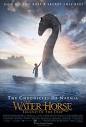 Whyfore the difference? The rest of us read the book last year before it opened in theaters, (one of our nigh unto unbreakable House Rules is “read the book first”) and the experience coupled with the trailers we’d been enjoying switched it from the “Get thee to a Multiplex” list to “Eh, maybe on video.” And we almost didn’t do that, but in the end, Frodo’s desire to compare the two and the Princess’ curiosity overcame Sam’s apathy.
I fully realize that you sometimes have to alter, tweak, or change elements of a book to get the thing into a movie. Sometimes I wonder why choices are made, but I can understand it. But this wasn’t on the level of leaving Hermione’s founding S.P.E.W. out of the flick, or something on that level. This was a wholesale re-write.
Dick King-Smith’s perfectly charming kid’s book is about two kids Kirstie and Angus living in Scotland in the 1930’s with their mother and her father (their father is a merchant marine gone for months at a time). They go to the shore frequently to look for firewood, kelp (to put on their grandfather’s garden), and miscellany. One day, Angus and Kirstie find a giant “mermaid’s purse“, which our protagonist, Kirstie, decides to sneak home because she’s so curious about it. That mermaid’s purse turns out to be an egg sack for the Water Horse. The rest of the book is about the family’s struggle to feed and care for the beastie while keeping him secret. He’s moved from body of water to body of water ’til he ends up in Loch Ness, where a certain picture is taken of him in 1934. Along the way, silly Angus grows up a bit, grandfather (named ‘Grumble’ because of his personality) cheers up, Kirstie becomes more mature.
In the movie, we’re still in Scotland, but it’s in the middle of WWII, and Angus is the focus…he’s drawn to the water, yet terrified of it (for reasons to be semi-explained later). One day at the beach where he’s supposed to be playing, he finds this strange rock, which he takes home–which is a large estate, his mother is the Head Housekeeper there. The rock turns out to be an egg, from which hatches the Water Horse. The next day, a regiment (or so) of soldiers arrives to be housed at the estate while they guard the nearby Loch from German Subs. Angus recruits the help of Kirstie and the new handyman with the mysterious past (taking the job of Angus’ father) to help him keep the creature a secret. Which brings them into confrontation with the soldiers, helps Angus deal with the loss of his father and his fear of water.
Which would’ve been a fine little flick, if it didn’t claim to be based on the book. Trust the source. You thought the novel was good enough to buy the rights to…don’t mess with it. Why is this so hard for people to understand?
So, basically, if you and yours haven’t read the book–it’s a cute movie to watch with the kids. Otherwise…find something else.
By the way, I have to wonder…just what history books do the people at Walden Media read? Apparently, aside from one/both parents being separated from their kids, WWII’s a pretty magical time (maybe just in the UK). The Pevensies are whisked away to Narnia, the MacMorrow kids get a magical pet…
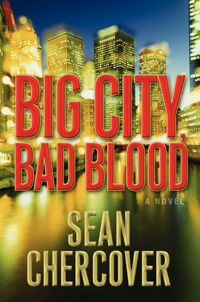 Somewhere, maybe it was a Robert Crais discussion list, I saw the debut novel of Sean Chercover mentioned in the same breath as
 Naturally, after
 – I’ve read all but one or two of Buckley’s novels, and it’s fair to say he’s my favorite satirist. In
  – The latest (last?) installment in the Leo Waterman series, is definitely the darkest. About half-way through this novel Leo stops going about this the way he normally does and instead assembles a team of criminals to start a major sting/blackmail operation. It bugged me while reading it, and by the time it was over, it bugged me a lot. I can’t really put my finger on it, but it didn’t feel like Leo, more like one of Spenser’s weaker escapades. The romantic subplot really worked for me, as did the b-plot with the runaway, but the A-plot…eh. I really hope that Ford gets back to this series so I can see how he’s going to take things with Leo’s love life–part of me is glad to see him risking the status quo; but the other part of me really likes Rebecca as a character, and I’d rather see more of her than less. But mostly I want to see if Ford continues to take this series in the darker direction this novel heads down (and his newer series seems to take), or if he lets Leo return to being Leo. Personally, I hope he takes the latter route–I miss the fun Elvis Cole (not that I totally mind the darker Elvis), don’t want to lose the fun Leo, too.
 – I really wanted to like this book–DeLillo’s one of my favorites. But this thing? Blah. This is DeLillo’s take on 9/11 and the aftermath. The scenes about the protagonist leaving the scene of the WTC attacks, and those showing how his son and his friends are reatcing to the attacks–those are really well done. And there were sentences, or paragraphs, that were great to read. But on the whole, this was a dreary novel, about dreary people reacting to horror in a dreary way. Worst thing I’ve read by him–which is strange, as many critics hail it as one of his best–who knows, maybe bluewoad’s rubbing off on me.
 – Tropper delivers yet another fun novel about a young man dealing with death (and how often can you say that?). This time, Tropper’s protag married an older woman with a teenage son. A plane crash cuts short their life together and now the widower has to put his life without her together. Of course, the teenage son is a complication that he’s not ready for. Tropper’s characters frequently have a strong woman character as friend/love interest (no matter how taboo). This time a twin sister takes care of the friend part of the equation–and is one of the more interesting characters he’s created. The quirky disfunctional family is along for the ride–the father, of course, being the most screwed up (not that mom is that together). Tropper doesn’t miss a beat, hit a wrong note, or flub the rhythm once in this book. Charming, funny, bleak, and hopeful. Probably his best work to date.
 – Wilson proves that you don’t have to be named J. K. Rowling to write children’s fiction that’s worth reading if you’re over 13. Good, imaginative, adventure story. Wilson’s got a natural (genetic?) way with words, that he’s honed well–would likely be a pleasure to read even if the plot and characters were weak.
 – This one’s a “Young Adult” novel, which again, puts me out of the target audience. Ooops. Actually, I think the target is teenage girls, so I’m really out of the target. Really don’t care. Meyer can tell a story. Even if the story is an implausible love story about a loner teen girl and a vampire whose Byronic personality is on loan from a Bronte novel. Probably one of the better vampire novels I’ve read (and I seem to be reading a lot of them lately for no apparent reason).