Tag: Mystery/Detective Fiction/Crime Fiction/Thriller Page 52 of 61

Free Fire (Audiobook) by C. J. Box, David Chandler: Pickett’s on the Case in a Prosecution-Free Zone

Free Fire

Free Fire

by C. J. Box, David Chandler (Narrator)
Series: Joe Pickett, #7

Unabridged Audiobook, 11 hrs., 5 min.
Recorded Books, 2010

Read: December 3-7, 2020
Grab a copy from your local indie bookstore!

What’s Free Fire About?

As it appeared certain at the end of In Plain Sight, Joe was fired as a Game Warden. He’s working on his father-in-law’s ranch, trying to make it by (his family no longer lives in state property, either). Sure, Marybeth’s business is doing pretty well, but it’s not the same.

Then Governor Rulon comes calling. He liked Joe the first time they met, and he’s pretty sure that Joe is the kind of straight-arrow he can count on. Someone figured out a weird loophole in the overlapping state and federal laws that govern the area of Yellowstone National Forest, and shot and killed several people and was unable to be prosecuted for it. Rulon’s hands have been tied and he can’t do anything about it. But he’d like Joe to go down and take a look, reporting to him, so Rulon can tell voters he looked into it.

Joe’s a Game Warden again, but one at large. No one at Yellowstone is happy to have yet one more person poking around there. But Joe has a job and he’s doing to do it right, no matter what feathers he ruffles.

Family Drama

We don’t get nearly enough time with the Pickett clan. Despite his hardships, things are good with Joe and Marybeth. Things could be better for the kids—because of their ages, and Joe’s very public lack of a job.

Joe and the family are living in a house on Marybeth’s Father-in-Law’s ranch—where Joe is working. The relationship between the Father-in-Law and the Picketts is pretty strong. Maybe even stronger than the relationship between Marybeth’s mother and the Picketts (the fact that Joe likes him probably accounts for a lot of that).

But it looks like things aren’t all happy on the ranch—there’s a lot of problems and who knows how long that’ll work for everyone.

Competition for Stephanie Plum?

Not in a million years, did I think I’d compare Joe Pickett to Stephanie Plum. But this Wyoming Game Warden might be as hard on vehicles as that New Jersey bounty hunter. It’s not as laughable yet, but it’s getting there.

I actually enjoy it more than I’d think I would.

I Did Not See that Coming

Now that I get to this point in the outline, I realize that there are two things I didn’t see coming. The first is that here in book seven, we get a lot of Joe Pickett backstory. If you’ve ever wondered what Joe’s childhood was like—or why we only hear about Marybeth’s family, this book will tell you.

But what I meant to talk about when I wrote the headings was this: Nate Romanowski shocked me. I’ve talked before about Nate serving as Joe’s Hawk/Joe Pike/Bubba Rogowski/Henry Standing Bear figure. We know what to expect from these figures—they’re the heavies. They do the morally/legally questionable things. They’re more likely to be the violent type (and more effective at the violent things anyway). But what Nate does here made me audibly gasp. I’m not saying he was wrong I just didn’t expect it.

At the same time, there are things that happen to him at the beginning and end of the novel that were surprising, but they rank among the “huh, that’s interesting,” kind of thing, not a “what did I hear?” kind of thing.

A Word About the Narration

Actually, I don’t really have anything to say here, Chandler delivers another solid job. He is the voice of Joe Pickett to me at this point. The two go together now.

So, what did I think about Free Fire?

I thought Box did a great job of coming up with a way to keep Pickett as a Game Warden and at the same time not making Twelve Sleep, WY to have a murder-rate that rivals Cabot Cove, ME.

Putting him in Yellowstone was just icing on the cake, and the angle of this prosecution-free zone in the Park is brilliant. At this point in the series, readers know the regular cast of characters and this world—Box can lean into them—or start defying expectations—as he needs to. This is a comfortable place for fans to spend time, and judging by the number of times Pickett comes back? It stays that way. I get that and am already eager to get back to spending time with the Pickett clan.


3.5 Stars

2020 Library Love Challenge
This post contains an affiliate link. If you purchase from it, I will get a small commission at no additional cost to you. As always, opinions are my own.


My Favorite Audiobooks of 2020

Given the large number of audiobooks I listened to in 2020, I sort of felt like I had to focus on them for one of these posts. But how to keep this from being just a rehash of the other best of lists? Well, I focused on the audiobook experience over the content. What was it like to listen to it? How engaging was it, how did the narrator do? Was it a good match in terms of tone, content, and performance?

Truth be told, this was a harder choice than I expected. Also, a couple of books that were in my mental rough draft didn’t make it to the final version when all was said and done (I’m still not sure I made the right call on a couple of these).

(in alphabetical order by author)

Dark JennyDark Jenny

by Alex Bledsoe, Stefan Rudnicki (Narrator)

My original post
Stefan Rudnicki brilliantly captures the humor, the confusion, the determination of Eddle LaCrosse and the situation he finds himself in—and then the horror, revulsion, and anger he has when he discovers what’s really going on. Starting with one of Bledsoe’s best books, Rudnicki goes on to bring it to life.

4 Stars

Dash & Lily's Book of DaresDash & Lily’s Book of Dares

by Rachel Cohn, David Levithan, Ryan Gesell (Narrator), Tara Sands (Narrator)

My original post
For me, this book came along at the right time—its particular brand of silly and escapist sweetness was exactly what it turned out that I needed. Add in a couple of stellar performances from Ryan Gesell Tara Sands and it’s just a delight. They can make you believe (even temporarily) in the magic of Christmas and young love.

3.5 Stars

Luck and JudgementLuck and Judgement

by Peter Grainger, Gildart Jackson (Narrator)

My original post
I’ve said it before, and I’ll keep on saying it: there’s a certain magic, an ineffable alchemy about Jackson narrating Grainger’s work. It’s just fantastic, I think I’d have liked these audiobooks with another narrator (or in print), but I don’t think I’d have liked them as much.

I could’ve listed each book in this series here, but I limited myself to this one because it’s an atypical crime for a novel, the solution (and how Smith and his team come to it) is offbeat, there’s some great humor and great emotional beats, too. It’s Grainger at his best and Jackson delivers it perfectly. There is a strong sense of humanity in these books, not just in the protagonists, but in the victim, the killer, the witnesses, the people who aren’t the killer but who aren’t up to anything legal/moral/ethical…everyone. There’s no one cartoon-y or over the top (in any direction).

4 Stars

The In BetweenThe In Between

by Michael Landweber, Brittany Pressley (Narrator), Mark Boyett (Narrator)

My original post
This is the story of what happens to a family when a young child goes missing during a teleportation trip that his parents make successfully (to put it too succinctly) It’s a gripping listen and wonderfully performed. As you may have guessed Brittany Pressley narrates the chapters from the mother’s point of view, and Mark Boyett takes the father’s. I don’t think I’d heard anything by either of them beforebut I’ll keep my eyes peeled for their names when I browse for audiobooks in the future. They truly did wonderful jobs. They got the emotion of the moment, the tensionand occasional moments of fun, joy, or reliefas well as giving a real sense of the characters. It didn’t happen often, but even when a character usually only seen in a Lillian chapter showed up in a Jackson, you could recognize them (and vice versa)which was nice. Landweber wrote a great story but Boyett and Pressley brought it to life.

5 Stars

GreenlightsGreenlights

by Matthew McConaughey

My original post
When Chris Hardwick interviewed McConaughey recently he described the audiobook as McConaughey playing McConaughey, which is a great way to put it, and I wish he’d posted this before I wrote about the book so I could’ve borrowed it then. But that’s it exactly, Yes, it’s his stories, but yeah, he’s performing. It feels like you’re sitting around the campfire or a table in a bar, listening to a great storyteller at work.

3.5 Stars

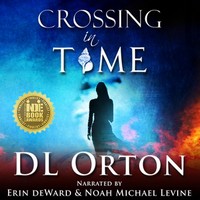
Crossing in TimeCrossing in Time

by D. L. Orton, Noah Michael Levine (Narrator), Erin deWard (Narrator)

My original post
Typically, when I post about an Audiobook, I close with a discussion about the narrator(s). But I started with it when I posted about this novel because Levine and deWard did such a great job, they’re the highlight of the experience for me. Typically, when there is a male narrator and a female narrator—the female will read all the narration and dialogue in the female character POV chapters, and the male will read all the narration and dialogue in the male character POV chapters. But here, deWard reads all the female dialogue, no matter the narrator (and vice versa). That’s a nice touch, and once I got used to it, I really appreciated it. Particularly, it helped the conversations between characters feel like conversations—there was a little bit of talking over each other, and so on. And when the two laughed together? That was either fantastic work by the narrators or by the editor (or both).

I’m not that sure how much I’d have enjoyed this book in print, but the way these two embodied the book made it one of the highlights of the year.

4 Stars

Far from the TreeFar from the Tree

by Rob Parker, Warren Brown (Narrator)

My original post
This was an Audible Original, so the Audiobook experience is a big part of it. Brown was a great choice of narrator—he’s the perfect voice for this material. He captured and shaped the tone as he needed to, and gave the right performances for each character.

I can’t help feeling like I need to say more, but I just don’t know what else to say. If I had problems with the performance, I’d probably be able to go on longer, but when a narrator gets it right, like Brown does here, what else is there to say? It was a brutal, brutal experience, with more twists than I can count, and a plot so complex I’m not able to talk about it in this small space.

4 Stars

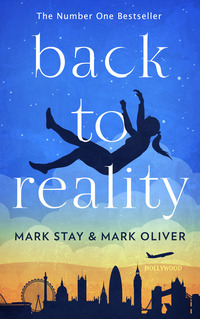
Back to RealityBack to Reality

by Mark Stay & Mark Oliver, Kim Bretton (Narrator)

My original post
This is sort of a Fringe-inspired take on a Back to the Future/Freaky Friday mashup, and it’s as odd, and fun as that description makes it sound.

I’ll frequently (maybe too frequently?) talk about an audiobook narrator bringing the text to life. And Kim Bretton does that. But she does more than that—she fills it with life. Dynamic, energetic, vibrant…are just some of the adjectives that spring to mind. I was very happy when I just looked over her other audiobook credits and saw a couple of titles I was already thinking about—if she’s doing them, I’m giving them a try. (although, if I never hear her do another American male accent, I’d be more than okay).

Funny, sweet, amusing, heartfelt, laugh-inducing, touching, comic, imaginative—and did I mention humorous? This is 606 minutes of pure entertainment. I really encourage you to put this in your ear-holes. It’d probably work almost as well in print—Bretton’s great, but she has to have something to work with—but in audio? It’s close to a must-listen.

4 Stars

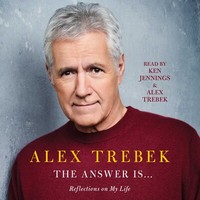
The Answer IsThe Answer Is . . .: Reflections on My Life

by Alex Trebek, Narrated by: Ken Jennings, Alex Trebek

My original post
Jennings was a great choice of narrator, since his time on Jeopardy!, the two are linked in the collective consciousness, and they clearly have a good relationship. He sounds like a natural when it comes to narration. But his work is overshadowed by the few chapters he didn’t read.

Trebek read a few chapters himself—the one about why he swears so often (it surprised me, too), the one talking about notable Jeopardy! contestants (like Jennings), the one about his wife (Trebek didn’t like the idea of someone else talking about his wife that way), and the last chapter, where he discussed his cancer and coming to terms with his impending death. I understand why he couldn’t do the entire book himself, but I’d have preferred it (nothing against Jennings—I’d have been content with Jennings doing the whole thing). But I’m so glad he did those chapters, you could hear the sincerity in his praise for Jennings, Eddie Timanus, Cindy Stowell, and others; his love for his wife; and the resolution and contemplation he’d put into his final days

4 1/2 Stars

Dawn PatrolDawn Patrol

by Don Winslow, Ray Porter (Narrator)

Wow. Despite this being my first and favorite Winslow novel, I wasn’t inclined to grab the audiobook. But then it was on sale and a fellow Winslow-fan recommended Porter’s take on the book. I didn’t know that Porter did audiobooks before this, but he’s on my list to watch for now.

I don’t know how to describe this—I was blown away. I’ve read the book two or three times, but Porter made it feel like it was all new. I was gripped. I was entertained. I was heartbroken. It’s as good as you can ask for an audiobook to be.

5 Stars

Pub Day Repost: Bone Canyon by Lee Goldberg: Eve Ronin Digs Up Bones, Secrets and Ugly Truths in this Great Follow-Up

Bone Canyon

Bone Canyon

by Lee Goldberg
Series: Eve Ronin, #2

eARC, 288 pg.
Thomas & Mercer, 2021

Read: December 20-23, 2020
Grab a copy from your local indie bookstore!

What’s Bone Canyon About?

A wildfire was wiping out good swaths of L.A. County as the last novel wrapped up. Now, just a few weeks later, several things that were hidden pre-fire have been exposed—some of those things are human remains. Eve Ronin and her partner are called out to the site of one such discovery. They’re able to identify the remains, they belong to a young woman who’d reported being raped and soon disappeared six years previously.

Eve assumes there’s a link between the rape, disappearance, and her death. This is solidified when it’s determined the woman was murdered. Even if it proves untrue, she needs to start her investigation somewhere, so she starts by looking over the initial investigation and is less than impressed with the way it was handled. So, she plunges into re-investigating the rape and disappearance while also trying to get a handle on this murder. It’s not long before she’s getting pressured to drop the rape angle.

When another group of remains is found in the same general area—these belonging to an older woman, things get more complicated. How many murderers is she looking for?

Duncan “Dunkin’ Donuts” Pavone

I only gave Eve’s partner four sentences in my post about Lost Hills, I think I should’ve spent a little more time on him, I have a sneaking suspicion that he’s the secret weapon in this series. He seems like a Spenser’s Frank Belson-type (I have to admit I see Ron McLarty, TV’s Belson, in my mind during his scenes). He’s a slob, constantly covered in crumbs (donut or otherwise), cynical, seemingly lazy—but at heart a dedicated and good detective. Watching him at work in the interrogation room should be enough to make anyone doubt the image he projects.

When we first meet him, he’s got his eyes on his retirement date and is counting down to it, which is why he’s saddled with the homicide detective no one wants as a partner. He seems to tolerate Eve and will sprinkle some tips and cynicism her way. But that’s about it. By the end of the first novel, there’s more than toleration at work. By the time Bone Canyon opens, he’s really trying to mentor her, trying to guide her, and prepare her as much as possible for her future (not that he’s obvious about it, or even willing to admit it, but it’s there). In a lot of this novel, it’s clear that he cares for Eve as a partner, and is likely more concerned with the future of her career than she is. He won’t necessarily agree with all of her wild theories, but he’s at least willing to entertain them, to look for evidence to back them up.

It’s a nice shift, and if she can win Duncan over, there’s reason to hope that she can get others in the Department to work with her.

While I’d been hoping that Goldberg would find a way to keep him in the series after his retirement (somewhere around 100 days after this novel), I wasn’t sure he would. I guess I’m still not positive that he will, but Goldberg provided a way to do so. I’m relieved—Eve needs a cop she can trust in her life, even if he’s retired.

Which leads me to:

Cop or Politician?

Several times, superiors in the Sheriff’s office, a friendly D.A., and her own mother accuse Eve of playing political games with this case for her own career advancement. In Eve’s mind, she’s not making political moves for her own gain, but for the sake of the case. It’s all about justice for the victims, she insists. She doesn’t trust anyone in the Department, so she has to go at things in her own way.

Sure, she made some moves circumventing the chain of command to keep things moving, to prevent leaking and anyone stopping her. But she denies being overtly political about this, and only admits it in retrospect. Which I found a little odd, remembering something she thought about the Harry Bosch audiobook she was listening to in Lost Hills:

[Bosch’s] problem, she thought, was that he didn’t know how to play politics. She’d already proven that she could.

As much as Eve thinks of herself as a loner—due to circumstances forcing her into the role, rather than that being her nature—there are events here to teach her that ain’t necessarily true. She’s never going to win any popularity contests (Duncan will testify that she’s unlikeable), but if she pays attention, Eve’s going to find more allies. She doesn’t have to be Renée Ballard.

* We know she’s a Harry Bosch fan, I wonder what Eve thinks about Ballard.

…or Is She a Media Star in the Making?

The other thing that’s constantly being thrown at Eve is her social media stardom—the viral video that got her promoted into the Homicide Division was just the start. Someone leaked video of her heroics at the close of the previous novel which just compounded things for her. So many of her fellow detectives and deputies just assume she’s all about getting fame and glory for her own advantage (many of these people are just jealous and would do whatever they could to get a share of her fame so they could cash in on it). It’s truly the last thing she wants, unlike the other accusation.

Ironically, her family is pushing her to embrace this notoriety and cash in on it (mostly for their selfish benefit, not her good)—and both an agent and a TV Writer/Producer are circling her. Everyone’s telling her that a series/movie is going to happen no matter what, if she wants any influence on how it happens, she has to sign up.

Goldberg had already firmly established that this series takes place in the shadow of the Entertainment Industry, would-be actors, film crew members, bona fide stars, and others (like a fellow detective) wanting to get into the industry. So this subplot doesn’t feel out-of-place at all, it’s the world Eve Ronin deals in.

I really like this aspect of the story—as long as it doesn’t become too dominant—and watching Eve try to figure out how to use her notoriety to help (or at least, not hinder) her police work is as interesting as watching her figure out how to survive as a political animal.

Now, that’s a nice touch…

There’s a little treat for readers of Goldberg’s Ian Ludlow series. I loved it. But if you’re not reading that series, don’t worry, you won’t even realize that you missed something.*

* Still, I should take a beat to ask you why you aren’t reading the Ian Ludlow books. You should fix that. Click here to see what I’ve had to say about those.

So, what did I think about Bone Canyon?

This rocked. I think it was a step up from Lost Hills, which I’m pretty sure was the best thing Goldberg has written. He does all the same things that made Lost Hills a success and then progressed them a little bit. I raced through these pages—both because the prose invites you to and because I just had to see how it all ended.

Eve’s a great character—she’s flawed, she has a lot to learn, but she has potential as a detective and is driven to fulfill that potential. Her cases are twisty enough to keep you guessing and turning pages. and Goldberg’s writing is at his best.

I liked Lost Hills enough that pre-ordered this book as soon as I could, and have already done the same for the third book, knowing only its title (I’d buy books 4 and 5 right now, too, for what it’s worth). They’re that good—and I think you’ll likely agree. Jump on the Eve Ronin train, you’ll be in for a great ride.

Disclaimer: I received this eARC from Thomas & Mercer via NetGalley in exchange for this post—thanks to both for this, but aside from giving me something to opine about, this didn’t impact what I said.


4 1/2 Stars

This post contains an affiliate link. If you purchase from it, I will get a small commission at no additional cost to you. As always, opinions expressed are my own.

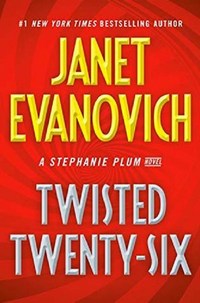
Twisted Twenty-Six by Janet Evanovich: Stephanie’s Discontented but Provides Readers with the Best Book in Years

Twisted Twenty-Six

Twisted Twenty-Six

by Janet Evanovich
Series: Stephanie Plum, #26

Paperback, 305 pg.
G.P. Putnam’s Sons, 2019

Read: December 25, 2020
Grab a copy from your local indie bookstore!

“You still want to chase after this guy?”

“You bet your ass. Just because he made fools out of us three times, don’t mean one of these times we won’t luck out. Notice he called us losers and not quitters. That’s on account of we never quit. In my mind, that’s the difference between being a loser-and a winner. A winner is willing to look like a idiot for as long as it takes to get the job done. I figure you stick with i it long enough ~ and you win. Unless you die or come down with some disease like shingles or cancer of the rectum. If I ever got cancer of the rectum, I’d go to the best rectumologist out there. Like I’d get a celebrity rectumologist. I wouldn’t mess around with some local yokel.”

“All good to know,” I said.

I don’t even need to provide dialogue tags to that, do I? If you’ve read a single Stephanie Plum novel, you know who’s saying what there.

What’s Twisted Twenty-Six About?

When we last left Stephanie*, her Grandma Mazur had left for a getaway with her new love, who just happens to be a semi-retired mobster. We pick up a week or so later, Grandma Mazur and Jimmy Rosolli had been married, and then forty-five minutes later, Rosolli died (of natural causes, I feel compelled to add). Still, even a 45-minute marriage makes Grandma a widow, but more importantly, a widow of some status in the neighborhood.

* Yeah, I know, right? I’ll talk about that in a minute.

We don’t know a lot about Jimmy’s criminal life, but among his group, he had a particular importance. He was “Keeper of the Keys.” Now, no one—not Grandma, not the cops, not almost anyone that Stephanie can talk to about Jimmy knows what that means. The few that do know, aren’t talking to anyone about them (also, they don’t believe Stephanie or Grandma when they say they don’t know where the keys are).

So Jimmy’s partners are looking for the keys, their rivals are looking for the keys. And everyone thinks Grandma Mazur either has them or can get them (she is the beneficiary of his will, after all). And none of these men are willing to take any means necessary to get her to talk. Stephanie, Ranger and Morelli team up to keep Grandma Mazur and the Plums safe.

All the while, Stephanie and Lulu are on the hunt for people who missed their court dates for the Bail Service, Stephanie is dealing with a destroyed car, Stephanie is fending off advances from Ranger—and not doing fending off much from Morelli, you know, typical stuff.

A moment of chronological accuracy

At one point, Stephanie is lamenting to Lulu about how her life isn’t working out the way she wants and states her age—a larger number than Lulu is ready for (okay, I wasn’t ready for that amount of candor, either—but the math works), and a sign that maybe Evanovich is going to start aging her in real time. It’s not long before Stephanie blows off that moment of honesty as a joke and we’re elft wit an indeterminate age again.

Still, for a couple of poages, it looked liek Evanovich might have been making a big step.

Old Dog, New Trick?

From the start of this series, there’s been a little carry-over from one book to the next—Stephanie’s sister’s marriage and kids, glacially slow advancement of her relationships with Ranger and Morelli, and so on. But largely, these are stand-alone books and can be read in any order.

Until now (obviously).

The end of Look Alive Twenty-Five leads into this book. The ending of this book propels the reader into Fortune and Glory (aka Tantalizing Twenty-Seven). This is new. This is a positive movement, there’s something to sink our teeth into. Not much, maybe, but it’s something.

I’m not sure why Evanovich has changed her approach. I’m not sure I care, either. I’m just happy to see that it has happened, and wonder where she’s going with all of this.

So, what did I think about Twisted Twenty-Six?

“I don’t want to do this job anymore. I’m not good at it. I don’t like it. I don’t like being in the bad neighborhoods looking for the bad people.”

“What would you rather do?”

“I don’t know,” I said.

“Do you have a direction?”

“No.”

“Babe.”

“Yeah, I’m a mess.”

“You aren’t a mess,” he said. “You’re just a little burned out.”

“It’s more than that. I’m stagnant. There’s no growth in my life.”

“That’s okay as long as you like what you’re doing. Not everyone needs to keep moving up the ladder.”

I have to read a State of the Series in these words (see also: the quotation at the top). I doubt that Evanovich set out to do that, but “mess,” “stagnant,” and directionless are words I’d use to describe this series lately. But like Stephanie’s (no doubt) futile efforts at self-improvement, over the last couple of books I’m seeing signs that Evanovich might be trying to add some direction and clarity to the series

I do not think it’ll ever reach the comedic heights it once hit. Nor do I think that Evanovich is going to suddenly become the new Grafton (not that I’d complain), but it seems like she’s taking the storytelling component of this seriously again. I could be 2-3 books away from again wondering why I’m sticking with these series. But until I get to that point, I’m going to enjoy the ride.

As for this book? It was fun—I admit to laughing out loud on a few occasions. I liked the story (I’m not convinced the bad guy was set-up correctly before the reveal, but…I’m not going to argue about it). The action was decent. I didn’t roll my eyes at the destruction of the car, and best yet, I think this is one of the best uses of Stephanie’s parents in ages (if not ever).

This might actually be a decent jumping-on point (Look Alive Twenty-Five would be marginally better) for this long-running series. This is definitely one to use to come back to the series after a time away. Or if you’re just plugging away with a new annual entry, you’ll be satisfied. Give this series a shot, it’ll be worth it.


4 Stars

This post contains an affiliate link. If you purchase from it, I will get a small commission at no additional cost to you. As always, opinions are my own.

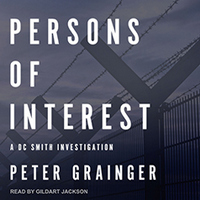
Persons of Interest (Audiobook) by Peter Grainger, Gildart Jackson: DC Smith’s Tie to a Murder Victim Leads to a different Twisty Case

Time’s gotten away from me on this one, been trying to get it done since August and keep getting distracted. But…I won’t let myself listen to the next one until I get this posted. So…


Persons of Interest

Persons of Interest

by Peter Grainger, Gildart Jackson (Narrator)
Series: A DC Smith Investigation, #4

Unabridged Audiobook, 10 hrsl, 30 min.
Tantor Audio, 2017

Read: August 14-18, 2020
Grab a copy from your local indie bookstore!

Allen wrote a short email of his own to Detective Inspector Reeve. The first version included the phrase, “Tell Smith to carry on as normal.” Then he had second thoughts and deleted that, telling Smith to carry on as normal might not be wise, because “normal” for Smith was not the same as it was for other people. [guessing on punctuation, etc.]

What’s Persons of Interest About?

DC Smith is called to a nearby prison to answer some questions. It appears that a murdered prisoner had a connection to Smith. Smith has never had anything to do with this man. Oh? Then why does he have your phone number? This is technically true, but it hasn’t been Smith’s number since the first book in the series. DC’s written off pretty quickly as a suspect (thankfully! I’ve made it clear that I just don’t like those stories), but he is curious about the man having his number.

But he can’t focus on that—the case belongs to a different jurisdiction, in the first place. In the second place, there’s a major new drugs task force temporarily in Kings Lake and he needs to focus on the new initiative. DC is enough of a cynic to have little use for it, seeing it as a PR stunt more than anything else.

Sadly, because of this task force, Smith and his team realize that something has happened to the drug trade in Kings Lake recently, power has shifted and the old players aren’t in the game anymore, or are playing a diminished role. So who’s running the show now, and how did this happen without any of the police aware?

Oh, and there is that nagging curiosity in the back of his mind about the murdered prisoner.

The On-Going Arcs

I really appreciated the way that Smith is still dealing with the, er, shortcuts he took to make sure he passed his physical exam. It was semi-comedic in the previous book, but that’s over and now DC is paying for it.

The new team member is becoming part of the crew but there’s still some room to grow—which is how it should be. There are some other internal moves, and potential moves, even some cooperation where I wouldn’t have expected it. I’m looking forward to seeing how it all resolves. I’m being vague, but it’s hard not to be without spilling details.

The story involving DC’s True Crime Writer friend was really scaled back, and I kept wondering if it was going to come into play more in this book. It didn’t, which I assume means that it’ll play a big role in Book 5. Which works for me. It’s not my favorite part of any of these books, but I’m really curious about how it’s going to play out.

Jackson’s Narration

Everything I’ve said before still holds. The perfect combination of text and narrator, protagonist and portrayer.

That’s it, that’s all I can say.

So, what did I think about Persons of Interest?

The reason that it’s taken me months to post about this book is that I don’t know what else to say about this series. I think that there are a couple of more compelling police procedural series out there, but I can only handle so much of them at one time. It feels like I could listen to this series on a loop and be perfectly content for a few weeks.

I love the cast, I love the way Smith’s mind works, I love his quiet little humor (he reminds me of a more realistic Francis Xavier Flynn making jokes that only he will understand or appreciate), I really like the cases this team works, and Jackson’s narration puts it over the top.

I’m not 100% convinced that this case was as compelling as the previous three, but the way Grainger tells the story makes up for that. I can’t wait to get back to Kings Lake Central and see what they get up to next.


4 Stars

This post contains an affiliate link. If you purchase from it, I will get a small commission at no additional cost to you. As always, opinions are my own.

The Friday 56 for 1/1/21: Dead Perfect by Noelle Holten

The Friday 56This is a weekly bloghop hosted by Freda’s Voice

RULES:
The Friday 56 Grab a book, any book.
The Friday 56 Turn to Page 56 or 56% on your ereader. If you have to improvise, that is okay.
The Friday 56 Find a snippet, short and sweet.
The Friday 56 Post it

from 56% of:
Dead Perfect

Dead Perfect by Noelle Holten

…I apologize if this is slightly repetitive. Remember when we were talking about strange people you may have come across or who’ve made you uncomfortable? Can you just remind me of them again and maybe what made you feel weird around them?’

‘Erm … All right. Is this one of those times I have to just give you what you ask and trust that you have your reasons?’

‘I’m afraid it is.’

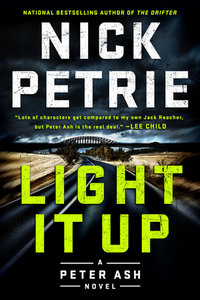
Light It Up by Nick Petrie: Peter Ash Throws a Monkey Wrench into a Denver Conspiracy

Light It Up

Light It Up

by Nick Petrie
Series: Peter Ash, #3

Paperback, 381 pg.
G.P. Putnam’s Sons, 2018

Read: December 28-29, 2020
Grab a copy from your local indie bookstore!

“I could really use your help,” Henry told Peter. “Maybe a week, two at the most. Just until I get things squared away,”

Peter didn’t have to think before he answered.

“No problem.” He’d send June a postcard. Maybe leave out a few details. He didn’t want to worry her. “Sign me up.”

Later, he’d wish he’d answered differently.

He’d have plenty of reasons.

But he knew he’d have answered exactly the same way.

What’s Light It Up About?

Peter meets and befriends a Vietnam vet on a project in Oregon. His friend, Henry, needs to return home to Denver—his daughter and son-in-law run a security company, escorting money for the cannabis industry. On a recent run, the son-in-law and his team went missing (along with the money). Henry needs to go help run things and hopefully come across a clue about the disappearance. He asks Peter to come along, and he does.

Four days later, Henry, Peter, and two others are taking care of another shipment of money. It’s a very routine run—until it’s not. They’re attacked by a group of professionals and it’s a very ugly event.

It’s no longer about Peter trying to help out a friend, it’s now about Peter striking back at the people who attacked his team and making sure they don’t do anything like that again.

A Three-Headed Monster

There are essentially three villains to this book. I’d like to talk about all three of them, but I don’t think I really can without taking something away from the experience—one calls the shots, one is the man on the ground making the plans and seeing that they’re implemented, the third is the guy who carries out the plan.

This latter we’ve seen before—he’s all about killing and raping*—maybe a little pillaging while he’s at it. He really just wants to watch the world burn. The man at the top is another guy we’ve seen before (a good version of him, don’t get me wrong).

* No, he doesn’t rape anyone in this book. There are some passing references to times he has, and he definitely looks forward to doing it in the future.

It’s the middle man that’s the guy who captured my attention. The man at the top is probably convinced he’s doing the right thing (for at least some people), the guy at the bottom of the chain of command doesn’t care about right and wrong. But the other one—he knows that what he’s doing is wrong, he is deliberately choosing evil. He has compelling reasons for that, but he’s going in with his eyes wide open.

Also, he has an interesting tie to Peter, one that adds a new layer to Peter.

No Army of One

Peter likes to think of himself as a lone wolf—he can do it all himself. Maybe even thinks he needs to (the book delves deep into this toward the end, but I’m not interacting with that part). But he’s not one—unlike Jack Reacher (the easiest guy to compare him to) who will pick up an ally or two for a book, and then will leave them in the dust while “The Lonely Man” (from The Incredible Hulk) plays in the background.

Peter didn’t want to leave June behind, but needed to (and wants to get back to her). And while he considers Lewis a friend, doesn’t try to get him involved in his messes. But they don’t let him—he needs help, so they come to him, over his objections.

Peter’s an action hero for our time—he’s dealing with PTSD (not stoically enduring, he’s trying to deal with it, he’s got a counselor), he has a sense of humor, and he’s a social creature. He needs people—for community and for assistance from time to time—and he’s the kind of guy that people are drawn to.

There’s a moment where Lewis describes why Peter’s men followed him where they did in Iraq. It’s something about his personality, is leadership, his character—he still has that, he just has different people following him in the trouble spots in the U.S.

The Lone Wolf Hero is a mainstay, it’s a fixture in Fiction—but a hero like Peter? He’s so much easier to believe. Easier to root for. He has more to lose, so you care more for his success.

A Missed Opportunity

When it looks likely that Peter’s going to be facing some legal troubles, Lewis arranges for a lawyer for him. She comes on the scene like some sort of oversexed Rita Fiore (from the Spenser/Jesse Stone series), intimidating police and protecting Peter. She’s not cartoonish, but she’s trending that way. She has a couple of good scenes, but then she practically vanishes.

This isn’t a legal thriller, and a lawyer shouldn’t play a huge role—but if you’re going to put a flashy character show up, use them. There’s no reason to believe that she’ll be around in future books—unless Peter moves to Denver.

I did like her, I thought she had some good scenes, but it felt like hiring Meryl Streep to play a role listed as “Lady in Restaurant” in the credits.

So, what did I think about Light It Up?

This series gets better and better. I thought the whole idea of the security for the cash shipments for the new (at least then) cannabis industry in Colorado was great. It’s the kind of thing that was just waiting for a thriller writer to jump on, and Petrie took full advantage before anyone else saw it.

There’s a mano a mano fight at the end—fantastic. Just fantastic. There’s plenty of action before that—a chase scene, the ambush of the security team, and some others—just those would’ve been enough to make me commend and recommend this thriller. But that climactic combat? Just wonderful.

Like with Burning Bright, I lost sleep over this—and did not care. Solid (at least) action, an ingenious premise, good character development, some well-written and well-conceived antagonists (scratch that, they’re flat-out bad guys). There’s nothing to complain about here. Get your hands on this one.


4 1/2 Stars

This post contains an affiliate link. If you purchase from it, I will get a small commission at no additional cost to you. As always, opinions are my own.

Bone Canyon by Lee Goldberg: Eve Ronin Digs Up Bones, Secrets and Ugly Truths in this Great Follow-Up

Bone Canyon

Bone Canyon

by Lee Goldberg
Series: Eve Ronin, #2

eARC, 288 pg.
Thomas & Mercer, 2021

Read: December 20-23, 2020
Grab a copy from your local indie bookstore!

What’s Bone Canyon About?

A wildfire was wiping out good swaths of L.A. County as the last novel wrapped up. Now, just a few weeks later, several things that were hidden pre-fire have been exposed—some of those things are human remains. Eve Ronin and her partner are called out to the site of one such discovery. They’re able to identify the remains, they belong to a young woman who’d reported being raped and soon disappeared six years previously.

Eve assumes there’s a link between the rape, disappearance, and her death. This is solidified when it’s determined the woman was murdered. Even if it proves untrue, she needs to start her investigation somewhere, so she starts by looking over the initial investigation and is less than impressed with the way it was handled. So, she plunges into re-investigating the rape and disappearance while also trying to get a handle on this murder. It’s not long before she’s getting pressured to drop the rape angle.

When another group of remains is found in the same general area—these belonging to an older woman, things get more complicated. How many murderers is she looking for?

Duncan “Dunkin’ Donuts” Pavone

I only gave Eve’s partner four sentences in my post about Lost Hills, I think I should’ve spent a little more time on him, I have a sneaking suspicion that he’s the secret weapon in this series. He seems like a Spenser’s Frank Belson-type (I have to admit I see Ron McLarty, TV’s Belson, in my mind during his scenes). He’s a slob, constantly covered in crumbs (donut or otherwise), cynical, seemingly lazy—but at heart a dedicated and good detective. Watching him at work in the interrogation room should be enough to make anyone doubt the image he projects.

When we first meet him, he’s got his eyes on his retirement date and is counting down to it, which is why he’s saddled with the homicide detective no one wants as a partner. He seems to tolerate Eve and will sprinkle some tips and cynicism her way. But that’s about it. By the end of the first novel, there’s more than toleration at work. By the time Bone Canyon opens, he’s really trying to mentor her, trying to guide her, and prepare her as much as possible for her future (not that he’s obvious about it, or even willing to admit it, but it’s there). In a lot of this novel, it’s clear that he cares for Eve as a partner, and is likely more concerned with the future of her career than she is. He won’t necessarily agree with all of her wild theories, but he’s at least willing to entertain them, to look for evidence to back them up.

It’s a nice shift, and if she can win Duncan over, there’s reason to hope that she can get others in the Department to work with her.

While I’d been hoping that Goldberg would find a way to keep him in the series after his retirement (somewhere around 100 days after this novel), I wasn’t sure he would. I guess I’m still not positive that he will, but Goldberg provided a way to do so. I’m relieved—Eve needs a cop she can trust in her life, even if he’s retired.

Which leads me to:

Cop or Politician?

Several times, superiors in the Sheriff’s office, a friendly D.A., and her own mother accuse Eve of playing political games with this case for her own career advancement. In Eve’s mind, she’s not making political moves for her own gain, but for the sake of the case. It’s all about justice for the victims, she insists. She doesn’t trust anyone in the Department, so she has to go at things in her own way.

Sure, she made some moves circumventing the chain of command to keep things moving, to prevent leaking and anyone stopping her. But she denies being overtly political about this, and only admits it in retrospect. Which I found a little odd, remembering something she thought about the Harry Bosch audiobook she was listening to in Lost Hills:

[Bosch’s] problem, she thought, was that he didn’t know how to play politics. She’d already proven that she could.

As much as Eve thinks of herself as a loner—due to circumstances forcing her into the role, rather than that being her nature—there are events here to teach her that ain’t necessarily true. She’s never going to win any popularity contests (Duncan will testify that she’s unlikeable), but if she pays attention, Eve’s going to find more allies. She doesn’t have to be Renée Ballard.

* We know she’s a Harry Bosch fan, I wonder what Eve thinks about Ballard.

…or Is She a Media Star in the Making?

The other thing that’s constantly being thrown at Eve is her social media stardom—the viral video that got her promoted into the Homicide Division was just the start. Someone leaked video of her heroics at the close of the previous novel which just compounded things for her. So many of her fellow detectives and deputies just assume she’s all about getting fame and glory for her own advantage (many of these people are just jealous and would do whatever they could to get a share of her fame so they could cash in on it). It’s truly the last thing she wants, unlike the other accusation.

Ironically, her family is pushing her to embrace this notoriety and cash in on it (mostly for their selfish benefit, not her good)—and both an agent and a TV Writer/Producer are circling her. Everyone’s telling her that a series/movie is going to happen no matter what, if she wants any influence on how it happens, she has to sign up.

Goldberg had already firmly established that this series takes place in the shadow of the Entertainment Industry, would-be actors, film crew members, bona fide stars, and others (like a fellow detective) wanting to get into the industry. So this subplot doesn’t feel out-of-place at all, it’s the world Eve Ronin deals in.

I really like this aspect of the story—as long as it doesn’t become too dominant—and watching Eve try to figure out how to use her notoriety to help (or at least, not hinder) her police work is as interesting as watching her figure out how to survive as a political animal.

Now, that’s a nice touch…

There’s a little treat for readers of Goldberg’s Ian Ludlow series. I loved it. But if you’re not reading that series, don’t worry, you won’t even realize that you missed something.*

* Still, I should take a beat to ask you why you aren’t reading the Ian Ludlow books. You should fix that. Click here to see what I’ve had to say about those.

So, what did I think about Bone Canyon?

This rocked. I think it was a step up from Lost Hills, which I’m pretty sure was the best thing Goldberg has written. He does all the same things that made Lost Hills a success and then progressed them a little bit. I raced through these pages—both because the prose invites you to and because I just had to see how it all ended.

Eve’s a great character—she’s flawed, she has a lot to learn, but she has potential as a detective and is driven to fulfill that potential. Her cases are twisty enough to keep you guessing and turning pages. and Goldberg’s writing is at his best.

I liked Lost Hills enough that pre-ordered this book as soon as I could, and have already done the same for the third book, knowing only its title (I’d buy books 4 and 5 right now, too, for what it’s worth). They’re that good—and I think you’ll likely agree. Jump on the Eve Ronin train, you’ll be in for a great ride.

Disclaimer: I received this eARC from Thomas & Mercer via NetGalley in exchange for this post—thanks to both for this, but aside from giving me something to opine about, this didn’t impact what I said.


4 1/2 Stars

This post contains an affiliate link. If you purchase from it, I will get a small commission at no additional cost to you. As always, opinions expressed are my own.

Cooking for Cannibals by Rich Leder: An Ex-Con turned Cook, Experimental Drugs, Reverse Aging and a Gerontologist make for a Very Strange Crime Novel

Cooking for Cannibals

Cooking for Cannibals

by Rich Leder

eARC, 371 pg.
Laugh Riot Press, 2021

Read: December 15-17, 2020

Don’t Suspend Your Disbelief, Throw it into a Small, Locked Room Somewhere

The core premise of this book is hogwash. Scientifically impossible. Accept that and move on. Leder doesn’t try to dress it up in pseudo-scientific jargon or explanations, he just says this impossible-to-believe thing happened. The characters only believe it because of what’s in front of their eyes and make no attempt to explain it to each other, either. So pretend the universe works the way he needs it to for this story, and you can have a lot of fun.

If you can’t do that, don’t even bother picking it up. Sure, go ahead and buy it, Leder could use the sale, but don’t bother reading the book.

What’s Cooking for Cannibals About?

It’s about what happens when an ex-con gets his big break, a behavioral gerontologist who prefers rats to people takes a dramatic step, and a group of seniors embrace a second chance.

Carrie

Carrie is a behavioral gerontologist who’s working at a secret pharmaceutical laboratory coming up with a medication to combat the effects of aging. The results are phenomenal. Unbelievable—it actually appears to reverse the aging process to a degree. A significant degree.

On the weekends, Carrie works for the Copacabana, a “low rent rest home,” where her mother lives, and has grown close to a number of the residents. She can’t help but want to help them and steals the medication from the lab one night.

This sets almost everything else in motion.

Jimmy

Jimmy’s done time a couple of times—assault, burglary, that kind of thing. As a result of this, he can’t get a job unless he lies about his background. As soon as the truth comes out, he loses the job. While he’s trying to go straight, Jimmy can’t go for more than a few weeks without having to start over again, losing jobs and places he rents. He’s a “rockstar butcher” but wants to cook. He just can’t get the chance.

After his most recent dismissal/eviction, he’s given a tip about a job—there’s a retirement home in need of a cook, they provide room and board, in addition to a paycheck. This is everything he needs, if he can get the job. Which is where he meets Carrie, becomes smitten with her, and sees what happens to the residents there when they start using that medication.

Sadly, his new parole officer is determined to find him in violation of his parole for being fired/evicted and will send him back to prison. Unless, of course, Jimmy starts paying him a weekly bribe.

The Copa Crew

Carrie’s mother and her friends are the ones who make the decision to hire Jimmy after he wows them with his sample meals. And instantly, the reader enjoys them—there’s a great, familial interaction between them and it’s just charming. Once they start taking this medication? Well, they become even more entertaining.

The Fixer and the Cleaner

You can absolutely make the case that Carrie and Jimmy are their own antagonists (with some help from the Copa Crew), they’re just not cut out for this kind of thing. But formally, I guess we have to give that credit to the two bodies that funded the pharmaceutical experiments, as represented by the Fixer and the Cleaner, both in LA to make sure that no one finds out about the drug or that their employers had anything to do with any secret drug research.

The Fixer is a suave, calm, and collected Latino who enjoys creative ways of torture. The Cleaner is a Russian in love with Hollywood and all things American film (like poorly educated, heavily accented Chili Palmer), but he loves fire and burning things/people even more. Neither is the kind of guy you want to draw the attention of. Sadly, Carrie does (and because of that, so does Jimmy)

So these two come to LA to find the stolen pills, recover them, eliminate anyone who knows anything about the pills, and any other trace of them—records, people who’ve used or developed them, etc. (without realizing the other is doing the same). It’s their entrance into the story that gets everything really rolling. The question is simply, who will be alive after they’re done?

And sure, the California Legal System was also out there, looking into Jimmy and his activities. But comparatively speaking, that’s a pretty low worry.

Lecter-ish, but with a Sense of Humor

So, Cannibalism is in the title for a reason. Technically, yeah, there’s some cannibalism. But it’s not that anyone wants to eat humans, it’s just a side effect of the drug that the users become very hungry, and are not that selective where their meat comes from.

If it also turns out that eating human remains cleans up other problems by eradicating evidence? Well, that’s just a bonus.

It’s not grizzly, it’s not detailed—it’s also not justified. I think everyone involved is disgusted on some level. It’s simply they’re hungry and they have access to some well-cooked human remains.

The Two Styles of Rich Leder

This is the third novel I’ve posted about by Leder, and he seems to write two different types of books. There’s the McCall & Company series, which is a fairly straight-forward series about a would-be actress who takes over her father’s PI business after his death. It’s light fun in the vein of Stephanie Plum, but a little less wacky. I read the first book, and have intended to read the rest (my mother has read at least one, probably more, of the rest). Then there’s Let There Be Linda, a book I described as “strange, bloody, a little violent, and impossible to explain in a way that does it justice.” Which could really be said about this book, too.

It’s hard to see both of these coming from the same source. I don’t know if one’s necessarily superior to the other, but one’s a lot more marketable than the other, for sure. I’m not sure there’s a lot of overlap in the audiences for both, too. Linda and Cooking for Cannibals are marked by black comedy, one unbelievable occurrence being accepted as fact, and stories that are nigh-impossible to predict.

I do think this is largely more successful, and only slightly less imaginative, than Linda. Leder has a tighter focus on the narrative here, and it just makes the whole thing more compelling and interesting.

So, what did I think about Cooking for Cannibals?

Seriously, if you’re going to read one black comedy about anthropophagites this year, make it Cooking for Cannibals. As I wrote that, it occurred to me that late last year, I read another black comedy about anthropophagites. This is a pretty odd trend, but I can assure you that neither of them has had an impact on my diet.

There’s a lot of funny stuff in this novel. There are also few things with a pretty high “ick factor.” But what comes through most strongly? There’s a sweetness to the way that Jimmy, Carrie, and the Copa Crew interact. The relationship that springs up between Jimmy and Carrie is the focus, but there’s a nice connection between Jimmy and the people who give him his chance to cook (and they love his food), Carrie and her mother find another layer to their relationship in these pages, and so on. Sure the sweetness is buried underneath torture, killing, fire, rats, threats, and more—but it’s there.

The major note I had about the writing was that it felt like the concluding chapter ends 1-4 paragraphs too early. At least at the moment. But honestly, it’s the perfect conclusion to this story as it is. I just had to think about it for a couple of minutes first.

If you’re willing to give this kind of thing a shot, you’re going to have a pretty good time. Leder can pull off the outlandish ideas in a piece of Crime Fiction and it’s rewarding to see him do it.

If you read what I said, and you’re on the fence? You should probably avoid it.

Disclaimer: I received a copy of this novel from the author in exchange for this post and my honest opinion. While I appreciate it, my opinions are my own.


4 Stars

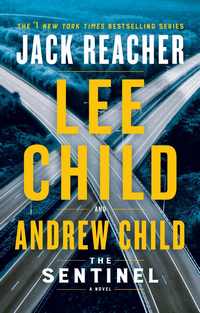
The Sentinel by Lee Child and Andrew Child: A New Era for the Series Kicks Off with this Presciently Timely Thriller

The Sentinel

The Sentinel

by Lee Child and Andrew Child
Series: Jack Reacher, #25

Hardcover, 351 pg.
Delacorte Press, 2020

Read: December 10-14, 2020
Grab a copy from your local indie bookstore!

“…Someone’s got to [help him].”

“And that someone’s you?”

“I guess so.”

“Why is that?”

Reacher shrugged again. “I’m the one who’s here.”

What’s The Sentinel About?

After a quick (and only slightly violent) stop in Nashville, Reacher finds himself in a smaller city, Pleasantville. Before he can even get a cup of coffee, Reacher sees a group of people act as if they’re about to abduct a man on the street. He stops it from happening and then finds himself arrested.

After he’s released, Reacher meets the man he rescued and they start to talk. His name is Rusty and he’s the freshly dismissed IT manager for the city. He was fired because the city was hit by a ransomware attack, which is crippling the city government and causing problems throughout Pleasantville. With only one or two exceptions, the entire populace hates him because of this, convinced that he had a role in the attack. Rusty’s determined to prove he had nothing to do with it, and if the city leaders had just listened to him, it all could be avoided. He just doesn’t have it all worked out about how he’ll do that.

Reacher, on the other hand, thinks more is going on. The people who tried to abduct Rusty aren’t disgruntled citizens, they were professionals. Why would professionals care about this? Reacher determines he has to stick around and get to the bottom of it.

Explosions, gunfire, and fisticuffs ensue as Reacher gets closer and closer to discovering what really went on, and hopefully clearing Rusty’s name.

A Trend that Needs to End

Reacher’s no Luddite, he just doesn’t care about technology/computers/the Internet/etc. When he has to, he can use them a little, but relying on them is just not in his makeup.

But last year’s Blue Moon, and this year’s The Sentinel hinge on cybercrimes (at least after a fashion). Which makes sense, this is what thrillers are about right now. But Reacher doesn’t belong in this world. He can get by—especially if he has help—but readers need a break from cybercrimes. We need a book or three of Reacher not needing to depend on someone and their laptop.

The Thing Everyone’s Talking About

Unless you’ve been living under a rock (which seems like a smart move in 2020, to be honest), you know that Lee Child has started backing away from writing and is handing over the reins to his brother Andrew. As part of that, the two co-wrote this book, a first for both (I believe).

So automatically you know (or at least you should), this is going to feel different than a typical Reacher novel (although, Lee Child’s been good about changing the flavor to one degree or another in each book). And it does—Reacher’s a bit talkier than we’re used to (although he still says nothing fairly often); the prose isn’t as sharp, as punchy; and so on. It’s not bad, it’s just not Lee Child (which ought to be patently obvious).

While it’s not strictly a Lee Child book, with his style, it’s still good. The plotting is as good as Child at his prime, the fights are as well choreographed and violent, and Reacher’s essence is unchanged. At the end of the day, Lee Child picked his successor (unlike Robert B. Parker, Ian Fleming, etc.), if he’s satisfied, I can get used to this new style (while Andrew Child catches his stride)

So, what did I think about The Sentinel?

Reacher’s general approach to driving was to find someone else to do it. He was capable of operating a vehicle, in a technical sense, The army had provided thorough training. He’d never killed anyone with a car. At least not by accident. He’d never had any collisions, Not unintentional ones. His problem was mainly one of temperament, Good driving called for a balance of action and reaction, speed and restraint, measurement and control. A middle ground, stable and sustained. Reacher on the other hand was built for extremes. His default was to move extremely slow or extremely fast. One moment he could appear languid, lazy, almost comatose. The next he could erupt into a frenzy of action, furious, relentless, for as long as necessary, then relapse into serene stillness until the next threat presented itself.

The Sentinel has all the things you need in a Reacher novel—an individual in need of help, a physical challenge (actually, one of the toughest I can remember for him), a truly evil antagonist (you’ll have multiple reasons to root against this guy), and plenty of justice for Reacher to mete out.

Is it Reacher at his best? No. But he hasn’t been at his best for a couple of years anyway. Is it Reacher that provides solid adventure? Yup. Even a mediocre Reacher is entertaining (and this isn’t at that point), it’s going to take Andrew a little bit to fit into his brother’s mold (or as close to it as he wants to go), I’m willing to let him figure out how to do that, and will jump back for #26 as soon as I can.


3.5 Stars2020 Library Love Challenge

This post contains an affiliate link. If you purchase from it, I will get a small commission at no additional cost to you. As always, opinions are my own.
Page 52 of 61

Powered by WordPress & Theme by Anders Norén