Tag: Non-Fiction Page 12 of 31

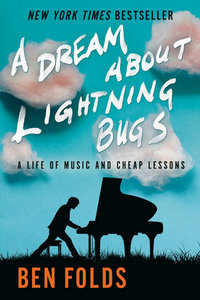
A Dream About Lightning Bugs by Ben Folds: Pianos, Pop Music, and a Life in Progress

A Dream About Lightning Bugs

A Dream About
Lightning Bugs:
A Life of Music
and Cheap Lessons

by Ben Folds

Trade Paperback, 311 pg.
Ballantine Books, 2019

Read: December 17-27, 2021
Grab a copy from your local indie bookstore!

So what about the middle-aged making pop music? Sure, it’s allowed. But let’s be honest about what pop, or popular, music is. It’s music for the mating age. It’s a soundtrack for that yearning, that youthful anger, those ideals and inside jokes of the teenagers and young adults as they experience the rough ride together. It fills an an important need. It help us get through to adulthood. Pop music can be a life jacket, a sexy security blanket, a hipster Hallmark card. And it communicates very real things. It also requires serious craft and is a competitive business, worthy of great respect. Pop music saved my ass as a kid, paid the bills in my earlier career. And I love to make fun of it.
What’s A Dream About Lightning Bugs About?

Well, it’s a memoir by Ben Folds, covering childhood through the present (give or take a few years). He talks about the teachers that helped him along the way, his struggles in various schools, his early music career (including being a one-man polka band), how horrible he is at marriage, the formation of Ben Folds Five, the dissolution of it, his solo career, parenting and how (and why) his career is shifting, his thoughts on writing, music, comedy and all sorts of other things.

Basically, a little about everything.

Highlights

I don’t have time—and you don’t have the attention span—to write about all the things that are worth saying about this book. So, here’s a quick list of some of the highlights of the book:
bullet He has a section about humor records that he listened to as a kid, and muses on comedy in general. It was the first time in the book that things really clicked for me.
bullet There’s a section about life in the suburbs, the angry music associated with it in the 90s (and beyond) and I thought was really insightful.
bullet The story about the release day for his album Rockin’ the Suburbs and being live on the radio to promote it when the attacks for 9/11 happened. That chapter was just great.
bullet It’s hard to beat a section on writer’s block by someone who’s worked through it.
bullet I’m a big fan of the (little known) band Fleming and John—him talking about them for a paragraph or two made me really happy. Also, the part of the book about William Shatner? There’s nothing like a good Shatner story.
bullet Folds has done some truly horrible things on tour—throwing piano stools on a regular basis with the band (and breaking other things with those stools), lying like crazy about his personal life on tour with John Mayer and the fallout from it. It ain’t pretty, but it’s good to see him talking about it.

The Spotify Playlist

Random House has a Spotify playlist for the book, which is just a great idea. It’s a great soundtrack for the book or just fun to listen to on its own. There are many songs by Folds that he talks about or makes a passing reference to in the book. There are also many songs that he didn’t write/record but that he talks about. If you like Folds/the music that inspired him—you’re going to dig this.

So, what did I think about A Dream About Lightning Bugs?

I enjoyed getting to know Folds a bit better—warts and all. It took a long time for me to really get into it, though. Yes, the parts about his early life were interesting—and I enjoyed it, but it was really easy to put the book down.

But once we got to Ben Folds Five? I was hooked and I flew through the rest of the book. Maybe it’s because I was getting background information on the band and music I knew so well. But I think it’s because Folds shows a different kind of passion for things once his career started to take off and that passion translated into being more interesting reading. It’s likely a little of both and a few other things, too.

Some of the book that’s less about him and his career and more about his thoughts about creating, performing, music, etc.—that’s inspirational, motivational—and the kind of thing I’ll come back to re-read from time to time.

This probably isn’t a book for people who aren’t at least a casual fan of Folds as a solo artist or his band. But for those who are? It’s a lot of fun, and worth the time.


3.5 Stars

This post contains an affiliate link. If you purchase from it, I will get a small commission at no additional cost to you. As always, opinions are my own.

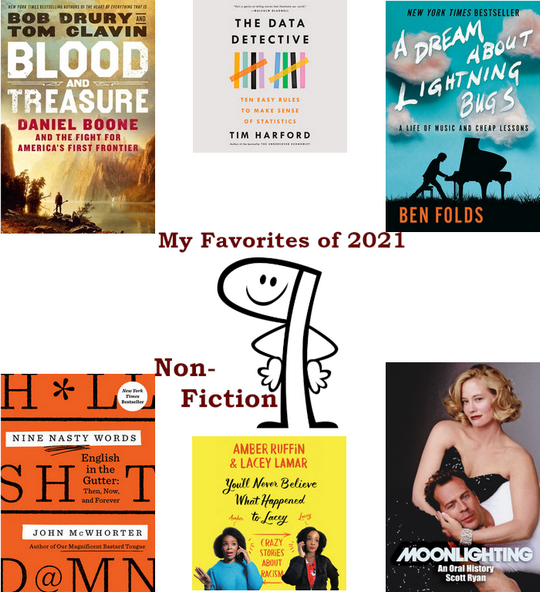
My Favorite Non-Fiction Books of 2021

Favorite Non-Fiction 2021
My 2021 Wrap up continues and now we’re on to the Non-Fiction list. While I liked a number of works that didn’t make this list, I felt strange calling them a “favorite.” So, we have 6 instead of the nigh-obligatory 10 (Hartford had two books on the list, but I wouldn’t let someone else do that on another list, so I trimmed one from this). Like last year, I was surprised that I’d given so many of these 3 or 3 1/2 stars. But these are the ones that stuck with me through the year; the ones I cited in conversation; that I thought about when reading something else or watching something on TV. Really, that’s what’s important, right?

As always, I only put books that I’ve read for the first time on this list. I don’t return to NF books (outside of looking up things for one or three points), but occasionally I do—for example, The Pleasures of Reading in an Age of Distraction by Alan Jacobs would get a permanent spot on this list, were it not for this rule.

(in alphabetical order by author)

Blood and TreasureBlood and Treasure: Daniel Boone and the Fight for America’s First Frontier

by Bob Drury and Tom Clavin

My original post
This book de-mythologized—and then re-mythologized (to a point) Daniel Boone, who ended up being more interesting (and more human) than I anticipated. Some of the writing was fantastic and you could forget you were reading history (there were other parts that were so dry it could be nothing else). The book looks at both Boone and the Fight for the Frontier—against Indians, French, and the English. It’s the kind of history book that convinces me that I should read more history—not to better myself, just because it’s worthwhile.

3.5 Stars

A Dream About Lightning BugsA Dream About Lightning Bugs: A Life of Music and Cheap Lessons

by Ben Folds

I haven’t written a post about this book yet, so it’s hard for me to try to give a thumbnail here. I enjoyed getting to know Folds a bit better—warts and all (and he’s not afraid to bring up some of the warts). Where this book really impressed me was when he talked about music—performing, creating, listening, what it means to a listener/performer. I’ve already returned to some of that material to reread—I’m not a musician, but I appreciate someone that thoughtful about it. It’s inspirational.

Also, his stuff about Shatner is just great.

3.5 Stars

The Data Detective: Ten Easy Rules to Make Sense of StatisticsThe Data Detective: Ten Easy Rules to Make Sense of Statistics

by Tim Harford

My original post
This is one of those books I should go back and re-read, taking copious notes to help me internalize the points. We’re subject to people at work, on the news, online, and from the government throwing numbers, statistics, and “studies show” so often that it can be overwhelming. So much so that many people blindly accept everything they’re told from that formula, or doubt it all. Hartford’s point is that we should be skeptical, but to use that skepticism to dig out the real meaning behind the study/statistic and then use it for our advantage as a voter, citizen, employee, or person (or all of the above). Crystal clear writing, easily applicable, and more useful than most books on related subjects.

Actually, I think I just convinced myself to re-read it soon.

3 Stars

Nine Nasty WordsNine Nasty Words: English in the Gutter: Then, Now, and Forever

by John McWhorter

My original post
I’m a sucker for an entertaining look at language, and that’s what McWhorter delivered here. While I try to eschew the use of profanity, we’re surrounded by it so much more than we likely realize, so I might as well learn more about it, right? This was a solid look at the background and development of these “Big 9” words—in particular, I enjoyed McWhorter’s demonstration of how the words function as various parts of speech, as well as the varying nuances of meaning.

3 Stars

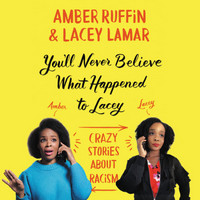
You'll Never Believe What Happened to LaceyYou’ll Never Believe What Happened to Lacey: Crazy Stories about Racism

by Amber Ruffin, Lacey Lamar

My original post
I talked about this in my favorite audiobook post, too, never fear—this’ll be the last time I bring it up this week.

Early on, Ruffin writes:

Twice a week, I get a text from my sister that says, “Can you talk?” It’s my favorite because I know I’m about to be transported to a place that exists in real life and fantasy: the place where coworkers will put their whole hand in your hair, talking ’bout “It’s fluffy like a dog.” I realize this sounds terrible, but it’s like watching Dateline. You can’t believe it was the GIRLFRIEND who killed the HUSBAND! It’s the edge of reality. Technically, it happens, but it is barely plausible. Excited, I steal away to the elevator banks at work and listen to Lacey tell me a new horror story. It’s fantastic. As I stand there, mouth agape, listening to some new fresh hell, I am always struck by the fact that these stories will only exist in this phone call. Some will go on to become stories once the topic turns to “racist people at work” one night when Lacey is hanging out with her friends, but she’ll forget most of them because of the sheer volume. The. Sheer. Volume.

That’s what this book is, a distillation of that volume. A compilation of the best/worst of those stories. They are tragic. They are sobering. They are frequently pretty funny. But only in the way they’re told. Lamar and Ruffin share these stories with an air of “you have to laugh or you’ll cry.” The kind of resigned laughter when you realize that your situation isn’t going to get better any time soon, so you might as well find the pleasure in it. A lot of this is hard to listen to/read—but it’s usually worth it. There’s also a decent level of “a spoonful of sugar helps the medicine go down” running throughout this.

4 Stars

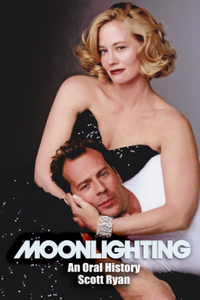
Moonlighting: An Oral HistoryMoonlighting: An Oral History

by Scott Ryan

My original post
It’s probably the most fun I’ve had with a book this year. Somehow, Ryan’s able to capture a little bit of the flavor of the show while getting into the history. Moonlighting was a revolutionary show, and he is able to talk to just about every significant figure involved in the creation and production of it for this history. He chronicles the ups, downs, and all-around zaniness. There are deep-dives on important episodes and or tricky scenes, as well as broader looks at themes, storylines, characters, etc. It’s easy to forget just how magical this show was, but spending some time with Ryan will remind viewers of a certain age of just what a ground-breaking, oft-controversial, and entertaining series it was.

5 Stars

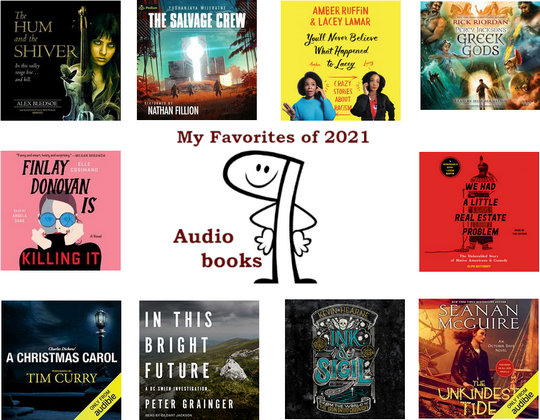
My Favorite Audiobooks of 2021

My Favorite Audiobooks of 2021
Last year I kicked off my Year-End Retrospective with a look at my favorite audiobooks, I might as well repeat that this year. How do I keep this from being just a rehash of my other year-end lists? By focusing on the audiobook experience over the content. What was it like to listen to it? How engaging was it, how did the narrator do? Was it a good match in terms of tone, content, and performance? All of these books are/were good—but the audiobooks are a bit better because of the narrator and the rest of the people involved in the production.

(in alphabetical order by author)

The Hum and the ShiverThe Hum and the Shiver

by Alex Bledsoe, Emily Janice Card(Narrator), Stefan Rudnicki (Narrator)

This was my third or fourth trip through this book (maybe, fifth, but I don’t think so). I’m not sure if that means it was easy for me to be impressed—or maybe it was really hard because I had high expectations. Regardless, Rudnicki and Card took me to Cloud County and the land of the Tufa. I could believe that these people lived, breathed, and walked around in this world—and yet were otherworldly, as they ought to be. I knew Rudnicki could make me believe in a Fantasy world—it turns out that he can make me believe in this one, too. Card was right there with him.

4 Stars

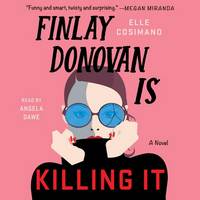
Finlay Donovan Is Killing ItFinlay Donovan Is Killing It

by Elle Cosimano, Angela Dawe (Narration)

My original post
This is on the list because of Dawe’s narration. The text was entertaining enough, sure, but her narration is what made sure I remembered the book during the list-making time. The novel was a tricky balancing act between the various tones and characters, and Dawe makes you believe it. She captured the comedic sense of the novel along with the tension and emotional moments. There were a few accents involved and she did a believable job with them, too.

3.5 Stars

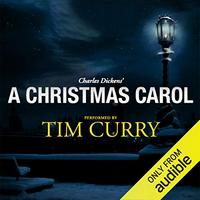
A Christmas Carol: A Signature Performance by Tim CurryA Christmas Carol: A Signature Performance by Tim Curry

by Charles Dickens, Tim Curry (Narrator)

My original post
I’ve said it before, I’ll say it again: all you need to know about this is: Tim Curry. This wasn’t the performance I expected—I figured I was in for something near to over-the-top, with Curry going to town with the text. Instead, we’re treated to a respectful, restrained performance giving Dickens’ classic just the right emotional weight, sentimentality, personality, and life.

5 Stars

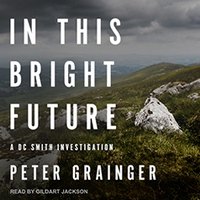
This Bright FutureIn This Bright Future

by Peter Grainger, Gildart Jackson (Narrator)

My original post
Grainger and Jackson together have made this one of my Top 3 audiobook series, period. So my only question was how many of the books would end up on this list. I ended up limiting myself to one, and therefore it had to be this one—we get so little of our typical characters and settings, but Jackson is able to make Belfast as warm and homey as King’s Lake. There are elevated dangers and emotions in this book that we don’t typically get with D.C. Smith, but Jackson doesn’t miss a beat. Grainger puts D.C. through his paces, too. Both are at the top of their game—making D.C. at the top of his, too.

4 Stars

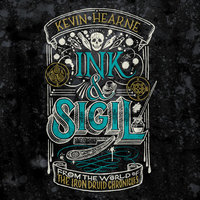
Ink & SigilInk & Sigil

by Kevin Hearne, Luke Daniels (Narrator)

Even though a pro like Luke Daniels is constantly doing voices/accents for his characters and the narration is almost never his “natural” voice (assuming he even has one anymore), I have to think that maintaining a Glaswegian accent for as long as he did for this book (ten hours and change, I think) has to be an added level of difficulty. Not that you can tell from listening to this. I thought the novel was a rollicking good time and just the way you should introduce a new series. The audiobook version just cemented that.

4 1/2 Stars

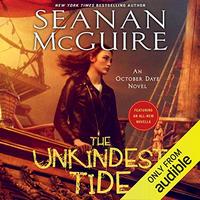
The Unkindest TideThe Unkindest Tide

by Seanan McGuire, Mary Robinette Kowal (Narrator)

This novel was the payoff (as far as we know so far, I wouldn’t put it past McGuire to turn it upside down later) to a storyline that had been lingering and building for years, I remember being stunned when reading it—just that aspect of The Unkindest Tide brought a great combination of anticipation, grief, suspense, and surprise. The story of the novel—the trip to the Duchy of Ships, the intrigue around Dianda, etc. was as solid as it gets, too. I remembered all this going in, so it was all teed up for Kowal—and she nailed it, it almost felt like I hadn’t read the book before and was discovering it fresh. A narrator who can do that is tops in my book.

4 1/2 Stars

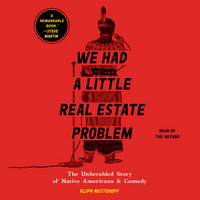
We Had a Little Real Estate ProblemWe Had a Little Real Estate Problem: The Unheralded Story of Native Americans and Comedy

by Kliph Nesteroff

My original post
As I was trimming down the list of audiobooks I listened to last year for this list, I didn’t expect that this would stay on the list. A history of Native Americans in Comedy, really? But I kept not deleting it…so I started thinking of it—there’s a social history, an entertainment history, with individual profiles mixed it—it has it all. What’s more, despite a pretty dry (but never boring) narration, and not using clips of original performances, the comedy of these individuals comes through. In the midst of hardship, suffering, prejudice, and hard breaks, there are some solid laughs. It’s hard not to keep thinking about that.

4 Stars

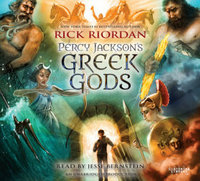
Percy Jackson's Greek GodsPercy Jackson’s Greek Gods

by Rick Riordan, Jesse Bernstein (Narrator)

I started working on a post last year about contemporary myth retellings (and I intend on finishing it before my unconceived grandkids are ready to read it), and listened to this as part of that. In many ways, the book and the information didn’t fare well compared to things like Gaiman and Fry have recently produced. But this is here and they’re not—because as an audiobook this is a great experience. Bernstein is Percy Jackson here, and it felt like something ol’ Percy was sitting down and relating to future Camp Halfblood residents. It inspired me to listen to the original Percy Jackson series again just so I can listen to Bernstein perform this character.

3 Stars

You'll Never Believe What Happened to LaceyYou’ll Never Believe What Happened to Lacey: Crazy Stories about Racism

by Amber Ruffin, Lacey Lamar

My original post
I’m still telling people about this audiobook/book nine months later. I can’t think of a book that made me angrier, sadder, or made me laugh as much in 2021 (or a few years before it, either). This did all three. Ruffin’s narration, Lamar’s stories, their hurt, and their optimism make this a must-listen.

4 1/2 Stars

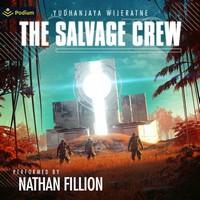
The Salvage CrewThe Salvage Crew

by Yudhanjaya Wijeratne, Nathan Fillion (Narrator)

My original post
This is a very strange SF story about a sentient AI (based on the memories and personality of an engineer). I think I’d have enjoyed the story had I read the novel, but it’s Nathan Fillion that brought it to life. That same charm that makes you like Caleb, Mal, Castle, and Nolan shines forth and makes you believe in this malfunctioning (at least eccentrically-functioning) AI and get invested in the AI’s survival and that of his ragtag crew.

4 Stars

Catch-Up Quick Takes: A Few 2021 Books I Can’t do a Full Post About

The point of these quick takes posts is to catch up on my “To Write About” stack—emphasizing pithiness, not thoroughness.


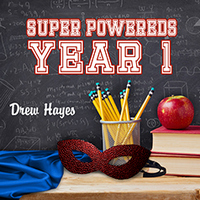
Super Powereds: Year 1

Super Powereds: Year 1

by Drew Hayes, Kyle McCarley (Narrator)
Series: Super Powereds, #1
Unabridged Audiobooks, 26 hrs., 11 min.
Tantor Audio, 2016
Read: November 19-25, 2021
Grab a copy from your local indie bookstore!

(the official blurb)
Lander University has a program that most universities don’t. They offer a Hero Certification Program—a way for super-powered students to become qualified to be a super-hero. This book focuses on five particular students—they’re not just super-powered, they’ve got a secret, too.

As the title suggests, this book follows them over the first year—as they grow, increase in power and ability, develop bonds, and so on. The book is a nice mashup of superhero training and dumb college kids being dumb college kids.

I went into this expecting something that felt a lot like Fred, the Vampire Accountant. This was less like it than I thought possible—it’s much longer, it doesn’t feel like a collection of interconnected short stories, it’s a novel.

I was impressed at how different it is, sure. But I liked the story, world, and characters. I’m not sure I’m up for four more in this series, but I have a feeling that Hayes will change my mind.


3.5 Stars

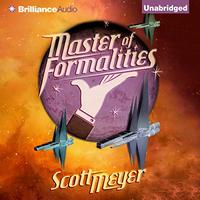
Master of Formalities

Master of Formalities

by Scott Meyer, Luke Daniels (Narrator)
Unabridged Audiobook, 14 hrs., 58 min.
Brilliance Audio, 2015
Read: November 12-17, 2021
Grab a copy from your local indie bookstore!

(the official blurb)
Thousands of years in the future, elaborate rules of honor, etiquette, and form have been imposed on the planetary governments to preserve order—even in the midst of war. We’re talking rules that Downton Abbey’s Carson would find overly elaborate and restrictive.

Two planets have been at war for decades—but things have come to a tipping point. It’s up to the two arbiters of these rules on these planets to keep things under control.

This book did something I didn’t expect—I would have admitted it was possible, but wouldn’t have expected that Scott Meyers and Luke Daniels produced something that left me frequently bored and that I had a hard time connecting with at all. It was clever, but that cleverness strayed into convolutedness in the plot. Good enough to listen to, but by a hair.


3 Stars

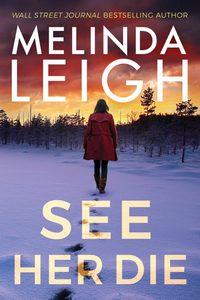
See Her Die

See Her Die

by Melinda Leigh
Series: Bree Taggert, #2
Kindle Edition, 315 pg.
Montlake, 2020
Read: September 30-October 2, 2021
Grab a copy from your local indie bookstore!

(the official blurb)
I don’t have much to say about this book, which is why it’s here, but I wish I did. There’s just something nice about this series, and I’d like to talk about it more.

This is really a follow-up to the first in the series—okay, so Bree got herself the job, what’s she going to do with it? How are the vets in the department and the community as a whole going to handle her coming in? How is she going to do with the whole parental figure for her niece and nephew? Etc. We don’t get definitive answers, but we get some good ideas.

But more importantly, there’s a creepy killer on the loose. In the end, that story is both too outlandish to buy, and I can actually imagine reading about this happening.

I’m coming back for more.


3 Stars

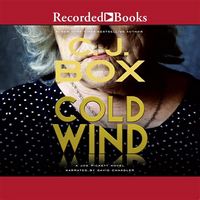
Cold Wind

Cold Wind

by C. J. Box, David Chandler (Narrator)
Series: Joe Pickett, #11
Unabridged Audiobook, 11 hrs., 13 min.
Recorded Books, 2011
Read: August 23-24, 2021
Grab a copy from your local indie bookstore!

(the official blurb)
Wow. There’s a lot going on in this one. The events of the Nate story were horrible, but Box pulled it off in a way that will be good for the character/series long-term.

Killing Missy’s husband Earl on the other hand…well, like Joe himself, I’m not crazy about any time we spend with Missy, so making her a focal point of a novel isn’t going to make me thrilled with it. But, I ended up really liking this one, too.

These books don’t inspire a lot of thought or writing from me—and maybe they should—but I do consistently enjoy them. Chandler’s narration is solid as ever. At this point, I don’t think I can switch to the print version of the series—I need his voice for Joe and the gang.


4 Stars

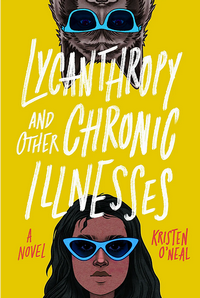
Lycanthropy and Other Chronic Illnesses

Lycanthropy and Other Chronic Illnesses

by Kristen O’Neal
Hardcover, 379 pg.
Quirk Publishing, 2021
Read: June 2, 2021
Grab a copy from your local indie bookstore!

(the official blurb)
It’s really bothering me that I haven’t gotten a full post out of this yet—and it’s been long enough (and I lost my notes) that anything I end up saying will be super vague and would be too much work to get a longer post.

In a Discord support for chronic illnesses, a group of people from around the world from a variety of age groups, come together to share struggles common to people with a variety of ailments and disorders. A couple of them realize they live nearby and strike up a friendship. Eventually, one of them disappears from contact for too long, so the other takes it upon herself to go try to find her friend IRL.

It turns out that this friend’s chronic illness is a case of lycanthrophy—things get strange and heartwarming from there.

A lot of this is told in modern-epistolary: texts, emails, Discord chats, tumblr posts, etc., etc. I loved the jumble of methods used to tell the story. It really captures the feel for these characters and their lives.

If you look at places like Goodreads, you’ll see a lot of controversy about elements of this book. I didn’t know about any of it until I’d read the book. 96% of what I saw doesn’t reflect the book, and seems to stem from one or two people who hadn’t read the book. Ignore it all.

This was a fun, earnest story that addresses serious things like living with chronic disease and finding your place in the world along with silly things like Lycanthropy and excessive binge-watching with friends. A nice break from reality that maybe helps you think about some things.


3 Stars

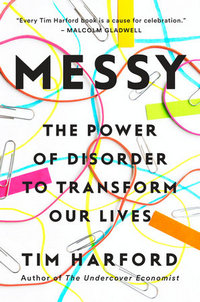
Messy

Messy: The Power of Disorder to Transform Our Lives

by Tim Hartford, Nicholas Guy Smith (Narrator)
Unabridged Audiobook, 9 hrs., 45 min.
Penguin Audio, 2016
Read: December 16-17, 2021
Grab a copy from your local indie bookstore!

(the official blurb)
I think I’m going to have to make a point to listen to more Hartford books—between the time I put this on my TBR list and picking it up, I’d forgotten it was by the man behind The Data Detective.

The basic premise is this—people who are messy (not those full of utter chaos in habits or possessions), function better than those who are ruled by rigid standards—either metaphorically or literally. When rules (primarily at work) are too inflexible it hurts productivity and satisfaction in the work.

So let people organize their work and workplaces as they will, don’t impose a filing system on people who don’t want it, etc. Sure, keep things tidy, but beyond that…let the individual reign. That’s a horrible oversimplification, but to do it justice would take…well, most of this book. Just go with that as a thumbnail and read/listen to it. It’s entertaining, thought-provoking, and empowering.

I think this went on a bit too long—perhaps if the last couple of chapters had been excised, it would’ve been better. But I might change my mind on a re-read/re-listen.


3.5 Stars

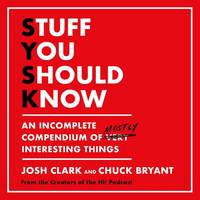
Stuff You Should Know

Stuff You Should Know:
An Incomplete Compendium
of Mostly Interesting Things

by Josh Clark and Chuck Bryant
Unabridged Audiobook, 9 hrs.
Macmillan Audio, 2020
Read: December 27-28, 2021
Grab a copy from your local indie bookstore!

(the official blurb)
Very little (if any) of this fits into things I should know, and I’m glad the subtitle talks about “Mostly Interesting” things. It’s a strange hodgepodge of in-depth look at topics like…the history of facial hair, Murphy beds, Mezcal, and child prodigies.

It was fine, but nothing special. Before I started it, I figured this would end up turning me into a subscriber to the podcast. It didn’t, but I can see why people would listen to it—the narrators/hosts are pretty engaging and had an interesting approach to their explanations. Maybe it was these topics, the randomness of the topics, or…I don’t know. I just didn’t see the point. It made for a good soundtrack to my workday, but within two days, I’ve pretty much forgotten everything I heard.


2 1/2 Stars

2021 Library Love Challenge 2021 Audiobook Challenge

This post contains affiliate links. If you purchase from any of them, I will get a small commission at no additional cost to you. As always, opinions are my own.

We Had a Little Real Estate Problem (Audiobook) by Kliph Nesteroff: One of Those Books You Didn’t Know was Needed Until You Read It

We Had a Little Real Estate Problem

We Had a Little Real Estate Problem:
The Unheralded Story of
Native Americans and Comedy

by Kliph Nesteroff

Unabridged Audiobook, 9 hrs., 34 min.
Simon & Schuster Audio, 2021

Read: December 8-9, 2021
Grab a copy from your local indie bookstore!

What’s We Had a Little Real Estate Problem About?

This book sketches a broad history—roughly from the end of the 19th Century to the present—of Native Americans in comedy. He starts with things like wild west shows and circuses—where people like P. T. Barnum presented “authentic Indian” practices, but would define what was authentic for the people who’d do the performing, and would punish them if they did anything actually authentic. So right away, you know this is going to be a feel-good story.

In the early days of Movies and TV, it’s not much better for most—Indians were stereotyped and usually played by Whites. Sure, you’d get occasional people like Will Rogers as the exception. Nesteroff chronicles the struggles for representation from then up to “Iron Eyes” Cody (and beyond, I’m sure).

Then he sketches out the bright spots for Native Americans in the contemporary comedy scene, from stand-up to theater to TV writing. Nesteroff spent a lot of time on Charlie Hill’s life, career, and legacy—who made a lot of the contemporary advances possible. Frankly, he could’ve spent more time on it and kept me interested (although what he gave was sufficient). His interactions with Richard Pryor was fascinating.

Interspersed with the history are brief profiles of individual comedians/teams and their careers. So it’s not just a history of the industry, but we get spotlights on individuals, too. They were definitely the highlights of the book for me.

How Funny Was It?

Nesteroff kept the narration restrained—he’s a stand-up, so I’m sure his instincts were to perform (at least) a bit more than he did. But he read it the same way you’d read a book about productivity. I’d think that would be particularly difficult when he read a transcript or script from a comedy piece/interview. But even then—the material shone through and I found myself audibly chuckling frequently. Funny stuff is funny (would’ve been funnier in the original, I’m sure, but getting permissions necessary to do that would’ve made this audiobook too expensive to produce)

So, what did I think about We Had a Little Real Estate Problem?

I heard Marc Maron talk about this book a little on his podcast (but I haven’t gotten around to any of the episodes with the author), and it seemed like it’d be up my alley. I love hearing about the business of comedy and the people that are behind it. Focusing on this one story? Sounded like a great idea. And I think Nesteroff pulled it off.

I guess I would think as a history, it’s probably incomplete—but I’m not sure how you can do a comprehensive history of something like this.

I think the central premise of this—media depictions of Native Americans makes them conform too much to a stolid, serious, stoic type—or a tragic one. It’s hard to believe that encompasses any culture—much less the great number of Native American cultures in North America. To promote understanding between cultures in the US and Canada, we ought to see all aspects of them.

The profiles—either brief or extended (like Charlie Hill and Will Rogers)—were interesting enough to make me go check out samples (and sometimes more) of the work. The overall narrative was interesting and optimistic.

I think the book worked—if you’re at all interested in the behind-the-scenes of comedy, about those who make the movies/shows/stand-up you enjoy, you’ll probably think so, too.


4 Stars

2021 Library Love Challenge 2021 Audiobook Challenge

This post contains an affiliate link. If you purchase from it, I will get a small commission at no additional cost to you. As always, opinions are my own.

PUB DAY REPOST: The Twelve Monotasks by Thatcher Wine: A Guide to Living a More Focused Life

The Twelve Monotasks

The Twelve Monotasks:
Do One Thing at a Time
to Do Everything Better

by Thatcher Wine

eARC, 272 pg.
Little, Brown Spark, 2021

Read: November 22-23, 2021
Grab a copy from your local indie bookstore!

What’s The Twelve Monotasks About?

We live in a society that celebrates the multitaskers, those who seemingly do a half-dozen things at once—while posting about it on Twitter/Instagram/etc. We feel inadequate if we’re not at that level—and if we are, we should be pushing for more. Thatcher Wine wants to call us back—at least some of the time, not necessarily all the time–to a more straightforward, more focused (remember focus?) way of life and work. Arguably, this would be a healthier and less stressed way of life as well.

Using research from Neuroscience, Psychology, and insights from mindfulness practices, Wine outlines Twelve things to focus on—monotasks—Reading, Walking, Listening, Slppeing, Eating, Getting THere, Learning, Teaching, Playing, Seeing, Creating, and Thinking. After making his case of “The Art and Science of Monotasking,” Wine spends one chapter on each monotask, describing and defining it, showing its benefits, and giving some exercises to help the reader start practicing the task. He then gives a couple of wrap-up chapters—encouragements to practice these (and other monotasks) and reminders of the benefits.

A Few Highlights

I really like this idea—I know I need to focus more and this approach seems like a good way to build that ability.

Some of the chapters seemed more attractive to me, as well as easier to fit into at least my life—the Walking, Eating, Seeing, and Playing chapters really stood out. Oh, and, obviously, the Reading chapter—that’s a given, right? It was a great way to start that part of the book. I’m not saying I thought the others were a waste of time or anything, but I read these chapters and immediately identified how I could easily make that part of my life and what the benefits would be. I bet most readers will have a few chapters like that, too—ones that jump out at them as being good fits—their lists will vary from mine, but they’ll have theirs.

The chapters laying out the individual monotasks are arranged the same—by the third you know where you’re going to find what—the explanations, the benefits, the challenges, the practical exercises. It’s a firm outline and easy to use.

Overall, for me, one of the biggest selling points of the book is that it provides a different vocabulary for what’s likely a good idea. I’ve read a few books and taken a few classes on dealing with stress, emotional wellness, etc. lately—one recurring idea was mindfulness, being present, and so on. There was something about the language that bothered me. I liked the concepts, but the pseudo-spirituality/pseudo-psychological terms it was couched it didn’t sit right with me. I always felt like I was being silly in not being comfortable with them, but it was a real stumbling block for me. Now, Wine’s monotasking isn’t the same idea—but they’re compatible, really compatible. But his approach, his terminology comes without the touchy-feely connotation—making it more palatable to many readers (I can’t imagine I’m the only one).

A Few Problems

While there were a few chapters that jumped out at me as being easily useful and adopted, there were a few that didn’t seem that easy to work into my life—and I’m not sure that Wine convinced me would be that helpful for me: Travel, Thinking, and Teaching. It’s possible—maybe even likely—that once I do the exercises, I’ll change my mind.

For some of the monotasks (and those three are good examples, again, your results may vary), I really had to wonder how universally adoptable they’d be. For example—I commute alone, in the dark (one way)—I can’t do a lot of what he suggests in the Travel chapter. Some of the others seem more geared toward people like Wine—the self-employed, business owners, or managerial types—all with a degree of affluence. People who are at the low end of the corporate ladder, don’t have the freedom or ability to do a lot of this. It doesn’t take down the whole system, but it’s a chink in the armor.

On the more nitty-gritty end of things, there’s a lack of variety in personal anecdotes that Wine uses. There are three formative events in his life that he uses as the basis for observation, for personal examples, etc. Were I him, I’d probably base most things I say off of those same events/experiences. It just makes the reading seem repetitive. This isn’t an attack or a problem with the system he’s proposing, it just makes the reading a bit duller.

So, what did I think about The Twelve Monotasks?

As always, I’m trying not to evaluate the arguments or thesis—my goal is to talk about the reading experience. That said, if I was going to evaluate Wine’s arguments and proposed methods—it’d be a pretty positive assessment. This is definitely the kind of book I’m likely to return to, but more on that in a minute.

The problem with evaluating the reading experience is that I didn’t read it the way Wine intended. Once you get to Part II, “The Twelve Monotaks,” the reader is supposed to take them one chapter at a time. Read about the task, take in the guidance and practice it before moving on to the next. I didn’t have that kind of time between the publicist and today (even if I waited until release day, I wouldn’t have). But I can imagine how that would work—and it’d be better than plowing through it as I did.

But even plowing through without the breaks take each in turn with some practice, I got a pretty good idea of how it should work. It seems like a solid approach, one that’s not overwhelming either—rather than trying to work in 12 or so new disciplines into your life, go for one. And then another. It’s the camel nose in the tent approach. I can see that when I return to this in the coming months, slowly bringing in each task to my life is going to work much better than diving in and trying to add all twelve at once.

A lofty goal—helping people learn/relearn/recapture the ability to focus in a world full of distraction—and a common-sense approach to pursue it. It’s the makings of a good read—whether the method is successful or not is probably up to the reader. But Wine gives the tools in an attractive, easy-to-read manner.

Disclaimer: I received this eARC from Little, Brown & Co. via NetGalley in exchange for this post—thanks to both for this.


4 Stars

This post contains an affiliate link. If you purchase from it, I will get a small commission at no additional cost to you. As always, opinions are my own.

The Twelve Monotasks by Thatcher Wine: A Guide to Living a More Focused Life

The Twelve Monotasks

The Twelve Monotasks:
Do One Thing at a Time
to Do Everything Better

by Thatcher Wine

eARC, 272 pg.
Little, Brown Spark, 2021

Read: November 22-23, 2021
Grab a copy from your local indie bookstore!

What’s The Twelve Monotasks About?

We live in a society that celebrates the multitaskers, those who seemingly do a half-dozen things at once—while posting about it on Twitter/Instagram/etc. We feel inadequate if we’re not at that level—and if we are, we should be pushing for more. Thatcher Wine wants to call us back—at least some of the time, not necessarily all the time–to a more straightforward, more focused (remember focus?) way of life and work. Arguably, this would be a healthier and less stressed way of life as well.

Using research from Neuroscience, Psychology, and insights from mindfulness practices, Wine outlines Twelve things to focus on—monotasks—Reading, Walking, Listening, Slppeing, Eating, Getting THere, Learning, Teaching, Playing, Seeing, Creating, and Thinking. After making his case of “The Art and Science of Monotasking,” Wine spends one chapter on each monotask, describing and defining it, showing its benefits, and giving some exercises to help the reader start practicing the task. He then gives a couple of wrap-up chapters—encouragements to practice these (and other monotasks) and reminders of the benefits.

A Few Highlights

I really like this idea—I know I need to focus more and this approach seems like a good way to build that ability.

Some of the chapters seemed more attractive to me, as well as easier to fit into at least my life—the Walking, Eating, Seeing, and Playing chapters really stood out. Oh, and, obviously, the Reading chapter—that’s a given, right? It was a great way to start that part of the book. I’m not saying I thought the others were a waste of time or anything, but I read these chapters and immediately identified how I could easily make that part of my life and what the benefits would be. I bet most readers will have a few chapters like that, too—ones that jump out at them as being good fits—their lists will vary from mine, but they’ll have theirs.

The chapters laying out the individual monotasks are arranged the same—by the third you know where you’re going to find what—the explanations, the benefits, the challenges, the practical exercises. It’s a firm outline and easy to use.

Overall, for me, one of the biggest selling points of the book is that it provides a different vocabulary for what’s likely a good idea. I’ve read a few books and taken a few classes on dealing with stress, emotional wellness, etc. lately—one recurring idea was mindfulness, being present, and so on. There was something about the language that bothered me. I liked the concepts, but the pseudo-spirituality/pseudo-psychological terms it was couched it didn’t sit right with me. I always felt like I was being silly in not being comfortable with them, but it was a real stumbling block for me. Now, Wine’s monotasking isn’t the same idea—but they’re compatible, really compatible. But his approach, his terminology comes without the touchy-feely connotation—making it more palatable to many readers (I can’t imagine I’m the only one).

A Few Problems

While there were a few chapters that jumped out at me as being easily useful and adopted, there were a few that didn’t seem that easy to work into my life—and I’m not sure that Wine convinced me would be that helpful for me: Travel, Thinking, and Teaching. It’s possible—maybe even likely—that once I do the exercises, I’ll change my mind.

For some of the monotasks (and those three are good examples, again, your results may vary), I really had to wonder how universally adoptable they’d be. For example—I commute alone, in the dark (one way)—I can’t do a lot of what he suggests in the Travel chapter. Some of the others seem more geared toward people like Wine—the self-employed, business owners, or managerial types—all with a degree of affluence. People who are at the low end of the corporate ladder, don’t have the freedom or ability to do a lot of this. It doesn’t take down the whole system, but it’s a chink in the armor.

On the more nitty-gritty end of things, there’s a lack of variety in personal anecdotes that Wine uses. There are three formative events in his life that he uses as the basis for observation, for personal examples, etc. Were I him, I’d probably base most things I say off of those same events/experiences. It just makes the reading seem repetitive. This isn’t an attack or a problem with the system he’s proposing, it just makes the reading a bit duller.

So, what did I think about The Twelve Monotasks?

As always, I’m trying not to evaluate the arguments or thesis—my goal is to talk about the reading experience. That said, if I was going to evaluate Wine’s arguments and proposed methods—it’d be a pretty positive assessment. This is definitely the kind of book I’m likely to return to, but more on that in a minute.

The problem with evaluating the reading experience is that I didn’t read it the way Wine intended. Once you get to Part II, “The Twelve Monotaks,” the reader is supposed to take them one chapter at a time. Read about the task, take in the guidance and practice it before moving on to the next. I didn’t have that kind of time between the publicist and today (even if I waited until release day, I wouldn’t have). But I can imagine how that would work—and it’d be better than plowing through it as I did.

But even plowing through without the breaks take each in turn with some practice, I got a pretty good idea of how it should work. It seems like a solid approach, one that’s not overwhelming either—rather than trying to work in 12 or so new disciplines into your life, go for one. And then another. It’s the camel nose in the tent approach. I can see that when I return to this in the coming months, slowly bringing in each task to my life is going to work much better than diving in and trying to add all twelve at once.

A lofty goal—helping people learn/relearn/recapture the ability to focus in a world full of distraction—and a common-sense approach to pursue it. It’s the makings of a good read—whether the method is successful or not is probably up to the reader. But Wine gives the tools in an attractive, easy-to-read manner.

Disclaimer: I received this eARC from Little, Brown & Co. via NetGalley in exchange for this post—thanks to both for this.


4 Stars

This post contains an affiliate link. If you purchase from it, I will get a small commission at no additional cost to you. As always, opinions are my own.

Catch-Up Quick Takes: The Case of the Missing Marquess; Dark Arts and a Daiquiri; Breaking Silence; Everything Happens; Based on a True Story: A Memoir; How to Resist Amazon and Why; Nothing Like I Imagined

The point of these quick takes posts is to catch up on my “To Write About” stack—emphasizing pithiness, not thoroughness. This time, I’ve got a handful of 3 Star reads/listens (I don’t think I planned it that way, it just worked out).


The Case of the Missing Marquess

The Case of the Missing Marquess

by Nancy Springer, Katherine Kellgren (Narrator)
Series: Enola Holmes, #1
Unabridged Audiobook, 4 hrs., 31 min.
Recorded Books, 2008
Read: November 1, 2021
Grab a copy from your local indie bookstore!

(the official blurb)
This is a cute read for people who like the idea of Sherlock Holmes, but aren’t that interested (or ready) in the real thing. Which may sound dismissive, but it’s not supposed to be. I can easily see why the people behind the movie(s) latched onto this character. I can also easily see why they tweaked the content of this book and expanded it for the first movie (does the second book some/all of what they used to expand?).

I don’t know that I’m going to go the distance with this series, but I can easily see going for one more dip in the pool.

Fast, amusing and pretty clever. This look at Sherlock and Mycroft’s little sister is a pleasant little book.

3 Stars

Dark Arts and a Daiquiri

Dark Arts and a Daiquiri

by Annette Marie, Cris Dukehart (Narrator)
Series: The Guild Codex: Spellbound, #2
Unabridged Audiobook, 7 hrs., 39 min.
Tantor Audio, 2018
Read: October 22-25, 2021
Grab a copy from your local indie bookstore!

(the official blurb)
For book 2 to remove our non-magical bartender to a guild of Magic Users from the Guild Members for the majority of the book is a pretty gutsy move. I’m not sure it was the right way to go, and I’m not sure it was successful. But it was gutsy.

The story was…okay, I guess. It really didn’t do a lot for me, but the last few chapters—pretty much when Tori reunites with her friends made the whole thing worth it. And the Dresden File hat-tip was fantastic.

I’m still in on this series/group of series, but I bet when all is said and done, this’ll be the one to forget.

3 Stars

Breaking Silence

Breaking Silence

by Linda Castillo, Kathleen McInerney (Narrator)
Series: Kate Burkholder, #3
Unabridged Audiobook, 9 hrs., 21 min.
Macmillan Audio, 2011
Read: October 20-21, 2021
Grab a copy from your local indie bookstore!

(the official blurb)
Another horrific murder in Amish country. I’d love for a few books to involve other crimes in this community. I realize it’s her shtick, but a little variety could help things.

That aside—the villain of this piece is horrible and creepy, and you can feel the evil. Watching Kate and Agent Tomasetti try to figure out the motive behind the killing and the identity of the killer was a fun ride. I really do like these individually—even if I wonder about the series as a whole.

3 Stars

Everything Happens

Everything Happens

by Jo Perry
Kindle Edition, 119 pg.
Fahrenheit Press, 2019
Read: October 18-19, 2021

(the official blurb)
This starts as the story of a nurse trying to get a quickie divorce from a loser and then turns into a story of carjacking, kidnapping, attempted kidnapping, robbery, vengence, betrayal, and car chases.

Basically: just another weekend in Vegas.

I was riveted throughout, but…I couldn’t stop asking, “Why?” I’m not sure I saw the point of the whole thing—but you know what? I didn’t care, I enjoyed it too much to bother with things like that.

3 Stars

Based on a True Story: A Memoir

Based on a True Story: A Memoir

by Norm Macdonald, Tim O’Halloran (Narrators)
Unabridged Audiobook, 7 hrs., 18 min.
Random House Audio, 2016
Read: October 12-14, 2021
Grab a copy from your local indie bookstore!

(the official blurb)
A fictionalized version of MacDonald’s memoir, it’s hard to tell what’s memoir, what’s a joke, what’s a mixture. The more obviously genuine moments are marred by their vicinity to the clearly fictional. As a book? This is a mess—a self-indulgent, erratic, mess.

But wow. This was funny—even most of what I didn’t like was funny.

Don’t go into this thinking you’ll understand MacDonald’s life, career, or humor better. Go into it expecting a strange performance art-like experience with some giant laughs and you’ll be set.

3 Stars

How to Resist Amazon and Why

How to Resist Amazon and Why:
The Fight for Local Economics,
Data Privacy, Fair Labor,
Independent Bookstores,
and a People-Powered Future!

by Danny Caine
Paperback, 113 pg.
Microcosm Publishing, 2021
Read: October 6, 2021
Grab a copy from your local indie bookstore!

(the official blurb)
This is a no-holds barred critique (screed?) against Amazon—their business practices, the way they treat employees, the way they deal with governments, their security products…and just about everything else. It’s also a call to arms against the giant.

I have a lot of sympathies for Caine’s positions and desires—and agree with most of them. I also follow some of the practices he espouses (not as many as I want, but hey…I’m on a budget).

Still, I’m not sure the megastore is a super-villain—it may resemble one, very closely. As much as we might want it to be.

Read this—blanch at some of it—but take it with a grain of salt.

3 Stars

Nothing Like I Imagined

Nothing Like I Imagined (Except for Sometimes)

by Mindy Kaling
Unabridged Audiobook., 2 hrs., 19 min.
Brilliance Publishing, 2020
Read: October 1, 2021

(the official blurb)
I really enjoyed Is Everyone Hanging Out Without Me? (And Other Concerns) and Why Not Me?—this has the same kind of humor—and the audio versions of all three are equally charming.

But I don’t know, this seemed lifeless? Sweet and genuinely funny, but it left me wanting a bit more. I don’t think it was just the length, either.

3 Stars


This post contains affiliate links. If you purchase from any of them, I will get a small commission at no additional cost to you. As always, opinions are my own.

Catch-Up Quick Takes: Out of House and Home; Word by Word; Scarface and the Untouchable; Yearbook; Is This Anything?

The point of these quick takes posts is to catch up on my “To Write About” stack—emphasizing pithiness, not thoroughness. Here are some recent-ish audiobooks (and one left-over from 2020!).


Out of House and Home

Out of House and Home

by Drew Hayes, Kirby Heyborne (Narrator)
Series: Fred, The Vampire Accountant, #7
Unabridged Audiobook, 11 hrs., 11 min.
Tantor Audio, 2021
Read: September 29-30, 221
Grab a copy from your local indie bookstore!

(the official blurb)
Wow, it’d been almost ten months since I’d listened to a Fred, the Vampire Accountant book. After a pretty steady diet of them for a while, the break was a little strange.

Anyway, the wedding’s behind him, so there’s another new challenge for Fred—someone’s coming for him, and the House of Fred. This isn’t new, but the openness, brazenness, and intensity of the attacks are.

Fred has to be his most creative to get through this challenge with both his ethics and clan intact. Not to mention his life.

For reasons that make sense (and make some of the drama possible), Krystal was not around for most of this book. That bugged me, I’d have liked to have seen a bit more about married life between the two. Oh, well, there’s time for that to come.

Gentle humor, just enough action to keep you going, and a bunch of pleasant characters. The seventh installment of this series proves there’s plenty of life left in this story of the undead.
3.5 Stars

Word by Word

Word by Word: The Secret Life of Dictionaries

by Kory Stamper
Unabridged Audiobook, 9 hrs., 48 min.
Random House Audio, 2017
Read: September 16-20, 2021
Grab a copy from your local indie bookstore!

(the official blurb)
If you’ve ever wondered how a dictionary—at least Merriam-Webster dictionaries—is produced, this is the book for you. If you hadn’t but the idea sounds pretty good now that you know a book like that exists (like I was), good news. Kory Stamper’s book will satisfy.

As the blurb says,

She explains why small words are the most difficult to define, how it can take nine months to define a single word, and how our biases about language and pronunciation can have tremendous social influence. And along the way, she reveals little-known surprises—for example, the fact that “OMG” was first used in a letter to Winston Churchill in 1917.

I found her discussion about trying to refresh the definition of “bitch” in the twenty-first century, with all the history and varied usage to pair nicely with John McWhorter’s chapter on the word in Nine Nasty Words. I’d love to hear the two of them discuss it.

There’s some humor, some scholarship, and word-nerd fun. It’s an entertaining and enlightening book.
3.5 Stars

Scarface and the Untouchable

Scarface and the Untouchable: Al Capone, Eliot Ness, and the Battle for Chicago

by Max Allan Collins and A. Brad Schwartz, Stefan Rudnicki (Narrator)
Unabridged Audiobook, 18 hrs., 36 mins
HarperCollins Publishers, 2018
Read: June 14-21, 2021
Grab a copy from your local indie bookstore!

(the official blurb)
There is a lot of de-mythologizing in this history of Capone and Ness—not just of some of the myths that surrounded them during the 1920s and 30s—but of many of the “de-mythologizing” works that have been written about them since. According to Collins and Schwartz, both men—especially Ness—have been the victim of so much revisionist history that it’s almost impossible to really get at what these two did and were like.

Still, the authors think they’ve got it—or at least closer to it than others due to their research methods, etc. Hopefully, they have—I don’t know. They did tell a pair of compelling stories about Capone, Ness, and how they both rose to notoriety—and kept it.

I do think a text version of this would work a little better—I had a hard time tracking some of the not-as-important names/dates/events. It could be me, and probably is. I don’t think it was Stefan Rudnicki’s fault at all—he did a great job with the work (and it was nice to hear him doing something other than Alex Bledsoe novels).

3 Stars

Yearbook

Yearbook

by Seth Rogen (and a whole lot of other people)
Unabridged Audiobook, 6 hrs., 13 min.
Random House Audio, 2021
Read: September 7-8, 2021
Grab a copy from your local indie bookstore!

(the official blurb)
Simply put, this is a collection of stories from Rogen’s life—from doing stand-up as a teenager to his work on TV and in movies. There’s—no surprise at all—a lot of references to and stories about drug use.

I’m not a huge Rogen fan—have enjoyed some of his work, but not most of it. I have always appreciated his ability to tell a story in interviews, though, and that’s what we get here. Great literature? Nope. Insightful look into the human condition and/or the Entertainment Industry? Nope. Silly fun? Yup. I can’t imagine anyone picking up a Rogen book looking for more than the last option, anyway. So you get what you expect.

This was definitely a book to listen to on audio—listening to Rogen tell these stories adds a bit of humor and flavor to it that I think just reading it wouldn’t deliver.
3 Stars

Is this Anything?

Is This Anything?

by Jerry Seinfeld
Unabridged Audiobook, 6 hrs., 15 min.
Simon & Schuster Audio, 2020
Read: December 15-16, 2020
Grab a copy from your local indie bookstore!

(the official blurb)
Jerry Seinfeld keeps the notebooks he writes his jokes in and has always done so. Which made compiling this collection possible. This is a collection of what Seinfeld considers his best material.

It’s organized by decade, with a little narrative added to discuss his career/family. But it’s primarily joke after joke after joke after joke. As I recall, SeinLanguage was essentially the same thing, but the last time I read that was in the 1990s, and my copy is in a box. So I can’t verify that.

I’m not sure audio was the best method for me. It felt like listening to a comedy album recorded in a studio rather than in front of an audience. It just felt strange to hear it all without laughter or other audience reaction—or his reaction to the audience. Also, I think it’d work better taken in parts—not the whole 6 hours in a clump (I guess 2 clumps).

Still, it’s material from one of the best around—it’s an entertaining time.

3 Stars

2021 Library Love Challenge 2021 Audiobook Challenge

This post contains affiliate links. If you purchase from any of them, I will get a small commission at no additional cost to you. As always, opinions are my own.

Catch-Up Quick Takes: The Treadstone Exile, Warping Minds & Other Misdemeanors, In a Sunburned Country, Pray for Silence

The point of these quick takes posts is to catch up on my “To Write About” stack—emphasizing pithiness, not thoroughness. Here are some recent-ish audiobooks.


The Treadstone Exile

by Joshua Hood, Ron Butler (Narrator)
Series: Treadstone, #2
Unabridged Audiobook, 9 hrs., 1 min.
Penguin Audio, 2021
Read: September 2-3, 2021
Grab a copy from your local indie bookstore!

(the official blurb)
I thought the first novel in the series was a heckuva thrill ride, but a little thin on character and believability. Still, the follow-up sounded fun.

Wow, was I wrong. The characters were just as thin (maybe thinner), I didn’t ever get invested in—or even mildly curious about—the plot. The action scenes were great, though.

Still, I think I’m done with the series.
2 Stars

Warping Minds & Other Misdemeanors

Warping Minds & Other Misdemeanors

by Annette Marie, Rob Jacobson, Iggy Toma (Narrator)
Series: Guild Codex: Warped, #1
Unabridged Audiobook, 6 hrs., 34 min.
Tantor Audio, 2020
Read: August 26, 2021
Grab a copy from your local indie bookstore!

(the official blurb)
This book (and series, I guess) kicks off in the aftermath of Three Mages and a Margarita—and I love the idea of multiple series that are interwoven yet independent. It’s going to get difficult to track at some point, I bet, but that’s on me.

When the officials sweep in to clean up after 3 Mages one of the mages arrested is a low-powered psychic, Kit Morris. Really, the MPD is more interested in who Kit can lead them to than him—and they’re playing hardball with him to get to his higher-powered pals.

What ensues is Kit trying to play the Agent who’s trying to get him to flip and looking for a chance to escape (and neither working too well). A strange alliance forms between them.

I had a lot of fun with this one, maybe more than I did with its predecessor. Iggy Toma sold me on the characters, too, I really enjoyed the narration. I’m looking forward to spending more time in this world.
3 Stars

In a Sunburned Country

In a Sunburned Country

by Bill Bryson
Unabridged Audiobook, 11 hrs., 54 min.
Random House, 2000
Read: August 24-25, 2021
Grab a copy from your local indie bookstore!

(the official blurb)
I remember reading Bryson’s The Mother Tongue back in the ’90s and have often thought about trying him again—but anytime the thought occurred to me, I couldn’t find one of his books available. So when I saw this as available from the library I jumped on it. Not the best move.

This is a travelogue of a trip or two that Bryson took around Australia. It’s fairly amusing, mildly interesting, and not a complete waste of time. That’s about all I can say for it—the few pages/minutes he spends on Cricket were laugh-out-loud funny. The rest of the book barely maintained my interest.

Your results may vary, but this just didn’t do it for me.
2 Stars

Pray for Silence

Pray for Silence

by Linda Castillo, Kathleen McInerney (Narrator)
Series: Kate Burkholder, #2
Unabridged Audiobook, 11 hrs., 27 min.
Macmillan Audio, 2010
Read: August 16-17, 2021
Grab a copy from your local indie bookstore!

(the official blurb)
At the rate these books are going, by the time this book reaches book 14 (expected next year), I don’t see how anyone is going to be left alive in Painters Mill. A small town like this just can’t take a lot of mass murders, can it?

But for now, Book 2 still has a nice, bustling community full of people. In fact, an Amish family moved to town about a year ago. But when we meet them, they’re the victims of murder. Chief Kate Burkholder comes across one of the most disturbing crime scenes I’ve seen in fiction—and that’s saying something. But as Kate digs into the family’s past trying to find a motive for the butchery, it seems that the gruesome murders weren’t the worse expression of evil in the novel.

Gripping story, solid narration by Kathleen McInerney, but I could use a little more growth in Kate. Still, I’m going to be back for more pretty soon.
3 Stars

2021 Library Love Challenge 2021 Audiobook Challenge

This post contains affiliate links. If you purchase from any of them, I will get a small commission at no additional cost to you. As always, opinions are my own.

Page 12 of 31

Powered by WordPress & Theme by Anders Norén