Tag: Non-Fiction Page 13 of 31

How to Slay a Dragon by Cait Stevenson: A Historical Approach to Major Fantasy Tropes

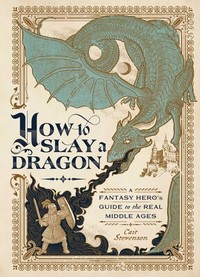
How to Slay a Dragon

How to Slay a Dragon:
A Fantasy Hero’s Guide
to the Real Middle Ages

by Cait Stevenson

Hardcover, 188 pg.
Tiller Press, 2021

Read: September 14-16, 2021
Grab a copy from your local indie bookstore!

From the Back of the Book

I tried to come up with my own summary, and it kept coming out like those horrible paraphrases you turned in to your teacher after basically sitting down with an encyclopedia for ten minutes—technically not plagiarism (at least not to a sixth-grader’s mind), but not really original work.

Instead, let’s just see what the back of the book says:

Grab your magical sword and take the place of your favorite fantasy character with this fun and historically accurate how-to guide to solving epic quests.

What should you ask a magic mirror? How do you outwit a genie? Where should you dig for buried treasure? Fantasy media’s favorite clichés get new life from How to Slay a Dragon: A Fantasy Hero’s Guide to the Real Middle Ages, a historically accurate romp through the medieval world. Each entry presents a trope from video games, books, movies, or TV—such as saving the princess or training a wizard—as a problem for you to solve, as if you were the hero of your own fantasy quest. Through facts sourced from a rich foundation of medieval sources, you will learn how your magical problems were solved by people in the actual Middle Ages.

Divided into thematic subsections based on typical stages in a fantastical epic, and inclusive of race, gender, and continent, How to Slay a Dragon is perfect if you’re curious to learn more about the time period that inspired some of your favorite magical worlds or longing to know what it would be like to be the hero of your own mythical adventure.

So, what did I think about How to Slay a Dragon?

It’s a great concept—fantasy readers (and writers, I assume) are frequently talking about authenticity and if X technology or practice really fits with an era. Or how would you really go about doing Y? We’ve needed something like this book for years.

It’s just clever—it’s not just about the topics that Stevenson addresses, it’s how the topics are dealt with. There’s a great deal of wit in the setup and explanation of each one—and the way they flow from subtopic to subtopic. Jumping from person to person, location to location, and so on could seem erratic or jarring, but she makes it feel like it flows naturally.

I love her voice—I honestly wish I wrote the way Stevenson does. It’s not just the humor, it’s the way she approaches an idea. It’s the kind of prose that if I decided to get serious about writing that I’d want to study emulate.

Yet…this was one of those strange, I can’t explain it at all, the whole is less than the sum of its parts reads for me. It impressed me on all fronts, and yet I was bored almost the entire time. Until the last 40 pages or so, I’d eagerly pick it up and dive in, and then my mind would start wandering within a page or so.

It absolutely could be just what was going on for me this week, it’s likely just me—I fully expect after I post this and look around at what others say that I’m going to see a lot of raving. But I just can’t do that.

I’m sticking with the 3 stars because of the sum of its parts and because one of the first notes I made was, “if she keeps this up, she’s got a lock on 4+ stars.” Otherwise, this would be 2 stars.

By all means, fill up the comment section with ways I’m wrong about this one.


2 1/2 Stars

2021 Library Love Challenge

This post contains an affiliate link. If you purchase from it, I will get a small commission at no additional cost to you. As always, opinions are my own.

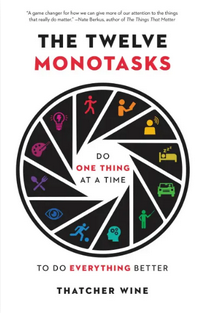
Nine Nasty Words by John McWhorter: Reading This Book Aloud Will Fill Your Swear Jar in a Hurry

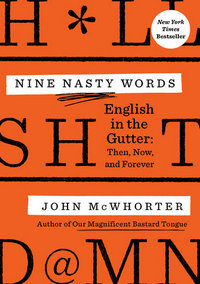
Nine Nasty Words

Nine Nasty Words:
English in the Gutter:
Then, Now, and Forever

by John McWhorter

Hardcover, 270 pg.
Avery, 2021

Read: September 2-6, 2021
Grab a copy from your local indie bookstore!

What’s key is that the stock of curses is ever self-refreshing, The fashions change, as always and everywhere, but what persists is taboo itself, a universal of human societies. What is considered taboo itself differs from one epoch to another, but the sheer fact of taboo does not. Language cannot help but reflect something so fundamental to our social consciousness, and thus there will always be words and expressions that are shot out of the right brain rather than gift-wrapped by the left one.

What’s Nine Nasty Words About?

McWhorter looks at nine of the “bigger” profanities in English (with some asides to discuss related words), tracing their history, evolution, varying definitions, and contemporary usage. He points out periods where they were verboten, periods where they were perfectly acceptable—and what made them profane again.

The flow of the book comes from this thesis*:

On that matter of evolution, profanity has known three main eras—when the worst you could say was about religion, when the worst you could say was about the body, and when the worst you could say was about groups of people. The accumulation of those taboos is why “just words” like h***, s***, and n***** respectively harbor such sting.

I don’t know how accurate that is, but it kind of makes sense—and it works pretty well as a framework for the book, too.

* The book uses the actual words, I wimped out and elided them.

The chapter headings give you a pretty good idea of what the book covers and shows how the framework is used (with the addendum at the end):

1 D*** and H***: English’s First Bad Words
2 What Is It About F***?
3 Profanity and S***
4 A Kick-A** Little Word
5 Those Certain Parts.
6 Why Do We Call It “The N-Word”?
7 The Other F-Word
8 Being in Total Control, Honey!
9 A M************ Addendum

So, what did I think about Nine Nasty Words?

I largely enjoyed this book, I find the history and evolution of English fascinating—and while I try to eschew the use of profanity, I’ve found the development of those words very interesting—and I can appreciate a clever and inventive use of them in art.

This was a great look at those words—in particular, I enjoyed McWhorter’s demonstration of how the words function as various parts of speech, as well as the varying nuances of meaning. It was a clever mix of entertainment and education.

McWhorter has a great style, too, throughout the book he sprinkles little gems like:

To understand how language changes without allowing a certain space for serendipity is to understand it not at all.

The [N-]word is indeed twenty-first-century English’s Voldemort term,

The chapters on slurs—”words about groups of people”—mixed in a bit too much contemporary social commentary for my taste, but I’m pretty sure most people won’t agree.

On the whole, this was a great mix of entertainment and education, I doubt this is the definitive work on the subject (and McWhorter would likely agree), but it’s a solid work and I’m glad I read it.


3 Stars

2021 Library Love Challenge

This post contains an affiliate link. If you purchase from it, I will get a small commission at no additional cost to you. As always, opinions are my own.
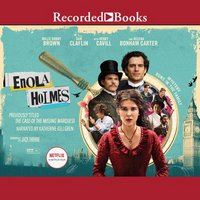
Faith Among the Faithless by Mike Cosper: An Example of Being Faithful (while Stumbling) in a Hostile World

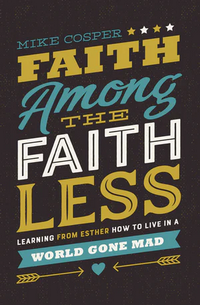
Faith Among the Faithless

Faith Among the Faithless:
Learning from Esther How
to Live in a World Gone Mad

by Mike Cosper

Kindle Edition, 208 pg.
Thomas Nelson, 2018

Read: August 8, 2021
Grab a copy from your local indie bookstore!

What’s Faith Among the Faithless About?

This is hard to sum up briefly, but I’m going to give it a shot—we live in a compromised age, society is changing, shifting—it’s difficult to predict what the next few years are going to look like, but one thing is certain: Western Culture, particularly that of the U. S., isn’t going to look anything like it did before. How is the Christian to react?

Many hold up Daniel as the model of how to behave in a culture hostile to the Faith. Cosper thinks he’s the wrong model

…there’s a problem with looking to Daniel: Most of us aren’t a Daniel. In fact, we are far from it. As much as we recognize that our culture is in decline, we also kind of . . . like it. Christians in general consume as much mass media and are as addicted to pornography, as likely to divorce, as consumeristic, and as obsessed with social media as the rest of our world. Again: we’re immersed in a secular age, and it’s had a profound effect upon us…while [Daniel is] a great model of faithfulness, I’m not sure he’s the best reference point for most of us.

Instead, he suggests we look to Esther.

…her story is more complicated than [the storybook versions we’re used to]. And much darker. It’s less VeggieTales and more Game of Thrones, with a lot more sex, murder, and impaling than the usual version of the story would imply. (There’s actually quite a bit of impaling.) Mordecai and Esther’s motivations are sometimes murky and sometimes blatantly self- serving.

As in Esther’s day, the Church is compromised, we’ve taken on a lot of the World’s values, and we should look for people in the Bible who find themselves in that situation rather than men like Daniel.

Esther’s story reveals a way forward in a culture where people of faith find themselves at the margins of society. She neither clutches for power nor seeks self- protection. Instead, she faces reality, embraces weakness, and finds faith, hope, and help from a world unseen…Her story is also an invitation to those whose faith, convictions, and morality are less than they wish they were.

When we examine Esther, we see that

…the story is a reminder that God doesn’t abandon his people, no matter how dark their circumstances, how compromised their hearts are, or how hidden he may seem.

So Cosper examines the Biblical account, retelling the story in a very non-Sunday School way and uses that to illustrate the situations that believers may find themselves in and how we can learn from Esther and Mordecai (both positively and negatively) in our cultural moment.

I’m going to end up writing twenty thousand words if I don’t cut myself short, so I’m going to do that.

So, what did I think about Faith Among the Faithless?

Whatever happens in the years and decades to come, we can be sure that faithfulness looks pretty much like it did three thousand years ago. Sometimes it looks like Daniel: a steady path of spiritual formation and obedience. But sometimes, and perhaps more often than not in the world we occupy today, it looks more like Esther: a path of awakening, risk, vulnerability, and, ultimately, hope.

This book is told in an easy, breezy style—full of wit, and wisdom. Cosper knows how to communicate engagingly and clearly. I walked away thinking Cosper would be a fun guy to talk books, TV, and The Bible with. But that style doesn’t belie the seriousness of the material, this is a high-stakes situation, and he’s fully aware of that. But Cosper uses his style to connect to the audience, not to sugarcoat anything.

It’s clear that Cosper has done his research on the book—I wish he’d shared more of his homework in footnotes for the reader. Not necessarily to check his work, but to expand on it—to get a greater appreciation for what he summarized.

Do I agree with every jot and tittle? Of course not. But there’s a lot to appreciate here, and more to chew on, to reflect on, and to learn from. There’s hope in the darkness—and Cosper is good to point the reader to it. It’s not because we’re morally strong and faithful like Daniel, nor does it come from the weakness that characterized Esther’s early life and then the ways she found to do the right thing. The hope of the book of Esther is that the Lord is faithful when we are not, and he will provide for His people.

I do recommend this book, it’ll entertain you and then make you think as well as pray.


3.5 Stars

This post contains an affiliate link. If you purchase from it, I will get a small commission at no additional cost to you. As always, opinions are my own.

Moses and the Burning Bush by R. C. Sproul: A Brief Examination at What God Shows Moses About Himself

Moses and the Burning Bush

Moses and the Burning Bush

by R. C. Sproul

Kindle Edition, 103 pg.
Reformation Trust Publishing, 2018

Read: August 15, 2021
Grab a copy from your local indie bookstore!

What’s Moses and the Burning Bush About?

One of the church’s biggest problems is that we don’t understand who God is. But in that one revelation—the theophany in which God appeared to Moses—the transcendent majesty of God was partially unveiled. What had been invisible became visible through the theophany.

Sproul examines—briefly—just what God says about himself when he revealed himself to Moses. He shows His holiness, His glory, His Aesity, and more—here is even, as Sproul puts it, “A Shadow of Christ.”

In ten short chapters, Sproul opens up the account of Moses’s encounter with the Lord in the bush that was on fire, but was not consumed.* He doesn’t just camp out in Exodus 3, but spends time in Isaiah, Genesis, and other places, although he brings it all back to this point.

* I’ve learned to appreciate Scott Oliphant’s point that calling it a “burning bush” misses the point, it’s only supernatural to call it an “unburning bush.”

So, what did I think about Moses and the Burning Bush?

… in the burning bush we see the revelation of the person of God, of the power of God, and of the eternality of God. We see the revelation of the compassion of God, the redemption of God, and now, finally, the truth of God.

It has been ages—or at least it feels like it has been—since I’ve read an R. C. Sproul book (at least for the first time). There’s a clarity to the prose that’s almost untouchable by anyone else. He can express deep thoughts in a way that anyone can understand—not that there were a lot of tricky concepts this time out, but that voice is still there. And I’m going to miss it.

This is a nice book, as a sketch of these ideas. I think Sproul was capable of more, he could’ve got into all of these areas with more detail, could have fleshed out the concepts more—and given the reader something to chew on. I’m sure he had his reasons for not, I just wish he’d done more.

Still, if all you’ve thought of is the event itself—not what it meant beyond God calling Moses, it’s probably a good way to introduce yourself to it, but beyond that, there’s probably limited value.


3 Stars

This post contains an affiliate link. If you purchase from it, I will get a small commission at no additional cost to you. As always, opinions are my own.
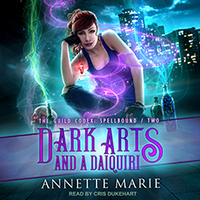
Catch-Up Quick Takes: The Data Detective; All Creatures Great and Small; The Miracle Pill

The point of these quick takes posts is to catch up on my “To Write About” stack—emphasizing pithiness, not thoroughness. This time we’re looking at some recent Non-Fiction Audiobooks.


The Data Detective: Ten Easy Rules to Make Sense of Statistics

The Data Detective: Ten Easy Rules to Make Sense of Statistics

by Tim Harford
Unabridged Audiobook, 10 hrs., 24 min.
Penguin Audio, 2021
Read: May 19-21, 2021
Grab a copy from your local indie bookstore!

(the official blurb)
On the one hand, Hartford’s aim is to dispel the myth that “to really lie, you use statistics.” But part of what he ends up saying is that they are pretty handy tools for (at least) misleading people. So I’m not sure the book’s as successful as it could’ve been.

But what Hartford really does is show how to interpret statistics, to look behind the headlines and look at what the studies (or whatever) were looking into, what were they asking? And then to take the results reported in the news (or wherever) to use them to better understand things.

It’s basically a guide to teach yourself critical thinking skills—something we could all use more of. I really enjoyed it, and probably need to read/listen to it a few more times to really internalize it.
3 Stars

All Creatures Great and Small

All Creatures Great and Small

by James Herriot, Christopher Timothy (Narrator)
Series: All Creatures Great and Small, #1
Unabridged Audiobook, 15 hrs., 41 min.
Macmillan Audio, 1999
Read: May 17-19, 2021
Grab a copy from your local indie bookstore!

(the official blurb)
I read this series back in junior high—I remember liking them, I remember eventually getting to the point that I wondered if mother cows/sheep/horses always had problems delivering, and…well, that’s about it really.

I didn’t remember how much drinking there was, or the interpersonal stuff between Herriot and the vet he worked for, or the silliness of some of the other interactions he had with people. Which is a shame—because that was just so much fun.

There were some really moving parts, too—I probably skimmed over them in my youth, but I enjoyed dwelling on them now.

This was a sweet book, and it’s easy to see why people have been reading this series for years—and will probably continue to do so. I’m coming back for more as soon as I can.
3 Stars

The Miracle Pill

The Miracle Pill

by Peter Walker
Unabridged Audiobook, 7 hrs., 58 min.
Simon & Schuster Audio UK, 2021
Read: May 3-4, 2021
Grab a copy from your local indie bookstore!

(the official blurb)
So, basically, here’s the thing the book is pushing: moving more improves our health. Little things like walking and riding bikes—and sitting less—will do wonders to help our health in ways we can’t imagine. Essentially, he argues that if we could take an expensive pill that would have the same impact, we all would. So why not do the free, natural thing?

Walker addresses several different ways that sedentary life can have an adverse impact on health and the ways that movement (walking, cycling, etc.) can reverse that. He talks about the small changes (that hopefully lead to larger changes) that can make dramatic improvements. Walker experiments on himself to illustrate some points, which is always fun.

It gets a little old and repetitive from time to time. But it’s good to review this stuff and a quick and entertaining listen. Give it a shot.
3 Stars

2021 Library Love Challenge 2021 Audiobook Challenge

This post contains an affiliate link. If you purchase from it, I will get a small commission at no additional cost to you. As always, opinions are my own.
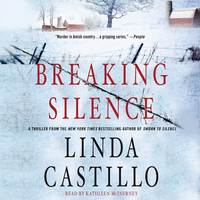
Church History 101: The Highlights of Twenty Centuries by Sinclair B. Ferguson, Joel R. Beeke, Michael A.G. Haykin: A Quick Look at 20 Centuries

Church History 101

Church History 101:
The Highlights of
Twenty Centuries

by Sinclair B. Ferguson, Joel R. Beeke, Michael A.G. Haykin

Kindle Edition, 99 pg.
Reformation Heritage Books, 2016

Read: July 25, 2021
Grab a copy from your local indie bookstore!

… the record of church history teaches us to hold fast to Christ, assured that He is with us always, even to the end of the world. He will build up His church and kingdom to all generations.

What’s Church History 101 About?

That’s the controlling idea behind this book—it’s a survey of Church History—which is the story of Christ building his church. There will be highlights and lowpoints. This, and more, is sketched out in the preface—as well as a description of the book that follows.

The chapters came from Ferguson’s time in the pulpit. Then Beeke, Haykin and their assistants revised them for use in The Reformation Heritage KJV Study Bible, and then there were published as this book.

Application

Each chapter sums up a century of Church History, talking about major movements controversies and figures incredibly briefly. It’s a ninety-nine page book, covering 20 Centuries—so to say the chapters are brief is an understatement. Most chapters include (not always as the concluding point) a “lesson” for application. Like:

Gregory’s vision produced a kind of nominal Christianity with which the church continues to struggle to this day.

The church should honor Gottschalk’s memory despite his human frailties. We should also continue to educate ourselves about missionaries such as Cyril and Methodius, and remember that the quest for power and recognition, demonstrated by Pope Nicholas, ultimately detracts from the mission and witness of the church.

Today we must see that the church exists to bring light to the world, and we must be willing to separate earthly power and gain from the mission of the church. The church accomplishes her mission by the power of the Holy Spirit, not by the might of kings or political leaders.

I get these came from a Study Bible, and those tend to be very object lesson-oriented, but I’m not sure it’s all that helpful (or necessary) in this context.

So, what did I think about Church History 101?

I think I read something wrong about the length—I knew it was a brief survey, but I didn’t expect it to be so brief that I finished it in under 90 minutes.

But, for a quick, very surface-level look at 2,000 years of History? This is good—it focuses on the essentials, it helps orients the reader to what matters—and hopefully ignites someone’s interest in diving deeper into a person, period, or movement mentioned in these pages.

I enjoyed it, I appreciate what it tried to do, I wish it had done more, but that would’ve defeated the purpose, I guess.

I do recommend this for anyone Junior High and up for a solid overview, a refresher, or a nice way to spend an hour or so. It won’t change your life, but for those who don’t need the introduction, it will serve as a reminder that Christ is building His Church and what that looks like.


3 Stars

This post contains an affiliate link. If you purchase from it, I will get a small commission at no additional cost to you. As always, opinions are my own.
Finding Hope in Hard Things by Pierce Taylor Hibbs: How the Hard Things Shape Us

Finding Hope in Hard Things

Finding Hope in Hard Things:
A Positive Take on Suffering

by Pierce Taylor Hibbs

Paperback, 133 pg.
2020

Read: July 18, 2021
Grab a copy from your local indie bookstore!

We think we’re stone. Only chisels and hammer strikes can change our shape. But no; we’re wet clay. We’re sediment and soil. We’re waiting for hands. We’re waiting for fingertips. We’re waiting for the pressure of palms. We’re waiting to be shaped by an artist. And the artist’s tools are hard things.

Hard Things are Going to Shape Us in Ways Easy Things Can’t

That’s it, there’s the book in a nutshell—that line and the quotation, there’s the central premise of the book and the kind of way he presents it.

Hibbs focuses on three of the hard things he’s faced in his life—the death of his father, his anxiety disorder, and his struggles with self-doubt. These case studies are just that, things that his readers can relate to, sympathize with, and find similarities in their lives. After that, Hibbs points to finding Christ and His purposes in the hard things, and that’s where we find hope.

Anxiety disorders, Crohn’s disease, cancer of the spine, the death of your father—these things happen. What matters most is not what happens to you but how you perceive and respond to it. Perception and response—that’s the key.

So, what did I think about Finding Hope in Hard Things?

I’ve talked about two of Hibbs’s books here before—Finding God in the Ordinary and Struck Down but Not Destroyed: Living Faithfully with Anxiety. The former is a collection of essays about finding God in ordinary, minute things in life; the latter is a thoughtful and thorough look at how Hibbs has dealt with his Anxiety Disorder, and how the reader can apply these things to their own problems. This book combines the best of the two approaches to these books—we don’t get a systematic look at suffering. Instead, we get essays based on his studies, based on his observations and thoughts.

I loved this approach, this style. Most books on suffering that I’ve read are meditations or studies on the relevant Psalms—maybe a passage or two from the Gospels or Epistles. Hibbs doesn’t do that, he talks about where he is, where he’s been, where his readers are/have been/will be. He’s learned the lessons of those other books and now he’s internalized them. He can meditate, muse, and reflect—and that’s what these essays are.

As with his earlier book, these essays are wonderfully put together, a pleasure to read, even without the content.

On an episode of The West Wing, Leo McGarry tells a story:

“This guy’s walking down the street when he falls in a hole. The walls are so steep he can’t get out.

“A doctor passes by and the guy shouts up, ‘Hey you. Can you help me out?’ The doctor writes a prescription, throws it down in the hole and moves on.

“Then a priest comes along and the guy shouts up, ‘Father, I’m down in this hole can you help me out?’ The priest writes out a prayer, throws it down in the hole and moves on.

“Then a friend walks by, ‘Hey, Joe, it’s me can you help me out?’ And the friend jumps in the hole. Our guy says, ‘Are you stupid? Now we’re both down here.’ The friend says, ‘Yeah, but I’ve been down here before and I know the way out.'”

I thought about that story a lot while reading this. Hibbs is that friend. He knows the way out of the hole—better yet, he understands why the hole is there and how it’s used by God to make us into who He wants.

This isn’t your typical book on suffering, it’s better.

3.5 Stars

This post contains an affiliate link. If you purchase from it, I will get a small commission at no additional cost to you. As always, opinions are my own.
The Irresponsible Reader On…Self-Published Non-Fiction

Self-Published Authors Appreciation Week
From the first moment that people did the strange thing of asking me to talk about their books on my blog, I’ve been impressed by the quality of a lot of what’s been published by authors going out on their own, taking all the risks, shouldering all the responsibility and doing all the work to get their words, their dreams, their blood, sweat, and tears. This should be celebrated—it’s definitely appreciated, as we’re trying to show this week.

I haven’t had time to read anything new for Self-Published Authors Appreciation Week, and therefore don’t have anything new to blog about, so I’m going to highlight some of the self-published works that I’ve blogged about over the last few years—just a sentence or two. Hopefully enough to make you click on the link to the full post. Beyond that, it’d be great if I inspired you to add a few of these to your TBR. Also, be sure you check out the other posts over at the SPAAW Hub.

Today we’re going to be looking at Self-Published Non-Fiction–which are all memoirs at the core, I now realize. It’s what the authors do with the memoirs that makes these really stand out.

bullet Life and Death Behind the Brick and Razor: Code Red Diamond by Isaac Alexis, MD—A prison doctor uses his experiences to give suggestions for a healthy/healthier life. (my post about it)
bullet No Problem, Mr. Walt: Building a Boat, Rebuilding a Life, & Discovering China by Walt Hackman—Hackman was one of the first self-published authors to reach out to me, and I’m so glad he did. A fascinating read about a man deciding to have an authentic Chinese junk built for him to use as a houseboat in California. (my post about it)
bullet Struck Down but Not Destroyed: Living Faithfully with Anxiety by Pierce Taylor Hibb—Drawing on what he’s learned from over 12 years of an anxiety Hibbs talks about learning to see what God’s purpose in the suffering is (anxiety disorders specifically, but easily transferable to other types), understanding that His hand is guiding all things—including our problems—so how do we in faith (without denying the suffering) rest in faith. (my post about it)
bullet And Drink I Did: One Man’s Story of Growing Through Recovery by Jay Keefe—It’s all there in the subtitle, Keefe tells about his OCD, his alcoholic days, his getting sober and how he’s trying to help others since then. Powerful stuff. (my post about it)
bullet Uber Diva by Charles St. Anthony—a humorist writes a memoir of a Lyft/Uber driver mixed with a guide to starting/surviving/thriving as one in a tough market. St. Anthony also has a few other books out now that are probably worth a read. (my post about it)
bullet Flying Alone: A Memoir by Beth Ruggiero York—A female pilot’s memoir of her path from flight school to flying for TWA (now that I have a son learning to fly, some of her more harrowing experiences keep flashing through the back of my mind). (my post about it)


If you’re a self-published author that I’ve featured on this blog and I didn’t mention you in this post and should have. I’m sorry (unless you’re this guy). Please drop me a line, and I’ll fix this. I want to keep this regularly updated so I keep talking about Self-Published Authors.

Foundations of Covenant Theology by Lane G. Tipton: A Fascinating Approach to Genesis 1-3

Foundations of Covenant Theology

Foundations of Covenant Theology:
A Biblical-Theological Study
of Genesis 1–3

by Lane G. Tipton

Paperback, 131 pg.
Reformed Forum, 2021

Read: July 4, 2021

What’s Foundations of Covenant Theology About?

In 2019, Lane Tipton gave a series of lectures for a Reformed Forum seminar on covenant theology. Tipton’s now turned these lectures into “a brief and non-technical” book, suitable for private use or as a supplement to a Sunday School class, building on the work of Geerhardus Vos and Meredith G. Kline.

I really don’t like it when I don’t provide my own summary/synopsis, but after a few attempts, I’m bailing. Primarily because my attempts ended up 2-3 times long as what’s on the back of the book/Reformed Forum’s website. So…why bother reinventing the wheel, if I’m just going to make it bloated and cumbersome?

Drawing from Genesis 1:1 and subsequent biblical revelation, Lane Tipton argues that before creating the visible world, the immutable triune God created a heavenly temple dwelling, filled that heavenly dwelling with the unchanging glory of his Spirit, and sanctified that heavenly dwelling as the realm of everlasting Sabbath rest.
Adam, as the created image of God and federal head of his posterity, could have advanced through perfect covenantal obedience beyond probation on the mountain of God in earthly Eden into the heavenly dwelling of God in Sabbath rest. This God-centered and heaven-focused theological backdrop enriches our understanding of the person and work of Jesus Christ, as the second and last Adam in the covenant of grace, who in his humiliation and exaltation has opened the gates of heavenly paradise for his church.

Vocabulary and a Glossary

This is a non-technical book as Tipton says in the preface. But at a glance, you’d be tempted to think otherwise. Tipton has a very precise and erudite vocabulary, and it’s in full view here. Where some writers will (unintentionally) obfuscate with their language, Tipton’s doesn’t do that at all. I find his style and word choice to helpful—once you get used to it (and it doesn’t take long), you don’t even notice that it’s not your run-of-the-mill non-technical language.

There are concepts and phrases he uses throughout that he wants to highlight, and they’re included in a Glossary at the end of the book. There were a few he used in the text that I’d have liked a bit more detail on, but it’s clear that he uses the Glossary to focus on the vital concepts to his argument. I wish more people would do things like that.

So, what did I think about Foundations of Covenant Theology?

I’ve lost track of the books/chapters I’ve read that serve as an introduction to Covenant Theology in the last couple of decades. Yet I keep reading them (and, largely, enjoy and profit from them). This is a different way of covering these concepts and it’s a very effective one.

It’s also a different way of looking at Genesis 1-3. Almost every time I’ve seen these chapters explained and exegeted, it had to do with the doctrine of Creation, the Fall and the Promise of the Seed in Genesis 3, and so on. But Tipton’s approach—while addressing all that—focuses on the Big Picture, looking at the purposes behind Creation, the protoevangelium, the Covenants of Work and Grace, and how those are worked out in history (particularly in the last two chapters about Christ as the Promised Seed and the Second Adam).

Would I have liked this book to be longer and these brief chapters to be expanded—making this still non-technical, just not brief. If this had taken me a few hours to read rather than just an afternoon, I’d have been happier. But…this was a fascinating book, a helpful read, and I know I’ll profit from meditating on and returning to these concepts. You really should try this one yourself, you’ll be rewarded for it.


4 Stars

PUB DAY REPOST: I have a hard time shutting up about Moonlighting: An Oral History by Scott Ryan

Moonlighting: An Oral History

Moonlighting: An Oral History

by Scott Ryan

eARC, 288 pg.
Fayetteville Mafia Press, 2021

Read: May 9-15, 2021
Grab a copy from your local indie bookstore!

Why Did I Want to Read Moonlighting: An Oral History?

Over on Twitter last month, Grab This Book said something about requesting a book about Moonlighting on NetGalley, and the next thing I knew, I was on the site doing the same thing. It was a reflex, since I was twelve I wanted to know everything I could about David Addison, Agnes DiPesto, Maddie Hayes, Herbert Viola—everyone at the Blue Moon Detective Agency, their clients and adversaries. I watched first-run episodes, reruns, syndicated episodes (when it was possible to find them)—the only reason that I haven’t watched the whole series on DVD multiple times is that they’re hard to find—and prohibitively expensive when you do*. In short, I was a huge fan of the series, and the idea of a book devoted to it was something I had to get my hands on.

* But after I get this posted, I’m going to re-watch the first 3 seasons, I assure you.

Who is the Target Audience for Moonlighting: An Oral History?

People who have watched some/all of the ABC series that aired from 1985 to 1989. Well, not just watched but enjoyed the show. This isn’t going to work for you unless you have at least some familiarity with the show.

And the number of people familiar with the show isn’t that large and isn’t growing. Unlike so many things from that era, you can’t watch it on syndicated re-runs or a streaming service—and then there are the aforementioned issues with the DVDs.

But if you’re part of that group? This book is definitely for you.

What does the Oral History Cover?

There are discussions of each season, with chapters that focus on particular episodes as well—big ones, like the pilot, the black and white episode*, the Shakespeare episode**, the Christmas episode***, and so on****. There are discussions about some of the guest stars and specific behind-the-scenes personnel.

* “The Dream Sequence Always Rings Twice”
** “Atomic Shakespeare”
* “Twas the Episode Before Christmas”
* like “The Son Also Rises”, “Big Man on Mulberry Street”, “I Am Curious… Maddie”

Aside from episodes/seasons, the focus is on the writers, creator, and primary stars—Cybil Shepherd, Allyce Beasley, Curtis Armstrong, and Bruce Willis. The first three appear in the book, but despite trying, Willis and the author couldn’t work out the timing.

It’s not all glowing and positive, there are real criticisms of the writing, plots, and characterizations—as well as how some scenes came out in the end. Some of the criticism is due to this being a show that’s very much a product of its time, doing things that wouldn’t make it to air today. There are frank and honest discussions about the behind-the-scenes drama and conflicts. But it’s all given from a place of love/admiration for the show, there are no cheap shots in these pages.

That said, on the whole, this is a very positive book—it’s written by a long-time fan (which is obvious), with interviews from the people most involved in the show’s production, most of whom have very positive memories and associations with the show. These people poured proverbial blood, sweat, and tears into Moonlighting and it shows in the way they talk about it.

So, what did I think about Moonlighting: An Oral History?

This post was difficult to write, as you can see from that first paragraph, I can fanboy over this series with little provocation. I have 9 pages of single-spaced notes from this book. And restraining myself from using every note in this post was difficult. If I was reading this post-publication and could quote from it? I’d probably be unable to finish this post for a month because I’d be struggling to find the best 3-4 parts to quote.

When I read a book about a television show, I want a few things—I want something to

    • make me want to rewatch the show
    • make me not really need to, because the book has helped me remember it in such a way that it’s not that necessary
    • give me a lot of behind-the-scenes information about the show
    • help me understand it better (not just information, but reflections on it—its legacy, cultural context, impact on television, et.)
    • Ideally, teach me something about the art and/or business of television (preferably both)
    • and if it can be fun (TV should be entertaining), that’s all the better.

Yeah, that seems like a lot to ask for from a book, but if I’m going to take the time to read a book instead of watching a behind-the-scenes show or listening to a panel discussion, I want bang for my buck—I don’t always get it (and know that going in), but I want it. Moonlighting: An Oral History delivered on all of these fronts. In spades.

Also, I find that a lot of oral histories run out of steam after a while—to get one to stay interesting for almost 300 pages is a feat—and it takes a combination of great interview-ees and skill from the author in asking the right questions and then assembling the pieces used in the final product.

Could this have been improved if Ryan had been able to work out the scheduling to get Willis involved? Yes. Almost definitely—although, I think he maybe ended up coming off better this way. There’s no defensiveness on his part or protecting his name or anything like that (not that he necessarily would be that way, I don’t know)—it’s the cast, crew, and Ryan that get to sing his praises.

How much did I enjoy this book? I even liked the “Special Thanks” chapter—which is far more involved than your typical Acknowledgements section. Ryan talks about how the book came to be, how he interacted with some of the interview-ees, and so on. When even the Acknowledgements part of a book is worth commenting on/taking note of, you know you’ve got a winner of a read.

I had a blast reading this—I can’t imagine any half-hearted fan of the show not enjoying themselves. The only thing better might be sitting down to talk to Ryan about the show and what he learned from interviews (but that would be hard to refer back to, so maybe that wouldn’t be better).


5 Stars

P. S.

If anyone out there has a copy of seasons 4 and/or 5 on DVD that they’d like to donate/sell for less than market price, please get in touch with me. Please.

Disclaimer: I received this eARC from Black Château via NetGalley in exchange for this post—thanks to both for this.

This post contains an affiliate link. If you purchase from it, I will get a small commission at no additional cost to you. As always, opinions are my own.
Page 13 of 31

Powered by WordPress & Theme by Anders Norén