Tag: Non-Fiction Page 25 of 31

Benedict Arnold: From American Hero to British Traitor by in60Learning: A compelling and tragic story of America’s Traitor

Benedict ArnoldBenedict Arnold: From American Hero to British Traitor

by in60learning
Series: in60Learning

Kindle Edition, 40 pg.
in60Learning, 2018
Read: May 4, 2018

If someone knows just two names from the US War for Independence, they’re George Washington and Benedict Arnold. We should all probably know a few more, but most of us have those two in our mental arsenal. He’s easily the most famous traitor since Judas Iscariot — his name is synonymous with the act.

But how many of us know just how he betrayed the American forces? How’d he get to that position? What happened to him afterwards? This book answers those questions — and a few others you hadn’t thought to ask.

The story is just tragic, really. That’s not an apologetic for the guy — don’t make misunderstand me. But there’s just something about his floundering for significance and success that just strikes you as sad — he’s like Forrest Gump, but without engendering any good will anywhere.

I want to read more about Arnold after reading about this — something I never expected.

As they have every time I see them interact with Christianity, these authors just don’t get it. They seem to misunderstand the New Light/Old Light controversy and American Puritanism. It’s a very minor point in this narrative, but as trends go, it’s pretty annoying.

This is a pretty compelling story and the book seems longer than it is — that’s not long as in boring, but long as in it covers a lot and you’d think it’d take at least 20 more pages to fit it all in. This brief biography of Arnold is this series at its best — a brief introduction of something most of us should know about told in a way that you can digest easily, that will drive you to read more.

—–

3.5 Stars

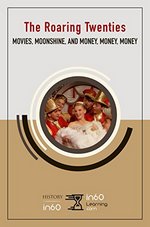
The Roaring Twenties: A Time of Movies, Mass Production, and Moonshine by in60Learning: A lackluster look at the decade of excess

The Roaring TwentiesThe Roaring Twenties: A Time of Movies, Mass Production, and Moonshine

by in60learning
Series: in60Learning

Kindle Edition, 45 pg.
in60Learning, 2018
Read: May 4, 2018

The Roaring Twenties are frequently considered one of the more exciting periods of American history — it’s right there in the name after all. The cultural, economic and political changes that characterize this decade are the fodder for all sorts of reflection and analysis. This volume in the series attempts to be an introduction and a survey to this. And it is — just an uninspired and very surface-level one.

Something that most people forget — or misunderstand — is that Prohibition came from Progressive roots — sadly, this volume repeatedly attributes it to others. I’m not sure why — the moral/political battles of yesteryear don’t have to look like those of today.

Finally! There’s a Bibliography! I’ve lamented the lack of one of these in every installment in this series. Now we finally get one — it’s not long, but it’s robust enough to equip someone to start looking into the topic in more depth on their own. Bravo!

This isn’t the series at its best — I’m not sure what it was I didn’t like. It was . . . just dull? Lifeless is a better description. It covered the basics, but didn’t seem to want to do anything else — this series, when at it’s best seems like it’s a compression of something longer and more detailed. But This one almost seemed like it was stretching to fill the pages. Still, that Bibliography is worth at least a half start.

—–

3 Stars

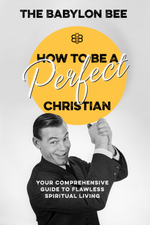
How to Be a Perfect Christian by The Babylon Bee: Winning Satire with a Point

How to Be a Perfect ChristianHow to Be a Perfect Christian: Your Comprehensive Guide to Flawless Spiritual Living

by The Babylon Bee

eARC, 208 pg.
Multnomah, 2018
Read: May 13, 2018

I’m pretty sure my introduction to the concept of satire came from the works of “Jovial” Bob Stine (this was before he discovered you could make a bazillion dollars selling horror books to kids) — The Sick Of Being Sick Book, The Cool Kids’ Guide to Summer Camp, Don’t Stand in the Soup, and How to be Funny. I hadn’t thought of him for years. Until I read How to Be a Perfect Christian, that is.

I’m not trying to suggest that this book is the equivalent of satirical children’s books from the early 80’s and late 70’s. But it’s exactly what someone who grew up reading that kind of thing should read. Also, I’m glad I got to spend a few moments remembering Jovial Bob Stine, and I wonder if I still have those books somewhere (and how un-funny would my own kids think they are).

If you’ve ever read anything from The Babylon Bee, you know what to expect from these guys. If you haven’t — you either should, or maybe this isn’t the book for you.

Styling itself as a guide to sanctification — there’s even a handy ruler at the end of each chapter helping the reader to note their progress — How to Be a Perfect Christian is a hands-on guide to making progress in Cultural Evangelicalism. There’s a chapter on picking the right Church (what can they do for me?), what things to volunteer for at church (minimum of work, maximum of exposure/attention), how to use social media (if your Quiet Time doesn’t result in an Instagram post, was there a point?). There’s a wide variety in the types of jokes here: there are dumb and obvious jokes, some subtle, some clever — all pointed. Which is the idea, they’re pointed so they can deflate contemporary American Evangelicalism — its cultural (sociopolitical/cultural) manifestations, anyway.

Yes, sometimes the prose contradicts itself — because the target or punchline on page 70 is different than the target or punchline on page 47. But that’s okay for two reasons — 1. the jokes land on both pages 70 and 47 (these numbers are made up, by the way), and 2. this books isn’t really trying to make a coherent, consistent argument. At least not for the first 98%, anyway. But the jokes are funny — not all of them laugh out loud funny, but they’ll elicit a chuckle or a grin. Some might just leave you with a general sense of amusement. Most will find a way to strike home (and there are a few duds — but everyone will have their own list of duds, I don’t think there’s one in the book that everyone will dislike).

More importantly, everyone will find themselves at the receiving end of the serrated edge of the satire more often than they’d like. But not in a guilt-inducing way, but in a — “hmm, I should probably work on that” kind of way. Which, I trust, is the point.

The last two percent (for those clever enough to do the math) that I pointed at earlier? Yeah, that’s what the whole book driving toward — the lampooning is for fun but there is an overall point under-girding everything. A point, that’s both well earned, and very needed, by cultural Christians, sincere and thoroughgoing Christians, and a waiting world.

Solid satire — laughs with an edge — directed toward a deserving target. The conclusion was equally on-point and earned. I honestly expected less from this book — yes, I knew there’s be good laughs along the way and that the necessary sacred cows would be shot at — I just wasn’t sure if The Babylon Bee could pull off a piece this long, and count the whole thing as a pleasant surprise.

Disclaimer: I received this eARC from WaterBrook & Multnomah via NetGalley in exchange for this post — thanks to both for this.

—–

4 Stars

Life Begins When The Kids Leave Home And The Dog Dies by Barb Taub: A fun humor collection looking at family and life.

Life Begins When The Kids Leave Home And The Dog DiesLife Begins When The Kids Leave Home And The Dog Dies

by Barb Taub

Kindle Edition, 175 pg.
2018

Read: April 13 – 14, 2018

Barb Taub, a former Midwest newspaper columnist turned blogger, has released a collection of (I think) previously published and/or posted columns and blog posts around the family-related themes — kids, relationships, life, travel, holidays, pets, and death.

You know how there are hard-boiled mysteries, noir mysteries and cozy mysteries? This feels like cozy humor. (I’m sure there are better designations/genre labels, but I don’t know them). There’s nothing offensive, nothing boundary pushing, nothing upsetting — just amusing anecdotes, a slightly off-kilter look at life, and a way with words. Simple entertainment — pretty much what you’re looking for in a collection of humor, right?

I wouldn’t recommend sitting down and reading this cover to cover. Sample from it, a little here and a little there over a few days. Taub has a couple of phrases that she really likes, anecdotes that she returns to often (for different ends sometimes) — and I don’t blame her for doing so, when it works, it works. But when you read them too close together, it takes a way from the moment. But that’s a minor quibble.

This is a simple, straightforward, collection of amusing, occasionally heart-warming, pleasantly humorous pieces. I feel obligated to say something else about it, but I can’t think of anything else to say. Taub’s a funny woman, if you like reading funny things, you should read this book.

Disclaimer: I was given a copy of this book by the author in exchange for my honest opinion and this post. I appreciate it, but this simple act didn’t impact my opinion.

—–

3.5 Stars

The Founding of Los Angeles: Before the Birth of Hollywood by in60Learning

The Founding of Los Angeles: Before the Birth of HollywoodThe Founding of Los Angeles: Before the Birth of Hollywood

by in60learning
Series: in60Learning

Kindle Edition, 37 pg.
in60Learning, 2018
Read: April 28, 2018

“The final story, the final chapter of western man, I believe, lies in Los Angeles.” – Phil Ochs

This chapter epigraph reflects the obsession that so many have with Los Angeles, which is why we have a book about its founding, and not the founding of Seattle or Topeka.

When this book says “Before the Birth of Hollywood,” it means it — it starts as far back as 8000 B.C. with the Chumash people, tracing the various Native American groups to control the area, before eventually getting to the Spanish explorers and their descendants. From there they trace the various phases of Spanish rule of the area, followed by the Mexican rule and then eventually the transition to U. S. rule.

Through each era, the authors explore the cultural, religious, and economic lives of those in the greater L.A. area. I was vaguely aware of the Spanish and Mexican rule, but it didn’t take much reading in this book to realize how vague my awareness really was. This is truly interesting information, and I’d probably enjoy reading longer works on it.

I do have one quibble with the book — when discussing the ways the Spanish brought their own culture to the region, the book states: ” Spanish settlers, who had arrived in America to claim the land for themselves, converted the aboriginal people to Christianity and put them to work. There is some debate over whether they were forced into being baptized or impressed by the skills possessed by the Europeans and lured into doing so with the promise of knowledge and protection.” That bothers me. Why are those the only two options? Why couldn’t the converts be converted because they were convinced of the truth of Christianity? Or because they realized their own understanding of religion was deficient in comparison?

Quick read, that gives (at least) the impression of some sort of depth to the very focused topic. An easy read that offers a good deal of information that’s easily digested in a few minutes. Again, footnotes/endnotes and/or a bibliography/suggested reading list would be welcome additions to this book so the reader can follow up with something more in depth. Another good entry in a very helpful series.

—–

3 Stars

Secular Jewish Culture by Yaakov Malkin, Shmuel Sermoneta-Gertel

Secular Jewish CultureSecular Jewish Culture

by Yaakov Malkin (Editor), Shmuel Sermoneta-Gertel (Translator)

Kindle Edition, 520 pg.
Library of Secular Judaism, 2017
Read: February 5 – March 30, 2018

I don’t know where the person who offered me this book found me, nor why they thought I’d like the book. Nor do I even remember what it was about this book that I thought sounded like it could be my cup of tea — but man, were we both wrong.

Which is not to say that this is a bad book, or an uninteresting book. But this is not the kind of thing I usually read or blog about — the typical secular Jewish writing around here is Jennifer Weiner or Hagit R. Oron. And the academically-oriented reading I usually do is definitely not the secular variety.

This is essentially a manifesto and apologetic for the study of Secular Jewish Culture as an academic discipline. The various authors definitively state what it is that Secular Jews believe, think, and cherish — which is far less diverse than say, CNN on-air talent, or members of my household. White largely set positively, on the whole much of this book defines Secular Jewish Culture by what it isn’t, and given that most people have a hard time separating the ethnicity from some form of the religion, that makes sense. But it doesn’t make for good reading.

Granted, it’s obvious from the outset that I’m not going to approach the Hebrew Scriptures from the same perspective as these authors, so it’s not surprising that I’d characterize almost all of their reactions to those scriptures as misreading the text — I can handle that, really. But some of the misreadings are so bad, and seemingly deliberately so, that I was frequently angered as I read them.

I had a long list of things I wanted to talk about, but I really can’t muster the interest — and I can’t imagine anyone reading this post will be able to, either — so I’ll just wrap things up.. It was generally a slog to read — but I can’t fault it for that, it’s not supposed to be a page-turner. It definitely set out to accomplish a few tasks, and on the whole, it succeeded. Except for making me want to read anything else from any of these authors. Did I like it? No. Is it a good book? Maybe? Probably? Are there many people that will think this book is a treasure? Yup, but I’m not one of them.

I honestly think this book deserves more stars than this, it’s a good book. But, I didn’t like it and this is my blog, so . . .

Disclaimer: I received this book in exchange for this post and my honest opinion, I appreciate the opportunity.

—–

2 Stars

Opening Lines: Everything is Normal by Sergey Grechishkin

We all know we’re not supposed to judge a book by its cover (yet, publishing companies spend big bucks on cover design/art) (also, this has a great cover). But, the opening sentence(s)/paragraph(s) are fair game. So, when I stumble on a good opening (or remember one and pull it off the shelves), I’ll throw it up here. Dare you not to read the rest of the book.

from Everything is Normal: The Life and Times of a Soviet Kid by Sergey Grechishkin:


Anekdot

n.: the most popular form of Soviet humor, a short story or dialogue with a punch line, often politically subversive. “Being simultaneously independent from and parasitically attached to mass cultural production and authoritative discourse, the anekdot served as a template for an alternative, satirical, reflexive, collective voice-over narration of the Soviet century.”

Many of the anekdots under this book’s chapter headings were once punishable in the USSR by up to ten years of forced labor under article 58 of the criminal code (“ Anti-Soviet Propaganda”). This article was used freely to put critics of the Soviet government behind bars. Today, of course, things are very different in Russia. Now it’s article 282.

Maybe it’s just given the subject matter, I was expecting something dreary or earnest or incredibly serious — or all three, but man, I cracked up at that last sentence. I tell you, my friends, this book is going to have to work for less than 4 stars from me at this point.

Greek Mythology: Beyond Mount Olympus by in60learning

Greek Mythology: Beyond Mount OlympusGreek Mythology: Beyond Mount Olympus

by in60learning
Series: in60Learning
</brKindle Edition, 38 pg.
in60Learning, 2018

Read: March 10, 2018

“It’s not by chance what Americans say when in need of a specialized or precise term, that ‘the Greeks have the word for it’.” -Aikaterini Spanakaki-Kapetanopoulos

Let me start by saying that I still think that the in60Learning project is a great idea and I hope it puts out a lot of material. I just hope that in their rush for quantity, they don’t skimp on quality. From the typographical errors to the way this was written, I think that’s a real danger.

Still, let’s focus on this volume — they really did go beyond Mount Olympus in their coverage of Greek Mythology, let’s look at the contents of this book:
An Overview of Greek Mythology
The Creation
The Gods of Mount Olympus
Other Gods, Spirits and the Stars
The Underworld and Other Beings in Greek Mythology
The Human Race and the Gods
Greek Mythology in Today’s World
That’s a lot for anyone to tackle in a book much longer than this — it’s a Herculean effort to get that much into a book this small (pun fully intended). But they go for more than an overview of Greek Mythology, they try to suggest some deeper meanings, to tie their topic into philosophical discussions and the like. Some of that worked, some of that seemed like a stretch — and some fell flat (that last paragraph, in particular, was a complete mess). You’ve got to admire the effort, though.

Not only did they cover a wide range of topics, but they worked in a lot of detail — maybe too much in some instances (including the Roman equivalent names at some points felt like they were striving for word count rather than being thorough).

One of the main theses of the book is the impact that Greek Myth had on Western Culture/the English Language, as is seen in the quotation I borrowed above and they utilized to drive home the point. Not only did they prove this point (in case anyone thought it worthy of debating), but they overdid it. At a certain point, the sections along these lines just became lists:

From the Greek god of sleep, Hypnos, is derived the word hypnosis.
From the Greek legend of the King Tantalus, is derived the word tantalize. He was condemned for eternity to stand up to his chin in the middle of a river with a fruit tree above him. Whenever he tried to drink the water, it receded from him, or grab a fruit, it pulled away from him.
From the Greek god of love, Eros, is derived the word erotic.
From the Greek goddess of love, Aphrodite, is derived the word aphrodisiac. . . .
From the god of fire and blacksmithing, Vulcan (Greek: Hephaestus), is derived the words volcano and vulcanizing.
From the Roman goddess of grain and farming, Ceres (Greek: Demeter), is derived the word cereal.

That goes on for pages (depending how you have your text size set). The facts are good, they’re on point, but it’s not good reading.

The basic overview of the Olympian myths, the origin of the universe, the war with the Titans, etc. was pretty solid. Nothing remarkable, but decently executed. The writing as a whole, however, didn’t impress me — frequently, but particularly as the authors tried to wrap up each chapter, the writing felt like it was lifted from High School term papers. I don’t necessarily think that’s a bad thing, but I got the impression that this series was supposed to be better than that.

This one didn’t work for me, but I bet there are people out there who will be helped by it. These people didn’t check out D’Aulaires’ Book of Greek Myths so many times from 3rd to 6th grade that the library might as well have given me a copy (not counting the other books on the subject I read, reread, bought, etc. at that age) or haven’t had kids during the Riordan-era of publishing. Basically, I should’ve skipped this one, I think. This slim volume took some big swings — amount of material, range of material, a couple of the “Big Ideas” running through the book, and whiffed on them all (to stick with the metaphor, I do think it caught a piece of a couple of the pitches). A strong effort, but not one that worked for me.

—–

2 1/2 Stars

Illinois Native Americans: A 9,000 Year Civilization by in60Learning

Illinois Native Americans: A 9,000 Year CivilizationIllinois Native Americans: A 9,000 Year Civilization

by in60learning
Series: in60Learning

ARC, 36 pg.
in60Learning, 2018

Read: February 27, 2018


Man, it’s hard to write about a book this short in a meaningful way. So I’m going to talk a little bit about this project as a whole — there’s this group, in60learning, who write very concise non-fiction (text and audiobooks) on historical topics/events or biographies (other topics are coming, apparently), so they can be read and digested in a brief matter of time. Great idea — I’m on board with this. I found the selection a little overwhelming, honestly, since I was going to try just one — I’m not sure I’d have been any more decisive if I’d had 6 to choose from. So I just told them to send me one at random. I’ll get to that in a minute, but first, if you’re interested in this idea and want to get more information about the group and their releases, get yourself added to their LearningList.

Now, the title I got was Illinois Native Americans: A 9,000 Year Civilization. I know nothing about the Illinois, nada. You ask me about Native American tribes from the Idaho area, and I’m good; I know a little about the Delaware thanks to David Brainerd; and a bit about the Cheyenne thanks to Craig Johnson. I’m not sure how reliable a source Henry Standing Bear really is, though. So the Illinois? Fuhgeddaboudit. Making me a prime candidate for this book. The idea that this people group existed as a discernible culture for 9,000 years is mind-boggling.

The book covers all sorts of aspects of the Illinois — the politics, the religion, the familial roles, hunting, interaction with other Native American groups — and present state. It talked about changes that happened when Europeans showed up and altered the way of life for everyone in North America.

I appreciated the matter-of-fact way the book addressed cultural changes when the Illinois came into extended contact with Europeans — apparently, primarily the French. The book didn’t vilify the French (or English, etc.) for the changes they brought to the culture — nor did they act like this was the greatest thing for them. Instead, it took more of a “so this changed” approach, letting the readers draw their own conclusions.

The writing is crisp, clear, and (seemingly) comprehensive. It achieves this great balance of being brief and yet covering 9,000 years of history. Even better, it does this history in a few paragraphs in a way that doesn’t feel like you’re missing a lot.

A couple of short-comings that may or may not be addressed in actual editions of the books, not just the ARC version I received — footnotes/endnotes would be great, or at least a bibliography. Just so a reader could look into some of what’s covered a little more.

I really liked this book and plan on picking up more in the series soon. I think it’s just the kind of thing that could help my kids with some things in school, and yet it could also appeal to they busy adult who just feels like they should get better grounded in some part of history or just wants to read something quick. I don’t see why anyone from 12 on up couldn’t benefit from (or understand) this book, and assume the same is true for the rest of the series. Dive into these, folks, you’ll be glad you did.

Disclaimer: I received a copy of this book from the publisher in exchange for my honest opinion — thanks for this!

—–

3 Stars

Timekeepers by Simon Garfield

TimekeepersTimekeepers: How the World Became Obsessed With Time

by Simon Garfield

eARC, 368 pg.
Canongate Books, 2018

Read: February 16 – 23, 2018

Time, once passive, is now aggressive. It dominates our lives in ways that the earliest clockmakers would have surely found unbearable. We believe that time is running away from us. Technology is making everything faster, and because we know that things will become faster in the future, it follows that nothing is fast enough now. . . But the strangest thing of all is this: if they were able, the earliest clockmakers would tell us that the pendulum swings at the same rate as it always has, and the calendars have been fixed for hundreds of years. We have brought this cauldron of rush upon ourselves. Time seems faster because we have made it so.

I remember a few books pretty distinctly from my childhood — particularly those I read that were my first forays into “grown up” books — Ian Fleming, Erle Stanley Gardner, Mario Puzo, Richard Hooker, and so on. The first non-fiction book that I remember trying along those lines was Tom Wolfe’s The Right Stuff, which may have ruined me for a lot of the non-fiction that would follow (we can talk about my discernment later). It was funny, it taught me a lot, it made me think of the early US Space Program a little differently than what I’d been taught, and it was told in Tom Wolfe’s voice (which I love to this day). But it cemented the way I look at non-fiction books. Today, when it comes to non-fiction reads, there are a number of ways I tend to judge them (rightly or wrongly) — first (always first): Is it well-written? I’m not saying it has to sound like Wolfe, but does the writer know what he’s doing? Even if I end up learning a lot from a book, if it’s not well-written, I’m not going to like it. Secondly, is it informative? Do I actually learn something, or is it a re-hash of things that any number of books have said (do we really need that many biographies of Abraham Lincoln?)? Thirdly, does it make me think of something in a new way, or challenge my preconceptions (does this examination of Don DeLillo make me re-think White Noise? (I know of no book like this, but would love to read one)). Fourth, this is not essential — but is the book entertaining? It gets bonus points for that.

Simon Garfield’s Timekeepers, clears the bar for every one of these standards. Since he does it more succinctly than I could, I’ll let Garfield sum up the book:

This is a book about our obsession with time and our desire to beat it. . . The book has but two simple intentions: to tell some illuminating stories, and to ask whether we have all gone completely nuts.

He begins with telling the well-known (at least in brush strokes) story about the invention of time zones — but man, did I not understand really how this came about. Then he covers the experiments with the calendar, the clock, etc. tried following the French Revolution (and how some of those experiments live on). We get a couple of chapters on time and the cinema. Music (Beethoven, The Beatles, recording and more), photography, filibustering, the work day, and other sundry topics are covered as well. You can’t forget watch-making, watch-marketing, watch-design, watch-capabilities, watch-symbolism, and a few other watch-related notions that I can’t think of at the moment.

Let’s get to the writing itself. Garfield has a way with words — the number of sentences that I highlighted because of his use of the language is pretty high. If I quoted every one that I wanted to, this post would quickly move into the tl;dr range — and into the copyright infringement range not long after that. It wasn’t just his style, the book simply displays some well-crafted writing. It’s not perfect — but it’s good. I’ll freely admit that not every topic he covered really interested me, but his writing kept me reading — and I was rewarded pretty frequently. Even when my interest waned, his writing would stand out here and there so I could appreciate the how he said it, even if the what didn’t interest me. Rarely, the topics that did grab me would have a paragraph or so that didn’t rise to that level, however. I’m not going to go into specifics on this point, though — I didn’t bother to note those, and I bet that comes down to taste and others won’t think of those passages the same way, and they were brief moments, so they didn’t detract from the whole.

Did I learn something from the book? Much more than I expected to. The chapter on the French experiments alone probably taught me enough to justify the whole book. I didn’t/couldn’t stick with the details of watch-making (I have a hard time visualizing that kind of detail), but even that was fascinating and informative on the surface. Most topics broadened my understanding and taught me something. Also, the sheer amount of trivia that I picked up was great (the amount of time spent recording the first Beatles LP, why pop music tends to be about 3 minutes long, etc., etc.)

But it’s not just about the information gained — it’s what that information means (both in terms of the book’s argument(s), but in how the reader considers that information in the light of what they already know and personal experience. Every time that Garfield moves from the “here’s what happened” or the “here’s how this works” bits to the “because this happened” or “because this works” bits, it was something I don’t know that I’d spent too much time thinking about previously. Sometimes those took the form of quick “huh,” moments — but occasionally he brushed against profundity, which I really appreciated.

And yes, Garfield picked up bonus points for entertainment. After the first paragraph in Chapter 1, my notes read “Between the Introduction and this paragraph, I’ve laughed four times. Am going to dig this book.” Later on, I wrote that I didn’t care about the content, really, I was having too much fun reading it to worry about it being right.

There’s room for improvement, I think. If there’s a design to the organization, I’m not sure I see it. He appears to hopscotch around between his topics. I’m honestly not sure how he could have arranged them to flow from one to another, but I do believe it could’ve been done. I think he could’ve lessened the detail occasionally (and increased it in a spot or two). But generally, this is me being nit-picky for the sake of not being a push over. There’s really almost nothing to complain about.

Garfield scores across the board with this one, however. I do think the survey hops around a bit too much without obvious connections between the ideas so that the cumulative punch is less than it could be. In his concluding thoughts, Garfield raises some issues and asks some pointed questions that could be more forceful, more pointed if the preceding chapters had been more clearly linked. Nevertheless, the points were made and I, like most readers (I suspect), had to give some serious thought about my relationship to time and what I actually value. I’ll have to continue this thinking for a while, actually — the fact that I have to — and want to — is because of this book forcing me to consider things I’ve taken for granted about time and how my life is governed. I suspect I am not alone in this.

Thought-provoking, interesting, educating, well-written and generally entertaining — Timekeepers really covers all the bases and covers them well. You’d do well to check it out.

Disclaimer: I received this eARC from the swell folks at Canongate Books via NetGalley in exchange for this post — thanks to both for this. I’m very sorry this posted after the release date, my notes had that in March.

—–

4 Stars

Page 25 of 31

Powered by WordPress & Theme by Anders Norén