Tag: SF Page 2 of 30

Cover Reveal: Bounty Inc by Adam Holcombe

I’m very pleased today to welcome the Cover Reveals for Adam Holcombe’s upcoming Bounty Inc! Because SF about intergalactic bounty hunters is just what you expect after couple of books about a grandmotherly necromancer, right? Eh, maybe not…but I’m game for pretty much anything he puts out.

I’ll show you this cover below, but first let’s learn a little bit about the book and author, shall we? It’ll just take a moment, and then we can all take a peak at the cover.

About the Book:

A dream lives on while a will is strong, but a significant inheritance from a recently-deceased father sure helps too.

When Wyn throws away his easy life to open the galaxy’s first bounty hunter organization and become a bounty hunter himself, he soon learns that a strong support system will be needed. A support system like an unwise mentor, her giant lizard ex-girlfriend, a woman trapped within her armor, a suspicious cyborg, a possible war criminal, several thousand beetles, and a ten-year-old insectoid with a pet.

Money is never endless, however, and Wyn will need to lead his new friends down a dangerous path to prove Bounty Inc.’s worth and keep his dream alive.

Book Links:

Amazon Preorder ~ Direct Signed Bundle Preorder ~ ARC Request Form


About the Author

Adam HolcombeAdam Holcombe daylights as a programmer and moonlights as an author. After spending years toying with the idea of writing, he decided to commit and work toward releasing his first novel. Then Gam Gam got in the way, and now he’s writing too many stories to count.

When he’s not locking himself in a cold basement to type away, he can be found squishing his dog (but not too hard), squawking at his tortoise (but not too loudly), goofing off with his wife and daughter (in perfectly ordinary, non-weird ways), playing D&D with friends (I’m playing a character now!), or the usual chilling at home. He is a lover of books, board games, video games, and swords.

He is the author of the Chronicles of Gam Gam series featuring the titular necromantic grandmother Gam Gam, and the Bounty Inc. universe which will be a collective of sci-fi novels spanning a galaxy. You can find out more about both series, along with future publishing news, and additional book content at bountyink.com. Onto the next one!

Author Links:

Bluesky ~ Discord ~ Patreon ~ Instagram ~ TikTok ~ Goodreads

and now…

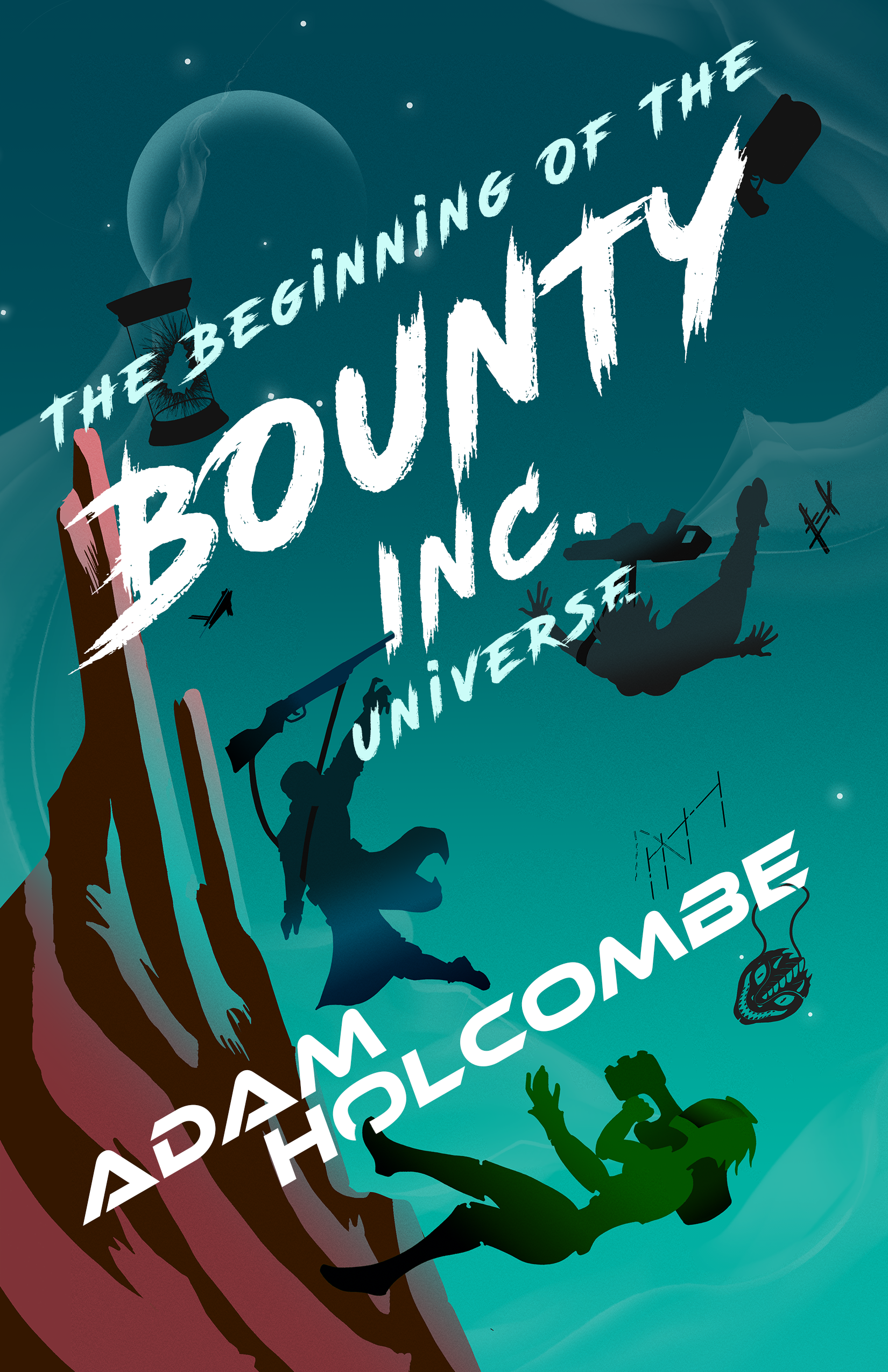
The Cover

cover for Bounty Inc by Adam Holcombe

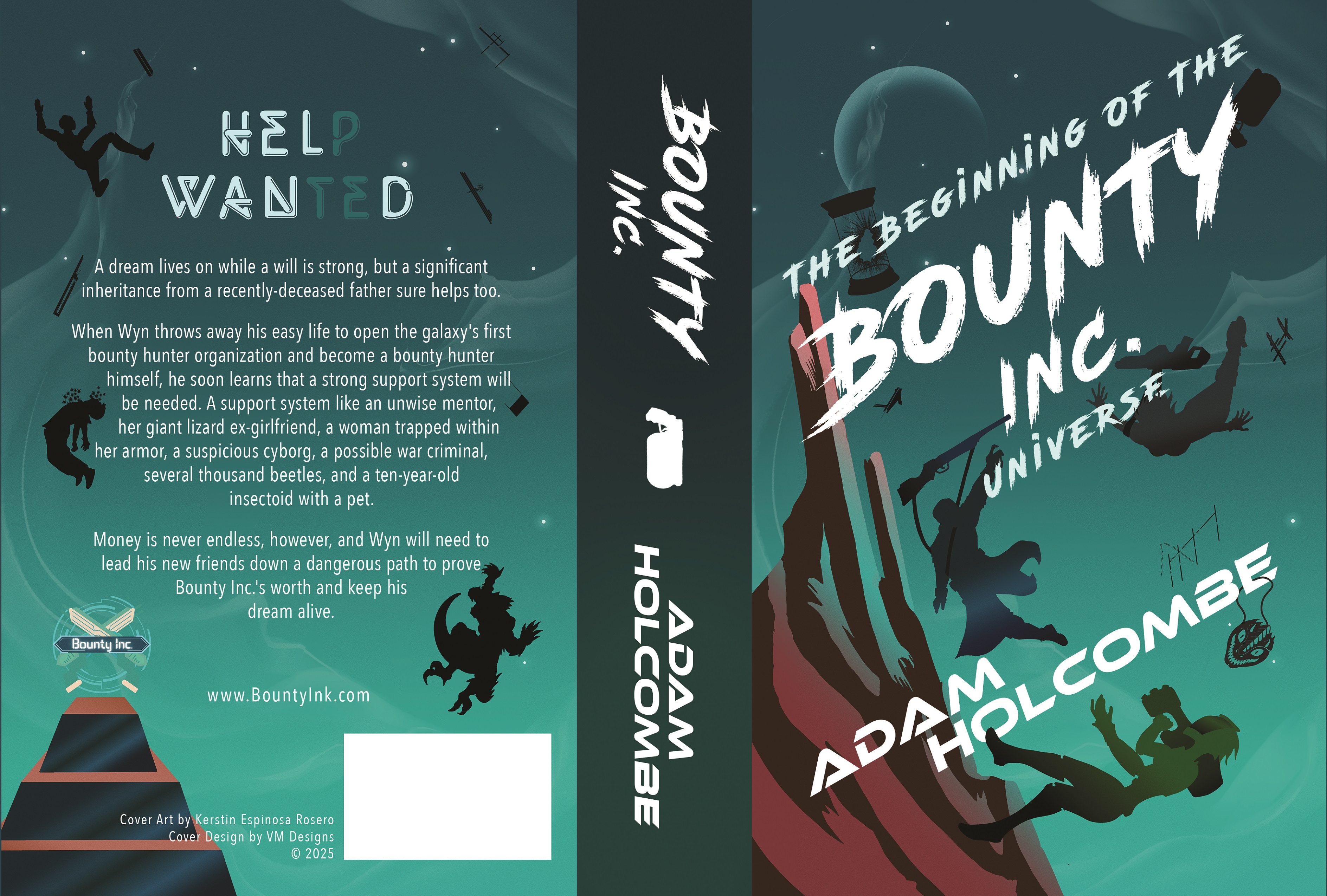
The Complete Cover Wrap:
Covers Wrap for Bounty Inc by Adam Holcombe
Click to embiggen either image. And why wouldn’t you want to see them in their complete glory?

Kudos to these fine folk for their work on this eye-grabber:
Cover Art by Kerstin Espinoza Rosero
Cover design by VM Design

I was in from the words “by Adam Holcombe.” I’d pre-ordered the book as soon as I could, actually. The blurb sealed the deal (but I’m pretty sure I read it after I ordered). That cover is just icing on the cake for me–very attractive icing, I should add.

Go and do the right thing–place your orders now.

Irresponsible Reader Pilcrow Icon

Leveled Up Love by Tao Wong & A. G. Marshall: Your Typical RomCom featuring a Waitress, a Bikini Model, and a lot of Space Battles (like I said, typical)

Cover of Leveled Up Love by Tao Wong & A. G. MarshallLeveled Up Love

by Tao Wong & A. G. Marshall

DETAILS:
Publisher: Starlit Publishing
Publication Date: June 20, 2021
Format: e-Book
Length: 604 pg.
Read Date: August 18-19, 2025
Buy from Bookshop.org Support Indie Bookstores

What’s Leveled Up Love About?

Zack Moore is living off the generous inheritance he received from his parents, occasionally (when forced) looking in on the charitable foundation they started, and playing video games. Primarily, he’s playing Star Fury, and his team is gearing up for a big tournament that could lead to them playing on a professional circuit. He doesn’t need the job or money—but his teammates do. Zack needs to be good at something, and Star Fury seems to be it.

But his gameplay is interrupted one day, and the trustee overseeing his accounts (and former guardian) is there to get him to sign some documents. One of those documents (that Zack doesn’t read because he’s in a rush to get back to the game), is an agreement to alpha test a new game—and progress in that game will affect things like access to his accounts, access to the rest of the world, and access to the internet. Zack’s luxury condo (which looks like the sloppiest dorm room you’ve ever been in—without the textbooks) is so tied into smart technology that everything Zack owns or uses can be controlled by this software.

The game is Dating Evolution App, with the goal of a significant relationship with a romantic partner. Zack has to level up in various areas—like hygeine, personal style, employment, general reputation (several impassioned internet comments—all about Star Fury and its players—have to go, for example). If he wants to get the time online that he needs to help his team win the tournament, he has to start jumping through hoops—now.

General RomCom situations ensue.

As a LitRPG

I’ve never read a LitRPG before, so I may be off base, but…according to the repository of all human knowledge, Wikipedia:

LitRPG, short for literary role-playing game, is a literary genre combining the conventions of computer RPGs with science-fiction and fantasy novels… In LitRPG, game-like elements form an essential part of the story, and visible RPG statistics (for example strength, intelligence, damage) are a significant part of the reading experience… Typically, the main character in a LitRPG novel is consciously interacting with the game or game-like world and attempting to progress within it.

If that’s the case, Wong & Marshall nailed it.

Zack’s stats at the beginning of the game were:

Zack Moore Current Attributes (Social Level 8)
Physique: 31
Style: 19
Reputation: -18
Occupation: 0

He would get similar stats fed through his smart glasses, based on social media/other internet data on any woman he focused on for long, which was so creepy and invasive I shouldn’t have to say (and yes, landed him in hot water not nearly as often as it should’ve).

He’d then get fed quests like:

Quest Found!
Hold a conversation with a woman face-to-face!
Restrictions: In-person. Non-VR generated. Unpaid interaction.
Difficulty: Variable
Reward: Access to electronics and internet

Now, with access to non-essential internet usage—like the massive tournament he was preparing for, Zack had no little choice but to take on these quests (similar ones for Physique, Style, Reputation, and Occupation). That’s what’s driving him through almost this whole novel—not his health, not the way he looks/dresses/smells (he’s not around people enough to care), or lack of relationship. It’s about access to Star Fury.

As a RomCom

This hit all the main points—a misunderstood, and loveable schlub (think of a social Sonny Koufax, without the girlfriend in the beginning), who (like Sandy) is wealthy. There’s a cute, wholesome woman without all the advantages he has that befriends him, and they build a relationship. There’s a knock-out bikini model neighbor who sees him as a nice guy that will buy her fancy clothes, nice jewelry (that matches whatever she has on), and will take her to expensive places and dinners.

Zack casually dates them both to get game points (although neither woman is aware of the other).

Meanwhile, he starts to grow in some ways through the other things the game has him work on, and he just might be growing up.

If you can’t guess the rest of the plot from here—you really haven’t spent much time with RomComs. Wong & Marshall get all the plot points right, deliver them in an entertaining and amusing way, and lead up to an emotionally satisfying resolution. Practically textbook.

So, what did I think about Leveled Up Love?

This reminded me of several books where a man-child is forced (by whatever) to change their lifestyle—exercise, eating right, concern for their appearance, and maybe even a better job—and along the way, they find that they like doing all that after all and get the girl. Does that make it bad? No. Predictable? Pretty much, yeah. But you don’t pick up something like this to be blown away. You pick up something like this because you’re curious about how it pulls it all off. How it hits all the conventions (in this case, both genres) marks in an entertaining way.

Or maybe because you love the conventions and you don’t care how fresh this book’s take is on it, you just want the familiarity.

Either works—and either will be satisfied with this book.

I liked all the characters—I wish we’d gotten to know a few better (particularly Zack’s teammates). The overall atmosphere is pleasant—and it’s one of the “cleanest” RomComs I remember reading. This just leaves you feeling warm and comfortable—it delivers some good smiles, and a chuckle or two, too.

I do think it could’ve been shorter—it was a lot longer than I expected when I started it (I really should glance at page counts for ebooks). But on this side of things, I don’t really know what they could’ve cut. Still, it dragged a bit for me (just a bit).

All in all, a completely enjoyable experience—could it have been better? Sure, dial up the laughs a bit more—but that might have detracted from something else. Leveled Up Love. It delivers just what it tells you in the subtitle. If that seems like your kind of thing, you’re right. Give it a try.


3 Stars

This post contains an affiliate link. If you purchase from it, I will get a small commission at no additional cost to you. As always, the opinions expressed are my own.
20 Books of Summer 2025 logo

This Is How You Lose the Time War by Amal El-Mohtar & Max Gladstone: Just Doesn’t Deliver the Brilliance it Promises

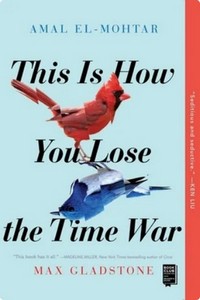
Cover of This Is How You Lose the Time War by Amal El-Mohtar & Max Gladstone This Is How You Lose the Time War

by Amal El-Mohtar & Max Gladstone

DETAILS:
Publisher: S&S/Saga Press
Publication Date: March 17, 2020
Format: Paperback
Length: 198 pgs.
Read Date: July 23, 2025
Buy from Bookshop.org Support Indie Bookstores

On a span of blasted ground, she finds the letter.

It does not belong. Here there should be bodies mounded between the wrecks of ships that once sailed the stars, Here there should be the death and dirt and blood of a successfut op. There should be moons disintegrating overhead, ships aflame in orbit.

There should not be a sheet of cream-colored paper, clean save a single line in a long, trailing hand: Burn before reading.

What’s This Is How You Lose the Time War About?

Red and Blue are agents from two great forces who are battling to control the timeline. They do this by going back and forth in time—along strands—to make small adjustments that will have big implications. For example (not from the book, but to give you an idea), instead of going back to kill Hitler, they’d go back to convince the man who taught Hitler’s art teacher to go into a different field.

Red is an agent of the Agency—a technology-driven group, with aspirations to keep history moving in a direction for their cybernetic, singularity culture to thrive in. Blue works with Garden, who are all about nature, growth, and nurture.

They both seem to be some of the best agents each side has—and they keep running into each other, preventing each other’s missions from succeeding. Until after one defeat, Red finds a letter (see above). Thanks to mechanics that work only for time travelers, she’s able to burn the letter and then read and retain the contents.

Blue knows her from her work and taunts her for her recent defeat. At their next encounter (where Red comes out on top), she’s hidden a letter for Blue—and I’m not going to try to describe how that letter is hidden/revealed. The two begin exchanging taunts, which turns into a friendship of sorts (very few individuals in all of existence—past, present, future) can really understand their lives. From friendship, a romance blossoms—and that is where the danger is found.

Atlantis and The Absence of World Building

Atlantis sinks.

Serves it right. Red hates the place. For one thing, there are so many Atlantises, always sinking, in so many strands: an island off Greece, a mid-Atlantic continent, an advanced pre-Minoan civilization on Crete, a spaceship floating north of Egypt, on and on. Most strands lack Atlantis altogether, know the place only through dreams and mad poets’ madder whispers.

Because there are so many, Red cannot fix just one, or fail to. Sometimes it seems strands bud Atlantises to thwart her. They conspire. History makes common cause with the enemy. Thirty, forty times throughout her career she has walked away from some sinking, burning island, thinking, at least that’s over. Thirty, forty times, the call has come: Go back.

It’s here with the talk about Atlantis—and the following discussion about the various ones—that was probably the highlight of the book for me. It’s at least where I liked the book the most. Somehow in all the possible pasts, the strands keep bringing Atlantis into the world—which is where we get all the various stories about it. Just this idea and Red’s distaste for all of the Atlantises…and compared to Blue, it turns out she might have a positive view of the island.

In each chapter—this falters later on in the book, but it’s close enough—we’re introduced to a possible future or past with an explanation of what the agent we’re focusing on in this chapter is trying to accomplish—and then we see how they fail. Before getting a letter.

The possible settings are fantastic. They each feel like they could be the basis of a gripping 300-page novel—but we dispose of them in a few pages. Each Agent’s mission—and the counter—is depicted and explained in a way that’s just as wonderful. The only thing that tops either of them is the transmission/delivery of the next letter and its reception.

We don’t really get worldbuilding here—we just get glances at them, a quick bit of immersion into the world—and then right back out and into the next. Beyond that, we’re not given any idea how Red, Blue, and the rest travel upstrand or downstrand. We don’t get a clear picture—outside of tech vs. nature—of what the war is over, or how the missions are selected and designed. We get a little of Blue’s backstory, but not much—just enough to set up a great scene or two.

This is both frustrating and fantastic. It’s my nature as a reader to want more, to want the nitty gritty. But, I’ll tell you what, El-Mohtar and Gladstone make this work—it’s enough to get these glances. And to give those details would change the nature of the book—and it’s probably best they didn’t.

Humor and Heart

This is a strange, fantastic book with an earnest tone—what I wasn’t prepared for was the humor. But fairly early on, Red taunts, “Ha-ha, Blueser. Your mission objective’s in another castle.” And I was caught off-guard, “Oh, we’re doing laughs, too?”

And yes—the very next page is hilarious. And the two will make me laugh several times after that.

But this is not a comedy. I want to go back to the earnest idea. This book wears its heart on its sleeve. There a big feelings expressed and felt. Largely, those are delivered in a prose that’s simply delicious. Worthy of quotation and meditation.

So, what did I think about This Is How You Lose the Time War?

Killing gets easier with practice, in mechanics and technique. Having killed never does, for Red. Her fellow agents do not feel the same, or they hide it better.

So clearly, after everything I’ve just said, I loved the book, right?

Sadly, no. All the elements were there—killer concept, the execution of individual scenes was spot-on, the characters are interesting and engaging, etc., etc., etc. I loved the authors’ language, their approach to the whole thing, and more. Seriously, a time-traveling epistolary novel? Come on…

But I couldn’t buy the central relationship. They went from taunting admiration to a camaraderie across battle lines pretty quickly, and I could’ve bought that (probably). But then it goes into a romance that threatens to mark one or both of them as traitors to their cause, and they risk everything to keep going? That just happened too quickly. If we’d gotten a few more letters before things got super-serious between the two, I could’ve maybe accepted it. But in the end, it was just too deep, too fast—and these elite agents are both ready to throw caution to the wind and risk incurring the wrath of their superiors?

I wanted to like this, I really did. There’s little reason why I shouldn’t—sadly, Gladstone and El-Mohtar found the reasons I shouldn’t.

I’m going to be in the minority here—or so I bet—and for those who can really get into the book, I understand you and envy you that ability. But I just couldn’t go that far.

Fantastic building blocks, but poor use of them, left me with mixed feelings at best—but mostly a strong sense of missed opportunities.

I think most readers will find something—probably several things to relish in this book. I just can’t be positive it’ll be worth it to you (then again, it’s less than 200 pages of nicely moving prose—maybe it’s worth the investment). Also, if you look at the accolades this book has garnered, I could be way off base about this.


3.5 Stars

This post contains an affiliate link. If you purchase from it, I will get a small commission at no additional cost to you. As always, the opinions expressed are my own.
Irresponsible Reader Pilcrow Icon

The Irresponsible Reader On…Self-Published Science Fiction

(updated 7/24/25)
Self-Published Author Appreciation Week '25 Banner. Banner has a gray bird on a black disk. Around the disk are the words, 'Self Published Authors Appreciation Week.' In the top left corner, it says, 'July 21-27, 2025.' In the bottom right corner it says, '#SPAAW'

From the first moment that people did the strange thing of asking me to talk about their books on my blog, I’ve been impressed by the quality of a lot of what’s been published by authors going out on their own, taking all the risks, shouldering all the responsibility and doing all the work to get their words, their dreams, their blood, sweat, and tears. This should be celebrated—it’s definitely appreciated, as we’re trying to show this week.

As part of this week-long celebration, I’m continuing my habit of highlighting the self-published works that I’ve blogged about over the last few years (or meant to blog about, but at least read)—just a sentence or two. Hopefully, this’ll be enough to make you click on the link to the full post. Beyond that, it’d be great if I inspired you to add a few of these to your TBR. Also, be sure you check out the other posts over at the SPAAW Hub.

Today we’re going to be looking at Self-Published Science Fiction. Old tropes in new garb, fresh ideas, and a creativity that astounds. These authors are well worth your time and money.

bullet Hit the Ground Running by Kate Ashwin—a cyberpunk heist novel with a sense of fun. A group of revolutionaries try to do a little good for the holidays in a futuristic corporate city. (my post about it)</span
bullet Wistful Ascending by JCM Berne—if I start talking about this, I’m not sure how to stop. There’s a retired super-hero/super soldier working a menial job on a space station. There’s a revenge story. There are aliens that look like talking bears. It’s just so much fun. (my post about it)
bullet The MOST Powerful Christmas by JCM Berne—Rohan and friends save Christmas for Santa (my post about it)
bullet Return of the Griffin by JCM Berne—Rohan has to return to Earth to battle monsters that might be too much for him and the collective might of Earth’s superheroes. Rohan also has to battle the legacy he left behind when he left. (my post about it)
bullet Blood Reunion by JCM Berne—Rohan struggles to stay alive and protect the citizens of Wistful from a the most powerful vampire I’ve read about. Oh, and he has to deal with his father on the station, too. It’s debatable which is harder for him to deal with. (my post about it)
bullet Shadow of Hyperion by JCM Berne—Rohan is called upon by Earth again for some help with a challenge that will take Rohan and a new ally to Earth, to other locations nearer Wistful, and to reckon with their bloody pasts. (my post about it is forthcoming)
bullet The Elites by Matt Cowper—a Batman-esque figure rebuilds a government-sponsored team of heroes. They take on super-villains of all stripes and even an alien invasion.
bullet The World Savers (my post about it)
bullet Rogue Superheroes (my post about it)
bullet Nightfall (my post about it)
bullet Children of the Different by S. C. Flynn—a very different kind of YA take on post-apocalypse life in Austrailia. (my post about it)
bullet Full Metal Superhero by Jeffery H. Haskell—a young technical genius who lost the use of her legs in the accident that cost her parents their lives creates an Iron Man-esque suit and starts fighting crime in the hopes of being recruited into an Avengers/Justice League-type team. I’ve frequently talked on the blog (and even in this series of posts) about being frustrated that I haven’t caught up with a series. This one really gets to me. There’s also a spin-off series that looks great.
bullet Arsenal (my post about it)
bullet Unstoppable Arsenal (my post about it)
bullet Super Powereds: Year 1 by Drew Hayes—The first in a series about a group of freshmen in a college-level Super-Hero Training program. (my post about it)
bullet Darkside Earther by Bradley Horner—this is a series about a privileged group of teens trying to get through school and into adulthood while on a space station orbiting Earth. Their parents are the elite of humanity and are trying to mold their children into very different types of leaders.
bullet Darkside Earther (my post about it)
bullet Degrading Orbits (my post about it)
bullet Saul by Bradley Horner—a professor of nanotech tries to save his daughter in the middle of a global catastrophe. (my post about it)
bullet Billy in Space by Harry L-B—Billy has been given telekinetic abilities, and instead of becoming the government agent he’d aspired to, he’s become a human forklift in a spaceship’s warehouse. Not glamorous at all, but it’s a job. Then an alien race attacks his ship. Then space pirates do, too. And then things get bad. You’ll also witness a really bad first date. I should stress that this is a comedy. (my post about it)
bullet Proxies by James T. Lambert—Jair Howard has some big challenges ahead of him–he has to deal with his mother, he has to fix his relationship with his girlfriend, he has to prove someone hacked into the military’s computers, then he has to prove it wasn’t him–oh yeah, and prevent interstellar war. His mother might be the biggest problem, really. I just finished reading the book and haven’t finished my post, but you’ll want to give it a look.
bullet Duckett & Dyer: Dicks For Hire by G.M. Nair—This story felt like the love child of Dirk Gentley’s Holistic Detective Agency (the Douglas Adams version) and Comedy Central’s Corporate, but sweeter. A pair of old friends-turned multi-dimensional P.I.s tackle a missing persons case. (my post about it)
bullet Serengeti by J.B. Rockwell—a damaged warship—and the AI who operates it—attempts to rejoin the fleet.
bullet Serengeti (my post about it)
bullet Dark and Stars (my post about it)
bullet AI Theist by Michael J. Svigel—The world’s most advanced and powerful AI struggles with its(?) conscience and gets religion. (my post about it)
bullet Please Return to the Lands of Luxury by Jon Tilton—an MG Dystopian thriller. There’s a fantastic world here—a very plausible one, too. The story is hard to sum up in a sentence or two, but this would be a great read for an MG reader who’s able to read some unpleasantness (and a lot of wholesome and hope-filled moments, too). (my post about it)
bullet The FATOFF Conspiracy by Olga Werby—Americans have lost the war on obesity and all but the elitist of the elite are dangerously obese (while tucking away a good portion of that fat into a pocket dimension), in pain, struggling, dying young, and yet eating almost constantly. (my post about it)
bullet Genrenauts by Michael R. Underwood—Parallel to our world are various worlds populated by fictional characters in a wide variety of genres (Western, SF, Romance, etc), and when things go wrong in the stories, things go wrong in our world. n this world, there are a number of teams of story specialists who shift to the other worlds to fix the stories and set things back on course here. The first two novellas in this series were published by Tor, but after that, Underwood took it over himself.
bullet The Cupid Reconciliation (my post about it)
bullet The Substitute Sleuth (my post about it)
bullet The Failed Fellowship (my post about it)
bullet Genrenauts: The Complete Season One Collection—a compendium of all the novellas/stories in Season 1. (my post about it)
bullet The Data Disruption—a Season One Prequel (my post about it)
bullet The Wasteland War—Season Two kicks off (my post about it)


If you're a self-published author that I've featured on this blog and I didn't mention you in this post and should have. I'm sorry (unless you're this guy). Please drop me a line, and I'll fix this. I want to keep this regularly updated so I keep talking about Self-Published Authors.

Self-Published Authors Appreciation Week Footer

The 2024 Self-Published Authors Appreciation Week Logo was made by Witty and Sarcastic Book Club

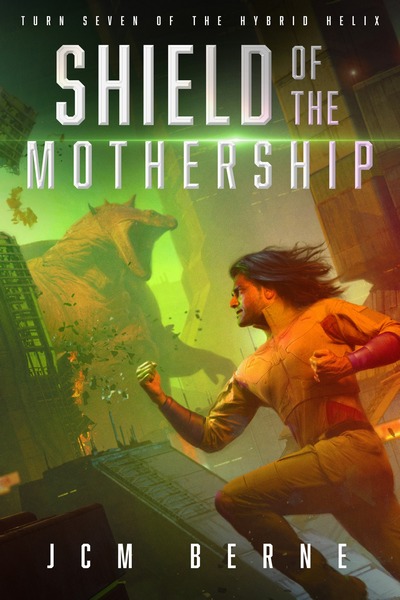
PUB DAY SPOTLIGHT: Shield of The Mothership by JCM Berne

I’m excited talk about today’s release of Turn 7 of The Hybrid Helix series, JCM Berne’s Shield of The Mothership. SF readers, Super-hero fans, Space Opera fans, and people who like to read good books in general should check it out. Here’s a little more about the book to get you interested.


Book Details:

Title: Shield of The Mothership by JCM Berne
Series: The Hybrid Helix, Turn 7
Format: Hardcover/Kindle/Paperback
Length: 477 pg.
Publisher: The Gnost House
US Publication Date: July 22, 2025
Cover of Shield of The Mothership by JCM Berne

About the Book:

Sometimes the enemy of your enemy is still your enemy.

Rohan swore he’d never work for the il’Drach again, never again be called Lance Primary, never again kill or risk the lives of his friends on behalf of the Empire.

But when the safety of the sector is at risk, when inaction could lead to the death of every living thing in the galaxy, he has to work with what he has.

Even if what he has is allies he can’t trust, a mission he doesn’t understand, and the growing suspicion that things are only getting worse.

Book Links:

Amazon ~ Author’s Website

About the Author

JCM BerneJCM Berne has reached middle age without outgrowing the notion that superheroes are cool. Code monkey by day, by night he slaves over a hot keyboard to prove that superhero stories can be engaging and funny without being dark or silly.

Website ~ Bluesky ~ Twitter ~ Facebook ~ Instagram ~ YouTube

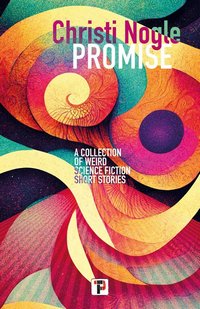
Promise by Christi Nogle: Wonderfully Weird, Unequivocally Unnerving

Cover of Promise by Christi NoglePromise

by Christi Nogle

DETAILS:
Publisher: Flame Tree Press
Publication Date: September 12, 2023
Format: Paperback
Length: 208 pg.
Read Date: February 1-10, 2025
Buy from Bookshop.org Support Indie Bookstores

What’s Promise?

This is a collection of 21 short stories. The cover calls them “weird Science Fiction” stories—this is true. When Nogle described herself in a Q&A here last year, she described herself as “focusing on horror and horror-adjacent work.” I’d say most of these qualified as Horror-adjacent; there’s just something unnerving about just about every one of these. Now, I grant you that my tolerance/acceptance of Horror is pretty low, so while I might call these Horror-adjacent, real Horror fans might roll their eyes. That’s fine, I get it. But some of these are really unnerving/creepifying.

When trying to come up with a good way to describe this collection, I saw the back of the cover blurb and decided that I couldn’t do better.

A young woman confronts her digital doppelganger at a creepy academy. A mother and daughter struggle underground, finishing robots the rich will use. A loving couple find that their mirrors are very different than mirrors used to be. You can order a headset to speak with your dog, and your devices sometimes connect not just to the web but to the afterlife.

Be prepared for strangeness here. We have several types of aliens, cults devoted to contacting alternate dimensions, virtual-reality writing retreats, time-travel games and timetravel tragedies, augmented consciousness, cosmic artforms and living paintings, haunted Zoom meetings, giant worms, and guesthouses for the dead. These stories reflect the weird and unknowable future. They are often bizarre and dreadful, but they also veer towards themes of hope, potential…and promise.

I Have So Many Questions…

A little over halfway through my notes, I wrote, “I have so many questions about her process.” I can’t tell you exactly what prompted that, but I’m pretty sure the question had been building. And I’d still like to ask a few now that I’ve been prompted.

Sure, there’s the old chestnut of “where do you get your ideas?” I know authors hate that question (and I get it), but…just how does someone come up with these? And beyond the generic planner v. pantser, I really wonder how much of these strange worlds she has worked out before she starts to tell a story in them, and how much she figures out along the way.

But also—what does the first draft look like compared to the final? Does she write everything and then pare it down to just the essentials? How does she choose the starting point for these? I know my reflex would be to start most of these stories about 8 paragraphs of story earlier than she does (and generally to give another few paragraphs at the end). How does she choose the twist/reveal/whatever it is that clues the reader into everything that’s going on?

I guess I’m just looking for a DVD commentary on each of these. Something about Nogle’s construction makes me more curious about her approach than I usually am.

So, what did I think about Promise?

So, two of these stories did nothing for me (2 out of 21 is a great number). Several I’d just qualify as “good,” but a handful wowed me. There are a couple I’m still thinking about all these months later (not steadily, mind you, but every now and then the mind will wander a bit—or I’ll see this cover, and…pow, I’m back in it).

I love Nogle’s prose and approach to storytelling. There’s some variation because no two stories have the same voice—but generally, I can say she gives you just enough to know what’s going on, but you have to use your imagination and think about it to really understand the story. There’s no spoon-feeding here, but nothing so cryptic or ambivalent as to be obscure or oblique.

Was I satisfied with the conclusion of every story? No—but I’m pretty sure I wasn’t supposed to be. Particularly the couple that really don’t conclude, but just end.

Creepy, mind-bendy, the kind of short story you can vanish into and leave the world behind. These stories will leave you feeling the way that the Black Mirror or The Twilight Zone episodes do. I rather enjoyed almost all of these and think you will, too. (and many of you will really get into the ones that left me cold, and won’t be wigged out by those that got me…we can compare lists later)


3.5 Stars

This post contains an affiliate link. If you purchase from it, I will get a small commission at no additional cost to you. As always, the opinions expressed are my own.


Literary Locals logo

Hive by D. L. Orton: A Wild Time Travel Ride

Hive Tour Banner

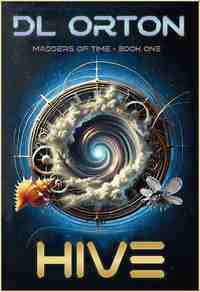
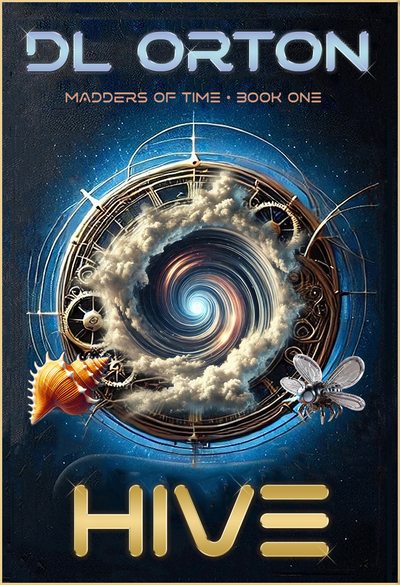
Cover of Hive by D. L. OrtonHive

by D. L. Orton

DETAILS:
Series: Madders of Time, Book One
Publisher: Rocky Mountain Press
Publication Date: May 6, 2025
Format: ARC
Length: 350 pg.
Read Date: May 8-9, 2025
Buy from Bookshop.org Support Indie Bookstores

What’s Hive About?

We open on a semi-functional (less so by the day) biodome some 30 years in the future (it’s vague, but safe to put it in the 2040s-2060s largely depending from when the reader picks this up)—there are two living humans, and an AI of sorts trying to keep going. There are some other biodomes out there, and hopefully, they’re doing better. The land outside the biodome is not fit to sustain human life—or much in the way of animal or vegetable life, either.

They have enough energy to use a spacetime bridge one more time as a last-ditch effort to go back and stop things from getting to this point. The target day was a fateful day for the two of them as individuals, and apparently one for the timeline as well (probably for different reasons, I’m not suggesting history pivots on them). They can send one person back with the sole idea of preventing their present.

I’m being as vague on details as the characters are here—you’ll get an idea about the particulars later.

We spend the rest of the book watching how this plays out from the point of view of some pivotal individuals (earlier versions of these characters in one way or another), with some observations from that AI about how well it’s working and the chances their mission holds of success.

A Quick Look at the Characters

Our primary characters (in the 2010s-2030s) are Matthew, Diego, and Isabel. Matthew and Diego did some work together in the past, and have some loose connections in the book’s “present”—but they’re not great pals or anything, and their stories don’t intertwine much (in Hive, anyway—I expect that to change). Matthew is a physicist of some repute and his expertise will be important.

When we meet Isabel, her divorce has just been finalized and she is excited and free from her husband (well, as free as you can be from an egomanical technocrat that you happen to work for and who owns your research). Diego is the would-be do-gooder scientist/entrepreneur who’s trying to do his part to help poorer countries with their water supply. Diego is also the one who got away, for Isabel. Through some unlikely coincidences (probably shaped by their future selves), they reconnect and try to start over/make up for lost time.

Also, they’ve received prompting from future-Isabel to stop Dave. It’s unclear what they’re supposed to stop him from doing, but they’re all in.

Dave is the kind of character that the reader is primed and ready to hate, or at least really dislike, from his first line of dialogue—and your impression of him goes downhill from there. There are a few sycophants in his company that we don’t get to know too well, but their devotion to him really solidifies your impression of them.

Meanwhile, Matthew is pretty much kidnapped by a couple of representatives of the U.S. government to work on a mysterious artifact, presumably (to the reader) something sent back to the past from the biodome. The senior member of this pair is easily as dislikable as Dave—almost irrationally so. And while he might be one of the “good guys,” or at least is working to help people, he’s definitely one of those envisioned by the coiners of the phrase, “Who needs enemies with friends like this?”

I’m focusing on these two here to be efficient—other than these two jackwagons, 99% of the rest of the characters (from very minor on up) are kind, pleasant, smart (if not brilliant), and are working to improve things. They’re the kinds of characters you want to spend time with—they’ve got good senses of humor, are optimistic and determined to keep going. Reading about them while there’s some sort of apocalypse around them is actually pleasant. Even if only you and the AI knew how bad things were going to get for them, you would like their chances and be pleased every time the AI mentioned their chances of improving their chances of success.

A Focused Armageddon

It’s hard to judge the scope of this/these calamity/calamities—our view is of Denver and the surrounding area. We get some hints that conditions are the same in other parts of the country as things get worse. But we really don’t know what things are like outside the U.S.

Given how bad it is 30+ years into the future when we first see things, it makes sense to think this happened globally. But it’s also possible that the devastation was limited to North America (or just the U.S.) and the rest of the world was able to protect itself, or weren’t exposed to the effects. During the bulk of our time with Diego and Isabel, some forms of communication work and some don’t for them, so it’s believable that they just have no clue what’s happening outside of Colorado. Communications around Matthew seem a lot more reliable, but he’s kept so much in the dark that it really doesn’t get the reader anywhere.

I’m not sure how much it matters for the story—particularly at this point. But I think it’s fun to speculate about while you’re reading and afterwards. Has the rest of the world moved on, fairly intact, waiting for things to calm down in North America so they can come over and try to rebuild? Or are they, so far removed from the three events, suffering just as much?

Crossing in Time

Feel free to skip this part and move on—I’m not sure this adds much to the overall post, but I can’t stop thinking about this.

This is a reworked version of Orton’s novel Crossing in Time. I listened to that book back in 2021 and enjoyed it—try as I might not to, I inevitably kept what was different about this version. The little voice in the back of my head just wouldn’t shut up. To make things worse—I think I have some details of Crossing in Time conflated with one or more other time travel books involving a strong love story.*

What I think she did here was lop off some later chapters, I assume to move them to Book Two. And introduce and/or beef up some of the chapters and subplots. I’m more sure about the former than the latter, if I’m right, that makes the ending more of a cliff-hanger that will springboard you into wanting Book Two in your hands straightaway.

I also think Orton removed what could be described as convolutions—making the novel more streamlined and fast-paced. Overall, I get her choices, and I do think it makes the book a stronger read.

But again, I could be wrong—but I couldn’t stop thinking about it as I read the book, or as I think about it now—so I had to get this out.

* With apologies to the author, there have been 800 or so books between now and then, details get fuzzy.

So, what did I think about Hive?

This is a fast-paced, propulsive read filled with amiable characters who aren’t afraid to joke around even when things are tense or confusing. The hook gets set pretty early, and the pages melt away as you plunge ahead to follow the events. It’s exactly the kind of popcorn read that helps you escape after a long day.

The tech is very cool—both the stuff that Isabel developed and the items that Matthew talks about and develops. Orton gives you enough to understand how it all works and to visualize it clearly without bogging down the pace with paragraphs and paragraphs of details. The plausibility of it all? Eh, it’s SF, it’s plausible enough if you come with a standard level of suspension of disbelief needed for time travel (especially, in this case, when the time travel comes with a side order of multiverse story).

Because of the pacing, Orton’s able to get away with a few things that maybe she couldn’t in a slower-moving book. I don’t actually see the grounding of the romance between Diego and Isabel—he’s carried a torch for years, she regrets making the choice years ago to walk away. But…that’s it. We don’t see many sparks, just have to take it because we’re told that. There’s no reason for the senior agent involved with Matthew to be such an ass to everyone, all the time, especially when just a sentence from him now and then would be enough to get people to work with him instead of his threats (and I don’t care how instinctive and characteristic his brusqueness is, you don’t move up in an organization simply be being mule-headed, there has to be at least an insincere level of cooperativeness expressed occasionally). All the depth of the characters that could be brought out are merely nodded to, or you have to assume them.

Actually, this all might be necessary because of her pacing. If so, I understand the choice (as much as I disagree with it).

I want to stress, however, in the moment, you don’t think about this (and if you do, you brush it off because you don’t want to step out of the movement). Everything works, everything clicks while you’re reading and speeding off to the next twist/revelation. It’s only after you get to the ending that leaves you holding onto the cliff’s edge with your fingers that this might occur to you if you stop and think about it. Mostly, you’re going to be thinking about how long it will be until you can get your hands on Book Two.

It’s easily enjoyable, engrossing, and entertaining. You should give it a try.

This post contains an affiliate link. If you purchase from it, I will get a small commission at no additional cost to you. As always, the opinions expressed are my own.


My thanks to The Write Reads for the invitation to participate in this tour and the materials they provided, including the ARC.

BOOK SPOTLIGHT: Hive (Madders of Time #1) by D.L. Orton

I’m very pleased today to welcome The Write Reads Ultimate Blog Tour for Book One in D.L. Orton’s Madders of Time series, Hive! If you take a look at the feed for https://twitter.com/WriteReadsTours over the next week, you’ll see what several other bloggers have had to say about it. My $.02 will be coming along in a little bit.

Hive Tour Banner

Book Details:

Title: Hive by D. L. Orton
Genre: Madders of Time, Book One
Genre: Science Fiction
Age Category: Adult
Format: Hardcover/Paperback/Ebook
Length: 350 pages
Publication Date: May 6, 2025
Hive Cover

About the Book:

What if saving the future meant rewriting the past?

In a dying world overrun by microdrones, humanity’s last survivors cling to life inside the Eden-17 biodome. Isabelle Sanborn knows her time is running out, but one desperate plan might give humanity a second chance. With the help of Madders, an enigmatic AI built from the memories of a brilliant physicist, Isabelle sends Diego Nadales—the love of her life—35 years into the past. His mission? To change the course of history and prevent their world’s collapse.

When Diego arrives in the vibrant yet fragile Main Timeline, he’s forced to confront ghosts of the past, including a younger, ambitious version of Isabelle. As he battles to shape a better future, Diego must navigate a delicate web of relationships and events without destroying the very fabric of time.

Brimming with suspense, heart-pounding action, and a poignant love story that transcends time, Madders of Time – Book One is a breathtaking science fiction adventure. Award-winning author DL Orton weaves a tale that explores sacrifice, resilience, and the timeless power of love.

Fans of The Time Traveler’s Wife and Dark Matter will find themselves captivated by this unforgettable journey through parallel worlds and intertwining destinies.

The clock is ticking. Can love survive the collapse of time itself?

Prepare to lose yourself in the first installment of the Madders of Time series—a story that will keep you turning pages and leave you hungry for more.

Book Links:

Amazon Canada ~ Amazon US ~ Amazon UK ~ Goodreads ~ The StoryGraph

About the Author:

Forest Issac JonesThe BEST-SELLING AUTHOR, DL ORTON, lives in the foothills of Colorado where she and her husband are raising three boys, a golden retriever, two Siberian cats, and an extremely long-lived Triops. Her future plans include completing the books in the BETWEEN TWO EVILS series followed by an extended vacation on a remote tropical island (with a Starbucks).

When she’s not writing, playing tennis, or helping with algebra, she’s building a time machine so that someone can go back and do the laundry.

Ms. Orton is a graduate of Stanford University’s Writers Workshop and a past editor of “Top of the Western Staircase,” a literary publication of CU, Boulder. The author has a number of short stories published in online literary magazines, including Literotica.com, Melusine, Cosmoetica, The Ranfurly Review, and Catalyst Press.

Her debut novel, CROSSING IN TIME, has won numerous literary awards including an Indie Book Award and a Publishers Weekly Starred Review. It was also selected as one of only 12 Great Indie Stars by BookLife’s Prize in Fiction.


My thanks to The Write Reads for the invitation to participate in this tour and the materials they provided.

Happy Jack and the Scary-Ass Book of Doom (Audiobook) by Rich Partain, read by JP Adams: DNF’d Without Prejudice (or any interest)

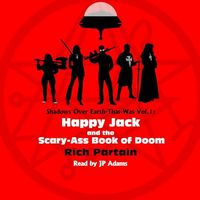
Cover of Happy Jack and the Scary-Ass Book of Doom by Rich PartainHappy Jack and the Scary-Ass Book of Doom

by Rich Partain, JP Adams (Narrator)

DETAILS:
Series: Shadows Over Earth-That-Was, Book 1
Publication Date: December 17, 2024
Format: Unabridged Audiobook
Length: 12 hrs., 50 min. (I made it 3.5 hours )
Read Date: April 16-17, 2025

What’s Happy Jack and the Scary-Ass Book of Doom About?

From Audible:

What happens when the geeks inherit the Earth? For starters, things get a little weird.

In the year 2475, the remnants of humanity have taken to the skies, inhabiting massive domed cities that hover five miles over the ruined ecological disaster of old Earth. The Powers That Be, in their infinite wisdom, decided that the few million people left deserved to live their best lives, so they gave each sub-orbital platform its own theme and legally enforced tech level. Named for afterlives and sacred places from all of the world’s great cultures, Elysia, A’Aru, Valhalla, Tian and the other orbitals range from cyberpunk metropolises to Tolkienesque medieval fantasy lands; from Victorian steampunk cities of glass and copper to snowbound Viking kingdoms.

Not content with merely cosplaying their days away, a significant portion of the population have become transhuman “cybernaturals,” electing to transform into creatures from myth through cybernetic enhancements and advanced genetic therapies; orcs, dwarves, elves, vampires and werewolves now exist through super-scientific means, not supernatural ones.

In the middle of this madness, Daniel Davidson, a pop culture archaeologist and mercenary of dubious repute and his band of foul-mouthed friends are charged with tracking down an ancient book that could, in the wrong hands, erase all of reality. It could be a huge payday and might even involve saving the known universe as a tidy bonus. That is, if they manage to NOT die at the hands of cannibal sex cultists, swashbuckling rogue vampires, prankster demigods, Templar knights, horrifying biblical angels, the angry star-spawn of elder things, and Satan himself. And possibly food and/or alcohol poisoning. Or suffocation in a sex dungeon.

It’s a filthy, hilarious, epic journey through an off-kilter future filled with bullets, blades, beasts, and boat drinks. If you like your profane sci-fi action comedies with a side order of urban and traditional fantasy, look no further.

I Do Have One Issue

Daniel Davidson makes too many late 20th/early 21st Century references. He uses the slang of these eras, talks about music, books, TV, movies, video games of this era. Yes, he explaines it. But I can’t buy that this kind of a geek–no matter his specialty–doesn’t make references to things outside of this time. Something from the intervening 300+ years would’ve snuck in.

His complaints about Evangelical Christians are also very 2020+–there’s no way that they wouldn’t have moved on to other ways to provoke the culture around them.

Listen, it makes sense for the Bobiverse’s clones to be stuck in contemporary references. That absolutely works. This just doesn’t. John Crichton might be full of references to Earth, but he also picks up the lingo and culture of those he interacts with once he joins Moya’s crew (see also Buck Rogers).

So, why didn’t I finish Happy Jack and the Scary-Ass Book of Doom?

It just never grabbed me. It was occasionally amusing. I thought the blue language was overdone, but it wasn’t as offensive as the Author’s Note at the beginning made it sound like it’d be. If you’re going to overuse some or all of The Nine Nasty Words be interesting with it, otherwise it just fades into the background like a dialogue tag.

I’m leaving the door open to returning to this–it didn’t anger me, offend me, or bore me. Like I said, I found bits of it amusing–even entertaining. But it just left me apathetic. I’d rather be annoyed by a book than totally uninterested. I’ll stick with a book to see if the author can make something good/decent out of something bad. But I can’t stick with something to see if I ever have a reaction.

I have no opinion on JP Adams, either. I don’t think James Marsters, Lorelei King, or Ray Porter could’ve done more with the material. So, I’m absolutely open to something else by him, too.

So, I’ll check out of this for now, and maybe return to in later.

Irresponsible Reader Pilcrow Icon

A Few Quick Questions With…Kate Ashwin

Earlier today, I posted my thoughts about Ashwin’s Hit the Ground Running, and now I get the fun of presenting this Q&A with the author Kate Ashwin.


Why don’t you take a moment to introduce yourself to the readers, and tell us about your comics, before hitting us with an elevator pitch for Hit The Ground Running?
Heya! I’m Kate Ashwin, and I’ve been getting away with putting stories on the internet for over twenty years now. Comics-wise, I’ve worked for UK kids’ comics such as The Phoenix and The Dandy, and my (award winning!?) Victorian-era wizardy adventure webcomic Widdershins is entirely free to read online at https://www.widdershinscomic.com/ !

Having worked on a bunch of goofy caper comics, I fancied trying my hand at writing a goofy caper novel, and that’s where Hit The Ground Running comes in! It’s an offbeat cyberpunk heist novel about robbing a megacorp’s Christmas party, and it reads kinda like Leverage, but gayer and with more cyberarms.

I can’t/won’t be the first to ask you about the difference between what you’ve been doing for years and novel-writing. Nor the last. So while apologizing for that, I have to. What was the hardest part about the switch and was that what you expected it to be? Is there a different kind of internal reward to it? (if there’s anything else about the differences/similarities you want to ramble about, go for it.)
Hey, it’s a good question! The biggest thing I kept getting tripped up on was dialogue length, oddly enough. When you’re working with comics, you really have to consider how many words fit in a speech bubble and how many bubbles you can fit onto a page. There’s a real economy of space going on to prevent clutter, so I was finding myself automatically “clipping” dialogue to fit non-existent spaces. Didn’t see that one coming! It’s also difficult to adjust your sense of comic timing to no longer include the visual, a lot of the anatomy of how I traditionally crack a joke is in the break between panels, or the facial expressions of the character, so to switch to using turn of phrase for that instead required some thought.

One of the most rewarding parts was the one I was expecting and hoping for–it’s nice to be able to get into a character’s internal narration a lot more, y’know? When you’re drawing out a scene, unless you’re doing something high-concept, a setting will look the same to the character as to the reader since you have to convey a readable sense of space. But when you’re writing it from a character’s perspective, you really get to play around with what they’re noticing in particular, any internal judgments they may be making, and such. This also applies to how they see other characters, too. Happy to report that it’s exactly as fun as I was hoping!

I could probably talk for days on this question in particular, but I’ll save that rambling for another day.

What was it about this idea—out of all of the dozens likely flitting about your mind—that made you say, “yup, this is what I’m going to spend years(?) and thousands of words on.”
Might be kind of a simplistic answer, but I just love heists. I could write heists for years and never get tired of ’em. There’s something in watching a plan come together (or fall apart) that really tickles my brain nicely.

What came first—these characters (or at least a couple of them) or the world/story?
Renji in particular has been kicking about in my head for quite a while now. I love an impulsive rebel, I love a fast-talker, I love someone who notices something is wrong with the world and sets out to do their bit to change it, and that’s all him! A guy who is going to have to shake off a lot of bad habits, but is sure as hell willing to try.

Hanging the series on a heist crew means you already have roles that need filled–the hacker, the bruiser, the stealth expert- so it’s all about building it out from there. Creating an idea for a character, then layering up little quirks and foibles like a love of plants or zines or french press coffee is one of my favourite things to do. I got to write a scene where everyone’s having tea while planning their heist, and deciding what each of their orders would be is how I get my kicks, it turns out.

The setting came kinda naturally–a cyberpunk version of the UK felt like a fairly obvious leap to make, since that’s pretty much just a step or two away from where I live anyway, and while the ol’ “vertical city as class signifier” deal is not uncommon, it’s still a fun one to play with, and there’s just a hell of a lot to say on that front, unfortunately.

This is the point where I like to ask about a supporting character or two that caught my attention. But I can’t pick just one. Truly. So, if you’re in the mood, you pick one that you want to talk about to highlight for a paragraph or two.
I’d be remiss if I didn’t pick Cadence, really. She and her sister Melody are, through circumstances they don’t wish to explain yet, stuck sharing the same body, and neither of them are having a good time with this arrangement. While Melody is the laid-back type, a hacker with a love of 90s pop and garish clothing, her sister Cadence is a furious mess of energy and punches. Her scenes were fun as I do love to write a good punch-up, and her two cyberarms were a fun addition to the usual brawl, but mostly I enjoyed writing her and Renji sniping at each other. Renji has come from a far more privileged background than Cadence, so she very much views him as some rich boy playing at rebel, fully expecting him to cut and run at the first sign of trouble. Renji doesn’t quite grasp the intricacies of this beyond “the mean lady is yelling at me” which leads to some of that good conflict where both sides have a point, which is always the best kind of conflict.

The core of Cadence is her big tangled ball of feelings- she isn’t some cold combat machine, she’s a conflicted mess in this situation where she isn’t even in control of her own body half of the time, stuck with strong desire for vengeance with nowhere to park it because her enemy is an entire city, and she can’t even talk it out with her sister since they physically can’t inhabit the same room.

It’s no wonder she punches so many people.

In lieu of asking questions about a character, I want to talk about two non-characters a. At what point did you start thinking that Renji carting around a potted plant with him everywhere was a good idea (it was, btw)? Is there, in your mind, a point to it?
Oh man, the plant ended up as more of a running theme than I’d intended. While he wouldn’t admit it, Renji steals the thing from the airship because he’s burdened with an inconvenient amount of empathy, and sometimes that peeks out in unexpected ways. He steals it from the airship, where it ought to be doing well enough in the care of the company, and totes it down to the dark lower levels of the city, where it ends up thriving and cared for in a place where society does not expect things to be able to grow. So, yeah, I never met a phor I didn’t like..!

The plant actually nearly made it onto the cover–one of Ben’s sketches included it, but I decided not to go with that one as it made Renji look like he knew a single goddamn thing about plant care.

The sword—primarily the one Renji carries with him, but beyond that, the culture around these people carrying them. It seems so out-of-place, yet so fitting. Where’d that come from?
Searching for a better answer than “Swords Are Cool”, searching…

Ah, there we go, found one. I had the upper class of this setting carry swords and enact duels because it’s such a ridiculous bit of history that seems to happen whenever there are people with too much cash and not enough to do. There used to be something of a trend for “dueling scars”, to the point where people would even have them added intentionally to their own faces, and that’s just an intoxicating bit of nonsense, isn’t it? It felt kinda right to have that included, but based more around cyber arms, implants, etc. It also leaves a little more room for close combat than an excess of guns might, and simply feels like a more natural fit for a city-state that’s physically attached to the UK.

As for the sword Renji had in this book, it mostly just tickled me to have him steal the thing despite having little to no idea how to use it. Will he get better at swordfighting? I’m led to understand that it takes years of diligent practice, so the odds… are not great.

What’s next for Kate Ashwin, author? Does that depend on the reaction to Hit The Ground Running or are you already neck deep in your next project or five?
The reaction’s been good, but a little quiet- part of that is my insistence on writing for a very quiet genre, though, so that’s on me, but getting an independent book in front of people is even harder than getting an independent comic in front of them, it turns out!

All the same, I have another book or two planned out for this series, and would very much like the encouragement to get stuck in on those. The second one will be from Melody and Cadence’s point of view, and would include corporate espionage, cyborg assassin romance, and infiltrating a robot wars tournament, so obviously I very much do want to write it..!

Otherwise, I’ve been picking at a standalone spy vs spy romance novel; and my webcomic Widdershins is going to be wrapping up in the next year or two with its eleventh and final book, so that is going to be a hell of a feeling. Which feeling in particular, I am not sure, but it will very much be felt.

Thanks for your time and participation! I hope Hit The Ground Running finds its audience—I had a lot of fun with it!
Thank you! So did I!


A Few Quick Questions

Page 2 of 30

Powered by WordPress & Theme by Anders Norén