Tag: YA/MG Page 11 of 24

BOOK SPOTLIGHT: The Mostly Invisible Boy by A.J. Vanderhorst

I’m very pleased and excited today to welcome The Write Reads Blog Tour for the first in a a MG Fantasy Series The Mostly Invisible Boy by A.J. Vanderhorst . This Tour Stop consists in this little spotlight post and then my take on the novel coming along a little later today. Let’s start by learning a little about this novel, okay?
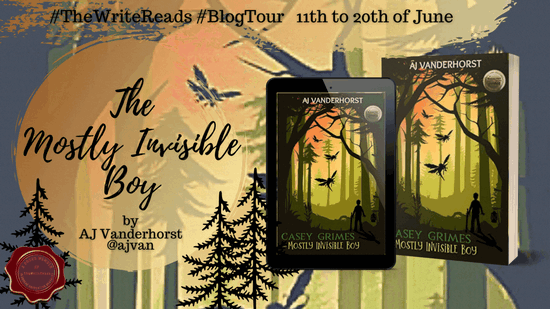
The Mostly Invisible Boy Tour Banner

Book Details:

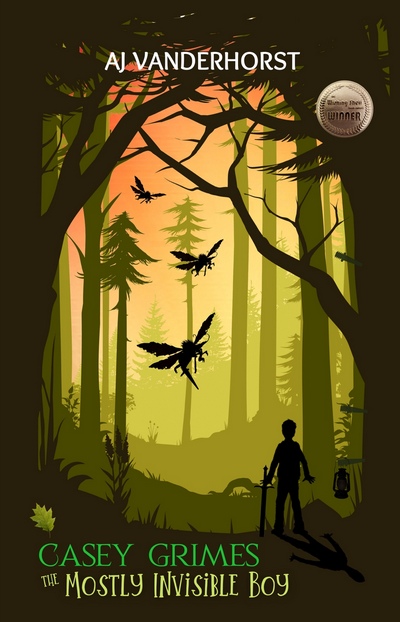
Book Title: The Mostly Invisible Boy by A.J. Vanderhorst
Publisher: ‎ Lion & Co
Release date: May 6, 2021
Format: Ebook/Paperback
Length: 298 pages

Book Blurb:

Eleven-year-old Casey is stubbornly friendly, but he’s eternally the new kid at Vintage Woods Middle School. Students look right through him—and they’re not faking. Casey doesn’t know why he’s mostly-invisible, but when he scales a colossal oak, he discovers a fortress in its branches. The forgotten sentry tree marks the border between his safe, suburban life and a fierce frontier.

Casey and his little sister Gloria infiltrate Sylvan Woods, a secret forest society devoted to ancient, wild things. Sky-high footpaths. Survival sewing. Monster control. Shockingly, people here actually see Casey—but being seen isn’t enough. He wants to belong.

Keeping his identity hidden–while struggling to prove he fits–is hard enough, but Butcher Beasts have returned to Sylvan Woods after a hundred years. Trickery is under siege. As the monsters close in, and the fearsome Sylvan Watch hunts Casey down, he and his newfound friends must unearth abandoned magic, buried at the forest’s roots…or be devoured along with everyone else, Sylvans and civilians alike.

A fast-paced middle-grade fantasy/adventure book with all the monsters kids could ever hope for.

About the Author:

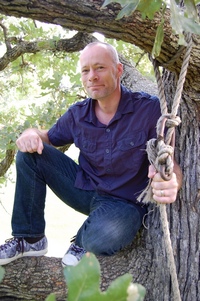
AJ VanderhorstAJ Vanderhorst has had many jobs, including journalist, paramedic, escape artist, and baby whisperer. One time in fifth grade, he built a traffic-stopping fort in a huge oak tree, using only branches and imagination, and slept there for a week.

Now he and his wife live in a woodsy house with their proteges and a ridiculous number of pets, including a turtle with a taste for human toes. This makes AJ an expert on wild, dangerous things—invisibility spells, butcher beasts, hungry kids, you get the idea.

He is the only author in the world who enjoys pickup basketball and enormous bonfires, preferably not at the same time. He and his family have drawn up several blueprints for their future tree castle. Visit AJ online at ajvanderhorst.com.

My thanks to The Write Reads for the invitation to participate in this tour and the materials they provided.

Runaway Train by Lee Matthew Goldberg: It’s Just Easier than Dealing with the Pain

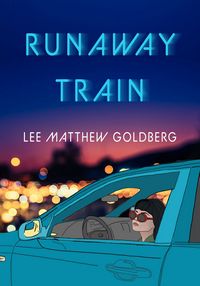
Runaway Train

Runaway Train

by Lee Matthew Goldberg
Series: Runaway Train, #1

eARC, 296 pg.
Wise Wolf Books, 2021

Read: May 31-June 1, 2021
Grab a copy from your local indie bookstore!

What’s Runaway Train About?

Following the shocking death of her sister at 17 (from a brain aneurysm), sixteen-year-old Nico is spiraling out of control. Never the best student, and far more interested in being everything her high-achieving, popular sister wasn’t, Nico’s focus is on getting high, listening to as much grunge as she can, and fantasizing about meeting Kurt Cobain (who would fall for her, leave Courtney, and the rest would be history).

When things at home—which haven’t been good for a long time—take a turn for the worse, Nico is at the end of her rope and doesn’t know what to do. Her best friends talk her into leaving home and hitting the road, to go cross things off her bucket list before her own aneurysm cuts her life tragically short. Although they’d decided to run away together, Winter and Jeremy leave her in the lurch—Winter tells her that she needs this trip to hit rock bottom so she can pick up the pieces left by Kristen’s death (although I think this is largely a lie, and Winter just doesn’t have the courage to go through with it, but this sure sounds good).

So she packs up her teal blue Hyundai Excel with some essentials, a lot of batteries, her Walkman, and her father’s gas card and takes a trip up the California coast on the way up to Seattle, to see what the grunge scene is “really like,” cross some things off that bucket list, and hopefully get the chance to tell Cobain what his songs have meant to her.

Here’s where I get some egg on my face—I know Goldberg’s primarily a thriller writer, and assumed* that this would be one, too. That shortly after Nico left L.A. something would happen and this would become a thriller, with Nico doing all she could to stay alive and/or evade the police while on the run from something/someone/multiple someones. But no, that’s it. It’s the story of a girl living in her Hyundai trying to put the pieces of herself together.

* and you know what happens when you assume…

90s Referencepalooza

The first sentence of the book includes the date October 31, 1993. But then, as if Goldberg isn’t sure that his readers will understand that he means it, he hits you over and over and over with references to the early 1990s. There are over a dozen references in the first 3% of the book. And there are multiple stretches of the book that are like it. They eventually taper off, but it takes a while before Goldberg seems to think that he’s established the setting.

Now I enjoyed almost every one of the references and thought they really grounded things. But it also felt like overkill. Like he didn’t trust his audience to remember that these events took place in 1993 and 1994. Although it’s just as likely, maybe more likely, that Goldberg was having so much fun with them that he didn’t want to cut any of the references. And I get that, I really do. But I think it might have carried more punch if he’d been a little less effusive with them.

Embracing the Ambiguity, Pt. 2

A couple of months back, I wrote about a book that included elements that could be supernatural or they could be an expression of the protagonist’s PTSD. I mentioned at the time how that writer leaving it up to the reader to decide was a great idea, how it’s more effective that we don’t really know which it is.

And here I’m repeating myself—there’s something that happens to Nico several times in the book that could be a product of her subconscious or could be a supernatural event. I initially ascribed it to a psychological phenomenon—trauma, or grief, or something. I think it’s written so that you think it’s a physiological thing. But at some point, I joked to myself, “Unless, of course, it is a ghost.” And then I couldn’t talk myself out of the joke—it really, really could be a ghost. Or it could be a manifestation of Nico’s subconscious. I could defend either position from the text, I think. And I really liked that.

So, what did I think about Runaway Train?

I really got swept up in this story and with Nico’s journey. How does your heart not go out to a girl in that much pain? A dead sister, parents who aren’t dealing well with her, friends (more important to you than family at this stage of life) basically shoving her out the door on her own. and a strong sense of your own impending death? She doesn’t just hit rock bottom, she ultimately throws herself at it. But also, there’s an element of envy for the reader—you wanted to have the guts/folly to do something like Nico does at that age, and even now (however much older you are than her), you’d like to have the ability to do that.

Put those two elements together? How do you not have a warm spot in your heart for this book?

Yes, it’s clearly fiction. Yes, it’s heightened and only semi-plausible—both the high points and the low. But…it feels real. I can absolutely believe that I could sit down with Nico or Evan (since he’s from this area) today over a cup of coffee and hear them tell me about this time in their life.

I was more than a little surprised to see that there’s going to be a sequel to this. Typically, coming-of-age novels are one-and-done. But I’m on board—I want to see what the next chapter is for Nico. I can’t imagine all her problems were worked through in this book, and as much progress as she made (and looks to continue making), there’s no way that the work is done and I’m looking forward to seeing her continue it.

I absolutely recommend this to you—like its central character and her musical idol, Runaway Train is occasionally a mess, but there’s a heart to it. There’s an ineffable quality that’s going to make you want to pay attention to it and see how it can shine.

Disclaimer: I received this novel from the author in exchange for my honest opinion.


4 Stars

This post contains an affiliate link. If you purchase from it, I will get a small commission at no additional cost to you. As always, opinions are my own.

Top Ten (and a bonus) Books from My Childhood

It’s been a few years since the last time I posted this, so hey, here we go, in lieu of me posting something I’m dissatisfied with (and don’t have the energy to fix), how about a re-run of something I did enjoy?


I was bemoaning how long my current read was the other day and how it was going to leave me without a post for today, and my ever-so-clever daughter suggested, “Why don’t you list the Top 10 Books from your childhood?” That sounded pretty fun, so I figured that I might as well. It turned out to have been better than I thought, so kudos to her.

Ranking them really would be impossible, but then 11 came to mind really without any effort, and I couldn’t axe one of them, so there’s a bonus entry to the list. All of these I read more than I can count — if they’re part of a series, these were the ones that I came back to most often. The links are to Goodreads pages because I can’t find good official pages for all the books/authors (a true sign of my age, I guess).

Enough of that, on with the trip down Amnesia Lane:

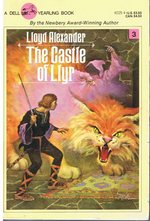
The Castle of LlyrThe Castle of Llyr

by Lloyd Alexander

The Chronicles of Prydain taught me most of what I needed to know about Fantasy (augmenting The Chronicles of Narnia‘s lessons). Fflewddur Fflam here is at his best, I think it’s here that I fell in love with Eilonwy, Taran’s more of a real hero than before, and you get plenty of Gurgi (who I just have to mention because thinking of him makes me smile). There’s peril, the characters grow more than they have before, a hint of romance . . . it’s not the most important book in the series, but I think it’s pivotal.

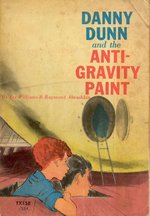
Danny Dunn and the Anti-Gravity PaintDanny Dunn and the Anti-Gravity Paint

by Raymond Abrashkin and Jay Williams

I didn’t know until today that this was the first in the series, I always figured it was mid-series. It’s the only one of the series that I owned — thankfully, the library had a few more — so it’s the one I read most. It was also my favorite — I just loved the stuff at the edge of our solar system and Prof. Bullfinch and Doctor Grimes making musical instruments from their hair — stupid as all get out, but it worked for me.

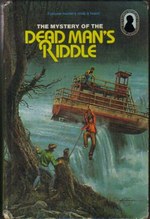
The Mystery of the Dead Man's RiddleThe Mystery of the Dead Man’s Riddle

by William Arden

While Encyclopedia Brown (see below) got me reading mysteries, it was The Three Investigators — Jupiter Jones, Bob Andrews and Pete Crenshaw (btw, the only thing there I had to look up was Pete’s last name — not bad for a series I haven’t touched since the late 80’s) got me hooked on reading detective series. The Dead Man’s Riddle was one of my favorites — and I think the first or second I read — something about the Cockney slang kept bringing me back to it. I read what I do today because of this series, really.

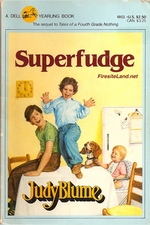
SuperfudgeSuperfudge

by Judy Blume

I remember Tales of a Fourth-Grade Nothing being funnier, but this was a better story — the Fletchers leaving NYC, Peter maturing, Fudge being a real pain, not just a cute nuisance. Blume taught me a lot about how to read non-genre stuff, probably paving the way for Hornby, Tropper, Weiner, etc.

The Last of the Really Great WhangdoodlesThe Last of the Really Great Whangdoodles

by Julie Edwards

What a great world, what a great magic system . . . I’m not sure I can express what this book meant to me as a kid, and the copious warm-fuzzies the memory brings up. I remember that it was in the pages of this book about a magic kingdom that I first learned about DNA and RNA (and what those letters meant) — thanks, elementary school science classes. The creatures’ names in this are great (and, as an adult, I can “hear” Andrews saying them in my mind for an added layer of fun). There’s a great deal of whimsy here, a sense of play that permeates this — even when it gets silly. The kingdom’s motto, “peace, love and a sense of fun” really sums up the spirit of the book.

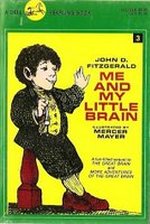
Me and My Little BrainMe and My Little Brain

by John D. Fitzgerald, Mercer Mayer (illus.)

Sure, the series was supposedly about Tom, but J. D.’s the real hero of the books. He has a conscience, a better moral compass than his brother — and is probably just as smart. This is the book that lets him shine as he ought to have all along. All the books had their strong points, and were fun, but this ruled them all.

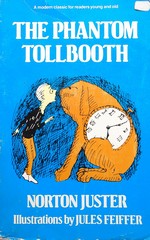
The Phantom TollboothThe Phantom Tollbooth

by Norton Juster, Jules Feiffer (illus.)

Such wordplay! What a great, twisted way to teach how important words and ideas are. Seriously, just a wonderful book. The humor is so off-kilter, any appreciation I have for puns came from this book (and it set the standard that a pun must achieve for me not to groan). If you haven’t seen the documentary about it, The Phantom Tollbooth: Beyond Expectations, get on it. (I contributed to the Kickstarter for it, I should add).

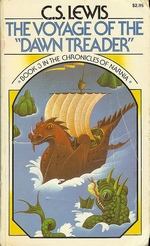
The Voyage of the Dawn TreaderThe Voyage of the Dawn Treader

by C. S. Lewis

I remember the bookstore where I bought this, the date and month that I bought it, and reading a good chunk of it before I got home. I read this one more than the rest of the series (Prince Caspian a close second). I just love this one — you get Reep at his bravest and funniest, some really odd creatures, an epic story, and Eustace’s redemption (back when I did crazy things like this, I almost got a tattoo of Eustace as Dragon). Who could ask for more?

Alan Mendelsohn the Boy from MarsAlan Mendelsohn, the Boy from Mars

by Daniel M. Pinkwater

Pinkwater has funnier and stranger books (both before and after this one), but there was heart, there was depth — there was length! — to this story about a kid who didn’t really fit in until he made a friend who didn’t want to fit in. This is another one where I can peg the place and time I bought it. Science Fiction-y in a real world (didn’t know you could do that!), comic book geeks as heroes, and real non-sanitized-for-kids emotions. There’s no way this wouldn’t be a favorite. More than the rest on this list, I’m thinking of finding my old copy and taking it out for another spin (because I just read the next one a couple of years ago).

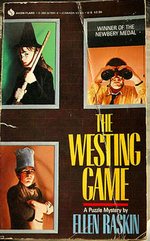
The Westing GameThe Westing Game

by Ellen Raskin

If I had to pick one off this list (and I don’t), this would probably be my favorite. I re-read it two years ago, and it was one of my favorite experiences that year with a book. The characters are great, the story was so clever, the writing so crisp. There’s nothing wrong with this book at all.

I saw a hardcover reprinting of this on Monday, and had to fight to resist buying a new copy. Kind of regretting that now. [Note: I went back a couple of days later and bought the hardcopy. It looks very nice on my shelf]

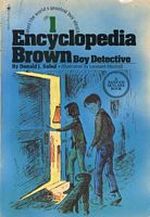
Encyclopedia Brown Boy DetectiveEncyclopedia Brown, Boy Detective

by Donald J. Sobol

Summer after second grade, we were on a forever-long road trip and I was bored, so I demanded my parents buy me something to read. I must’ve been a real snot about it, because at the next town, they did. I got two books, this one and Sugar Creek Gang Screams in the Night (not the best in the series, but it was good enough to read several times). It blew me away — I loved the puzzles, the characters, the idea. I wanted to be a P. I. This was my first mystery book, and it clearly set the stage for most of what I’ve read since (about a third of what I read).
Were you a fan of any of these as a kid? What were some of your faves? Have you read them lately?

The Incredibly Dead Pets of Rex Dexter by Aaron Reynolds: A Wonderfully Ridiculous Adventure

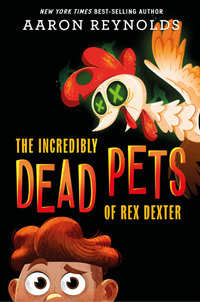
The Incredibly Dead Pets of Rex Dexter

The Incredibly Dead Pets of Rex Dexter

by Aaron Reynolds
Series: The Incredibly Dead Pets of Rex Dexter, #1

Hardcover, 213pg.
Little, Brown Books for Young Readers, 2020

Read: February 19-20, 2021
Grab a copy from your local indie bookstore!

There’s a hum from the game and it roars to life…The Grim Reaper inside starts to move. He puts his bony hand near a small chute and my quarter falls into his palm.Behind him, a little sign spins into place:

PLAY AGAINST THE GRIM REAPER
WIN AND YOUR WISH IS GRANTED
LOSE AND SUFFER THE REAPER’S CURSE!

“Whoa!” cries Darvish in realization. “This is just like that old movie from the eighties.”

“What movie?” I ask.

“You know,” he persists. “The one with Tom Hanks.”

“Never heard of him.”

“He wishes to be tall,” Darvish says. “Or grown. What was it called? Tall? Large?”

“No idea,” I tell him. “Unlike you, I do not spend my time on ancient movies from a bygone era.”

What’s The Incredibly Dead Pets of Rex Dexter About?

Rex Dexter is a sixth-grader who desperately wants a pet. Well, no. He wants a dog—and considers all other kinds of pets as beneath him. A Chocolate Lab in particular, or he’d settle for a Yellow Lab. Even a Black Lab. Or, if he must, a Golden Retriever. The kid has standards.

Due to a mishap a few years earlier with a Goldfish and, well, his entire personality, his parents have decided he’s too immature for a dog, but they do get him a rooster for his birthday to see how he handles that. Sure, this makes no sense—who gives a rooster as a pet? But don’t worry, the chicken dies in a strange mishap hours later. (That’s not a spoiler, he’s literally dead on the book’s cover).

It’s about this time that Rex plays the Reaper’s game, and loses. Soon after that a very flat chicken starts talking to him—but no one else can see or hear the chicken, but Darvish is able to see the Rooster move things, so he believes Rex. So, the Reaper’s curse has something to do with seeing dead animals. Rex and Darvish barely get the chance to start believing that when a Rhino’s ghost shows up, too. It had died in a fire at the local zoo.

The Rhino (Rex calls him Tater Tot) tells Rex she needs help finishing something on Earth before he can move on—Drumstick (the rooster) has no intention of leaving. Rex and Darvish need to figure out who killed Tater Tot to help her move on. While they’re trying, more dead zoo animals arrive—making quite the mess in Rex’s room and making it difficult for him to focus on school (never a strength in the first place).

Their age and inexperience are a couple of the biggest strikes against their success, but there are bigger obstacles. Starting with the fact that their Sixth Grade Teacher, Ms. Yardley, keeps trying to educate them, and then there’s a research project looming on the horizon, as well as the Evening of Enchantment dance. That’s just a whole lot to go up against, but these ghosts need his help.

Rex and Darvish

Rex is the kind of over-confident (arrogant-adjacent) and not all that bright hero that MG books seem to love filling themselves with lately–Greg Heffley and Timmy Failure are the two examples that jump to mind. He’s got attitude to spare, opinions on everything under the sun, and a blind spot to his own strengths and weaknesses that’s larger than himself.

Where Timmy has that Polar Bear, Rex has Drumstick. And where Greg has Rowley, Rex has Darvish. Darvish is a lot like Rowley—upbeat, considerate, and pretty clever. Also, they’re much better friends to Greg/Rex than Greg/Rex are to them. Both of them would be better off getting a new best friend, but neither do. It’s a fun dynamic to see, but man…I feel for them, you know?

So, what did I think about The Incredibly Dead Pets of Rex Dexter?

First off, thanks to The Bookwyrm’s Den for letting me know about this book and making it sound fun enough to look into.

This is a ridiculous book, a goofy premise, and an outlandish execution of that premise. And I loved it. There’s a higher joke-density to the text than The Wimpy Kid books or Timmy Failure‘s adventures. Maybe it’s too much, honestly, I had to take a couple of breaks because I just needed a break from the relentless barrage of jokes. I don’t see anyone in the target audience doing that, but it was at over-dose levels for me (like you get when you get near to the end of a package of Double-Stuff Oreos if you eat the entire thing at one sitting).*

It’s ridiculous, it’s hilarious, the story holds up, and the characters (living and dead) are just great. I think this works for all ages, there’s just enough story to keep you invested and even if all the jokes don’t land, just wait for the sentence and you’ll get another one.

It’s been a while since I just read a book for fun, with no other expectations or goals. That’s all that Reynolds offers and that’s exactly what he delivers.


3.5 Stars

2021 Library Love Challenge
This post contains an affiliate link. If you purchase from it, I will get a small commission at no additional cost to you. As always, opinions are my own.

The Friday 56 for 2/19/21: The Incredibly Dead Pets of Rex Dexter by Aaron Reynolds

The Friday 56This is a weekly bloghop hosted by Freda’s Voice

RULES:
The Friday 56 Grab a book, any book.
The Friday 56 Turn to Page 56 or 56% on your ereader. If you have to improvise, that is okay.
The Friday 56 Find a snippet, short and sweet.
The Friday 56 Post it

from page 56 of:
The Incredibly Dead Pets of Rex Dexter

The Incredibly Dead Pets of Rex Dexter by Aaron Reynolds

…we now know I’m not imagining things.

Which means my deepest darkest fear has come true. Next to falling into a pit of snakes. And global takeover by evil robots. And paper cuts. These are the things that haunt my nightmares.

My fourth deepest darkest fear has come true.

I have been cursed by a rogue carnival game.

The Silver Arrow by Lev Grossman: Every once in a while the world is unfair in a good way.

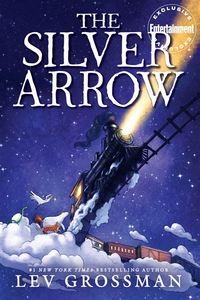
The Silver Arrow

The Silver Arrow

by Lev Grossman

Hardcover, 259 pg.
Little, Brown Books for Young Readers, 2020

Read: December 3-4, 2020
Grab a copy from your local indie bookstore!

You really don’t appreciate how incredibly colossal a steam locomotive is till one shows up parked on the street in front of your house. This one was about fifteen feet high and fifty feet long, and it had a headlight and a smokestack and a bell and a whole lot of pipes and pistons and rods and valve handles on it. The wheels alone were twice her height.

What’s The Silver Arrow About?

Kate lives a life that she doesn’t find that interesting. It involves a lot of reading (mostly books about science, or books where people discover that magic is real), wishing her parents would pay her more attention, or that something interesting would happen. I don’t think her younger brother, Tom, is any more satisfied, but he seems generally more upbeat. They have an uncle they’ve never met—because their parents describe him as irresponsible, but incredibly rich.

For her 11th birthday, Kate writes him a letter, asking for a present. What arrives is her uncle—who may be irresponsible, but he seems like a nice guy (even if her parents have a seemingly irrational amount of anger toward him) who arranges for a steam train, The Silver Arrow, to be delivered to her (and a small line of track installed in her backyard). While Kate and Tom climb all over it, her parents demand that Uncle Herbert remove the train. Before he can, it leaves with them on board.

Not only does it start by itself and travel through places it shouldn’t—the train communicates with the children. Before they know it, they’re at a hub where they add on passenger cars (among other things) and then start picking up passengers, all of whom are talking exotic animals (fully ticketed). Sure, by definition, a talking animal is fairly exotic, but I’m talking about things like a pangolin, a polar bear, a mamba, a fishing cat, and so on.

While they travel through the world (including many places that non-magical Steam Trains can’t go) the siblings have to overcome various challenges, defy the laws of physics (but never in a way that feels like violating physics), learn to work together, and learn a few lessons about some pretty heavy topics (in an entertaining and age-appropriate manner).

This really reminded me of…

Life always seemed so interesting in books, but then when you had to actually live it nothing all that interesting ever seemed to happen. And unlike in books, you couldn’t skip ahead past the boring parts.

The marketing for the book mentions both Roald Dahl and The Chronicles of Narnia. I honestly don’t remember the Dahl books I read in enough detail to comment on that—but it feels mostly okay. But Narnia? No. Sure, there were talking animals—but not that kind of Talking Beasts. Also, there’s no allegory at work here. That comparison didn’t work for me.

Julie Edwards’s The Last of the Really Great Whangdoodles came to mind while thinking about the book—the mix of science and magic, the way that adults talk frankly to children, the feel of the narration—all hearkened back to that for me.

But primarily, this reminded me of The Phantom Tollbooth—from the unexpected arrival of a magical form of transportation, to the encounters with strange realities, and lessons learned, the occasional feel of absurdity (that never feels absurd)…it speaks Tollbooth to me.

Neither of these books have the marketing pull of Dahl or Narnia, so I get why the Publisher went with the ones they went with, but it irks me that they were so far off.

The Things Beyond the Story

Deep in her heart Kate knew that. She knew that her problems weren’t real problems, at least not compared with the kinds of problems kids had in stories. She wasn’t being beaten, or starved, or forbidden to go to a royal ball, or sent into the woods by an evil stepparent to get eaten by wolves. She wasn’t even an orphan! Weirdly, Kate sometimes caught herself actually wishing she had a problem like that-a zombie apocalypse, or an ancient curse, or an alien invasion, anything really-so that she could be a hero and survive and triumph against all the odds and save everybody.

As Milo did in The Phantom Tollbooth, Kate (and, to a lesser extent, Tom) learn a lot from their travels and the atypical people they encounter. Some of the things I noted they experienced—and that young readers will encounter include maturity/embracing responsibility; engaging in life, not merely observing (via smartphone or books); animal preservation/conservation—notably of threatened or endangered species; and a strong hope in the future of and for Humanity. I don’t usually see the latter two themes paired together but I found Grossman’s use of the two to keep the book from being too heavy or too light.

This is a Book to Read Aloud

The best part of the book for me was Grossman’s use of language, his style, and voice. He sucked me in with the way he told the story before Kate and The Silver Arrow got their hooks in me. There’s a charm to the language that would attract (I can only imagine) middle-grade readers in a similar way that Norton Juster did me decades ago.

The other thing that kept coming to mind was just how fun this would be to read aloud to a kid of the right age. There are several lines that just beg to be hammed up while reading to a receptive third-grader, like:
bullet “Herbert,” he said. “What the blazes is this?” He didn’t really say blazes, but you can’t put the word he did say in a book for children.
bullet [After several sentences of the mamba speaking full of “ssssss”s] (I’m not going to keep typing all the extra s’s, so just keep in mind that the snake hisses a lot when he talks.)
bullet Weird how boys had feelings, too, but pretended they didn’t.

Those probably work better in context, but he breaks the fourth wall enough to add plenty of opportunities to have fun while you read it.

So, what did I think about The Silver Arrow?

She’d almost forgotten that the train could talk. There’s a lot going on in your life when you have more urgent things to think about than a talking train.

I think if I was about 40 years younger, I’d probably rate this at least 4 Stars, or maybe if I’d actually read it to someone, that might have done the trick. But I’m an old(er) crank and I could only imagine what it’d have been like to read to my kids.

This is a fun book, a kind of adventure that I’d want to give to kids, I’d want kids to be exposed to. And, yeah, it’s good for the inner child of older readers who like to remember how much fun certain books can be.


3.5 Stars

This post contains an affiliate link. If you purchase from it, I will get a small commission at no additional cost to you. As always, opinions are my own.

Amari and the Night Brothers by B. B. Alston: Look Out World, There’s a New Magician on the Loose!

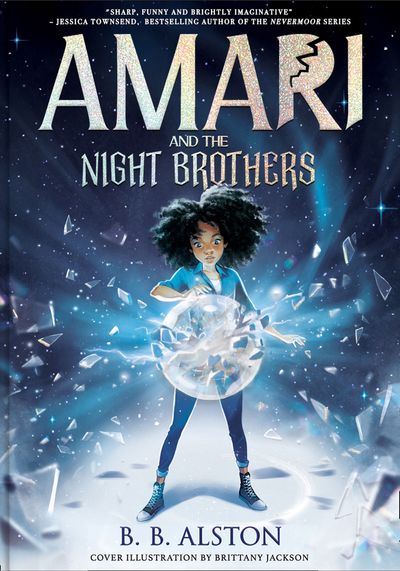
Amari and the Night Brothers

Amari and the Night Brothers

by B. B. Alston
Series: Supernatural Investigations, Volume Number 1

eARC, 384 pg.
Egmont Books, 2021

Read: December 7-9, 2020
Grab a copy from your local indie bookstore!

What’s Amari and the Night Brothers About?

Amari is a thirteen-year-old girl from Atlanta’s inner-city, attending a private school on scholarship, and is in trouble when we meet her. She’s been antagonized (probably bullied, honestly) by some rich girls from her school and struck back. She’s now facing discipline—up to and including loss of her scholarship. The principal ties this behavior to her brother’s recent disappearance/presumed death, she’s been “acting out” since then.

While reeling from this, Amari receives a delivery from her brother—cutting the details, it’s an invitation to the Bureau of Supernatural Affairs. The invitation opens her eyes (literally) to the hidden magickal world around her. She can join the Bureau via a summer program (as her brother, Quinton, did) and if she passes some tests, she can become a junior member. She sees this as her best/only chance to find out what happened to Quinton—and hopefully, find him alive.

But also, it’s magick. How could she not want to be part of it?

One of the first steps involves finding her secret talent—where she learns that she has rare and illegal abilities. Determined to stay in the Bureau to find Quinton—and to show that just because she’s born with abilities that remind everyone of the worst people in the supernatural world’s history, it doesn’t mean she’ll be as evil.

It’s hard to make friends—hard not to be ostracized by everyone—because of her abilities, and she faces outright prejudice. But she does make an ally or two among the other supernatural youths, and a few among the adults overseeing the program*. Not only does Amari work to pass her tests to remain in the Bureau, she and her allies look into Quinton’s disappearance.

* I really don’t have the time to get into it, but I really liked the adults in this book (with the exception of two that you’re clearly not supposed to like)

The Clincher

There are many reasons to read this, many reasons you’ll enjoy it. More than I have time to enumerate, more than you want to spend time reading. So I’ll just give you one word that should convince you: weredragon.

Were…@#$%&!…dragon.

I love this idea. I don’t know why we don’t have a half-dozen series about them in UF. Elsie, the weredragon in question, would be a character I love no matter her special ability/species/whatever. She’s a fun, vibrant, supportive, smart character, and combining those qualities with the idea of a human shifting into a dragon? You’ve got a fan in me.

The Inevitable Comparisons

It’s impossible to read this book and not think of a certain other MG series that rhymes with Larry Cotter. I think Amari and the Night Brothers comes off pretty well in such a comparison—I’m not saying it’s superior (or inferior), but it holds its own.

But honestly? I think this is closer to a Percy Jackson kind of thing (just without the mythological basis), and Alston’s style and voice are closer to Riordan’s.

I’d also throw in a comparison to Will Hill’s Department 19 books, but few of my readers will recognize it—and it’s for an older audience and is more bloody. But it’s one of those things that keeps coming to mind as I read Amari’s adventure.

I’m not suggesting that Alston’s just giving us an “inner city” version of Percy Jackson, etc. There are just things about Amari and the Night Brothers that remind me of the others, (the way that the Iron Druid Chronicles reminds readers of The Dresden Files, for example). The novel’s themes and particulars of the fantasy worlds will vary, but the overall feel and style of the novel will invite comparison to Barry Totter, Percy, and similar works.

The Real World

In the background of all the fantastic things going on in Amari’s life—all the unbelievable things she’s being introduced to, the incredible people and creatures she’s encountering—there’s the real world, and not an easy part of it. She lives in the inner city of Georgia with her mother working horrible shifts at a local hospital struggling to make ends meet. Her father has abandoned the family.

The police assume her brother’s disappearance has something to do with him being a criminal—he’s not missing, he’s off doing something he doesn’t want his mother to know about. Because that’s what young men in this neighborhood do. As infuriating as that prejudice expressed is, there’s someone in the neighborhood who is falling into that lifestyle. Quinton had been tutoring him, but now he has no one helping him—but Amari tries once she realizes what’s going on with Jayden. This is a storyline that we follow throughout the book, and it might be the most important and rewarding one.

Both in Amari’s school and even at the Bureau, she has to deal with privilege—people who were born into the right families, people who aren’t like her. Because of things she has no control over, no input into, simply accident of birth, there are those who don’t want her in the Bureau, don’t want her pursuing her goals—but she doesn’t back down. Never fear, the book doesn’t preach, it doesn’t moralize. It simply shows the challenges Amari has to deal with—and the challenges so many others don’t—and lets the reader draw their own conclusions.

Grit and Smarts

Amari is practically the embodiment of Angela Duckworth’s concept of grit. I made a few notes like that while reading, making Amari the kind of protagonist you can really get behind.

Duckworth’s website defines grit as:

Grit is passion and perseverance for long-term goals…
Grit isn’t talent. Grit isn’t luck. Grit isn’t how intensely, for the moment, you want something.
Instead, grit is about having what some researchers call an”ultimate concern”–a goal you care about so much that it organizes and gives meaning to almost everything you do. And grit is holding steadfast to that goal. Even when you fall down. Even when you screw up. Even when progress toward that goal is halting or slow.
Talent and luck matter to success. But talent and luck are no guarantee of grit. And in the very long run, I think grit may matter as least as much, if not more.

Replace the word “talent” above with “magick” and you’ve got Amari.

The book is also a celebration of thinking. Quinton, Elsie (the weredragon), and Amari are smart. They’re bookish. They’re problem solvers. Sure Amari has magical abilities, but before she uses magic, she thinks through a situation and addresses it with her mind. Amari and Elsie study, they plan. There’s one point where Amari remembers the book and page number where she learned a fact that proved vital to one challenge. Her remembering that page number just made me happy.

Elsie’s a tinkerer, even before she gets her magical enhancement, she’s inventing things, making things. Amari talks about how many things are in the library that she wants to read about, learn about that have nothing to do with her goals. Give me characters like this any day.

So, what did I think about Amari and the Night Brothers?

This was just so much fun. Even when things are looking dire for poor Amari (or anyone else), there is an ineffable sense of awe and hope to the book. That just magnified all the good from above (and helped me brush off the couple of minor reservations I had).

Is this one to give to the MG reader in your life? Yes. Is this one to read yourself if you like the occasional (or not-so-occasional) MG novel? Absolutely. I’m already planning on getting the sequels, and expect just about everyone who reads this novel will too.


4 Stars
My thanks to The Write Reads for the invitation to participate in this tour and the materials (including the novel from Egmont Publishing via Netgalley) they provided.

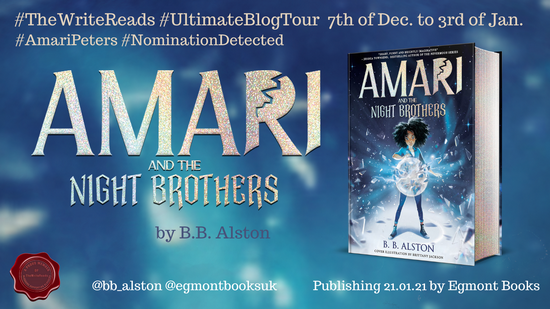
BOOK SPOTLIGHT: Amari and the Night Brothers by B. B. Alston

I’m very pleased and excited today to welcome The Ultimate Blog Tour for the wonderful Amari and the Night Brothers by B. B. Alston. This Tour Stop consists in this little spotlight post and then my take on the novel coming along in a bit (warning: even after trimming things a bit, it’s on the long side). Let’s start by learning a little about this novel, okay?

Book Details:

Book Title: Amari and the Night Brothers by B. B. Alston
Publisher: Egmont Books
Release date: January 21, 2021
Format: Ebook/Hardcover
Length: 384 pages

Book Blurb:

Amari Peters knows three things.

Her big brother Quinton has gone missing.
No one will talk about it.
His mysterious job holds the secret …

So when Amari gets an invitation to the Bureau of Supernatural Affairs, she’s certain this is her chance to find Quinton. But first she has to get her head around the new world of the Bureau, where mermaids, aliens and magicians are real, and her roommate is a weredragon.

Amari must compete against kids who’ve known about the supernatural world their whole lives, and when each trainee is awarded a special supernatural talent, Amari is given an illegal talent one that the Bureau views as dangerous.

With an evil magician threatening the whole supernatural world, and her own classmates thinking she is the enemy, Amari has never felt more alone. But if she doesn’t pass the three tryouts, she may never find out what happened to Quinton …

About the Author:

B. B. Alston lives in Lexington, SC. Amari and the Night Brothers is his debut middle grade novel. When not writing, he can be found eating too many sweets and exploring country roads to see where they lead.

My thanks to The Write Reads for the invitation to participate in this tour and the materials they provided.

Venators: Legends Rise (Audiobook) by Devri Walls, Daniel Thomas May: The Venators Have Their Hands Full in this Packed Adventure

For the last part of my Tour Stop, I’ll be talking about the Audiobook version of Venators: Legends Rise, as I have with the first two books in the series this year as part of The Write Reads Tours for them. And, as before, I largely copied what I said about the paperback-but tweaked things a little bit and added something about the narration (just in case you read the earlier post and think I’m repeating myself, you’re right, I absolutely am.)
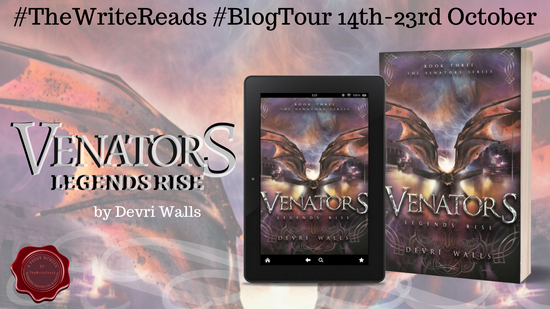

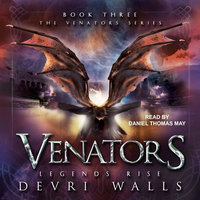
Legends Rise

Venators: Legends Rise

by Devri Walls, Daniel Thomas May (Narrator)
Series: Venators, #3

Unabridged Audiobook, 18 hrs. 9 min.
Tantor Audio, 2020

Read: October 6-9, 2020
Grab a copy from your local indie bookstore!

“How long ago were we here?” she asked.

“I don’t know. Two weeks? Three? I’ve lost track of the days.”

She sat with that for a moment, trying to reconcile the timeline. “Why does it seem like forever ago?”

“Because it was.” Grey rested his forearm across the saddle horn, face pensive. “We’ve lived a lifetime since then.”

I’m glad to see that I’m not the only one who couldn’t believe how little time went by in the first two books.

What’s Legends Rise About?

At the end of Promises Forged, Tate is taken by the Fae and is sent back to the Gladiator games that he’d escaped from not that long ago. He’s doing this so he can get his wife and son to safety (and maybe see them for the first time in years, too).

But our heroes, Grey and Rune, need to get him free from that—preferably without letting the Council know he’s been taken. So while they’ve been assigned to go rein in the remnants of the Werewolf pack they let get away in Magic Unleashed, and maybe bring another pack to order, they’ll use that assignment as cover for their real concern.

A neat trick if they can pull it off.

Along the way they get to train, they get to experience more of their new world and abilities than they’ve been able to thus far in their crash-course introduction to the ways and mores of Eon. The training, obviously, is really important if we’re to continue to believe their success in combat. A couple of lucky breaks like we’ve seen so far is one thing, but at a certain point, we need to see some competence out of them.

Venator Development

This book sees Rune and Grey getting to know each other better—Grey shares a lot with Rune and she responds as she ought. They both settle into roles as partners, their individual personalities helping them support the other in weak spots while working together.

Grey continues to be the character I’m most invested in and most interested in for this series—his strengths—compassion, empathy, concern—are seen even more clearly than before. He’s quite the contrast to the Venators of legend on Eon. Yes, it gets him into trouble. Yes, he has flaws and stumbles into being someone I really don’t like during the final battle of the book. But assuming he can keep himself from that in the future, and stay true to who he is, he’ll be the hero that Eon needs and will keep me reading the series.

Rune on the other hand…I change my mind about her repeatedly in each book. As a character, Walls keeps developing her along the lines we’ve seen so far—particularly in Promises Forged, building on those traits and showing herself, her trainers, Grey, and the Council what she’s capable of. I’m not crazy about some of her choices and actions—but I think most of them will be good for the series, and one of them will lead to melodrama and problems (and will be a source of delight for most readers).

I’m glad that I’m not all-in with either character—it makes them feel more real, more grounded that I like aspects of them, and am troubled by others. It also points to the tendency Walls showed in Promises Forged for the Venator powers to shape the thinking and attitudes of the individuals and how much these two need to strive against that. Give me a complex protagonist any day.

Some Skin in the Game

Zio makes a move here—a lot sooner than I expected her to, too. It’s not a big attack, it’s more of a surgical strike, just to sound out her opponents and test out her pet Venator. If more happens and she gains some big advantages while she’s at it, all the better.

She’s craftier than I gave her credit for and I think that this was a smart move by Walls—both for the progression of the story and for the development of Zio as a character. It’d be easy to write her off as a Skeletor-type, just a power-hungry magic-user trying to cause chaos and destruction for her own gain. And, yes, I still think she is that—but I think there’s more to her than that.

A Bonanza of Backstory

Two of the most important figures for our Venators are Beltran and Verida. We know there was some sort of romance in their past, and that it didn’t well at all. We get that filled in a little bit, which is good. But more than that we get looks into their pasts—what brought them to the point they were at when we first encountered them.

We see a lot of what motivates Verida in her desire to train these Venators, to aid the resistance. We get some insight into what drove the wedge between her and her father. We even meet some of her family and can see that she could very easily have been a different kind of person. I walked away from this book liking Verida a lot more than I did before.

We see more of Beltran’s story, too, and come a lot closer to understanding him—I think Walls is keeping a surprise or two about him up her sleeve, though. I’d like to think that someone with his centuries of experience would possess a little more maturity, and not be quite so emotionally adolescent—but maybe for his species you don’t hit that for a few more hundred years.

An Almost Entirely Frivolous Sartoirial Question

Does anyone on Eon wear loose clothing? Every time* someone’s pants are described, the words “tight” and “leather” appear. From just about everything I’ve ever read, leather pants are really uncomfortable. Maybe society would be better, people would be more prone to get along if Rune introduced them to denim? Could Grey get people to wear chinos and with the improved blood flow help cooler heads to prevail?

* No, I haven’t done a search on e-copies of this to verify this, there may be exceptions—roll with the hyperbole here.

At the very least, from this point can’t we just take it as read that every time Walls says “pants” that she means “tight” and “leather” and trim 1-2% of her word count?

Is this petty? Sure. But Walls spends enough time talking about clothing that questions arise. If I were so inclined (and someone would have to pay me to be), I think I could do an entire post on the clothing of Eon.

My Big, Not-Frivolous Question

What are people (the Council/Zio/Resistance) fighting for? Control of Eon? Power? Sure, that’s obvious. But Power for the sake of Power is dull and hard to care about as a reader. If you look at Panem, you can get an idea why people are fighting for it (on either side), ditto for The Society in Red Rising, Luna from The Lunar Chronicles—you get the idea.

What are the ideals of this society? What has the Council betrayed? Are they pretending to uphold something from the past that they’ve actually abandoned and that the resistance are trying to restore? (see the Rebel Alliance in Star Wars)—while at the same time, Zio has another idea entirely?

What’s the point of this Resistance movement? What are their goals? When are we going to finally meet them?

Where’s the joy in this world? Where’s The Good (or just good)?

We spend some time in a city and in a village here—they couldn’t be less similar, so we’re getting two separate looks at Eon society. The city puts Mos Eisley to shame, and the poor village is just…well, poor. Even before tragedy hits (thanks to the Venators, in a way) this village, I don’t see that there’s a lot going for it or its citizens.

I guess that I was just struck by the question, “why?” Why are these factions working so hard to gain control of this place? I don’t doubt for a moment that Walls has a handle on this question—she knows it. I just hope she clues her readers in soon.

How was the narration??

Daniel Thomas May really impressed me this time. He balances the action and emotion well, keeping the focus on the characters. Walls gave him a large cast of characters to work with in these pages and he handles it well. I feel like I should have more to say, but I really don’t. He does a good job and kept me entertained.

So, what did I think about Legends Rise?

This was by far the most ambitious of the Venators novels (I know it’s only book 3, but I read two versions of book 1, so I’m counting this as the fourth), and I applaud Walls for taking a big swing here. I wonder if she maybe tried to do too much, though. I’ve tossed this idea around a lot over the last few weeks and I’m undecided. I’m hoping that listening to the audiobook for the upcoming Book Tour will help me decide.

We got some good backstory on pivotal characters, we see a lot more of the world and have a better understanding of parts of it, the Earthlings get a chance to acclimate a bit more to Eon and spend some time with citizens. And, yeah, there are some pretty great action sequences. There’s even some romance for those who want that sort of thing—and I’m certain almost every reader of this series will be very pleased by it (I actually don’t mind a romantic subplot, I just can’t stand this one and think it’s a bad move for everyone involved).

Regardless of what the stars may suggest—I enjoyed this book and recommend it. Furthermore, I like this series, I’m really curious about what’s going to happen next and I think anyone who reads them will, too.


3.5 Stars

My thanks to The Write Reads for the invitation to participate in this tour and the materials they provided.


EXCERPT from Venators: Legends Rise by Devri Walls


For the next part of my stop on The Write Reads Blog Tour for Venators: Legends Rise by Devri Walls, I have this nifty excerpt provided by the author. Enjoy!


from Venators: Legends Rise by Devri Walls (available from Brown Books Publishing Group)

After such a long day and a full meal, Rune and Grey were both yawning. Beltran was feeling the exhaustion himself, but he needed Rune to be at least partially awake for the conversation he had planned for tonight. He got to his feet and brushed off his pants.

     Verida eyed him from across the fire. “Where are you going?”

     “I tried to explain before we left but was rudely interrupted.” He crossed to the packs and started pulling out shimmering pieces of fabric, grinning at Verida’s silent glower. “I have gifts from Arwin.”

     Grey leaned back on the palms of his hands, craning his neck. “What is that?”

     “Your tents.” Beltran strolled behind Grey, separating one from the rest and dropping it in his lap.

     “This is my tent?” The fabric whispered through his hand, sliding away like liquid silk and pooling in his lap. Grey’s face fell. “We’re going to freeze.”

     “On the contrary.” Beltran handed one each to Verida and Rune. “Tonight you will be warm, comfortable, and most importantly, unnoticeable to anything passing through the area.”

     Given his ability to shift, Beltran didn’t actually need a tent—he could sleep just about anywhere in a well insulated form. But he was endlessly fascinated with Arwin’s abilities and wasn’t about to pass up the opportunity to experience the wonder of magic by volunteering to turn himself into a bear.

     Besides, with Rune so nearby, he was particularly attached to this human form, and would rather not be covered in fur in the middle of the night. Although, considering the cold shoulder she’d given him since the incident, an unexpected tent visit from Rune was probably a touch optimistic.

     “How are we supposed to use this?” Grey asked. “Are there stakes or ropes or—”

     “Grey.” Beltran tsked. “We’re dealing with a wizard. Arwin would be offended. Observe.” He flipped the fabric outward, the way Arwin had shown him. It snapped in the air. He gave it a sharp yank, pulled it over his head, and released. The fabric fluttered down around him and caught, puckering as if suspended by something, and then draping to the ground.

     At first Beltran could only see the brightness of the fabric, but then a translucent circle appeared at the center point above his head. The effect grew larger, flowing down like rain water until it appeared that he was surrounded by nothing at all. The only tell-tale sign of the tent’s presence was the occasional shimmer that rippled across the inside.

     Beltran saw everything, but to an outsider, he’d just become invisible.

    Verida looked at the fabric in her hand like it was a viper, and Beltran stifled a laugh. She hated magic. The lack of control, understanding, and predictability ate her alive.

   “Go ahead,” he called. “Try it.”

   Rune’s nose crinkled. “Not very soundproof, is it?”

   “Intentional. I asked Arwin to leave it that way.”

   “Why would you have done that?” Verida took out her nervousness on the first thing she found, gesturing wildly. The delicate fabric clenched in her hand, flipped, and rolled. “What if Grey snores?”

   Grey’s head snapped up, his brow furrowed. “But…I don’t.”

  Well, Verida darling, that way, when you try to kill me in the middle of night, Rune and Grey will hear my screams and come running to my aid.” He poked his head between the flaps and would’ve winked—he wanted to—but the look on Verida’s face said she’d probably remove the offending eyeball.

   “I’ll speak to Arwin about the glaring flaw in his design when we return.”

   “I’ll let him know to expect you.”

  “Hey,” Rune said. “Why didn’t we use something like this instead of nixie bubbles?”

  Verida whirled, shouting, and shaking the tent in the air. “Because I didn’t know Arwin could do this, and we weren’t walking around the council house openly asking for help to disobey the council!”

   “All right, all right,” she held up a hand. “Sorry I asked.”

  Don’t worry Rune, it’s not you,” Beltran said, stepping out from the tent. “Verida hates magic.”

  “Stop. Talking!”

  He shoved his hands in his pockets, and shrugged at Rune as if to say…see?

  “I don’t think I’m understanding,” Grey interjected. “Did you really choose not to soundproof this because you were afraid she’d murder you in your sleep?”

  “Would you blame me?” Beltran mimicked Verida’s earlier flailing and grinned. “But no. Arwin said I could have invisibility or sound protection. I chose what I thought would be the most beneficial.”

   “It would’ve been nice to know you brought tents before I packed the regular ones,” Verida snapped. “We could’ve done without the additional weight.”

   “We’ll need both. Arwin gave me a very long speech loaded with copious amounts of wizardly terms that I wasn’t completely familiar with, but basically meant that fabric doesn’t hold magic as well as earth. He infused a stone—and proceeded to instruct me no less than fourteen times not to lose it—and then connected the rock to the fabric via another spell. It was very convoluted but amounted to the simple fact that the fabric can only hold so many hours of magic before needing to be placed back in the pack with the stone. These should last until morning, but once the tents are depleted, they’ll need to rest for at least a full day before they can be used again.”

   He smiled at Verida, who asked, “then why are we using them tonight?”

    “I thought it best to test out their capabilities.”

“I see.” She pulled in a tight breath through her nose. “And hope we don’t need them tomorrow? Excellent.”

    “A better option than pulling them out when we desperately need them and discovering they don’t work.”

   “Hold up,” Rune interrupted. “Let me get this straight. Our tents have to… charge?”

   Beltran looked at her blankly. “I have no idea what that means.”

   Rune rolled her lips in.

   Grey burst into laughter, holding up the tent like he’d found the prize of an era. “Rune! Look! It’s the new upgraded iTent! The Bluetooth connection is non-existent but it’s new, improved, and doubles as a shelter.”

   “But,” she snickered. “How’s the screen size?”

   The two Venators continued, laughing hysterically, and dropping one joke after the next.

   “I have absolutely no idea what they’re talking about,” he said dryly, glancing to Verida. “And I’m really starting to dislike how often that’s happening.”

   “Agreed.”

   At least they agreed on something.


Read the rest in Venators: Legends Rise by Devri Walls.

Thanks to Devri Walls for this excerpt! Also, thanks to The Write Reads for the invitation to participate in this tour and the materials they provided.

Page 11 of 24

Powered by WordPress & Theme by Anders Norén