Author: HCNewton Page 209 of 623

The Excellencies of God: Exploring and Enjoying His Attributes by Terry Johnson: Not Quite as Good as Its Predecessor but Worth Your Time

The Excellencies of GodThe Excellencies of God:
Exploring and Enjoying
His Attributes

by Terry Johnson

DETAILS:
Publisher: Reformation Heritage Books
Publication Date: October 23, 2022
Format: Hardcover
Length: 347 pg.
Read Date: October 23-November 20, 2022
Support Independent Bookstores - Visit IndieBound.org

The Excellencies of God‘s Jacket Copy

God’s attributes is the most practical of subjects, inspiring and shaping the entire Christian life. Contemplating who God is and what He has promised to do can bring great comfort to the most despairing soul. Moreover, it brings immense delight to all those who recognize their chief end as the glory and enjoyment of God. In The Excellencies of God, Terry L. Johnson explores several aspects of the divine character and shows how they play a crucial role in our Christian experience. May God’s mercy and grace, His patience and wisdom, His truth and faithfulness, His spirituality and blessedness prove to be a blessing to all who peruse these pages.

The Table of Contents

That’s kind of vague, so let’s look at the TOC.

Preface
Introduction: The Christian and the Attributes
The Mercy, Grace, and Patience of God
1. The Mercy of God
2. The Grace of God
3. The Patience of God
The Truth and Faithfulness of God
4. The God of Truth
5. Liberating Truth
6. Pursue and Proclaim the Truth
The Blessedness of God
7. The Blessed God
8. Our Blessedness in God
The Fatherhood of God
9. God Our Father
10. Pleasing Our Father
11. Our Father’s Children
12. Our Father’s Care
The Spirituality of God
13. The God Who Is Spirit
14. Serving an Invisible God
15. Spiritual Mindedness
16. Spiritual Worship
17. True Worship
The Wisdom of God
18. God Only Wise
19. Wisdom and Folly
20. Seeking and Submitting to God’s Wisdom

So, what did I think about The Excellencies of God?

I struggled to write a post about Johnson’s The Identity and Attributes of God two years ago, and I find myself in a similar position now with this follow-up. I went with the bare minimum above because it fits the book—Johnson lays things out very matter-of-factly, and you get exactly what the TOC lists. He takes each thought and explains it using citations from Scripture, the Fathers, Reformers, and some contemporary writers—with some illustrations of hymns.

I have the impression that Johnson gives 50-60% of the text, and the rest are quotations (mostly a sentence or less). I did not (would not) try to verify that—and I’m pretty sure I’m wrong, but that’s my impression as a whole. I wanted more of Johnson and less of everyone else. I think this is about the same as the previous volume, and I had a similar thought about it—but overall it was so good, I didn’t care. This book was a little less impressive so it stuck out to me more.

I don’t think I get the selection of the major topics and how they flowed one from the other—the chapters within each topic, on the other hand, flowed nicely.

Is this a decent read? Yeah, but it tends to the dull-side with the repeated quotations. But beyond that, it’s a pretty straightforward and thorough look at the topics. It’s helpful, it should push you to look more into some of the ideas that you find more provocative (and the footnotes will help with that). It’s sound and measured, majoring on the majors and not really spending time on minor issues.

It’s a good book that I can recommend without hesitation, I just wanted more from it.


4 Stars

This post contains an affiliate link. If you purchase from it, I will get a small commission at no additional cost to you. As always, the opinions expressed are my own.


Saturday Miscellany—11/26/22

Odds ‘n ends about books and reading that caught my eye this week. You’ve probably seen some/most/all of them, but just in case:
bullet Borrower returns library book 47 years past due, provides explanation in ‘thoughtful letter’
bullet The Mysteries of Encyclopedia Brown: The Books, The Lawsuits, The HBO Show?!—Who doesn’t want to stop and learn more about ol’ Encyclopedia?
bullet Damppebbles’s annual recommendation-fest, #R3COMM3ND3D is in the home stretch now, this week’s offerings are diverse genre-wise, but share a similar high quality.
bullet …with #Author Terry Tyler
bullet …with #Reviewer Davida Chazan
bullet …with #Author Rachel Sargeant
bullet …with #BookBlogger Jude Wright
bullet …with #BookBlogger Rae
bullet …with #BookBlogger Jo
bullet …with #BookBlogger Wendy W.
bullet Enough of 2022 (for a minute), let’s glance at 2023 with The Real Book Spy’s Our (Way too) Early Look at Notable 2023 Thrillers, Part Two, Part 3—my dance card is already starting to look a little packed
bullet I shared some of the posts last year from the series Neurodivergence in Fiction. It’s been brought back with a broadened view and kicks off with this post from A.C. Cross, Mental Health in Fiction: Writing Through the Pain—I expect this series will as good—if not better—than its predecessor.
bullet Thoughts After Writing Lots of Negative Reviews
bullet 10 Funny Reasons Why I prefer Physical Books

A Book-ish Related Podcast episode (or two) you might want to give a listen to:
bullet Don’t Remember Me Like This—I keep meaning to fit this “a podcast of short stories, memoir, satire, commentary, and essays with an occasional seizure of fiction, interviews and maybe even poetry” into my rotation, but I haven’t yet. I enjoyed Barber’s book a few years ago, and am looking forward to the same kind of humor in audio form.
bullet Blood Brothers Episode 111 with Robert Crais—I’ve heard Crais on a decent number of podcasts, but he seems looser and less canned than I’m used to here

This Week’s New Releases that I’m Excited About and/or You’ll Probably See Here Soon:
bullet Little Ghost by Chris McDonald—McDonald launches a new series—this one promises a noir feel about a PI in Denver. Looking forward to diving in.
bullet The World Record Book of Racist Stories by Amber Ruffin & Lacey Lamar—the sisters pair up again for more stories of racism that you have to laugh at (so you don’t burn down the world)
bullet NYPD Red 7: The Murder Sorority by Marshall Karp—Karp takes over control with this series entry about a hunt for a team of assassins taking down notorious New Yorkers. Which is an inadequate description, really. You should read my post from last week instead.

Theft of Swords by Michael J. Sullivan: A Rollicking Adventure I Should Have Read Years Ago

Theft of SwordsTheft of Swords

by Michael J. Sullivan

DETAILS:
Series: The Riyria Revelations, Volume 1
Publisher: Orbit
Publication Date: November 23, 2011
Format: Paperback
Length: 649 pg.
Read Date: November 10-16, 2022
Support Independent Bookstores - Visit IndieBound.org

First Things First

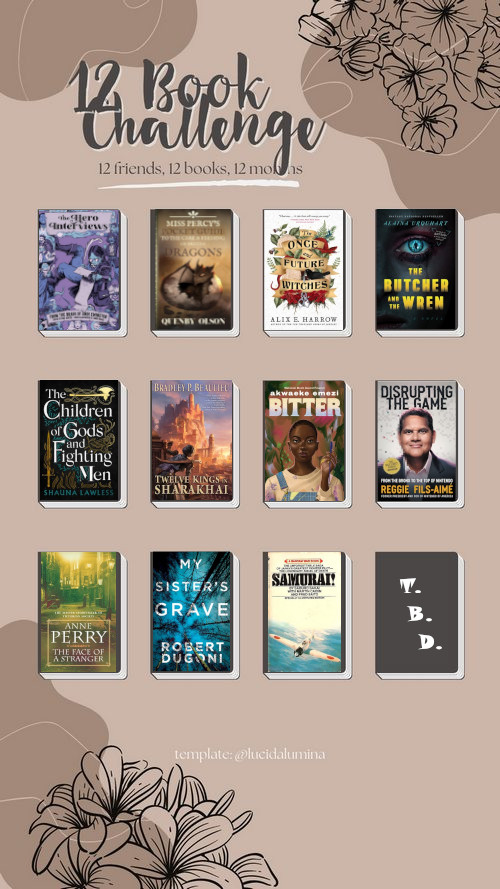
Back in Down the TBR Hole (18 of 24+) (January 2021), I removed a form of this book from my “Want-To-Read” list, despite everyone I’d ever talked to about Sullivan being a fan. In response, Bookstooge did offer a pretty convincing counter-argument, “BECAUSE I SAID SO!!!!” I should have listened. Sorry, Bookstooge! Thankfully, Micah recommended this for the 12 Books Challenge, so my compounded errors (not reading it as soon as I put it on my “Want-To-Read” shelf, removing it from my list, and then ignoring that Bookstooge) were corrected.

It’s pretty obvious already, but let me officially spoil the conclusion of this post: I heartily encourage picking up this book.

What’s Theft of Swords About?

The Riyria are thieves—so proficient, so renowned that they might not actually exist. They may be the Fantasy World equivalent of Urban Legends. Except they really do exist—they are Hadrian Blackwater a mercenary fighter who’s about as skilled a swordsman as you’re going to find, and Royce Meborn, a thief who’s probably better at that than Hadrian is with a sword. Together they can steal just about anything. Hadrian has a strong impulse to do the heroic action, he wants to help. Royce is a misanthrope who is only interested in helping himself and a few friends and acquaintances. Except when he’s not.

This book is about two jobs they should not have taken but do. And then all the things they have to do after taking those jobs. At the core, each job is about stealing a sword. That’s pretty much where the similarities end.

The first has them hired to steal a sword from the King’s castle (it doesn’t belong to any member of the royal family, but someone who is visiting there). This job lands them in prison, in the middle of an investigation into the murder of a royal, in an effort to save two other royals, and freeing another prisoner or two.

The second involves them helping a damsel in distress and her family—and it’s Royce’s call to take this job for far less than it’s going to cost them to carry it out. That job lands them in the battle to save a small village, in the middle of a conspiracy to wrest power from the rightful possessor, and in danger of being eaten by a magical lizard.

What will see them through is a very strange assortment of allies and each other. And a whole lot of luck—much of which they have to manufacture or steal from themselves. In the end, it will put the pair on a path that may lead to changes in the broken empire they live in—very unbeknownst to them (or they’d probably run screaming in the other direction).

The Dialogue

As a genre, Fantasy isn’t well-known for having snappy and witty dialogue. Of course, there are exceptions—and I can point to a number of them on my own shelves, you don’t need to point out all the ways I’m wrong. But come on, let’s be real here—from Tolkein on, it’s rare that you read dialogue that really grabs you outside of a line or two. It’s what the characters are and do that attracts you, it’s the stories, it’s the settings, etc.

Put the Riyria Revelations down as one of those exceptions. I was pretty sure of this on page three, and the 646 following pages didn’t change my mind. It’s strongest between Royce and Hadrian—they’re the veterans who’ve seen enough that they can have a wry detachment from danger and drama to joke their way through it. But there’s plenty to get a kick out of in the conversation of others.

The narrative voice that shows us what the characters are thinking and not saying is good, possibly better.

The Politics

In addition to your nobles of various ranks and importance of land-holdings vying for prominence against each other, there are three political movements running around this world—I’m not going to describe them much because I’m afraid I’m going to miss a nuance or two and give a skewed description given my space constraints. I’m not accustomed to seeing something like this in Fantasy—seeing two competing political philosophies/contingents within one Empire/Kingdom, sure—but the way it’s set up here (and we really have only scratched the surface up to this point) seems pretty novel.

On top of that, there are some ecclesiastical machinations and divided camps within the same religion (or one religion with two divergent streams…I’m not one hundred percent sure the fairest way to describe this)—a mix of conviction and connivance for political power. There are a lot of earnest believers within the clergy, some that may believe, but are more convinced they’re right when it comes to affairs of this world, and some that are really good at using the belief of others to get their way.

Adding the ecclesiastical politics into the mix with the wholly secular stuff? Sullivan’s really given us a treat here. In this particular book, it’s largely (but not wholly) a backdrop to the main action—but I doubt it’s going to stay that way for long.

Then there are the relations between races like Dwarves and Elves marked by prejudice and distrust all around. I can’t wait to see how some of this plays out.

The Wizard

There’s a Gandalf/Allanon/Bayaz-ish wizard in the middle of all of this. I really want to like him, and think I do. I really want to distrust him deeply. And I definitely do.

Is he Gandalf or is he Saruman? I’m not sure. He may be a little of both. He may be neither. Don’t know. Don’t care (at least for now). He’s a fantastic character to watch at work.

In retrospect, I guess that makes him more like Bayaz than the rest of the names I’ve tossed around. But Bayaz might be more trustworthy.

So, what did I think about Theft of Swords?

I’ve enjoyed being exposed to works I probably/definitely wouldn’t have gotten around to because of this challenge. Personally, Micah‘s recommendation has solidified a lesson I will definitely learn from. He’s now recommended the DI Eva Harris series, the DC Smith/Kings Lake Investigation series, and this one. I need to start following his recommendations blindly.

Okay, that personal note out of the way, let’s focus on the book—by mid-way through the opening scene, I was hooked—and had basically signed up for the trilogy. While not really being the same kind of scene, it evoked the same kind of feel as the opening of “Our Mrs. Reynolds” (the “if your hand touches metal, I swear, by my pretty floral bonnet, I will end you.” scene). That feeling continued to grow through the first book. I don’t think it deepened in the second book, but it didn’t falter.

I’ve already invoked Firefly, and this hit the pleasure center in the brain as that show did—also Kings of the Wyld and The Lies of Locke Lamora. I think the storytelling of this is more straightforward than Lynch’s, but there’s a similar vibe. The relationship between Royce and Hadrian is as tight as you’re going to find in the aforementioned works—they might as well be brothers (they’re closer than, say, the twins Caramon and Rastlin Majere). But they’re quick to add others as friends and allies—or even to their “family” group. Remarkably, this also extends to those they’d planned on killing at the first opportunity. This gives the whole book this warm glow of camaraderie that just augments the likability of all the characters—and the novel as a whole. I fully expect this to continue throughout the series.

The action is great, I loved the sword fights, in particular. We get character deaths that might as well be punches to the gut (when you don’t want to cheer them). The imagination showed in the magic system, the magical creatures, and the politics—between races, within the remnants of the human empire, and the ecclesiastical politics—are really well conceived and effectively portrayed. On that last point, I really want to stress how nicely (not perfectly, but good enough) Sullivan catches us up on hundreds of years of history and backstory without making the infodumps painful and/or dull. These villains are truly foul, and yes, it’s typically pretty clear who’s a White Hat and who’s a Black Hat from the initial meeting—but Sullivan also gives us some characters that could easily go either way before this series ends—possibly bouncing back and forth, too. I relish a good combination like that.

In a very real sense, there’s almost nothing that someone who’s read/watched a handful of fantasy series hasn’t been exposed to before. It’s the way that Sullivan has assembled these tried and true elements that is going to make you happy—that and the characters. Not just Hadrian and Royce, but especially Hadrian and Royce. Their banter alone would be enough to sign me up for two more books.

I think I’m in danger of just finding new ways to say that I really dug this work without adding anything worth reading, so I’m going to cut myself off. If you haven’t read this yet, and you enjoy a good fantasy adventure—this is me adding my voice to your friends who have probably already told you to read this. If you don’t have any friends who’ve given you that advice already, I’ll loan you a couple of mine.


4 1/2 Stars

This post contains an affiliate link. If you purchase from it, I will get a small commission at no additional cost to you. As always, the opinions expressed are my own.

The Ballad of Bonaduke—Episode 10: The Bathroom by R. T. Slaywood: Washing Off the Dust from the Past

The Ballad of BonadukeThe Ballad of Bonaduke—
Episode 10: The Bathroom

by R.T. Slaywood

DETAILS:
Series: The Ballad of Bonaduke, #10
Format: Kindle Vella Story
Read Date: November 24, 2022

The Story So Far…

A drunken Michael Bonaduke decides to use a grift (with maybe some sort of magic/magic-like “help”) to win on a scratch-off lottery ticket so he has money to buy more to drink. He pulls off whatever he did, gets his money and some booze and stumbles off into the darkness to drink himself into oblivion so he can start again the next day. He’s hit by dark memories (probably what’s driving him to the drinking) of fire, pleading, and screaming. There’s going to be a price to pay for his grift, and he’s trying to be ready.

Before then, he gets himself drunk and we get some of his tragic backstory. As he ponders this, he decides to use some of his ill-gotten-gains to buy more booze and walks into a liquor store robbery. He foils it in some sort of magical fashion, gets some more to drink, and heads off to the park to drink until he’s arrested (probably for the failed robbery). At least that’s his plan, but it gets interrupted by being hit by a car. He wakes up on some sort of short, metal bed and is unsure what’s going on. It turns out that some group is subjecting him to a test—if he passes, everything will be explained to him (and hopefully the reader, too). He passes—and is brought somewhere for answers, or maybe training, or maybe another test. Time will tell (or things are going to get really annoying).

What’s The Bathroom About?

So the room that Bonaduke discovered (for lack of a better term) behind the bookshelf last episode is the bathroom he renovated in the home he and his wife shared all those years ago. He spends some time remembering this and grieving his wife—again.

So, what did I think about The Bathroom?

This was all atmosphere and introspection—which was pretty effective. I really liked this for what it is and trust that we’re going somewhere with this—and boy do I want to see where.

That all we get is atmosphere and introspection without it leading to anything leaves me wanting after the episode was over (but I’m getting used to that).


3 Stars

The Friday 56 for 11/25/22: Dead Lions by Mick Herron

The Friday 56This is a weekly bloghop hosted by Freda’s Voice.

RULES:
The Friday 56 Grab a book, any book.
The Friday 56 Turn to Page 56 or 56% on your ereader. If you have to improvise, that is okay.
The Friday 56 Find a snippet, short and sweet.
The Friday 56 Post it.

from Page 56 of:
Dead Lions

Dead Lions by Mick Herron

She said to Ho, “You don’t have to tell us anything you don’t want to.”

As an interrogation technique, thought River, this lacked bite.

Thanksgiving 2022

Happy Thanksgiving/Turkey Day/Thursday

(depending on your practice/preference/location)


On this day that has been set aside these U.S. for expressions of gratitude, it’s been my custom to take a moment or two and mention a few of the things that The Irresponsible Reader is thankful for:

bullet The readers of this blog. If I knew your names, I’d thank you all personally.
bullet The authors who’ve corresponded with me, encouraged me—even promoted this here project.
bullet Those authors, publishers, and/or publicists provided books for me to read.
bullet Books (print, electronic, or audio)—the stories, characters, and/or things I learn are what keep me sane, entertain, and inspire me.
bullet Authors! If not for them, I wouldn’t have the above.
bullet Talented narrators and illustrators—ditto
bullet Coffee (and other beverages both caffeinated and adult)
bullet Time to read
bullet The Nampa Public Library, The Caldwell Public Library, (and The LYNX! Consortium)
bullet Rediscovered Bookshop, Rediscovered Bookshop – Caldwell, and Libro.fm
bullet My supportive, understanding, and encouraging wife and kids. They all do a pretty decent job pretending to care when this old man drones on and on about what he’s reading or what’s going on with the blog. They’ve also continued to step up on the brainstorming front lately.
bullet Again, all of you who read this page, follow, like, tweet, comment, email, etc.—you have no idea how much every little bit is appreciated.

For my fellow Americans, I hope you have a pleasant day with your friends and/or family. As for the rest of you, I hope you enjoy today and that you enjoy having the same pant size tomorrow as you do today.

A Hard Day for a Hangover by Darynda Jones: A Good Way to End the Trilogy (even if I don’t want it to end)

A Hard Day for a HangoverA Hard Day for a Hangover

by Darynda Jones

DETAILS:
Series: Sunshine Vicram, #3
Publisher: St. Martin's Press
Publication Date: December 6, 2022
Format: eARC
Length: 352 pg.
Read Date: November 16-19, 2022
Support Independent Bookstores - Visit IndieBound.org

What’s A Hard Day for a Hangover About?

Wow, this is hard to do. This is the third book in a trilogy, so let’s start off with this—all the ongoing storylines are progressing—barrelling to some sort of conclusion, we get to know everyone a little better, we see the ramifications and ripple effects of the deaths, arrests, plots, and everything else from book 1 and 2, secrets are revealed, lives are changed, and….well, it’s a third book. A lot happens, many things end, and some things start.

There are a couple of new/book-specific plotlines: the town flasher gets stabbed by an unlikely weapon; a prisoner escapes from state custody, which leads to some uncomfortable questions for Sherrif Vicram; someone breaks into the home of one of the town’s elderly residents (and she wants it covered up); a young woman is found beaten and hanging on for dear life—and she may not be the first woman in that situation; and a group of grade schoolers starts a boy band (you won’t believe which of those storylines intersect).

All in all, this is a bad week for Sunny to start hungover.

Hot Ones

I’m not a die-hard fan, but my wife and I watch a lot of Hot Ones—and we frequently buy and use the sauces we see on the show. If you don’t know what I’m talking about, you should fix that, and this illustration won’t make much sense. Sorry about that.

When I’m eating those sauces, I generally prefer the ones that are in the 1-3 slots, but occasionally, I can enjoy up to a 5 (and, yes, I’ve eaten sauces in all 10 spots—and have consumed “The Last Dab” more than once). If you convert Hot Ones‘s sauces into sex scenes in books, I think you’d find my tastes for those pretty well align. Keep things mild, close the door before things go too far, and let these people have some privacy.

Jones clearly has no designs to do anything like that. This book (like the rest of the series) is definitely not erotica—but it’s far too spicy for my taste. It’s not so distasteful that I have to stop reading, but my skim-reflex does kick in. As I said when I talked about A Good Day for Chardonnay, All I could think of as I read those sections was, “My mom is going to read this.” She’s going to read it because I bought her the first book. Not only is she going to read this book, but she’s also going to know that I read those scenes. And then I wanted to burst into flames.

I would guess that there are fewer spicey scenes in this book, but they rank higher on the Scoville scale. That’s going to please some (most?) fans, but others should know that going in.

Too Much?

Like the previous two books, Jones keeps the action jumping back and forth between Sunny and Auri, from case to case, or from case to personal arc constantly. And every time you think you’re about to settle into one of the stories for a while, she yanks the focus from you to something else (quite possibly something you’d forgotten was going on). There are times I felt like a lab dropped into a herd of squirrels, never sure what I should be focused on because there were so many things to watch.

And, on the whole, I found this as effective and fun as before. I don’t think Jones could write a boring story, but I’m not sure because she never gives you the chance to start to get bored with a storyline, before she changes things.

But…I’m not sure it was the right choice for this book. She’d given us so many great characters, so many wonderful ideas and plots, plus the new ones we that she introduced in this novel. I think it was just too much. There were (at least) two great characters that we never got to see this whole novel—they were mentioned, but the life-changing nature of what transpired in the storyline they’re attached to could’ve used their presence. Mostly, I’m bothered because one of them was one of the brightest rays of sunshine in the series (and in this series, that’s saying something).*

* I take that back. Sort of. One of the two I’m thinking of shows up for one scene. The fact that I remembered this just before publishing both illustrates what I said about this being overstuffed and undercuts my complaint.

Then there are storylines that seem to be given short-shrift—I can’t get into specifics without spoilers—but there were a couple of storylines that we’d spent so much time over the previous two books that I expected something major to occur here—but we get token bits of instead. That’s largely true for some of the storylines introduced in these pages, too.

Still, there’s just so much happening—so much to enjoy and get caught up in—that other than the absence of that bright ray of sunshine I mentioned, I didn’t notice and/or care about this until I sat down to think about and write about the book. I do think that this novel could’ve benefited from another 70-100 pages to give us all the characters readers expect to see and give adequate space for all the storylines. But in 350 pages for Jones to accomplish all that she does is an impressive feat and I don’t want to complain about that.

I guess I’m just feeling like someone who goes to a concert for a favorite band and they don’t play as many of their hits that you wanted them to, just most of them—and seemed to cut off the encore a little sooner than you’d hoped.

So, what did I think about A Hard Day for a Hangover?

I had such a blast with this. I seriously didn’t want it to end—not just because of what I talked about in the last section—but unless this trilogy spawns a sequel or becomes a longer series, this is the end of the road for these characters. I don’t want to be done with them—especially not Auri and her friends. We’ve gone so far with all of these characters and I want to see what happens to them next.

That doesn’t seem fair to this book—it’s funny, it’s charming, it’s sweet—probably sweeter than the rest just because of where various storylines resolve. Even the silly raccoon storyline will elicit a few “awwww”s. The banter between Sunny and Auri is as great as ever—ditto for Quincy and Sunny. I don’t need plots, Jones can just release occasional 30-40 page collections of conversations between those pairs every now and then as they go about their daily lives, and I’ll buy every one.

The mysteries were resolved nicely (and I got one pretty large surprise along the way)—although I thought the missing prisoner story was resolved a bit too neatly (space issue, I’m sure). It’d be easy to overlook most of those stories in the midst of all the other stuff going on, and that’d be a shame—Jones really can tell a mystery story well and I hope she returns to the genre soon.

I’m honestly at a loss for what to say beyond this—if you’ve read A Bad Day for Sunshine and A Good Day for Chardonnay, of course, you’re going to want to read this—and you’ll be so glad that you did. If you haven’t read the previous novels—do not start here, go back and start from A Bad Day and you’ll thank me. This book—like the series—is a little bit Moonlighting, it’s a little bit Veronica Mars, it’s a little bit Gilmore Girls, and it’s a lot of warm-hearted fun.

Disclaimer: I received this eARC from St. Martin’s Press via NetGalley in exchange for this post—thanks to both for this.


4 1/2 Stars

This post contains an affiliate link. If you purchase from it, I will get a small commission at no additional cost to you. As always, the opinions expressed are my own.

WWW Wednesday, November 23, 2022

Here on the Eve of Gluttony Day (or whatever we’re calling it this year), I’m going to take a moment and see to this week’s WWW Wednesday.

This meme was formerly hosted by MizB at A Daily Rhythm and revived on Taking on a World of Words—and shown to me by Aurore-Anne-Chehoke at Diary-of-a-black-city-girl.

The Three Ws are:

What are you currently reading?
What did you recently finish reading?
What do you think you’ll read next?

Easy enough, right?

What are you currently reading?

I’m reading Dead Lions by Mick Herron (and spending a good deal of time berating myself for putting this off for so long) and am listening to The Mutual Friend by Carter Bays, George Newbern (Narrator) on audiobook (and am wondering if it’s worth the time).

Dead LionsBlank SpaceThe Mututal Friend

What did you recently finish reading?

I just finished Darynda Jones’ A Hard Day for a Hangover—which is as fun as its predecessors—and Druid Vices and a Vodka by Annette Marie, Cris Dukehart (Narrator) on audio—and that ending really surprised me.

A Hard Day for a HangoverBlank SpaceDruid Vices and a Vodka

What do you think you’ll read next?

My next book should be Wistful Ascending by JCM Berne for a tour next week and my next audiobook should be The World Record Book of Racist Stories by Amber Ruffin & Lacey Lamar to raise my blood pressure (and give me a few chuckles).

Wistful AscendingBlank SpaceThe World Record Book of Racist Stories

Are you especially thankful for any reads this week? (or are you suffering through a turkey?)

A Few Quick Questions with…Marshall Karp

Marshall KarpWe’ve reached the end of my little Marshall Karp Appreciation Day posts—I talked a little about how I fanboy-ed on him earlier, I’ve posted about his New Release, NYPD Red 7: The Murder Sorority, I posted about his summer release, Snowstorm in August, and now I get to pick his brain a little about his career and books. It’s probably clear from the questions, but my focus was on Snowstorm in August, not today’s new release, but it’s still good to hear from the author regardless, and some of this fits with that series, anyway. I hope you enjoyed this 1/10th as much as I did.


Let’s start by introducing yourself to the readers by sketching out your path to publication (bonus points for working in a pitch for the Lomax & Biggs books)
My path? That’s like saying to a lab rat who finally got to the center of the maze, tell us about your Path to Cheese. I just started running. Every time I hit a wall I’d get up, and run the other way. Did I follow a path? No. But I could always smell the cheese.

I was born a writer. It’s something you realize at an early age, like if you’re born a natural athlete, or a singer, or a conjoined twin. But I didn’t think of writing as a career. In my senior year of high school, I decided I’d become a dentist, but happily, my plans crashed and burned when I flunked biology in college. I also started working on the school newspaper, and I realized how much I loved — no, wait — needed to write.

After college I got a job as an advertising copywriter. I was good at it. But the punishment for being an award-winning writer is to put you in charge of a large creative department and pay you not to write. It was fun for a while, and then I had my first midlife crisis. I’m a writer. Am I going to spend the rest of my life not writing?

So that summer, I sat down and wrote a play, Squabbles. Some people in TV noticed it, and suddenly I was the flavor of the month. So off I went to Hollywood. Dozens of TV shows and a feature film later, I came back to New York, caught the dotcom wave, opened up an Internet ad agency, did well, sold the company, and finally sat down to write that book.

I figured it would take six months. I was wrong, and for the next five years I slogged along. That so-called path was filled with rookie mistakes, paralyzing self-doubt, and crushing rejections. And then one day, I got the call. Someone wanted to publish my first novel, The Rabbit Factory. I’ve made it, I thought. I can cross “write book, get it published” off my bucket list. But apparently, Mike Lomax and Terry Biggs, my two LAPD detectives, caught on. People wanted more. Fourteen books into my career, I’m still at it. What can I say? I like the cheese.

I can’t imagine that I’m going to get to ask this question a lot, but what was the process like getting the co-writing gig with James Patterson? I don’t imagine it’s like most writing collaborations. And once you got the job, was it more exciting or intimidating? (or after your years in TV and Film, are you at the point where a job is a job?)
I had worked with Jim in advertising. e had given me some brilliant storytelling advice when I sat down to write my first book. But the day he called to ask if I’d write a book with him was mind-jarring. After four Lomax and Biggs books that fell into the Critically-Acclaimed-but-Not-Gonna-Pay-The-Rent category, I was being offered the opportunity to collaborate on a book that I knew had a shot at the #1 slot on the New York Times bestseller list.

The process was simple. Jim came up with the outline. I fleshed it out and started sending him chapters. The book, Kill Me If You Can, hit #1. And then I did something most writers never do. I pitched an idea to James Patterson. A hand-picked squad of NYPD cops who answer the call whenever a crime is committed against New York City’s rich and famous. An elite task force called NYPD RED.

He loved it. We produced six bestselling NYPD RED books together, and then it happened: James Patterson announced, “I’m thrilled to have Marshall Karp take on the NYPD RED series.” It doesn’t get any headier (or scarier) than that. It was both exciting and intimidating. Exhilarating and petrifying. And for me, writing — writing anything — is never a job. It’s a joy.

Moving on to Snowstorm in August—how do you possibly research these things (I’m thinking particularly of the Central Park attack) without landing yourself on a few dozen watchlists? (that’s mostly a joke, but I’m serious—how do you go about researching all these things?)
I Google weird shit dozens of times a day. In the first chapter of my first book, The Rabbit Factory, I killed a pedophile. I researched their behavior, their backgrounds, and their modi operandi, so I’m pretty sure I made the Big Brother watchlists early on.

A word about research — sometimes accuracy is critical. When I was trying to have a character shove a toaster oven down an incinerator chute in a New York City apartment building, I called the company in Florida that makes the chutes and talked to one of their technicians. His first question — “Why would anyone want to shove a toaster oven down an incinerator chute?” I said, “Because there’s a bomb in the toaster oven, and the guy is a cop. Now … can he get it in, and what happens to the chute when the bomb goes off in the basement?” We talked for an hour. Another upstanding citizen sucked into my life of crime.

But sometimes accuracy is impossible. When I was writing Snowstorm In August, I remember asking Google, “How many tons of cocaine would it take to blanket Central Park?” All I got in return were drug laws, street prices, and a link to join the Central Park Conservancy. So I asked Siri, and she responded with, “There are seven drug rehabilitation clinics near you.” Eventually, my friend, retired NYPD homicide detective Danny Corcoran, helped me come up with an answer: four tons. It may be right; it may be wrong. Who’s gonna argue?

The idea of a (at least somewhat) benevolent shadowy cabal of billionaires seems fairly novel. Where does an idea like this come from—was it a product of “I need a funding source for this team” or a “what if I had this group of billionaires wanting to do some good, what could I do with that?”
Definitely the former. I had a Mission Impossible-style team. They needed an unlimited budget. Enter the Baltic Avenue Group, four billionaires who are willing to secretly fund the team. Not because they’re do-gooders, but because they are well aware that the September 11 terrorist attacks cost New York City three billion dollars. And since their individual wealth is directly tied to the financial and political stability of the city, they are willing to spend millions to safeguard their billions.

I haven’t read that many people who’ve done this (maybe only you), so I have to ask—is there a difference between writing LAPD detectives and NYPD detectives? Or is it the characters or what the book/series calls for that makes the difference?
That’s a great question. I think the best way to answer is to come back at you with a few questions of my own. Is there a difference between New York and LA? Is there a difference between Los Angelinos and New Yorkers? Having lived in LA for two years I can answer those questions in one word. Duh! The NYPD RED books are steeped in the lore, the culture, and the attitude of New York. My Lomax and Biggs books are so Hollywood-centric, you can practically smell the bullshit in the world they live in. But here’s a fine point. Mike Lomax was born in LA. He has that casual Southern California way of winning people over. His partner Terry Biggs is much more of an in-your-face cop. That’s because Terry is a transplant. He was born and raised on the tough streets of New York and that “you talkin’ to me?” charm oozes from every pore.

Before we wrap things up, I have to give you a chance to talk about Vitamin Angels. Please tell us about it—and how readers can help.
On September 11, 2001 my daughter Sarah had just arrived at the World Trade Center when American Airlines flight 11 crashed into the North Tower. An eternity would pass before I knew she survived, and the agony of watching the towers collapse until I got the joyful news was unbearable.

Thirty-six hours later I finally got to see Sarah, and that first embrace has forever been enshrined in our Father-Daughter chronicles as The Best Hug Ever. As I held her in my arms, I made a vow. Do something. Pay the universe back for sparing my child.

I searched the Internet until I stumbled on Vitamin Angels. One man, Howard Schiffer, made it his mission to find companies willing to donate vitamins, and then he’d distribute them through local relief groups in 20 countries.

I asked him what was the biggest global problem that vitamins could solve? “Five hundred thousand children around the world go blind from Vitamin A deficiency,” he said. “We know the solution — a high dose of Vitamin A administered every six months. It would only cost 25 cents a year to save one child’s life. But we don’t have the money.”

“Corporations have money,” I said. So I went to Johnson and Johnson and asked if they would be the first to sponsor a program to eradicate Vitamin A deficiency childhood blindness on the planet by the year 2020. They agreed. That first year we reached 200,000 children. Two years later it was a million.

Today, Vitamin Angels is bringing life-saving nutrition to 70 million children and nursing mothers around the world. And all it costs is 25 cents to save one child’s life.

Your readers can donate through my website or directly to Vitamin Angels.

You’ve got the next NYPD Red book coming soon, and presumably more of them to come, what else should readers expect to come from Marshall Karp?
NYPD RED 7: THE MURDER SORORITY will be released on Nov 22. Publishers Weekly gave it a coveted starred review and called it “the best yet in the series.” Pretty heady, since it’s the first one I’ve written since Patterson turned the reins over to me. Your readers — even if they haven’t read any of the previous NYPD RED books — can read this one first. Like episodes of Law & Order, each book stands on its own.

I’m not sure what I will be writing next, but I would be thrilled if you told them about Lomax and Biggs. I’ve just reissued all five books on Amazon in paperback and Kindle. You can also find them as e-books on Smashwords. Start with The Rabbit Factory. (It’s where my life of crime began.)

Thanks for your time, and I hope you have a lot of success with Snowstorm in August, I had a great time with it.


Snowstorm in August by Marshall Karp: Retired Cops Face Off Against a Cartel to Save NYC

Snowstorm in AugustSnowstorm in August

by Marshall Karp

DETAILS:
Publisher: Blackstone Publishing
Publication Date: June 6, 2022
Format: Hardcover
Length: 279 pg.
Read Date: September 12-13, 2022
Support Independent Bookstores - Visit IndieBound.org

What’s Snowstorm in August About?

Joaquín Alboroto is the head of Mexico’s largest drug cartel—and is a character straight out of Winslow’s Cartel Trilogy (and, likely, reality). He’s powerful, ruthless, calculating, and vengeful—and right now, he’s angry. His anger is directed at New York City and the family of one judge from NYC, and he goes after both.

The first step in this process is blanketing Central Park in cocaine—it looks like a snowstorm swept over the park. Horses, dogs, squirrels, birds, children, and adults out for a fun day in August are killed or hospitalized—countless lives are irrevocably damaged at once. And Alboroto promises more to come.

The NYPD is totally unprepared for this—the current commissioner isn’t the right man for this moment, he’s better known for working the political and bureaucratic sides of things. Preventing attacks of this type isn’t in his wheelhouse.

A former counter-terrorism officer in the NYPD is recruited to head up a group of retired officers to confront Alboroto and similar threats. This is a vigilante group with private funding, but in their hearts, they’re still NYPD and want to serve the city. Using old contacts (on both sides of the law), liaising with the Mexican government, and armed with the best hackers and technology that money can buy—plus their own experience and grit—this small group just may be able to stop Alboroto before his next strike.

The Baltic Avenue Group

This right here might be my favorite idea in this novel. So you’ve got a non-governmental anti-terrorist strike force—you need to fund them if they’re going to be effective at all. So, sure, you could have one of them be a super-genius inventor/entrepreneur (like Tony Stark), an orphaned heir of a super-rich man (Bruce Wayne), a group of thieves and con artists turned Robin Hood (Leverage), or a Powerball winner. Something.

Karp gives us a group of billionaires who know the economic impact that a terrorist attack can bring on the city—and on themselves. They don’t want to go through that again, so they’re willing to spend a lot of money to keep them from losing much more. They’re benevolent and out for themselves at the same time. That’s as close to a perfect description of heroes for our time as you’re going to find anywhere.

So, what did I think about Snowstorm in August?

This book made me flashback to a book that I hadn’t thought of in years—I posted about it on October 25, 2013, so probably the last time I gave it any thought was the 26th (though probably the afternoon of the 25th)—Dick Wolf’s The Intercept. There’s a very similar elite group of cops ready to take down terrorist threats with all the fancy tech and everything. That group, however, was part of the NYPD and should’ve been controlled by things like the Constitution, the courts, and the city’s budget. This book, however, features retired cops acting as vigilantes with a budget that probably shames even all of The Big Apple’s. Also, the writing is crisper, the characters aren’t cardboard, and it’s more entertaining. My intent wasn’t to find another excuse to disparage The Intercept, but because the books were similar in so many ways, I had to figure out why I really liked one and had little good to say about the other.

Sometime after 9/11 I remember reading about (and I think I heard one or more of the participants discuss this), some governmental agency brought together some thriller writers, movie makers, etc. to think up some possible, but unlikely attacks that could be launched on the U.S. so contingency plans could be thought up as well as ways to deter this. Does anyone else remember this? Anyway, a lot of what Albortoro gets up to in this book feels like the product of those meetings—possible, but unlikely. Still, if you picked up your phone tomorrow morning and whatever social media feed gives you your news described the attack on Central Park (or any of the other things in this book), you’d believe it. I’m not so sure how willing I am to believe that a handful of ex-cops and federal agents could stop it. But I’d like to think it could happen. (I clearly have more confidence in the ingenuity of criminals and killers than I do in people who’d want to stop them).

There’s an incredibly cinematic feel to this—if your brain doesn’t project a lot of these scenes onto a mental movie screen in your head, something’s wrong. That cover shot alone deserves a Wagner score (although that seems overused, maybe substitute Harold Faltermeyer*). That cinematic feel lets Karp get away with a few things that I’m not sure that other thriller writers could get away with (and some thriller writers use all the time)

* Composer of Top Gun‘s score.

Combine all of those two paragraphs, and what Karp has given us is a blockbuster novel with a very realistic grounding, but it doesn’t necessarily play out that way. But Karp hooks you quickly and keeps on hooking you—he’s not content to get you invested just once, he wants it all. There’s a romantic subplot that works well and rounds out Danny’s character, but I wondered a couple of times if it messed up the pacing a bit (and made me wonder about Danny’s priorities at least once). Aside from that, the pacing was spot-on, and the novel kept picking up speed as it goes and you barrel into the conclusion—I don’t know how someone is supposed to put this down during the last 50 pages (it’s slightly easier in the 50 before that—slightly).

Satisfying action, well-executed plot twists and turns, characters you want to see again, and very believable villains. Snowstorm in August is the action-adventure novel you need to read.

Disclaimer: I received this ARC from the author in exchange for this post and my honest review.

This post contains an affiliate link. If you purchase from it, I will get a small commission at no additional cost to you. As always, the opinions expressed are my own.
Page 209 of 623

Powered by WordPress & Theme by Anders Norén