Author: HCNewton Page 222 of 610

The Friday 56 for 7/1/22: Short Tails by Spencer Quinn

The Friday 56This is a weekly bloghop hosted by Freda’s Voice.

RULES:
The Friday 56 Grab a book, any book.
The Friday 56 Turn to Page 56 or 56% on your ereader. If you have to improvise, that is okay.
The Friday 56 Find a snippet, short and sweet.
The Friday 56 Post it.

from Page 56 of:
Short Tails

Short Tails by Spencer Quinn

(it might help people to know that the narrator is that handsome guy on the cover)

I barked my low rumbly bark. Bernie rose and followed me to the top of the ridge. We gazed into the distance, a hilly distance with everything so clear in the early morning light: giant red rocks, tall saguaros like green men stuck in the ground, a tiny black blur of circling buzzards. The bubble gum smell grew stronger. I started making my way down the ridge.

“Chet? We haven’t finished breakfast.”

I kept going.

“You know we’re on vacation?”

Vacation was what again?

“Hang on. It’s steep.”

It was? Somehow I’d missed that, and now it was too late, what with me already at the bottom, the making my way down part having turned into a sort of bounding.

Movieland by Lee Goldberg: It’s No Walk in the Park for Eve Ronin

MovielandMovieland

by Lee Goldberg

DETAILS:
Series: Eve Ronin, #4
Publisher: Thomas & Mercer
Publication Date: June 20, 2022
Format: Kindle Edition
Length: 329 pgs. 
Read Date: June 21-22, 2022
Support Independent Bookstores - Visit IndieBound.org

“It’s hard enough solving a case without the victim working against you.”

“Now you know how I feel.”

Eve walked alongside her sister across the parking lot. “What do you mean?”

“Patients almost never do what we tell them is best for their health and then complain when they just get sicker or their injuries don’t heal. It’s incredibly frustrating.”

“So you’re saying what we do is futile.”

“All it takes is one win, one life saved, and all the other bullshit doesn’t matter.”

What’s Movieland About?

The way that Lee Goldberg describes Malibu Creek State Park in this book makes ti seem like something he created just to have a setting for this book. Exhaustive research (Duck Duck Go +45 seconds) shows me that he didn’t make it up and that he barely scratched the surface of what a great place that must be. Sadly, if Goldberg has Eve Ronin and her partner, Duncan Pavone, at the Park, it can only mean one thing: someone’s been murdered there.

Before Eve got promoted and assigned to Lost Hills station, causing upheaval in Duncan’s life, he’d been trying to tie together a series of cases of shootings (at buildings, cars, that kind of thing) around the Park. He was convinced it they were related, but once he started mentoring Eve through high-profile murder cases, that got put on the back burner. But now, his gut tells him that those shootings and this shooting are related.

The LASD brass doesn’t want to hear it–they want the two focused on the murder and preventing the media storm that’s brewing around it–also, they want this all to come to a quick resolution so the Park can be reopened and people will be willing to use it again.

This is, of course, when things get complicated.

The Victim as a Hurdle

The victim’s girlfriend is an activist blogger well-known in the area for taking on developers, local politicians, celebrities–and the LASD. She was also injured in the attack. She might be the only person who is more skeptical of the Department than Eve. Zena’s convinced that her girlfriend either was killed to silence her or that Zena herself was the intended target and the wrong person was killed.

Zena doesn’t trust the Sherriff’s Department to find the murderer, she assumes they’re not that interested, either. She has her own list of suspects and lashes out at them on the blog she works for, muddying the waters and serving as a distraction to the avenues of investigation that Eve and Duncan want to pursue.

This is a great dynamic to see play out in the book–I don’t remember seeing this a lot in fiction, but seeing the way media attention (however well-intended) makes it hard for the police to do their job properly is a great way to ratchet up the tension.

Is Eve Learning?

“When I start investigating a homicide, I go all-in.”

“You become obsessed.”

“I become focused,” she said.

He shook his head. “You can’t sustain that, physically or emotionally. I keep telling you that. The way you’re going, I’ll outlive you.”

I’ve talked before about Eve’s reckless, pursue-the-case-at-all-costs mentality, and how that’s not sustainable–Duncan’s been on her for quite a while, too. From the way she reacts after this conversation, he might be getting through to her. Then again, action is her default position, so who knows how well it’ll stick.

She also might be paying attention to what he (and others) have been saying about the way she interacts with people, how she plays politics–and tries to apply it.

Basically, Eve’s learning. Goldberg said from the beginning that this was about a rookie detective learning, making mistakes (and we see the blowback from past mistakes here–as well as new ones), and growing into a seasoned detective. Bosch was fully formed when we met him. Ditto for John Rebus, Renee Ballard, Walt Longmire, Jesse Stone, and so on. We really don’t see that many detectives learning their trade. I love this aspect of it.

Frank Belson Redux?

“Is there a way to broach it that won’t offend all of them?”

“Nope, so I’ll handle it,” he said.

“Why you?”

Duncan got out of the car with a groan, clutching his right knee. “Because I’m lovable and retiring and you’re abrasive and sticking around.

I finally put my finger on it while reading this book–Duncan Pavone is Goldberg’s version of Sgt. Frank Belson, from Parker’s Spenser series without the cigar. He’s closer to Ron McLarty’s portrayal in Spenser: For Hire, actually. He’s a slob, getting food on every item of clothing, he doesn’t seem to be incredibly interested in the job, etc. But he doesn’t miss a thing, he’s doggedly stubborn, and will do what it takes to close a case. (he’s also quick to make a caustic and/or cynical comment, and will dole out unsolicited advice like it’s his life purpose).

Knowing that when this book opens that he was 2 weeks away from retirement (which makes him impervious to political pressures, incidentally) cast a shadow over everything in the novel. Eve’s a great character, but I’m really starting to think that Duncan’s the guy to watch in this series.

So, what did I think about Movieland?

“How old so I to be before people stop offering me life lessons?”

“It’s not age, it’s experience.”

“There’s another one,” Eve said, but with a smile, to show there was no bitterness or anger behind the remark.

“It won’t be long, Eve. You’ve crammed more experience into the last few months than most detectives I know have in decades.”

It shouldn’t be this way, but I always end up liking an Eve Ronin book more than I expect to going in–and I’m always champing at the bit for the next one. This is no exception. The Eve Ronin books are one of my favorites in the last couple of years. Movieland is the twistiest, most complex case she’s dealt with, there’s a harder edge to this novel, and fewer reasons to grin or chuckle.

That is not a complaint, it’s a description. Nor does it mean that this is harder to read–Goldberg doesn’t do that–the action moves quickly, his style is deceptively breezy, and the characters pop off the page.

At this point, I’m really invested in these characters and can’t wait to see what’s next for them.

The book also features someone who might be Michael Connelly’s most misguided fan. That was a nice little treat.

Readers of this series probably don’t need the encouragement to read this, but here it is. People who are looking for solid police procedurals with engaging characters and great plots would do well to hop on the Eve Ronin train now (or jump back to book one, Lost Hills).


4 1/2 Stars

This post contains an affiliate link. If you purchase from it, I will get a small commission at no additional cost to you. As always, opinions are my own.

WWW Wednesday, June 29, 2022

Here we are, knocking at the end of June, preparing for that wonderful time of the year where it seems like half of the people in my subdivision are trying to terrify my dogs into moving to Canada. Why don’t we commemorate it with a WWW Wednesday? My current book is taking a lot out of me–and it’s cutting into my audiobook time, so I’m not making a lot of progress with those, either. I’m not complaining (much), because it’s such a good book–but man, it’s taking a lot out of me.

This meme was formerly hosted by MizB at A Daily Rhythm and revived on Taking on a World of Words—and shown to me by Aurore-Anne-Chehoke at Diary-of-a-black-city-girl.

The Three Ws are:

What are you currently reading?
What did you recently finish reading?
What do you think you’ll read next?

Easy enough, right?

What are you currently reading?

I’m making slow and steady progress through the monumental The Border by Don Winslow. I’m listening to Songbird by Peter Grainger, Gildart Jackon (Narrator) on audiobook, it’s a spin-off or sequel or continuation or…something to the DC Smith series and it’s very strange listening to this next phase with these characters (good! but strange).

The BorderBlank SpaceSongbird

What did you recently finish reading?

I most recently finished Lee Goldberg’s Movieland and Daughter of the Morning Star by Craig Johnson, George Guidall (Narrator) on audio.

MovielandBlank SpaceDaughter of the Morning Star

What do you think you’ll read next?

My next book should be A World Without “Whom”: The Essential Guide to Language in the BuzzFeed Age by Emmy J. Favilla and my next audiobook should be My Mess Is a Bit of a Life: Adventures in Anxiety by Georgia Pritchett, Katherine Parkinson (Narrator) (I largely checked this out for the title).

A World Without WhomBlank SpaceMy Mess Is a Bit of a Life

What about you?

Top 5 Tuesday – Top 5 books of 2022… so far


This week’s topic is, “Yes, we are halfway through 2022. So tell us your fave books of the year ― so far!” I haven’t done one of these in a minute, this seemed like a good time to get back to it. This list was easier than I thought it would be—but that’s because I only had to pick five. At this point, if I had to do a Top 10, it would’ve taken me a week. I think there was a 10-way tie for #6, as I looked over my 2022 log.

Huh…2 of these books also showed up on my Top 5 Tuesday – Top 5 books I will definitely* read in 2022. That’s an interesting coincidence.

In alphabetical order by author:

1 Bye Bye Baby
Robert B. Parker’s Bye Bye Baby by Ace Atkins

The fiftieth Spenser novel is also the last one in Ace Atkins’ run. It’s hard for me to separate my thoughts and feelings about this book from my thoughts and feelings about that run. This wasn’t his best Spenser novel, but it was better than his worst (which really wasn’t that bad). In this book Spenser acts as a bodyguard for a libral minority congressperson and investigates the threats behind her. It’s an entertaining time with some characters I’ve spent decades with.

My full take on the book can be found here.

2 Don't Know Tough
Don’t Know Tough by Elic Cranor

This was a hard, grim read. In brief, an idealistic, young High School Football coach brings a troubled, angry, and violent player into his home to help him escape home and get back on the right track. And well, you know what they say about the road paved with good intentions. As difficult as the material was, Cranor’s skill with writing, rich characterization, and dynamite prose made this a sheer pleasure to read—while putting you through the emotional wringer.

My full take on the book can be found here.

3 Reconstruction
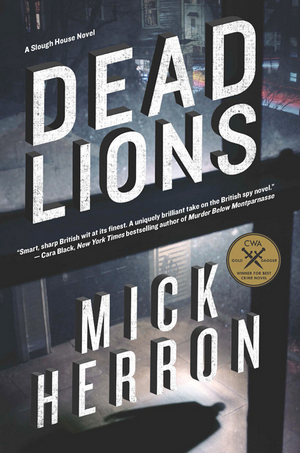
Reconstruction by Mick Herron

An MI6 accountant is brought in to negotiate with a young man who has taken some hostages in a nursery school (2 children and 3 adults). But how did all of these characters get to this point? Why are they here? What’s going to happen after they get out of the school? This novel examines all these things—putting the pieces of the puzzle together so that by the end (and I’m talking the end), the reader is able to put all the pieces together and can construct a pretty clear understanding. This is one of the best structured and written novels I’ve read in a long time.

My full take on the book can be found here.

4 The Kaiju Preservation Society
The Kaiju Preservation Society by John Scalzi

The previous two books on this list were pretty heavy and intense reads. This is anything but. This popcorn movie in a handy book form. It’s about a food delivery app driver who joins up with a group who travels to a parallel dimension to study and protect Kaiju. There are tense and action-filled moments, but given the premise—how heavy can it be? It’s filled with a catchy, irreverent narrative; snappy dialogue; and a first-person narrator you click with almost instantly (or not at all)—it just took me a few pages to know that I was going to find nothing but joy in these pages.

My full take on the book can be found here.

5 Adult Assembly Required
Adult Assembly Required by Abbi Waxman

If the last three years have taught me anything (and it’s likely that it hasn’t, but for the sake of argument, let’s say it did), it’s that Abbi Waxman will make me laugh, warm my heart, maybe even get me misty—while telling a story full of great and quirky characters, with dialogue as good as you’ll find anywhere. That’s what you get here in this story about a young woman who came to LA to get a fresh start on life. But before that start, things have to get a little worse for her—thankfully, she finds herself among a great group of (mostly) women who decide to become her friends.

My full take on the book can be found here.

PUB DAY REPOST: The Lost by Jeffrey B. Burton: Mace and Vira Race the Clock to Find a Kidnapped Girl

I was interrupted more than usual while writing this post by one of my dogs seeking attention. “Could I give you scritches later, girl? I’m trying to talk about fictional dogs,” is a strange mind space to be in.


The LostThe Lost

by Jeffrey B. Burton

DETAILS:
Series: Mace Reid K-9 Mystery, Volume 3
Publisher: Minotaur Books
Publication Date: June 27, 2022
Format: eARC
Length: 288 pg.
Read Date: June 16-17, 2022
Support Independent Bookstores - Visit IndieBound.org

What’s The Lost About?

Mace and his dogs are moving in different circles after the events of The Keepers, and get called to help the FBI look for a missing mother and daughter—they were kidnapped after a home invasion went wrong. Their husband/father, financier Kenneth J. Druckman, was beaten and left behind. It’s up to Mace and Vira to give them a lead.

Sadly, it doesn’t take long for Vira to find the mother’s body on Druckman’s land, or for her to act like Druckman did the killing. It’s not like Mace can just point at the billionaire and shout, “J’accuse!” He’s going to need to find more than the word of his young dog—he also needs to help the FBI (if he can) to find the five-year-old girl before it’s too late.

Kippy Gimm (now a detective) and the rest of Mace’s dogs are, of course, in on this, too.

Non-Mace Perspectives

Typically, I’m not a fan of a first-person narrated book frequently switching to the third person—usually the killer. It doesn’t turn me off of a book, but I really don’t enjoy it. Burton, however, has done a better job of it in this series than most authors. I don’t know that I can say that I’ve enjoyed every instance of it—but, unlike most, in the previous two books in this series, those sections have added to the novel.

That really doesn’t sound like a compliment, but it was one.

In The Lost, most of those scenes/chapters are essential. The way this novel is set up—and the crimes perpetrated by the various criminals involved (and there are a handful)—necessitates that we see things from several perspectives that aren’t Mace’s. There’s just no way that he can find this information (he doesn’t require it, but the reader is going to demand to know what’s going on)—and it’d take months of investigation after these events for the FBI to figure some of this out (assuming they’d try).

The later in the book we get, the better these non-Mace portions get. Particularly those from the daughter’s point of view, they brought a lot to the table and got me really invested in these characters.

I still think I’d prefer more Mace and less of everyone else in future books in the series—but The Lost really shows that this approach can work. It also underlines how good at it Burton is.

So, what did I think about The Lost?

I’m not sure how the space is given to the non-Mace perspectives in this book compares to the previous novels, but it’s significantly more—that alone makes this novel feel different. The fact that many/most of those sections of the book take place prior to Mace’s involvement with the Druckman family also contributes to that feeling. I appreciate the fact that Burton’s doing things in Book 3 to make sure the series doesn’t get in a rut.

Sure, it’d be a fine rut to get stuck in and I’d have gladly read more books that were structurally similar to The Finders and The Keepers.* But I’m glad Burton made the step now and didn’t wait until he needed to shake things up.

* I read The Keepers a year ago and didn’t get the title until right this moment. I’m not too proud to admit that.

I’m not sure that we needed to learn about Kippy’s job woes at this point—it didn’t have an impact on this book, as FBI-centric as it was. It might have been better to talk about her difficulties with her new assignment when it’d have a bearing on the plot, and wouldn’t risk feeling like a repeat when it does come up. It’s not a good position for her to be in—I don’t want to minimize that—I’m just not sure the reader needed to get that information now, I don’t know what we’re supposed to do with it. As complaints go (and I think it’s the only one I had with this book), that’s a pretty minor one.

The pacing on this is strong—we hit the ground running with Mace and Vira at the beginning and we really don’t stop. There isn’t a lot of time here for contemplation and rumination—it’s not a breakneck speed, but it’s a steady jog. Again, it shows that Burton’s doing something different in this book.

I feel like I’m spending too much time talking about how different The Lost is from the other books—and I don’t mean to harp on it, I’m just commenting on the various ways it is. I don’t know that readers who aren’t writing about the book are going to spend that much time thinking about it—I think they’ll note the freshness of it, they’ll feel the overall effect, though. I’m not saying it’s better or worse than the other two, just appreciatively different. And that’s a nice thing.

As always, any time spent with Sue, Maggie May, Delta Dawn, Vira, and Billie Joe is a boon. They’re a fun pack of animals to read about—and I’m already looking forward to their next adventure. Mace and Kippy are good, too—but we all know who the stars are here.

This would be an okay jumping-on point to the series, I’m not sure you’d get the full idea of Vira’s special talents—but that’s okay, it’s not required to appreciate the books. The important thing is that mystery readers—particularly the dog-loving kind—jump on to the series at some point.

Disclaimer: I received this eARC from St. Martin’s Press via NetGalley in exchange for this post—thanks to both for this.


4 Stars

This post contains an affiliate link. If you purchase from it, I will get a small commission at no additional cost to you. As always, opinions expressed are my own.

Book Blogger Hop: Fiction or Non-Fiction?

Book Blogger Hop


This prompt was submitted by Billy @ Coffee Addicted Writer:

What is your reading preference – fiction or nonfiction?

I’ve unintentionally taken a couple of weeks off, thankfully, this is an easy way to come back—because it’s essentially crunching a few numbers. By Non-Fiction, I’m including history, biography, autobiography, memoir, humor collections, essays, science, literary/film criticism, theology…eh, pretty much anything that’s not in the 800s in the Dewey Decimal system (and even some of it). With Fiction, I’m including novels, novellas, short stories, children’s picture books, and comics/graphic novels (other than things like Maus and Persepolis).

It helps that I do a year-end table (and monthly for a while now, too) showing the breakdown by genre, so it didn’t take too much work to tweak it into a Fiction vs. Non-Fiction Graph.
Fiction vs. Non-Fiction Graph

If you ignore 2012 (and I don’t know what I was doing there with only 10% Non-Fiction), I average out at 21% Non-Fiction, 79% Fiction. I’d like to think I read more Non-Fiction than that, but honestly, I’m happy it’s that much.

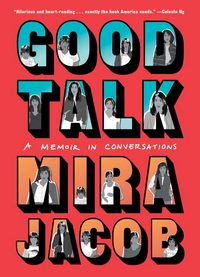
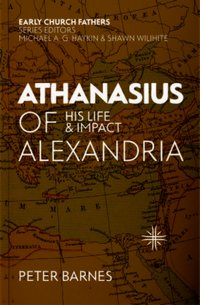
On second thought, that’s not what the question asked, is it? The question wasn’t “What do you read more of?” was it? It was “What is your reading preference?” There’s little better in the world than a well-written Non-Fiction book. I’ve re-read The Right Stuff and The Last Chance to See innumerable times—ditto for The Big Picture by A. Whitney Brown. The books I’ve listed in Just a Spoonful of Sugar—Non-Fiction to Smile With and Learn From* are a real pleasure to read. A well-written biography is dynamite. And so much of the theology that I read does more for my heart and soul than my mind. I could go on here, but I guess I’m trying to say that I love reading a good Non-Fiction book.
* An updated version is due in a few months, but I’m giving myself a chance to add a couple more entries to it first.

Now, I did say “there’s little better in the world than a well-written Non-Fiction book.” Chief among that “little” would be a well-written novel. My preference is definitely fiction—my practice reflects my preference.

The danger in writing these Book Blogger Hop responses in a pretty stream-of-consciousness fashion is that it ended up taking me 421 words and a bar graph to get to the point rather than saying, “Fiction,” and moving on.

What do you want for nothin’? A Rubber Biscuit?

What about you—what’s your poison?

A Wash of Black by Chris McDonald: This is How a Series Should Start

A Wash of BlackA Wash of Black

by Chris McDonald

DETAILS:
Series: DI Erika Piper, #1
Publisher: Red Dog Press
Publication Date: January 27, 2020
Format: Kindle Edition
Length: 218 pg.
Read Date: June 17-18, 2022
Support Independent Bookstores - Visit IndieBound.org

What’s A Wash of Black About?

A year ago, DI Erika Piper was assaulted in the course of her duties, she survived, but it was close. It’s her first day back to work, and it’s a doozy.

A famous actress has been murdered and her body was essentially left on display. It’s a recreation of a very famous scene from a movie she starred in—the same way her character was killed. Well, almost. The film version departed from the novel it was adapted from on a couple of points—this crime scene is loyal to the book. The publicity around this case is going to be huge—as will be the pressure to solve this quickly.
Is this a personal grudge against the actress disguised to throw off the police? Is this a crazed fan paying a gruesome tribute to the actress/movie/novel? Is this someone working off some other twisted purpose hiding it beneath the spectacle?

This killer isn’t satisfied with one murder—and soon it appears the killer has Piper herself in their sights.

DI Erika Piper

Piper arrives in this book nearly fully-formed, sure, there’s room for development and growth in the books to come—but as a character, she’s fully fleshed out. She has a past (that we get a glimpse of), well-established relationships with fellow detectives, her superiors, crime scene investigators, coroner, and so on—as well as a full personal life.

Frequently we get these layers a little at a time with a series like this, and only after a few books, do we get to see the character’s entire world (or at least a good deal of it). McDonald doesn’t go that route, we could be reading the 4th or 8th book in the series, not the first. I don’t mind taking the former route with a character—and I understand why authors might make that choice—but I love it when an author successfully pulls off what McDonald did here.

She might be physically ready to come back to work, but she’s not fully ready on the psychological front (it’d be easy to argue she never will be). I don’t think she came back too soon, but she has some work to do on that front, and it was great to see a character actually do that work rather than the typical “detective does just enough to get the shrink to sign off on their return to duty.”

I particularly enjoyed the relationship Piper has with DS Liam Sutton. They work so well together, and their interactions and rituals bring this part of her world to life. I’m hoping to see more of that in the books to come.

A Mistake or a Red-Herring?

I don’t know about you, but I frequently find myself talking back to books when characters are making mistakes. Boy howdy, did I mutter at Piper a lot about one thing. There’s a witness that I (based on my extensive training and experience as a reader of procedurals) figure should’ve been talked to right away. And Piper and the other detectives ignore them.

Now, was this an oversight on McDonald’s part? Should Piper have tracked this person down? Is this a red herring designed to trip up readers like me?

I’m going to assume it’s the latter—although it could also be a sign that Piper’s a little rusty. Either way, it drove me nuts.

So, what did I think about A Wash of Black?

I had such a great time with A Wash of Black. It hit the spot just right—well-executed and satisfying. It’s not reinventing the wheel, there’s nothing revolutionary about it. It’s a solid, confident police procedural that delivers all the twists and complexity that the genre demands—with a good cast of characters, an engaging protagonist, and a compelling killer. You don’t need to be flashy or to subvert conventions or anything when you get everything as right as this one does.

I said it above, but it bears repeating—there’s no indication that this is the first in the series—or a debut for the novelist. McDonald approaches this with the assurance of an established writer. It shouldn’t need to be said, but just to be safe, I will—this is not the same kind of book as his Stonebridge Mysteries, and it takes no time at all to see that. Don’t go looking for anything cozy here.

I’m eager to come back for the second, Whispers in the Dark, in a couple of weeks. In the meantime, I heartily recommend this to you.


4 Stars

20 Books of Summer

This post contains an affiliate link. If you purchase from it, I will get a small commission at no additional cost to you. As always, opinions are my own.

An Explorer’s Guide to John Calvin by Yudha Thianto: Calvin 101

An Explorer's Guide to John CalvinAn Explorer’s Guide to John Calvin

by Yudha Thianto

DETAILS:
Series: Explorer's Guides Series 
Publisher: IVP Academic
Publication Date: July 11, 2022
Format: eARC
Length: 256 pg.
Read Date: June 12-19, 2022
Support Independent Bookstores - Visit IndieBound.org

What’s An Explorer’s Guide to John Calvin About?

IVP Academic’s website describes the Explorer’s Guide Series as:

Anyone who has ventured into new territory knows the importance and benefit of having an experienced guide. Discovering the classics of Christian theology is no different.
The Explorer’s Guide Series acts as a guide for those who are exploring some of the great Christian texts and theologians from the church’s history.
Written by scholars with years of expertise, these volumes will acquaint readers with the sometimes unfamiliar context in which these classic texts were written and help readers navigate the rich yet often complex terrain of Christian theology. New and experienced readers alike will benefit from these volumes as they continue on their journey of faith.

This volume focuses on John Calvin, the Genevan Reformer. Yudha Thianto has been introducing students at Trinity Christian College to Calvin for years. Now he aims to bring an accessible overview of his life and thought through this book.
Part One: Calvin the Man

The first part of this book focuses on the historical context and the person of Calvin. Why do people still read him today? Why is he so important—or at least why is he regarded as such?

After sketching out why Calvin’s worthy of study, Thianto gives a brief (34 page) biography of Calvin. I’ve read a handful of full-length biographies of John Calvin, and I learned a thing or two from this.

Thianto follows this biography with a FAQ about Calvin—addressing several important questions and controversies about him and his teaching. Several parts of that FAQ were impressive, and I appreciated his approach to it (he did duck a couple of typical controversial points that are brought up—but it’s safe to argue that those are for less introductory works). Then he spends a chapter focusing on Calvin as a pastor. It covers some of the material from the biography, but from a different angle—and it covers a lot of additional material, too. Whatever Calvin’s legacy may be, this chapter addresses what was likely the most important part of his life to him.

Part Two: A Guide to The Institutes of the Christian Religion

A little more than half of the book is spent on the book Calvin’s best known for. Thianto spends a chapter talking about the different editions the book went through, where Calvin was in his career when each was written, and discusses some of the major differences between editions.

The final version was the 1559 edition, which is composed of four books/parts. Thianto spends one chapter on each book—describing the flow of thought, some important arguments made, and the major doctrinal teachings.

This is not an easy work to summarize and condense into a little over 100 pages, and I’m sure some will say Thianto glossed over or skipped something important—he undoubtedly did. But he also covered most (if not all) of the essentials). Something like this part of the book would be great to have for someone diving into the book for the first time.

So, what did I think about An Explorer’s Guide to John Calvin?

First, I really like the idea for this series, and hope to get my hands on other volumes. Naturally, I think someone as ill-understood and intimidating as Calvin is a good subject for this kind of book.
I appreciated Thianto’s approach to Calvin, the misunderstandings surrounding him (although he doesn’t cover all of them), and his writings. His experiences in the classroom have given him a solid understanding of those things that need to be covered for someone’s initial/early exposure to the Reformer, and it shows.
As this is supposed to be a guide for those with little-to-no exposure to Calvin, I can’t complain about the lack of depth displayed on some issues—and I really wouldn’t want to, anyway. The only thing that jumped out at me to make me wonder about the book is a point in the conclusion where he suggested that different beliefs about the Trinity are equivalent to differences regarding sacraments or predestination and that Calvin would see them as such. It was a minor point in the conclusion, and I think the overall point was sound—but the Trinity isn’t something Calvin would put on the same level as a debatable point of doctrine.

This is a great resource—a fantastic introduction to Calvin and a handy guide to reading the Institutes for yourself. If you’re curious about Calvin and don’t want to do the heavy lifting required by a full biography and/or reading his Institutes, I’d strongly recommend picking this up and giving it a read (and hanging on to it for future reference).

Disclaimer: I received this eARC from InterVarsity Press via NetGalley in exchange for this post—thanks to both for this.


4 Stars

This post contains an affiliate link. If you purchase from it, I will get a small commission at no additional cost to you. As always, opinions are my own.

Saturday Miscellany—6/25/22

Odds ‘n ends about books and reading that caught my eye this week. You’ve probably seen some/most/all of them, but just in case:
bullet Whither Children’s Bookselling? asks Publishers Weekly
bullet In Defense of Unsympathetic Protagonists
bullet Copywriter Slash Novelist: How My Career in Advertising Helped Shape Me as a Novelist—Matthew Norman talks about some of the lessons he carries with him today
bullet Summer Reading Assignments for Grown-Ups
bullet “Dance” like no one’s watching, but for bookish types
bullet Canva 101: How to Use Canva as a Book Influencer—I really need to play around with this post next time I try to display my lack of graphic design ability
bullet The NeBUloUs Topic of ARCs—a dose of sagacity from The Orangutan Librarian
bullet Novels with Terrific Opening Lines—Jami Fairleigh shares some of her favorites
bullet Book Quotes to Love in 2022—Read Betwixt Worlds shares some favorites from this year

A Book-ish Related Podcast episode (or two) you might want to give a listen to:
bullet Page Break with Brian McClellan Ep 44 – Scott Lynch—Good conversation about mental health, writing, Lynch’s plans, and more.

This Week’s New Releases that I’m Excited About and/or You’ll Probably See Here Soon:
bullet The Self-Made Widow by Fabian Nicieza—Profiler-turned-suburban mom and recently-no-longer-disgraced journalist team up on a murder investigation again. I am very excited about this follow-up to one of last year’s best debuts.
bullet Movieland by Lee Goldberg—the strongest outing yet for rookie detective Eve Ronin, as she and her partner investigate a killing in a State Park.
bullet One Decisive Victory by Jeffrey H. Haskell—I won’t look at the description of this one until I read the second book in a couple of weeks here, but as much as I enjoyed Book 1, I’m happy to see that it’s out.
What 'you have too many books' actually means

Holy Chow by David Rosenfelt: Keeping the “Semi” in Andy’s Semi-Retired Status

Holy ChowHoly Chow

by David Rosenfelt

DETAILS:
Series: Andy Carpenter, #25
Publisher: Minotaur Books
Publication Date: July 5, 2022
Format: eARC
Length: 304 pg.
Read Date: June 20, 2022
Support Independent Bookstores - Visit IndieBound.org

What’s Holy Chow About?

About a year ago, Rachel—a new widow in need of a companion—came into the Tara Foundation’s dog rescue facility and fell in love with a Chow Chow named Lion (who reciprocated)—Andy remembered her fondly. Then she calls out of the blue with a favor—will Andy take the dog if she dies and her stepson, Tony, can’t/won’t take the Lion?

Andy says of course he will. Within a week, Rachel’s been murdered and Andy learns more about this woman. She was rich, in an eye-popping kind of way, and Andy is told to come to the will reading. He’s confused by this, but assumes it has to do with taking possession of Lion (just in an unusual way). The reading is interrupted by the police coming to arrest that stepson for her murder.

Andy visits Tony and decides to take his case—for solid, evidence-based reasons, and not at all because he seems like a nice guy, his Great Dane mix had recently died and he’s excited to take Lion. Okay, that’s not true—Andy smells something off about the case, but it’s (naturally) because Tony’s a nice, dog-loving guy.

The police and prosecution are presenting this as a case of an heir being angry at the size of their inheritance. But Tony doesn’t have a history of being that interested in money. Andy wonders if the murder might have something to do with the fact that Rachel had been taking an interest in her late husband’s company’s day-to-day activities lately. Or is there maybe something else afoot?

It’ll take the combined efforts of Andy’s firm, The K-9 Team, and the Bubeleh Brigade (the retirees-turned-hackers that Andy uses from time to time) to get to the bottom of this.

When Will They Ever Learn?

I’m not wondering why prosecutors don’t immediately drop the case when they hear that Andy has taken on a client. He does have a few guilty verdicts on his record. Although, you would think they’d require the police to tighten up their cases and make sure there aren’t any threads hanging once Andy requests discovery.

But what I wonder is that given his track record, why they don’t take him seriously when he calls the FBI, DEA, Homeland Security, or any other three-lettered agency. (note: I wonder similar things when Joe Pickett starts meddling in non-wildlife issues). I’m not saying they need to roll out the red carpet or anything for him—don’t let Andy Carpenter, of all people, call any shots. But he shouldn’t have to rely on favors from a friend of a friend or threats to get someone to take him seriously anymore.

How does no one have this conversation:

Agent 1: Hey remember that guy who tipped us off to that terrorist organization and saved all those lives a couple of years ago?
Agent 2: That lawyer with the hot wife and the scary bodyguard, sure. Didn’t he also tip us off to the smuggling ring last Winter?
Agent 1: Come to think of it he did.
Agent 2: Why are you bringing him up?
Agent 1: Well, he’s got this theory about _________ now.
Agent 2: Might be worth sitting down with him, looking at his theory.

Although, some of that threatening and calling in favors can make for entertaining scenes. So, y’know…

So, what did I think about Holy Chow?

Andy Carpenter #25? That’s a mind-boggling number. I know it wasn’t that long ago that I read #24, but I don’t think it registered. So, does the Andy Carpenter series have anything new up its sleeve? (I’m tempted to make an old dog/new tricks joke here) I won’t rule it out, but we don’t see much new here.

But that doesn’t make this stale, either. There’s a comfort and a reassurance in knowing Andy’s behavior while the jury deliberates, the fact that Pete and Vince are going to bust his chops and put their food on his tab, that taking a walk with his dogs will help Andy come up with an idea, and so on.

I’m not trying to take a shot at anyone here, but where this feels comfortable and not tired and repetitive is that Andy has settled into these patterns—this is his life. He’s not, say, constantly second-guessing his choice of career (as much as he complains about it), he’s not trying to decide between a sexy Homicide Detective love interest and a lethal and hot Security Specialist love interest after 30+ books. Just to come up with some completely random example that no way could be describing any particular series.

I guess what I’m trying to say is that the twenty-fifth novel in this series might not have a lot that’s new, there’s still a lot of fun to have. And, we might get a glimpse of a different side of a long-running character (a continuation of something from Citizen K-9)

The humor is still present and sharp, the courtroom antics are fun (maybe a little subdued this time compared to others because of the case), and you can’t beat the time hanging with these characters. Both the solution to this case, the reveals involved, and the resolution are as well-delivered as always.

Readers new to the series or those who’ve been around since 2003* will find plenty to enjoy in the pages of Holy Cow. A good time should be had by all.

* Or at least since Open and Shut, no matter when they read it.

Disclaimer: I received this eARC from St. Martin’s Press via NetGalley in exchange for this post—thanks to both for this.


4 Stars

This post contains an affiliate link. If you purchase from it, I will get a small commission at no additional cost to you. As always, opinions are my own.

Page 222 of 610

Powered by WordPress & Theme by Anders Norén