Author: HCNewton Page 246 of 623

Force of Nature (Audiobook) by C.J. Box, David Chandler (Narrator): Wyoming Requiem

I’ve ended up working on this post a lot longer than most—definitely longer than any other book in this series. I know I didn’t say everything I wanted to, but I think I covered all the essentials. I also think my trimming ideas/paragraphs/rabbit trails didn’t make this too difficult to follow. Let me know if I missed that mark, will you?


Force of NatureForce of Nature

by C. J. Box, David Chandler (Narrator)

DETAILS:
Series: Joe Pickett, #12
Publisher: Recorded Books
Publication Date: March 20, 2012
Format: Unabridged Audiobook
Length: 11 hrs., 23 min.
Read Date: April 13-15, 2022
Support Independent Bookstores - Visit IndieBound.org

What’s Force of Nature About?

Nate Romanowski.

That’s the short version anyway—but it’s not a helpful answer.

Since we met Nate, we’ve known that he’s living off the grid for more than philosophical reasons—he’s not just a modern Thoreau, But we’ve never been given the story behind that. He’s offered to tell Joe, but Joe’s smart enough to know he shouldn’t know (but he is curious).

Well now, those people he’s been avoiding are getting close to finding him. They are approaching, questioning, kidnapping (if deemed necessary), and putting all other sorts of pressure on those who may know something about Nate or his whereabouts. This includes new characters as well as well-established characters—including all the Picketts, his friends on the reservation, his mysterious friends in Idaho, and others.

To protect those who are important to him, Nate has to stop hiding and go on the offense. Along the way, the reader gets answers to a lot of the questions about him that we’ve built up over the previous eleven novels.

We also get another lesson in watching out for your ears around Nate Romanowski, just in case Free Fire wasn’t enough for you.

Yes, there are several other things going on, but they all tie back to Nate Romanowski—his past, his present, and if he has a future.

A Gripe

This is semi-spoilery, but without this, I might have rated this higher, so I have to talk about it. I don’t think reading this is going to ruin anything plot-wise. Still, feel free to skip down to the next heading.

Nate, Joe, and Marybeth all agree that the Picketts have to get out of town for their own safety. So Joe, Marybeth, April, and Lucy get to the airport so they can get out of the reach of those who might try to use them to get to Nate.

See the problem there? I said nothing about Sheridan. Sure, she’s away at college, but we’re talking about people who have gone to Idaho and Colorado to find people to get leverage on Nate. Does anyone really think they can’t get to Laramie? Yes, Joe sends his FBI buddy to talk to her, but that’s to get information, not to watch out for her.

I literally kept talking back to the recording, “What about Sheridan?” Is it possible I missed the two sentences it would’ve taken for Box to justify this choice, but I don’t think that’s the case.

David Chandler

This is book 12, David Chandler has this series down—I’m sure he’s not on auto-pilot or anything, but at this point, it’s got to be comfortable for him.

That said, he’s on his game here, and really gets to stretch his wings a little—there’s (obviously) more Nate than usual, and Nate has a greater emotional range than usual, too. Bang-up job by Chandler.

So, what did I think about Force of Nature?

This is the most action-packed, violent, and unpredictable Joe Pickett novel yet. I’m not sure it’s even close—I’m not sure it’s the best novel in the series, but I’m guessing it’s quite the fan-favorite because of all the Nate material.

It’s the C.J. Box-equivalent of Robert Crais’ L.A. Requiem where we get all of Joe Pike’s background* in the midst of a gripping thrill ride. There’s a version of this post that contains several paragraphs comparing/contrasting these two novels that I’m sorely tempted to write, but I can’t imagine anyone wanting to read it all. This will both serve to humanize Nate as well as build up his mystique. A nice trick to be sure.

* I just got a very real lesson in careful typing by invoking Joe Pike in a discussion about a Joe Pickett novel.

Am I happy to have a lot of questions answered about Nate? Yes. Do I have a whole bunch of new questions about him? Yes. Do I sort of hope that he disappears for at least a book so we can refocus on Joe? Yes. Do I think that anyone with a mild interest in the Joe Pickett series will dig this novel? No doubt in my mind.


4 Stars

This post contains an affiliate link. If you purchase from it, I will get a small commission at no additional cost to you. As always, opinions are my own.

Book Blogger Hop: From Beginning to End?

Book Blogger Hop


This prompt was submitted by Elizabeth @ Silver’s Reviews:

Do you finish reading every book that you have slotted for a review?

Step One in answering this is determining what the question means by “slotted.” Really, every book I pick up I plan on blogging about—the whole point of this endeavor is to keep me from treating books like disposable items and to think about them.

Once or twice a year, though, I just can’t finish a book because of time or interest. But those are books that I’ve told myself I’d blog about, so I’m not sure that counts as “slotted” (I don’t count them like that).

On the other hand, there are books that I’ve told others I’d blog about. If we’re talking about a NetGalley or Book Tour book, then yes, I finish it (sometimes I sacrifice sleep or mood to do so, but yeah, I’ll finish it). If it’s a book I agreed to blog about that an author/publisher/publicist sent me, then yes—that’s the deal I make with them: if they provide it, I’ll read it and talk about it. No matter what I think of it.

There’s been one exception to that—an author sent me a Space Opera trilogy. I read 2.3 (or so, I don’t remember exactly) of the books, and had pretty positive things to say about the first two. I wasn’t crazy about the third, but I was curious about where the story was going to end up and had faith in the overall plot. Then everything fell apart and I just had to stop, I couldn’t force myself to continue.

That was almost five years ago, however, and I’ve been doing this for about 9 years. I figure I can make one exception to my rule. I don’t have real numbers, nor do I have time/inclination to get them–but I figure I’m north of 99% on completion.

This, I guess is just a long-winded way of answering, “Yes.”

What about you?

Old Made New by Greg Lanier: A Practical and Engaging Guide for Laypeople

Old Made NewOld Made New:
A Guide to the New Testament
Use of the Old Testament

by Greg Lanier

DETAILS:
Publisher: Crossway
Publication Date: April 12, 2022
Format: Paperback
Length: 137
Read Date: April 10-17, 2022
Support Independent Bookstores - Visit IndieBound.org

What’s Old Made New About?

Lanier’s goal is to enable the average reader of the New Testament to understand how and why the authors would use an Old Testament passage at a particular point. As often as the NT uses the OT, that’s so important.

He begins—and this is beyond sad that he has to—by explaining why the reader of the NT would want to understand their use of the OT. He then differs his approach from others—primarily he’s not going to get bogged down in or distracted by technical considerations. As interesting as I find that kind of thing, he has a point.

In Chapter 1, he explains his method for analyzing the NT usage of a portion of the OT (I won’t get into that here), and then he spends the next few chapters demonstrating it.

The bulk of the book consists in tracing the NT authors’ engagement with the OT along three major themes:
Chapter 2—articulating the gospel in terms of the saving work of God in history and the gift of salvation to individual believers
Chapter 3—articulating the fullness of Jesus in his person and work, both as divine Son and human Savior
Chapter 4—articulating the identity of the church as eschatological Israel, as well as its mission and conduct for today

Each chapter has a mix of shorter examples that help prove out these themes, as well as longer case studies (six per chapter) that model for the reader how to do the work.

Appendix

There is a fourteen-page appendix to this book, “Inventory of New Testament Uses of the Old Testament,” listing most of the major agreed-upon uses of the Old Testament in order of New Testament chapter and verse, and then notes what kind of NT usage (Quotation, Allusion, Citation). There are some disagreements about what verses are NT uses of the Old, so Lanier keeps it to those with widespread agreement.

This is a very useful list both for the sake of reference and to help the reader practice the principles in the book. I know I’m coming back to this appendix.

I would’ve liked another version of this list using the same data, but in order of the OT book/chapter/verse—only to make things easier.

So, what did I think about Old Made New?

Lanier did a great job of balancing explaining his points with demonstrating the principles, and showing why the reader would want to use these principles. This is an engaging book, an eminently practical read, and an easy-to-use hermeneutic guide.

I really liked Lanier’s 3-step approach to analyzing the usages, it’s easy to wrap your brain around both as an example and for following the example. His case studies are both great object lessons and interesting for what he shows about the passage. I’d have had no problem reading these chapters if they were twice as long for personal benefit. Getting a handle on tools like this is such an aide for personal study and understanding, and Lanier’s given the Church a great gift with such an easy-to-understand and easy-to-use guide.

I definitely recommend this to your attention, study, and application. You’ll be rewarded.


4 Stars

This post contains an affiliate link. If you purchase from it, I will get a small commission at no additional cost to you. As always, opinions are my own.

Saturday Miscellany—4/23/22

On Monday, I hit a little landmark:

A few years ago, I’d struggle to get 4 posts a week–so it came as a surprise when WP let me know last year that I’d gone 30-40 days in a row ( the details are fuzzy). Then I turned it into a personal challenge–could I hit 100? It was unexpectedly easy. Then I decided to try for a year. I will admit I struggled a bit, but I managed to pull it off. A few months back, I thought about taking the day after the one-year mark off, but I forgot to. Now, I’m not shooting for 2 years, but I have no intention of taking a break or going back to my early/very sporadic days. I like the discipline–but if I happen to miss a day, I’m not going to sweat it.*

Much.

Anyway, you didn’t come here for my own horn-tooting, on with the miscellany:
Odds ‘n ends about books and reading that caught my eye this week. You’ve probably seen some/most/all of them, but just in case:
bullet I’m a High School Junior. Let’s Talk About ‘Huckleberry Finn’ and ‘Mockingbird.’—worth a read if you can evade the paywall
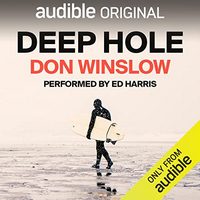
bullet A preview clip from CBS Saturday Morning (the whole thing just aired, I guess) where Don Winslow announces his retirement—from writing, anyway. Hate to see him set down the pen, but at least I now have a chance to catch up on the backlog.
bullet There’s more Winslow to come on this list, he does have a book releasing next week, and I’m excited for it.
bulletMurder, revenge, power: Don Winslow reveals classical inspirations for crime novel ‘City On Fire’—Nunc hoc in marmore non est incisum
bullet Author Don Winslow Reveals Why We’re Obsessed With the Mafia and What’s To Love About His New England Mafia Book City on Fire
bullet He also tweeted this video from his Polish publisher showing the book printed—I could watch this kind of thing all day
bullet Neil Gaiman on book bans and the secret to a good book-to-film adaptation—anytime is a good time for a Gaiman interview
bullet A Veterinarian’s Perspective on Writing Animals—I’d already put this vet’s book on my list when I read this piece on CrimeReads. Now I’ve moved it a little higher on the list.
bullet Rarely Seen Paintings by J.R.R. Tolkien Portray a Lush ‘Lord of the Rings’ Landscape—ooh…
bullet Ben Aaronovitch Celebrates 11 Years of ‘RIVERS OF LONDON’—haven’t had a chance to watch this yet, but looking foward to it.
bullet 8 Reasons Why Reading Is Better Than Sleeping—in case there was any doubt
bullet Do You Annotate? Pros and Cons
bullet Are Readers Patient?—a question I’d never have thought to ask
bullet Alternatives to Goodreads: Literal—I’d never heard of this Goodreads Alternative.
bullet It’s okay to collect books—yup
bullet The books that shaped me as a reader – The Early Years!—I love reading things like this
bullet The Problem With “Problematic” | The Book Community’s Perpetual Witch Hunt—I wouldn’t co-sign every jot and tittle of this, but most of them….

This Week’s New Releases that I’m Excited About and/or You’ll Probably See Here Soon:
bullet Pay Dirt Road by Samantha Jayne Allen—a small Texas town is rocked by the murder of a waitress. Which is a lousy way to pitch this, but in a sentence, that’s as good as I can do. Why don’t you just read my post about it?
bullet King Of The Crows Anniversary Edition by Russell Day—This was one of my (possibly the) favorites of 2020, the anniversary edition looks gorgeous. Get it while you can.
bullet Blood Sugar by Sascha Rothchild—A woman fights to clear her name after being falsely accused of murdering her husband. But she has killed three other people…
bullet The Sweet Goodbye by Ron Corbett—An FBI agent looks into small-town corruption in northern Maine.
bullet Fifty-Four Pigs by Philipp Schott—A Canadian veterinarian investigates a murder to save a friend

Lastly, I’d like to say hi and extend a warm welcome to Sarah Tavanello, who followed the blog this week. Don’t be a stranger!

Opening Lines: Sixteen Ways to Defend a Walled City by K.J. Parker

We all know we’re not supposed to judge a book by its cover (yet, publishing companies spend big bucks on cover design/art). But, the opening sentence(s)/paragraph(s) are fair game. So, when I stumble on a good opening (or remember one and pull it off the shelves), I like to throw it up here. This one grabbed me with the voice, the perspective, and the attitude. If Parker can maintain this, I’m in for a great time.

from Sixteen Ways to Defend a Walled City by K.J. Parker:

I was in Classis on business. I needed sixty miles of second-grade four-inch hemp rope—I build pontoon bridges—and all the military rope in the empire goes through Classis. What you’re supposed to do is put in a requisition to Divisional Supply, who send it on to Central Supply, who send it on to the Treasurer General, who approves it and sends it back to Divisional Supply, who send it on to Central Supply, who forward it to Classis, where the quartermaster says, sorry, we have no rope. Or you can hire a clever forger in Herennis to cut you an exact copy of the treasury seal, which you use to stamp your requisition, which you then take personally to the office of the deputy quartermaster in Classis, where there’s a senior clerk who’d have done time in the slate quarries if you hadn’t pulled certain documents out of the file a few years back. Of course, you burned the documents as soon as you took them, but he doesn’t know that. And that’s how you get sixty miles of rope in this man’s army.

Opening Lines Logo

Ordinary Grace by William Kent Krueger: A Summer In the Valley of the Shadow of Death

Ordinary GraceOrdinary Grace

by William Kent Krueger

DETAILS:
Publisher: Atria Books
Publication Date: March 26, 2013
Format: Hardcover
Length: 307 pg.
Read Date: April 19-20, 2022
Support Independent Bookstores - Visit IndieBound.org

All the dying that summer began with the death of a child, a boy with golden hair and thick glasses, killed on the railroad tracks outside New Bremen, Minnesota, sliced into pieces by a thousand tons of steel speeding across the prairie toward South Dakota. His name was Bobby Cole. He was a sweet-looking kid and by that I mean he had eyes that seemed full of dreaming and he wore a half smile as if he was just about to understand something you’d spent an hour trying to explain. I should have known him better, been a better friend. He lived not far from my house and we were the same age. But he was two years behind me in school and might have been held back even more except for the kindness of certain teachers. He was a small kid, a simple child, no match at all for the diesel-fed drive of a Union Pacific locomotive.

What’s Ordinary Grace About?

It’s the summer of 1961, and thirteen-year-old Frank and his younger brother, Jake, are going to be irrevocably changed over the next few months. Their small Minnesotan town of New Bremen, will be rocked by five deaths and some near-deaths, as well.

Frank and James live there with their older sister, Ariel—eighteen and about to leave their parents’ home. Nathan and Ruth married before Nathan went to serve in WWII—when he came home, he became a Methodist minister instead of the lawyer he’d planned on being before the war changed him. Ruth hasn’t entirely forgiven him for that but does her best to take part in congregational life, and to make do with his small salary.

Ariel is their golden child, Julliard-bound. Jake stutters, and is clearly fearful of almost everything—and everyone—around him, drawing what little confidence he has from his proximity to Frank. Frank is the family rebel—by most standards, he’s only slightly mischievous, but compared to the rest of the Drum family, he’s the equivalent of Bart Simpson.

The first death (see the quotation of the novel’s first paragraph, above) is that of someone that Frank and Jake knew–even played with. The boys discover the second body, a stranger to them. Those two are enough to alter the course of their development to a degree—but the next three (and the accompanying events) are what will leave an indelible mark on the entire family.

God’s Awful Grace

Krueger likes to use the phrase “the awful grace of God,” and makes other references to it, he wants that idea in your head as you read about the horrible things and deaths the reader and the characters encounter. You’re supposed to think about the (apparent) contrast between “awful” and “grace”, as well as catch the references to Aeschylus and Robert F. Kennedy (and, by extension, Martin Luther King’s death).

As far as the Aeschylus/RFK allusions go—yes, think about those. I think there’s a lot to chew on there. Sure Kennedy has yet to cite that poem, but the narrator has heard it–he’s writing from the perspective of four decades later.

But the former suggestion? I’m sure that Krueger, and many/most of his readers, know the phrase isn’t to evoke something extremely bad or shocking/saddening, but the archaic definition of awe-inspiring or enormous. But the reflex for contemporary readers isn’t to go with the lesser-known/used understanding but to think of the surface and the tension between the ideas, and it bothers me that we’re supposed to spend time on that understanding, even if it’s only a little bit. I’m not sure why it does, but it does.

But while I’m here on the subject of God’s grace, can I just say that the one sermon that we get all of from Nathan Drum, during the darkest part of this book, is one of the best I’ve read in a long time. Drum doesn’t understand grace the same way that RFK or Aeschylus does—grace to him is the unmerited sort, the kind that will come to someone in loss, in misery, in despair, and will cause them to believe, hope, and love. The book was worth the effort for this sermon alone, the rest is just gravy.

Krueger’s Prose

On the one hand, the prose is gorgeous—Krueger’s one of those authors that feels like he’s writing, perpetrating hooptedoodle. He breaks most of Leonard’s rules for writing all over the place, notably, “If it sounds like writing, I rewrite it.” But, as Leonard notes himself, there are authors who can skip them–Krueger’s one of those authors.

Still, there are a couple of things that got under my skin and would frequently take me out of the moment. For one, Krueger is sparing in his use of commas—a couple of times, I’d read a sentence out loud the way it’s in the book, and then with the missing commas; and I think I could get close to understanding why he made the choice. I didn’t agree, but I could maybe see what he’s going for.

But the thing that really bothered me was the dialogue. It really reads like someone wrote it, everyone (or almost everyone) is almost constantly sounding like they’re making a profound point about whatever. Particularly when it comes to Frank and his brother—I don’t need prepubescent boys uttering sentences with layers of meaning and dripping with wisdom nearly every time they say something.

That doesn’t mean that some of those sentences aren’t great and readable and even quotable. It just means it bothered me.

So, what did I think about Ordinary Grace?

“… He’s a vet. Korea. Had a tough time over there. It’s eating at him, I believe. He drinks. He’s hard on his family…”

“Sometimes, Nathan, I think it wasn’t as what we took into the war. Whatever cracks were already there the war forced apart, and what we might otherwise have kept inside came spilling out.”

Once I’d gotten on board with the hooptedoodle, I was able to appreciate what Krueger was about. This really brought Tiffany McDaniel’s The Summer That Melted Everything to mind (and Betty to a lesser extent). I also was reminded of Songs In Ordinary Time by Mary McGarry Morris, A Prayer for Owen Meany by John Irving, and early Richard Russo, as I read this. None of which would ever be considered for the Edgar, Anthony, Macavity, or Barry Awards like Ordinary Grace won. I know those awards mean I should think of this as a Mystery or Crime novel, but I just don’t. It fits with the others better, I think (but I do see why it won those).

It’s a book that will get its hooks into you, if you let it, just not the way that most Mystery novels do. It will make you think, it will make you feel, and it may cause you to think deeper (or more shallow, I suppose) thoughts about God and His grace. But mostly, it’ll make you think about humanity and many of the ways we can harm each other, intentionally or not.

I won’t say that I enjoyed 98% of this book—but the entire time I spent reading it I was fully aware that I was reading something of quality–something that deserved my attention, and I was glad to give it. I also had no trouble seeing why my friend recommended it to me–and I owe her a solid recommendation in return.


4 Stars

This post contains an affiliate link. If you purchase from it, I will get a small commission at no additional cost to you. As always, opinions are my own.

Blessed Are the Bank Robbers by Chas Smith: Not as Catchy as a Story about Billy Joe and Bobbie Sue

Blessed Are the Bank RobbersBlessed Are the Bank Robbers:
The True Adventures of an Evangelical Outlaw

by Chas Smith

DETAILS:
Publisher: Abrams Press
Publication Date: March 14, 2022
Format: Hardcover
Length: 264 pg.
Read Date: April 11-18, 2022
Support Independent Bookstores - Visit IndieBound.org

What’s Blessed Are the Bank Robbers About?

From the Publisher’s Site:

Chas Smith grew up deeply enmeshed in the evangelical Christian world that grew out of Southern California in the late 1960s. His family included famous missionaries and megachurch pastors, but his cousin Daniel Courson was Grandma’s favorite. Smith looked up to Cousin Danny. He was handsome, adventurous, and smart, earned a degree from Bible college, and settled into a family and a stable career.

Needless to say, it was a big surprise when Cousin Danny started robbing banks. Known as the “Floppy Hat Bandit,” Courson robbed 19 of them in a torrid six-week spree before being caught and sentenced to seven years. When he tried to escape, they tacked on another year. And when he finally got out, despite seeming to be back on the straight and narrow, Cousin Danny disappeared. Banks started getting robbed again. It seemed Cousin Danny might be gunning for the record.

Smith’s Blessed Are the Bank Robbers is the wild, and wildly entertaining, story of an all-American anti-hero. It’s a tale of bank robberies, art and jewel heists, high-speed chases, fake identities, encrypted Swiss email accounts, jilted lovers, and the dark side of an evangelical family (and it wasn’t just Danny; an uncle was mixed up with the mujahideen). It’s a book about what it means to live inside the church and outside the law.

Some of the material in this book comes straight from Courson himself—emails while he was a fugitive and writing he did while in prison to describe his career.

Other Bank Robbers

Scattered throughout are descriptions of other prodigious bank robbers, their streaks, and their methods. Most of these are pretty interesting and probably worth a book themselves. It’s not my typical genre, but there are a couple of these that I’d jump on.

So, what did I think about Blessed Are the Bank Robbers?

Well, it wasn’t bad. A lot of it was pretty entertaining and well-written. Significant portions of it were a blast and really sucked me in. But for every section of the book that sang, there was a section or more that fell flat. I had high hopes for this one and none of them were met.

This felt like the journalism surrounding Capone and the like during their heyday—it was a celebration of Courson’s crimes. The acknowledgment that his crimes caused actual harm came from Courson himself in a throwaway comment. Sure, it’s exciting to read about this kind of crime and Courson is clearly a charismatic figure. But celebrating him like this left a bad taste in my mouth. Then sending emails back and forth with him while he’s “on the lam”* and daydreaming about following in his footsteps? Were Smith a starry-eyed adolescent, I could accept it, but in a father? It discredited the author in my eyes (it would’ve taken a 2-sentence paragraph where he acknowledged the problem with it).

* I did appreciate getting the etymology of that phrase.

I don’t think Smith did an effective job of exploring the link between Courson’s Calvary Chapel upbringing and his turning to a life in crime—it’s there if you look for it (and make some assumptions), but if you’re going to put “Evangelical” in the subtitle, you need to expand on this.

There was a lot of promise in the premise, some entertaining/informational moments, and it was an easy read—but ultimately, it was a letdown. I fully expect that others won’t stumble over the things I did (some of which are above), and I don’t know that I would argue with them.


2 1/2 Stars

This post contains an affiliate link. If you purchase from it, I will get a small commission at no additional cost to you. As always, opinions are my own.

Spelling the Month in Books: April

Spelling the Month in Books: April
I might need to cut myself a little slack on the whole “books I read before I blogged” requirement for the rest of the year, I had a hard time coming up with much to say about these five…

A About a Boy

About a Boy

Nick Hornby’s novel about perpetual adolescent, Will, befriending the awkward and introverted teenage, Marcus, wasn’t at all what I expected from the follow-up to High Fidelity. But, by the end, it won me over. NOwhere near as fun as Hornby’s first novel, but I recall it showing real growth in writing and characterization.

P Pride and Prejudice

Pride and Prejudice

I was clearly having difficulty coming up with a P, if I decided to use Jane Austen’s second novel. A handful of years ago, I decided I’d read her collected works–and, I just did not understand the enduring appeal of them. I realize that this is entiredly a problem with me, but, nevertheless, it persists. It does have killer opening line, I will admit.

R The Riddle of the Wren

The Riddle of the Wren

This was Charles de Lint’s first novel, and after reading it, I could absolutely see where he’d end up having the career he did. I didn’t wow me, but there was something to the writing and the worlds described that suggested the talent he’d later display. I remember the protagonist, flaws and all, making a strong impression.

I I Thought You Were Dead

I Thought You Were Dead

Pete Nelson’s use of the protagonist’s dog, Stella, elevated this from your typical young white guy trying to put his life together novel. When it’s just Paul and Stella, they have some great conversations. I really did enjoy Paul and the other characters in the novel, too–it’s not just because of Stella that this stuck in my mind. But her presence, her relieved/excited greeting “I thought you were dead” every time Paul came home, and their relationship is the best part of it.

L Last Chance to See

Last Chance to See

I wasn’t prepared for the serious side of Douglas Adams when this book came out in ’91, but it quickly won me over. Adams’s humor and quirky way of looking at things shone in his narrative about touring the world with zoologist Mark Carwardine as they look for animals on the verge of extinction and try to capture the wonder of these animals while its still possible to do so.

WWW Wednesday, April 20, 2022

The theme for the week around my home has been tired–my youngest spent a couple of days in the hospital this weekend thanks to a common cold knocking his immuno-suppressed body for a loop. Something nobody tells you about getting a kidney transplant–sure you get a new lease on life, but every now and then some random and relatively wimpy virus can put you down for days. While he’s recovering, we are, too–to a much lesser extent. Still, it’s surprising how much of a toll just sitting in a hospital room for a day can take. Nevertheless, I’ve managed to do a little reading (and less writing, but I’ll catch up sometime…maybe).

Which brings us to today’s WWW Wednesday:

This meme was formerly hosted by MizB at A Daily Rhythm and revived on Taking on a World of Words—and shown to me by Aurore-Anne-Chehoke at Diary-of-a-black-city-girl.

The Three Ws are:

What are you currently reading?
What did you recently finish reading?
What do you think you’ll read next?

Easy enough, right?

What are you currently reading?

I’m reading the atmospheric Ordinary Grace by William Kent Krueger and am wrapping up the trilogy with The Return of the King by J.R.R. Tolkien, Andy Serkis (Narrator) on audiobook.

Ordinary GraceBlank SpaceThe Return of the King

What did you recently finish reading?

I finally finished Chas Smith’s Blessed Are the Bank Robbers: The True Adventures of an Evangelical Outlaw (although I did read two other books while working on it). I also just finished Goodbye, Things: The New Japanese Minimalism by Fumio Sasaki, Eriko Sugita (Translator), Keith Szarabajka (Narrator) on audio.

Blessed Are the Bank RobbersBlank SpaceGoodbye, Things

What do you think you’ll read next?

My next book should be “Sixteen Ways to Defend a Walled City by K.J. Parker and I’m not sure what audiobook is next, it’s going to be a while before I get through the one I’m working on.

Sixteen Ways to Defend a Walled CityBlank Space???

Hit me with your Three W’s in the comments! (no, really, do it!)

Amongst Our Weapons by Ben Aaronovitch: Fear, and Surprise, and Ruthless Efficiency, and two Births.

Amongst Our WeaponsAmongst Our Weapons

by Ben Aaronovitch

DETAILS:
Series: Rivers of London, #9
Publisher: DAW
Publication Date: April 11, 2022
Format: Hardcover
Length: 294 pg.
Read Date: April 12-15
Support Independent Bookstores - Visit IndieBound.org

What’s Amongst Our Weapons About?

Peter’s called in for an initial assessment on an odd murder scene, just to make sure that there’s nothing magical about it. He brings along the newest trainee to the Folly’s Course in magical policing, just to familiarize police throughout the country with their methods. On an initial glance, it looks like it’s something that would belong to the Folly, but there’s an odd lack of vestigium—almost a suspicious lack. The method of murder—and the damage to the more technical devices in the area make it clear that this is a magical murder.

So, Peter and his trainee, join Guleed and Stephanopoulos in their investigation. They soon discover that this murder is actually the second in a string—there’s little to tie the two victims together at first glance, except a similar taste in platinum rings. “Taste” is a poor word there, it’s more of an obsessive need to have their ring that invites Gollum comparisons (however they might be discouraged).

This case is likely the most International that the novels have recorded (although no one leaves the country—as helpful as that might have been) and involves history and magical disciplines that Nightingale and Postmartin can only speculate about. In other words—everyone’s in for a pretty steep learning curve before this is all done.

I feel like I’ve spent a lot of words there to say very little, but it’s one of those setups, I’m not sure what else to do.

Everyone Expects…

With a title like that, if the words “Spanish Inquisition,” aren’t on the tip of your tongue, something’s wrong with you. So, you can’t help but look for the Inquisition to show up in the novel—it’s the how it shows up that’s clever and wholly within what you expect for the series.

Aaronovitch doesn’t work Monty Python into this novel quite as thoroughly as he did with the Hitchhiker’s Guide references in False Value—but it’s there. Which is a fun little garnish.

Building Worlds and Bridges

If everything else in this novel was a “bleh” (and it wasn’t), I’d consider this one a win only for the things I’m talking about in this section.

The Rivers of London series has a pretty well-developed world, and there’s a lot of room to play already. But Aaronovitch keeps building it out—and we get a good deal of it here. There’s a whole other side to the world of practitioners in England pre-WWII that we didn’t know about and that Nightingale hasn’t seen a reason to share with Peter before. I loved this new discipline, how it was introduced, and how it ties in with other non-Society of the Wise British practitioners.

It’s very clear that whatever the Magical community looked like pre-WWII, the War devasted it—alliances are shattered, secrecy and nationalism became the order of the day—with a healthy dose of suspicion. Slowly some of the barriers are coming down and Peter has a lot to do with that—his activity alone has helped practitioners in other nations (see: Germany) become aware of the Folly’s current status. Also, Peter’s relationship with Beverly and her family is strengthening and altering the relationship between the Folly, the Demi-monde in general, and The Rivers in particular. We see a big jump on the domestic front with the other discipline and some other things in these pages—but also, there’s a real sign that Peter’s trying to forge a stronger connection between the magical communities of the U.K. and the U.S. I can only hope that this will soon result in Tobias Winter and Peter meeting up.

Also, there’s something that was briefly mentioned in False Value that’s returned to here, but isn’t given all that much attention. I think, ultimately, this is going to be the post-Faceless Man Big Bad, and this slow build-up to it in a series of 2+ is great. I’m including this with the Worldbuilding because it’s pretty clear that whatever this ends up being, Peter (and I bet Nightingale, too) are going to have to reconsider what they know about the world.

Awwwww…

When the book opens, Beverly is close to delivering the twins. In practically every conversation that Peter gets into, someone is asking him about the upcoming birth, the christening (or whatever they end up doing), etc. Seemingly every minor character from the series so far is talking about it.

There are all sorts of goings-on at Beverly’s home to prepare for the birth—and those who aren’t asking Peter questions are chipping in to get things ready.

All hands are on deck—several in unexpected ways—on this front, and for long-time fans, this whole story through the novel is going to be a real pleasure—it’s the emotional heart of the novel and it pays off well. This storyline—especially the last ten pages of the book—is almost enough to tip me from the 4 Stars I was going to give the novel to a 5.

So, what did I think about Amongst Our Weapons?

I’ve tipped my hand already, I realize, but I liked this novel—a lot. This is fairly predictable—it’s the ninth novel in a series that I’m a completist in. I’ve read and listened to the previous eight novels, short stories, and novellas at least once—and have read all the comics one or two times, too. So, it’d take a massive drop in quality for me to be negative about this. It’s not my favorite in the series—but it’s on the upper end of the spectrum.

I do wonder if the main story could’ve been focused on a bit more in the midst of the personal story and all the expansion of the world that’s going on, it sometimes seemed to take a backseat to other things. I think we got a simpler story so that Aaronovitch could do all the extra things without overcrowding the novel. Also, I can’t think of a thing he should’ve cut. If anything, I think it could’ve been improved with another 100-150 pages of material. For example, we’d have been better served to have our favorite FBI Agent, Kim Reynolds, get 2-4 scenes showing some work in the States related to the crimes.

There are some great character moments—including from some unexpected corners. For example, we get some background on one character that I’d simply assumed we’d never learn more about (I think Peter was with me on this point). Like so many things in this novel, that’s a real treat for the fans.

It’s hard to say without knowing where things are going, but it feels to me like the first arc wrapped up in Lies Sleeping and False Value served as a chance for the characters and readers to catch their breath after it, and Amongst our Weapons is setting things up for the next arc. Given all the things that are set up? It’s going to make taking down the Faceless Man seem easy. I can’t wait.

Obviously, I recommend this to those who’ve read this series—although I probably don’t need to. If you’ve read this far and haven’t read the series—I encourage you to do so. I don’t know that this is where I’d jump on—it’s not a bad place, per se, but it’s not the best. Maybe try False Value first—however, going back to the beginning would be best.


4 1/2 Stars

This post contains an affiliate link. If you purchase from it, I will get a small commission at no additional cost to you. As always, opinions are my own.

Page 246 of 623

Powered by WordPress & Theme by Anders Norén