Author: HCNewton Page 251 of 623

Reconstruction by Mick Herron: A Tense and Cerebral Thriller

ReconstructionReconstruction

by Mick Herron

DETAILS:
Publisher: SohoConstable
Publication Date: February 1, 2008
Format: Hardcover
Length: 352 pg.
Read Date: January 21-26, 2022
Support Independent Bookstores - Visit IndieBound.org

Memory plays tricks, everyone knows that: it shuffles the deck, charms the snake, hoists the rope into nowhere. It convinces you you know just where you were, what you were doing, then whap, the detail betrays you. Reconstruction is never simple. Two days from now, a grainy, after-the-event newspaper photo will show Jaime Segura wearing the jacket he’s wearing now, and it’s not a dark green bomber at all: it’s brown, it’s faux-leather; it has long sleeves turned up at the cuffs, and drops to mid-thigh. George Trebor will look at that picture and wonder how much else of what he remembers actually happened, and how much was simply processed by a mind taught, like everyone else’s, to join the dots. Nobody studies events every second that passes. Like speed cameras, we take one picture, then another; and allow the data gathered by experience to fill the gaps.

And, like speed cameras, sometimes there’s no film in the machine.

Oops

I knew I should’ve written this post before I talked about this book on the Barbican Station podcast, I’ve been struggling to write this since—I’ve lost the impulse, having said just about everything I can think of about the book.

But I’m about to run out of renewals at the library, so I’d better get something done.

What’s Reconstruction About?

On the surface, this is a story about an inadvertent hostage situation. A young man, Jamie Segura, is told that if something happens to his boyfriend, he’s to go to a nursery school in Oxford and find a lady there who can help him understand. Which is what he does.

On the way to the school, through circumstances far beyond his control, Jamie picks up a gun. So when he shows up at the school, he gets the attention of those present—one of whom, the teacher, shows a remarkable amount of presence of mind and locks the place down, so that no more people can be stuck inside with him—it’s just the aide who cleans up the place, this teacher and one father with his twins. Louise’s quick thinking keeps the other staff, parents, and students away.

In addition to the instruction to find the lady at this school, Jamie has a name, Ben Whistler. Whistler worked with Segura’s boyfriend, they both are accountants for MI6. Not really the kind of guy you want in a hostage negotiation, but when he’s the one man the hostage-taker will talk to, you make do.

As the novel progresses, we learn what brought each of the people to the school that morning—their motivations, their past, and their very tenuous present are peeled back and exposed (mostly for the reader, but some for them)—while we also see what happens from the time Whistler arrives. This novel is like an onion—or an ogre—each time you pull back a bit and reveal something, you discover there’s a lot more you need to discover. For me, the structure is reminiscent of Hawley’s The Fall but in a more compressed time—and perhaps more effectively told. But now I’m clearly out of things to say describing what happens and have started talking about the book in an evaluative way, so I’d better move on to the next heading.

The Gun

She’d never been this close to a gun—stupid: nobody had ever been this close to a gun; nobody with a normal life and ordinary aspirations. Eliot’s boys were crying, but that seemed a long way distant; much closer was the gun itself, which was this side of the railings now. While Louise gazed into its mouth, the boy holding it—the only one among them on his feet—closed the gate. That, at least, was normal; everything else had rattled free of its holdings, scattering reality around her like spring rain.

One of the things that really grabbed my attention early on was during the hostage situation was that the attention wasn’t on Jamie Segura, but on the gun he was holding. It’s all about the gun—at the moment, Louise probably couldn’t have described him at all, he’s a boy, that much she’s got, but nothing more. She’s not alone there, the others are in the same boat—the gun is what’s important, the gun is essentially personified.

That’s such a great choice. The reader is focused on the gun so easily, just like Louise and the others. Really, at that moment—even the reader isn’t that concerned with knowing anything about Jamie, just what’s he going to do with the gun. Later, once Ben Whistler arrives and starts to get Jamie to open up a little, then our attention and interest shift to him, as they ought. But that’s secondary.

Later in the novel, there are other guns that are important—but that, too, is for later. And even then, they’re not focused on the way this gun is, because we know the people behind them (largely) and what they’re going to be used for.

The Prose/Narrative Voice

‘Are you an only child?’

‘Am I a what?’

‘Do you have brothers or sisters?’

‘What’s that got to do with—no. No, I don’t. Do you?’

‘Second of four. All boys.’

‘Well, that explains your ease with women.’

‘Probably accounts for my competitive nature, too. I’ve never liked coming second.’

‘Is there a point to this?’

‘Something I’ve noticed about only children. They have a tendency to think events revolve around them.’

We meet the narrator of this very early on—at the same time they tell us they’re not going to be around anymore (they might have 2 sentences total where they mention themselves). So we know that this isn’t some sort of neutral or omniscient third-person. There’s a human involved in telling this story, but we know precious little about them. But it does add some color to the reader’s experience.

The novel is told in a wry, detached sort of humor—but there’s nothing funny going on. It’s very strange—it’s not a comic thriller, those contain things you’re supposed to laugh at, actually funny moments. This is told like that without any humor. Individual phrases, sentences, paragraphs—even a couple of paragraphs are funny if you read them out of context. There’s a lot of wit involved in the way the words are assembled. But in context, nothing’s funny. It’s deadly serious, and even the wry narrative comment or three doesn’t relieve the tension–if anything it ratchets up the tension.

I don’t know how Herron pulled it off. I really don’t. I spent time re-reading passages trying to see if I could figure it out. And I just can’t. It’s the kind of thing where I see it in action, admire it and then have to move on.

What Exactly is Being Reconstructed?

I don’t spend too much time thinking about titles to books, really. I’ll think about “The 2019 X Character book” or “The Y Writer Stand-alone about Z” with a vague idea about when I read it—if I need the title, well, that’s what my spreadsheets and Goodreads are for.

But every now and then, a title will stick in the back of my head as I read a book—this is one of those cases. What could Reconstruction be referring to? The rebuilding of post-war Iraq? The police (or someone else) taking all the evidence around the hostage situation and putting together how it happened? The narrator taking in everything and putting it together in a way the police can’t? or…I have a list of around a dozen guesses. I’m pretty sure at least half of them are defensible. Like the layers of story and character that Herron peels back, there’s a lot to think about in just the title.

So, what did I think about Reconstruction?

…today is either the first day of the rest of your life or the last day of your old one, depending on how things work out. It’s Tuesday, April 3rd. The weather’s set for fair. Sunlight has already reached the bedspread, drawing upon it a range of shadow mountains whose outcrops and valleys exactly match the folds and ridges of the curtaintops. It’s time to get up. It’s time to get up.

The book opens with (almost) all of the characters waking up, going about their normal business not knowing if today is the first day of the rest of their life or the last day…all they know is that they have to get up and do some things. Then The Gun (and the poor, scared young man holding it) show up at the nursery school, and everything changes.

I’ve read and listened to Slow Horses, and while I enjoyed it, I’ve yet to move on in the series (I’m not sure I can explain why). But this book turned me into a Mick Herron fan—it’s going to be one of those books I’m thinking about for a long time to come. (and the more I think about it, the more I like it)

It took me a little bit to settle in—but even before I did, I was loving the prose and narration. Once Herron finished setting things up and introducing characters and starts letting them just do what characters do, I was hooked. From the surprising and horrific image (and sound!) of a car striking a man running out in front of it, through the events at the nursery, to the jaw-dropping last page—and killer last line. This is a great read.


5 Stars

This post contains an affiliate link. If you purchase from it, I will get a small commission at no additional cost to you. As always, opinions are my own.


Glorification: An Introduction by Graham A. Cole: A Vital, and Ill-Understood, Topic

Glorification: An IntroductionGlorification: An Introduction

by Graham A. Cole

DETAILS:
Series: Short Studies in Systematic Theology
Publisher: Crossway
Publication Date: April 19, 2022
Format: Paperback
Length: 121 pg.
Read Date: March 20,

What’s Glorification: An Introduction About?

This book is focused on a particular aspect of individual eschatology—glorification, although Cole touches on the other aspects of eschatology, too. The first chapter focuses on the glory of God—it is His glory shared with believers, so it’s right to start there. The fifth and final chapter gets a bit speculative about who will and won’t be glorified. The three chapters in between those two are the heart and focus of the book. Cole begins by sketching God’s project following the fall in restoring the image (and glory) lost. He then shows the beginning of the work of glorification in the sanctification of believers in this life. He ends this portion of the book by looking at what we know about the glorification in the New Earth—which is where the cosmic and ecclesiastical aspects of glorification are looked at, in addition to the individual.

So, what did I think about Glorification: An Introduction?

Cole talks a little at the beginning of the book about the lack of book-length looks at this topic. I’m not convinced that this is the best way to address the lacuna. It’s good and useful, but maybe it’s too speculative. Maybe setting out to do more than it needed to for this introduction. Throughout the work, Cole takes some close looks at pivotal texts on the topic of glory, sanctification, and glorification—these are the highlight of the work and are very valuable. I’m less convinced that what he does outside of those exegetical portions are nearly as useful. Maybe if given more space to develop some of his ideas, I might have a different impression. In the end, I’m glad I read this and will return to it for the exegetical moments and gladly recommend it.


3 Stars This post contains an affiliate link. If you purchase from it, I will get a small commission at no additional cost to you. As always, opinions are my own. 2022 Support Independent Bookstores - Visit IndieBound.org

Saturday Miscellany—3/26/22

Odds ‘n ends about books and reading that caught my eye this week. You’ve probably seen some/most/all of them, but just in case:
bullet What Counts as Reading?—a bookseller weighs in on this evergreen topic
bullet Creating Harry Bosch and Renée Ballard—a couple of nuggets I don’t think I’ve read before in this interview with Connelly
bullet Our readers recommend these mystery novels that are also funny—Seattle Times readers weigh in on crime fiction that made them laugh out loud. (most of the recommendations are spot-on, but a couple make me worry about the readers who nominated them)
bullet Revealing Dead Man’s Hand, the Debut Novel From James J. Butcher—hard enough to launch an UF series, but the weight of expectations on this debut? Oof.
bullet Spotify Playlist Recommendations For Every Bookish Mood—a couple of these look like they could be worth a try
bullet “After I Read It, It Took Me Two Weeks To Fully Recover”: People Are Sharing Books That Have Genuinely Changed Their Lives—yeah, like most buzzfeed lists, it’s too long. But I had fun going through this.

This Week’s New Releases that I’m Excited About and/or You’ll Probably See Here Soon:
bullet Payback is Forever by Nick Kolakowski—A thief goes into hiding after a heist goes wrong, and things get worse from there
bullet Don’t Know Tough by Eli Cranor—I’ve been seeing nothing but positive buzz about this book for months now. High School Football and Southern Noir—a powerful combination.

The Friday 56 for 3/25/22: Payback is Forever by Nick Kolakowski

It’s been a couple of weeks since I’ve done one of these (a streak of books with hard-to-quote or oddly-dull-to-quote 56s), but you can always count on Kolakowski to be quote-worthy.

The Friday 56This is a weekly bloghop hosted by Freda’s Voice.

RULES:
The Friday 56 Grab a book, any book.
The Friday 56 Turn to Page 56 or 56% on your ereader. If you have to improvise, that is okay.
The Friday 56 Find a snippet, short and sweet.
The Friday 56 Post it.

from Page 56 of:
Payback is Forever

Payback is Forever by Nick Kolakowski

Creak-creak-creak-creak.

Miller pictured a lightning bolt shooting from the top of his head, through the ceiling, and incinerating the old man in his irritating chair. Like something a Greek God would do to a peasant who was preventing him from mating with a beautiful swan. Wasn’t that how the legend went? He was a little drunk.

Jill laughed. “You have to admit, it’s sort of funny.”

“Sure, unless I’m trying to sleep.”

Book Blogger Hop: Author Feedback?

This prompt was submitted by Heather @ MM Romance Reviewed:

Do you have a threshold on books where you will offer the author feedback but won’t review?

No. It seems arrogant* to hit up an author with “you need to hear what I have to say about your book” and then list issues/problems/complaints. I write for other readers. Period. If an author reads what I have to say, especially the negative/less positive, that’s on them. I love to hear when an author reads my stuff–it’s even better when they appreciate what I had to say. But an author has editors/publishers/beta readers, etc. to give them feedback. That’s not my role.

* I’m sure some people can do this without coming across as a jerk–more power to you if you can, I’d also love to see how you do it. It’s just not in my wheelhouse.

What about you?

Double Take by Elizabeth Breck: It’s As If This PI Novel Was Customized For Me…

Double TakeDouble Take

by Elizabeth Breck

DETAILS:
Series: Madison Kelly, #2
Publisher: Crooked Lane Books
Publication Date: October 11, 2021
Format: Hardcover
Length: 321 pg.
Read Date: March 21-22, 2022
Support Independent Bookstores - Visit IndieBound.org

Five days was an eternity with a missing person; forty-eight or even seventy-two hours was the cut-off for a good chance of finding the person alive. But five days was still something to work with. Madison could help bring another person safely home. Finding someone who was kidnapped or lost or just needed help to get home was so fulfilling, it was like having a life’s purpose she’d never known she’d been without.

What’s Double Take About?

Madison is approached by Travis, the desperate boyfriend of Barrett Brown, a reporter for an almost impossibly-small newspaper who’s been missing for five days. He’s afraid she’s been abducted, he’s afraid she’s being tortured or worse, and is about to die.

Madison is dealing with some medical issues and just finished a case that took her out of state, but how can she possibly leave this to the police (who don’t seem to believe that Barrett didn’t just ghost Travis)? So she jumps into action—retracing Barrett’s steps, figuring out what story she was working on—assuming that’s the reason she’s missing.

This leads Madison down a twisty path into a criminal conspiracy that she can only see the barest outlines of—and might end up leading her into grave danger.

While she’s searching, Madison has to deal with someone having her followed, the aforementioned medical issues, and a truly inconvenient spark of attraction between her and Travis. Who might not be the great boyfriend he gives the initial impression of being.

My Alma Mater

Chapter One takes place on the campus of the University of Idaho—so you know Breck gets extra points from me for that. Would’ve been an easy 5-Star read if the whole book had taken place there—or at least most of it.

But no, Madison has to go home to San Diego—sure, it’s hard to blame her, San Diego in October has got to be more pleasant—wrecking my hope for a PI novel on campus.

Madison’s Development

After the events of Anonymous, Madison’s picked up some notoriety—she’s become a go-to for missing persons. This is great, she’d been bemoaning how all she’d been doing was insurance work in Anonymous, and it wasn’t that fulfilling—but as we see in the above quotation, she’s finding satisfaction in her work. It’s also nice to see that she’s getting some attention, you frequently get the idea in P.I. fiction that the work is largely unseen.

Another departure from the norm is that Madison’s monetarily successful at the moment—the typical PI is scraping by. Not Madison—at least not now.

The focus on missing persons reminded me of Elvis Cole, just up the coast from Madison—but despite some wealthy clients, you don’t get the idea that he’s as successful. He definitely doesn’t seem to get the notoriety. So, I guess I have to update my one sentence description of Madison from being “Kinsey Millhone for today” to add “with an Elvis Cole twist.”

It’s good that she’s got money coming in, because this self-employed, and likely under-insured woman has medical bills. I wasn’t sure what to think of the discussion of Madison’s past cancer in the first book, but seeing it here, I’m seeing what Beck’s intention is and I like the way it gives the character another dimension and unconsciously (sometimes, anyway) shapes her actions.

Madison and Barrett

One of the ways you can see the appropriateness of the title is that from the first conversation with Travis, Madison starts noting all the coincidental parallels between what’s she’s told about Barrett and what she knows about herself. This can go one of two ways, typically—either this becomes a large hurdle for the protagonist doing their job, or it’s a motivator. This largely serves as a motivation—but it also causes a couple of problems for Madison—at most it’s a distraction occasionally.

It’s arguable that she gets invested pretty quickly because of the parallels, but not by much. Also, Breck finds a way to use this sense of them being so similar in both a positive and negative way for Madison—and then adds a new layer to this later in the book. It didn’t go the way I expected, fully, but I appreciated it.

So, what did I think about Double Take?

I was pretty enthusiastic about Anyonymous, and this cemented my initial impression of Breck and Madison. I was enjoying this the entire time, but toward the end, Beck shifts into high gear and…wow. It’s the kind of ending where you find yourself leaning forward as you read, because somehow that helps you get to what happens next faster; you don’t hear the music/people/animals around you; and your eyes move just too slowly. Okay, maybe I’m exaggerating there, but woe betide anyone who attempted to distract me during the last quarter or so of the book.

This is a fast-paced book. The main action starts Monday evening and ends in the pre-dawn on Friday. In that time, Madison has to find a missing (hopefully still alive woman), figure out why she’s missing/abducted (which leads to a larger criminal act), deal with some personal (some of which should have been dealt with already) and medical issues—and maybe catch a wink or two of sleep. All that in a short amount of time helps explain a couple of the blunders she makes—but those help ground and humanize her, so who cares about them? Especially the way Breck uses those mistakes.

And, hey, she still quotes Nero Wolfe twice. University of Idaho and Wolfe quotations—it’s really like Elizabeth Breck wrote this for me. A delusional thought, I realize, but I like my delusions.

I do wish Breck had made it a little more difficult for the reader to see the things that Madison didn’t/couldn’t put together. I get why she did that, and it was probably the right move, but I still would’ve preferred to work a little harder. That’s the sole issue I have with Double Take, and who knows, any other day, I might have considered that a feature instead of a bug.

Even if you’re not me, if you’re a fan of P.I. novels, I don’t see how this novel/author/character/series doesn’t appeal to you. Madison’s tough, smart, lucky (and knows how important that is), and committed. Brisk and assured writing. A nice bit of sleuthing to find a pretty clever crime (committed by some people who really shouldn’t ever get into criminal activity—and some who seem born to it). My only regret is that I have to wait for the third book in this series to be published before I can dive in.


4 1/2 Stars

This post contains an affiliate link. If you purchase from it, I will get a small commission at no additional cost to you. As always, opinions are my own.
WWW Wednesday, March 23, 2022

Spring has sprung, and sure, that’s messing with my Seasonal Allergies, but I’ll take it. I just stuck my head outside to get the dogs in and I’m going to have a hard time convincing myself to go back to work here in a few minutes…I was able to hold my attention together long enough to remember that it’s time for a WWW Wednesday, tnough.

This meme was formerly hosted by MizB at A Daily Rhythm and revived on Taking on a World of Words—and shown to me by Aurore-Anne-Chehoke at Diary-of-a-black-city-girl.

The Three Ws are:

What are you currently reading?
What did you recently finish reading?
What do you think you’ll read next?

Easy enough, right?

What are you currently reading?

I’m reading Halo: The Fall of Reach by Eric Nylund, which is not a sentence I’d have expected to utter even four months ago (which is the kind of snobbery I’m trying to get over) and I’m listening to The Two Towers by J.R.R. Tolkien, Andy Serkis (Narrator) on audiobook, and probably will be until sometime next week.

Halo: The Fall of ReachBlank SpaceThe Two Towers

What did you recently finish reading?

I just finished Elizabeth Breck’s dynamite Double Take and really enjoyed revisitng False Value by Ben Aaronovitch, Kobna Holdbrook-Smith (Narrator) on audio.

Double TakeBlank SpaceFalse Value

What do you think you’ll read next?

My next book should be DoubleBlind by Libby Fischer Hellmann and my next audiobook should be Murder Under Her Skin by Stephen Spotswood, Kirsten Potter (Narrator).

DoubleBlindBlank SpaceMurder Under Her Skin

You reading anything good right now?

Pay Dirt Road by Samantha Jayne Allen: A Tale of Oil, Murder, and Land

Pay Dirt RoadPay Dirt Road

by Samantha Jayne Allen

DETAILS:
Series: Annie McIntyre Mysteries, Volume 1
Publisher: Minotaur Books
Publication Date: April 19, 2022
Format: eARC
Length: 304 pg.
Read Date: March 21, 2022
Support Independent Bookstores - Visit IndieBound.org

What’s Pay Dirt Road About?

Annie just graduated from college and moves back to her hometown to decide her next move. That’s the generous way to look at it, anyway, we’ll get back to that in a bit. She’s waiting tables at a local diner—well, the local diner in Garnett, TX. It’s hard to say exactly how large Garnett is, but it’s not big. But given the nearby oil fields, there’s a lot of money as well as a lot of poverty in this smaller town.

Annie and her roommate/cousin spend a lot of their evenings drinking, frequently with others they graduated from high school with. One night they go to a bonfire at the home of one of Annie’s former classmates and unexpectedly run into a co-worker, Victoria. Victoria has overserved herself at this point and doesn’t show signs of slowing down. When Annie decides to leave, she tries to find Victoria but is told that she’s gone off with someone.

That’s the last anyone sees Victoria—the last anyone will admit to, anyway. Her body is found a few days later. Driven by guilt for abandoning her, Annie takes advantage of an offer from her grandfather—former sheriff, now a PI—to work for him and look into the case.

Annie

Annie is what many would call a deeply flawed character, but others would just say human. She’s trapped by her own insecurities as well as ego. She knows she could likely do well in law school—but it would be hard and risky. She could probably talk herself into the challenge, but failing means losing hope she could get away from Garnett, and I don’t think she’s willing to do that.

Like so many people in similar circumstances, not knowing what to do, she drinks, so she doesn’t have to think about it for a while. And drinks a lot. This wouldn’t be a big deal for me as a reader, but Annie spends a lot of time judging her grandfather for his drinking—especially when they’re supposed to be working. She doesn’t say anything to him, she just keeps it inside and lets herself indulge. It’s things like this that make her a wonderful, complex character.

The Sense of Place

I’m vague on a lot about the town of Garnett (size, demographics, etc.), but I also have some concrete visions of certain parts of it. It reminds me a lot of the TV version of Dillon, Texas—which seemed to change size, economic status, and makeup from week to week, depending on what the story called for.

As I type that, I realize that my ideas about Garnett are basically half-Samantha Jayne Allen/half-Friday Night Lights. Annie would basically fit in with the Tyra Colletes and Tim Riggins of the world, not the Jason Streets and Lyla Garritys (although we get glimpses of that part of Garnett, too). I just thought of three paragraphs I could do paralleling the worlds of these two fictional towns, so I’d better move on before this becomes a very different kind of post.

What I kept getting was a feel for the town more than anything—it’s the kind of place where the best and brightest leave after high school, and the big question is: will they come back? You get the impression that if they do, it’s not because they chose to—they either have no choice, or it’s just as a way station–like Annie intends. Some of those in the latter category end up sticking around, usually not by choice. This bleakness covers the whole of the novel—in the successes as well as the failures (and the in-between moments).

At the same time, it seems that few of these people are there by choice. It is their home. Up until two weeks before her death, Victoria had been tied to Garnett, but she had plans. Annie intends on leaving. But when it comes to the land of Garnett? Their families’ acres? There’s a reflexive, instinctive, and deep sense of possession and binding. Everyone knows that Annie’s going to leave town at some point—but when there’s a suggestion that someone is going to buy the land she’s set to eventually inherit? That sets an emotional fire in her that I think surprised even her. You see something similar with Victoria, too. People like them may not like Garnett, may not want to live there but it’s home. It’s their home, and will be.

So, what did I think about Pay Dirt Road?

I don’t know that I can say that I particularly enjoyed this book—by design, it’s not a good time. But it’s a great experience. Allen’s sense of character and sense of place ensures that the reader feels what’s going on. Particularly, but not limited to, Annie’s experiences.

Like with any good mystery—and look at character—Pay Dirt Road is as much about the investigation as it is the history of the characters—for Annie, this goes back to High School, for her family, the history we see goes back far before that. The past illumines the present, and helps the reader—and eventually, Annie and others—to see what’s going on in the present.

Last year, I finally got around to reading The Far Empty by J. Todd Scott. Garnett doesn’t have the same kind of corruption (at least that we see) going on, but it has the sense of setting, of bleakness, and dedication to place/city/home. Between these two books—not to mention Locke’s Bluebird, Bluebird and Kent’s The Dime—I’m starting to think I should focus more of my Crime reading on the Lone Star State.

This could be the beginning of a series—and if it is, I’ll be at the front of the line for the sequel. This could be a stand-alone, and if so, it leaves the characters in a good place—both in terms of closure and promise for the future. Either way, this is a book that’s going to linger in the back of my mind for a while, and I think that’ll be true for others.

Disclaimer: I received this eARC from St. Martin’s Press via NetGalley in exchange for this post—thanks to both for this.


4 Stars

This post contains an affiliate link. If you purchase from it, I will get a small commission at no additional cost to you. As always, opinions are my own.

Death in the Sunshine by Steph Broadribb: Detectives Hitting “Pause” on their Retirement

Death in the SunshineDeath in the Sunshine

by Steph Broadribb

DETAILS:
Series: The Retired Detectives Club, #1
Publisher: Thomas & Mercer
Publication Date: February 28, 2022
Format: Kindle Edition
Length: 319 pg.
Read Date: March 16-18, 2022
Support Independent Bookstores - Visit IndieBound.org

Moira takes one last look towards the park and feels a pang of . . . something. She remembers how it felt when she saw the body, and how she switched from retired lady of leisure, Moira Flynn, back into her old, original skin. It’d felt like she was on autopilot– confident, professional, and knowing exactly what to do and what to say– and it had felt good. So good. Like she was useful again. Like there was a point to her. Like she still had purpose.

What’s Death in the Sunshine About?

Moira retired as a DCI doing undercover work, moved into a retirement community in Florida, adopted three dogs, and started on the next stage of her life—and tried to put everything that happened before retirement behind her. That was her goal, she was done with all that. Until early one morning when she finds a murdered woman floating in the swimming pool.

A neighbor and acquaintance—and leader of the community watch—comes upon the crime scene after the police arrive, sees Moira, and brings her back to his house to find out what’s going on. His wife was a CSI officer back in the UK, and Philip was also a DCI—he and Moira never crossed paths in England, just once she moved in. Philips’s friend, Rick, is a retired DEA agent and is also involved in the community watch.

Philip and Rick see this murder as an opportunity to get back into their old lives and bring some peace of mind to their neighbors—there’d been a string of burglaries recently, and now a murder, in their supposedly incredibly safe and secure community. They take it upon themselves to drag Moira and Lizzie into their impromptu investigation into the murder.

The police have no interest in, or patience with, what these four are discovering. They’ve got a quick and easy theory and solution in mind and are pursuing that—no matter how off-base they might be.

In addition to this murder (and possibly the string of burglaries that have gotten more than a few residents on edge), there are other mysteries bubbling under the surface—some involving the retired detectives, and others around their new home. We’re not going to get a resolution to them all in this book, maybe the sequel. Broadribb gives us just enough to get really invested in them without the reader feeling cheated that we didn’t get a resolution while making sure we’re coming back to see if we get to uncover the answer.

Un-likeable Leads

I’m not one who thinks you need to like all the protagonists in a book as people—but it helps if you like them as fictional characters. Death in the Sunshine gives a prime example of how it’s not necessary to like all the protagonists for a book to work.

I’m going to withhold the names, but I only liked two of these four as people—but all four made compelling characters. One of those I didn’t like, I might end up liking, once I decide how much I can trust them. But the fourth just rubbed me the wrong way all the time.

I can’t believe how many times I grumbled about Character X in my notes. I understood a lot of what made X act in the ways that made me dislike them so much, but that doesn’t excuse the choices they make throughout—that could have easily put the kibosh on their whole investigation.

Is it possible that Broadribb will change my mind about X in the next book? Absolutely. But I kind of hope she doesn’t, as long as I can keep liking the other two.

Pet Peeve

It’s been a bit since I’ve grumbled about this, but if a UK-based writer is going to write American characters, they really should get an American Beta reader to focus solely on making sure they sound like people who grew up and live here. I assume the experience for me is similar to someone from London listening to Dick Van Dyke’s Mary Poppins accent.

Now, I will say that it’s not that bad in this book, it’d take me only a little browsing through my archives to find worse offenders. But I expect a bit more out of Broadribb. She did make a wise move, I think, by having three of her four leads be from the UK, though.

So, what did I think about Death in the Sunshine?

Is that what this investigation is about? Is he trying to rekindle his old life? He misses it bad; misses it like a piece of him was amputated on the day he retired. If he’s honest about it he misses it as much, and maybe even a bit more, than he does his own children.

You start this thing having read the description, and you think this is going to be The Thursday Murder Club with different accents and a less amatuer-ish feel. This assumption lasts maybe two chapters before crashing headlong into the sharp rocks of reality.

It’s a wholly different setup, wholly different tone, with wholly different kinds of characters, and a wholly different relationship to the local police. This is a grittier kind of feel, with characters that feel like they could’ve stepped from the pages of other series right into this one.

Broadribb does a pretty good job of balancing the point-of-view characters, but I thought we could’ve gotten a little more of Rick, the ex-DEA agent, but that might just be me. Some of the supporting characters were a lot of fun, too—hopefully, they’re around in the sequel(s).

I particularly enjoyed the way Broadribb had these four reflect on what got them into investigating this case, and what it brought back for them. I’m years away from having to think about what life’ll be like when I leave the workforce, but there’s something about their reactions that spoke to me.

Strong characters and settings that we don’t see a lot of in Crime/Detective Fiction, some voices/perspectives that we could use more of, neck-deep in a case that should satisfy most genre fans. Now that Broadribb has established this world and characters, I’m expecting things to get better from here (and they’re pretty good where they are).

Jump on board this train while you can, readers.


3.5 Stars

This post contains an affiliate link. If you purchase from it, I will get a small commission at no additional cost to you. As always, opinions are my own.
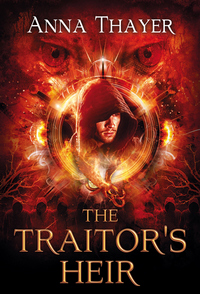
BOOK SPOTLIGHT: These Walls Were Never Really There by Bryan Blears

I’m very pleased to welcome The Write Reads Blog Tour for by Bryan Blears to the blog today. I couldn’t fit this into my schedule on time, sadly, but you should absolutely check out some of the posts about it at https://twitter.com/WriteReadsTours to see why you should give it a read. But before you go there, let’s learn a little about this book, shall we?

These Walls Were Never Really There Tour Banner

Book Details:

Book Title: These Walls Were Never Really There by Bryan Blears
Publisher: 2qt Limited
Release date: April 1, 2022
Format: Paperback/Ebook
Length: 286 pages
These Walls Were Never Really There

About the Book:

Based on the author’s own experiences of leaving home and traveling across Europe on less than a pound a day, These Walls Were Never Really There is a compelling true story described by publishing editors as ‘immersive and moving’ and ‘a potential prizewinner in the making’.

Initially set in the heart of Manchester’s homeless community, These Walls follows twenty-year-old Cameron, who is propelled on a physical and spiritual journey which will take him far from the life he once knew.

A surprising story about mental health, friendship, and redemption, this compelling debut will take you on a journey across Europe and beyond, as Cameron and his traveling companion Jacob navigate perilous border crossings, packs of wolves, and the harsh realities of life on the road.

Set against the backdrop of the emerging Arab Spring, Cameron and Jacob will have their friendship pushed to its limits as they find themselves trapped thousands of miles away from home…

Book Links:

Amazon US ~ Amazon UK ~ Goodreads

About the Author:

Bryan BlearsBryan Blears is an author of contemporary literary fiction from Salford, Manchester. He has written for the Huffington Post, the New Statesman, and the Philosophical Society of England, among others.

Focusing on social issues, mental health, and overcoming personal adversity, his fiction has been compared to George Orwell, Sylvia Plath, and Donna Tartt. His debut novel, These Walls Were Never Really There, has been described by critics as an ‘immersive and moving true story’ and ‘a fantastic talent, and a potential prizewinner in the making.’

Author Links:

Website ~ Twitter


My thanks to The Write Reads for the invitation to participate in this tour and the materials they provided.

Page 251 of 623

Powered by WordPress & Theme by Anders Norén