Author: HCNewton Page 309 of 610

Saturday Miscellany—12/26/20

Hope you all are doing okay as we approach the last few days of this unusual year, and that your planning for 2021 and look-backs at 2020 are going well.

So little to say this week, and not much to link to. But I enjoyed these, and hope you do, too.

Odds n ends about books and reading that caught my eye this week. You’ve probably seen some/most/all of them, but just in case:
bullet This Christmas, read a story aloud – you’ll be surprised by the joy it brings—Thinking back on when I used to do this regularly with my kids, this is a decent idea for other times of the year, too.
bullet I appreciated this thread from Ethan M. Aldridge on how libraries benefit authors
bullet Who wore it better? US book covers vs. their UK counterparts.—a fun look at the differences in covers from Lit Hub
bullet The Worst Literary Adaptations of the Century (So Far)—I’ve only seen half of this list, can’t argue with them.
bullet <a href=”https://www.tor.com/2020/12/17/the-only-right-and-proper-way-to-read-the-chronicles-of-narnia/ target=”_blank” rel=”noopener”>The Only Right and Proper Way To Read The Chronicles of Narnia—Am pretty sure I’ve posted this before, but it bears repeating.
bullet I’ve seen some really good creative approaches to the Year’s Best theme this year, like:
bullet Top Five Backlist Reads of 2020—from Realms of My Mind
bullet Steven Writes posted both Top Five Memorable Endings I Read In 2020 and Top Five Most Dramatic Twists I Read In 2020—excellent ideas, both
bullet TBR Tackle Challenge Announcement—yeah, I know last week I said something about cutting back on challenges. This one could be helpful, though. I’m considering it, you might benefit from it, too.

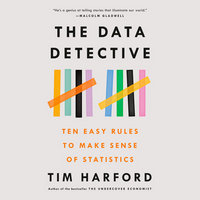
Catch-Up Quick Takes: The Power of Bad, Everything is F*cked, The Checklist Manifesto, And Then You’re Dead

The point of these quick takes post to catch up on my “To Write About” stack—emphasizing pithiness, not thoroughness.

The Power of Bad

The Power of Bad: How the Negativity Effect Rules Us and How We Can Rule It

by John Tierney and Roy F. Baumeister, Paul Bellantoni (Narrator)
Unabridged Audiobook, 8 hrs., 9 min.
Penguin Audio, 2019
Read: November 24-25, 2020
Grab a copy from your local indie bookstore!

(the official blurb)
Ignore the chapter where the authors totally misunderstand the evangelistic work of Whitefield and Edwards in the 1700s (and the part where the Narrator couldn’t pronounce Whitefield’s name correctly, over and over and over and over), and I really liked this.

The way the authors explain negativity bias—and then apply it to improving our jobs/careers, marriages, and more. Utterly fascinating. I probably need to read and/or listen to this a few more times, and maybe take notes at least once before I can both articulate what I find helpful here—and what I find problematic.

But it’s the kind of book that makes you think about things in a way you probably haven’t before. While being counter-intuitive, much of it rings true. And best yet, it’s a good read/listen—engaging and entertaining.


3.5 Stars

Everything is F*cked

Everything is F*cked: A Book About Hope

by Mark Manson
Unabridged Audiobook, 7 hrs., 2 min.
Harper Audio, 2019
Read: October 16/17, 2020
Grab a copy from your local indie bookstore!

(the official blurb)
Manson’s warmed-over Stoicism didn’t work nearly as well for me as it did in his first book. The writing was almost as good—but not as clever, I just think it’s not as well written. The topics interested me, but I found myself questioning his basic premises in almost every instance.

Ultimately, his hope is founded on a total lack of foundation—he finds it freeing, I find it unstable and doomed to failure. It’s hard getting my point across short of a 20-30 page paper examining the book, and I just don’t care enough to undertake it.

I actually enjoyed a lot of it, but I also found myself annoyed and/or mildly angry with this one for significant portions of the time.


2 1/2 Stars

The Checklist Manifesto

The Checklist Manifesto: How to Get Things Right

by Atul Gawande, John Bedford Lloyd (Narrator)
Unabridged Audiobook, 6 hrs., 9 min.
Macmillan Audio, 2009
Read: September 21, 2020
Grab a copy from your local indie bookstore!

(the official blurb)
First off: Gawande is a doctor/surgeon, and a lot of his illustrations and examples are surgical in nature. A bit too detailed for me early on—I’m a little more squeamish about real-life blood and guts than most people. I figure most readers won’t be bothered by it like me (some may not even call it detailed).

Anyway, it’s a simple premise, but seeing how checklists have been used by pilots, surgeons, investment bankers and the like is utterly fascinating. There’s just no way that I can make it sound like it. Could’ve been a little longer, could’ve used a little more guidance on how to implement it for yourself.

Still, at the end of the day, more fun, more interesting than you’d think a book about checklists would be.


3.5 Stars

And Then You're Dead

And Then You’re Dead: What Really Happens If You Get Swallowed by a Whale, Are Shot from a Cannon, or Go Barreling Over Niagara

by Cody Cassidy, Paul Doherty, Dennis Boutsikaris (Narrator)
Unabridged Audiobook, 4 hrs., 59 min.,
Penguin Audio, 2017
Read: December 21, 2020
Grab a copy from your local indie bookstore!

(the official blurb)
So, yeah, what I said about squeamish earlier? Pushed to the edge a couple of times in this short read/listen. It’s all about the science behind what would happen to you if say, stowed away in an airplane, stowed away on a trip to the Moon, fell into the works at a Pringles factory, ate the same number of cookies as the Cookie Monster—and more.

It’s funny (thankfully, or I couldn’t have made it through a couple of spots), informative, creative—and a great way to spend a few hours. At one point the authors tell the reader not to do a google search on one topic. First, that hadn’t even begun to cross my mind as a good idea. But secondly, given the detail they’d used when describing what happens to a human body shot out of a cannon, or swallowed by a whale, and several other topics, when they say, “don’t go looking at pictures of something”? I am taking their word for it.

I had a blast listening to this. If I taught high school science, I’d have at least one copy of this on hand for reference or to pass along to students. Since I don’t, I just have to remember some of these stories/theories for my own amusement.


3.5 Stars

2020 Library Love Challenge
This post contains affiliate links. If you purchase from any of them, I will get a small commission at no additional cost to you. As always, opinions are my own.

Festivus 2020: For the Rest of Us

Shunning the commercialization of Christmas/Hanukkah/Kwanzaa/Santaween/Chrismukkah, we’re again celebrating Festivus (for the rest of us) here at The Irresponsible Reader.

Let’s begin our observance!

Festivus PoleHere I am with my Festivus pole. My wife very kindly upgraded me to a full-size version this year. I really appreciate the very high strength to weight ratio, it’s a mighty fine pole.

Note the lack of distracting tinsel. It’s very important.

And now, let the Airing of Grievances begin.

Airing of Grievances
Yes, some of these are only slightly revised from last year. Which is to be expected, it’s not like the entire universe fixed itself after I posted one lil’ post. It’s going to take at least three, right?
bullet I have a grievance with the book publishing/selling/marketing industry. It’s 2020, why are we still placing stickers on books? If we have to do that, why hasn’t Science come up with a sticker that doesn’t leave a gummy residue behind? C’mon, Science, if you can’t give us a cure for cancer, a pill so people with Celiac disease can eat bread, or an Oreo that will help me lose weight—at least you can give us stickers that don’t leave gunk on our books! Especially, especially when it covers the ISBN number for those of us trying to scan them.

bullet What’s worse than stickers are those things that look like stickers, but aren’t. Just stupid, garish circles that have been printed on the cover and really only serve to obscure the image.

bullet I have a grievance with Movie/TV covers on books. C’mon people, this is stupid. Sure, it maybe helps sell more copies of the books—but has any book been improved by one of these covers? No! Knock it off! And especially, stop it with sticking pictures of actors on books in a series that haven’t been adapted, just because some have (yeah, I’m looking at you, Longmire).

bullet It’s another year without the next installment from Rothfuss/Martin. No, my grievance isn’t with them, it’s with the entitled “fan” of the work, whinging at every conceivable moment about how long it’s taking them. Because there’s nothing else around to read? Let ’em get it right and use that energy to support someone whose books could use it.

(still—Martin, Rothfuss…c’mon…Butcher published two books this year. While I’m at it, Scott Lynch—The Gentlemen Bastards need to get back in action, too)

bullet Whether it’s from a mainstream publisher, indie press, or a self-pubbed book, we have the technology and (theoretically??) the education so there’s no reason for there to be missing/extra punctuation or misspelled words in books.

Obviously, this doesn’t apply to book blog posts. No one paid for these.

bullet I have a grievance with the Book Blogging Community. There are way too many good book bloggers out there to keep up with. Some of you need to write less often! Also, you make the rest of us look bad.

bullet I’ve got a grievance with running out of places to put books and bookshelves that aren’t like a bag of holding or TARDIS and can’t take an increasing number of books. So…physics, I guess. Yeah, that’s right, Laws of the Physics, I’m calling you out. Get your act together!

bullet I’ve got a grievance with how hard it can be to pick the next book to read despite having piles of books (see above grievance) waiting to be read/multiple files on an e-reader. I know it’s not just me who endures this, so there’s gotta be a conspiracy afoot here. At the same time…could publishing take a break for just two or three months? Hard to catch up on a TBR/backlist when you keep putting out new things that are tantalizing.

bullet And what’s more…I lost my train of thought.

Time for Feats of Strength
So last year, for my Feat of Strength, I held my TBR above my head, and thought about repeating that feat this year—as the list has grown, it would’ve been more impressive. But, I decided to go for something even harder:

Netgalley Feat of Strength
Yes, that’s me signing out of Netgalley without requesting a single book. It can be done, despite what you might think (similar to walking out of Costco without spending over $100)—but it’s tough. If that’s not a Feat of Strength, I don’t know what is.

Let’s see how the rest of you do with your feats.


Happy Festivus

Cooking for Cannibals by Rich Leder: An Ex-Con turned Cook, Experimental Drugs, Reverse Aging and a Gerontologist make for a Very Strange Crime Novel

Cooking for Cannibals

Cooking for Cannibals

by Rich Leder

eARC, 371 pg.
Laugh Riot Press, 2021

Read: December 15-17, 2020

Don’t Suspend Your Disbelief, Throw it into a Small, Locked Room Somewhere

The core premise of this book is hogwash. Scientifically impossible. Accept that and move on. Leder doesn’t try to dress it up in pseudo-scientific jargon or explanations, he just says this impossible-to-believe thing happened. The characters only believe it because of what’s in front of their eyes and make no attempt to explain it to each other, either. So pretend the universe works the way he needs it to for this story, and you can have a lot of fun.

If you can’t do that, don’t even bother picking it up. Sure, go ahead and buy it, Leder could use the sale, but don’t bother reading the book.

What’s Cooking for Cannibals About?

It’s about what happens when an ex-con gets his big break, a behavioral gerontologist who prefers rats to people takes a dramatic step, and a group of seniors embrace a second chance.

Carrie

Carrie is a behavioral gerontologist who’s working at a secret pharmaceutical laboratory coming up with a medication to combat the effects of aging. The results are phenomenal. Unbelievable—it actually appears to reverse the aging process to a degree. A significant degree.

On the weekends, Carrie works for the Copacabana, a “low rent rest home,” where her mother lives, and has grown close to a number of the residents. She can’t help but want to help them and steals the medication from the lab one night.

This sets almost everything else in motion.

Jimmy

Jimmy’s done time a couple of times—assault, burglary, that kind of thing. As a result of this, he can’t get a job unless he lies about his background. As soon as the truth comes out, he loses the job. While he’s trying to go straight, Jimmy can’t go for more than a few weeks without having to start over again, losing jobs and places he rents. He’s a “rockstar butcher” but wants to cook. He just can’t get the chance.

After his most recent dismissal/eviction, he’s given a tip about a job—there’s a retirement home in need of a cook, they provide room and board, in addition to a paycheck. This is everything he needs, if he can get the job. Which is where he meets Carrie, becomes smitten with her, and sees what happens to the residents there when they start using that medication.

Sadly, his new parole officer is determined to find him in violation of his parole for being fired/evicted and will send him back to prison. Unless, of course, Jimmy starts paying him a weekly bribe.

The Copa Crew

Carrie’s mother and her friends are the ones who make the decision to hire Jimmy after he wows them with his sample meals. And instantly, the reader enjoys them—there’s a great, familial interaction between them and it’s just charming. Once they start taking this medication? Well, they become even more entertaining.

The Fixer and the Cleaner

You can absolutely make the case that Carrie and Jimmy are their own antagonists (with some help from the Copa Crew), they’re just not cut out for this kind of thing. But formally, I guess we have to give that credit to the two bodies that funded the pharmaceutical experiments, as represented by the Fixer and the Cleaner, both in LA to make sure that no one finds out about the drug or that their employers had anything to do with any secret drug research.

The Fixer is a suave, calm, and collected Latino who enjoys creative ways of torture. The Cleaner is a Russian in love with Hollywood and all things American film (like poorly educated, heavily accented Chili Palmer), but he loves fire and burning things/people even more. Neither is the kind of guy you want to draw the attention of. Sadly, Carrie does (and because of that, so does Jimmy)

So these two come to LA to find the stolen pills, recover them, eliminate anyone who knows anything about the pills, and any other trace of them—records, people who’ve used or developed them, etc. (without realizing the other is doing the same). It’s their entrance into the story that gets everything really rolling. The question is simply, who will be alive after they’re done?

And sure, the California Legal System was also out there, looking into Jimmy and his activities. But comparatively speaking, that’s a pretty low worry.

Lecter-ish, but with a Sense of Humor

So, Cannibalism is in the title for a reason. Technically, yeah, there’s some cannibalism. But it’s not that anyone wants to eat humans, it’s just a side effect of the drug that the users become very hungry, and are not that selective where their meat comes from.

If it also turns out that eating human remains cleans up other problems by eradicating evidence? Well, that’s just a bonus.

It’s not grizzly, it’s not detailed—it’s also not justified. I think everyone involved is disgusted on some level. It’s simply they’re hungry and they have access to some well-cooked human remains.

The Two Styles of Rich Leder

This is the third novel I’ve posted about by Leder, and he seems to write two different types of books. There’s the McCall & Company series, which is a fairly straight-forward series about a would-be actress who takes over her father’s PI business after his death. It’s light fun in the vein of Stephanie Plum, but a little less wacky. I read the first book, and have intended to read the rest (my mother has read at least one, probably more, of the rest). Then there’s Let There Be Linda, a book I described as “strange, bloody, a little violent, and impossible to explain in a way that does it justice.” Which could really be said about this book, too.

It’s hard to see both of these coming from the same source. I don’t know if one’s necessarily superior to the other, but one’s a lot more marketable than the other, for sure. I’m not sure there’s a lot of overlap in the audiences for both, too. Linda and Cooking for Cannibals are marked by black comedy, one unbelievable occurrence being accepted as fact, and stories that are nigh-impossible to predict.

I do think this is largely more successful, and only slightly less imaginative, than Linda. Leder has a tighter focus on the narrative here, and it just makes the whole thing more compelling and interesting.

So, what did I think about Cooking for Cannibals?

Seriously, if you’re going to read one black comedy about anthropophagites this year, make it Cooking for Cannibals. As I wrote that, it occurred to me that late last year, I read another black comedy about anthropophagites. This is a pretty odd trend, but I can assure you that neither of them has had an impact on my diet.

There’s a lot of funny stuff in this novel. There are also few things with a pretty high “ick factor.” But what comes through most strongly? There’s a sweetness to the way that Jimmy, Carrie, and the Copa Crew interact. The relationship that springs up between Jimmy and Carrie is the focus, but there’s a nice connection between Jimmy and the people who give him his chance to cook (and they love his food), Carrie and her mother find another layer to their relationship in these pages, and so on. Sure the sweetness is buried underneath torture, killing, fire, rats, threats, and more—but it’s there.

The major note I had about the writing was that it felt like the concluding chapter ends 1-4 paragraphs too early. At least at the moment. But honestly, it’s the perfect conclusion to this story as it is. I just had to think about it for a couple of minutes first.

If you’re willing to give this kind of thing a shot, you’re going to have a pretty good time. Leder can pull off the outlandish ideas in a piece of Crime Fiction and it’s rewarding to see him do it.

If you read what I said, and you’re on the fence? You should probably avoid it.

Disclaimer: I received a copy of this novel from the author in exchange for this post and my honest opinion. While I appreciate it, my opinions are my own.


4 Stars

Saturday Miscellany—12/19/20

The unboxening has wrapped up, now I just have to organize all the books. This is going to be rough. I picked up a nice little corner shelf to help alleviate some of the overcrowding I know is impending. Well, it has enough room for the As (I alphabetize by author), with a little left over. Although, if Ace Atkins and Ben Aaronovitch keep up their pace, that won’t be true by Spring 2022* at the latest. I think I’m in trouble.

* It just feels wrong to be thinking about Spring 2022 as just around the corner.

But anyway, on with the miscellany:
Odds n ends about books and reading that caught my eye this week. You’ve probably seen some/most/all of them, but just in case:
bullet Publishing saw upheaval in 2020, but ‘books are resilient’—AP’s summary of the year in publishing. Best line: “‘A lot of what has happened this year — if it were a novel, I would say that it had a little too much plot,’ said Simon & Schuster CEO Jonathan Karp.”
bullet How to Plan for Your 2021 Reading Challenge—whatever that challenge may be.
bullet Walter Mosley on Devil in a Blue Dress, Thirty Years Later—I didn’t like this as much as I expected to years ago, I think I need to give it another shot.
bullet Roddy Doyle on writing The Commitments: ‘Whenever I needed a name, I used the phonebook’—A little look back at the creation of one of my all-time favorit desert island novels.
bullet Reacher, Prospero, and Child: The links connecting two writers—William Shakespeare and Lee Child—run deeper than you might think.—Child biographer, Heather Martin, dives deep with this one.
bullet Audible Alternative Libro.fm: Audiobooks from Indie Bookstores—A great post about Libro.fm and why you should give it a shot.
bullet Why I’m (mostly) Giving Up Reading Challenges For 2021—Yeah, me, too.
bullet That said, I think this is going to be one of the exceptions: The 2021 SFF Badge Collection—How do you not want to collect those badges?
bullet Books I want to read but don’t want to read—a great tag post from The Orangutan Librarian
bullet The LibraryThing Tag—as is this one from the Bookstooge

This Week's New Releases That I’m Excited About and/or You’ll Probably See Here Soon:
bullet The Vigilante Game by Meghan Scott Molin—really curious to see how Molin wraps up the Golden Arrow Mystery trilogy.
bullet The Fey and the Furious by Andrew Cartmel, Ben Aaronovitch, Lee Sullivan, Mariano Laclaustra—the eighth collection of the Rivers of London comics delivers a lot of fun.

Lastly I’d like to say hi and extend a warm welcome toAnjana, Dr. Ndubuisi E. Ojo, and Miss Katherine White who followed the blog this week (a formal sounding group this week, eh?). Don’t be a stranger, and use that comment box, would you?

The Friday 56 for 12/18/20

The Friday 56This is a weekly bloghop hosted by Freda’s Voice

RULES:
The Friday 56 Grab a book, any book.
The Friday 56 Turn to Page 56 or 56% on your ereader. If you have to improvise, that is okay.
The Friday 56 Find a snippet, short and sweet.
The Friday 56 Post it

from page 56 of:
Olive, Mabel & Me

Olive, Mabel & Me: Life and Adventures with Two Very Good Dogs by Andrew Cotter

She just wouldn’t leave Olive alone. And Olive, having enjoyed four years of peace and solitude, was clearly rather put out by the visitor—asking, with those Labrador eyes that tell all, “Is this thing going to be staying long?”

I’m pretty sure that from the start Mabel saw Olive as some sort of replacement mother. They are, in fact, related in that curious mixed-up dog dynamic, where romantic liaisons are free and easy and they don’t feel tied down by human constraints or propriety. Olive’s father Henry was also the father of another litter, which contained Mabel’s mother Izzy. Working it out, that makes Olive a half-aunt to Mabel, if there can be such a thing. One of these days we’ll get everyone together on a Jerry Springer-style program and Henry will be confronted by his numerous partners and offspring. Child support will finally catch up with him and it will all get messy.

One thing that was more simple and obvious was Mabel’s love for Olive, and within just a few weeks, some—if not all—of that love was reciprocated. Neither would now want to be without the other, but Olive could probably spend more time without Mabel than vice versa.

Catch-Up Quick Takes: Dash & Lily’s Book of Dares; Undeading Bells; Paranormal Bromance; My Calamity Jane

The point of these quick takes post to catch up on my “To Write About” stack—emphasizing pithiness, not thoroughness.


Dash & Lily's Book of Dares

Dash & Lily’s Book of Dares

by Rachel Cohn, David Levithan, Ryan Gesell (Narrator), Tara Sands (Narrator)
Series: Dash & Lily, #1
Unabridged Audiobook, 6 hrs., 40 min.
Listening Library, 2010
Read: November 14-17, 2020
Grab a copy from your local indie bookstore!

(the official blurb)
I picked this up as the result of “I need something to listen to and the library’s app just happened to have it at the top of the list.” This was about the time that the Netflix series was about to launch, so a good part of my Twitter feed was talking about it. I’d read something by Levithan years ago and had good memories, figured I’d try it out.

It was adorable. It was sweet. Pure silly fun. The narrators did a pretty decent job convincing me that they were teenagers. I think Lily can do better than Dash, but that’s probably just me. I doubt I’ll continue on in the series, but I’m glad I gave this a shot.

3.5 Stars

Undeading Bells

Undeading Bells

by Drew Hayes, Kirby Heyborne (Narrator)
Series: Fred, The Vampire Accountant, #6
Unabridged Audiobook, 11 hrs., 34 min.
Tantor Audio, 2020
Read: November 9-13, 220
Grab a copy from your local indie bookstore!

(the official blurb)
The wedding is nigh—Fred’s just got a little to take care of first. He’s got to hire someone to help him deal with his rapidly expanding business, he has to submit to some tests from the Blood Council, Amy needs some help with her new business model, and so on. But the main event is the wedding—which brings out friends (old and new) and enemies (old) alike.

This is the same kind of book that I’ve come to expect—fairly episodic with a nice through-line, amusing stories, an overall “blue sky” feel, with some fun situations for our Vampire Accountant to get himself out of.

I appreciated the new hire on the accountancy side, her particular supernatural type was a lot of fun. I also was impressed by what we learn about the Sheriff of Boarback. That was a simply great idea. I’ll also admit to being touched by the last few pages of the book, Fred’s in uncharted territory for him, and he does it well—public Displays of Affection and a little bit of rebelling.

I’ve spent most of this year dipping into this series when I needed a fun palate cleanser, and now I’ve caught up. Apparently, he’s working on the next book now, so I know I’ll be able to come back at some point, but…man…what am I supposed to do in the meantime.

3.5 Stars

Paranormal Bromance

Paranormal Bromance

by Carrie Vaughn, Neil Hellegers (Narrator)
Series: Kitty Norville, #12.5
Unabridged Audiobook, 2 hrs., 11 min.
Tantor Audio, 2018
Read: October 26, 2020
Grab a copy from your local indie bookstore!

(the official blurb)
Three guys who never should’ve been turned, and likely wouldn’t have survived as vampires if they weren’t in Rick’s Denver, are the focus of this novella. Since they’ve been turned, they camp out in their basement apartment and live largely human-ish lives. Basically, they’re the kind of guys who need advice from Kitty Norville, but who’ve never called into her show (or even listened)

Because they’re clearly the weakest, most pathetic excuses for Vampires (one sells collectibles online, another reviews video games) they’re targeted as a way to Rick by an enterprising reporter. While dealing with that, Sam starts to fall for a mortal—exactly the kind of woman he would’ve dreamed about dating as a human, but now he’s still feeling like she’s out of his league.

Watching Sam and his roommates deal with his friendship with the woman on the one hand and then the reporter on the other brings out the kind of fun that Vaughn didn’t often get to show in the Kitty-verse. It was a pleasant way to spend a few hours while packing/cleaning—and like I’ve said, any time in the world of Kitty Norville is a pleasant time.

3 Stars

My Calamity Jane

My Calamity Jane

by Cynthia Hand, Brodi Ashton, Jodi Meadows, Sophie Amoss (Narrator)
Series: The Lady Janies, #3
Unabridged Audiobook, 13 hrs., 28 min.
HarperAudio, 2020
Read: August 31-September 3, 2020
Grab a copy from your local indie bookstore!

(the official blurb)
Man…of all of these in this post, this is the hardest to not write a lot about. I’m not sure this is my favorite of the series, but in many ways, it’s stronger—definitely an improvement over My Plain Jane (which I liked, don’t get me wrong).

Wild Bill’s Traveling Show is just a cover for him, Calamity Jane and Frank Butler to hunt garou throughout the Wild West. Annie Oakley is unaware of this, but is a crack shot and needs to make money (or get married off to someone she can’t stomach). She ends up signing on to the show, just in time for it all to fall apart. The group ends up in Deadwood, where a supposed garou-cure is being peddled.

Sure, Calamity Jane is the focus of the book, but for me, it’s all about Annie Oakley, she was a delight, and her stumbling romance was as sweet as you could ask for. I also loved that we got an Al Swearengen who never made me think of Ian McShane once.

These goofy supernatural alt-history books are just a lot of fun, and I’m eager to see what they do with Mary, Queen of Scots.

3.5 Stars

2020 Library Love Challenge

This post contains an affiliate link. If you purchase from it, I will get a small commission at no additional cost to you. As always, opinions are my own.

The Sentinel by Lee Child and Andrew Child: A New Era for the Series Kicks Off with this Presciently Timely Thriller

The Sentinel

The Sentinel

by Lee Child and Andrew Child
Series: Jack Reacher, #25

Hardcover, 351 pg.
Delacorte Press, 2020

Read: December 10-14, 2020
Grab a copy from your local indie bookstore!

“…Someone’s got to [help him].”

“And that someone’s you?”

“I guess so.”

“Why is that?”

Reacher shrugged again. “I’m the one who’s here.”

What’s The Sentinel About?

After a quick (and only slightly violent) stop in Nashville, Reacher finds himself in a smaller city, Pleasantville. Before he can even get a cup of coffee, Reacher sees a group of people act as if they’re about to abduct a man on the street. He stops it from happening and then finds himself arrested.

After he’s released, Reacher meets the man he rescued and they start to talk. His name is Rusty and he’s the freshly dismissed IT manager for the city. He was fired because the city was hit by a ransomware attack, which is crippling the city government and causing problems throughout Pleasantville. With only one or two exceptions, the entire populace hates him because of this, convinced that he had a role in the attack. Rusty’s determined to prove he had nothing to do with it, and if the city leaders had just listened to him, it all could be avoided. He just doesn’t have it all worked out about how he’ll do that.

Reacher, on the other hand, thinks more is going on. The people who tried to abduct Rusty aren’t disgruntled citizens, they were professionals. Why would professionals care about this? Reacher determines he has to stick around and get to the bottom of it.

Explosions, gunfire, and fisticuffs ensue as Reacher gets closer and closer to discovering what really went on, and hopefully clearing Rusty’s name.

A Trend that Needs to End

Reacher’s no Luddite, he just doesn’t care about technology/computers/the Internet/etc. When he has to, he can use them a little, but relying on them is just not in his makeup.

But last year’s Blue Moon, and this year’s The Sentinel hinge on cybercrimes (at least after a fashion). Which makes sense, this is what thrillers are about right now. But Reacher doesn’t belong in this world. He can get by—especially if he has help—but readers need a break from cybercrimes. We need a book or three of Reacher not needing to depend on someone and their laptop.

The Thing Everyone’s Talking About

Unless you’ve been living under a rock (which seems like a smart move in 2020, to be honest), you know that Lee Child has started backing away from writing and is handing over the reins to his brother Andrew. As part of that, the two co-wrote this book, a first for both (I believe).

So automatically you know (or at least you should), this is going to feel different than a typical Reacher novel (although, Lee Child’s been good about changing the flavor to one degree or another in each book). And it does—Reacher’s a bit talkier than we’re used to (although he still says nothing fairly often); the prose isn’t as sharp, as punchy; and so on. It’s not bad, it’s just not Lee Child (which ought to be patently obvious).

While it’s not strictly a Lee Child book, with his style, it’s still good. The plotting is as good as Child at his prime, the fights are as well choreographed and violent, and Reacher’s essence is unchanged. At the end of the day, Lee Child picked his successor (unlike Robert B. Parker, Ian Fleming, etc.), if he’s satisfied, I can get used to this new style (while Andrew Child catches his stride)

So, what did I think about The Sentinel?

Reacher’s general approach to driving was to find someone else to do it. He was capable of operating a vehicle, in a technical sense, The army had provided thorough training. He’d never killed anyone with a car. At least not by accident. He’d never had any collisions, Not unintentional ones. His problem was mainly one of temperament, Good driving called for a balance of action and reaction, speed and restraint, measurement and control. A middle ground, stable and sustained. Reacher on the other hand was built for extremes. His default was to move extremely slow or extremely fast. One moment he could appear languid, lazy, almost comatose. The next he could erupt into a frenzy of action, furious, relentless, for as long as necessary, then relapse into serene stillness until the next threat presented itself.

The Sentinel has all the things you need in a Reacher novel—an individual in need of help, a physical challenge (actually, one of the toughest I can remember for him), a truly evil antagonist (you’ll have multiple reasons to root against this guy), and plenty of justice for Reacher to mete out.

Is it Reacher at his best? No. But he hasn’t been at his best for a couple of years anyway. Is it Reacher that provides solid adventure? Yup. Even a mediocre Reacher is entertaining (and this isn’t at that point), it’s going to take Andrew a little bit to fit into his brother’s mold (or as close to it as he wants to go), I’m willing to let him figure out how to do that, and will jump back for #26 as soon as I can.


3.5 Stars2020 Library Love Challenge

This post contains an affiliate link. If you purchase from it, I will get a small commission at no additional cost to you. As always, opinions are my own.

A Few Quick Questions with D. B. Borton

Can you describe your initial path to publication with these books, and why are you reissuing them now?

I had been reading a mystery featuring an older woman detective, and the stereotypical portrayal just made me angrier and angrier. I threw the book against the wall and told myself, “I can do better.”

I wrote the book and signed on with an agent, who told me that she’d found the first chapter so hilarious that she’d read it to her sister over the phone. A year passed and I didn’t hear anything from my agent. Meanwhile, my cherished 18-year-old feline companion died (the book is dedicated to her). The grief opened a hole in my life that swallowed everything, including my writing aspirations, and I asked myself why I’d ever thought anyone would want to read my writing. The day after I hit bottom, I pulled myself together, sniveled my way over to the bookstore, and bought a book called How to Write a Mystery. The next day, my long-lost agent called to say that she was very close to selling the book to Berkley. I think the same first chapter sold the book to my editor at Berkley, who, as it turned out, also edited the series about an older woman detective that had made me so angry to begin with.

The first chapter never appeared in the final book. In it, the 59-year-old protagonist got her period in a department store dressing room, and had an epiphany: if Mother Nature couldn’t provide her with the Change of Life, she would have to make her own change. Some early readers advised Berkley against including it.

As for why I’m reissuing the series now, the economics of independent publishing has a lot to do with it. Series tend to be more profitable than single books. That’s the economic answer. But this series has always inspired a strong loyalty in many readers, who seem to identify with the protagonist. Over the years, I’ve continued to receive the occasional inquiry from a fan (or a fan’s daughter) looking for a complete set.

The community that Cat builds (or finds building around her?) in the apartment that ends up giving assistance and support to her is a frequent feature in female P.I. novels. Is there a particular reason for that, what is it about a female P.I./P.I.-type protagonist that lends itself to that in a way that your typical male P.I. doesn’t? How did you pick your residents of Catatonia Arms?

Interesting question. Women have, of course, traditionally done the cultural work of community building, so I suppose their take on detective fiction reflects that. But when I think of the classic writers, that strong sense of community isn’t there. Miss Marple is strongly identified with St. Mary Mead, and she often finds mystery when she’s off visiting friends, but the recurring characters are few. Girl detectives, on the other hand, have been embedded in communities since the modern girl detective emerged in L. Frank Baum’s Mary Louise series. At first, girls weren’t taken seriously as readers (or purchasers of detective novels), but when they were, publishers wanted to reflect the experiences and interests of their readers. So like Nancy Drew, Bess, and George, girl detectives have always traveled in packs, or at least in pairs.

I’m not really sure how I picked the residents of the Catatonia Arms, except to say that they all bring special knowledge and skills with them. Adding a retired cop at the end of the first book really completed that skill set while giving Cat an older ally against the young people.

There are a number of characters I’d like to ask you about, but I’m going to limit myself to Phyl Stinger, was there a particular historical inspiration for her? If not, just where did she come from?

I guess she’s a composite of several Hollywood screenwriters I’d read about and my imagination — writers like Frances Marion, Anita Loos, and June Mathis. I imagined that they’d have to have been tough as nails to survive in Hollywood.

I loved the way that Cat drew from her reading to guide her through her investigation/expectations of the P.I. job/wardrobe. Unless I’m mistaken, Spenser was the most prominent source of inspiration—is that because of something about the character himself, or given the time period, was he just the easiest to reference? Is there someone you wanted to work in a reference to, but couldn’t quite fit in?

I’d say that Robert B. Parker was a big influence on me.  He’s a male writer who created the kind of community you were talking about around his male P.I. Spenser. The Spenser books have a lot of heart, and they’re very funny. Later books in the series reference other fictional detectives, like Kinsey Millhone, V. I. Warshawski, and Kinky Friedman.

Let’s play “Online Bookstore Algorithm” (a game I’ve recently invented). What are 3-5 books whose readers may like One for the Money?

Oh, I like this game! As someone who’s always looking for comparable authors for advertising purposes, I’d love to hear what other people would say. A recent reviewer said that fans of Dorothy Gilman’s Mrs. Pollifax and Sue Grafton’s Kinsey Millhone would like it, and I’d agree. Also fans of Elizabeth Peters’s Amelia Peabody and, of course, Christie’s Miss Marple. Jana Deleon’s Miss Fortune series features some older women detectives who are a lot of fun.

What’s next for D. B. Borton?

I’ve been working on a standalone about a librarian who inherits a fortune, a valuable library, and a dangerous mission to return a handful of library books. I’m also planning to reissue the rest of the Cat Caliban books. And I’ve started thinking about a new Cat Caliban.

Thanks for your time, and this fun read, I’m looking forward to working my way through the rest of the series


One for the Money by D. B. Borton: This Would-Be Gumshoe Gets By on Her Charm, Wit, Gumption, Friends and a Healthy Dose of Expletives

Later this morning, I’ll be posting a Q&A with the author–be sure to check it out.

One for the Money

One for the Money

by D. B. Borton
Series: Cat Caliban, #1

eARC, 224 pg.
Boomerang Books, 2020

Read: December 1-3, 2020
Grab a copy from your local indie bookstore!

What’s One for the Money About?

Cat Caliban’s a recent widow, who is ready for a change (since she is still waiting on the Change), and takes the bull by the horn and gets herself her change. She buys an apartment complex, moves herself and her cats into one of the apartments there, and pursues a new career—becoming a Private Investigator. Between the suspicious nature and investigative abilities raising three kids has gifted her with and the extensive research she’s done into the P.I. lifestyle (read: reading plenty of P.I. Novels, from Nancy Drew to V. I. Warshawski).

Most of her kids, and most people from her old life, don’t approve of this new stage of her life—and she could not care less. Instead, she assembles a new group of friends who are on board with this change—with one carryover from her old life. And the tenants of her apartments end up being a strong base for those friends.

Of course, there’s a snag there—when showing a vacant apartment to a couple of potential renters, they discover a murdered woman. Almost immediately, Cat begins annoying the investigating officers by trying to look into the death herself. When it’s discovered that the victim is a homeless woman, the priority that the police put on solving the murder drops, but Cat’s drive to find justice for the woman increases.

Sure, she’s still learning the basics of investigating, but she catches a couple of lucky breaks and makes good progress. She also connects with people—friends of the victim, people she worked with, an activist group she was involved with, and someone who probably saw the victim and the killer minutes before the murder—in a way that the police don’t. People respond to this older woman who cares about the woman—not just her death, but the life she led.

One thing leads to another, and Cat’s hot on the trail of both the killer and what could have prompted the killing in the first place.

I’m a Sucker for this Kind of Thing

I am a sucker for fictional PI/PI-types who largely (or entirely) learn their way through detecting via PI novels like Lee Goldberg’s Harvey Mapes (in The Man With The Iron-On Badge, now called Watch Me Die) or Jim Cliff’s Jake Abraham (in The Shoulders of Giants)—Bobby Saxon, from The Blues Don’t Care, took a similar approach with Bogart movies.

Maybe it’s because this is the kind of detective I would be if I had the gumption to try. At the very least I can easily identify with these people, they’ve read the same things I’ve read. We think along the same lines. Watching them draw upon their fictional examples to try to decide how to deal with their cases is just fun.

Naturally, Cat (and Borton), get extra credit from me for the number of times they invoke Spenser. But it works no matter what character she’s referencing.

The Supporting Cast

Cat’s the focus—and she should be—but she wouldn’t be anywhere without the other characters that she bumps up against (we’ll ignore the principles/suspects in the investigation). The book might still be good with just Cat and the suspects, but what frequently makes a book worth reading are the secondary and tertiary characters—and Borton fills the novel with people worth reading about.

The people that fall into her life in this novel almost seem too convenient—wow, Cat makes a friend who happens to be able to help her learn to shoot. One of the first people she rents an apartment to happens to be a lawyer who can help her get through the city’s legal system, what a crazy coincidence! But once you shrug that off (what novel isn’t filled with that kind of thing)

There’s an elderly screenwriter character who is a delight. She adds a crucial detail or two that Cat needs to put everything together, but more than anything else, she’s just fun to read. Borton brings in a few characters like that—they’re around for one or two conversations, but it feels like Borton spent as much time and energy into developing the character for those conversations as she did for the killer or one of the other prime suspects.

I want to talk about the witness to the crime—and his family—but I just don’t think I can do them justice without ruining something. But Borton’s choices in including him, and the way she did so, are a real strength of the novel.

Even the cats are well-written and likable (long-time readers of this site will recognize how odd that is for me to say)

So, what did I think about One for the Money?

Last year, I wrote about Luna Miller’s The Lion’s Tail (apparently now called Looking for Alice), about a sexagenarian rookie P.I. Sure, Gunvor Strom is a little older than Cat, and the novel’s darker—but it’s along the same lines.* I really appreciated the way that neither of these women are allowing themselves to be held back by their age, their sex, their past—their utter lack of experience—they can make a difference, they have something to contribute, and they have the drive.

* I mostly bring it up in case readers are asking themselves, didn’t he talk about this before? Also, because readers of one of these are really going to want to read the other.

Cat and the team she assembles do the one thing the police are unwilling/unable to do: they can focus on the victim and her life to the exclusion of all else. She can get people to talk to her who wouldn’t talk to the police out of principle or intimidation. They open up to her, they tell her things they wouldn’t tell others.

She’s also smart enough and driven enough to keep going until the facts she uncovers fit together in a way that makes sense.

And Borton delivers all this in an engaging, easy style that makes you want to keep turning the pages. It’s a fun story, with a great group of characters that you can’t help but root for, and you not only want to find out what happens but you want to know what happens next. I’ll be back for the rest as soon as I can, but in the meantime, I’m glad I got to read this one and think you will be, too.

Disclaimer: I received a copy of this novel from the author in exchange for my honest opinion and this post.


3.5 Stars

This post contains an affiliate link. If you purchase from it, I will get a small commission at no additional cost to you. As always, opinions are my own.

Page 309 of 610

Powered by WordPress & Theme by Anders Norén