Did that last post whet your appetite? Why not enter to win a signed copy of the book?
https://widget-prime.rafflecopter.com/launch.js
(if my blog is acting up and you can’t see the widget — just click here).
Did that last post whet your appetite? Why not enter to win a signed copy of the book?
https://widget-prime.rafflecopter.com/launch.js
(if my blog is acting up and you can’t see the widget — just click here).
Welcome to our Book Tour stop for Seven Threads: A Book of Short Stories. Along with this spotlight post, we’ll be featuring a Q&A with the author as well as a giveaway. (the links’ll work when the post goes live).

Book Title: Seven Threads: A Book of Short Stories
Author: Jason Atkinson
Category: Adult Fiction, 151 pages
Genre: Thriller and Suspense
Publisher: Mascot Books
Release date: July 4 , 2017
Content Rating: PG
In this collection of seven short stories from Jason Atkinson, follow a man accused of murder, a runaway girl on a train, a scientist at the heart of a government conspiracy, and more! Full of twists and turns, Seven Threads offers a selection of fast-paced stories full of heart and excitement.
Jason Atkinson lives in the Midwest with his wife and son. With a love of writing, this is his 3rd book, but first book in the fiction category. Short stories are easy to digest, and yet, this book still provides all the joys for the long haul reader. Jason write for everyone in mind when creating this piece and hopes you will enjoy it as much as he did when writing it.
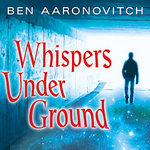
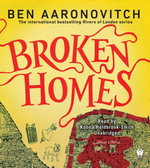
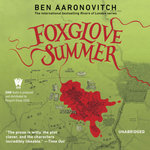
Moon Over Sohoby Ben Aaronovitch, Kobna Holdbrook-Smith (Narrator)
Series: The Rivers of London, #2
Unabridged Audiobook, 10 hrs.
Tantor Media, 2012
Read: June 21 – 23, 2017

When I think back over the first books in this series, I remember them being a lot of fun — pretty funny, really, with moments of tension and drama.
I don’t know why I think that. Listening to the first two have been a good corrective. Yes, Peter is witty, and some of what he does while learning magic or talking to other police officers is amusing. But these are not light books — this is solid police work mixed with dark magic. They’re still fun, just a lot less light than I recall. Actually, my poor memory extends beyond just the tone. I remembered almost nothing about the plot of this one (I remembered almost everything that wasn’t involved in the main plot, the long-term investigation into the Faceless Man, the stuff with Lesley, etc.). Which made it a great experience to re-read.
Jazz musicians are dropping dead after performances of a lifetime — in ways that seem like natural causes, but Peter (and Dr. Walid) can tell there’s something more going on — just what that might be is a touch beyond them. There’s another supernatural predator traveling in London hotspots, preying on unsuspecting men. Peter and DS Stephanopoulos work together to get to the bottom of things — we also meet PC Sahra Guleed. After Guleed’s appearance in Body Work, I’ve been trying to remember where I knew her from, but I couldn’t come up with it, so pleased to have that question resolved for me — I remember now, and I remember what a great character she is.
Peter’s spirit, his curiosity, his drive — they make for a great protagonist, and I quite enjoy spending time with him. I would’ve liked a bit more Nightingale — but I understand why he wasn’t around. Even Peter’s new love interest and his new musician friends are a blast. Really, I can’t think of any characters in here I don’t dig.
Kobna Holdbrook-Smith . . . I’m telling you, this guy is just great. His characterizations of the regular characters, plus the ones that we meet here, are great, he just brings everyone to life. But, the job he does with Lesley May’s voice as she recovers from the devastating injuries she sustained at the end of Midnight Riot? I don’t know how to talk about how wonderful — and heartbreaking — I found that.
Another little plus that the audio books bring (not attributable to Holdbrook-Smith) are the interstitial music, that little jazz bit between chapters. It’s just perfect for this series. If you could get that on a chip in the paperbacks to play when you turn the page of a new chapter (or on a whim)? That’d be gold.
A great installment in the series, solidifying the world and helping every character move forward following Midnight Riot.
—–

Saulby Bradley Horner
Series: The Great Curve, #1
Kindle Edition, 182 pg.
2017
Read: July 13 – 14, 2017

It just wasn’t fair. This whole fucking situation was downright ironic. The last eighty years had been a non-stop panic about righting all of their ancestor’s wrongs, a comeback after the nearly complete catastrophic dieback right before the turn of the last century.
Hadn’t they’d re-seeded the plains and the oceans? They had tried to make amends, hadn’t they? And apparently, the Earth was just a tiny bit slow on the uptake if this an attempt to punish them, that no, they weren’t forgiven, and no amount of flowers would ever be accepted. It was like the Earth was out to destroy their gardens just because they’d destroyed hers.
It turns out, no matter what kind of political, economic, scientific, or social utopia you create, the natural world around you isn’t obligated to pay attention or cut you some slack.
Saul describes what Saul Rothe goes through in the 28 minutes where the Earth experiences an earthquake more widespread than anyone’s experienced, resulting in devastation I can’t describe. Saul’s basically wrapping up professorial duties for the day, chatting with his wife while she’s at work, checking on his daughter and preparing to go home when the quake hits. Basically, at this point, the infrastructure that humanity depends on fails, all of it.
Saul does everything he can to get to his daughter and ensure her safety, but just before he can, their apartment building collapses with her in it. Saul, who’s been coming from a tower far above throws himself down, following her, doing what he can to save her. Ignoring the wide-scale destruction and suffering all around him (maybe even adding too it unintentionally). To do so, he has to pull out every technological/future science trick he knows, invent a couple of new ones, violate standards, regulations, etc. By doing all this, he becomes a global celebrity and example to others — leading many to mount their own rescue attempts to save those around them from the calamity.
Clarke’s Third Law states, “Any sufficiently advanced technology is indistinguishable from magic.” We’ve all heard that a million times, and while reading this book, I realized how handy that is for SF writers (I’m sure I’m not the first to realize this). You just imagine a technology impossibly advanced, and you can use it like magic. That’s precisely what Horner does here — and it works out pretty well for him.
Saul does so many things that defy physics (well, as I understand them — apparently, Montgomery Scott was wrong, and you can change the laws of physics), especially time. I had so many notes along the lines of “too much talky-talk, and not enough rescuing here,” only to see that a couple of seconds had passed — part of the tech allows Saul and others to have long conversations about . . . . well, all sorts of things, while he falls, taking no time at all.
The world-building was amazing — it’s very easy to see, from the world he describes, the language he uses (much of which is defined in the very necessary glossary), to the technology, to . . . seriously, everything. There are very few SF novels with as fully-realized worldbuilding as Horner has pulled off here. That said, he could’ve done a better job communicating it all (or even a substantial portion of it all) to his readers. I’m not saying I need pages and pages, or even multiple paragraphs, detailing the history of why object X developed in this way. But a line or two here and there just to fill out our understandings would’ve been nice. Could I follow it enough to stick with the story? Yeah. Could I easily describe it to anyone else? No.
In the end, the SF story just wasn’t my cup of tea — I got it, well most of it, anyway — but I just didn’t like it. The Science was too abstract, too . . . “sufficiently advanced” for me to really enjoy. However, and this is the important part, the story about a father throwing everything he had at saving his daughter — not caring for his health, reputation, safety, future, or society as a whole’s health, future, safety — I absolutely liked. There are going to be scads of people that eat this up — and plenty of people that will muddle through the Science-y bits for the really good characters and story.
Give this a shot folks, it’s worth the effort — and, while I always want to hear what you have to say about a book, I’m extra curious about what others think of this one. Let’s fill up the comment section.
—–

Odds ‘n ends over the week about books and reading that caught my eye. You’ve probably seen some/most/all of them, but just in case:

Lastly, I’d like to say hi and welcome to Person of Interest, Brusque and The Hunt and Peck Blog for following the blog this week.

In The Stillby Jacqueline Chadwick
Series: Ali Dalglish, #1
Kindle Edition, 422 pg.
Fahrenheit Press, 2017
Read: July 8 – 11, 2017

Maybe the easiest way to describe this book is to say that I had to stay up so late finishing — because there was no way I was putting it down — that I fell asleep the next night writing up a post about it.
When I’d just started this book, I tried to describe it to my wife and this is what I came up with (and still think it works): Imagine Where’d You Go, Bernadette?, but instead of a delightful novel about a genius architect with zero social skills who leaves her profession to raise her child in Seattle, where she has no friends, no life outside of her house and an antagonistic relationship with her neighbors; this is a delightful novel about a genius forensic psychologist with zero social skills who leaves her profession to raise her children in a small town in Vancouver, BC, where she has no friends, no life outside of her house and an antagonistic relationship with her neighbors — and there’s a serial killer.
Yeah, that’s glib and shallow — but it’s kinda true.
Ali Dalglish is our genius former psychologist, she’s enjoying an early morning cigarette when the woman she’s been annoyed by and has antagonized for months shows up at her back porch needing to use her phone. Marlene’s dog has just found a body on the beach, and she doesn’t carry a cell phone. Ali hands her the phone and takes off to try to secure the scene — a good move, as it turns out, because the local police aren’t up to it. They don’t even take her name and address, much less a statement, before they send her home. Ali has already seen enough to conclude that this was no accident or a death by natural causes. This was murder. But the only one that hears her is Marlene.
Neither woman is inspired to confidence by what they see from the local police, and although police with more experience in this sort of thing are on their way, the two decide to investigate the murder on their own. Probably not the wisest choice they could make, but it’s an entertaining one. After a quick glance at the victim, Ali puts together a pretty thorough profile of the killer, and she knows this isn’t his first kill. The two ladies play amateur sleuths, nosing around their suspect pool’s houses and setting up opportunities to observe them. The specialists agree with their suspect lists and profile — even if they take longer to compile them than Ali. They’re also able to confirm many of her theories. Which only emboldens Ali and Marlene to keep at it — even as they brush up against reckless and dangerous plans (although they have some very safe ones, too).
When the book starts, Ali and Marlene can’t stand each other; but events conspire to keep them together, and before either realize it, a friendship is forged — one that I love, the interplay between the two is just fantastic. There’s sort of a Felix/Oscar-vibe between the two, just intensified. Ali also strikes up a friendship/mutual admiration society with one of the investigators that will probably progress interestingly as it continues. In the shadow of the murder, Ali is able to get out of her house and integrate a little with her town in a way she hadn’t found possible before.
Now, there is a dark side to this novel, there is a serial killer running around, after all. Ali’s profile of him is on the mark, we never get as much detail about what makes him tick as other writers give — and I’m fine with that. I wouldn’t have minded a little more, but what we got was good enough. Chadwick stayed on the right side of exploitative writing about the victims and their deaths. We got enough to see that he was a monster, but there’s no relishing in the suffering. There’s one scene where a stranger accidentally finds his way into the dungeon the killer keeps his victims in. This is such a good scene, it’s so powerful and the details are just perfect. What happens to this poor guy, on the other hand . . . On the whole, there’s not much in this part of the novel that we haven’t seen before (really, aren’t most serial killer stories pretty similar?), but it’s the way that Chadwick tells the story that sets it apart from the rest and elevates it.
There’s a great red herring. Dealt with in a way that almost no one else in crime fiction does. The police pretty much know he’s a red herring, but they have to spend the time to investigate him so they can write him off. This was done so well — don’t get me wrong, I don’t enjoy that character, I really didn’t like reading one particular scene with him. But what he does to the overall plot was great — even once he stops being a red herring, he still has a pivotal role to play.
For a first novel, this is put together really well. I was worried in the first few pages, because it was overwritten in a really off-putting way — thankfully, I realized it was because we opened with the killer’s POV. I’m not sure why it is that so many fictional serial killers are written that way, but it works. There were moments where we weren’t reading his POV that Chadwick dipped her toe into overwriting, but it was never too much, and after a few chapters it went away (or I got used to it). That aside, the plotting is brisk, the characters are alive, the humor is real and unforced, the pacing is great — I really can’t say enough good things about it.
I don’t remember ever having as much fun, being so entertained by a serial killer story — not for a second did this become some sort of feel-good romp, don’t misunderstand me. The horror is real, the stakes are high, but there’s a humanity running through this that I just fell under the spell of. There are two more books in this series coming out in the next few months, and you can believe I’ll be jumping on them.
—–

Oh fer cryin’ out loud, after I finished writing this, I noticed that the publisher’s description starts with the same quotation I started my post with. I swear I didn’t steal the idea.
—
The Forceby Don Winslow
Hardcover, 479 pg.
William Morrow, 2017
Read: June 26 – 29, 2017

Our ends know our beginnings but the reverse isn’t true.
If Denny Malone’s beginning knew his ending, would it have prevented anything? Or would Malone have convinced himself he could find a work-around? Probably the latter.
Denny Malone is a one of NYPD’s Finest — a detective sergeant, and the head of a task force (known as “Da Force”) on the front line of the War on Drugs. He and his team — who’ve been together for years — rule Manhattan. Sadly — and perhaps naturally — they’re corrupt. They take (and are given) money, drugs, weapons and more from criminals (of all levels), lawyers and others. They pass on some of these to lawyers, city officials and other cops — and keep a whole lot for themselves. Through their methods, they do keep some sort of peace on their streets — sure, they pass on some of the violence and poison on to other parts of the city, but that’s not their concern.
After doing this for years, the wheels start to come off — it’s tough to say what the first domino (to mix metaphors) was to fall, but once it does, there’s nothing stopping the rest — as much as Malone may try. The result is one of the most powerful crime novels I’ve read in years.
The characters are rich, fully developed and they seem like they could step out of the book onto the streets of NYC with no trouble. You are sickened by them, want to see them stopped — yet start to understand them, like them as people, and — despite yourself — hope at least some of them get away with it all. At one point, I was laughing at their banter like we were all old friends hanging out, and it bothered me how much I enjoyed them as people (that faded somewhat in a few pages).
This book feels like the love child of Tom Wolfe’s The Bonfire of the Vanities and Nicholas Pileggi’s Wiseguy. You really feel like you understand how the city of New York is run — at least parts of it: the police, elements of the criminal world, and parts of the criminal justice system. Not how they’re supposed to run, but the way it really is. He achieves this through a series of set pieces and didactic pericopes. Three quick examples: you get Malone musing on how the way that cops have to learn how not to care about citizens and criminals, because otherwise, they’ll end up hating them. A great section showing how The Force goes out on the town to celebrate. The following quotation about the attitude of a prosecutor and Malone about his creative use/understanding of the truth while testifying:
Because the real truth that they both know is that without cops “testilying,” the DA’s office would hardly get any convictions at all.
This doesn’t bother Malone.
If the world played fair, he’d play fair. But the cards are stacked against the prosecutors and police. Miranda, Mapp, all the other Supreme Court decisions, give the advantage to the skels. It’s like the NFL these days–the league wants touchdown passes, so a defensive back can’t even touch a receiver. We’re the poor defensive backs, Malone thinks, trying to keep the bad guys from scoring.
Truth, justice and the American way.
The American way is, truth and justice maybe say hello in the hallway, send each other a Christmas card, but that’s about the extent of their relationship.
You throw that kind of stuff in with a compelling plot, believable characters, striking details and Winslow’s voice? You’ve got yourself a dynamite book.
If someone had told me this was non-fiction, I’d believe it (maybe I’d balk at some of the details of his personal life being told in a Non-fiction book, but otherwise…). It rings true — and I spent most of the book just hoping that Winslow was exaggerating and fearing that he was holding back. The whole thing feels real, it seems ripped from the headlines, and is beyond engaging — it’s engrossing, it’ll take over your mind, make you see deception and corruption everywhere.
Winslow nailed it. It’s just mindbogglingly good. I’m going to over-hype it if I keep going — so I’ll leave it at that. Get this book and then strap in for one of the best reads you’ll have this year.
—–

Gork, the Teenage Dragonby Gabe Hudson
eARC, 400 pg.
Knopf Publishing Group, 2017
Read: June 30 – July 3, 2017

Note: As I re-read this before it goes up, I thought I should stress something: this is a fun book and I think people will enjoy it. The problem is, it takes more words to describe the stuff I wasn’t crazy about than it does to describe the stuff I liked. I chuckled, I grinned, I was happy for Gork’s successes (happier for his best-friend Fribby’s successes — but they usually coincided) — as rare as they were. Don’t let the length of the “bleh” bits here distract you — Hudson just provoked some thoughts.
There were parts of this that were delightful, parts of it that were problematic, parts that were just okay. There were also too many parts, but we’ll get to that in a bit.
Our protagonist and unlikely hero is Gork — a dragon with pretty strong feelings toward Tolkein and the author of Beowulf for the depiction of dragons — he’s sort of a wimp, his horns aren’t that big (pretty small, really), he’s not that fierce (but he wants to be), and he tends to faint at inopportune times and frequently. Nevertheless, he’s about to finish his last year at the War Academy and head off to terrorize and conquer a planet of his own, all he needs to do is get someone to agree to be his queen and they’ll head off. We meet him on the day he’s supposed to do just that. Now, think back to high school — does this seem like a guy who’s going to be getting a lot of dates? Not really — and when your high school is full of dragons intent on learning how to be the nastiest, fiercest, most terrifying conquerors any planet has ever seen, well — Gork’s odds are even worse.
Naturally, because this is a high school story, our puny geek has set his eyes on the most popular, gorgeous and dangerous girl in school. The question really isn’t “Will Gork and his band of friends be able to convince her to be is queen?” It’s, “Will Gork survive the day?” And oddsmakers around the school, put his chance at that at 1%.
This is clearly from the word “go” a comic novel — we’re supposed to laugh at the madness, mayhem and murdering — and it’s easy to do on the whole. It’s a crazy world Hudson’s created for these dragons to go around in, and most of the characters are amusing. I’m not convinced it works that well as a novel as a whole — as a series of goofy episodes that eventually lead to a big showdown with the nastiest dragon around, it’s all right. (I’m not sure that distinction makes sense to anyone).
I like the idea of spacefaring dragons, dragons that have fully embraced technologies that we can’t think of (or we have thought of, just haven’t done that much with yet) — robotics, nanobots, and more. Although the “mind-swap” device doesn’t really swap minds it . . . well, it’s hard to sum up, but it felt like it belonged more to a Hanna-Barbera show than a SF novel. Basically, this is a Science Fiction wonderland populated with dragons instead of highly developed humans, Grays, Vulcans or Wookies. Still, being that takes away some of the X-factor that makes people fascinated with dragons. Dragons are already pretty cool, you don’t need to give them gizmos and machines that go “ping” — if anything that detracts from them. Still…a dragon in a spaceship is a pretty cool visual.
There’s a moral code that the dragons here live by, or aspire to anyway. It glorifies treachery, destruction, brutality, and so on. Grades of F are to be aspired to, As are to be lamented. That sort of thing — but societies can’t exist like the way Hudson depicts, and honestly, his society doesn’t function the way he says it does (the fact that there are actual friendships depicted, not just uneasy alliances is proof enough against that). You can’t have characters shocked by betrayal in a world where there are classes on betrayal. It’s the moments of loyalty and help that should be shocking, and not trusted by anyone. But no one works that way in this book. This is not a problem unique to Hudson’s work, I’ve run into it before — usually, in works like this, where the twisted ethics are played for laughs and we’re not supposed to be getting as analytical about them as I am. So, ignore everything I just said.
There were just a couple too many zigs and zags to the plot — a few less challenges, a few less pages, and I think this would’ve worked a bit better. I’m not necessarily saying that I can point to something and say, “That right there — yeah, we didn’t need that,” it just dragged a bit here and there. I tend to be more patient than most of the target audience for this book, so I worry about their reaction.
Speaking of target audience — I’m not sure what it is. The humor and emotional depth says MG to me, but the Gork’s fixation on mating and the things that attracts him to potential mates (he’s pretty shallow, I should warn you) are more YA. I’m not sure it matters all that much, it’s just one of those things that ran through the back of my mind during the slow parts.
I got a bit ramble-y there, sorry about that. I clearly am not sure what to make of this book — I enjoyed it, and I bet many will, too. But it has it’s problems — my best advice is, don’t think about it — just enjoy the antics. Gork’s a good guy and is fun to hang out with.
Disclaimer: I received this eARC from Knopf Doubleday Publishing Group via NetGalley in exchange for this post — thanks to both for this.
—–

Powered by WordPress & Theme by Anders Norén