Category: Blog Series Page 198 of 232

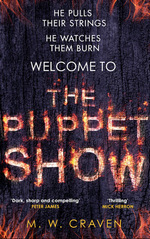
The Puppet Show by M. W. Craven: The debut of one of the best pair of characters I can think of in a truly compelling novel.

The Puppet ShowThe Puppet Show

by M. W. Craven
Series: Washington Poe, #1

Paperback, 352 pg.
Constable, 2018
Read: July 23, 2018

‘First impressions?’ Flynn asked.

He studied the slash marks again. Not including the messy number five, he counted forty-two. Forty-two wounds to spell out ‘Washington Poe’. Forty-two individual expressions of agony. ‘Other than the victim wishing I’d been called Bob, nothing.’

‘I need you to come back to work,’ she said. She looked around at the desolate fells he now called home. ‘I need you to re-join the human race.’

He stood up, all previous thoughts of resigning dismissed. There was only one thing that mattered: the Immolation Man was out there somewhere, selecting victim number four.

Washington Poe was a Detective Inspector who either made a very, very, very horrible mistake or is a DI or did a very, very, very bad thing — it depends who you ask. Either way, he’s on suspension until he either quits or the internal investigation is complete. He doesn’t quit, but he doesn’t expect to be brought back to work anytime soon.

Until his former DS, now his replacement, shows up — there’s a serial killer afoot, burning people alive — after some torture, it seems. What led to him being brought back (aside from being the kind of investigator who will be able to track this guy down) is that the last victim had Poe’s name cut into him before he was burned. This is a message to him — and possibly a threat. So, potential bad cop or not — for his own protection, he needs to get reactivated. Sure, it’ll be a little awkward, he’ll be acting as a subordinate to his former DS — but he frankly knows he was better at that anyway, so he’ll get used to it.

One of the first things he does is meet an analyst working with the police — she’s the one who developed the model to make sense of the wounds and found his name on the corpse. Tilly is a fascinating character — she’s a mathematical genius, a whiz with computers, and socially awkward. That actually is an understatement — clearly from a young age, Tilly’s mom sheltered her from the worst of society so that her genius could flourish. Now an adult, she decides to work with the police so her mathematics could see some immediate benefit to society — but she still is an outsider (and mom is determined to keep her that way).

Almost immediately upon meeting her, Poe shakes up her life. He defends her from some teasing/bullying by some police officers and then he insists that she’s coming to the field with him. Tilly’s never done anything like that before, but jumps at the chance. The two of them build a strange partnership — and a strong friendship — as they work this case, along with DI Flynn and an old friend of Poe’s, Kylian Reid) who is one of the few police officers in the country who aren’t suspicious of him.

Poe is a great character — there’s no two ways about it — you put him in a novel by himself (or with Flynn or Reid) and I’m reading it. He’s in the Bosch/Rebus kind of vein — he’s going to get the job done, and will annoy/offend whoever in the chain of command, city government, press, etc. to get the job done. This quotation describes it best:

He knew some people thought his reputation for following the evidence wherever it took him was because he felt he held some sort of moral high ground. That he had a calling to a purer version of the truth that was unattainable to other, lesser, cops. The truth was simpler — if he thought he was right, the self-destructive element to his personality took over. It frequently allowed the devil on his shoulder to shout down his better angel. And at the minute, the angel couldn’t get a word in edgeways . . .

His face turned to granite. If he didn’t do it, who would? Sometimes someone had to step up. Do the unpalatable so others didn’t have to.

That’s the kind of character I can read any time.

But what makes this book (on the character front, anyway) a must read is Tilly Bradshaw. Actually, no. It’s the combination of Tilly and Poe. Yeah, Poe largely uses her the way he’d use anyone to get the job done (see Rebus/Bosch) — but there’s some genuine affection for her at work, too. He truly seems to like her and wants to protect her — and maybe push her a little to fend for herself. Tilly clearly adores him — I should stress that this is a platonic thing for both — he protects her, treats her like an adult (something her mother doesn’t allow anyone to do), and relies on her brain (which most people do). Tilly is a character worth one’s time, no doubt about it — and I can’t imagine anyone who reads this book to not like her a lot. But the two of them together are as good a pair as you can imagine.

Now, that’s all well and good — but what about the plot? What about the killer? The plot is as intricate as you can hope for in a serial killer novel. As the police start to compile a theory of the case, a profile of the killer, it quickly becomes clear that there’s a dark root, a strong motivating factor behind the killings. At one point, I put in my notes “Okay, I’d be absolutely fine not learning anything else about the killer’s backstory. Can we just get to his arrest now, leaving the rest of the uncovering to the prosecutor’s work after the novel is over?”

Naturally, the answer to that was a resounding no. You learn more about what drove this man to kill — and frankly, it’s hard not to wonder if he’s justified. Not justified in how he goes about the killing, because that’s just horrible. But you might wonder if it’d be okay for him to get away with it. To get to that point — and to find out if Poe and Bradshaw are able to stop the killing — there’s some great twists and turns to the case, and some very compelling reveals to get through. The reader will be hooked throughout.

Not only can Craven create great characters, and tell a good story — but his writing is compelling, too (yes, there is a difference between those last two). The first description given of one of the corpses The Immolation Man left was horrific, it really made me ill. Another description that stood out was an older suspect — and her home — without giving anything else away, Craven’s description of the two together was so well done that I felt I could see them as clearly as I could see the room I was in at the time. I loved the voice, the style, his use of words — really just about everything.

Oh, yeah and when — I can’t believe I almost forgot this — when you figure out why Craven used this title, you’re going to need some help picking your jaw off the ground. There’s at least one other reveal that may require that as well, come to think of it. Any good Crime Fiction is going to have some good reveals embedded in the story — the skilled writer revealing them properly is what makes a good Crime Novel into a great one. Craven delivered the latter.

Craven’s writing, the compelling story, the fantastic characters — you put these elements together and you have an unbeatable combination and the makings of one of the best crime novels — novels, period — that I’ve read this year. I’m not really sure I read it — it was more of a semi-controlled devouring. There are few sequels I’m looking forward to as much as the next Washington Poe book. While I’m waiting for it, you should go grab The Puppet Show so you can join me in anticipating its arrival.

—–

5 Stars

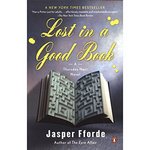
Lost in a Good Book by Jasper Fforde, Emily Gray (Audiobook): A little too zany for me

Lost in a Good BookLost in a Good Book

by Jasper Fforde, Emily Gray (Narrator)
Series: Thursday Next, #2

Unabridged Audiobook, 12 hrs. and 59 mins.
Penguin Audio, 2011

Read: September 4 – 6, 2018
I didn’t post about The Eyre Affair a couple of months ago when I listened to it, because I just didn’t know what to say about it. I was hoping that a second book would help. I’m not sure it did.

Let’s just start with the Publisher’s Summary (because there’s just no way I could do justice to this book):

           The second installment in Jasper Fforde’s New York Times bestselling series follows literary detective Thursday Next on another adventure in her alternate reality of literature-obsessed England—from the author of Early Riser.

The inventive, exuberant, and totally original literary fun that began with The Eyre Affair continues with New York Times bestselling author Jasper Fforde’s magnificent second adventure starring the resourceful, fearless literary sleuth Thursday Next. When Landen, the love of her life, is eradicated by the corrupt multinational Goliath Corporation, Thursday must moonlight as a Prose Resource Operative of Jurisfiction—the police force inside the BookWorld. She is apprenticed to the man-hating Miss Havisham from Dickens’s Great Expectations, who grudgingly shows Thursday the ropes. And she gains just enough skill to get herself in a real mess entering the pages of Poe’s “The Raven.” What she really wants is to get Landen back. But this latest mission is not without further complications.

Along with jumping into the works of Kafka and Austen, and even Beatrix Potter’s The Tale of the Flopsy Bunnies, Thursday finds herself the target of a series of potentially lethal coincidences, the authenticator of a newly discovered play by the Bard himself, and the only one who can prevent an unidentifiable pink sludge from engulfing all life on Earth. It’s another genre-bending blend of crime fiction, fantasy, and top-drawer literary entertainment for fans of Douglas Adams and P. G. Wodehouse.

There’s simply too much going on. This is Douglas Adams (mostly the Dirk Gentley novels) meets Terry Pratchett meets Doctor Who meets . . . something else, but it’s not just those elements — it’s those influences without restraint (not that any of those are known for their restraint). It’s just too zany ,too strange, too unmoored from reality.

There’s cloning to bring back extinct species, time travel, vampires, werewolves, interacting with fictional characters, rabid literary fans, characters walking into novels/other written materials to rewrite them, travel, or just to meet with someone else — and that’s just scratching the surface.

I realize that this is tantamount to complaining that there’s too much of a good thing, and I recently talked about what a foolish complaint that is. But this is different, somehow. The sheer amount of ways that reality can be rewritten/rebooted/changed in this series is hard to contemplate, and seems like too easy for a writer to use to get out of whatever corner they paint themselves into. One of the best emotional moments of this book — is ruined, simply ruined by time travel unmaking it just a few minutes later.

Emily Gray’s narration is probably the saving grace of this audiobook — I’m not sure I’d have rated this as high as I did without it. Her ability to sound sane when delivering this ridiculous text (I mean that as a compliment) makes it all seem plausible.

I enjoyed it — but almost in spite of itself. I can’t see me coming back for more. I do see why these books have a following — sort of. But I’ve got to bail.

—–

3 Stars2018 Library Love Challenge

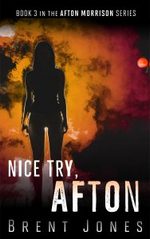
Nice Try, Afton by Brent Jones: Afton’s life gets stranger, more violent, and more open?

Nice Try, AftonNice Try, Afton

by Brent Jones
Series: Afton Morrison, Book 3

Kindle Edition, 111 pg.
2018
Read: July 18, 2018

           I could’ve screamed, knowing that I was the only person in the room working toward a peaceful resolution. Me, Afton Morrison, the disturbed murderess, suggesting that everyone take a deep breath, and find an answer that didn’t include violence.

Things have gone from bad to worse for Afton Morrison, the would-be murderess — not only is she being framed for a murder she didn’t commit, but didn’t; her home has been violated; her understanding of her childhood and family has been shattered; and so many buildings in her town have been burned over the last few days that the police have ordered a lockdown.

Again, this is hard to talk about without spoiling Book 1 and/or 2, so I’ll dodge it. Afton’s pushed about to her limit — maybe past it. And pushes herself in new ways. Ultimately, she embraces the violent tendencies that almost pushed her into her first kill back in Book 1 and sets out to put an end to the chaos that surrounds her home town and threatens to burn it all to the ground.

There is a hand-to-hand fight scene toward the end of the novella that was fantastic. I’d stack it up against Child, Sharp, Finder, or the like any day.

Beyond that there’s some compelling character-focused material. There’s some interesting discussion between the characters on the eternal nature/nurture debate. Afton gets very self-reflective — and maybe grows a little as a result. The emotional beats between the Afton and her family/friends (or the closest things she ahs to friends) are deeper than I expected, and hard-earned.

I’ve enjoyed and appreciated the series to this point, but Jones has found a new gear here, and has produced something markedly better than the rest. I’m not sure what he did here that was better — but every scene, every character, every thing, every theme is better written, better focused, sharper — if part 4 lives up to this, it’s going to be a great ending.

—–

4 Stars

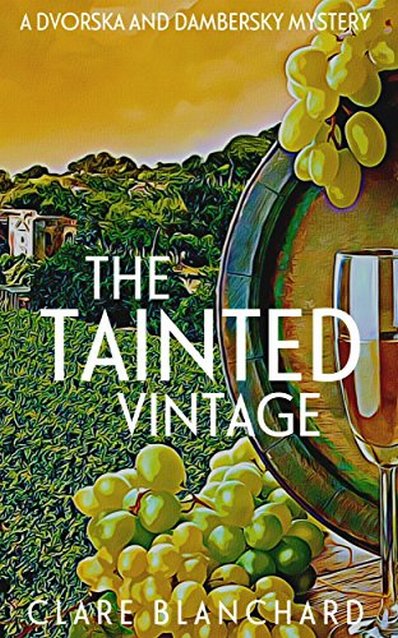
The Tainted Vintage by Clare Blanchard: A Promising Introduction to a series about crime fighting in the Czech Republic


—

The Tainted VintageThe Tainted Vintage

by Clare Blanchard
Series: Dvorska & Dambersky, #1

Kindle Edition, 159 pg.
Fahrenheit Press, 2018
Read: September 11, 2018

In the first chapter, we’re treated to a better synopsis than I could cook up, so let me just borrow it. One night in the little town of Vinice, in the Czech Republic, the mayor dies during his birthday party:

Dvorska was sure that she and Ivan had been sent there for the sake of appearances, because a dead mayor was by definition high profile, and of course because no-one else wanted to touch it. She wondered why they had been called out at all, so soon. The fat feminist and the misogynist – what a team. And of course Dambo, as the senior of the two, would call the shots, so her hands would be tied. Perfect. The sudden death of a rich and powerful local figure was hardly a magnet for rising-star detectives.

Dvorska picks up a clue or two that convinces her — and then Dambersky — that this death was not due to natural causes. The Powers That Be don’t want to hear such a thing, and rule otherwise. So this very unlikely duo has to embark on an unauthorized investigation — not just unauthorized, but prohibited — into the murder.

Finding the murderer of a man who died of natural causes isn’t the easiest thing to accomplish, obviously — it’s hard to ask too many questions without a “Hey, he wasn’t murdered, why are you asking?” coming up. So the partners have to be wily — not just with their superior officer, but with witnesses, possible suspects, and everyone else they encounter.

The investigation takes them to various cities, a variety of social classes, and even ends up giving them a few history lessons. The mayor’s home has ties to significant (at least to Vinice) historical movements, going back to World War II, the Communist takeover, and then once the Republic took over. This really helps the reader — particularly the reader who knows almost nothing about the Czech Republic — find themselves, not only in the geography but the history (cultural and otherwise). obviously, I’m no expert on the Czech Republic,, but I can understand a little more than I used to. Just the first couple of usages of “Perv” to indicate an illegal drug threw me — but between the narrator finally calling it Pervityn and a search engine, I got a little lesson in drugs during WWII.

It doesn’t take long for the book to try to get the reader on the side of these two characters — maybe there’s more to them than the “fat feminist and the misogynist.” I really found myself enjoying them as people, not just as detectives. We spend — for reasons that will become clear when you read this — more time with Dvorska than her partner, and she is a charming, dedicated detective, fully aware of her limitations and sure how to overcome them.

The writing was good but I thought it could be sharper — there’s an odd word choice or two (early on, the detectives start talking about the mayor’s death being an execution, not a murder); there’s a lot of recapping/rehashing something that was just done/considered/decided a page or two earlier — the kind of thing that makes sense for serialized novels, but this doesn’t appear to be on. Still, the voice is engaging, as is the story — and you get caught up enough in it that you can easily ignore a few things that’d normally bug you.

I was caught totally off-guard by the ending. I didn’t expect that to happen at all — my notes toward the end feature short words like “what” and”why?” But primarily my notes consist of question marks, exclamation points, and combinations thereof. This is a great sign for mystery and thriller novels. Blanchard did a great job setting things up so that there’s a dramatic reveal and one that isn’t seen chapters away. I do think some more ground work could have been laid early on so that it didn’t seem quite so out of nowhere. But it was effective enough, that I really don’t want to complain about it.

This is a pleasant read — it’s close enough to being a cozy that I could recommend it to friends who predominately read those, and twisted enough that those with more grizzled tastes can sink their teeth into it, too. The characters are winning, charming and the kind that you want to spend time with. It’s a good introduction to a series exotic enough for most English readers to feel “alien” and yet full of enough things so you don’t feel cut off from what you know. There are obviously future cases for these two in the works, and I plan on getting my hands on them when I can.

—–

3 Stars

BOOK SPOTLIGHT: The Tainted Vintage by Clare Blanchard

Today I welcome the Book Tour for The Tainted Vintage by Clare Blanchard, which adds a little international flavor to my typical fare. Along with this spotlight post, I’ll be giving my take on the novel here in a bit.

Book Details:

Book Title: The Tainted Vintage by Clare Blanchard
Publisher: Fahrenheit Press
Release date: July 7, 2018
Format: Paperback/ebook
Length: 159 pages

Book Blurb:

In the small Czech town of Vinice the mayor has been found dead in his wine cellar.

Detectives Jana Dvorska and Ivan Dambersky are called to the scene and soon realise that despite appearances, Mayor Slansky’s death was most definitely not from natural causes.

Almost immediately, the close-knit community closes ranks to try and brush the unexplained death under the carpet with the minimum of fuss.

Dvorska & Dambersky are drawn deeper and deeper into secrets that many hoped would remain buried forever and they’re forced into pursuing an investigation where their own lives are put in danger.

The Tainted Vintage is the first book in a wonderful new series set in and around The Czech Republic, an area rich in history, literature and culture that still remains largely unexplored by contemporary crime fiction fans.

About Clare Blanchard:

Clare BlanchardOriginally from the North Yorkshire coast in England, Clare Blanchard spent half her lifetime in the Czech Republic, where her books are mainly set. Inspired by Nordic noir, where the settings are often like another character in the plot, she writes crime mysteries and other fiction, usually with a historical twist. She loves beautiful landscapes and architecture, cross-country skiing, the wine of South Moravia, and of course Czech beer. When she’s not being literary she knits funky socks.

Clare Blanchard’s Social Media Links:
Twitter: https://twitter.com/CBcrime
Facebook: https://www.facebook.com/ClareBlanchardBooks/
Website: https://www.clareblanchard.com/
Amazon Author Page: https://www.amazon.co.uk/s/ref=dp_byline_sr_ebooks_1?ie=UTF8&text=Clare+Blanchard&search-alias=digital-text&field-author=Clare+Blanchard&sort=relevancerank

Purchase Links for The Tainted Vintage:
Amazon UK: https://www.amazon.co.uk/Tainted-Vintage-Dvorska-Dambersky-Book-ebook/dp/B07FC1MM58/ref=sr_1_1?s=digital-text&ie=UTF8&qid=1534608727&sr=1-1
Amazon US: https://www.amazon.com/Tainted-Vintage-Dvorska-Dambersky-Book-ebook/dp/B07FC1MM58/ref=sr_1_1?ie=UTF8&qid=1534608804&sr=8-1&keywords=the+tainted+vintage
Kobo: https://www.kobo.com/ca/en/search?Query=the+tainted+vintage
Nook: https://www.barnesandnoble.com/w/the-tainted-vintage-clare-blanchard/1125886642?ean=2940154344606
Fahrenheit Press” http://www.fahrenheit-press.com/books_the_tainted_vintage.html


My thanks to damppebbles blog tours for the invitation to participate in this tour and the materials they provided.

A Few Quick Questions about Dear Mr. Pop Star


I had the great privilege of asking a few questions of Mr. Dave Philpott regarding this great book. It was tough to come up with the questions, the temptation to get into some of the particular letters/responses was great — I also had a song or two I thought about trying to get their take on. But I restrained myself — at great personal cost. But it was worth it — these are some of the best answers I’ve received in one of these. . .

This seems to be largely a UK-based endeavor — for the sake of my largely US audience, could you introduce Derek & Dave Philpott and the background for this project?
To be totally frank with you we are just two ordinary blokes. I’m obsessed with music, am extremely knowledgeable about it and it’s my day job, So I revere and view artists and songs from a skewed perspective. My father though knows nothing about music, is completely detached from it and doesn’t know or care if a tune is by a world famous artist or a band in a garage down the road. Hence, when Mick Jagger sees a red door and wants to paint it black, I marvel at an angst-ridden motif of despair and the hopelessness of the human condition from the pen that bought us ‘Sympathy For The Devil’. My dad though, oblivious to Mr. Jagger’s pedigree, will say:

‘’What a fool! If he doesn’t put a strong undercoat on there it’s going to turn up purple. Your Uncle Len did that once and..’’

…and then he’s off on a diatribe about bad D.I.Y. or, as I believe our American friends call it, Home Improvements. How it would always work is that I would play him a song, or perhaps even give him a copy of the lyrics to a famous tune, let him digest it for a while and then wait for the gold, which would normally just be him wittering on for a while about the record interspersed with details of how his day would pan out and what the neighbours were up to. I would note this all down, edit it and it would form the body of a letter to the artist. In 2008 we put together a website of about 50 or 60 letters, which we would add to regularly, and then we set up our Facebook page. We thought it was funny enough that these unanswered missives were sitting there in the misty ether. We found ourselves with a fierce fan base and then one day, about two years into the project, we got a reply from one of the artists themselves. Crucially this contact was secured not through official channels but from a mutual fan who knew the pop star personally. We then realised that this could be an interactive dialogue with the rock and pop stars and that, importantly, we could get to these artists through ‘the back door of the industry’. This could be through friends of friends, roadies and crew, the bass player’s cousin or any indirect route. This made the process a lot more personable, as we were being recommended by people who knew who we were and what we did and that it was all a bit harmless and daft. Eventually we got to the point where the rock stars were telling each other. I wrote to a pop star last year, asking if they would like to get involved and if they knew who we were, then the immortal reply “Oh god, I’ve been dreading and looking forward to being asked one day!” came back and we were absolutely thrilled.

We made sure that we got the full consent of the artists to use their replies and that they were happy for us to share them. Every single one of them told us that they were more than happy and they all got behind us and some even supported us by telling their own fans about us.

Owen Paul told us, in not so many words, that he felt that this is so obviously an organic project which he’d seen this grow over years and if we had been a couple of journalists then he just wouldn’t have got involved because it would be contrived rubbish.

It took us a long time, nearly an entire decade in fact, but we ended up with enough material for a book which we self published after an amazingly successful campaign on Kickstarter, through which we were able to raise £18,000. The success of that volume bought us to the attention of our now publisher, Unbound, who encouraged us to do a second.

Is there an artist/group or song that you’ve tried to write about but just haven’t gotten things just right?
Yes, indeed, the one that springs to mind first is Stiff Little Fingers. Many of their songs are based around The Troubles in Ireland which started in the late 1960s, an era that my Dad lived through and, due to being that bit older, knows more about than I. He was quite rightly very uncomfortable about deriding the subject matter and lyrics, so we decided that we would poke fun at ourselves by writing a letter to them where we deliberately got the wrong end of the stick by misunderstanding the song for comedic effect. Looking back I think that that letter completely changed the project for the better – we realised that we could turn the joke on ourselves and this allows the artist to hit back at us. For the new book Dr Hook and Tears for Fears both informed us that they couldn’t find the inspiration to reply to our first efforts because they weren’t up to our usual standards, probably because of the fact that at the time we were compiling the whole project, and had our eye off the ball. So we screwed up the first letters and started again, thought it through and came up with completely new letters which they lapped up and their responses were magical. They were absolutely right.
Of the responses you’ve received from artists/groups, which has been the most surprisingly good? Either you didn’t expect a response quite along the lines of their letter, and/or theirs was better than you expected? (I’m sure you have some on the other end of the spectrum, as well, but we’ll ignore them)
From the new book it’s Geoff Deane from Modern Romance, Chris from The Waitresses, Mott the Hoople, Wang Chung and Nik Kershaw. They absolutely slaughtered us with their wit and inventiveness. Although I have to say that we are always impressed at the answers that we get back, the effort that the stars put into their replies is astounding and we’re flattered that they give us so much time and attention. Each letter is a wonderful surprise.
You’re obviously enjoying a measure of success from artists and readers (otherwise this book wouldn’t exist), what’s the most interesting criticism you’ve received — either from a reader, critic or musician? Has it changed your approach to anything?
Feedback from our friends online is vital to us and this is why we’ve always tried to be as interactive as we can on our Facebook page, which dad does try to be a part of as much as he can, but he is obviously from a era where things were a little less ‘immediate’ and a lot more polite. Sometimes when we send messages via Messenger and there’s a ‘seen tick’ but no reply, Dad feels that this is incredibly rude, but it’s just the way things are now in the world. He like so many pensioners comes from a more courteous past.

There is a certain luxury of this real time interaction with the people who follow you though, in that you can bounce ideas out there via status updates and see how new material is received in general. If it chimes and makes people laugh then you can integrate it into letters. Also when we first began our letters were fairly flowery – we would spend sometimes weeks perfecting them, making sure that we never repeated words, writing very elaborate scenarios to tie in with the different songs. Perhaps we were trying to be a bit too clever to impress the artists. But the feedback we got told us that we could actually lose a lot of the purple prose and just get straight to the point and this has crucially changed how we write now. Being succinct actually means that the focus is more on the replies and probably makes our missives easier to respond to, as they not bogged down in unnecessary language.

Also a lot of anoraks on the prog forums were incensed, claiming that we’d invented the responses from some of their heroes as ‘there is no way that Mr. XXXX would respond to this outrage’. I loved that – it meant that we really were getting somewhere.

Of all your letters in this particular volume what are the one or two that you’re most proud of?
Bruce Woolley’s is a masterpiece. Also as fan of Gong, getting Daevid was a massive deal for me. It was one of the last things the great man did before he left us, and he absolutely loved it. I was going to include it in the first book but felt it was too soon after his passing. Then I was dithering about putting him in this one and I had a vivid dream, in which he visited my house, knocked on the door and said,

“I am ready to speak”

Thank you very much for your time — and for this book. I had such a great time reading it, I hope you have great success with it!
Bless and thanks, Mr. Newton

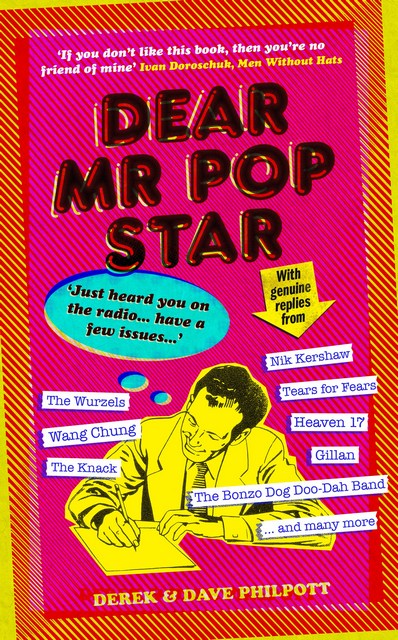
BOOK SPOTLIGHT: Dear Mr Pop Star by Derek & Dave Philpott

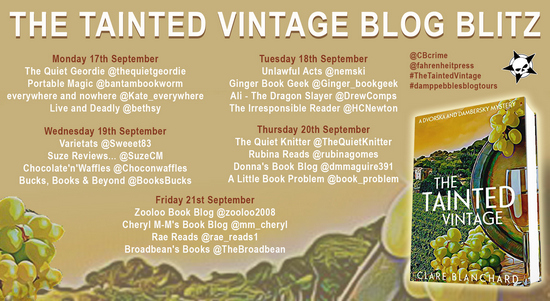
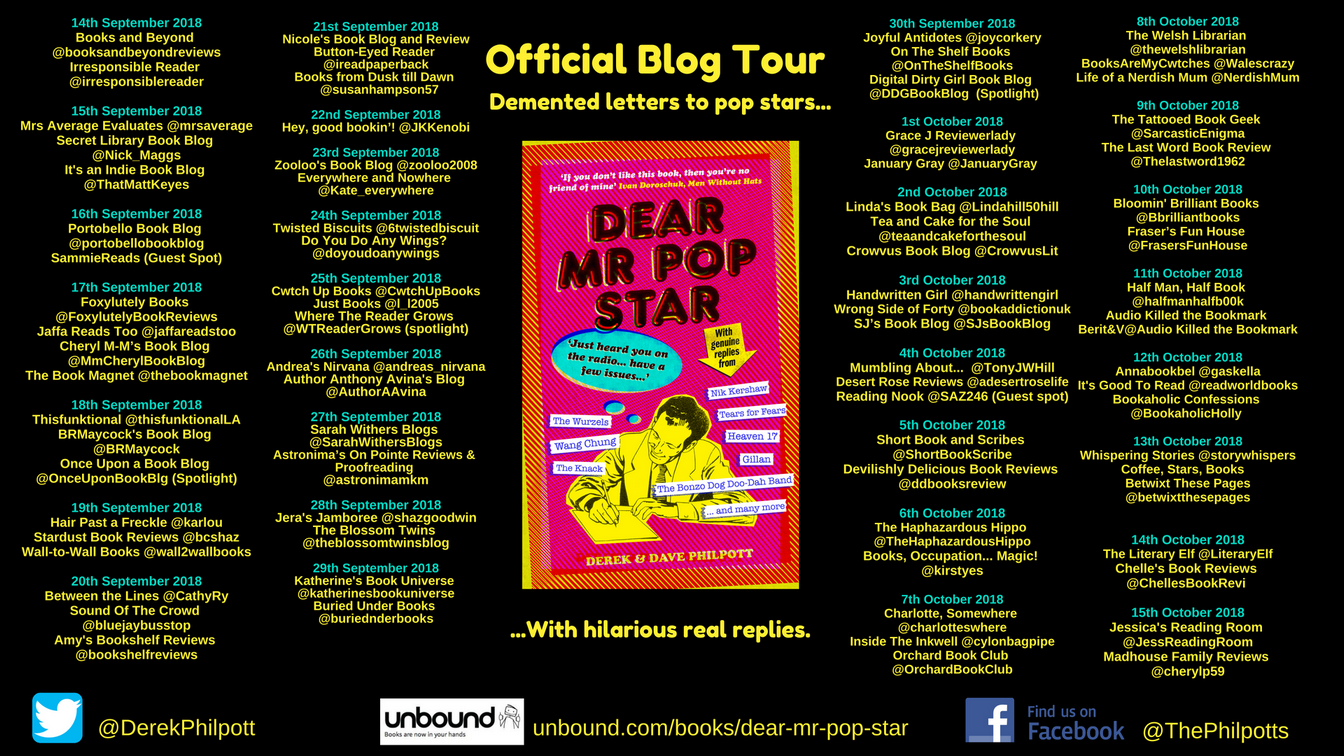
Today we welcome the Book Tour for the almost indescribable Dear Mr Pop Star by Derek & Dave Philpott — hopefully that “almost” is accurate, or I’m going to have trouble when it comes to my post about it (as if being one of this massive group isn’t bad enough — seriously, check out that graphic!). Along with this spotlight post, I have a Q&A about the book, and then I’ll be giving my take on the novel here in a bit. (those links’ll work once the posts are live)

(click to embiggen)

Book Details:

Book Title: Dear Mr Pop Star by Derek & Dave Philpott
Publisher: Unbound
Release date: September 20, 2018
Format: Hardcover/ebook
Length: 416 pages

Book Description:

“If you don’t like this book, then you’re no friend of mine.” Ivan Doroschuk, Men Without Hats

A collection of hilarious letters to iconic pop and rock stars with fantastic in-on-the-joke replies from the artists themselves: Eurythmics, Heaven 17, Deep Purple, Devo, Dr. Hook and many, many more…

For more than a decade, Derek Philpott and his son, Dave, have been writing deliberately deranged letters to pop stars from the 1960s to the 90s to take issue with the lyrics of some of their best-known songs. They miss the point as often as they hit it.

But then, to their great surprise, the pop stars started writing back…

Dear Mr Pop Star contains 100 of Derek and Dave’s greatest hits, including correspondence with Katrina and the Waves, Tears for Fears, Squeeze, The Housemartins, Suzi Quatro, Devo, Deep Purple, Nik Kershaw, T’Pau, Human League, Eurythmics, Wang Chung, EMF, Mott the Hoople, Heaven 17, Jesus Jones, Johnny Hates Jazz, Carter the Unstoppable Sex Machine, Chesney Hawkes and many, many more.

About the Authors:

Derek and Dave Philpott are the noms de plume of two ordinary members of the public, working with help from a worldwide social networking community.

For More Information:

Goodreads ~ Unbound ~ Twitter ~ Facebook

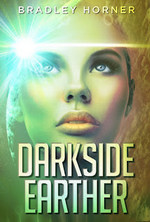
Darkside Earther by Bradley Horner: A Sweet Story of First Love Wrapped in a SF Shell

Darkside EartherDarkside Earther

by Bradley Horner
Series: Darkside Earther, #1

Kindle Edition, 221 pg.
2018
Read: September 1 – 3, 2018

I really didn’t think it could get any better than this.

But as with all tales of happiness, there’s always a floating cloud of crap over our heads just waiting for the touch of gravity to send it falling.

Axel is a not a typical teen, but he’s not a-typical. Hundreds years in the future, he lives on a massive space station in orbit above Earth. His parents are people of influence and importance on the station, and he’s being raised to join them. But that’s not at all what he wants. He’s a middling student, at best, all he really wants to do is make art and fall in love — hopefully with one particular girl from his classes. Maybe play a few video games (they’re far more immersive than anything we can possibly come up with — and are called something else, but they’re essentially what I used to play on an Intellivision).

Helen doesn’t have his artistic inclinations or abilities, but she shares his political apathy, his love of video games, his odd sense of humor and other interests (I was tempted to say that she shares his obsession with her appearance, but that’s not entirely fair to her). Her family is historically (and currently) a pretty Big Deal on Earth. Her immediate family is on this space station in part to work on behalf of the people on Earth. I don’t have as strong of a sense of her as I do Axel — at least not one I could express. That’s primarily on me — but it’s also part of the book, it’s Axel’s story, and we know him much better.

The book begins spending a little time with their courtship after setting the stage — it’s very easy to get caught up in the happiness and forget about that floating cloud of crap. Then they hit a pretty major road-bump — and then just when you get caught up in their clever ways around their obstacles, life for everyone on the station plunges into chaos.

Some bar owner once said, “it doesn’t take much to see that the problems of … little people don’t amount to a hill of beans in this crazy world” with an eye to the horrors of World War II around him. Axel and Helen have a bigger conflict, and more suffering, around them — and their problems are even smaller in comparison. But that won’t stop you from being drawn to their plight (and their joy, determination, and courage, too). What these two (and their friends) go through is enough to derail relationships, families, movements — and while you’d understand why both of them would bail on their romance, you can’t help but root for these crazy kids.

It would’ve been understandable, and so very easy, to turn the parents into the villains of the piece — even just one set. But Horner resisted that, and even has Axel realizing they’re all just doing what they think is right and best — even if that’s diametrically opposed to what their children want/believe.

This isn’t technically YA, but it’s YA-friendly. Maybe even MG-friendly, come to think of it. It’s suitable for SF readers of all ages, let’s just say. Horner writes like the best SF writers used to in a way that’s approachable and appealing to all audiences. I wish more did that. I could say a lot about the science of the space station — and the cultures created by it, both in orbit and on the ground; or the politics; or the technology; the human biology . . . basically the SF-ness of it. I’m not going to, because of time, space required — and frankly, the human elements, the characters are what counts.

I wasn’t that sure this book was going to work for me, but I’m glad I gave it a chance, because this thing won me over (pretty quickly, I should add) — it had to be Axel and his way of looking at life that drew me in and then pretty much everything else kept me there. It’s hopeful, almost optimistic (given the harshness of the reality of humanity’s situation, that’s an accomplishment), you can enjoy huge swaths of it. It’s a love story, it’s the beginning of a SF epic, and you will fall under its spell if you give it half a chance. There are some big ideas here, but it’s a pretty small story, where people and their feelings are more important (and more interesting) than conflict, technological wonders, and everything else.

—–

4 Stars

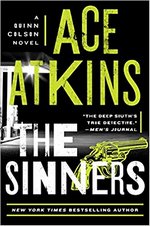
The Sinners by Ace Atkins: Atkins’ take on the Dukes of Hazzard(??) is another stellar installment in the Quinn Colson series.

The SinnersThe Sinners

by Ace Atkins
Series: Quinn Colson, #8


Hardcover, 365 pg.
G.P. Putnam’s Sons, 2018

Read: September 4 -5, 2018

They sat there in silence for a bit, enjoying the warm breeze, the empty, quite sounds of the hot wind through the trees. He and Boom could be together for a long while without saying a damn word, same as it had been hunting and fishing when they were kids. They didn’t feel the need to fill that silence with: bunch of empty-headed talk.

“This place is a lot different from when you got back,” Boom said.

“People in town said for me to burn the house down,” Quinn said.

“Took us two days just to clear out your uncle’s trash,“ Boom said. “Nothing good in here but some old records and guns.”

“And a suede coat and a bottle of Fine bourbon from Johnny Stagg.”

Boom nodded, silent again for a while. Quinn drank his beer watching Hondo, now just a flitting dark speck among the cows as he worked them a little, letting them know who was in charge. Nearly ten years Quinn’d been back and he wasn’t sure he’d made a damn bit of difference.

On the one hand, it’s easy to argue that with Quinn — even just one of the seven preceding novels would tell you that. But, it’s easy to see where he’d get to thinking that way — Tibbehah County is a very much poster child for The More Things Change, The More They Stay The Same Club. The Sinners is full of nice little moments like this — quiet, reflective moments with Quinn and Boom, Quinn and Lilly, Quinn and Maggie. While it’d be easy (and understandable) to focus on the storylines featuring the Pritchards or Boom Kimbrough — the heart of this novel is in these moments. You want to know what Quinn Colson, or this series is about? Focus on these conversations, the quiet in the midst of the storms.

But that doesn’t mean we should ignore the storms.

The first story (not in the book, but here) focuses on Boom Kimbrough, Quinn’s oldest friend. Unwelcome at his old job keeping the Sheriff Department’s vehicles running (among other things), thanks to the county supervisor we met in last year’s The Fallen, Boom’s moved on to doing some interstate trucking. Convinced (wrongly?) that a black man with one arm isn’t going to be hired by anyone else, he’s stuck with one particular company. And once he becomes suspicious about the cargo he’s sometimes carrying, he’s ready to quit — but despondent and frustrated about what he’ll do as an alternative. His boss doesn’t want him to leave — and uses a couple of tough looking employees to convey that to Boom (Boom’s not the only one they’ll threaten — Fannie Hathcock is also a target). Clearly, they don’t know enough about Boom, and before you know it, Quinn is informed about it all. Which brings in FBI agent, Nat Wilkins (more about her in a second). Things get hairy from there. This is the secondary story — and gets that kind of space — but it’s really the more interesting of the two major plots, mostly because it’s what forces Fannie and the Dixie Mafia toughs to get involved in the other story.

The major plotline involves the anti-Bo and Luke Duke. Tyler and Cody Pritchard are a couple of good ol’ boys concerned with racing their stock car, women, and growing/selling the best weed in The South. Things are going fine for them, by and large: they race, they grow and sell, which funds the racing, enabling them to attract women. Sure, they’ve double-crossed Fannie a bit, but that’s really nothing major. Until their Uncle Heath gets out of prison after doing 25 for his part in laying the groundwork of their marijuana growing. Heath, too, is an anti-Duke. He got caught, for one, and he’s not in the habit of keeping his nephews out of trouble, in fact, he makes things worse for them and spurs them into bigger and worse crimes than they’d been accustomed to.

Now, long-time readers will have done the math here — Heath did 25 years, Quinn’s been around for almost 10, having taken over for . . . that’s right, his Uncle, Hamp Beckett. Hamp and Heath apparently were quite the cat and mouse for a while (Hamp perhaps being spurred on by his “Boss Hogg,” Johnny Stagg — I swear I’m done with the Dukes now) until he finally got the goods on Heath and sent him away. That story kicks off this book and is a great way to open. To say that Heath has got a chip on his shoulder toward Hamp and his nephew would be understating things a wee bit.

So we’ve got Heath dragging his nephews into bigger and badder felonies, making them targets for the Dixie Mafia, who are having troubles with things at Fannie’s, and one of their transportation venues is being scrutinized thanks to Boom. Oh, yeah, and Quinn and Maggie are a couple of weeks away from tying the knot and Quinn’s mother is becoming a pest about the ceremony and reception. It’s set to be a good time in Tibbehah.

This is told with Atkins’ typical skill, eye for detail, good timing and atmosphere. It’s hard to find something new to comment on. One thing I really appreciated was how clever he had Quinn act when it came to putting the pieces together. We’re all accustomed (especially in film or television) for the police to be close to figuring things out, but needing a vital piece of information from an unconscious, unavailable, or non-communicative witness until the last second. By the time the unconscious witness woke up and started providing the clues and identities needed to put anyone away for their crimes, Quinn had already sussed it out and was in the middle of making the necessary moves. One more Hazzard reference, I lied, get over it — Quinn is very much the anti-Sheriff Rosco P. Coltrane.

I spent so much time feeling bad for Tyler and Cody — they aren’t characters I’d typically like. There’s little to commend them — they’re not that bright, not that talented, not that nice, I can’t imagine why any woman would want to spend time with them (not that we have proof that any do), and seem destined to lead quiet little lives of no consequence. But once their uncle forces them into things, I just wanted them to find a way back to their petty little pot farm.

I spent more than a little time worried for Fannie, too. She’s as despicable as they come, too, but as characters go, I like having her around. The way she’s treated by her superiors shows how tentative her situation is — and Quinn could be facing someone worse than her or Stagg pretty soon.

Speaking of worries — I spent most of the novel very concerned about the health, well-being and longevity of a character that’s been around since The Ranger. I don’t think for a second that Atkins feels the need to keep any one of these characters alive. Frankly, it’s be easy to make the Quinn Colson novels the Tibbehah County Chronicles or the Lilly Virgil novels — no one is safe, including Quinn. Making it very easy for me to spend a lot of time worried about someone I like. Obviously, I won’t tell you how right I was on that front — but I wasn’t wrong.

Naturally, Atkins gets the characters right. You know from the beginning how worthless Heath Pritchard is, how nasty the Dixie Mafia toughs are, how lame the Pritchard boys would be without prodding (lame, but amusing). We meet new federal officer here — Agent Nat Wilkins. I’m glad that Quinn isn’t wholly dependent on the DEA Agent (whose name escapes me for the moment) for outside support anymore. But more than that, I’m glad that Wilkins is who we get to see in this role. She’s brash, she’s smart, she’s fun — she really isn’t like any Law Enforcement type we’ve met in this series to date. I’m sure we’ll see her again, hopefully soon. I’m not saying I need to see her next year, but if I don’t see her again by 2020, Atkins can expect me to lead an online riot.

It was good to spend time back in this troubled county, checking in with our old friends and some new ones (I’m really liking Maggie, and hope she sticks around). As much as I enjoyed Atkins’, Old Black Magic, I think this is his better work this year. As satisfied as I was with the story, I’m already impatiently waiting for the next installment — between how much I liked The Sinners and the way that Fannie’s last line promised to make the next book a doozy, it can’t come soon enough.

—–

4 Stars

2018 Library Love Challenge

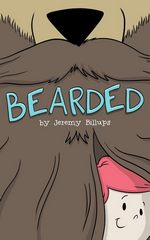
Bearded by Jeremy Billups: A Charming Picture Book about a Bearded Bear

Bearded

by Jeremy Billups
Hardcover, 34 pg.
Billups Creative, LLC, 2015
Read: September 5, 2018
Picture books about bears are everywhere — I have a hard time believing many kids get out of the picture book stage without exposure to at least 4 of them (and that’s before they’re at the Pooh or Paddington stage). But how many of those bears have been bearded?

Enter Jeremy Billups and his little book.

This is the story of a little red-haired girl (no, not that one) traveling the world with her bearded bear, having all sorts of adventures and meeting a bunch of different animals. There really isn’t a lesson, moral or much of a plot — just a bunch of quick looks at the pair. A few quick lines and a picture on each pair of pages.

The art is simple and arresting. They just pop off the page — this is one of those times I wish I had the necessary vocabulary to describe why I like the drawings, but I don’t. I bought a print of what turns out to be page 16 before I even picked up the book to flip through. I’ve bought a handful of prints this year, and it’s my absolute favorite — I like it even more now that I’ve read the book. Also, if you ever see a better picture of someone making buffalo wings, I’ll eat my hat.

Oh, and the endorsements on the back cover are a lot of fun. If that doesn’t convince you to try it out, I can’t imagine what will.

Great art, cute story, fun rhymes — everything you want in a picture book. Even better — animals with beards are the best animals that aren’t dogs. This is a charming little book that’s sure to please.

—–

4 Stars

Page 198 of 232

Powered by WordPress & Theme by Anders Norén