Category: Mystery/Detective Fiction/Crime Fiction/Thriller Page 23 of 153

Tower of Babel by Michael Sears: Concrete Jungle Where Dreams Are Made Of

Come back this afternoon for a Q&A with the author, Michael Sears, it’s a good one.

Tower of Babel was published a month ago, and I was trying to get this posted in that first week. I missed significantly, and I wanted to start things off by apologizing to Michael Sears and Wiley Saichek, the publicist that connected me with Sears, for that.


Tower of BabelTower of Babel

by Michael Sears

DETAILS:
Series: Ted Molloy, #1
Publisher: Soho Crime
Publication Date: April 6, 2023
Format: ARC
Length: 394 pg.
Read Date: March 27-29, 2023


What’s Tower of Babel About?

I really don’t like not providing my own synopsis/tease for a novel. But I’m overdue with this post, and a lot of that has to do with stumbling on this section. So I’m going to appropriate it from Soho Press’ site:

Queens, New York—the most diverse place on earth. Native son Ted Molloy knows these streets like the back of his hand. Ted was once a high-powered Manhattan lawyer, but after a spectacular fall from grace, he has found himself back on his home turf, scraping by as a foreclosure profiteer. It’s a grubby business, but a safe one—until Ted’s case sourcer, a mostly reformed small-time conman named Richie Rubiano, turns up murdered shortly after tipping Ted off to an improbably lucrative lead.

With Richie’s widow on his back and shadows of the past popping up at every turn, Ted realizes he’s gotten himself embroiled in a murder investigation. His quest for the truth will take him all over Queens, plunging him into the machinations of greedy developers, mobsters, enraged activists, old litigator foes and old-school New York City operators.

Haaaaave You Met Ted?*

* Sorry, I couldn’t resist. Not that I tried all that hard.

Ted’s a good example of a very familiar type of Crime Fiction protagonist. At one point in the not-too-distant past, he’d been very successful for his age with a bright future ahead of him. Then he hits a personal and professional rough patch, and all that success and future vanishes. He’s now had to recalibrate his life, his legal career in ruins and so begins a new—albeit somewhat related—career, with new routines, a new home, new allies, and so on to restart his life.

Like most of this type, he’s moved on, but not really. He still misses his old life, still laments it, regrets the things that happened (unjustly) to bring down his house of cards, and would go back if he could. He’s given chances over the course of Tower of Babel to revisit that life, to see how green the grass is on that side of the fence, and his response to that really tells the reader more about who he is than anything else in the book can.

In a New York State of Mind

I love when a novel hits me with a great sense of place—and Tower of Babel did that to me. Sears doesn’t spend that much time describing the city or its landmarks or anything like that. But the city permeates everything. Travis Bickle drove the same streets as Mohammad did (and probably in a safer manner). Sherman McCoy struck deals with the same kinds of people. Det. Denny Malone would be known to the detectives on the murder.

This is a novel that has to take place in New York.* I just don’t see it working anywhere else—are there shady real estate deals, corrupt politicians, organized crime, and entities with too much power in Chicago, Miami, L.A., Boston, London, etc.? Absolutely. Do other major cities have teams that have a fanbase as devoted and as constantly disappointed as the Mets? Absolutely (although most of them don’t have to share a city with the Yankees). Ethnic diversity and economic disparity might have different mixes and present in different ways from metropolitan to metropolitan, but they’re there just the same. But I just don’t see how this novel works in Miami or Boston. The organized crime of it all would be different in Chicago. There’s something about shady real estate antics that seems quintessentially NYC (it shouldn’t, but it does).

* Granted, I’m just some dude from Idaho, what do I know?

Any book that transports me so convincingly is worth the time and effort (not that this took much of the latter).

Ted and Jill

Ted is still friends with his ex-wife, Jill. They’re obviously very important to each other and spend a good deal of time together—primarily because of the NY Mets and Ted’s season tickets. I absolutely loved this version of divorced adults interacting with each other (there were no kids involved, which likely helped). Early on, when I wasn’t as sold as I eventually would be on the murder storyline (and was still trying to understand the real estate angle), I put in my notes that I’d have enjoyed the novel more if it was just about them spending time together. By the novel’s end, I’d changed my mind—but I’d still take a novella just about the two of them.

It’s a healthy friendship, supportive and challenging—and just fun. (then again, this is a noir-ish Crime Novel, so I make no promises that the way things start is the way they will end).

So, what did I think about Tower of Babel?

I stumbled a little in the beginning trying to understand the way that Ted’s making his money now and the antics involved in all the real estate transactions (ethical, legal, and otherwise), but that’s primarily because my brain doesn’t do well with that sort of thing. I ultimately gave up trying and just accepted it in the same way I do with Asimov’s worldbuilding or things along those lines. By the end of the novel, I (am pretty sure that) I understood it all because I’d stopped trying to decipher it (I still can’t totally explain psychohistory or Asimov’s take on superluminal flight, for what’s it’s worth). The details are both not as important to the novel as everything else and not as difficult as I was making it.

I can see Sears settling into this character and this world and turning Molloy into a typical scrappy lawyer character in the vein of Mickey Haller or Eddie Flynn. But I don’t think that’s the direction this is going—would I read that version? Absolutely, but I already have Haller, Flynn, et al. It feels to me that this is headed in a more David vs. Corporate Goliaths tack, maybe with some murder, etc. thrown in, sure—but my money is on this series focusing on corporate crimes, and corruption (both political and economic). Either way, I’m in for at least one or two more books—and I expect most readers will feel the same way.

This is not your typical Legal Thriller, and Sears sucks you into the story in ways you won’t expect—actually, I think you’ll end up expecting very little about the story and characters as you go along. But in the end, you’ll realize that just about everything had to go the way it did. I love that feeling of being taken unaware and then seeing that there was no other way for this jigsaw to be put together. It’s so satisfying when you can look at the whole thing (and a great ride along the way).

Crimes you’re not accustomed to reading about—crimes you’re very familiar with—a cast of characters you don’t see every day, and an ethically dubious protagonist (or is he?). Tower of Babel is a great entryway into a series that should garner a fanbase, and you should think about hopping on before the bandwagon builds up too much speed.

Disclaimer: I received this ARC from the author via Wiley Saichek and Saichek Publicity in exchange for this post—while I appreciate that, the opinions expressed are wholly mine.


4 Stars

This post contains an affiliate link. If you purchase from it, I will get a small commission at no additional cost to you. As always, the opinions expressed are my own.


Chain-Gang All-Stars by Nana Kwame Adjei-Brenyah: Are You Not Entertained?

Chain-Gang All-StarsChain-Gang All-Stars

by Nana Kwame Adjei-Brenyah

DETAILS:
Publisher: Pantheon
Publication Date: May 2, 2023
Format: eARC
Length: 348 pg.
Read Date: April 24-29, 2023


Before I begin, let me just say that you are wasting your time reading this post when you could be out buying or borrowing and reading this book.

If you’ve made the mistake of sticking around, I’ll go ahead and talk about the book, I guess. But really, your priorities are wrong.

What’s Chain-Gang All-Stars About?

In the not-too-distant future, laws regarding the incarceration of serious felons have been adjusted, and the Criminal Action Penal Entertainment program is born. Under CAPE, convicted murderers (many with other convictions as well) can be set free before the end of their sentence if they agree to participate. Participation however, could result in their violent death.

Under CAPE, these felons will face off one-on-one (sometimes two-on-two) against other felons in a fight to the death. If you survive a bout, you score some points and progress to the next fight (in a week or so). As you gain victories, you can earn points to be used for weapons, better food, clothing, equipment, etc. After three years, you will be released.

These felons are organized in Chain Gangs associated with the participating prisons. Links (as the fighters are called) in the same Chain do not face off against each other, and become (to varying degrees depending on their chain) teams—encouraging each other, giving tips, etc.

This has become the largest sports entertainment in the U.S. Throngs show up for live events or to watch a stream. You can also subscribe to almost constant live feeds of the Links between fights. Some fighters become superstars, with corporate sponsors, merchandise, inspiring their own fashion trends, etc.

Over the course of the novel, we follow (primarily) one Link from her initial bout to the final weeks of her time. We get to know her Chain—a couple of Links in particular—as well as Links from other Chains, so we can see how people join, survive, and (usually) die through this entertainment. We also get to know some of the executives and sportscasters becoming rich from this, some fans and subscribers—as well as some of the protestors trying to stop the program.

The Links

Most of the time we follow Loretta Thurwar and Hamara “Hurricane Staxxx” Stacker. LT’s on the verge of freedom, and Staxxx isn’t far behind. They try (with some success) to get their Chain to act differently, to help each other in ways others don’t. At the same time, they’re dealing with the emotions of LT not being around for much longer (one way or another) and Staxxx moving into the leadership role. We get to know them and their team, what brought them to this point in their lives, and what might be around the corner.

But we don’t just focus on those two—there are other Links, in other Chains, that we watch. Some as they make the transition from prisoner to Link, some in their early (and final) bouts. As horrible as the fights to the death are—and they are—it’s the time with these other Links that really cements the horror of what is happening to and through all the Links. There’s one man who spends a lot of time in solitary confinement and some of what he goes through made a bigger impact on me than the bloodiest death.

None of these links would claim to be a good person—well, there’s one wrongly convicted man, but his innocence doesn’t last long as a Link. They know they’re criminals, killers, and most would say they don’t deserve life or freedom. But none of them deserve this.

Everyone Else

As fantastic as the portions of the novel about the Links are, I think it’s these characters and seeing how they relate to CAPE that is the genius of the novel. A society cannot spend so much money (and earn it, too) on something like this without it shaping it and the people in it. Think of how so much of the US economy, news, and entertainment in January/February is devoted to the Super Bowl. Now magnify that, make it year-long, and add some serious ethical and moral issues.

The corporate figures are easy enough to write off as villains. And Adjei-Brenyah does that really well—but he makes sure we see them as human villains. The kind of people it’s easy to imagine existing given the right circumstances—these are not cartoons.

The protestors we see are complex as well—they’re smart, passionate people, who are trying their best to put an end to this modern slavery. They make bold moves, some stupid ones, too. But they also have to wrestle with the ramifications of their positions. One in particular is the child of a Link—she doesn’t have a relationship with him anymore, she doesn’t want anything to do with him but doesn’t want him killed in this way. But she doesn’t want him roaming around outside of a prison, either. There’s an honesty to the portrayal of these protestors that I find admirable—they may not have the answers about the right way to deal with serious criminals, but they do know what’s wrong and are willing to take their stand.

The portrayal that’s going to stay with me the longest is of a young woman who finds the matches distasteful—not necessarily morally repugnant, but not the kind of thing she wants to watch. But goes along with her boyfriend to placate him—he’s a giant fanboy with strong opinions and facts to back them up. He’s reciting them to her constantly, but she tries not to pay attention. She does start to get involved in the live streams about the out-of-combat lives of these Links—think Survivor meets Big Brother. She eventually becomes invested in some Links through those streams and that opens a can of worms.

The Endnotes

The Endnotes are a particularly interesting feature of this book—so interesting I’ll bite back my default complaint about choosing to use endnotes when footnotes exist.

In this novel, the notes are a fascinating combination. The first type are notes about the characters and events in the novel—a little more background, or other detail that doesn’t fit in the text proper. I don’t remember seeing this kind of footnote in a book as serious as this one, but Adjei-Brenyah pulled it off well.

The second type of endnote material cites laws (real and fictional), studies, and actual history surrounding the contemporary American penal system. In addition to being valuable information for the reader to have in general—or when it comes to talking about this book—this is a clever device for Adjei-Brenyah to keep it fresh in the reader’s mind that while this is a novel, it’s a novel well-grounded in things that matter—things he wants the reader to care about and hopefully take action in response to knowing this material.

So, what did I think about Chain-Gang All-Stars?

This is going to be one of the best books I’ve read in 2023. It’s well-written, the characters are fantastically drawn and depicted, the pacing is perfect—the story doesn’t stop moving, and the perspective jumps just draw you in closer. The moral and ethical questions are real, but not all of the answers are. I don’t know how you walk away from this book unmoved and unprovoked to think and perhaps act. There are moments when Adjei-Brenyah makes it clear that you can enjoy yourself with these characters—but there are many more that will make you hate this world. Most of those will remind you how easily it could be ours.

But you won’t stop turning the pages until the end.

There’s so much that I want to talk about, so many things that Adjei-Brenyah did that many writers don’t—or wouldn’t have thought of. But I just don’t have the time to get into it (or I’d ruin the experience for you).

Here’s one example. At some point around the 20% mark, we’re given an (well-executed and seamless) infodump, that largely serves to tell the reader that anything they’ve surmised about the CAPE program is correct (or to adjust any misunderstandings, I guess) and to give a few more details. A well-timed and well-executed infodump is great to find—one that’s largely a reaffirmation is even better. That affirmation is welcome so that you can move on with certainty.

The author talks about changes in his outlook on the American penal system during the writing and research he did for this book. I don’t know that I can agree with him on those, but it’s something I had to consider because of the novel. And I can certainly empathize with his thinking. I can’t imagine there are many who don’t think our penal system needs reformation of some kind—there’s little agreement on what needs reform, and less on how it should be done. But a side-benefit of this novel is that the reader will have to think about their own positions some. It’s not all a diatribe about our prisons—it’s a book that you can just read for the story—but you’ll not want to.

Lastly, for a book that’s about death—violent death at the hands of violent people who only hope to go on so they can kill again—the book is really about life. It’s a celebration of life, a call to protect it, a call to see it for what it is. It’s a reminder that “where life is precious, life is precious.”

Disclaimer: I received this eARC from Knopf, Pantheon, Vintage, and Anchor via NetGalley in exchange for this post—thanks to both for this.


4 1/2 Stars

This post contains an affiliate link. If you purchase from it, I will get a small commission at no additional cost to you. As always, the opinions expressed are my own.

Swamp Story by Dave Barry: Florida. Just say it’s Florida.

Swamp StorySwamp Story

by Dave Barry

DETAILS:
Publisher: Simon & Schuster
Publication Date: May 2, 2023
Format: eARC
Length: 320 pg.
Read Date: April 19-21, 2023


What’s Swamp Story About?

This is hard to summarize, really. Which is part of the beauty of the book.

Most of the characters in this book aren’t what you’d call likable. They’re not really villains or antagonists, they’re just…people you don’t want to spend time with in real life, people with more greed/ambition than common sense (or decency). There are a couple of guys living in a cabin in the Everglades trying to assemble enough footage for a reality show pilot (basically, the good-looking one of the pair walking around shirtless interacting with native wildlife). Their weed dealer owns a failing convenience store/bait shop and has a “so stupid it just might work” plan to put his family’s store on the map. There’s a would-be talent agent (or just anything to ride the coattails of his buddy who happens to make a little money). Oh, and there’s a lawyer and a cabinet secretary/presidential aspirant, too—can’t forget them.

On the villainous side, there’s the weed dealer’s supplier—a former football player who is still large enough to intimidate active linemen who will not tolerate missed deadlines. Two ex-con brothers who are the textbook definition of nasty are also running around. There’s also an Eastern European gangster and some of his employees from the old country who should make everyone quake with fear.

On the likable side, you have the shirtless would-be star’s girlfriend and mother of his child (who really regrets ever giving him the time of day, no matter how pretty he is). The weed dealer’s brother who really needs something to motivate him to do more than play games on his phone, might have found that motivation in her. You’ve also got a couple of aides to the secretary, who really need a better job. An alcoholic ex-reporter desperate to make a buck is just what the weed dealer wants for his idea. I can’t forget either the aging TV reporter desperate to cling to her former relevance or the champion snake hunter.

Put all these characters in a small geographic region, throw in a large amount of buried Confederate gold and a couple of viral videos, shake well, and serve. Swamp Story is the result.

This Book Could’ve Been Shorter

Around the 70% mark (I’m keeping it vague because I don’t know how it’ll go in the final edition), a couple of the characters have an exchange that essentially goes along these lines:

Character A: I hope nothing else happens.
Character B: What else could happen?
Character A: …

and then there’s a map showing the immediate vicinity and some of the major buildings/landmarks of the story, making it very obvious that, based on what we know, all the characters are really near each other and that the likelihood of them running into each other in the very near future is pretty high. The reader will not be able to look at this map and not start imagining how all that running into each other is going to go.

I made a note at this point, that Barry could’ve ended the novel at that point—that exchange, the map, and the reader’s imagination—and it’d have been a fun and satisfying read.

However, odds are, your imagination isn’t as good as Barry’s is (mine sure isn’t), and as zany as I thought things were going to get from this point, the truth was far zanier. His conclusion to the novel (not just the immediate every character and storyline coming together in one spot, but everything that followed) was better than any of the ideas I came up with (and I liked most of my ideas a lot).

Still, there’s part of me that wishes he’d left things with that line and the map. I’d have laughed hard at that.

So, what did I think about Swamp Story?

I really enjoy reading Barry’s novels, and Swamp Story is no exception. It’s a different kind of humor (largely) than Barry’s columns or books, but it’s just as satisfying. I’d want to say that it’s more subtle, but that’s not true at all. There’s more character-based humor, and some of it’s the dialogue—which strikes you differently than the straight humor pieces he’s best known for.

Now, that said, there’s a scene at the beginning—involving a rich child’s birthday party, a couple of costumed performers, and a difficult-to-crack piñata, that absolutely cracked me up and I’ve been replaying it in my head since I read it—it’s perfect slapstick.

Putting aside the humor, all the story arcs worked really well and I can see toned-down versions of all the arcs working well together in a grim version of this story. I’ve argued recently that a good test of a comedic novel is if the plots would work without the laughs—in this case they largely wood. But they’re so much juicer and more enjoyable in this comic and heightened versions.

There are genuine bad guys, some actual threats, several characters in search of a good idea,* and a couple of people you hope catch a lucky break and escape from everything they’re surrounded by relatively intact. Throw in some good laughs, and some clever writing, and you’ve got yourself a fun few hours of reading. That’s likely what the reader looks for in a Dave Barry novel, and that’s what Swamp Story delivers. Strongly recommended.

* Apologies to Pirandello.


4 Stars

Disclaimer: I received this eARC from Simon & Schuster via NetGalley in exchange for this post—thanks to both for this.

This post contains an affiliate link. If you purchase from it, I will get a small commission at no additional cost to you. As always, the opinions expressed are my own.
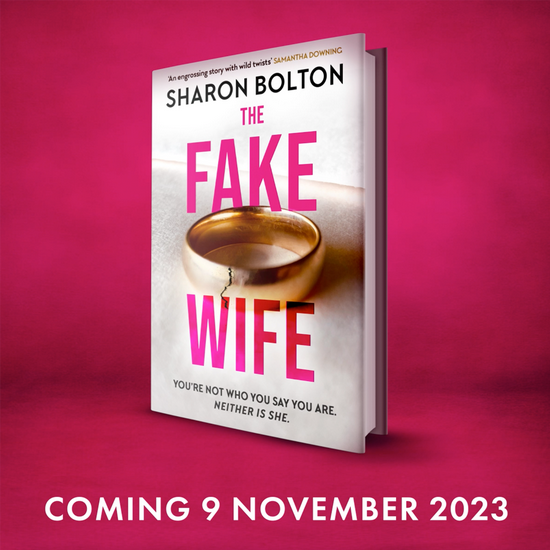
BOOK SPOTLIGHT: Conviction by Jack Jordan

I’m excited to welcome the Compulsive Reader Book Tour for Jack Jordan’s new novel, Conviction this morning. This looks like a solid legal thriller with a great twist, but why read my speculation–let’s get some details about the book.

Conviction Tour Poster

Book Details:

Book Title: Conviction by Jack Jordan
Publisher: Simon & Schuster UK
Release date: June 22, 2023
Format: Hardcover
Length: 432 pages
Conviction

About the Book:

To steal a man’s freedom all it takes is…
CONVICTION

Wade Darling stands accused of killing his wife and teenage children as they slept and burning their house to the ground.

When the case lands on barrister Neve Harper’s desk, she knows it could make her career.

A matter of days before the case, as Neve is travelling home for the night, she is approached by a man. He tells her she must throw the case or the secret about her husband’s disappearance will be revealed. Failing that, he will kill everyone she cares about, until she does as she is told.

Neve must make a choice – go against every principle she has ever had, or the people she loves will die.

‘No one crafts a dilemma quite like Jack JordanConviction is a tour de force of a legal thriller that will have you guessing at every turn and then gasping when the plot inevitably catches you unawares. His characters are beautifully and shockingly flawed yet so vividly drawn you just can’t help investing in them – and if you’re anything like I was, you’ll be swept away on a thrilling ride that starts from the very first page’ Janice Hallett

‘A masterclass in misdirection. Smart, stylish, taut and twisting. Conviction is Jack Jordan’s best yet’ Chris Whitaker

Jack Jordan goes from strength to strength with this expertly written tale of retribution and blackmail. Woven with Jack’s trademark moral dilemma, this is a book where the line between good and bad is never as obvious as it seems. Loved it!’ Sam Holland

‘Verdict is in – Jack Jordan is officially the king of the moral dilemma. Conviction is an edge-of-your-seat thriller that doesn’t relent until the very last sentence‘ Laure Van Rensburg

‘Raced through Conviction by the talented Jack Jordan. Tense and fast paced, this is a definite pre-order!’ Karen Hamilton

‘I loved every minute of this thrilling read. It combines the best of Sarah Vaughan and John Grisham: immersive, visual writing with twist after twist turning the screw tighter with ever page. Take a bow Jack “jeopardy” Jordan‘ Jo Callaghan

About the Author:

Jack JordanJack Jordan is the global bestselling author of Do No Harm, Anything for Her, My Girl, A Woman Scorned, Before Her Eyes, and Night by Night an Amazon No.1 bestseller in the UK, Canada, and Australia. Jack’s novel Do No Harm was a Saturday Times Bestseller and was longlisted for a Dead Good Reader Award in 2022.

My thanks to Tracy Fenton and Compulsive Readers for the invitation to participate in this tour and the materials they provided.

COVER REVEAL: Man on a Murder Cycle by Mark Pepper

Welcome to The Irresponsible Reader’s part in the Cover Reveal for Mark Pepper’s Man on a Murder Cycle!

Maybe it’s just me, but the Blurb—or maybe just the tagline—is enough to pique my interest, I don’t need the cover. Then again, with a cover like this one…

Book Blurb

HELL HATH NO FURY LIKE AN AUTHOR BETRAYED.

Tom Roker’s debut thriller was an instant bestseller. Since then, he has written four more books, none of which have been published. His reputation has faded from overnight success to one-hit wonder.

Now, finally, he’s making a comeback. His latest novel, Man on a Murder Cycle, is a blockbuster. The dark tale of Milton, a vengeful biker with a penchant for brutal acts of violence, perfectly recaptures the mood of Roker’s first novel. And everyone loves it!

It’s just a shame he didn’t write it.

The real author is recently deceased. Roker stole the manuscript, passing it off as his own. He’s covered his tracks well, so the trivial matter of who wrote what can be overlooked.

That is, until a mad man on a big bike starts killing people, exactly as described in the stolen novel – even those scenes that didn’t make the final cut.

Only one person can know what was written in those scenes, and he’s dead.

Isn’t he?

Publication date: March 30, 2023

Purchase Link

Get it from Red Dog Press

(I’m sure it’ll also be available at other online booksellers and whatnot, but why not support an independent publisher? It helps a lot if early pre-orders go through them.)


And now…

The Cover

Man On a Murder Cycle

Once again, Red Dog Press nails the cover. I see that on a shelf, I’m stopping to take a second look and read the back. This would lead to me buying it. Pretty much what a cover is supposed to do, come to think of it..

As good as the cover is, I’m betting the interior of the book is better—you can (and should) pre-order this now at: Red Dog Press. I know I will be.

.


My thanks to Red Dog Press for the invitation to participate in this reveal and the materials they provided.

Red Dog Press

Catch-Up Quick Takes: Some Overdue Audiobook Takes

This is a post I’d hoped to get up the first week of February, making it…very late. But here we go…

As always, I want to say that the point of these quick takes posts is to catch up on my “To Write About” stack—emphasizing pithiness, not thoroughness.


Destructive ReasoningDestructive Reasoning

by Scott Meyer, Luke Daniels (Narrator)

DETAILS:
Series: The Authorities, #2
Publication Date: November 16, 2022
Format: Unabridged Audiobook
Length: 9 hrs., 21 min.
Read Date: January 5-10, 2023

(the official blurb)
This sequel starts off with a sequence as silly, but slightly less cringe-worthy, as the first book before shifting to the major storyline. This one takes the team to Los Angeles to investigate a series of killings. The common thread amongst the victims is that they were playing a version of Dr. John Watson in a movie/TV series.

Not only have there been some killings, but there are three actors in the area who are currently playing Watson (or a Watson-figure), and the team has to investigate and keep them alive.

We get some mocking of the Entertainment Industry, general silliness when it comes to the team, and even a little more backstory on a couple of characters.

Overall, I didn’t like this quite as much, it felt like Meyer was trying too hard to be funny rather than tell a story in his signature way. Still, it was enjoyable enough to finish and want to see more.

Luke Daniels did his typical bang-up job. Ending the audiobook with bloopers was a fun bonus.

3 Stars

Ms. DemeanorMs. Demeanor

by Elinor Lipman, Piper Goodeve (Narrator)

DETAILS:
Publisher: HarperAudio
Publication Date: December 27, 2022
Format: Unabridged Audiobook
Length: 7 hrs., 27 min.
Read Date: January 17-18, 2023

(the official blurb)
I saw this a few times on my Libby app and decided I wasn’t that interested as cute as it sounded, but at some point, I saw a cover blurb from Richard Russo. So, why not?

Jane Morgan is under house arrest and newly unemployed thanks due to a minor crime, a nosy neighbor, and a judge wanting to make an example of her. She’s forced to try to do things to help the time bearable—including making the acquaintance of someone else in her building also under house arrest.

There’s some romantic comedy here, some self-discovery, and just some warm-hearted fun. It’s not fantastic, but it’s a good way to spend some time. It’ll keep you engaged and entertained.

3 Stars

The Wizard’s ButlerThe Wizard’s Butler

by Nathan Lowell, Tom Taylorson (Narrator)

DETAILS:
Series: The Wizard's Butler, #1
Publisher: Podium Audio
Publication Date: April 20, 2021
Format: Unabridged Audiobook
Length: 12 hrs., 10 min.
Read Date: January 25-27, 2023

(the official blurb)
I feel like I should have a lot to say about this one, but I don’t (which kind of bugs me). It’s the story of a man being hired to be a butler/caretaker of an older man for a year. After that year, the unscrupulous relatives that hired him will pay Roger a disgusting amount of money and will ship Joseph Perry Shackleford off to a retirement home and take control of his money and property.

What is going to make this easier is that Mr. Shackleford forward thinks he’s a wizard. Roger could use the money and likes Mr. Shackleford, so he doesn’t care what the old man thinks he is. Roger wants to help him—and he’s pretty sure that his new bosses are up to no good, maybe he can cause them some trouble.

It turns out, however, that the old man actually is a wizard. Roger gets introduced to a world he couldn’t have imagined was real if he tried.

This book was charming as all get out. I really enjoyed the story, the world, the magic system, the characters (I really enjoyed the characters), and the way that Lowell put this together—Taylorson’s narration was effective and engaging, too.

This is the slowest-paced Urban Fantasy I’ve ever read—with stakes that are so far smaller than we’re used to, which doesn’t stop it from being something that holds your attention. It could probably be safely described as Cozy UF—Fred, the Vampire Accountant books have more violence, and it’s typically tame 90% of the time. And I’m more than ready for more of this kind of story.

3 Stars

Really Good, ActuallyReally Good, Actually

by Monica Heisey, Julia Whelan (Narrator)

DETAILS:
Publisher: HarperAudio
Publication Date: January 17,2023
Format: Unabridged Audiobook
Length: 10 hrs., 13 min.
Read Date: January 20-25, 2023

(the official blurb)
This is a look at the ups and downs—and further downs, and deeper downs–of a young woman in the year after her divorce. It’s about grieving her relationship, friendship, dating (we’ll be generous/prudish and call it that), and accepting yourself–and accepting help.

I thought the prose and inventiveness in certain scenes were spot-on. There’s a lot of cleverness displayed throughout. But while there are some great moments, but I just didn’t think the journey was worth the destination—and I’m not that crazy about the journey, either.

It’s an utterly fine book.

3 Stars

How to AstronautHow to Astronaut:
An Insider’s Guide to
Leaving Planet Earth

by Terry Virts

DETAILS:
Publisher: Workman Publishing Company
Publication Date: July 15, 2022
Format: Unabridged Audiobook
Length: 11 hrs., 23 min.
Read Date: January 27-31, 2023

(the official blurb)
This is exactly what you want in an astronaut memoir—he talks about his interest in the program and why he wanted to become an astronaut, his training–both for the Space Shuttle and ISS—actual service on both—(obviously spending more time on the ISS because he spent more time on it and there was more to talk about), as well as what it’s like after returning to Earth. It’s not glowing about NASA or any space program—he’s frank and honest about problems, his own errors, and difficulties as well as what a fantastic opportunity it was for him.

He’s witty, thoughtful, and reflective throughout (in both the writing and his audio narration). I thoroughly enjoyed it and can see myself returning to this one in the future.

3 Stars

This post contains affiliate links. If you purchase from any of them, I will get a small commission at no additional cost to you. As always, my opinions are my own.

PUB DAY REPOST: Hard Rain by Samantha Jayne Allen: The Rookie PI Might Be in Over Her Head

Hard RainHard Rain

by Samantha Jayne Allen

DETAILS:
Series: Annie McIntyre Mysteries, Volume 2
Publisher: Minotaur Books
Publication Date: April 18, 2023
Format: eARC
Length: 352
Read Date: April 4-7, 2023

What’s Hard Rain About?

It’s been six months since Annie McIntyre solved a murder and began training as a Private Investigator under her grandfather and his partner, Mary-Pat. It doesn’t seem like Annie’s really sure of her current path, but at least it’s a path—hopefully out of Garnett at some point.

A High School classmate—not really a friend, but more than an acquaintance—approaches her with a job. Mary-Pat tells her she’s ready to take the lead on their next case, and is about ready to apply for her license. So, she’s primed and ready—at least she thinks so.

A couple of weeks previously a flash flood had wreaked havoc on the town and the cost in property damage and lives is high. Bethany, however, was saved through the actions of someone that she fears is a victim. But his body was never found. She wants Annie to find either the body or, preferably, the man so she can thank him properly. Not expecting the latter, and equipped with only a vague description, Annie takes the job.

The police have nothing for her, and the local fire and rescue people found no sign of this man—many people think that Bethany imagined him. But Annie keeps looking—searching downstream from the area Bethany had been found in, Annie does find a body. But not of the man she’s been looking for—but a murdered woman. Now Annie has to ask, is her target a killer or a hero?

As Annie investigates, she finds herself in a new layer of crime, corruption, and danger.

The Sense of Place

When talking about the previous book, Pay Dirt Road, I had a few things to say about the city of Garnett’s depiction. I won’t repeat them here—but I really could. I don’t think it’s an issue so much with Allen’s writing, just my ideas about Texas communities. (not that I’d complain if Annie made some mention of the population size)

What I failed to appreciate—or at least write about—was Allen’s depiction of, and description of, the natural environment. Given the storms and flood surrounding this book, it’s hard not to take note of it. Allen nails this material.

I really can see the flood damage, the sky, the geography in general—Allen pairs her vivid imagery with a little bit of wry commentary (frequently, but not always) to really help the reader get a handle on the sights and sounds. I was reminded of Chandler describing L.A. This is not typically the kind of thing I spend a lot of time thinking about when reading a P.I. novel, but I really couldn’t help but do so this time—both because of the nature of Annie’s investigation and because of Allen’s skill at it. Particularly the latter.

The Portrayal of Evangelicals

So, so, so often lately—including in books I really like—evangelicals are brought in as bastions of corruption, hypocrisy, and prejudice. Especially if they happen to belong to a mega-church.

The church that Bethany is part of, that her husband and father-in-law are pastors of, that some of the flood victims belonged to, that her missing man and the murder victim may be tied to, isn’t a mega-church yet, but is well on its way to being one.

Yes, some of the members are tied to criminal activity, unethical activity, and some other hypocritical kinds of things. But by and large the members of the church are honest, faithful, and human. They’re not perfect, but they’re working at it. It’s an honest depiction, and while not necessarily flattering, it’s not vilifying, either. I appreciate that.

Learning the Ropes

I described this series as a friend recently as “a PI version of the Eve Ronin books,” and the more I think about that, the more I like it.

Yes, Goldberg and Allen have very different tones. The tenor and flavor of the books are different—each fitting their setting and authors. But at the core, you have determined young women in settings that aren’t necessarily hospitable toward them, dealing with family issues and learning the ropes of their current professions. They make mistakes that experience would provide, get correction and guidance from their mentors (and their own reactions to their errors), but have good instincts and the drive to improve.

They’re very different series and very different kinds of stories, but I like seeing Eve and Annie as different outworkings of the same idea.

So, what did I think about Hard Rain?

Last year, I said that I’d have been satisfied with Pay Dirt Road as a standalone, but that I’d be in the front of the line for a sequel. I’m glad I came back—this world and this character deserve the time a series affords (I see there’s already a third volume scheduled for next year).

I enjoyed this one more than last year’s—I don’t know that it’s that much better, but Annie being more confident (maybe only by degrees, but it’s there) and the type of story made that possible. If you haven’t read Pay Dirt Road, Hard Rain will work as a stand-alone or as an entry point to the series, but you’d be denying yourself seeing Annie’s growth.

Atmosphere, character (not just the protagonists, but all the supporting characters as well—maybe next year I’ll find/make the time to talk about Annie’s family, for example), and story—Samantha Jayne Allen delivers the goods on all fronts. I heartily recommend Hard Rain to your attention.

Disclaimer: I received this eARC from St. Martin’s Publishing Group via NetGalley in exchange for this post—thanks to both for this.


4 Stars

This post contains an affiliate link. If you purchase from it, I will get a small commission at no additional cost to you. As always, the opinions expressed are my own.

Scratching the Flint by Vern Smith: We Didn’t Start the Fire…

I’ve been working on this one for a little over two months, and I kept deleting draft after draft after draft. I’m still not wholly satisfied with this one–but it’s close enough. Also, the book was released last weekend, so this is so overdue it’s causing heartburn. TL;DR version: This is an unsettling, brutal look at law enforcement with people on both sides of the Law.


Scratching the FlintScratching the Flint

by Vern Smith

DETAILS:
Publisher: Run Amok Crime
Publication Date: April 15, 2023
Format: ARC
Length: 228 pg.
Read Date: February 7-9, 2023

What’s Scratching the Flint About?

Detectives Alex Johnson and Cecil Bolan are part of the Toronto PD’s anti-fraud division. They’re in the midst of trying to take down a vintage car theft ring. Sadly, their witnesses are being targeted by the head of this ring–they’re being mocked and murdered in a way that sends a very loud message to quiet anyone else who might be thinking of coming forward.

One of these witnesses is an old high school friend/basketball teammate of Cecil’s. He reacts badly to this, but his commanding officer and his partner are doing their best to keep him from interfering with the homicide investigations and to focus on the ring (as much as they can without interfering with homicide) or other anti-fraud work.

It’s not long before the pair are given an involuntary vacation–in lieu of a suspension–leaving Cecil with too much time on his hands and not much opportunity for Alex to keep him reined in. And that’s where things have the opportunity to go from bad to worse–to potentially much, much worse–in this noir examination of crime and policing at the turn of the century.

2001

Smith is very careful throughout the book to locate the book in 2001 and captures the feel of it so well. At least, the way I’d imagine it’d feel in that part of Canada. The use of specific games of the Toronto Blue Jays really helped ground that.

Smith has some very specific aims for that–and most of the reason I struggled with this post comes from trying to interact with those aims but I don’t think I can without spoiling a good deal of the book. So let me just say this when it comes to the chronological setting–enjoy the flashback (for those who can remember the year) and just know it’ll give you plenty to chew on as the book goes along.

The Thin Blue Line

This is hard to write about–and frequently difficult to read. Crime Fiction writers (and TV/Movie viewers) are used to cops that color outside the lines–and we frequently root for them. We’re even used to rogue cops who go to extremes to get the job done. Or bent cops who are the villains of the piece.

Striking the Flint gives us none of those–or maybe all of those. Ian Patrick’s Sam Batford series comes to mind as a comparison (although this feels less like fiction and more like thinly disguised true crime). Our protagonists are detectives who seem intent on making their cases, on making arrests. But when push comes to shove, I’m not entirely convinced it’s about enforcing the law all the time with them–it’s getting a win, coming out on top over some of them. (I’m trying to behave here when it comes to spoilers, so I have to stay vague).

Their superiors–and other police officers–are just as involved. Skirting regulations, finding dirt on people who might have legitimate complaints about police treatment, supporting clearly unethical/illegal behavior, and so on. There are outright crimes committed by these two (usually independently) that depending on the outcome and motive would be used for comic relief or in a way that would be justified in other novels. But Smith doesn’t let the reader find the humor or rationalization for them here–sometimes they get away with them because of the badge. Sometimes, they just get away with them.

One only minorly-spoilery example: neither of these detectives owns a car. Alex’s ex-wife lets him borrow hers at the beginning of the novel. But partway through it, she takes the car back–leaving them without the means to do their jobs. So, Alex “borrows” it again without her knowledge–and gets away with it through a combination of police solidarity and misogyny. A lot of times, that would be played for laughs. I can see that being funny in a Stephanie Plum-like novel. Or someone like Bosch or Rebus would do it while feeling conflicted and have to face the music about it later. I initially took it as a lighter moment before realizing that Smith isn’t in that business.

The back of the book promises that this book examines “the lowest common denominators of policing.” And it delivers on that and will make you rethink a lot of what you read and watch in the fictional realm in light of what we see on the news.

Dialogue

There is a distinctive way that these characters talk to one another–at least Alex, Cecil, and most (if not all) of the criminals. I think if I wanted to take the time, I could come up with a more definitive list of exceptions (and that might prove interesting). Perhaps it’s a time-specific Toronto-area affectation. But I don’t think so, I think it’s a Vern Smith-thing. Like every David Milch or Aaron Sorkin series shows a specific kind of speech pattern (this is far more Milch than Sorkin, it should be noted).

It was a little odd at first, but an oddness I could appreciate. Then I got used to the rhythm and enjoyed it. By the end of the book, I don’t even think I noticed it anymore, it’d just become part of the novel’s world.

I don’t think I see this kind of thing too often in fiction, but when I do, I just love it. It’s not flashy like some people are with dialogue, just distinctive.

So, what did I think about Scratching the Flint?

This was an intense read. I was wholly immersed in it and really didn’t want to come up for air.

At the same time…these are not good people, at all. I think the characters I felt the most empathy for were Cecil’s wife (who seems utterly clueless about what he gets up to) and the lieutenant of the car theft ring’s head. He doesn’t show a lot of interest in going straight, but he doesn’t want anything to do with what his boss is involved in.

Smith captured the time, captured the psychology of the characters (or at least what you think these kinds of “cops and robbers” would think like), and delivers one of the grittiest, most realistic works you’re going to run into. Canadian noir, whodathunk it?

I cannot say I enjoyed Scratching the Flint (and I wonder a little bit about anyone who does), but it’s a powerhouse of a novel that will leave you thinking. It’s been more than two months since I read it, and I’ve chewed on bits and pieces of it almost every day since.* It’s an audacious work that will stick with you and one that will make you want more.

* And not just because I was trying to figure out how to write about it.


4 1/2 Stars

This post contains an affiliate link. If you purchase from it, I will get a small commission at no additional cost to you. As always, the opinions expressed are my own.
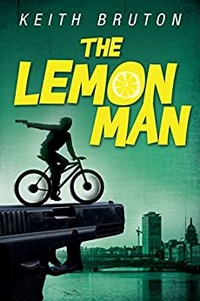
 

Hard Rain by Samantha Jayne Allen: The Rookie PI Might Be in Over Her Head

Hard RainHard Rain

by Samantha Jayne Allen

DETAILS:
Series: Annie McIntyre Mysteries, Volume 2
Publisher: Minotaur Books
Publication Date: April 18, 2023
Format: eARC
Length: 352
Read Date: April 4-7, 2023

What’s Hard Rain About?

It’s been six months since Annie McIntyre solved a murder and began training as a Private Investigator under her grandfather and his partner, Mary-Pat. It doesn’t seem like Annie’s really sure of her current path, but at least it’s a path—hopefully out of Garnett at some point.

A High School classmate—not really a friend, but more than an acquaintance—approaches her with a job. Mary-Pat tells her she’s ready to take the lead on their next case, and is about ready to apply for her license. So, she’s primed and ready—at least she thinks so.

A couple of weeks previously a flash flood had wreaked havoc on the town and the cost in property damage and lives is high. Bethany, however, was saved through the actions of someone that she fears is a victim. But his body was never found. She wants Annie to find either the body or, preferably, the man so she can thank him properly. Not expecting the latter, and equipped with only a vague description, Annie takes the job.

The police have nothing for her, and the local fire and rescue people found no sign of this man—many people think that Bethany imagined him. But Annie keeps looking—searching downstream from the area Bethany had been found in, Annie does find a body. But not of the man she’s been looking for—but a murdered woman. Now Annie has to ask, is her target a killer or a hero?

As Annie investigates, she finds herself in a new layer of crime, corruption, and danger.

The Sense of Place

When talking about the previous book, Pay Dirt Road, I had a few things to say about the city of Garnett’s depiction. I won’t repeat them here—but I really could. I don’t think it’s an issue so much with Allen’s writing, just my ideas about Texas communities. (not that I’d complain if Annie made some mention of the population size)

What I failed to appreciate—or at least write about—was Allen’s depiction of, and description of, the natural environment. Given the storms and flood surrounding this book, it’s hard not to take note of it. Allen nails this material.

I really can see the flood damage, the sky, the geography in general—Allen pairs her vivid imagery with a little bit of wry commentary (frequently, but not always) to really help the reader get a handle on the sights and sounds. I was reminded of Chandler describing L.A. This is not typically the kind of thing I spend a lot of time thinking about when reading a P.I. novel, but I really couldn’t help but do so this time—both because of the nature of Annie’s investigation and because of Allen’s skill at it. Particularly the latter.

The Portrayal of Evangelicals

So, so, so often lately—including in books I really like—evangelicals are brought in as bastions of corruption, hypocrisy, and prejudice. Especially if they happen to belong to a mega-church.

The church that Bethany is part of, that her husband and father-in-law are pastors of, that some of the flood victims belonged to, that her missing man and the murder victim may be tied to, isn’t a mega-church yet, but is well on its way to being one.

Yes, some of the members are tied to criminal activity, unethical activity, and some other hypocritical kinds of things. But by and large the members of the church are honest, faithful, and human. They’re not perfect, but they’re working at it. It’s an honest depiction, and while not necessarily flattering, it’s not vilifying, either. I appreciate that.

Learning the Ropes

I described this series as a friend recently as “a PI version of the Eve Ronin books,” and the more I think about that, the more I like it.

Yes, Goldberg and Allen have very different tones. The tenor and flavor of the books are different—each fitting their setting and authors. But at the core, you have determined young women in settings that aren’t necessarily hospitable toward them, dealing with family issues and learning the ropes of their current professions. They make mistakes that experience would provide, get correction and guidance from their mentors (and their own reactions to their errors), but have good instincts and the drive to improve.

They’re very different series and very different kinds of stories, but I like seeing Eve and Annie as different outworkings of the same idea.

So, what did I think about Hard Rain?

Last year, I said that I’d have been satisfied with Pay Dirt Road as a standalone, but that I’d be in the front of the line for a sequel. I’m glad I came back—this world and this character deserve the time a series affords (I see there’s already a third volume scheduled for next year).

I enjoyed this one more than last year’s—I don’t know that it’s that much better, but Annie being more confident (maybe only by degrees, but it’s there) and the type of story made that possible. If you haven’t read Pay Dirt Road, Hard Rain will work as a stand-alone or as an entry point to the series, but you’d be denying yourself seeing Annie’s growth.

Atmosphere, character (not just the protagonists, but all the supporting characters as well—maybe next year I’ll find/make the time to talk about Annie’s family, for example), and story—Samantha Jayne Allen delivers the goods on all fronts. I heartily recommend Hard Rain to your attention.

Disclaimer: I received this eARC from St. Martin’s Publishing Group via NetGalley in exchange for this post—thanks to both for this.


4 Stars

This post contains an affiliate link. If you purchase from it, I will get a small commission at no additional cost to you. As always, the opinions expressed are my own.

Fearless by M.W. Craven: I Didn’t Realize How Ominously “Proactive” Could Be Used in a Sentence

1. I don’t think I adequately expressed how good this book is below—it’s always a problem I have when I’m as enthusiastic about a book as I am about this one.
2. I typically post about a pre-publication book less than a month before publication, this is more than three months in advance. I just couldn’t wait that long to read it. See what I said about “enthusiastic” above.
3. Related to #1, I really don’t know if this is all that coherent–I get rambly when I’m this enthusiastic. I’m also not sure I rambled about the right things. You get what you pay for here.


FearlessFearless

by M.W. Craven

DETAILS:
Series: Ben Koenig, #1
Publisher: Flatiron Books
Publication Date: July 11, 2023
Format: ARC
Length: 405 pgs. 
Read Date: March 20-21, 2023

What’s Fearless About?

I’m going to be vague and/or withholding a lot here because Ben Koenig/M.W. Craven will give you the details in a more satisfying manner than I will/can. So live with that—or go order the book. (the better option)

Ben Koenig used to be a U.S. Marshal. Well, he never resigned, so maybe he still is one. But he’s no-showed enough that he probably isn’t anymore. Before he went off-the-grid six years ago, he headed up the Special Operations Group—a task force that went after the worst of the worst on the Marshals’ caseload. They’re the kind of guys that Raylan Givens would call when things got over his head (or hat, I guess).

Koenig literally cannot feel fear—which is a great asset in a situation fraught with danger—it’s also a major problem. Fear keeps people from reckless and foolish moves. A move he might not have made if he’d hesitated a moment (but that he doesn’t regret) put him in a situation where he needed to disappear. No one is better at disappearing than someone who is great at tracking anyone.

But something has happened, and the Marshals have to go to extraordinary lengths to find him. The Director of the Marshals Service, Mitchell Burridge needs his help. Mitch was Ben’s mentor/friend/father figure, so he’d agree to pretty much anything. Mitch’s daughter went missing from her college some weeks ago, and no one has a lead on her—no police force, no Federal agency. Mitch asks Ben to bring his daughter home (at this point, probably her body, but no one admits that out loud). And as for those who took her? Well, that’s also best left unsaid. Ben will address that when it comes time.

As Mitch puts it, Ben’s an apex predator and there’s no one else who can do all of what needs to get done. He may be that, but he’s been acting more like prey for a long time so he makes a few stumbles along the way as he shakes the dust off. But it’s not too long before Koenig catches a scent and starts following it.

That’s an Unfortunate Name

There’s a figure mentioned pretty early on and then repeatedly throughout the book—it takes a while to know if he’s a victim of something, involved in the disappearance, tangentially connected to the abductors, a dupe, or a red herring—or something else entirely. But the name keeps coming up, and it threw me.

The name is Spencer Quinn. Spencer Quinn is also the pen name of Peter Abrahams. Readers of this blog will recognize that name as the author of one of my favorite PI series, The Chet and Bernie Mysteries, among other things. The name is distinctive enough that it jumps out at you—it took me out of the moment each time. In a way that Rob Parker, Pat Cornwall, or Tom Harris might not (or even the non-nickname versions of their names). Will this be a hiccup for anyone who isn’t a Quinn reader? Nope. Was it easy to get over? Yeah, but there’s the instinctual flash of name recognition throughout.

Craven had no idea he was doing this (as I’d assumed, although I’d theorized that he could be a major fan or a major detractor—depending on how things went with the character), although I have to confess I’m a little surprised that no editor stopped him along the way.

Still, it’s a cool name, you can’t blame a guy for wanting to use it. Just ask Peter Abrahams.

Michael Westen-Moments

The show Burn Notice would regularly feature the protagonist giving voice-over lessons on spycraft, weapons, strategy, etc. to the viewer, and that’s the name I inevitably give to moments in thrillers when the first-person narrator, or the protagonist’s thought process described by the third person narrator, breaks down the hero’s decision making, etc.

I love this stuff. Almost every thriller writer has to feed the reader this kind of thing because most of us don’t know how much pressure you have to exert on the trigger of Gun X to get it to fire, or why it’s important that the guy on the left is holding the knife the way he is so the hero knows he’s more dangerous than the larger guy on the right with the shotgun. Sometimes the protagonist—either through confidence (cockiness?) or to help intimidate the opposition—will deliver this in dialogue. I always appreciate the flair that gives.

Ben Koenig is great at this kind of thing. When he Michael Westons his way through the way he approaches a certain building in the final confrontation, why he picks the type of car he does to use on his mission, why he punches this guy the way he does, etc. the reader can actually believe they’ve been given some information they can use in their daily life. You know, the next time they need to drive a car into another state to locate the missing child of their old boss.

But my favorite Michael Westoning in this book—and the scene that hooked me—is early on when Koenig takes time to critique the group of deputies who came to bring him into custody for the way they went about it—location, timing, where the person with the shotgun was standing in relation to everyone else, etc. Sure, Koenig was the one being detained—but there was no doubt who was in control (and who could’ve made everyone’s day much, much worse had he wanted to).

Incidentally, it’s been too many years since I read the book, but you can’t tell me that this scene wasn’t a tip of the hat to Child’s Killing Floor—and a suggestion to the reader that this character is going to be their next Reacher (who is also good at Michael Westoning).

Who Wrote This Again?

I’m not going to try to claim that I’m an expert on M.W. Craven—but I’m fairly familiar with his work (I’ve read 6 of his 7 previously published novels—don’t ask me to explain the missing one). It’s easy to see that the Avison Fluke novels are written by the same author that gave us the Washington Poe novels. This makes sense, it’s fairly common amongst writers of multiple series—no one is surprised to learn that the Mickey Haller books are written by Bosch’s creator; the Sunny Randall and Virgil Cole/Everett Hitch series and the stand-alone Double Play are clearly the work of the Spenser writer; even if John Rebus wasn’t Malcolm Fox’s white whale, everyone could tell those series were written by the same man; and so on.

But Fearless? It probably took me less than 50 pages to stop thinking of this as ‘the new Craven’ book and ‘the first Koenig’ book. If Koenig shares any DNA with Fluke or Poe, it’d take 23andMe or Ancestry.com to figure it out. If you know nothing about Craven’s previous work, all you’ll see is someone writing a book in the mold of Jack Reacher and Peter Ash—with a little bit of Nick Mason and Nick Heller thrown in. Well, writing in that mold—and matching each series at their best.

So, what did I think about Fearless?

I think the past 5 years have demonstrated pretty clearly that I’m probably going to love whatever Craven writes—and now I know that’s true even if it doesn’t feel like a Craven book.

This just worked on every level—Koenig is a fertile character, well-designed to carry a series for quite a while. His assets are perfect for a Reacher/Peter Ash-type character. His flaws keep him from being invincible, and provide plenty of ways for him to be his own greatest adversary. His quirks (e.g., fixation on chocolate milkshakes, absorption of odd bits of trivia) round him out nicely. The reason he’s off the grid is better than being a Luddite/technophobe. Can he grow—and can the reader grow in their understanding of him? Sure. He can also believably regress and find develop new hindrances and weaknesses to work through or overcome.

The narrative voice that Craven uses here will suck in the reader and keep the pages turning between action scenes. The action scenes might as well be directed by John McTiernan, Shane Black, or Chad Stahelski. I don’t know how “realistic” they are, but I don’t think you have to suspend much disbelief. And they’re so fun, who cares?

The story could have been a little more intricate—just a tad. But given everything else that this book had to do—introduce Koenig, establish the series and his backstory, provide some good potential recurring characters—some things have to be sacrificed. Then again, I can point to several beloved and best-selling thrillers that aren’t as intricate as this one. So don’t take this point as anything but me being greedy.

I did have a quibble or two with the novel—it’s not perfect. But I hesitate to get into them as I read an ARC, and there’s still a chance for them to vanish before publication. Also, they’re pretty much at the straining at gnats level, and I try to avoid that. In the end, those quibbles only serve to underline how great the rest of it is.

This is clearly the first in a series (even if all the promotional materials didn’t call it that, you’d get that sense throughout—and the last five pages make it abundantly clear that there’s more to come. So I do think future books will have a slightly different flavor than this one—which could’ve very easily served as a standalone.

To put it simply, I loved every second I spent reading this, Fearless was the highlight of the month for me—and I expect that I’ll keep talking about it throughout the year—I can’t wait for it to get published here so that American audiences can meet Craven. Put your orders in now, folks, July will be here before you know it, and you don’t want to miss this.

Disclaimer: I received this eARC from Flatiron Books via NetGalley, and an ARC from Flatiron with an assist from the author in exchange for this post—thanks to all involved for this. Their providing it only influenced my opinion by giving me something to opine about—I raved about it of my own free will.


5 Stars

This post contains an affiliate link. If you purchase from it, I will get a small commission at no additional cost to you. As always, the opinions expressed are my own.
Page 23 of 153

Powered by WordPress & Theme by Anders Norén