Category: Fiction Page 202 of 341

Craig Johnson in Boise

I put off posting this to go along with the blog post for the book. Which I expected to do a month and a half ago. Whoops.

To celebrate the release of his new book in September, Rediscovered Books brought Craig Johnson to town for a reading, signing and whatnot — continuing something they’ve been doing since Johnson first started doing public appearances.

Johnson started off talking about his connection with Rediscovered and the early days of touring and public appearances. Then he sifted into talking about the new book (The Depth of Winter) and some of the preparation work he did for the book — including a snowy trip to the bottom of the Grand Canyon, and a visit to Mexico where his guide kept insisting that he not tell anyone who he was (he’d be too attractive to kidnappers).

He did a little reading from the first chapter of the book — Johnson comes across as a natural at this. No offense to George Guidall, but Johnson would make a great Longmire audiobook narrator. Then he shifted to audience questions — which ranged from some talk about the TV series (maybe too much of that, but that’s probably just me) to the similarities between Vic and Mrs. Johnson to some of the early writing of the series. Johnson quickly and deftly transitioned from an answer to the question to an anecdote along the same lines, giving the audience member what they wanted to know and more. It was really one of the better Q&A sessions that I’ve been present for.

Then the signing kicked off — when my friend and I got close we heard a great story about Grace Slick’s reaction to The Western Star (I’d have paid good money for that story). My friend got in a good question and then it was my turn. And I got a refresher on why I blog instead of doing a podcast or vlog. Aside from one almost clever response to something he said, all I could muster up was 3-4 “Thank You”s to getting the picture, his signature and whatnot. No interesting question, no insightful comment about the series, observation about his work — or even an articulate appreciation for something about his writing. Nope. Just “Thank you,” and a feeling of inadequacy and inarticulateness.

Before the event, while my friend and I were waiting in line to pay for parking, I see a gentleman walk up wearing a large hat. I mutter something to myself about hoping I didn’t get stuck behind this guy, because between that hat and his height, there was no way I’d be able to see Johnson. Actually, given the “Western wear” the guy was sporting, he could almost pass for Johnson, I remember thinking. Except this gentleman was younger than I remembered pictures of Johnson appearing. Naturally, about ten minutes later, we’re talking to people sitting in the same row who talked about riding up in the elevator with Johnson. I said something about talking myself out of thinking he was in line behind us for parking. They replied with something about the green plaid shirt and I felt like the world’s worst fan. Clearly, I care more about a writer’s words than his appearance. On the plus side, not recognizing him spared both of us the opportunity to unleash my eloquence on him earlier.

That aside, it was a great night — Johnson can tell a story in person as well as he can on paper. Sure, the audience was already predisposed to enjoy him — but he kept our attention and rewarded it. If you have a chance, I highly recommend going to one of his public appearances — you’ll have a blast.

Depth of Winter by Craig Johnson: Walt Goes South of the Border on a Rescue Mission

Spoilers for The Western Star appear below, read at your own risk if you haven’t caught up.

Depth of WinterDepth of Winter

by Craig Johnson
Series: Walt Longmire, #14

Hardcover, 292 pg.
Viking, 2018
Read: September 27 – 29, 2018

“I wish we had more weapons.”

I thought about the fact that we pretty much just had the Colt at my back, the FN, and the collection of antique weaponry in the gym bag. “Me, too.”

He lit the cigar and pocketed the lighter. “You know he is going to kill you.”

“I know it’s a possibility.”

He took a deep puff, savoring the tobacco, and then slowly exhaled. “I’d say it’s a probability.”

With just a little adjustment to what happened at the end of The Western Star, Johnson picks up shortly after Walt takes off on the trail of Tomás Bidarte who has arranged for the kidnapping of Cady. It’s a suicide mission and not one with much likelihood of success — but Walt’s convinced he has no choice and is determined he will survive long enough to get Cady freed. He has no plan (that we know of) to keep her safe after he’s dead, but seems to believe he’ll have made her safe beforehand.

To do this, he elicits some help from a maverick-y US Border Patrol agent and some interesting characters from a blind and legless man who serves as Walt’s guide, his nephew, and a former spy turned doctor to help him get to and infiltrate Bidarte’s compound. The most intriguing of Walt’s new allies is a young man named Isidro, a Tarahumara and a sharpshooter that puts Vic to shame. Both his mannerisms and backstory really sold me on him — more than I expected.

I’ve pushed off writing this post because I’m not sure what to say about it. Yes, it was exciting. Yes, there’s a lot of good action — and seeing Walt out of his element, dependent upon others to explain the world around him and for backup is a nice change of pace.

But . . .

It’s not Walt Longmire. Walt’s an honorable man. A man of law and order (I know, I know…he’s also going to make exceptions where Cady is concerned). He’s a guy who figures things out, he’s not a one man (or one man with strong support) vigilante army. That Walt is hard to find in this book, replaced with some sort of not-quite Bryan Mills-level action hero.

Bidarte’s become some sort of super-villain. Some sort of strange mashup of a James Bond villain and the head of a CBS procedural’s Drug Cartel. And that was hard to take. I also have a hard time swallowing the idea of . . . well, I can’t talk about that without spoiling anything. But there’s an auction — and I can’t buy: 1. the idea of it; 2. the number of bidders; 3. how that all played out. If you read/will read the book, you’ll know what I mean.

I am so glad I got to meet Isidro, and I wouldn’t mind more time with The Seer and the doctor and their families — or even the Border Patrol agent (he’d be a lot of fun with Walt’s FBI or State Police friends). But under very different circumstances. The story is exciting — there’s some good chuckles, a couple of great fight scenes, a lot of heart. There’s a lot to commend this book for. But it’s not a Walt Longmire book to me, and that’s its fatal flaw.

Going into this, I feared it’d be Johnson’s equivalent to Parker’s A Catskill Eagle, a book that had Parker’s character act out of character on his mission to save the most important woman in his life. But I hoped that Johnson would be able to avoid the problems that Parker ran into. I don’t think he succeeded, I’m sure that others will disagree. This one just didn’t do much for me, and the more time I think about it, the worse it fares. So I’m going to try to not think about it again for a while.

I do look forward to seeing Walt back in Wyoming, dealing with some/all of the fallout and repercussions of the events of this book. But most of all I look forward to seeing Walt be Walt again.

—–

3 Stars

You Had Me at Woof (Audiobook) by Julie Klam, Karen White: A meandering mess of vaguely dog-related memoirs.

You Had Me at WoofYou Had Me at Woof: How Dogs Taught Me the Secrets of Happiness

by Julie Klam, Karen White (Narrator)

Unabridged Audiobook, 5 hrs., 44 mins
Tantor Audio, 2010
Read: November 1 – 6, 2018

From the Publisher’s Site:

           Julie Klam was thirty, single, and working as a part-time clerk in an insurance company, wondering if she would ever meet the man she could spend the rest of her life with. And then it happened. She met the irresistible Otto, her first in a long line of Boston terriers, and fell instantly in love.

You Had Me at Woof is the often hilarious and always sincere story of how one woman discovered life’s most important lessons from her relationships with her canine companions. From Otto, Julie realized what it might feel like to find “the one.” She learned to share her home, her heart, and her limited resources with another, and she found an authentic friend in the process. But that was just the beginning. Over the years her brood has grown to one husband, one daughter, and several Boston terriers. And although she had much to learn about how to care for them—walks at 2 a.m., vet visits, behavior problems—she was surprised and delighted to find that her dogs had more wisdom to convey to her than she had ever dreamed. And caring for them has made her a better person—and completely and utterly opened her heart.

Riotously funny and unexpectedly poignant, You Had Me at Woof recounts the hidden surprises, pleasures, and revelations of letting any mutt, beagle, terrier, or bulldog go charging through your world.

Spend much time around this blog and you’ll know I’m a sucker for dogs — real or fictional — if a book has a strong dog element in it, I’m sold. This should’ve been right up my alley. I expected to really dig it — but the reality didn’t match my expectation.

These meandering personal essays/memoirs are organized by lessons taught by various dogs, sure, but they didn’t seem as well-organized as those from similar books by Dave Barry or David Rosenfelt (or maybe it’s just guys named David that think like this). I didn’t think the voice was very consistent throughout — I frequently couldn’t tell if I was supposed to be laughing with Klam or at her. Or maybe I shouldn’t have been laughing at all. I didn’t find a lot to relate to — or even grab on to — in some of the anecdotes, other than a sense of pity for the two-legged individuals in her family and life. (that came out a little harsher than I intended, but I’m sticking with it).

I can’t point at anything in particular — other than her unessential and unsubtle celebrity name-dropping — that I didn’t like. I guess I found the thing too unfocused, too inconsistent, and not enough about the actual dogs. It seemed to be more about her in relation to various dogs. To an extent that’s true with the aforementioned books by the various David’s, too — but I don’t think it’s as much about them (although, I never wondered who I was supposed to be laughing at with them).

Is it possible that my problems with the book are in the narration? Sure, a lot of it comes down to understanding Klam’s voice, and Karen White’s interpretation of that could be affecting me enough to not appreciate the book. But I don’t think so — I can’t imagine an audiobook director or publisher is going to let something that disconnected from the text be produced, and White seemed to match the text and context with what she was doing. Granted that’s hard to know without reading the text independently, but I don’t care that much. If the text is really that slippery, that’s on Klam anyway, not White.

Oh, here’s something I really appreciated about the book — Klam talks at least twice about dog owners who will replace a beloved pet with one of the same breed and general appearance and give it the same name (sometimes several times). This answers a question I asked a couple of weeks ago. Even knowing this is a thing that people who aren’t Robert B. Parker or Robert B. Parker characters do, it’s still messed up. Happily, Klam agrees.

The concluding anecdote was good — maybe a bit too much, really — but it was sweet. And the section about dealing with the death (expected or not) of a dog was really strong. That’s why I’m not listing this as 2 Stars or fewer. There’s some really decent writing here, but the voice was inconsistent, the whole thing felt too self-serving, and . . . well, there’s just something intangible that happens between the reader and the text, and I just didn’t like this one. It’s not a bad book, per se. But it’s not a good one.

—–

2 1/2 Stars

2018 Library Love Challenge

The Vinyl Detective: Written in Dead Wax by Andrew Carmel: A great intro to one of the most unlikely thriller heroes around

The Vinyl Detective: Written in Dead WaxThe Vinyl Detective: Written in Dead Wax

by Andrew Cartmel
Series: The Vinyl Detective, #1

Paperback, 476 pg.
Titan Books, 2016
Read: August 6, 2018

How did it take this long for me to realize that the protagonist had no name? I just noticed that now, three months after reading the book, as I was flipping through the book to refresh my memory — and then giving up and using the Internet to cheat. Other than the lack of name — he’s a very thoroughly drawn character, so much so that you don’t notice little things like no one calling him by name.

I’d initially thought of the book as Rob Fleming (from High Fidelity), P.I. But that’s not right — our protagonist isn’t Rob, he’s Championship Vinyl’s best customer. Someone who can talk to Rob about minutiae of music, who can go toe-to-toe with Dick and Barry in music trivia, who will be there any time they have new vintage records, etc. He’s an expert in jazz — and might as well be an expert in just about everything else. He lives alone, makes enough to get by (but wouldn’t mind making more, if he could do it on his terms) and loves his pet cats.

One day, a beautiful woman approaches him with an offer he can’t (and doesn’t want to) refuse — on her employer’s behalf, she wants to hire him to track down an incredibly rare — impossibly rare, some would say — jazz record. It’s rare enough that even the reissues are nigh-impossible to track down.

They’ve not been looking for long, until it’s clear that there are a couple of other people who are actively looking for the record (in addition to a handful of people who always have an eye out for it). Then a fellow jazz aficionado is attacked — and money and violence start surfacing around the vintage vinyl circuit in London. Because that’s a thing that happens.

At some point, our protagonist starts to realize there are reasons beyond wanting a complete jazz collection to have the originals, and in conjunction with someone with family ties to the records, he plunges further into the hunt for the record and to uncover whatever dark and violent secrets that are being kept by the record.

This is not a story that should work. But it does — it absolutely does. It sort of makes sense that this quest starts to involve violence, lethal violence — and that both sides are prepared for it. The protagonist’s reaction to it all is what sells it. This is a guy who just wants to spend time with his cats, track down and listen to good music, and maybe enjoy some female company. He doesn’t expect to get plunged into some strange international quest, he doesn’t expect to fear for his life, or to have to outsmart people who are prepared to do him harm. It’s this nameless guy, the Vinyl Detective, who makes it all work.

In addition to the contemporary hunt for the record (which turns into a hunt for records), there’s the story behind the making of the records, the people involved, the reason that people are willing to spend a lot of money to recover the records (in addition to everything else they’re willing to do). It’s fascinating, believable stuff — especially the backstory to the recordings. I’d 100% believe that all the backstory actually happened that way, and that Cartmel used that true story as something to frame his novel around.

I don’t know how to adequately capture this book (note how long it’s taken me to post anything), it’s a very clever story, very well told. It’s exciting, it’s funny (at times), it’s heartfelt, it’s everything you want in a thriller within a world you don’t really think that much about. Not only does this strange premise hold-up well, it’s apparently good enough to spawn at least three sequels (two published, one on the way). Don’t ask me how it works — well, it has a lot to do with Cartmel’s skill and charm.

Give this guy a shot — you’ll be glad you did (and you’ll wish you could listen to his record collection).

—–

4 Stars

Her Last Move by John Marrs: This Thriller Left Me Feeling Gobsmacked and Awestruck

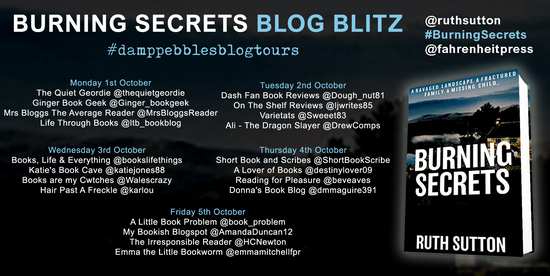
(that’s too tiny to read, sorry, click here to embiggen. There are a lot of great writers here — you’re going to want to check out those other posts.)

Her Last MoveHer Last Move

by John Marrs

eARC, 352 pg.
Thomas & Mercer, 2018
Read: November 8 – 12, 2018

           The very fact people were talking about him and taking him seriously was proof he was on the right path. But branding him a serial killer was lazy. Serial killers and psychopaths murder out of compulsion, he reminded himself. They do it because they have no choice. He killed with purpose. And eventually, everyone would understand why.

This is one of those books that I’m not going to do justice to. I know that now, and if not for the deadline of posting in a few hours, I’d probably walk away now and come back daily for until next Tuesday and post something I don’t like. But I do have that deadline, so I have to post something I’m not satisfied with in a few hours. I just like this one so much; and have so much that I want to say, but won’t because it would ruin your experience, that I know I’ll want a couple of mulligans to this post.

This starts off with one of those chapters we’ve all read too many times — a budding serial killer is preparing to make his first kill and is indulging in some interior monologue beforehand. This is where we start to get an understanding of the character, why he thinks he needs to be killing, why he’s so wonderful/special/different. But this chapter isn’t quite that — and by the time you realize this isn’t following the standard template, Marrs has his hooks in you — and this book is off to a startling and bloody start.

DS Becca Vincent is a young detective just trying to get somewhere in her career — it seems that her superiors, including (infuriatingly enough) women, are holding her back because of her devotion to her daughter. Not that her mother considers her that devoted as she’s doing most of the hands-on care while Becca is at work. She’s in the crowd when the first killing happens and is the first police presence at the scene. She also is the first to tie that victim to another murder victim. She leverages this into a spot on the investigation team, where she hopes she can make enough of a difference to lead to more responsibility in the future.

The first thing she’s assigned to do is to go over the CCTV tapes with a “super-recogniser.” I don’t know if this is a real thing or not, and don’t care. It works really well in this book — these are a select team of people with near-eidetic memories for faces who spend every shift pouring through security footage for faces — either to track down suspects or identify people who are near too many crime scenes to chalk up to coincidence. We meet DS Joe Russell as he recognizes a suspect on the street while riding a bus and chases him down. Becca meets him in less exciting circumstances — a dirty squadroom in a less-than-impressive looking building. She doesn’t buy the concept originally, but Joe wins her over pretty quickly.

The investigation doesn’t move quickly, there’s a lot of manpower put into it (more and more all the time), but progress is slow. A friendship develops (not without a few bumps) between Joe and Becca much more quickly, and they clearly work together well.

The killer’s spree does move quickly on the other hand. He has a plan, he’s been developing it, nurturing it, and getting it ready to carry out for a very long time. He’s spent years setting up these dominoes and when he knocks the first over, the rest fall quickly. As we watch him do that, we learn what shaped him throughout his life into the monster he’s become. Nothing that happens to him justifies what he’s doing — nothing could — but it helps the reader understand him, and empathize with him to a degree (until he gets to a certain point and you can’t empathize with him anymore).

The book is full of sincere and devoted professionals trying to get the job done in the best way to protect lives and stop the killer — we focus on a couple of them, but they’re clearly all over the place. Unlike the people on TV, these professionals have family, friends, medical issues, children, pasts, problems and joys outside the job who will distract from and inform their performance on the job. Watching Becca and Joe unsuccessfully balance these parts of their life (particularly given the pressures as the number of bodies rises) is just one of the things that Marrs does right. Come to think of it, you can say the same thing about our killer (for most of the book anyway). I’m really impressed at how much genuine tension and drama Marrs is able to mine from this.

Each death is increasingly horrific — seriously, these are some of the most gruesome murders I’ve read. Each reveals more about the killer and what’s driving him. The reader (as we have more information than the police) will put the pieces together before the Becca and Joe do. But when things start to click for the police, they’re able to figure things out quickly. It’s a very satisfying moment — the question is, do they figure things out in time to save anyone on the killer’s list?

I’ve never read Marrs before — but I will again. There’s not a wasted word in these 352 pages, not a throwaway line, useless exchange. My notes are filled with “Is he going somewhere with ____?” and “There’d better be a pay off to ___” Every time, without fail, I could’ve gone back and added the page/line that demonstrated he was going somewhere with that idea or paid off that observation. Even in my favorite reads of 2018, there are moments we probably don’t need — most of which I’m happy to have — lines, ideas, scenes that could be cut without hurting things. That’s not the case here — anything you read here is important, even if (maybe especially if) it doesn’t seem so.

I’m not sure how this would hold up to repeated reading — a lot of thrillers don’t. And I haven’t had time to try this one, but I think it’d hold up pretty well, if you’re not distracted by wondering what Marrs (or his characters) are up to, or what’s going to happen next, etc. you can focus on all the subtle little things he’s doing to create the anticipation and tension, and appreciate the skill involved in grabbing the reader and putting them through the paces.

This will suck you in, keep you entertained through the paces of the investigation, and lull you into thinking you know how things are going just long enough for you to get complacent so he can drop the floor out from underneath you. Marrs makes bold choices and will catch you off-guard at least once — I can practically guarantee that. This is one of those books that will lead you to shirk responsibilities at home and work; postpone things like eating and sleeping; and momentarily resent your family for interacting with you — particularly the last thirty percent or so (although you might have to might have to take a quick break to absorb what you just read or catch your breath). One of the best I’ve read this year — I hope you give this a shot and I bet you’ll agree.

—–

5 Stars

My thanks to damppebbles blog tours for the invitation to participate in this tour and the materials they provided — as well as Thomas & Mercer and the fine folks at Netgalley for the eARC.

BOOK SPOTLIGHT: Her Last Move by John Marrs

Today I welcome the Book Tour for the fantastic Her Last Move by John Marrs. Along with this spotlight post, I’ll be giving my take on the novel here in a bit (assuming I can come up with something more coherent to say about it than “kermit flail.gif GORUNOUTANDGETTHISRIGHTNOW!!!!”).
(that’s too tiny to read, sorry, click here to embiggen. There are a lot of great writers here — you’re going to want to check out those other posts.)

Book Details:

Book Title: Her Last Move by John Marrs
Publisher: Thomas & Mercer
Release date: November 8, 2018
Format: Paperback/ebook/audiobook
Length: 352 pages

Book Blurb:

She’s chasing a killer. He’s watching her every move.

He hides in the shadows, waiting for the perfect moment. Each kill is calculated, planned and executed like clockwork.

Struggling to balance her personal and professional life, young DS Becca Vincent has landed the biggest case of her career—and she knows that it will make or break her. But she can’t catch the culprit alone. Together with facial recognition expert Joe Russell, she strives to get a lead on the elusive murderer, who is always one step ahead of them.

Time is not on their side. The body count is rising, and the attacks are striking closer and closer to home. Can Becca and Joe uncover the connection between the murders before the killer strikes the last name from his list?

About John Marrs:

John MarrsJohn Marrs is the author of #1 bestsellers The One (soon to be made into a film with Urban Myth Films), The Good Samaritan (shortlisted for the Dead Good Reader Awards 2018), When You Disappeared, and Welcome to Wherever You Are. After working as a journalist for 25-years interviewing celebrities from the world of television, film and music for national newspapers and magazines, he is now a full-time writer.

Her Last Move is dedicated to John’s late father, Charlie, who was a police officer for 25 years.

Follow him on Twitter @johnmarrs1 Facebook: @johnmarrsauthor Instagram: @johnmarrs.author website: johnmarrsauthor.co.uk

Social Media:

Twitter ~ Facebook ~ Website ~ Instagram ~ Amazon Author Page

Purchase Links:

Amazon UK ~ Amazon US ~ Waterstones ~ BookDepository


My thanks to damppebbles blog tours for the invitation to participate in this tour and the materials they provided — as well as Thomas & Mercer and the fine folks at Netgalley for the eARC.

The Place You’re Supposed to Laugh by Jenn Stroud Rossmann: A Great Read about the Less-Glamorous, Less-Successful Side of Silicon Valley

The Place You're Supposed to LaughThe Place You’re Supposed to Laugh

by Jenn Stroud Rossmann

eARC, 330 pg.
7.13 Books, 2018

Read: November 5 – 7, 2018

Those inclined to irony might find it in the Palo Alto Farmers Market assembled on asphalt, where there had once been an apricot orchard. Each weekend from May through December, the workweek parking lot filled with vendor stands and umbrellas protecting bins of trucked-in garlic cloves, avocados, tomatillos, et al. The University down the street was known as “The Farm,” though it hadn’t been one since the Stanfords donated their country estate and chartered a college in the 1880s. Stanford grads and especially its dropouts had been transforming the Valley ever since; the fruit came from further and further away.

It’s really hard to grab a representative quotation from this novel — but this comes close. There’s a hint of the humor, the capturing of a moment in time, societal observation, a hint of wistfulness, and even a modicum of critique.

It’s 2002, in many parts of the country the shadow of 9/11 looms large. It’s present in Palo Alto, but not to the degree it is other places — what looms larger is the bursting of the dot-com bubble, everyone around them has been impacted in some way by it — most people have been impacted in significant ways, although the ripples are still going out from them and affecting the lives of everyone in their community in some way.

Our focus in this novel is on the life of Chad Loudermilk and those who are near him. Chad’s 14 and is enduring his first year in high school. His best friend since . . . well, forever, Walter Chen attended there briefly, but was pulled out by his parents to attend the Roman Catholic academy nearby — for a greater focus on academics, and fewer active shooter drills. Life’s hard without Walter around. Chad’s mother works with “at risk” youth, on making wise decisions, while she’s still reeling from her mother’s death a few months earlier. Chad’s father, Ray, is dealing with ripples of the burst — the advertising agency he’s part of his dealing with a shift in clientele. There’s Scot, Chad’s next-door neighbor, the creator of Latte (wink, wink) — the Macromedia tool — a big brother figure, dispensing non-parental advice and playing video games (his wife really doesn’t have any time for Chad). There’s a new girl in school that Chad can’t stop talking about, and a couple of guys from the proverbial other side of the tracks that he met at a record store and is spending time with. The major focus of the plot is following Chad’s interactions with them over the course of a few months — we get chapters focusing on his parents and what’s going on in their lives, but on the whole, the rest of the characters are seen filtered through Chad’s experience.

The other major thread follows Chad’s maternal aunt, Diana, a physics professor we meet as she registers for a conference in Barcelona. She’s trying to re-establish her career after pressing pause on things to have a child with her best friend. It’s not easy for her to get back into the swing of things, but she’s close. As Chad’s aunt, there’s a lot of opportunity for the plotlines to intersect and overlap — but the sisters aren’t that close, so it’s not as frequent as it could’ve been. By the end of the novel, events have transpired enough that Diana’s as large a fixture in Chad’s life as Scot (maybe larger), so it’s easy to intermingle the story lines. But for the first 1/2-2/3 or so, there a clear distinction between the two — and it’s not clear why we’re getting both stories.

Another thing that’s not clear is what exactly is Chad’s story. This is close to a Bildungsroman, but we only really see the beginning of Chad’s development — it’s like the first Act of Chad’s Bildungsroman. Which isn’t to say that it’s an incomplete story, it’s not. It’s just about Chad starting adolescence. You don’t want to get the details from me, you want to get them from the book, but a lot of stuff happens. Nothing major like a school shooting, a terrorist attack, or anything. Just life, the ebbs and flows of people’s lives. I could actually sum up the major events of the novel in 2 sentences. One of them might be long-ish, but just two sentences.

Don’t get me wrong — there’s a plot to this book. But really, you don’t see it (well, I didn’t see it) until toward the end — maybe even after the end. This is not a bad thing, it just means you have to think about things a lot. My notes are filled with comments along the lines of “I really don’t see where this is going” or “I’m not sure what the point of all this is” — and they’re always followed with, “Don’t care, great stuff.” I really didn’t care where Rossmann was going, I was too busy enjoying the ride — the voice, the characters, the atmosphere, the little bits like the Farmers Market (above), were enough to keep me engaged, entertained and turning the pages.

I’m not going to drill down and talk about the various characters — or even just one. I could do a post just about Ray, or Scot, or a long one on Chad or Diane — I think I’d have to do a series on Chad’s mom. Instead I’ll talk about them as a collective whole — they’re people. There are things to like about them all, there’s plenty to dislike about them all (particularly the adults). A lot of what they do seem inconsistent with the characters as Rossmann has presented them, but that just makes them more human. There’s not one character in this book that isn’t a human — no one larger than life (Scot kind of is, but he’s larger than life in the way that we all know someone who seems to be that way). Any person in this book could easily be the person next to you in the bagel shop, sipping on their caffeinated beverage of choice. They’re delightful in that perceived realism, also in the way that Rossmann talks about them. Without approval of anything, you get the feeling that she has affection for every character in the book.

The clergymen who appeared — however briefly — in this book were a couple of the least objectionable depictions of clergy I can remember seeing lately. Not hypocritical, they actually seemed to believe in what they were saying, and were actually trying to help those they encountered. It’s not often you get to see that anymore, and it should be acknowledged when you see it.

I’ve been struggling for a few days — and I’m not sure I’m succeeding at the moment — to put into words the experience that is The Place You’re Supposed to Laugh. I think I was hooked by the end of chapter 1 — definitely by some point in the third chapter. I liked the book, I liked the characters, I liked the writing. It’s a pleasant, thoughtful experience. It’s what reading a book should be like — skillful writing, wonderfully drawn characters and prose you enjoy immersing yourself in.

The novel talks about a lot of things — one of the biggest themes is forgiveness. I don’t think I’ve ever seen the topic discussed in quite the same way in any format. I won’t suggest that Rossmann exhausted the idea, obviously, but she talked about it, depicted it, and had her characters think about it in ways I found refreshing and encouraging.

I’m not sure what else to say — The Place You’re Supposed to Laugh is a great read. It’s a strong novel that will make you think, will make you feel, and will leave you satisfied. Rossman writes with sensitivity, wit and skill. What else are you looking for?

Disclaimer: I was provided with a copy of this novel by the author in exchange for my honest opinion, which is seen above.

—–

4 1/2 Stars

The Twisted Web by Rebecca Bradley: A Great Hook and Subtle Storytelling Make for a Compelling Read

The Twisted WebThe Twisted Web

by Rebecca Bradley
Series: DI Hannah Robbins, #4

Kindle Edition, 277 pg.
2018
Read: November 9 – 10, 2018

‘So, he talks about crime online and is murdered and left to be found in what is made to look like a crime scene?’ Ross asked, clarifying the situation in his own mind. A situation we all needed to get our heads around.

‘That appears to be the gist of it, Ross…’

I can’t come up with a plot summary as succinct as that, no matter how hard I try. As far as hooks go, they don’t come much better than that. This is my second Rebecca Bradley novel, and it’s the second one with a killer hook. In many ways, a killer hook — like knowing — is half the battle.

It’s up to DI Hannah Robbins and her team to find this murderer, and from the get-go, the cards are stacked against them. To begin with, social media was aware of the body before the police were (despite the number of CCTV cameras in the area the body was dumped), and Twitter was demanding action. Which means — like in so many aspects of society today — the pressure on those seeking to do the work in a professional, careful manner works against them. The online mob (and the politicians that fear getting on their wrong side) demand instant action, instant results and instant justice. Good police work rarely gives you instant anything.

Robbins’ team is in a little bit of flux at the moment — they have a relatively new DCI, who isn’t thrilled with the makeup of the team and doesn’t trust Robbins’ leadership (possibly not her ability at all — I’m not sure) as well as a newish DC who has started to prove herself (but is still trying to); they’re short a vital member due to a recent heart-attack; and Robbins herself is recovering from an injury and isn’t quite herself while being distracted by some family drama. But like any good team of professionals, they band together, adapt and get to work. I can easily see versions of this book where the internal problems distract the team from the investigation enough that the killer strikes again (which doesn’t mean that the killer doesn’t strike again here, but it’s not for this reason).

Robbins seems to do a pretty solid job running things, using her personnel and herself efficiently and wisely — from this particular armchair, the procedural part of this novel is the way things are supposed to go. No maverick detective bucking the system, going their own way, or bending any rules of evidence. How many “police procedurals” can claim that? Through that careful, ticking every box kind of approach — the stuff that Rebus can’t be bothered with, Bosch only gives lip service to, and Peter Grant submits to (grumbling the entire way) — Robbins team gets the job done. Not that serendipity doesn’t play a role, but that happens.

While delivering on that front, Bradley gives us a lot of really good character moments and subtle emotional beats. The observations about witnesses trying to insert themselves into things, the effect that a crime can have on the family of a victim, what goes on in a postmortem, and so on — elevated this from merely a solid procedural. (not that there’s anything wrong with a solid procedural)

One death permanently changed the life of many people.

Those affected by a murder often felt as though their life had also been taken once a loved one had been snatched so ruthlessly. But a court, should a murder ever go to trial, only ever counted one life. The media only counted and reported on the one life. Investigating the murder, you soon came to realise it was a hell of a lot more than one life. You don’t live in a vacuum. You are more than yourself in the world.

There were a couple of times, however, that she ruined the moment (well, diminished it greatly) by following a nice bit of description and showing us what was going on by following it up with an unessential and clunky sentence telling us what she’d just shown. Displaying a little more trust in her readers would help things. But overall, I was really impressed with the way she described the thinking and emotions behind the actions of her characters — even the tertiary ones.

Her characters are fully-developed and well-rounded. Even many of those we meet for only a few paragraphs. I’m a newbie to this series, but by the end, I thought I had a pretty good handle on almost everyone in Robbins’ world, as well as the killer and their family. That’s not easy to accomplish in a book like this that really had a lot more going on than just the murder inquiry. I really want to find out how things progress with a few of these people, and would jump on book five in this series tomorrow if it were available for that reason alone (well, okay, December — but only because I’ve got the rest of this month tightly scheduled).

I spent most of the novel annoyed by how much time we were spending with the killer — typically, novelists don’t pull this part off well, or at least with enough value added to make it worth my while (and several novelists and novels that are my favorites have this problem). Getting his perspective on the reaction to his crimes and on the official investigation didn’t seem to add much to the book, and took time away from the more interesting characters and actions. Because, really, almost all of his reactions were what the reader would’ve guessed if Bradley hadn’t given us this. But, I have to admit by the end, Bradley made almost all of it worthwhile — it was some pretty clever plotting on her part and a subtle bit of character work — and turned what was a weak point (for me, not for others) into a strength.

I was impressed with Dead Blind when I read it a few months back — but this The Twisted Web is so much better. Maybe because she’s had more time to create this world and knows her characters better, maybe it’s just the world she’s created. Either way, this book has insured that I’m going to be on the lookout for whatever she’s doing next (and, time permitting, I’ll grab the first three in this series). The Twisted Web delivers it all — some reflection on the driving forces behind our contemporary culture (and a well-deserved critique!), a solid police procedural, a villain with a credible motivation, a crime spree one can actually imagine happening, a couple of legitimate surprises, and human characters (as opposed to cardboard cutouts or stereotypes) driving it all.

—–

4 Stars

My thanks to damppebbles blog tours for the invitation to participate in this tour and the materials they provided.

BOOK SPOTLIGHT (and unauthorized Giveaway): The Twisted Web by Rebecca Bradley

Today I welcome the Book Tour for the gripping and throught-provoking The Twisted Web by Rebecca Bradley. Along with this spotlight post, I’ll be giving my take on the novel here in a bit. At the end of this post, there’s a giveaway, too. But let’s start by learning a little about this here book, okay?

Book Details:

Book Title: The Twisted Web by Rebecca Bradley
Release date: September 17, 2018
Format: Paperback/ebook
Length: 401 pages

Book Blurb:

A social media shaming. A killer with a message. A deadly combination.

When the body of a man is left in the city centre set up as a realistic police crime scene, DI Hannah Robbins is forced to enter a world that can break a person, a case and a reputation.

Social media platforms light up and Hannah is pitted against the raging online monster and a killer who has already lost everything.

Can she catch the killer and put him behind bars or will she become part of his sadistic game?

About Rebecca Bradley:

Rebecca BradleyRebecca is the author of four novels in the DI Hannah Robbins series, Shallow Waters, Made to be Broken, Fighting Monsters and The Twisted Web as well as a standalone thriller, Dead Blind.

She lives with her family in the UK with their two Cockapoos Alfie and Lola, who keep Rebecca company while she writes. Rebecca needs to drink copious amounts of tea to function throughout the day and if she could, she would survive on a diet of tea and cake while committing murder on a regular basis.

After 16 years service, Rebecca was medically retired from the police where she finished as a detective constable on a specialist unit.

Rebecca now runs a consulting service where she supports crime writers in making sure their fiction is authentic so they can get on with telling a great story. You can find details of that HERE.

Rebecca Bradley’s Social Media:

Twitter ~ Facebook ~ Website ~ Instagram ~ Amazon Author Page

Purchase Links:

Amazon UK ~ Amazon US

GIVEAWAY

At the last moment, I decided to add a Giveaway for this book. I’m not that creative, and I don’t want to bother with setting up a Rafflecopter or anything, so we’ll keep this simple. In the next 48 hours (check the post for the time — Mountain Daylight Time zone), leave a comment on this post — include the name of your favorite fictional police officer/detective, and make sure I can get in touch with you somehow. I’ll draw two names for an electronic copy of this book (format of your choosing).

My thanks to damppebbles blog tours for the invitation to participate in this tour and the materials they provided.

Be Brave, Little Puffy by Arline Cooper: A Cute Fish Tale

Be Brave, Little PuffyBe Brave, Little Puffy: Promoting Positive Body-Image and Self-Esteem

by Arline Cooper

Kindle Edition, 28 pg.
Ofek, 2018
Read: November 8, 2018

Puffy is a puffer fish with a little problem — he’s not terribly fond of his spines, if for no other reason than he’s frequently poking his friends with them. He leaves his fellow puffer fish to go on a journey to find other friends — maybe fish he won’t bother as much. Puffy encounters many other fish of various species in his effort to find a new group of friends he can live with. Eventually, naturally, he finds a way to win back his friends, and learn to accept his spines.

Each encounter is captured in a colorful drawing depicting the new species — attractive, fairly accurate and eye-catching.

It was a little wordier than most books for 4-8 year olds tend to be. Which isn’t a bad thing — just something I noticed. The thing that bothered me the most about this book was the pictures. I want to stress that this might just be a Kindle Version thing, and that other formats may not have the issue. But the pictures about each episode follow the encounter with the fish — so the visual aid comes too late. So you have to flip to the next screen before starting to read so you can see or show the fish in question, and then flip back to pick up the narration. Is this a problem? No, but it’s a pain — especially if your child/audience is impatient.

The pictures are also a little on the small side (yes, I know that can be changed for each picture as you go along, But it’d be nice if you didn’t have to do anything) — and they deserve a closer look than is easily possible.

Arline Cooper has the goods — story and pictures bother — to produce quality picture books, hopefully we see more. Quibbles aside, this is a fun book, a book I can see parents reading frequently — and kids demanding frequently. Nicely told, attractively illustrated, with a positive message — that’s a good combination.

Disclaimer: I received a copy of this book from the author in exchange for my honest opinion, as seen above.

—–

3 Stars

Page 202 of 341

Powered by WordPress & Theme by Anders Norén