Category: Non-Fiction Page 45 of 62

Back to Reality: A Novel (Audiobook) by Mark Stay & Mark Oliver, Kim Bretton: A Parallel Universe/Body Swap Story Story Full of Laughs and Heart


Back to Reality

Back to Reality

by Mark Stay & Mark Oliver, Kim Bretton (Narrator)

Unabridged Audiobook, 10 hrs., 6 Min.
The Bestseller Experiment, 2019

Read: March 19-25, 2020


Oh, boy… how do I talk about this? I thought about calling this a bundle of joy, but that means something else. A bundle of audio joy, maybe? This was just so much fun that I want to start with that. If you’re looking to have a good time, this is a book for you.

If you read the Book Spotlight I just posted, you’ve got a good idea about the plot (and if you haven’t read the Spotlight, why not?). But for the sake of completeness here’s the gist: connected by something across the multiple parallel universes, two versions (one 18 and one almost 2 decades older) of one woman swap bodies for a few days. The older version works in PR, is the mother of a teen who can’t stand her, with marriage problems. The younger version is a pop star on the verge of breaking through in the ’90s. If they don’t swap back, there’s every sign that they won’t survive in this new world. But how can they do that?

That sounds sort of intriguing, I hope. But the book never really feels like that kind of Fringe-inspired take on a Back to the Future/Freaky Friday mashup, because of the voice, the style and approach of Stay and Oliver—which is characterized by humor and heart. It’s like early-Rainbow Rowell/Jennifer Weiner/Emily Giffin/Sophie Kinsella. These are strong women in very strange circumstances, surrounded by interesting characters responding to unbelievable situations.

We meet Jo on a night out with people from the office, which turns into an alcohol-fueled karaoke sensation (Jo has a fantastic voice, but a lot of stage fright). I enjoyed this chapter so much that I probably could’ve written 3-4 paragraphs about it alone and would’ve read an entire book about this woman’s life (especially because what happens to her in the next couple of chapters deserved a complete novel to see her respond to). It took me a little longer to get invested in “Yolo” (the 90’s version), but I came around and started rooting for her, too.

I am not the target audience for this (note the authors I mentioned above—some of which I only know through my wife’s description). And there were a few times I asked myself why I was listening to this—each time, I decided I was enjoying myself enough that I didn’t care if this was my typical read or not. There’s just a hint of SF, a dollop of Time Travel (more like jumping between parallel universes), and a healthy amount of “women’s commercial fiction.” This is a recipe for a wonderful literary dessert.

I’ll frequently (maybe too frequently?) talk about an audiobook narrator bringing the text to life. And Kim Bretton does that. But she does more than that—she fills it with life. Dynamic, energetic, vibrant…are just some of the adjectives that spring to mind. I was very happy when I just looked over her other audiobook credits and saw a couple of titles I was already thinking about—if she’s doing them, I’m giving them a try. (although, if I never hear her do another American male accent, I’d be more than okay).

Funny, sweet, amusing, heartfelt, laugh-inducing, touching, comic, imaginative—and did I mention humorous? This is 606 minutes of pure entertainment. I really encourage you to put this in your ear-holes. It’d probably work almost as well in print—Bretton’s great, but she has to have something to work with—but in audio? It’s close to a must-listen.


4 Stars

My thanks to Overview Media for the invitation to participate in this tour and the materials (including a copy of the novel) they provided.

BOOK SPOTLIGHT: Back to Reality: A Novel (Audiobook) by Mark Stay & Mark Oliver, Kim Bretton

Today I’m pleased to welcome the Book Tour for the delightful audiobook of Back to Reality by Mark Stay & Mark Oliver, Kim Bretton (Narrator). Following this spotlight post, I’ll be giving my take on the novel here in a bit. But let’s start by learning a little about this here book, okay?


Book Details:

Book Title: Back to Reality by Mark Stay & Mark Oliver, Kim Bretton (Narrator)
Release date: September 25, 2019
Format: Audiobook
Publisher: The Bestseller Experiment
Length: 10 hours and 6 minutes

Book Blurb:

The bestselling ’90s nostalgia time travel comedy

Jo’s world is about to change forever, and it’s about time

Her marriage is on auto-pilot, daughter hates her, job sucks and it’s not even Tuesday.

As Jo’s life implodes, a freak event hurls her back to ‘90s Los Angeles where, in a parallel universe, she’s about to hit the big time as a rock star.

Jo has to choose between her dreams and her family in an adventure that propels her from London to Hollywood then Glastonbury, the world’s greatest music festival.

Jo encounters a disgraced guru, a movie star with a fetish for double-decker buses, and the biggest pop star in the world… who just happens to want to kill her.

Back to Reality is a funny, heartwarming story about second chances, with a heroine to rival Bridget Jones and the rock n roll nostalgia of Keith A Pearson.

The novel from the Bestseller Experiment podcast presenters Mark Stay and Mark Desvaux. The Two Marks went to more gigs in the ’90s than in any other decade and are currently working on a time machine to see Prince in concert.


Praise for Back to Reality

“Like if Nick Hornby wrote a time travel, body swap adventure!”—New York Times bestselling author Mimi Strong

“Everything the world loves about British comedy. For those who wished Simon Pegg wrote novels, you now have the Two Marks.”USA Today bestselling author Shannon Mayer

“Written with an authentic touch and plenty of good humour. A tough book to put down.”—Mark Dawson, USA Today bestselling author of the million-selling John Milton series

“A compelling story where the comedy compliments the drama and keeps you turning the page… A delight.”—Bestselling author of The Dublin Trilogy, Caimh McDonnell

“I LOVE IT! It’s Back to the Future meets Freaky Friday.”—#1 Kindle bestselling author of Hot Mess, Lucy Vine

“Crackles with all the addictive energy of a pop hit, and the heart of a soul classic.”—Samantha King, bestselling author of The Choice

“Like a book version of Hot Tub Time Machine with fabulous female characters and great music.”—Kate Harrison, author of the bestselling 5:2 series

“If you love time travel and rock and roll, you’ll love this book!”—Julie Cohen, author of Together

Sliding Doors meets Back to the Future in a story to make you sing with joy.”—Karen Ball, Speckled Pen

“A magnificent book! Loved every page. Beautifully written.”—Callan McAuliffe, actor The Walking Dead


What Amazon readers are saying:

★★★★★ ‘A real page-turner overflowing with humour.’
★★★★★ ‘All kinds of funny, from laugh out loud to quiet snorts of recognition.’
★★★★★ ‘I miss the characters so much I think I’ll start reading it again!’
★★★★★ ‘Pure pleasure to read. You won’t put it down until you reach the last page.’
★★★★★ ‘An absolutely cracking read. It’s funny, it’s clever, it’s heartwarming, and completely impossible to put down.’
★★★★★ ‘It’s —Spinal Tap meets —Back to the Future meets —Freaky Friday.’
★★★★★ ‘Funny, fast and massively entertaining. Hugely recommend.’
★★★★★ ‘—Back To Reality has it all; It’s funny, it’s thrilling, its thought-provoking and inspiring, but be warned, once you start reading this book you won’t want to put it down.’
★★★★★ ‘Think —Peggy Sue Got Married meets MTV. Funny and warmhearted. Highly Recommended.’
★★★★★ ‘This book reads like the best comedy movies. Great pace, humour and loads of action. Recommended for fans of Douglas Adams and Helen Fielding.’
★★★★★ ‘Belts along at a cracking pace, at times reminding me of Douglas Adams.’

About the Authors:

Mark Stay

Mark StayMark Stay co-wrote the screenplay for Robot Overlords which became a movie with Sir Ben Kingsley and Gillian Anderson, and premiered at the 58th London Film Festival. Author of the fantasy novel The End of Magic, he is also co-presenter of the Bestseller Experiment podcast and worked in bookselling and publishing for over twenty-five years. He lives in Kent, England, with his family and a trio of retired chickens. He blogs and humblebrags over at markstaywrites.com

Mark Oliver

Mark OliverMark Desvaux writes fiction as Mark Oliver. He also authors inspirational non-fiction and online courses, and is a professional speaker in the fields of self-development and spiritual growth. He is chairman and co-founder of the charity Foodshare. As a bestselling recording artist (Urban Myth Club), Mark’s two critically-acclaimed albums have led to appearances at festivals such as Glastonbury (which he tries to mention on every podcast). He lives on Vancouver Island with his family, surrounded by the beautiful mountains and seas, with chickens, bees and very tall trees.

Purchase Links

Amazon UK ~ Amazon US

My thanks to Overview Media for the invitation to participate in this tour and the materials (including a copy of the novel) they provided.

GUEST POST: GenTech in the Workplace: A Fresh Perspective Employing Generations

GenTech in the Workplace: A Fresh Perspective Employing Generations

by Guest Blogger Dr. Rick Chromey

The Millennial is creative but lazy and entitled. The Gen Xer is hardworking but rude and disloyal. The Boomer is reliable but old and out of touch. It’s a generational cocktail that produces derision and indecision, doubt and depression.

So, let’s say you’re a 35-year old and you lead a diverse team of three different ages. You have a worker who’s 18, another is 56 and yet one more aged 65. Traditionally, you view them as Gen Z, Gen X, and Boomer, but you could also see them from a different perspective.

Recast them through their generational technologies, to bring out the best performance.

Let me show you how.

The 18-year old

The 18-year old was born in 2001. She’s part of the Net (1990-2010) and iTech (2000-2020) generations. She’s been coming of age since 2011 and will reach full adult maturity in 2026. She’s known only a digital, cyberculture. The internet is like electricity. Her first technology was the smartphone and the iPad. She’s been baptized in social media. As a young employee, she is fluid in digital media, embraces diversity and is constantly connected. She doesn’t do email nor Facebook but enjoys Snapchat and Instagram. She wants to be a YouTube entrepreneur. The Gen Zer likes long breaks and often calls in sick.

The 56-year old

The 56-year old was born in 1963. He’s part of the Space (1950-1970) and Gamer (1960-1980) generations. He came of age between 1973 and 1988. His whole life has been like a video game and a rocket ride. He’s seen revolutions and recessions, a man landing on the moon and a teacher dying at takeoff. He remembers Nixon’s resignation, Reagan’s near assassination and Clinton’s impeachment. He grew up on rabbit ears, snowy channels, and black and white television. Consequently, he’s a bit jaded. He’s a realist. He struggles with newer tech. He still prefers old-school letters but has fully embraced email. He got hit hard by the Big Recession and has little saved for retirement. He’s working for every last penny. The Gen Xer has had five jobs in twenty years.

The 65-year old

The 65-year old was born in 1954. She’s part of the Television (1940-1960) and Space (1950-1960) generations. She came of age between 1964 and 1979. She watched JFK’s assassination, the Beatles and Walter Cronkite on television. She had an 8-Track in her car and a stack of records on her bedroom floor. She’s an idealist with a bit of hippie in her. She doesn’t mind the tech but thinks it’s over-rated. She prefers to talk face-to-face. She’s worked for the company for thirty years. She’s Ms. Reliable and she struggles with the team at times.

You – the 35-year old

And then there’s you. You were born in 1984. You’re part of the Cable Television (1970-1990) and Personal Computer-Cell Phone (1980-2000) generations. You came of age between 1994 and 2009. You grew up in a modem, flip phone, desktop culture. You watched the 9-11 terrorist attacks on CNN and suckled on an MTV cribs reality culture. You are computer literate and tech-savvy. You’re confident, verbal and view the world differently than older workers. You don’t mind email but prefer texts.

Your team is a reflection of their “coming of age” technology. One travels life (and work) like a video game while another freely swims in social media. One prefers texts and another wants face-to-face. One is company-loyal and another works to play.

Now you have a good picture of who’s on your team. How will you now delegate workflow? What will change?

The people working for you are the products of their generation’s technology.


We are giving away GenTech for free for one hour on AMAZON

GenTech is having a best-seller party, Thursday, March 26, 2020, 7-8pm EST and the book will be free for 1-hour on Amazon. Join us, and please share!

Want to learn more about GenTech? Go to www.mygentech.us, and we are on Facebook: @authorrichchromey, Twitter: @MyGenTech2020, and Instagram @MyGenTech. You can reach Dr. Rick Chromey at rick@rickchromey.com.

BOOK SPOTLIGHT: GenTech: An American Story of Technology, Change and Who We Really Are by Dr. Rick Chromey

Welcome to the Irresponsible Reader’s tour stop for Dr. Rick Chromey’s GenTech: An American Story of Technology, Change and Who We Really Are! In addition to this Book Spotlight, I’ve got a Guest Post from the author coming up in a bit, too. Give this book a second-look folks, maybe more. There’s a giveaway at the end of this post (and information on how to get a free copy in the Guest Post, too!)—be sure you check them out!

We are uniquely shaped by innovations that influenced us during our “coming of age” years between 10 and 25.
It is the technological interactions in our adolescence and college
years that guide our generational frames more than anything else, not the day we were born.We are generations of technology. We are GenTech.
– Dr. Rick Chromey
Join us for this tour from Mar 23 to Apr 3, 2020!

Book Details:

Book Title:  GenTech: An American Story of Technology, Change and Who We Really Are by Dr. Rick Chromey
Category:  Adult Non-fiction 18 yrs +,  328 pages
Genre:  History / Cultural & Technical History
Publisher:  Morgan James Publishing
Release date:   May 26, 2020
Tour dates: Mar 23 to Apr 3, 2020
Content Rating:  G : This is a non-fiction book about our technical history and how it has shaped our culture.

Book Description:

Every twenty years a new generation rises, but who and what defines
these generations? And could current generational tags mislead and miss
the point? In this insightful analysis of technology history since 1900,
Dr. Rick Chromey offers a fresh perspective for understanding what
makes a generation tick and differ from others. Within GenTech,
readers learn how every generation uniquely interacts with particular
technologies that define historical temperament and personality and why
current generational labels are more fluid than fixed, and more loopy
than linear. Consequently, three major generational constellations
emerge, each containing four, twenty-year generations that overlap,
merge, and blend:


  • The Audio Generations (1900-1950):
    Transportation-Telephone Generation (1900-1920), Motion Picture
    Generation (1910-1930), Radio Generation (1920-1940), Vinyl Record
    Generation (1930-1950)
  • The Visual Generations (1940-1990): Television
    Generation (1940-1960), Space Generation (1950-1970), Gamer Generation
    (1960-1980) and Cable Television Generation (1970-1990)
  • The Digital Generations (1980-2000): Personal
    Computer-Cell Phone Generation (1980-2000), Net Generation (1990-2010),
    iTech Generation (2000-2020), and Robotics Generation (2010-2030). Dive
    in and revel in this exciting, compelling, and novel perspective to
    understanding recent American generations with GenTech.


Official Scheduled Release Date is May 26, 2020.
Pre-Order Now:
Amazon.com ~ Barnes & Noble ~ IndieBound
BAM ~ Powell‘s ~ Indigo ~ Rediscovered Books


Meet the Author:  

Rick Chromey is a cultural explorer, social historian and generational
futurist. He’s also served as a pastor, professor, speaker/trainer, and
consultant. In 2017, he founded MANNA! Educational Services
International to inspire and equip leaders, teachers, pastors, and
parents. Rick has a doctorate in leadership and the emerging culture;
and travels the U.S. and world to speak on culture, faith, history,
education, and leadership topics. He has authored over a dozen books on
leadership, natural motivation, creative communication, and classroom
management. He lives with his wife, Linda, in Meridian, Idaho.
Connect with the Author: website ~ youtube ~ facebook ~ twitter ~ instagram

Enter the Giveaway:

a Rafflecopter giveaway

https://widget-prime.rafflecopter.com/launch.js

GUEST POST: The Poop Diaries: How a clogged toilet turned into a book by Abby Ross

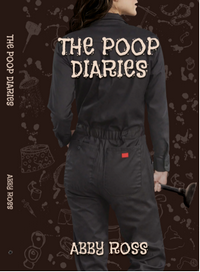
The Poop Diaries

How a clogged toilet turned into a book

I never expected to write a book. Of course, I have always loved to write. When I was a child, I wrote poems, short stories, and filled in the pages of those blank books designed for kids to put their imagination into words. Writing has served me well throughout my career. I worked as a television news reporter for six years where every day I wrote stories. I then transitioned into public relations where I wrote bylines, press releases and pitches. Today, I work in marketing where I write blog posts, client-facing and sales enablement content, and website pages. Writing is and has always been my favorite part of every job. Again, however, I never expected to write a book.

“The Poop Diaries” started as a side project. My toilet clogged on a Wednesday evening. I could not sleep without a working toilet, so I called a plumber – Jon. He showed up within an hour and unclogged the toilet almost immediately (as I embarrassingly cowered outside the bathroom door, like many people do). Jon also suggested I buy a new toilet, which he had in his truck ready to go. An hour later, the new toilet was installed, yet Jon did not seem to want to leave. He was a really nice guy who had that kind of magnetic personality where you hung on his words, curious what he would say next. I asked him to share his “greatest hit” stories, those service calls that he would always remember.

The minute he started sharing them, I began laughing and could not stop. I had no idea plumbers dealt with so much crap! And I do not mean literal crap. I mean the people they meet, things they find, and experiences they encounter. At that moment, I knew I had to write a book about Jon. After interviewing him and writing his diaries, I knew I had landed on something unique. So, I searched for more plumbers across North America.

The toughest part about the interviewing process was finding plumbers who would speak to me. As I mentioned earlier, I am a published writer in the sense of blogging and ghost-writing articles, but I am a “no name” in the book world. How were the plumbers supposed to know I was not a scammer? I found most of the plumbers through friends. Everywhere I went I told people I was writing a book about plumbers. I could not believe how many people in my inner circle knew a plumber! And I do not just mean a plumber who worked for them at one point in time. My friend’s uncle is a plumber. My other friend’s brother-in-law is a plumber. My friend’s friend is a plumber. Suddenly, plumbers were popping up everywhere.

Two of my biggest “finds” were women plumbers. Plumbing is still very much a man’s world. Women, however, are increasingly working in the business. The two women I interviewed own their own plumbing companies. My husband found them online, and fortunately, both agreed to talk to me. While I love the men’s stories in the book, the women’s stories are their own breed. For example, one of the women accidentally broke up a marriage because of what she found while on the job.

Writing this book made me come to a few realizations:

  1. Plumbers know so much about us, yet we know so little about them. They see us in our most private moments, sometimes because for whatever reason, we do not feel the need to “clear the cabinets” when a plumber comes over. Or, like one case in the book – get out of the shower. This book shows you those personal moments from the eyes of the plumber. It will definitely make you think twice about your trade worker etiquette.
  2. The stereotypes about plumbers – that they are blue-collar workers, who cannot pull up their pants, and are not educated – are FALSE. Plumbers are engineers. They spend years in school and/or working as an apprentice to learn the trade, which entails so much more than unclogging toilets. As one of the plumbers I interviewed stated, “Plumbing is like playing with a Tinkertoy set every day.” Plumbers also make good money. Many of the plumbers I interviewed have second homes and boats. No matter the state of the economy, the world will always need plumbers. It is a steady career that provides the opportunity to live well. Plumbers are also insanely patient and open-minded. Some of the stories they shared would make me want to run in the other direction. They all, however, stayed put, making sure they got the job done correctly, no matter how awkward the encounter. They also never made the customer feel embarrassed. All of the plumbers I interviewed said they are very careful with their reactions to situations because they never want a customer feeling uncomfortable. Oh, and that plumber’s crack stereotype? Most plumbers wear one-piece jumpers.
  3. Finally, I actually can write a book! All it took was finding a good story idea, and then dedicating the time to research, write and pitch (I pitched more than 100 publishers and agents. One said yes – Black Rose Writing). I believed in the idea from day one, and through the many rejections, I persisted. I knew if I could find just one person who believed in my idea as much as me, I would succeed. Persistence is the key to achieving an unexpected dream.

I hope you will enjoy reading “The Poop Diaries” as much as I enjoyed writing it. You can purchase it on Amazon.com and on BarnesandNoble.com

PUB DAY BOOK SPOTLIGHT: The Poop Diaries by Abby Ross

I didn’t have enough time to read The Poop Diaries by Abby Ross this month, but I liked the idea enough that I was hoping to give it a little boost here on its publication day. So I’ve got this little spotlight post and a nice guest post from the author coming along in a bit. But let’s start by learning a little about this atypical book, okay?

Book Details:

Book Title: The Poop Diaries by Abby Ross
Publisher: Black Rose Writing
Release date: February 6, 2020
Format: Ebook/Paperback
Length: 236 pages

Book Blurb:

They come into our homes. They see us in our most fragile moments. Plumbers are a fixture in our lives. When a toilet clogs, a faucet leaks, or a sewer line plugs, we call those unsung heroes, desperately seeking help. They scoop out our poop and pull underwear, toothbrushes and cotton balls out of our toilets, doing whatever it takes to get the job done.

On a late Wednesday evening, after my toilet clogged, I asked our plumber to share his top five “greatest hits.” The stories were so hilarious, I had to share them with the world. The Poop Diaries features true stories told by my plumber, and many other plumbers, about the most memorable service jobs they have worked on and most unique people they have helped. Whether it’s nudity, rats, fake vaginas, dildos, snakes, weapons and so much more, these plumbers have seen and smelled it all.

About the Author:

Abby Ross has nearly two decades of experience working in journalism, public relations, and marketing. She has written countless news stories, bylines, and blog posts. Abby began her career as a television news reporter, which fostered her passion for interviewing and writing about interesting people from all walks of life. After six years of reporting, Abby pivoted her career into public relations and marketing, which has been her focus for the past decade.

Purchase Links:

Amazon ~ Barnes & Noble

The White Man’s Guide to White Male Writers of the Western Canon by Dana Schwartz, Jason Adam Katzenstein (Illustrator): A Guide to White Male Writers for White Male Writers (or those who want to be one)

The White Man's Guide to White Male Writers of the Western Canon

The White Man’s Guide to White Male Writers of the Western Canon

by Dana Schwartz, Jason Adam Katzenstein (Illustrator)

Paperback, 241 pg.
Harper Perennial, 2019

Read: January 7-30, 2020
Grab a copy from your local indie bookstore (I did)!

If you want to be a writer, you should attend an Ivy League university, where you roommate happens to be the nephew of a senior editor at Knopf, and you should go on to get a summer internship in New York City. This internship will not be paid, and unfortunately you will have to suffer the indignity of living in an apartment that your parents pay for. But soon, your struggles will pay off, and you will be accepted at one of the nation’s most prestigious MFA programs.

If you can’t do all of that, I hate to say it, but it sounds like you won’t have the commitment and discipline necessary to make it as a writer.

Nice guy, the narrator of this book, right? I didn’t know this when I picked it up, but this is a book inspired by a parody Twitter account Schwartz runs @GuyInYourMFA, I wish I knew that going in—it might have helped me appreciate the book more. Probably not, really, the book speaks for itself, but it the humor in it screams Twitter. Anyway, that account is the voice behind this book.

This is a guide to:

teach you everything you need to know to become the chain-smokin, coffee-drinking, Proust-quoting, award-winning writer you’ve always known you should be…

Not a white man? Not to worry. The White Male Writer isn’t a hard-and-fast demographic; it’s a state of mind…

There’s a brief discussion of topics like how to dress like a writer, what the Western Canon is, how to identify “Chick Lit” (the last identifier is “By Jennifer Weiner”, which is a pretty good clue, you have to admit), and ends with a nice reading list of White Male Writers.

The heart of the book consists of thirty-two 6(+/-) page profiles of the greatest White Male Writers that make up the Western Canon. These consist of a brief biography, a discussion of some major works (“Works You Need to Know”), and some lessons from the work or life of the Writer that should be applied by the reader in their effort to become a Writer (drink recipes, how to respond to a rejection letter, how to write a love letter like James Joyce, etc.).

The writers are male, white, and largely published in the Twentieth Century (Shakespeare, Milton, Samuel Johnson, Goethe, Lord Byron, Dickens, Thoreau, and Tolstoy would be the exceptions). I can virtually guarantee that you’ve heard to them all—not that you’ve read them all, however. And in between the snark and intentionally sexist lessons, there’s some decent information to be gleaned. That isn’t the point of the book, the point is the snark, sexism, and general parodying the idea of the young, pretentious, white male would-be literary genius.

Every chapter includes at least 3 lines that should bring some level of amusement to the reader (some will have many more)—which is a pretty decent and consistent number. Sadly, all the jokes are around a theme, and so can get repetitive. If you don’t read cover to cover, if you only read a 2-3 chapters at a time, and bear in mind that all the jokes will be similar, you can have a lot of fun with this book. If you neglect any of that, it can get tiresome. Once I figured that out (it didn’t take long, thankfully, before I recognized the symptoms), I had a lot of fun with this book.

The illustrations are wonderful—each chapter (except the Pynchon chapter) features a great caricature of the artist, and a handful of other illustrations that do a wonderful job of augmenting the text.

This is not the subtlest of books I’ll read this year (it doesn’t try), but it is insightful, amusing and (accidentally?) informative. All of which makes it a fun, book-nerdy, read. Give it a shot, you’ll probably be glad you did.


3 Stars

This post contains an affiliate link. If you purchase from it, I will get a small commission at no additional cost to you. As always, opinions are my own.

Clearing the Deck: Tweet-length thoughts about books I can’t find time to write about

Yeah, I have a daunting TBR stack, but I also have too many books on my “To Write About” pile, and it’s bugging me. So, I’m cutting myself some slack, and am clearing the deck of everything from 2019 and before that I haven’t made time for. This was painful to do, I was looking forward to writing about most of these, but I’m just not going to get to them–and the 2020 books are starting to pile up, too. So, in 144 characters or less, here’s me cutting myself some slack.

(Click on the cover for an official site with more info)

Rivers of London: Detective Stories
3.5 Stars
Rivers of London, Volume 4: Detective Stories by Andrew Cartmel, Ben Aaronovitch, Lee Sullivan
Brief flashbacks showing what Peter et al. get up to between novels/comic series. A fun idea, well executed. Would enjoy another one like this.
Cry Fox
3.5 Stars
Rivers of London Volume 5: Cry Fox by Andrew Cartmel, Ben Aaronovitch, Lee Sullivan
This was a lot of fun, and showed a new side of a cool recurring character.
Rivers of London: Action At A Distance
3 Stars
Rivers of London: Action At A Distance by Andrew Cartmel, Ben Aaronovitch, Brian Williamson, Stefani Renne
A serial killer hunt and Nightingale backstory. Great combo.(some nice Molly material, too)
Geerhardus Vos: Reformed Biblical Theologian, Confessional Presbyterian
4 Stars
Geerhardus Vos: Reformed Biblical Theologian, Confessional Presbyterian by Danny E. Olinger
A biography and a discussion of his Vos’ major works. This was an excellent way to gear up for my 2019 Vos reading. Inspirational stuff.
The Utterly Uninteresting and Unadventurous Tales of Fred, the Vampire Accountant
3 Stars
The Utterly Uninteresting and Unadventurous Tales of Fred, the Vampire Accountant by Drew Hayes, Kirby Heyborne (Narrator)
A light Urban Fantasy about misfit monsters. Enjoyable enough to come back for more.
Open Season
4 Stars
Open Season by C. J. Box, David Chandler (Narrator)
Series Debut about a WY Game Warden with a nose for mystery. Loved the dual POVs (Pickett, his daughter). Addicting.
Please Don't Tell My Parents I'm a Supervillain
3 Stars
Please Don’t Tell My Parents I’m a Supervillain by Richard Roberts, Emily Woo Zeller (Narrator)
A cute story about kids of super-heroes/super-villains trying to get started in the biz without their parents’ involvement. Went on longer than it needed to, but fun enough to try volume 2.
Dragon Blood
3 Stars
Dragon Bones by Patricia Briggs, Joe Manganiello (Narrator)
Manganiello is a great choice for narrator. Nice little stand-alone fantasy story. Great dragons.
Savage Run
3.5 Stars
Savage Run by C. J. Box, David Chandler (Narrator)
Almost as good as the first Pickett novel. Mrs. Pickett gets to shine here, too. I’m so glad I finally got to this series.
Inkheart
3 Stars
Inkheart by Cornelia Funke, Lynn Redgrave (Narrator)
Gets a bit redundant, but I loved the concept. Better than the movie (which I kind of liked), but still could’ve been better.
Undeath and Taxes
3 Stars
Undeath and Taxes by Drew Hayes, Kirby Heyborne (Narrator)
A little better than the first volume, an enjoyable way to spend a few hours.
Dragon Bones
3 Stars
Dragon Blood by Patricia Briggs, Joe Manganiello (Narrator)
OK, so Dragon Bones wasn’t a stand-alone. Could’ve been, but it was nice to get a little more with these characters/this world. Still, give me a Briggs Urban Fantasy above this.
The Imputation of the Active Obedience of Christ in the Westminster Standards
4 Stars
The Imputation of the Active Obedience of Christ in the Westminster Standards by Alan D. Strange
I love this series. Strange packs so much material into this tiny package. Excellent stuff.
Badlands
3 Stars
Badlands by C. J. Box, January LaVoy (Narrator)
Cassie takes over The Highway series and moves to a new Oil Town in North Dakota. Midwest Winter, Drugs, Murder, Corruption and Too Much Money wreak havoc on her first week on the job.
Zombie Spaceship Wasteland (Audiobook)
3.5 Stars
Zombie Spaceship Wasteland: A Book by Patton Oswalt (Audiobook)
The memoir chapters are nice, the comedic bits are odd (and funny). An interesting look at Oswalt.
No Sweat
3 Stars
No Sweat: How the Simple Science of Motivation Can Bring You a Lifetime of Fitness by Michelle Segar, Ph.D.
A great way to look at keeping (or getting) yourself motivated to exercise.

Dreyer’s English by Benjamin Dreyer: A delightful guide to style, grammar, spelling and other things English Language-related that you didn’t realize you wanted to know.

Dreyer’s English

Dreyer’s English: An Utterly Correct Guide to Clarity and Style

by Benjamin Dreyer

Hardcover, 269 pg.
Random House, 2019

Read: December 27-30, 2019
Grab a copy from your local indie bookstore!

The English language…is not so easily ruled and regulated. It developed without codification, sucking up new constructions and vocabulary every time some foreigner set foot on the British Isles—to say nothing of the mischief we Americans have wreaked on it these last few centuries-and continues to evolve anarchically. It has, to my great dismay, no enforceable laws, much less someone to enforce the laws it doesn’t have.

Benjamin Dreyer isn’t the enforcer he wishes existed, but he’s close to one—especially for Random House. This book isn’t a book of those laws, rules or regulations—it’s about what one copy editor thinks that would-be editors, authors, and everyone else should know about grammar, sentence construction, punctuation, and. . . you know what? The official blurb does a more concise job of describing the book than I could. Let’s cheat a little and use it:

We all write, all the time: books, blogs, emails. Lots and lots of emails. And we all want to write better. Benjamin Dreyer is here to help.

As Random House’s copy chief, Dreyer has upheld the standards of the legendary publisher for more than two decades. He is beloved by authors and editors alike—not to mention his followers on social media—for deconstructing the English language with playful erudition. Now he distills everything he has learned from the myriad books he has copyedited and overseen into a useful guide not just for writers but for everyone who wants to put their best prose foot forward.

As authoritative as it is amusing, Dreyer’s English offers lessons on punctuation, from the underloved semicolon to the enigmatic en dash; the rules and nonrules of grammar, including why it’s OK to begin a sentence with “And” or “But” and to confidently split an infinitive; and why it’s best to avoid the doldrums of the Wan Intensifiers and Throat Clearers, including “very,” “rather,” “of course,” and the dreaded “actually.” Dreyer will let you know whether “alright” is all right (sometimes) and even help you brush up on your spelling—though, as he notes, “The problem with mnemonic devices is that I can never remember them.”

And yes: “Only godless savages eschew the series comma.”

Chockful of advice, insider wisdom, and fun facts, this book will prove to be invaluable to everyone who wants to shore up their writing skills, mandatory for people who spend their time editing and shaping other people’s prose, and—perhaps best of all—an utter treat for anyone who simply revels in language.

As one who enjoys a good language-revel, I fell in love with this book almost instantly. I had to force myself to stop jotting down notes because I’d be reading this thing until March if I wrote down everything I wanted to (I have a list of page numbers, though, to go back and glance at while I write this and/or want to do a quick revisit of the book). I’m glad that I’m bone tired and don’t have a lot of time here, because I could easily spend a few thousand words on this book if I let myself. But circumstance prevents me from that and protects you from enduring it (we’ll pretend you’d endure it to preserve my ego, you’d likely just decide it was too long and go to the next link on your list). I think this is coherent enough to post. I’ll let you decide.

Dreyer clearly had fun writing this—there’s a joie de mot/langue* that permeates this book and its infectious. Each page is filled with humor as well as semi-/quasi-/actually technical discussions about writing/reading, making this a book that will appeal to both your mind and funny bone.

* There’s a good chance that l’Académie française is going to hire someone to assassinate me for those neologisms. Whoops.

I’m not going to try to encapsulate the book (hence the use of the blurb), but I want to highlight a few things that stood out to me.

Over the last two years, I’d estimate I’ve read about 50 pages on the interrobang. That number didn’t increase at all with this book. In the chapter discussing punctuation he eventually gets to the interrobang and states, “Neither will we discuss the interrobang, because we’re all civilized adults here.” Reader, I laughed hard at that.

There’s so much of this book that authors need to read—were I richer, I’d require any author who asks me to read this book to evaluate it by these standards. For example, I can’t agree more with his oft-voiced complaint about italics that go on for more than a sentence (“For one thing, italics weary the eye; for another, multiple paragraphs of text set in italics suggest a dream sequence, and readers are always keen to skip dream sequences.” or “tend to convey Lengthy Interior Monologue or Something Else I Probably Don’t Want to Read.”). Do you know how many authors I want to send that to? (I’m including books I loved there, but most books I didn’t)

That reminds me, another thing I’d like to send to many, many authors I’ve read over the last five years:

…I swear to you, a well-constructed sentence sounds better. Literally sounds better. One of the best ways to determine whether your prose is well-constructed is to read it aloud. A sentence that can’t be readily voiced is a sentence that likely needs to be rewritten.

A good sentence, I find myself saying frequently, is one that the reader can follow from beginning to end, no matter how long it is, without having to double back in confusion because the writer misused or omitted a key piece of punctuation, chose a vague or misleading pronoun, or in some other way engaged in inadvertent misdirection. (If you want to puzzle your reader, that’s your own business.)

My life would be easier (and this blog much more chipper) if more authors were concerned about that.

A number of times, he’ll deliberately place an error in the text so he can call it out a paragraph or two (or pages) later to demonstrate how easy it is to make that faux pas and how hard it may be to catch. I loved every one of these and thought it was a brilliant idea.

He has lists of commonly misspelled words, notes on the way to get around Proper Nouns (or things that look like them, but aren’t), as well as bullet-point rants about pet peeves and actual problems that should prove to be an invaluable resource for students and writers of any level. I’m probably going to grab an e-copy of this so I can have it on my phone for easy reference.

The book is so fun, it’s spawned a game! How many books can say that?

While he is laughing at language, how it’s used/abused, and so on—Dreyer never discourages anyone from writing. He also mocks himself/his book a lot. It’s hard not to like a smart guy making wisecracks about himself.

With apologies to Dave Barry, Kevin Hearne and Delilah S. Dawson, this was probably the funniest thing I read in ’19 (and I cracked up a lot at those three). I laughed, I chuckled, I grinned, I think I might have even guffawed at this book (maybe even chortled). I can’t stop quoting it.

[People are] not, I’ve discovered, apt to be dissuaded from their prejudices by the evidence of centuries of literate literary usage or recitations from the bracingly peeve-dismantling Merriam-Webster’s Dictionary of English Usage. And they’re certainly not likely to be moved by the suggestion that English is in a constant state of evolution and that if our great-grandmothers ever caught us using the noun “store” when what we should have said was “shop” or using “host” as a verb, they’d wash our mouths out with soap. Well, I concede with a shrug, if the English language itself is notoriously irregular and irrational, why shouldn’t its practitioners be too?

As a practitioner, you might want to be less irregular and more rational. If so, Benjamin Dreyer has given you an excellent guide to find your way out of that. I loved it, if you’re even a little bit of a language geek, you will, too.

5 Stars

This post contains an affiliate link. If you purchase from it, I will get a small commission at no additional cost to you. As always, opinions are my own.

Find Your Weigh by Shellie Bowdoin: A No-Nonsense, but not overly-demanding, approach to Eating right/Weight loss

Find Your Weigh

Find Your Weigh: Renew Your Mind & Walk In Freedom

by Shellie Bowdoin

eARC, 239 pg.
2020

Read: December 21-23, 2019

Grab a copy from your local indie bookstore!

It’s that time when people are hitting the gym, starting diets, and doing all the sorts of things you do at the beginning of the year to “improve” themselves (seriously, having a hard time getting a parking spot at the gym). So it’s also the time for books on exercise, eating well, wellness in general to come out, enter Find Your Weigh. Bowdoin combines sage advice about eating/food/etc. with spiritual guidance.

When it comes to the Food aspects of the book, this is really good. Bowdain doesn’t try to impress with a lot of statistics, research articles and so on. Instead, she talks about her own experiences and then applies what she learned from them to provide examples for the book. Which isn’t to say that she didn’t do her homework, it’s there, but she doesn’t shove it in the reader’s face.

She covers things like honest expectations, mental blocks, habit formation, and the way to approach it all wisely. She does it in a friendly outgoing voice. She’s full of encouragement. She’s got plenty of tips and tricks to help you think about your weight and the effective ways to deal with it. There’s just so much here that is commendable that it’s hard to get into it all without making anyone getting the book on their own moot.

I’ll admit, if I’d known Bowdoin was going to try to bring the Bible into this, I’d have passed on the book. I have little patience for “Christian” diet books. It’s not that I don’t think the Bible is silent on health/diet/etc., but you’re not going to get much more than a pamphlet out of it, unless you’re going to trace themes about feasting, celebration, prayer, fasting, contentment, and so on then apply them via good and necessary consequence.

But, Bowdoin did bring the Bible up, so I feel compelled to address it. If she used the Scriptures correctly once, I didn’t notice it. And I’m not talking about holding/teaching a disputed idea from an unclear text. I’m talking about wholescale violence to the text and context she cites from. For example, Romans 7 is not about “learned helplessness” or the struggle against impulses to eat less-than-healthy food, it’s about the mortifying of sinful flesh; the discipline in Hebrews 12 is not self-discipline, but correction from our Heavenly Father; and so on.

If you ignore the Biblical citations/applications (and it’s easy to do, I wish I had), this is a really good book. It’s full of the voice of experience, compassion, and common sense. Written in a way that will likely draw you in, and help you to see how you can eat/act healthier. At the very least, it’s worth a glance (and probably more). This isn’t a once-sized-fits-all approach, but a toolbox that will have a lot of what you need to deal with the problem at hand.

Disclaimer: I received a copy of this book from the author in exchange for this post and my honest opinion.


3 Stars

This post contains an affiliate link. If you purchase from it, I will get a small commission at no additional cost to you. As always, opinions are my own.

Page 45 of 62

Powered by WordPress & Theme by Anders Norén