WWW Wednesday, February 7, 2024

I was reminded of Joshua Malina’s repeated struggles to pronounce the name of this month on the West Wing Weekly podcast (a tremendous look at the show, if you haven’t listened to it yet, you should) as it took me three times to get the spelling right in the title of this post. I’m a moderately-intelligent, college-educated adult and should be over this by now (and remember never having a problem with it). But man…it was rough this morning.

So, here’s a WWW to look over while I go grab a napkin and fork so I can dig into the Humble Pie.

This meme was formerly hosted by MizB at A Daily Rhythm and revived on Taking on a World of Words—and shown to me by Aurore-Anne-Chehoke at Diary-of-a-black-city-girl.

The Three Ws are:
What are you currently reading?
What did you recently finish reading?
What do you think you’ll read next?

Seems easy enough, right? Let’s take a peek at this week’s answers:

What are you currently reading?

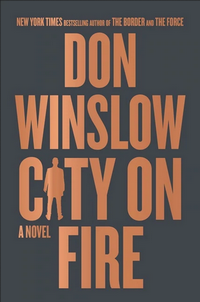
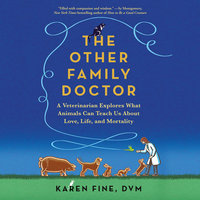
I’m finally reading City on Fire by Don Winslow, and am listening to The Other Family Doctor: A Veterinarian Explores What Animals Can Teach Us About Love, Life, and Mortality by Karen Fine on audiobook, as I’m apparently a sucker for Veterinarian Memoirs.

City on FireBlank SpaceThe Other Family Doctor

What did you recently finish reading?

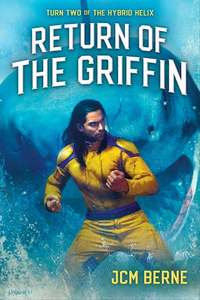
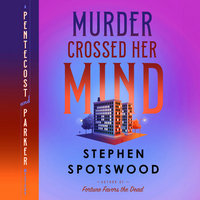
I just finished JCM Berne’s Return of The Griffin, and will be raving about it soon. I also recently finished the audiobook of Murder Crossed Her Mind by Stephen Spotswood, read by Kirsten Potter, easily the best Pentecost and Parker book yet.

Return of the GriffinBlank SpaceMurder Crossed Her Mind

What do you think you’ll read next?

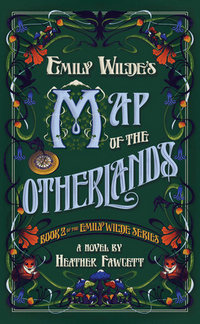
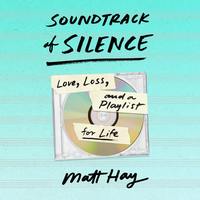
My next book should be for Emily Wilde’s Map of the Otherlands by Heather Fawcett—a sequel I’ve been looking forward to—and my next audiobook should be Soundtrack of Silence: Love, Loss, and a Playlist for Life by Matt Hay—which looks fantastic.

Emily Wilde's Map of the OtherlandsBlank SpaceSoundtrack of Silence

What’s on your bedside table (or wherever you keep your current reads)?

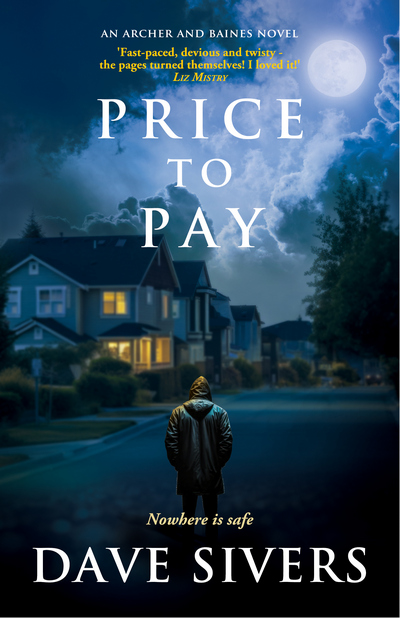
COVER REVEAL: Price to Pay by Dave Sivers

I’m very pleased to welcome the Cover Reveal for the new Archer and Baines novel, Price to Pay by Dave Sivers to The Irresponsible Reader this morning! Before we get to revealing the cover, let’s learn a little bit about the book. It’ll just take a moment, and then we can all feast our eyes on the cover.

Book Details:

Book Title: Price to Pay by Dave Sivers
series: Archer and Baines, Book 7
Genre: Police Procedural
Format: eBook
Release Date: February 28, 2024

About the Book

‘Fast-paced, devious and twisty – the pages turned themselves! I loved it!’  – Liz Mistry

The more you have, the more you have to lose…

Following an arrest that went wrong, leaving her disfigured and her life in ruins, DCI Lizzie Archer transferred to Buckinghamshire’s Aylesbury Vale, hoping to rebuild her confidence, her career and her life. Eleven years later, she’s happily married, her career is back on track, and she has friends she would trust with her life.

But things can change in a heartbeat.

Meanwhile, her friend and colleague, DI Dan Baines, has worries of his own as the long shadow of the serial killer known as the Invisible Man continues to hang over him. When the chance comes to finally get answers to some troubling questions, he is almost afraid to learn the truth. Because sometimes the reality can be worse than your imagination.

Soon after receiving unsettling threats from local criminals, an old flame makes an unwelcome return to Lizzie’s life. Days later, a grisly murder too close to home plunges her into a nightmare that could cost her everything as suspicion falls on her and her husband, Dominic.

Dan and his team are sidelined from the murder investigation, but they’re not going to let that stop them when a friend is in trouble. And the clock is ticking. Because, if they can’t uncover the truth soon, things will get even worse for Lizzie and Dominic.

Pre-Order the Book Now

and now…

The Cover

https://www.amazon.co.uk/dp/B0CTYNSSQX Cover

That’s a moody image, eh? I don’t get the feeling this is going to be a feel-good romp (the blurb helps, too). Just the thing for a chilly late winter night…

You’re going to want to get this, you might as well order it now, so it arrives on your reader on the 28th!


My thanks to Overview Media for the invitation to participate in this reveal and the materials they provided.


Irresponsible Reader Pilcrow Icon

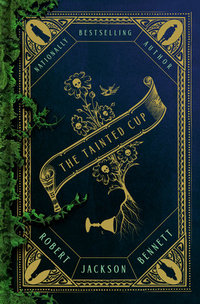
PUB DAY REPOST: The Tainted Cup by Robert Jackson Bennett: This Mystery/Fantasy Hybrid is My First 5-Star Read of the Year

The Tainted CupThe Tainted Cup

by Robert Jackson Bennett

DETAILS:
Series: Shadow of the Leviathan, #1
Publisher: Del Rey Books
Publication Date: February 6, 2024
Format: eARC
Length: 432 pg.
Read Date: January 4-9, 2023

Buy from Bookshop.org Support Indie Bookstores

What’s The Tainted Cup About?

This is a Mystery/Detective novel set in a Fantasy world. But to say that almost diminishes it. This is a Fantasy world you’re not used to seeing—well, I’m not anyway, you might be better read in the genre than I am. At the core of the mystery story are tropes, characters, motives, and twists that anyone familiar with that genre will recognize and resonate with. Combining the two genres here only serves to make them better.

The instigating event is the murder of a significant, but not hugely important, military figure on an estate of one of the most powerful and rich families in the Empire. That’s enough to get the official investigator, Ana Dolabra, and her assistant, Dinios Kol, involved. When you add in the cause of death—a clutch of trees erupted from the Commander’s chest—well, that’s definitely going to get some official notice. And quickly put you in a Fantasy world. Feel free to read that cause of death a couple of times, it’s still not going to make sense.

There’s just so much to talk about with The Tainted Cup—I’m going to talk about some of the best parts of this book as you would an Oreo cookie. The Mystery part is the creamy center (at least a Double Stuff in this case), and then the crispy cookie halves of the World Building/Setting and the Science of this World.

The Mystery

I already wrote a section below that quibbles with the official description, and I feel bad about doing that twice (am I risking future NetGalley approvals by this?), but I have to. It starts off by saying, “A Holmes and Watson–style detective duo.” You can maybe stretch things and call Ana Dolabra a Holmes-type character. Maybe. But outside of being the first-person narrator, there is nothing Dr. Watson-esque about Dinios Kol. I do not know if Bennett is a Rex Stout/Nero Wolfe reader. I suspect he is, though, because Dolabra and Kol are firmly in the Nero Wolfe/Archie Goodwin mold. (there are other versions of this duo, Pentecost and Parker and Jake and the Fatman spring to mind, but there are others).

I mention this because I think the duo of Wolfe and Archie is one of the greatest achievements in Detective Fiction, and will joyously talk at length about them at length at any opportunity. Bennett using these types at the center of this book almost automatically guaranteed that I’m going to enjoy it. Particularly if he does it successfully. And, boy howdy, does he.

Ana Dolabra is a brilliant and eccentric figure. Our Nero Wolfe. She can be pressed into politeness with enough reason, but on the whole, she’s blunt, crass, and solely focused on things that interest her. For a variety of reasons, Ana rarely leaves her quarters, instead, she has clues, interviewees, and suspects brought to her (and frequently, those she reports to, too). More than once she brings suspects and interview subjects together to question and/or to reveal a solution, putting on a show for others.

She has a new assistant, Dinios Kol, to serve as her eyes and ears in the outside world—and to bring back those bits of the world she needs to do her work. Thanks to a special augmentation, he has a perfect and permanent memory and will remember entire conversations and things he sees perfectly, with the ability to describe them to the detail Ana needs. He looks at crime scenes, records, bodies, etc. for her, conducts initial interviews with witnesses and experts, and so on. He also seems to do his best to keep her interactions with others at socially-appropriate levels (although this is a challenge). If this isn’t Archie Goodwin to a T.

They’ve been working together for a while now—mostly on fraud cases. This is their first murder case—and they wrap it up quickly and efficiently. Except, Ana is pretty sure that this murder will be linked to others—something more than murder is afoot here, she’s certain. And she’s right. (I assume this is almost always the case—Dinios certainly does)

Soon, she and her assistant are assigned to help in the investigation in a nearby city where several others have been killed in the same way. Dinios is partnered up with an experienced Assistant Investigator, Capt. Tazi Miljin, who does some on-the-job training and mentoring while working the case.

Soon, they determine that this isn’t just a murder case—nor is it several connected murder cases, there is something much bigger going on. Something that puts an entire city—possibly the entire Empire—at risk.

The World

I don’t know that I want to get too in-depth here, because the discovery of it all* is part of the magic of this book.

* And by “all,” I mean all that Bennett is going to share with us in this book—there’s much more to learn in books to come.

We find ourselves in a minor city in an Empire at the beginning of the novel before we move to a larger city, a major center of military importance. We don’t know a lot about this Empire—it’s centuries old, there are civic religions/cults but we see very few true adherents, and many people are cynical about the government. But it doesn’t matter—they need the Empire to keep them alive. So they push on.

The military isn’t focused on other nations/city-states/bands of roving mercenaries or outside human threats (although they do take the time to focus on bands of deserters). Instead, they’re focused on the seas. Each year, during the rainy season, monstrously large sea creatures they dub Leviathans (both think and don’t think about other Leviathans you’ve come across—other than large, water-bound, and scary) attempt to come ashore and snack on humans, cattle, whatever.

Places like Talagray, where we spend most of the novel, exist to maintain the wall between sea and land—leviathan and Empire—it’s a massive wall (massive in a way I cannot get across to you) with the occasional weapons mounted to attack the leviathan. I saw Talagray as sort of Jackson’s vision of Minas Tirith, but flattened to one elevation. I’m not sure if that’s what Bennet was going for, but that’s what my mind saw. Maybe a little muddier.

While the local canton is concerned with the murders, naturally, their primary concern during this season is the maintenance of the wall. Some of these murders have threatened the integrity of the wall in important ways, threatening all of Talagray. As important as solving the murder is—stopping further murders and therefore preventing further damage to the wall is far more important. Also…they probably have something special in store for anyone who’d risk the wall in any way.

The Science

I’m disagreeing a bit here with the official description—so take my observation with a grain of salt (but I stand by it). There’s no magic in this Fantasy novel—which, sure, happens sometimes. But it’s still strange and notable.

What this novel does have is “sufficiently advanced technology [which] is indistinguishable from magic.” It’s not often that I get to apply Clarke’s Third Law this way, but it works. This is a very technological society, but nothing we’d recognize, really. There are no circuits anywhere, no electricity…horses and carts are the primary means of transportation for those who are going too far or need to go too quickly to walk. But they practice all sorts of engineering feats, genetic manipulation, medical marvels, and so on.

The source of their raw materials? The Leviathans that threaten them all. When these Leviathans die/are killed, the Empire’s scientists harvest blood, tissue, and bone for all sorts of things to accomplish the above. Leviathan bone is difficult to shape, but it results in tools and swords that are beyond the strength and endurance of metal. Tissues can be manipulated and applied to humans to extend their abilities (augmenting strength, enabling them to have memories that are like eidetic memory to the nth power, control of their pheromones to alter the behavior of those around them, and so on).

Especially when it comes to the abilities that some of these people have, or the freakish contamination that the murderer is using, in a Fantasy book featuring people on horseback using swords, this looks like magic. But it ain’t. It’s just a kind of science that’s sufficiently advanced that 21st-century Western Readers can’t distinguish. And I love that. Bennett does such a convincing and thorough job of describing this (without getting mired in the details) that it just comes alive and you believe it all—and want to learn more about it.

So, what did I think about The Tainted Cup?

My reflex reaction ought to be, I want more of the detective-y stuff. How could I not? That’s my default genre, Ana is a fantastic character, Dinios at work is so much fun, and the pair of them being new incarnations of Wolfe and Archie. But when you add in the world-building, the intrigue and politics, and all the cool science-y bits? I wouldn’t have it any other way. You need all of it to make something this good. And it really does—each section above would probably earn 4 stars or so from me. But when you put them together, the accumulated score has to be at least 5.

Also, all the other stuff in the book distracts from a couple of the problems with the mystery story. These aren’t significant problems by any means, but at one point Ana reveals that Person X is Person Y, and her assistants are shocked and amazed. I assumed everyone realized that as soon as Person Y was introduced and described. For it to take umpteen chapters for everyone to catch up astounded me (am pretty sure Ana was as fast as me, for the record). The other thing that I’d consider a problem, I won’t get into for spoiler-reasons, but I was distracted enough that I didn’t see it until the reveal. Also, it’s the kind of thing that Rex Stout himself would do, so I’m never going to complain about it. Mostly, because it worked really well for the story, so who cares?

Regular readers may have noted that I haven’t spent that much time talking about the characters. I chose not to for time/space reasons. If I focused on writing about Ana, Dinios, and Miljin alone—I’d double the length of this post. If I included every major character I want to talk about? I’d triple the length. No one wants to read me going on that long. So I’ll sum it up by saying that his characters are just as good and developed (and strange) as everything else I’ve talked about.

Bennett doesn’t show a lot of flair in this writing. It has almost none of Elmore’s “Hooptedoodle”—although he violates a lot of Elmore’s other rules (and does so for the betterment of the novel). This is a description, not a criticism, you’re not going to be wowed with his style. He doesn’t need that. The descriptions of characters, structures, and monsters are so vivid, so detailed you have no problem seeing exactly what he wants you to see (with just enough room for the reader’s imagination). The action scenes are well-executed. The descriptions of the trees growing from outside of a person are as disturbing as they should be. There are flashes of humor, flashes of hope and optimism in both the characters and the story—but it’s all in the shadow of the imminent threat posed by the Leviathans and weakened walls. So there’s a strong “The World May Be Ending Tomorrow if not Tonight” feel throughout. I was under the spell of the narration and story from early on.

I didn’t set out to rave about this book. I was going to enthusiastically recommend it, but as I started to put my notes into some sort of order and write, I discovered that I really needed and wanted to rave about this. Fantasy fans are really going to get into this. Mystery/Detective Fiction fans who aren’t afraid to play in other worlds are going to go nuts over this. And I want to read the next book in the series today. But I’m willing to be patient—The Tainted Cup won’t even be published for 26 days. So I won’t start complaining about the delay in getting the next volume for 90 days (that seems fair).

Go place your orders or library holds now.

Disclaimer: I received this eARC from Penguin Random House via NetGalley in exchange for this post—thanks to both for this.


5 Stars

This post contains an affiliate link. If you purchase from it, I will get a small commission at no additional cost to you. As always, the opinions expressed are my own.

Irresponsible Reader Pilcrow Icon

Highlights from January: Lines Worth Repeating

Highlights from the Month
I’m back with this look at some of the best lines I came across last month. I wish a couple of the ARCs I read were published so I could use some lines from them–it probably would’ve almost doubled the size of this post.
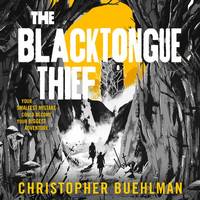
The Blacktongue Thief

The Blacktongue Thie by Christopher Beuhlman

Only the strong, the rich, and the dying think truth is a necessity; the rest of us know it for a luxury

And there’s humanity in a glimpse—we’ve always got a copper for a stone idol, but none for the beggar in its shadow.

To conquer a kingdom, a thousand is not enough. To free a prisoner, ten is too many.


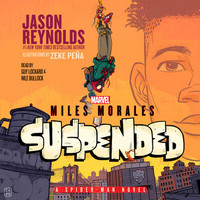
Miles Morales Suspended

Miles Morales Suspended by Jason Reynolds

The moon was a lightbulb dangling from a high ceiling, But in Brooklyn, there were no stars. Not in the sky. Miles, climbed along side his building up to the roof. Once there, he looked out at the New York City skyline and imagined that all the stars that were supposed to be there had fallen, and now sparkled much closer to the ground.


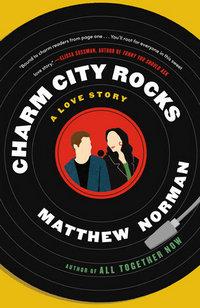
Charm City Rocks

Charm City Rocks by Matthew Norman

For parents, the drawback to loving their children so much is the anxiety that comes with it-—like love’s neurotic cousin…

He’d like to know what she almost said. One of the worst things about being a person is that when you don’t know something, you assume the absolute worst.

Another one of the worst things about being a person: when we’re not busy imagining the worst, too often we allow ourselves to imagine the best, and that almost never pans out.


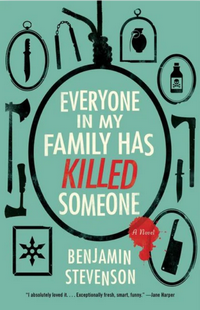
Everyone in My Family Has Killed Someone

Everyone in My Family Has Killed Someone by Benjamin Stevenson

“I’m sorry about before,” I said. Seeing as we were shoulder to shoulder, I spoke outwards, lobbing my apology into the void of the mountain. It’s the only way blokes know how to show humility, by pretending we’re at a urinal.

Witty repartee is not well serviced by truth.


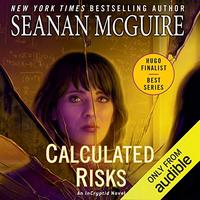
Calculated Risks

Calculated Risks by Seanan McGuire

I hate it when people tell me not to be afraid. They never do that when something awesome is about to happen. No one says “don’t be afraid” and hands you an ice cream cone, or a kitten, or tickets to Comic-Con.


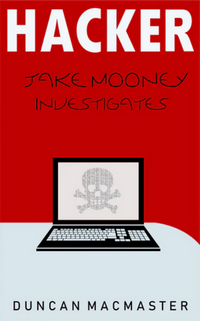
Hacker

Hacker by Duncan MacMaster

<

The campus was bustling.

The air was fresh.

However, I couldn’t shake the feeling that there were a pair of eyes boring holes into the back of my head. I turned around suddenly, and among the milling throng of students and staff going back and forth, I did catch someone doing an instant turn into a doorway.

Were the police tailing me?

Was the killer tailing me?

Was I being a paranoid moron?

All three were distinct possibilities.


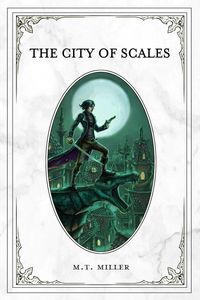
The City of Scale

The City of Scales by M. T. Miller

Ask, receive, then grieve over the folly of your desire.

The person behind the counter rose; a burly, shirtless creature resembling an oversized egg pretending to be a man.

But this hunt, not unlike a broken latrine, is a gift that keeps on giving.

“Suggestions?”

“None,” said the captain. “Unless someone finds us and we have to subdue them. If that happens, we should move at that moment.”

“No complaints from me,” Amelie said, knowing that she was telling a lie. If things turned sour, she would grumble all the way to her dying breath.

“Easy, no?”

“Not as easy as drowning,” the captain said. “But it could work.

“And my professional opinion is that I have no idea.”


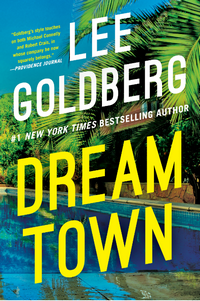
Dream Town

Dream Town by Lee Goldberg

“You’re cruel, which you’ve already proven today by trying to starve me to death,” Duncan said. “We skipped lunch.”

“How is that my fault?”

“You were driving,” he said. “We were caught up in the momentum of the case.”

“He who holdeth the steering wheel decideth whether to driveth- through or not to driveth- through,” Duncan said. “It’s in the Bible. Or maybe it was Shakespeare. I can’t remember, because I’m too hungry.

(Image by DaModernDaVinci from Pixabay)

MUSIC MONDAY: Do It Anyway by Ben Folds Five

Music Monday
Music Monday’s originated at The Tattooed Book Geek‘s fantastic blog and has shown up here and there since then.

Seemed like a good day for this:

Irresponsible Reader Pilcrow Icon

Clearing the Deck III: Tweet-length thoughts about books I can’t find time to write about

I did this last month to catch up up to 2023, but the backlog I’d accrued last year was too big for me. So here we go again. This doesn’t get me totally cuaght up, but it’s close enough. Hopefully it’ll be years before I have to resort to this again.

I frequently mention how looming Mt. TBR is getting for me, but what’s worse is my “To Write About” pile, I know I’m never going to catch up with that properly and it bugs me to no end. But in the interest of something being better than nothing, a dash of realism, and a heavy dose of self-care, I’m cutting myself some slack. This was painful to do, I was looking forward to writing about most of these, and I have so much that I want to say. But I’m just not going to get to them—and other books are starting to pile up, too. So, in 144 characters or less, here’s me cutting myself some slack.

(Click on the cover for an official site with more info)

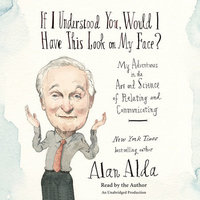
If I Understood You, Would I Have This Look on My Face?
3.5 Stars
If I Understood You, Would I Have This Look on My Face?: My Adventures in the Art and Science of Relating and Communicating by Alan Alda
Not sure how helpful this was–but it was quite entertaining & interesting. Hours of Alda’s narration–it almost doesn’t matter what he said.
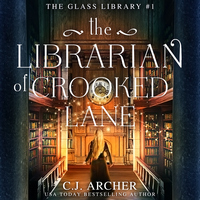
The Librarian of Crooked Lane
3 Stars
The Librarian of Crooked Lane by C.J. Archer, read by: Marian Hussey
Great idea. Okay (ish) execution. Had to push myself to keep going more than once.
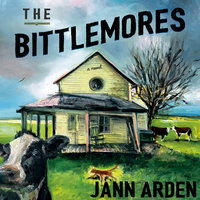
The Bittlemores
4 Stars
The Bittlemores by Jann Arden
So strange at times. The ending made all of the “why am I bothering” parts worth it. Capital Q-quirky and emotionally effective. Give it a try.
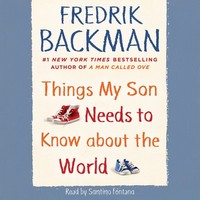
Things My Son Needs to Know about the World
3.5 Stars
Things My Son Needs to Know about the World by Fredrik Backman, read by: Santino Fontana
Hilarious and touching. Backman seems more down-to-earth than expected–a great writer & a relatable dad. Should give this to my grandkid’s dad.
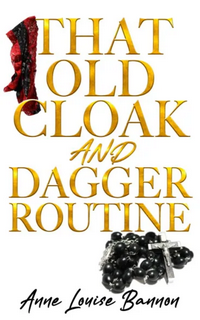
That Old Cloak and Dagger Routine
3 Stars
That Old Cloak and Dagger Routine by Anne Louise Bannon
Ummm…a cozy and fairly self-consciously chaste spy novel. Who knew that was possible? Wasn’t wowed, but intrigued enough to read more.
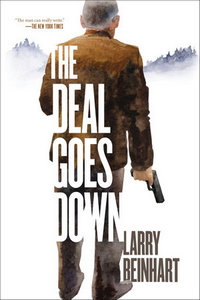
The Deal Goes Down
3.5 Stars
The Deal Goes Down by Larry Beinhart
A compelling, self-aware, action read. Really dug it, but not sure I’m 100% into the story’s wrap-up, but the denouement helped.
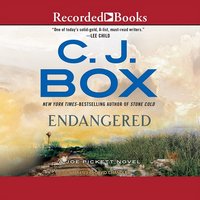
Endangered
3 Stars
Endangered by C.J.Box, read by: David Chandler
Ehhhh…I liked this, I think. I’m not sure what to say about it (hence the months of silence from me, I guess)
Strong Female Character
3 Stars
Strong Female Character by Fern Brady
Funny and helpful look at one woman coming to terms with an ASD diagnosis, and how she got to it.
Hammered
3 Stars
Hammered by Lindsay Buroker, read by: Vivienne Leheny
Good world, great protagonist/narrator. Decent introductory novel. I’ll be back for more.
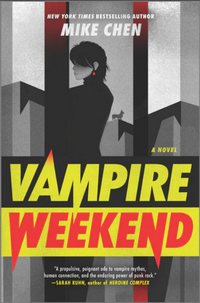
Vampire Weekend
4 Stars
Vampire Weekend by Mike Chen
Heckuva read. Words have failed me for a year with this one. The premise, execution, characters, plot–all typical Chen greatness.
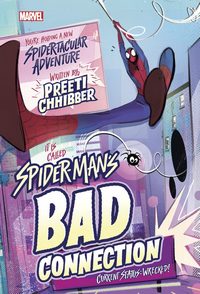
Spider-Man’s Bad Connection
3 Stars
Spider-Man’s Bad Connection by Preeti Chhibber
Not as good as book 1, but filled with everything I liked about it. Seemed more concerned about setting up the series arc than this book’s plot.
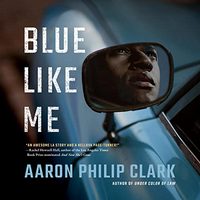
Blue Like Me
3.5 Stars
Blue Like Me by Aaron Philip Clark, read by: Preston Butler III
The mystery/police aspect of this series is great. The personal life material is less so. This author/narrator combo makes it worthwhile.
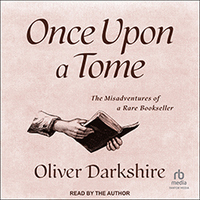
Once Upon a Tome
3 Stars
Once Upon a Tome: The Misadventures of a Rare Bookseller by Oliver Darkshire
If you’ve ever wondered what it’s like to work in an antiquarian bookshop or if you like quietly charming people talk about unusual occupations…
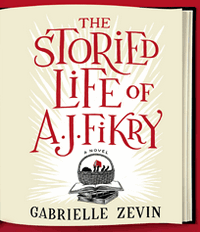
The Storied Life of A. J. Fikry
3.5 Stars
The Storied Life of A.J. Fikry by Gabrielle Zevin, read by: Scott Brick
So sweet, so heartwarming, so charming. This novel about booksellers in love–and Firkney’s adorable daughter–will steal your heart.
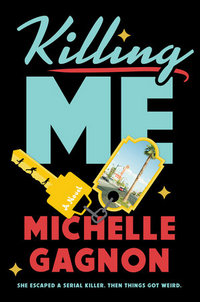
Killing Me
4 Stars
Killing Me by Michelle Gagnon
Great take on vigilante serial killers. Great turns and twists.
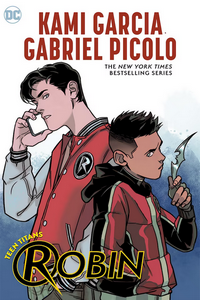
Teen Titans: Robin
3 Stars
Teen Titans: Robin by Kami Garcia, Art by: Gabriel Picolo
Not the best in the series, but Garcia’s take on these characters is good enough to overcome that. I just wish these came out faster.
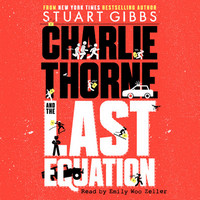
Charlie Thorne and the Last Equation
2 Stars
Charlie Thorne and the Last Equation by Stuart Gibbs, read by: Emily Woo Zeller
The problem with an impossibly smart characters is that the creators behind them aren’t that smart. The results are disappointing.
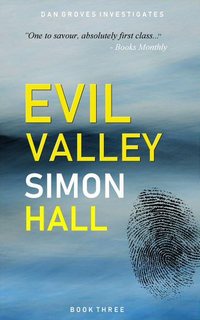
Evil Valley
3 Stars
Evil Valley by Simon Hall
I like this series, I like the characters…didn’t think this was up to the author’s standards. Some great scenes and a compelling killer.
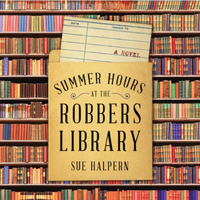
Summer Hours at the Robbers Library
2 1/2 Stars
Summer Hours at the Robbers Library by Sue Halpern, read by: Josh Bloomberg, Dara Rosenberg, Allyson Ryan
Meandering. The major reveal was a major letdown. It was just intriguing enough to keep me listening, but I wish it hadn’t been.
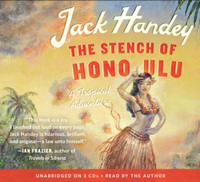
The Stench of Honolulu
2 Stars
The Stench of Honolulu: A Tropical Adventure by Jack Handey
What a waste of time (mine and the authors) and talent.
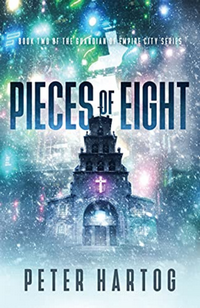
Pieces of Eight
3.5 Stars
Pieces of Eight by Peter Hartog
I <3 this universe. I think this case was weaker, but the character moments, growth, and magic were so great that it didn't matter. I need more.
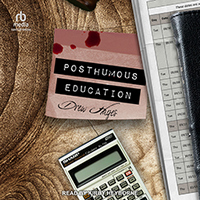
Posthumous Education
3 Stars
Posthumous Education by Drew Hayes, read by: Kirby Heyborne
Good to be back in Fred’s world. Not the best collection of episodes for the Vampire Accountant, but pleasant enough.
The Last Ranger
3 Stars
The Last Ranger by Peter Heller, read by: Mark Deakins
Feels like a CJ Box standalone that he abandoned because he couldn’t come up with an ending. Heller couldn’t either, but called it good anyway.
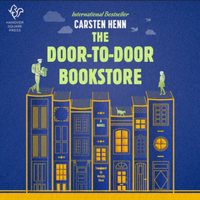
The Door-to-Door Bookstore
3 Stars
The Door-to-Door Bookstore by Carsten Henn, read by: Raphael Corkhill, translated by Melody Shaw
Schmaltzy but pure-of-heart. One central character’s motivation makes no sense. Ignoring that, it’s a sweet celebration of books/readers.
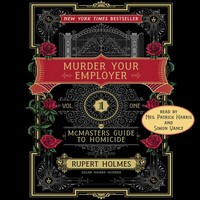
Murder Your Employer
3.5 Stars
Murder Your Employer: The McMasters Guide to Homicide by Rupert Holmes, read by: Simon Vance, Neil Patrick Harris
Possibly too clever for its own good. I vacillated between reveling in it and utter disdain. It’s a mixed-bag that won me over in the end.
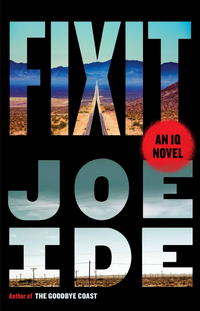
Fixit
4 Stars
Fixit by Joe Ide
IQ and Dodson are back and better than ever. Who needs to say more than that?
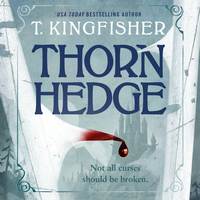
Thornhedge
3 Stars
Thornhedge by T. Kingfisher, read by: Jennifer Blom
Great prose in service of a solid modern take on Cinderella.
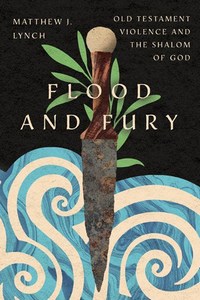
Flood and Fury
4 Stars
Flood and Fury: Old Testament Violence and the Shalom of God by Matthew J. Lynch
Helpful work on Divine Violence (how to think of it, how not to think of it or avoid the idea, either) and about the conquest of Canaan.
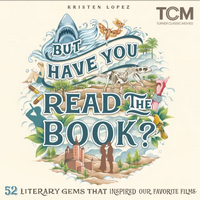
But Have You Read the Book?
2 1/2 Stars
But Have You Read the Book?: 52 Literary Gems That Inspired Our Favorite Films by Kristen Lopez
How can a book with this premise be so dull? And snobbish, too.
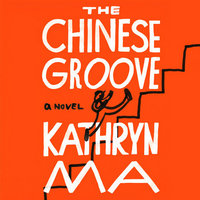
The Chinese Groove
2 1/2 Stars
The Chinese Groove by Kathryn Ma, read by: James Chen
Great characters, an okay story, but the payoff wasn’t there. The ending was bad enough to make me wish I hadn’t spent the time.
Noirville
4 Stars
Noirville: Tales From The Dark Side by Chris McVeigh
15 of the best short stories I’ve ever read. This is how Crime Fiction should always be.
Grand Theft Astro
3 Stars
Grand Theft Astro by Scott Meyer, read by: Elizabeth Evans
The Stainless Steel Rat with a contemporary twist. Meyer is capable of better, but I had enough fun (not sure I’m sold on the ending)
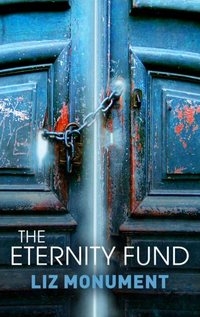
The Eternity Fund
3.5 Stars
The Eternity Fund by Liz Monument
Dynamite dystopian adventure. Worth the $ just for the worldbuilding. The story and characters were even better–I’d relish a sequel.
The Mostly True Story of Tanner & Louise
4 Stars
The Mostly True Story of Tanner and Louise by Colleen Oakley, read by: Hillary Huber
It took me a long time to decide what this book was really about, but I enjoyed the trip. The destination was okay, too.
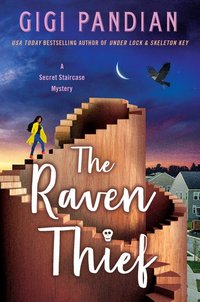
The Raven Thief
3 Stars
The Raven Thief by Gigi Pandian
See what I said about Spider-Man’s Bad Connection.
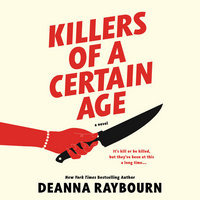
Killers of a Certain Age
3.5 Stars
Killers of a Certain Age by Deanna Raybourn, read by: Jane Oppenheimer, Christina Delaine
Who doesn’t enjoy an octogenarian assassin? Who doesn’t love female assassins? A group of them out for revenge? Sure-fire fun.
Vanished
3 Stars
Vanished by Kat Richardson, read by: Mia Brown
Good story, but felt underwhelmed by it all. I think it was me and my timing. not Richardson. I need to get back on this horse.
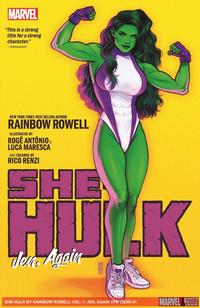
She-Hulk: Jen Again
3 Stars
She-Hulk, Vol. 1: Jen, Again by Rainbow Rowell
A real winner from Rowell. I knew I should’ve started reading this series earlier. Good art, interesting arcs, & some real smiles were induced.
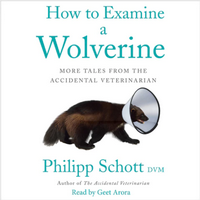
How to Examine a Wolverine
3 Stars
How to Examine a Wolverine: More Tales from the Accidental Veterinarian by Philipp Schott, read by: Geet Arora
A fun Veterinarian Memoir, with a lot of heart. James Herriot with more laughs and technology.
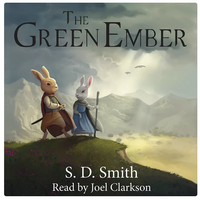
The Green Ember
3 Stars
The Green Ember by S.D. Smith, read by: Zach Franzen
Maybe too much like Wingfeather Saga, but with rabbits instead of humans. Still, a good fantasy for the MG crowd.
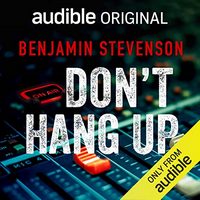
Don't Hang Up
3.5 Stars
Don’t Hang Up by Benjamin Stevenson, read by: Luke Arnold, Sybilla Budd
I can’t do better than Mike Finn did. Go read what he said. It’s why I listened.
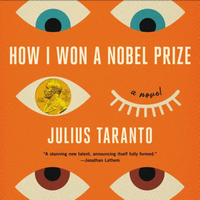
How I Won a Nobel Prize
2 1/2 Stars
How I Won a Nobel Prize by Julius Taranto, read by: Lauren Fortgang
Some good writing, but squandered for…I’m not sure really.
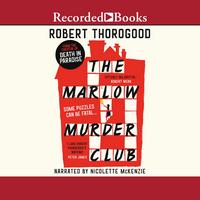
The Marlow Murder Club
3 Stars
The Marlow Murder Club by Robert Thorogood, read by: Nicolette McKenzie
Decent cozy with an intriguing cast of oddball slueths.
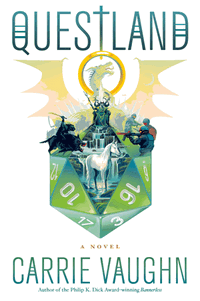
Questland
3.5 Stars
Questland by Carrie Vaughn
Jurassic Park for RPG, SF, Fantasy, etc. fans. Been a Vaughn fan for years, but don’t know that I’ve had this much fun with one of her novels.
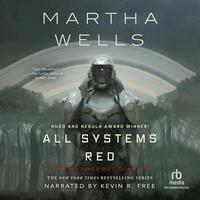
All Systems Red
3 Stars
All Systems Red by Martha Wells, read by: Kevin R. Free
Oh, wow. I understand all the fuss over this series. I shouldn’t have slept on this–or the sequels like I have.
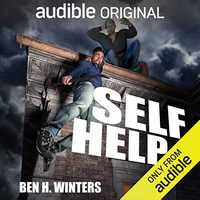
Self Help
3 Stars
Self Help by Ben H. Winters, read by: Wil Wheaton, Ron Perlman
Cool concept. Great cast. Entertaining but not-entirely satisfying result. Worth the time. But not much more.

Irresponsible Reader Pilcrow Icon

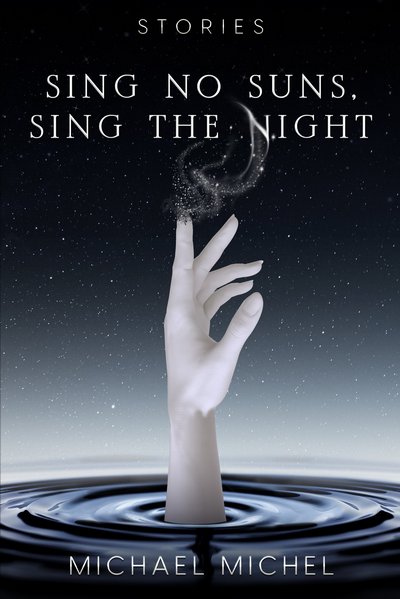
COVER REVEAL: Sing No Suns, Sing the Night by Michael Michel

I’m very pleased to welcome the Cover Reveal for Michael Michel’s short story collection, Sing No Suns, Sing the Night to The Irresponsible Reader this morning! Before we get to revealing the cover, let’s learn a little bit about the book and author, shall we? It’ll just take a moment, and then we can all feast our eyes on the cover.

Book Details:

Book Title: Sing No Suns, Sing the Night by Michael Michel
Genre: Science Fiction/Fantasy
Format: eBook
Release Date: February 20, 2024

About the Book

When the light that guides us fails, we must face the darkness within…or perish.

A warlord’s bitter crusade. A starship’s crew caught between a mindless monster and a race against starvation. Conflicted aliens, unable to stop their conquest. The unhappy life of a sentient gun.

Sing No Suns, Sing The Night is an SFF short story collection and an ode to Grimdark. Hope and despair. Love and hate. Sweet beginnings and sour ends. These stories cover themes that challenge our beliefs about self, society, and the nature of living.

If you’re ready to be dragged to the lip of the abyss and dangled over the edge, read on.

Pre-Order the Book Now

About the Author

Michael MichelMichel lives in Bend, Oregon with the love of his life and their two children. When he isn’t obsessively writing, editing, or doing publishing work, he can be found exercising, coaching leaders in the corporate world, and dancing his butt off at amazing festivals like Burning Man. His favorite shows are Dark, The Wire, Arcane, and Norsemen. He loves nature and deep conversations. Few things bring him more joy than a couple of hours playing table tennis.

Website ~ Twitter ~ Instagram ~ Goodreads

and now…

The Cover

Sing No Suns, Sing the Night
 Cover

That’s one sweet looking cover…

You’re going to want get this, you might as well order it now, so it arrives on your reader on the 20th!
Irresponsible Reader Pilcrow Icon

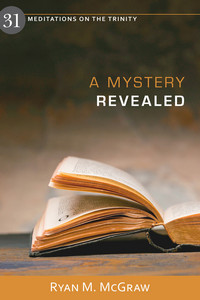
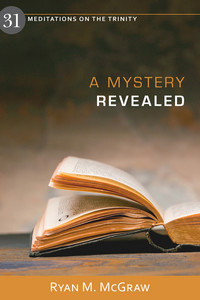
A Mystery Revealed: 31 Meditations on the Trinity by Ryan M. McGraw: Helpful and Quick Prompts to Greater Understanding

A Mystery Revealed: 31 Meditations on the TrinityA Mystery Revealed:
31 Meditations on the Trinity

by Ryan M. McGraw

DETAILS:
Publisher: Reformation Heritage Books
Publication Date: May 8, 2023
Format: eBook
Length: 256 pg.
Read Date: July 2-December 31, 2023
Buy from Bookshop.org Support Indie Bookstores

The Trinity is the grammar shaping the language we use to relate to God before we become self-conscious about it or skilled in using it. We often learn to hear the Bible and to speak to God and others in Trinitarian terms before we learn how and why those terms work.

What’s A Mystery Revealed About?

The Publisher’s site says:

Dr. Ryan McGraw peels back the curtain on how the Trinity forms the foundation for everything from evangelism to corporate worship. As he follows the Trinitarian shape of Scripture, McGraw brings this heavenly doctrine down to earth for the average Christian to experience.

These 31 meditations trace the biblical storyline, drawing us closer to the blessed persons of the Father, Son, and Holy Spirit.

And that’s basically what the book gives—McGraw starts by trying to sketch the grammar of the Trinity and then traces the storyline of the Bible showing how that grammar was revealed. McGraw notes early on that:

Many believers do not read the Bible like a story but like a collection of memory verses. How many verses have you memorized in your life, only to realize they mean something different than you thought?

So while helping readers to find the Trinity revealed throughout the Scriptures, he also helps the reader to understand the storyline of the Bible—how it’s not just a collection of memory verses.

The chapters end up with a good balance of “theory” and “practice.” McGraw isn’t known for just feeding the head or the heart in his books, he’s also focused on the reader putting his ideas into action—and that’s clear in this book.

Maybe Too-Reliant on J.R.R.?

McGraw begins every/almost every chapter with some sort of illustration to bring the reader to the subject—it’s not my favorite tool, but it’s time-tested and reliable. One frequent source of illustrations for this book are the works of Tolkien. I have nothing against Tolkien—and wish I knew his work better. But…I think it’s a well that McGraw maybe returned to too often. I didn’t pick up this book for ideas about the Trinity and The Hobbit/The Lord of the Rings/The Silmarillion.

Sure, Tolkien is an easy touchstone that a lot of McGraw’s readers will be familiar with, making the transition to the topics at hand easier. I just think he’d have been better served with other sources of introduction.

The gospel is the centerpiece of the Bible’s story line. All things anticipate it in the Old Testament, and all things point back to it in the New Testament. God is the author of the narrative, and Christ is the narrator. The Spirit makes us participants, rather than spectators, in the story . As we have seen, writing Himself into the story, it turns out that the triune God is the main character as well.

So, what did I think about A Mystery Revealed?

Now this is a devotional—meant to be read in short bursts on a daily (or weekly, like I used it) basis. It’s not to be read cover-to-cover, and you’re not going to get in-depth on any of the points considered. So you have to bear that in mind—McGraw’s addressed some of these topics in greater depth elsewhere, and it’s worth the effort to find them. Nevertheless, even in these devotional-length chapters, he does a capable job of addressing them.

Also, the “Further Reading” recommended with every chapter will satisfy whatever itches for greater depth or expansion on ideas the reader may have. They gave me a reading list I’m eager to tackle (or revisit).

McGraw’s use of grammar as a metaphor and reminding the reader of the storyline of the Bible are throughout and are so useful.

Some of the chapters didn’t do a whole lot for me—did we really need 4-5 pages on this? And others were like a cup of cold water on a hot day. But I imagine that if I read this book again in a year or so, I’d have a completely different list of chapters under each heading. This is to be expected, I assume, and isn’t a reason to walk away.

A Mystery Revealed is a nice way to spend a few minutes a day for a while. It should be helpful to remind/refresh/create a better understanding of the way the Trinity can be seen throughout the story of the Bible and point you to the greater needs of your soul.


3 Stars
This post contains an affiliate link. If you purchase from it, I will get a small commission at no additional cost to you. As always, the opinions expressed are my own.

Irresponsible Reader Pilcrow Icon

Saturday Miscellany—2/3/24

Odds ‘n ends about books and reading that caught my eye this week. You’ve probably seen some/most/all of them, but just in case:
bullet Column: Need help finding a good book? Try one your 9th-grader isn’t allowed to read —There’s something to this strategy (especially if it leads someone to read Milton), but I’m mostly sharing this for some of the updates on the banning-but-not-technically movement across the states.
bullet The Great Fiction of AI: The strange world of high-speed semi-automated genre fiction—as Pages Unbound noted, “The problem with this article is that we’re all mocking the authors for ‘writing’ books with AI, but they’re claiming people buy their books anyway and they’re making tons of money by churning this stuff out.”
bullet What Is Punctuation For?: Between the medieval and modern world, the marks used to make writing more legible changed from “pointing” to punctuation.
bullet Why Are We Talking About Books Like This?—This.
bullet What Makes a Favorite?—I appreciated Kopratic’s musings on the topic
bullet Dealing with DNF: The Practice of Did Not Finish—I’ve linked to a number of posts on DNFing over the years, I don’t know if any have been this thorough
bullet Why I’m No Longer Reading Grimdark…—I get this. I absolutely get this. I’m not there, but I could be. And I really identified with the Orangutan Librarian’s ‘2nd paragraph.
bullet Welcome to the #Febookary Reading Challenge 2024!—This looks fun. I absolutely don’t have time for it, but it looks fun.

To help talk about backlist titles (and just for fun), What Was I Talking About 10 Years Ago Week?
bullet Fobbit by David Abrams
bullet
Split Second by David Baldacci
bullet Unnatural Selection by Aaron J. Elkins
bullet And I noted the releases of Broken Homes by Ben Aaronovitch (and I was not prepared for all of that) and Cress by Marissa Meyer.

This Week’s New Releases that I’m Excited About and/or You’ll Probably See Here Soon:
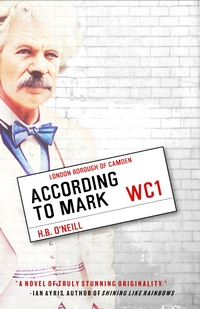
bullet According to Mark by H. B. O’Neill—”Following a bad breakup, a despondent man, Robert, becomes convinced that the spirit of Mark Twain is trying to guide his life and thinking, giving him lessons in the form of quotations from Twain’s works. Eventually, Twain focuses on getting Robert to kill himself. Robert’s eager to follow the lessons of his hero, but things keep interfering with his efforts.” Is how I started my raving about the book. You can read the rest here.
bullet A Quantum Love Story by Mike Chen—I stopped reading at the author’s name. So I don’t know what it’s about…it’s sort of a Groundhog Day/ST:TNG “Cause and Effect” kind of thing. But not?
bullet Everyone on This Train Is a Suspect by Benjamin Stevenson—Stevenson follows up his dynamite novel by sticking his protagonist in a locked room mystery on a train. Sounds perfect to me.
bullet Rivers of London: Here Be Dragons by James Swallow, Andrew Cartmel, Ben Aaronovitch—Peter and Nightingale deal with a Wyvern above London in the newest comic collection.
bullet These Deadly Prophecies by Andrea Tang—without reading it, I doubt I can do better than the description: “A teenage sorcerer’s apprentice must solve her boss’s murder in order to prove her innocence in this twisty, magic-infused murder mystery perfect for fans of Knives Out and The Inheritance Games.”

Lastly, I’d like to say hi and extend a warm welcome to mentalnotes1, who followed the blog this week. I hope you enjoy the content and keep coming back.
I may not know how to fly but I know how to read, and that's almost the same thing. Gregory Maguire

According to Mark by H. B. O’Neill: No Man Has a Wholly Undiseased Mind…

According to MarkAccording to Mark

by H. B. O’Neill

DETAILS:
Publisher: Fahrenheit Press
Publication Date: February 2, 2024
Format: eARC
Length: 496 pg.
Read Date: November 27-30, 2023

But we are all insane, anyway…The suicides seem to be the only sane people.
—Mark Twain’s Notebook, #40, (Jan. 1897-July 1900)

What’s According to Mark About?

This is tricky to describe, but let’s give it a shot.

Following a bad breakup, a despondent man, Robert, becomes convinced that the spirit of Mark Twain is trying to guide his life and thinking, giving him lessons in the form of quotations from Twain’s works. Eventually, Twain focuses on getting Robert to kill himself. Robert’s eager to follow the lessons of his hero, but things keep interfering with his efforts.

Meanwhile, Robert’s ex, Rebecca, is in therapy trying to deal with the breakup herself.

The novel takes us through Robert’s memories of their relationship while showing us the detritus of his life following the breakup and his efforts to do what Twain is calling him to do. In alternating narrative sections, we see Rebecca’s account of their relationship and we see a little bit of how she’s carrying on. Some of these accounts are synced to give us both perspectives on the events right after each other, some of them come several pages apart so the reader has to do some mental copying and pasting to get a chronological understanding of what happened.

That’s a pretty basic, yet comprehensive, way to tell you what the book is about without giving anything away. And it’s wholly unsatisfactory. Let’s see if I can do better in the next couple of sections.

Rebecca Morely

It’s entirely possible that Rebecca has been in therapy for some time before she and Robert broke up—she strikes me as the kind of person who may have seen therapists throughout her life as a way of staying healthy. Or maybe this is new for her.

Regardless, following the end of their long relationship, she’s in therapy now and her psychotherapist has instructed her to write a letter to herself as a means of coming to terms with the events. Rebecca tells us straight off that she’s struggling with some of the chronology, so we expect that the letter(s) won’t get everything perfectly straight and will hop around a bit, the way memories do. From her, we do get a fairly straightforward account of things between her and Robert—although she does circle around the events that led to their split a little, she doesn’t want to face it.

We see that Rebecca is a sweet woman. A sweet woman who is pushed around a bit by her parents’ expectations and wants for her—one of their big expectations is that she’ll eventually marry someone Rebecca’s known her whole life. He’s essentially an 80s teen movie villain who managed to grow up without Daniel Russo teaching him a lesson by kicking him in the face or Cindy Mancini setting him straight about how to treat women. She’s trapped by her parents expectations, and her understanding of society’s expectations, too.

But she’s finding her own way through that to focus on what’s best for her and what she wants. She wants love, marriage, companionship—and thinks she may have found that (or most of it, anyway) in the eccentric form of Robert. She’s very happy until things start to go wrong in his life and he won’t respond the way she thinks he ought. Little cracks in their foundation start to spread and eventually, things fall apart.

I really liked Rebecca. I empathized and sympathized with her—up to and including her self-recriminations. Possibly because of Robert’s view of her, I couldn’t see her as anything other than a wonderful person who made some tragic mistakes. Their relationship—particularly seen from her point of view—was so sweet even when we know it’s doomed. I found myself rooting for them even harder because I knew it wouldn’t work.

Horatio Robert Foxley

No man has a wholly undiseased mind; in one way or another all men are mad.
—Mark Twain, “The Memorable Assassination”

Robert (who hates the name Horatio), on the other hand…is hard to like (but you will). He’s hard to understand (but you’ll want to). He’s also a pretty unreliable narrator due to the way he sees the world in general, which grows worse as the book progresses. But you’ll get to where you can see through his narration to what’s really going on.

There are clearly a few (possibly several) diagnoses that psychotherapists and their colleagues would give Robert, but he never sees one to be given any diagnoses, medication, or other treatment. It’s tempting to play armchair psychologist and start listing some of them—but I’m going to resist that. O’Neill doesn’t give us the labels or diagnoses, so it’s speculation.

More importantly, this novel isn’t about a person with X. It’s not about his disorder. It’s not about his dealing with whatever issues he has. Those books have their places–and I’ve read my share of them. But O’Neill hastn’t written a novel about a man struggling with or coping with a diagnosis. It’s a novel about a man. It’s about Robert in all his strengths and foibles. He’s a man with many strengths, and some severe weaknesses, like most of us. According to Mark is about Robert’s life and his heart. He’s capable of great love, he’s capable of being loved. And like so many, when some of the supports in his life change or go away, his ability to cope with all the vagaries of life falters. He falters significantly because he needs his supports more than others seem to.

He and Rebecca have a Nancy Meyers-worthy meet cute, and his quirkiness (at least that’s how it comes across initially) attracts Rebecca. They build a life together—sure, she has trouble getting him to fit into hers—her friends and family don’t respond to Robert the way she wants, but they make do. He hits some bumps in the road, and doesn’t respond to them very well. Rebecca responds poorly to his responses.

Then he’s alone and Mark Twain starts whispering in his ear. Robert started reading Twain because of Rebecca, and quickly became a fan. Too much of a fan, one might argue. He read everything Twain wrote that he could get his hands on, and then everything he could about Twain. Rebecca chalked it up to enthusiasm, a sign that he was open to growth and that she had an impact on him—that he respected her opinion. But even she thinks he goes overboard with Twain. He’s driven enough, smart enough, and excessively concentrated enough on Twain that when these whispers start, they are actual quotations that Robert’s absorbed.

Once Twain starts talking to him, whatever was keeping Robert on the rails departs. And we are given a front-row seat to a mind falling apart. It’s horrific when you stop and think about it—but ever so compelling in O’Neill’s hands. More on that later.

Mark Twain

I learned more about Twain—particularly his time in England—than I’d known before thanks to Robert. I mean, O’Neill’s research. And naturally, the quotations that the book is full of make you want to go read more bons mots from him, if not actual works.

But at the same time…Robert becomes a case study in going too far with someone like Mark Twain, and I’ve been reticent to approach his work since then. I don’t think I’d end up like Robert, but…it’s like watching Jaws. You know it’s just a movie, that sharks like that don’t really exist. Buuuuut…maybe you should stay away from beaches/the ocean for a bit, just in case.

The Mark Twain in Robert’s head is an interesting figure—and one has to imagine that the actual Twain would appreciate (on some level) O’Neill’s use of his words.

Can You Laugh at This?

Man, I hope so. There are some moments around the first (that we see, anyway) attempt Robert makes at ending his life that seem to want to make you laugh. I did, anyway—like in Holland’s Better Off Dead—there’s some solid black comedy there (as Twain would want).

But the laughs taper off pretty quickly the more you understand Robert and what he’s going through. Also, his situation and mental health deteriorate steadily, and you forget about laughing and just want the guy to find some help (and, yes, things are already pretty bad as he’s suicidal when we meet him). This doesn’t make the book joyless or tortuous to get through—in fact, absurd moments, and little dashes of (mostly black) humor fill the book.

H. B. O’Neill

You really don’t have to read O’Neill’s website to know he’s a poet. His eye for detail is astounding. There are several instances of him focusing on a feature of a scene, a tiny aspect of Robert’s appearance, or something in his environment that made me put down the book to bask in it for a moment.

You can definitely see his poetry in word choices. There are repeated instances where Robert will look at the street and business signs around him, convinced that Mark Twain is communicating to him through them—the text will just be a string of these signs. And sure, it looks like O’Neill just wandered onto a random city block, took a few notes, and—presto!—had a paragraph for the book. But you know that’s not what happened—instead, he carefully constructed these lines to look like that—and yet to have a wonderful rhythm, provoke just the right images, and push Robert along the way he needs to be. I made a note at one point, “How does someone compose this? How does one revise this?” I’m just going to chalk it up to brilliance and move on.

The prose, the characters, the character arcs…these are all brilliantly conceived and executed, and I just cannot say enough good things about O’Neill’s writing.

So, what did I think about According to Mark?

If you cannot tell at this point, well, then I’ve really done a lousy job. You might want to just go by what I’ve said already because I may start overhyping it here.

This book wrecked me. It dominated my thinking and conversation at the end of November. I became obsessed with it—my friends and family surely got tired of me talking about it as I read on. I started compiling lists of who to recommend it to, who I should just buy it for (the publisher will be happy to know that I have purchased multiple copies already and I’m probably not done). I also have a list of people I’m going to warn away from this book, because, my friends, According to Mark is not for everyone. But the right people are going to love this book.

I’m not sure if I gave too much away above—I don’t think I did. And I tell you truly, I could’ve easily kept going on and on. This is me showing restraint.

It’s hard to put into written form what I want to say about this book. There’s part of Fridland’s Like, Literally, Dude where she shows all the way “Dude” can be used in a conversation with its various shades of meaning. I can see having a conversation with someone who’s read the book largely consisting of those shades.

“So where he makes her a bikini? Oh, dude!”

“And then with the lady at the library? Duuuude.”

“Oh, Dude! The poor dog with the swans!”

“Dude…” (laughter)

and so on. There’s an infamous scene from The Wire with a different four-letter word that would also work as an example of the conversation I could have with someone who’s read it.

But for you, the people that I’m trying to convince to read it? I don’t know how to convey exactly what I want to say.

Trust me. You want to read this. The writing is exquisite. These characters are wonderfully drawn and brought to life by O’Neill. According to Mark entertained me. It horrified me. It moved me. It disturbed me. It rattled me. It broke my heart. It gave me some odd hope. I loathed some of these characters, and loved others to a degree that’s unsettling. It’s been 64 days since I finished this book, and I’ve likely thought about this book on at least 53 of them (and not just because it took me this long to write this post). It’s one of the best books I’ve read in ages, and one I see myself talking about for years to come.

Disclaimer: I was given this eARC from Fahrenheit Press—with no expectation that I’d write anything. But there’s no way I could not say something. Thanks to them for this gift.


5 Stars

Irresponsible Reader Pilcrow Icon

Page 114 of 603

Powered by WordPress & Theme by Anders Norén