Tag: 4 Stars Page 15 of 88

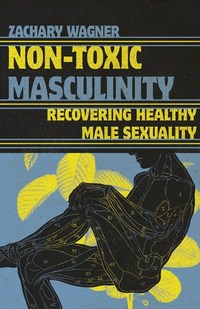
Non-Toxic Masculinity: Recovering Healthy Male Sexuality by Zachary Wagner: A Good Step in the Right Direction

Non-Toxic MasculinityNon-Toxic Masculinity:
Recovering Healthy Male Sexuality

by Zachary Wagner

DETAILS:
Publisher: IVP
Publication Date: April 04, 2023
Format: Paperback
Length: 194 pg.
Read Date: April 23-May 7, 2023


What’s Non-Toxic Masculinity About?

This is one of those books where I could easily go on and on about the arguments and ideas presented within—and I’d like to interact with some of those a bit, too. But this isn’t the place for that—I have to remind myself again—I’ll touch on some of it, but not much.

Wagner starts by reflecting on the Purity Culture that blossomed in the 90s (and since) in Evangelicalism and Conservative Protestantism—and the not-helpful to harmful ways it has impacted the lives of men and women since then. This first part of the book defines the issues and what kind of damage they have wrought.

The next two parts look to define and construct a healthy, i.e., non-toxic mascultinity, based on a Biblical view of masculinity—redeemed masculinity to be precise. After laying out this vision, he suggests ways to implement this vision. Wagner’s idea is rooted in sanctification—not to the exclusion of other areas, but that’s not what this book is about. His view of a sanctified, or at least growing in sanctification, masculinity is not that found in the Purity Culture or some of the works around it, but something greater.

Problems with the Book

I don’t have a lot to quibble with here—my main problem is that I think too much of this book is Zachary Wagner’s story. I think it has its place in this book—and it’s important to see what got him headed down this path of investigation. But I think we got too much about him.

I can easily see other readers disagreeing with me—and perhaps seeing themselves in him and his struggles. At the very least being able to relate to them and appreciating him sharing those struggles—and how he’s come through them. And I do, too. I just think we could use 15-30% less of it.

Similarly, I do wonder if he made the same points too many times in general—maybe accented differently depending on the chapter, but on more than one occasion I wondered “didn’t he already make this point in the last chapter?” Even there, that’s something I wonder with about half the non-fiction works I read anymore, so Wagner’s just fitting in.

An Unexpected Feature

Running throughout the book, but found in a couple of places in particular, is a critique of the more problematic aspects of Every Man’s Battle, the influential work by Stephen Arterburn and Fred Stoeker.

Now, true, the book has become a whipping boy for several authors recently—but I think it’s largely deserved.

Wagner, like me, once swallowed the book and its vision of male sexuality—redeemed or not. But, Wagner argues (convincingly, I’d say) that Every Man’s Battle‘s vision sees all men as permanently adolescent, immature, and lacking any kind of self-control. But if you read Paul, he’s clear that this is not what a mature Christian should be—absolutely, no Christian will reach full maturity in this life—but if you have no more self-control as an adult as you did as a teenager, you’re missing something vital in your spiritual (as well as physical and mental) life.

That’s, of course, a very brief summary of Wagner—his critique is more thorough (and more convincing). Now, is that what I got the book for? No. Did I expect something like that? Also, no. Am I glad Wagner gave it? Yes.

So, what did I think about Non-Toxic Masculinity?

The last chapter, “Death and Resurrection: The Beauty of Redeemed Masculinity,” is a winner. It sums up everything he’s been arguing for in the whole book and then focuses it. Wagner reminds the reader that Christianity is a call to self-denial, self-sacrifice, and dying to self. This includes in the bedroom. If you haven’t been convinced before this point, you likely won’t be by this chapter, but I found the terms he framed in this last chapter in the most convicting. I’d suggest that readers who don’t agree might have missed something. Those chapters leading up to it, are almost as good, too.

Ultimately what Wagner delivers is what I wanted in last year’s How Not to Be an *SS—and then some. So just on those terms, I’m a satisfied reader. But he delivered more than just that—laying out a compelling positive case for a masculinity defined by Scriptural terms, not merely cultural—whether in lock-step with it or in reaction against it.

I can’t—and wouldn’t want to—sign off on every jot and tittle of the work. But it’s far superior to every other thing I’ve read on the subject of what it means to be a man, male sexuality, and ideas of that nature, that I’m tempted to. (although Keith Ronald Gregoire and Andrew Bauman aren’t that far off)

No matter where you fit on the spectrum of those reacting to the purity culture, it’s worth a read. It’s good to consider, and helpful to sharpen your iron.


4 Stars

This post contains an affiliate link. If you purchase from it, I will get a small commission at no additional cost to you. As always, the opinions expressed are my own.

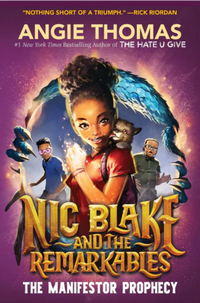
Ten Reasons to NOT Read Nic Blake and the Remarkables: The Manifestor Prophecy by Angie Thomas

The Manifestor ProphecyNic Blake and the Remarkables:
The Manifestor Prophecy

by Angie Thomas

DETAILS:
Series: Nic Blake and the Remarkables, #1
Publisher: Balzer & Bray
Publication Date: April 04, 2023
Format: Hardcover
Length: 351 pg.
Read Date: May 10, 2023


So Here’s the Deal:

I’ve tried to write a favorable post about this book a couple of times now, and I’ve failed. I’ve got to get this back to the Library soon, so I need to get something done. So…here are some bullet points describing why readers should avoid the book.

What’s the Book Jacket Say about The Manifestor Prophecy

I guess, to be fair, we should start with some facts. Here’s what the jacket copy has to say:

It’s not easy being a Remarkable in the Unremarkable world. Some things are cool—like getting a pet hellhound for your twelfth birthday. Others, not so much—like not being trusted to learn magic because you might use it to take revenge on an annoying neighbor.

All Nic Blake wants is to be a powerful Manifestor like her dad. But before she has a chance to convince him to teach her the gift, a series of shocking revelations and terrifying events launch Nic and two friends on a hunt for a powerful magic tool she’s never heard of…to save her father from imprisonment for a crime she refuses to believe he committed.

From internationally bestselling superstar author Angie Thomas comes a wildly inventive, hilarious, and suspenseful new contemporary fantasy trilogy inspired by African American history and folklore, featuring a fierce, irrepressible character who will win your heart.

Reasons to Avoid It

In no particular order, just the way they occurred to me:
bullet As all good Fantasy readers know, there’s a plethora of books (especially for MG audiences) with magic systems largely based on African American myths and folklore. It’s the same old-same old here, give me some WASP-y fantasy!
bullet An MG-book featuring a strong father-daughter connection, however flawed by good intentions and human nature? Bah. Who needs that?
bullet We don’t need a respectful, but still pointed, take on a certain magical boarding school series.
bullet The fact that there’s a way for Muggles, I mean Unremarkables, to access magic on their own is such a bad idea and adds nothing new to the genre.
bullet In many ways, you get the impression (although it might not be the case) that Coogler’s Black Panther influenced this storyline and world. Of all the superhero movies, why this one?
bullet The protagonist and her best friend be prepared for their adventures because of their devoted fandom of a series of fantasy novels. Nerds shouldn’t be action heroes. They should stay in their lane.
bullet “Chosen One post-traumatic stress disorder?” Listen, the notion of a Chosen One is sacrosanct and should be treated that way.
bullet It’s a Middle-Grade book, it shouldn’t acknowledge (but not dwell on) things like issues with the prison system, racism, the Underground Railroad, the Civil Rights Movement, and so on.
bullet Protagonists (and main characters) who make mistakes—serious ones—and have to adjust their behavior are not the examples that Middle-Grade readers need.
bullet Nic Blake finds herself as part of two supportive and encouraging multi-generational communities (who don’t see eye to eye, it should be said) and gets help from both when she needs it. But it’s not just help for her—the communities help each other—largely because it’s needed, not that they get anything in return.
bullet There’s a sense of fun and joy that pervades the entire book, without detracting from the stakes, and that’s such a turn-off.

So, what did I think about The Manifestor Prophecy?

Okay, fine…there are few reasons not to read this book, really. It’s a fun world filled great characters (both minor and major), and I’m ready to read the sequel today (if only so I can have another chance at writing something about the series).


4 Stars

This post contains an affiliate link. If you purchase from it, I will get a small commission at no additional cost to you. As always, the opinions expressed are my own.
Sunbolt by Intisar Khanani: This Will Hit You Like a Bolt of Something


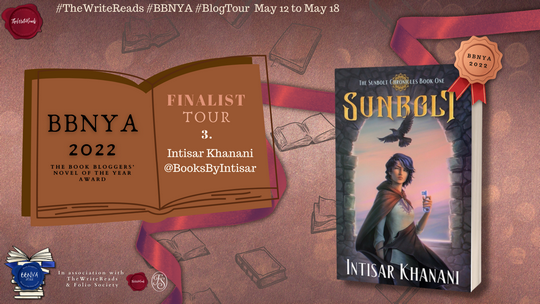
Sunbolt Tour Banner

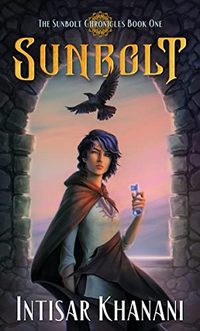
SunboltSunbolt

by Intisar Khanani

DETAILS:
Series: The Sunbolt Chronicles, #1
Publisher: Purple Monkey Press
Publication Date: June 17, 2013
Format: eBook
Length: 152 pg.
Read Date: May 9, 2023

What’s Sunbolt About?

We start with a chase scene through a street market that might as well be scored by Alan Menken (although Jafar or Genie is to be found anywhere in the rest of the book, Hitomi would have no problem with a Jafar). Our protagonist, a thief—and someone of a clearly different ethnicity to everyone around her—is scrappy and nimble, getting away from her pursuers (quasi-official mercenaries) with the help of some of the sellers in the market.

We learn that this brash young woman is named Hitomi and she’s allied (somewhat) with a group calling itself the Shadow League, which is trying to stand up to an increasingly corrupt and oppressive government. The government is backed by the Arch Mage Wilhelm Blackflame (who is just about to be running everything through puppets).

Hitomi and some allies head out one night to save a powerful family from arrest and (likely) execution—and almost everything that could go wrong does. Hitomi and some of the family are captured. And then…well, this book about scrappy freedom fighters becomes something very different.

The World Building

At the beginning of the book, Khanani provides a guide to pronouncing some of the names in the book—I always appreciate that kind of thing (if one was grading, I’d have gotten a low B, incidentally, on my own). In her lead-up to that, she mentions that the fantasy world she’s created and the cultures within it “are primarily based on a variety of real-world historical cultures.” I wish she’d have listed (at least a partial list) of those cultures just for curiosity’s sake. I spent a little too much time wondering what X or Y came from after reading that. (and was very likely wrong 60+% of the time)

But ultimately, it doesn’t matter what those sources were, because she’s made them into something new and fit for her world. And whatever the backgrounds may be, they work really well for this novel—perhaps better than it do in our own. It’s familiar and yet foreign all at once. Khanani doesn’t drown us in details or anything like that (thankfully), but you have the impression that everything has been worked out thoroughly (whether or not it has been) and that this a fully-developed world with a fascinating history and a future worth saving.

We only get a hint of the magic system, but has a lot of promise. The variety of magical races (for lack of a better term) is great, and (again) familiar to a fantasy reader, but specific to Khanani’s world. You can’t help but want to learn more about both the magic system and the races, you get enough to carry you through the novel—but you want more.

So, what did I think about Sunbolt?

Sunbolt is short. Freakishly short for the genre, really. But that brevity works so well for this story. Like a wizard and punctuality, this book is precisely as long as it needed to be. It tells the story it needs to in a satisfying manner and then is done. Yes, it prepares you for the second book in the series, but not in a cliffhanger way.

I wouldn’t have minded if the book was longer if it meant we got to spend more time with the characters—but that’s what a sequel is for, right?

There’s a moment really early on that made me grimace—Khanani over-explained a moment robbing it of its power. And as I so often do, I murmured a silent plea (pointless since the book had been out for a decade) for her to trust her audience. But that was the only time that the book stopped me with something like that—most of the writing was subtle, nuanced, and smooth. I did have to stop a few times to re-read sentences because I liked them so much.

Hitomi—fierce, independent, determined, and over-her-head—is one of those characters you gravitate to immediately and while you know she’s making a blunder here and there, you can’t help but root for her. Sadly for her, her blunders tend to work out better than some of her plans—a treat for her readers, however.

I’m going to avoid a deep dive on the rest of the characters, although I think many of them deserve it. I’m not sure I trust everyone in the Shadow League, but they’re all intriguing characters—and I’d gladly read a Shadow League novel tomorrow to get to know them better. The villains are some of the worst I’ve run across this year, and you can’t complain about that. Then there’s someone who becomes rather important to Hitomi in the closing chapters…I think they could go down as one of my favorites of the year (and easily become someone I despise in a future encounter).

A well-paced story, with strong characters, and a great fantasy world to explore. That’s all the makings of a winner in my book. Sunbolt is a quick, fascinating read that will make you want to click on the order button for the sequel as soon as you finish.


4 Stars

My thanks to The Write Reads for the invitation to participate in this tour and the materials (including the novel) they provided.

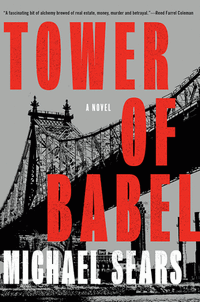
Tower of Babel by Michael Sears: Concrete Jungle Where Dreams Are Made Of

Come back this afternoon for a Q&A with the author, Michael Sears, it’s a good one.

Tower of Babel was published a month ago, and I was trying to get this posted in that first week. I missed significantly, and I wanted to start things off by apologizing to Michael Sears and Wiley Saichek, the publicist that connected me with Sears, for that.


Tower of BabelTower of Babel

by Michael Sears

DETAILS:
Series: Ted Molloy, #1
Publisher: Soho Crime
Publication Date: April 6, 2023
Format: ARC
Length: 394 pg.
Read Date: March 27-29, 2023


What’s Tower of Babel About?

I really don’t like not providing my own synopsis/tease for a novel. But I’m overdue with this post, and a lot of that has to do with stumbling on this section. So I’m going to appropriate it from Soho Press’ site:

Queens, New York—the most diverse place on earth. Native son Ted Molloy knows these streets like the back of his hand. Ted was once a high-powered Manhattan lawyer, but after a spectacular fall from grace, he has found himself back on his home turf, scraping by as a foreclosure profiteer. It’s a grubby business, but a safe one—until Ted’s case sourcer, a mostly reformed small-time conman named Richie Rubiano, turns up murdered shortly after tipping Ted off to an improbably lucrative lead.

With Richie’s widow on his back and shadows of the past popping up at every turn, Ted realizes he’s gotten himself embroiled in a murder investigation. His quest for the truth will take him all over Queens, plunging him into the machinations of greedy developers, mobsters, enraged activists, old litigator foes and old-school New York City operators.

Haaaaave You Met Ted?*

* Sorry, I couldn’t resist. Not that I tried all that hard.

Ted’s a good example of a very familiar type of Crime Fiction protagonist. At one point in the not-too-distant past, he’d been very successful for his age with a bright future ahead of him. Then he hits a personal and professional rough patch, and all that success and future vanishes. He’s now had to recalibrate his life, his legal career in ruins and so begins a new—albeit somewhat related—career, with new routines, a new home, new allies, and so on to restart his life.

Like most of this type, he’s moved on, but not really. He still misses his old life, still laments it, regrets the things that happened (unjustly) to bring down his house of cards, and would go back if he could. He’s given chances over the course of Tower of Babel to revisit that life, to see how green the grass is on that side of the fence, and his response to that really tells the reader more about who he is than anything else in the book can.

In a New York State of Mind

I love when a novel hits me with a great sense of place—and Tower of Babel did that to me. Sears doesn’t spend that much time describing the city or its landmarks or anything like that. But the city permeates everything. Travis Bickle drove the same streets as Mohammad did (and probably in a safer manner). Sherman McCoy struck deals with the same kinds of people. Det. Denny Malone would be known to the detectives on the murder.

This is a novel that has to take place in New York.* I just don’t see it working anywhere else—are there shady real estate deals, corrupt politicians, organized crime, and entities with too much power in Chicago, Miami, L.A., Boston, London, etc.? Absolutely. Do other major cities have teams that have a fanbase as devoted and as constantly disappointed as the Mets? Absolutely (although most of them don’t have to share a city with the Yankees). Ethnic diversity and economic disparity might have different mixes and present in different ways from metropolitan to metropolitan, but they’re there just the same. But I just don’t see how this novel works in Miami or Boston. The organized crime of it all would be different in Chicago. There’s something about shady real estate antics that seems quintessentially NYC (it shouldn’t, but it does).

* Granted, I’m just some dude from Idaho, what do I know?

Any book that transports me so convincingly is worth the time and effort (not that this took much of the latter).

Ted and Jill

Ted is still friends with his ex-wife, Jill. They’re obviously very important to each other and spend a good deal of time together—primarily because of the NY Mets and Ted’s season tickets. I absolutely loved this version of divorced adults interacting with each other (there were no kids involved, which likely helped). Early on, when I wasn’t as sold as I eventually would be on the murder storyline (and was still trying to understand the real estate angle), I put in my notes that I’d have enjoyed the novel more if it was just about them spending time together. By the novel’s end, I’d changed my mind—but I’d still take a novella just about the two of them.

It’s a healthy friendship, supportive and challenging—and just fun. (then again, this is a noir-ish Crime Novel, so I make no promises that the way things start is the way they will end).

So, what did I think about Tower of Babel?

I stumbled a little in the beginning trying to understand the way that Ted’s making his money now and the antics involved in all the real estate transactions (ethical, legal, and otherwise), but that’s primarily because my brain doesn’t do well with that sort of thing. I ultimately gave up trying and just accepted it in the same way I do with Asimov’s worldbuilding or things along those lines. By the end of the novel, I (am pretty sure that) I understood it all because I’d stopped trying to decipher it (I still can’t totally explain psychohistory or Asimov’s take on superluminal flight, for what’s it’s worth). The details are both not as important to the novel as everything else and not as difficult as I was making it.

I can see Sears settling into this character and this world and turning Molloy into a typical scrappy lawyer character in the vein of Mickey Haller or Eddie Flynn. But I don’t think that’s the direction this is going—would I read that version? Absolutely, but I already have Haller, Flynn, et al. It feels to me that this is headed in a more David vs. Corporate Goliaths tack, maybe with some murder, etc. thrown in, sure—but my money is on this series focusing on corporate crimes, and corruption (both political and economic). Either way, I’m in for at least one or two more books—and I expect most readers will feel the same way.

This is not your typical Legal Thriller, and Sears sucks you into the story in ways you won’t expect—actually, I think you’ll end up expecting very little about the story and characters as you go along. But in the end, you’ll realize that just about everything had to go the way it did. I love that feeling of being taken unaware and then seeing that there was no other way for this jigsaw to be put together. It’s so satisfying when you can look at the whole thing (and a great ride along the way).

Crimes you’re not accustomed to reading about—crimes you’re very familiar with—a cast of characters you don’t see every day, and an ethically dubious protagonist (or is he?). Tower of Babel is a great entryway into a series that should garner a fanbase, and you should think about hopping on before the bandwagon builds up too much speed.

Disclaimer: I received this ARC from the author via Wiley Saichek and Saichek Publicity in exchange for this post—while I appreciate that, the opinions expressed are wholly mine.


4 Stars

This post contains an affiliate link. If you purchase from it, I will get a small commission at no additional cost to you. As always, the opinions expressed are my own.
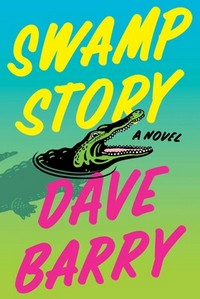
Swamp Story by Dave Barry: Florida. Just say it’s Florida.

Swamp StorySwamp Story

by Dave Barry

DETAILS:
Publisher: Simon & Schuster
Publication Date: May 2, 2023
Format: eARC
Length: 320 pg.
Read Date: April 19-21, 2023


What’s Swamp Story About?

This is hard to summarize, really. Which is part of the beauty of the book.

Most of the characters in this book aren’t what you’d call likable. They’re not really villains or antagonists, they’re just…people you don’t want to spend time with in real life, people with more greed/ambition than common sense (or decency). There are a couple of guys living in a cabin in the Everglades trying to assemble enough footage for a reality show pilot (basically, the good-looking one of the pair walking around shirtless interacting with native wildlife). Their weed dealer owns a failing convenience store/bait shop and has a “so stupid it just might work” plan to put his family’s store on the map. There’s a would-be talent agent (or just anything to ride the coattails of his buddy who happens to make a little money). Oh, and there’s a lawyer and a cabinet secretary/presidential aspirant, too—can’t forget them.

On the villainous side, there’s the weed dealer’s supplier—a former football player who is still large enough to intimidate active linemen who will not tolerate missed deadlines. Two ex-con brothers who are the textbook definition of nasty are also running around. There’s also an Eastern European gangster and some of his employees from the old country who should make everyone quake with fear.

On the likable side, you have the shirtless would-be star’s girlfriend and mother of his child (who really regrets ever giving him the time of day, no matter how pretty he is). The weed dealer’s brother who really needs something to motivate him to do more than play games on his phone, might have found that motivation in her. You’ve also got a couple of aides to the secretary, who really need a better job. An alcoholic ex-reporter desperate to make a buck is just what the weed dealer wants for his idea. I can’t forget either the aging TV reporter desperate to cling to her former relevance or the champion snake hunter.

Put all these characters in a small geographic region, throw in a large amount of buried Confederate gold and a couple of viral videos, shake well, and serve. Swamp Story is the result.

This Book Could’ve Been Shorter

Around the 70% mark (I’m keeping it vague because I don’t know how it’ll go in the final edition), a couple of the characters have an exchange that essentially goes along these lines:

Character A: I hope nothing else happens.
Character B: What else could happen?
Character A: …

and then there’s a map showing the immediate vicinity and some of the major buildings/landmarks of the story, making it very obvious that, based on what we know, all the characters are really near each other and that the likelihood of them running into each other in the very near future is pretty high. The reader will not be able to look at this map and not start imagining how all that running into each other is going to go.

I made a note at this point, that Barry could’ve ended the novel at that point—that exchange, the map, and the reader’s imagination—and it’d have been a fun and satisfying read.

However, odds are, your imagination isn’t as good as Barry’s is (mine sure isn’t), and as zany as I thought things were going to get from this point, the truth was far zanier. His conclusion to the novel (not just the immediate every character and storyline coming together in one spot, but everything that followed) was better than any of the ideas I came up with (and I liked most of my ideas a lot).

Still, there’s part of me that wishes he’d left things with that line and the map. I’d have laughed hard at that.

So, what did I think about Swamp Story?

I really enjoy reading Barry’s novels, and Swamp Story is no exception. It’s a different kind of humor (largely) than Barry’s columns or books, but it’s just as satisfying. I’d want to say that it’s more subtle, but that’s not true at all. There’s more character-based humor, and some of it’s the dialogue—which strikes you differently than the straight humor pieces he’s best known for.

Now, that said, there’s a scene at the beginning—involving a rich child’s birthday party, a couple of costumed performers, and a difficult-to-crack piñata, that absolutely cracked me up and I’ve been replaying it in my head since I read it—it’s perfect slapstick.

Putting aside the humor, all the story arcs worked really well and I can see toned-down versions of all the arcs working well together in a grim version of this story. I’ve argued recently that a good test of a comedic novel is if the plots would work without the laughs—in this case they largely wood. But they’re so much juicer and more enjoyable in this comic and heightened versions.

There are genuine bad guys, some actual threats, several characters in search of a good idea,* and a couple of people you hope catch a lucky break and escape from everything they’re surrounded by relatively intact. Throw in some good laughs, and some clever writing, and you’ve got yourself a fun few hours of reading. That’s likely what the reader looks for in a Dave Barry novel, and that’s what Swamp Story delivers. Strongly recommended.

* Apologies to Pirandello.


4 Stars

Disclaimer: I received this eARC from Simon & Schuster via NetGalley in exchange for this post—thanks to both for this.

This post contains an affiliate link. If you purchase from it, I will get a small commission at no additional cost to you. As always, the opinions expressed are my own.

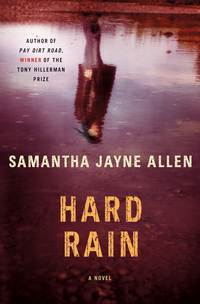
PUB DAY REPOST: Hard Rain by Samantha Jayne Allen: The Rookie PI Might Be in Over Her Head

Hard RainHard Rain

by Samantha Jayne Allen

DETAILS:
Series: Annie McIntyre Mysteries, Volume 2
Publisher: Minotaur Books
Publication Date: April 18, 2023
Format: eARC
Length: 352
Read Date: April 4-7, 2023

What’s Hard Rain About?

It’s been six months since Annie McIntyre solved a murder and began training as a Private Investigator under her grandfather and his partner, Mary-Pat. It doesn’t seem like Annie’s really sure of her current path, but at least it’s a path—hopefully out of Garnett at some point.

A High School classmate—not really a friend, but more than an acquaintance—approaches her with a job. Mary-Pat tells her she’s ready to take the lead on their next case, and is about ready to apply for her license. So, she’s primed and ready—at least she thinks so.

A couple of weeks previously a flash flood had wreaked havoc on the town and the cost in property damage and lives is high. Bethany, however, was saved through the actions of someone that she fears is a victim. But his body was never found. She wants Annie to find either the body or, preferably, the man so she can thank him properly. Not expecting the latter, and equipped with only a vague description, Annie takes the job.

The police have nothing for her, and the local fire and rescue people found no sign of this man—many people think that Bethany imagined him. But Annie keeps looking—searching downstream from the area Bethany had been found in, Annie does find a body. But not of the man she’s been looking for—but a murdered woman. Now Annie has to ask, is her target a killer or a hero?

As Annie investigates, she finds herself in a new layer of crime, corruption, and danger.

The Sense of Place

When talking about the previous book, Pay Dirt Road, I had a few things to say about the city of Garnett’s depiction. I won’t repeat them here—but I really could. I don’t think it’s an issue so much with Allen’s writing, just my ideas about Texas communities. (not that I’d complain if Annie made some mention of the population size)

What I failed to appreciate—or at least write about—was Allen’s depiction of, and description of, the natural environment. Given the storms and flood surrounding this book, it’s hard not to take note of it. Allen nails this material.

I really can see the flood damage, the sky, the geography in general—Allen pairs her vivid imagery with a little bit of wry commentary (frequently, but not always) to really help the reader get a handle on the sights and sounds. I was reminded of Chandler describing L.A. This is not typically the kind of thing I spend a lot of time thinking about when reading a P.I. novel, but I really couldn’t help but do so this time—both because of the nature of Annie’s investigation and because of Allen’s skill at it. Particularly the latter.

The Portrayal of Evangelicals

So, so, so often lately—including in books I really like—evangelicals are brought in as bastions of corruption, hypocrisy, and prejudice. Especially if they happen to belong to a mega-church.

The church that Bethany is part of, that her husband and father-in-law are pastors of, that some of the flood victims belonged to, that her missing man and the murder victim may be tied to, isn’t a mega-church yet, but is well on its way to being one.

Yes, some of the members are tied to criminal activity, unethical activity, and some other hypocritical kinds of things. But by and large the members of the church are honest, faithful, and human. They’re not perfect, but they’re working at it. It’s an honest depiction, and while not necessarily flattering, it’s not vilifying, either. I appreciate that.

Learning the Ropes

I described this series as a friend recently as “a PI version of the Eve Ronin books,” and the more I think about that, the more I like it.

Yes, Goldberg and Allen have very different tones. The tenor and flavor of the books are different—each fitting their setting and authors. But at the core, you have determined young women in settings that aren’t necessarily hospitable toward them, dealing with family issues and learning the ropes of their current professions. They make mistakes that experience would provide, get correction and guidance from their mentors (and their own reactions to their errors), but have good instincts and the drive to improve.

They’re very different series and very different kinds of stories, but I like seeing Eve and Annie as different outworkings of the same idea.

So, what did I think about Hard Rain?

Last year, I said that I’d have been satisfied with Pay Dirt Road as a standalone, but that I’d be in the front of the line for a sequel. I’m glad I came back—this world and this character deserve the time a series affords (I see there’s already a third volume scheduled for next year).

I enjoyed this one more than last year’s—I don’t know that it’s that much better, but Annie being more confident (maybe only by degrees, but it’s there) and the type of story made that possible. If you haven’t read Pay Dirt Road, Hard Rain will work as a stand-alone or as an entry point to the series, but you’d be denying yourself seeing Annie’s growth.

Atmosphere, character (not just the protagonists, but all the supporting characters as well—maybe next year I’ll find/make the time to talk about Annie’s family, for example), and story—Samantha Jayne Allen delivers the goods on all fronts. I heartily recommend Hard Rain to your attention.

Disclaimer: I received this eARC from St. Martin’s Publishing Group via NetGalley in exchange for this post—thanks to both for this.


4 Stars

This post contains an affiliate link. If you purchase from it, I will get a small commission at no additional cost to you. As always, the opinions expressed are my own.

Hard Rain by Samantha Jayne Allen: The Rookie PI Might Be in Over Her Head

Hard RainHard Rain

by Samantha Jayne Allen

DETAILS:
Series: Annie McIntyre Mysteries, Volume 2
Publisher: Minotaur Books
Publication Date: April 18, 2023
Format: eARC
Length: 352
Read Date: April 4-7, 2023

What’s Hard Rain About?

It’s been six months since Annie McIntyre solved a murder and began training as a Private Investigator under her grandfather and his partner, Mary-Pat. It doesn’t seem like Annie’s really sure of her current path, but at least it’s a path—hopefully out of Garnett at some point.

A High School classmate—not really a friend, but more than an acquaintance—approaches her with a job. Mary-Pat tells her she’s ready to take the lead on their next case, and is about ready to apply for her license. So, she’s primed and ready—at least she thinks so.

A couple of weeks previously a flash flood had wreaked havoc on the town and the cost in property damage and lives is high. Bethany, however, was saved through the actions of someone that she fears is a victim. But his body was never found. She wants Annie to find either the body or, preferably, the man so she can thank him properly. Not expecting the latter, and equipped with only a vague description, Annie takes the job.

The police have nothing for her, and the local fire and rescue people found no sign of this man—many people think that Bethany imagined him. But Annie keeps looking—searching downstream from the area Bethany had been found in, Annie does find a body. But not of the man she’s been looking for—but a murdered woman. Now Annie has to ask, is her target a killer or a hero?

As Annie investigates, she finds herself in a new layer of crime, corruption, and danger.

The Sense of Place

When talking about the previous book, Pay Dirt Road, I had a few things to say about the city of Garnett’s depiction. I won’t repeat them here—but I really could. I don’t think it’s an issue so much with Allen’s writing, just my ideas about Texas communities. (not that I’d complain if Annie made some mention of the population size)

What I failed to appreciate—or at least write about—was Allen’s depiction of, and description of, the natural environment. Given the storms and flood surrounding this book, it’s hard not to take note of it. Allen nails this material.

I really can see the flood damage, the sky, the geography in general—Allen pairs her vivid imagery with a little bit of wry commentary (frequently, but not always) to really help the reader get a handle on the sights and sounds. I was reminded of Chandler describing L.A. This is not typically the kind of thing I spend a lot of time thinking about when reading a P.I. novel, but I really couldn’t help but do so this time—both because of the nature of Annie’s investigation and because of Allen’s skill at it. Particularly the latter.

The Portrayal of Evangelicals

So, so, so often lately—including in books I really like—evangelicals are brought in as bastions of corruption, hypocrisy, and prejudice. Especially if they happen to belong to a mega-church.

The church that Bethany is part of, that her husband and father-in-law are pastors of, that some of the flood victims belonged to, that her missing man and the murder victim may be tied to, isn’t a mega-church yet, but is well on its way to being one.

Yes, some of the members are tied to criminal activity, unethical activity, and some other hypocritical kinds of things. But by and large the members of the church are honest, faithful, and human. They’re not perfect, but they’re working at it. It’s an honest depiction, and while not necessarily flattering, it’s not vilifying, either. I appreciate that.

Learning the Ropes

I described this series as a friend recently as “a PI version of the Eve Ronin books,” and the more I think about that, the more I like it.

Yes, Goldberg and Allen have very different tones. The tenor and flavor of the books are different—each fitting their setting and authors. But at the core, you have determined young women in settings that aren’t necessarily hospitable toward them, dealing with family issues and learning the ropes of their current professions. They make mistakes that experience would provide, get correction and guidance from their mentors (and their own reactions to their errors), but have good instincts and the drive to improve.

They’re very different series and very different kinds of stories, but I like seeing Eve and Annie as different outworkings of the same idea.

So, what did I think about Hard Rain?

Last year, I said that I’d have been satisfied with Pay Dirt Road as a standalone, but that I’d be in the front of the line for a sequel. I’m glad I came back—this world and this character deserve the time a series affords (I see there’s already a third volume scheduled for next year).

I enjoyed this one more than last year’s—I don’t know that it’s that much better, but Annie being more confident (maybe only by degrees, but it’s there) and the type of story made that possible. If you haven’t read Pay Dirt Road, Hard Rain will work as a stand-alone or as an entry point to the series, but you’d be denying yourself seeing Annie’s growth.

Atmosphere, character (not just the protagonists, but all the supporting characters as well—maybe next year I’ll find/make the time to talk about Annie’s family, for example), and story—Samantha Jayne Allen delivers the goods on all fronts. I heartily recommend Hard Rain to your attention.

Disclaimer: I received this eARC from St. Martin’s Publishing Group via NetGalley in exchange for this post—thanks to both for this.


4 Stars

This post contains an affiliate link. If you purchase from it, I will get a small commission at no additional cost to you. As always, the opinions expressed are my own.

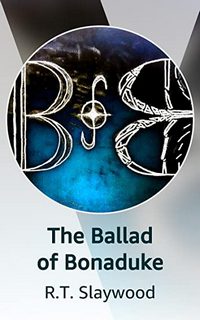
The Ballad of Bonaduke—Episode 20: Room 5 by R. T. Slaywood: Many, Many Things Happen and My Perseverance is Rewarded

The Ballad of BonadukeThe Ballad of Bonaduke—
Episode 20: Room 5

by R.T. Slaywood

DETAILS:
Series: The Ballad of Bonaduke, #19
Format: Kindle Vella Story
Read Date: March 17, 2023

The Story So Far…

A drunken Michael Bonaduke decides to use a grift (with maybe some sort of magic/magic-like “help”) to win on a scratch-off lottery ticket so he has money to buy more to drink. He pulls off whatever he did, gets his money and some booze and stumbles off into the darkness to drink himself into oblivion so he can start again the next day. He’s hit by dark memories (probably what’s driving him to the drinking) of fire, pleading, and screaming. There’s going to be a price to pay for his grift, and he’s trying to be ready.

Before then, he gets himself drunk and we get some of his tragic backstory. As he ponders this, he decides to use some of his ill-gotten-gains to buy more booze and walks into a liquor store robbery. He foils it in some sort of magical fashion, gets some more to drink, and heads off to the park to drink until he’s arrested (probably for the failed robbery). At least that’s his plan, but it gets interrupted by being hit by a car. He wakes up on some sort of short, metal bed and is unsure what’s going on. It turns out that some group is subjecting him to a test—if he passes, everything will be explained to him (and hopefully the reader, too). He passes—and is brought somewhere for answers, or maybe training, or maybe another test. Time will tell (or things are going to get really annoying). Answers aren’t quick to come—but the mysteries and questions keep piling up.

Things get hairy and Bonaduke leaves and finds himself back in the neighborhood he started from. Taking refuge in a homeless encampment, Bonaduke has to make some decisions. He starts to get his thoughts in order when the police begin a raid at the camp. During the raid, he’s apprehended by…well, we need to find out. But first, the interrogation starts.

What’s Room 5 About?

We pick up in the interrogation room Bonaduke was shoved into last time–with questions about the disaster in his home. Stalling for time–and maybe starting to scheme–Bonaduke asks to borrow some water. This gives him the opportunity to start using his grift to get him out of the building.

But that doesn’t go as well as expected, and some sort of supernatural combat ensues–and we get introduced to a very intriguing mystery that might prove to be the most important part of this story.

So, what did I think about Room 5?

The typos in this one really marred things. If you can’t get your protagonist’s name right (repeatedly)…maybe you need to take more time during the revision stage. There’s a word or two that I’m not sure was correct, either–but I wasn’t sure that something spelled much like them would work in context, either. Also, exactly what was going on with Bonaduke’s “grift” would be better–Slaywood clearly enjoys being coy with this–but it feels more obscure and vague than mysterious. But I can get over that.

Slaywood does some interesting things with whitespace in this one to build suspense. At the end of the day, his typing really made me conflicted.

This episode starts off slow, and I was thinking that even if we don’t get much happening, the interrogation is going to be interesting–and I was okay with that. And then…BOOM! Action flows like crazy. I’m not sure exactly what happened (see my last paragraph), but it kept me gripped. This is one of the longer episodes in the series and by far the best. I can’t wait to see what comes next (it’s been a while since I felt that way).


4 Stars

RE-ISSUE DAY REPOST: The Part About the Dragon Was (Mostly) True by Sean Gibson: A Hilarious Fantasy Filled with Adventure and Shenanigans. Definitely Shenanigans.

The Part About the Dragon Was (Mostly) TrueThe Part About the Dragon Was (Mostly) True

by Sean Gibson

DETAILS:
Publisher: The Parliament House
Publication Date: December 10, 2020
Format: Kindle Edition
Length: 358 pg.
Read Date: March 10-12, 2022


I am, if not the most well-known bard in Erithea (yet), arguably the most talented, and unarguably the cleverest. I also wouldn’t quibble if you suggested that I’m the most beautiful, but that’s just because I’m very agreeable (and beautiful)…

Decades ago, I was sworn to secrecy regarding the true story of the great and terrible “Dragonia,” but recent developments have released me from that promise, and so I can finally tell the tale.

A Quick Bit About the Re-issue

You should probably just read what Sean Gibson said over on his website, but I’ll share a snippet:

Bibliophiles the world over know there’s nothing quite like the feel of a hardcover book in your hands, especially when it’s nattily attired in a gorgeously illustrated dust jacket. It’s so much more than a book—it’s an experience. The story pulsating between the covers, a mystical alchemy of ink and imagination exponentially greater than the sum of its parts, guides you on a journey to an infinity of impossible destinations. When you’re reluctantly ready to return to reality, the stolid feel of those very same covers, just one design element of a marvel of engineering that can’t possibly be improved upon, slowly draws you back—changed, bettered, by the experience, somehow made more whole.

With that spirit in mind (or, perhaps, despite that spirit), Parliament House Press has re-issued this novel in hardcover and brought along Mateusz Wisniewski to provide this dazzling new cover. I liked the original cover, but this one is the kind you want on a hardcover.

I’d love to tell you exactly how snazzy this cover looks in person, but for two days now the tracking information says, “The shipping label has been created. Your package will be picked up by the carrier soon. Check back for updates on your delivery, or sign up for notifications.” Woe is me. You should head over to your local bookstore, Bookshop.org, or wherever you get your books and get your hands on this edition* today!

* Or, like me, an annoying and nowhere-near-as-attractive status update.

Enough about that, let’s talk about what’s behind the cover—as great as the cover is, this is the best part:

What’s The Part About the Dragon Was (Mostly) True About?

This is that true story about Dragonia, told alongside the “official” account so the reader can see how the details were adjusted and tweaked to create the story everyone knows.

The town (or village, depending on who you ask) of Skendrick is being terrorized by a dragon—crops are being ruined, trade is disrupted, and the town is about to fall apart. Desperate, they put out a call for adventurers to come and kill the dragon. But they get no takers—so they go to Plan B. The villagers (or townspeople) pool their meager resources to hire a bard. This bard is to compose a song to make the attempt to kill the dragon sound appealing enough—and its treasure (which may or may not actually exist) enticing enough—to get a band of adventurers to come.

This is where Heloise comes in. She takes the gig and soon gets a new and yet unaccomplished band of adventurers to take up the call to action. I don’t want to get into describing the group, you want to meet them in the book.

They encounter difficulties from without and within; nasty, malodorous geography; orcs and other creatures; and, well, the dragon.

Heloise the Bard

“You’re not half as funny as you think you are, as I suspect you have a very high opinion of yourself.”

“My opinion of myself is in direct proportion to my amazingness,” I said sweetly.

The half-elf, Heloise the Bard is our narrator—as you can tell from the quotations above, she has a fairly high opinion of herself and her abilities. She’s also rather impressed with her hair and certain other physical attributes. Probably her greatest skill is self-promotion.

She decides to accompany the adventurers, to chronicle their journey and the outcome of their clash with the dragon. Her wit and quick thinking prove valuable to their effort and her particular set of skills make all the difference.

She is a hoot. It’d be easy for Heloise to be an annoying, over-the-top character, but somehow Gibson keeps her as an entertaining, over-the-top character. I’ve been trying to come up with a character to compare her to, and I’m failing. Maybe she’s the Fantasy version of Evanovich’s Lula, except Heloise has the skills that Lula thinks she has. Maybe she’s the equivalent of High Fidelity‘s Barry. Somewhere in the Venn Diagram featuring Fantasy, Lula, and Barry, I guess.

She appears in a couple of other books by Gibson, and I’m eager to spend some more time with her.

The Humor

The section could easily be merged with the previous one because the humor displayed in the book is primarily Heloise’s. The jokes are pretty much non-stop—even in the middle of fight scenes, or when death is nigh. The danger is still present, and the combat (and so on) is as deadly as it would be in another book—it’s just surrounded by laughs.

It didn’t take me long before I’d highlighted too many lines to quote—not that it stopped me from going on. My notes on this one are ridiculous. I kept chuckling throughout the reading. I probably would’ve finished the book in 2/3 the time, if reacting to the jokes didn’t make me stop reading for a moment.

If you’ve read The Tales of Pell, you’ve got a good idea for the pace of the jokes—and tone of the book, too.

There’s slapstick, there’s scatological humor, a great Meatloaf (the singer) line, some fantastic bursts of alliteration for the sake of a laugh, some general silliness, clever dialogue, and…honestly, I’m having a hard time thinking of a kind of humor that’s not in there. There’s a running gag (that I’ve alluded to) throughout about whether Skendrick is a town or a village—I can’t tell you how often it’s brought up. And the joke works every time—I should’ve gotten sick of it, and I never did. I don’t know how Gibson pulled that off, but that alone is the mark of a fantastic humor writer.

In addition to The Tales of Pell, if you’ve enjoyed Christopher Healy, Dave Barry, K.R.R. Lockhaven, Peter David, Scott Meyer, Joe Zieja, Jim C. Hines’ Jig the Goblin series, or John Scalzi—you’re going to dig the humor here. And if you dig the humor, you’re going to really enjoy the book. It’s that simple.

So, what did I think about The Part About the Dragon Was (Mostly) True?

You know by this point that one of my main goals in telling this story is to show that the adventuring life isn’t all it’s thought to be. It’s mostly boring, frustrating, dangerous (though not excitingly dangerous), smelly (dear gods, so smelly), and not particularly lucrative. Occasionally, however, it’s exactly how the songs make it sound, and in those moments, it’s easy to see why people—even smart, capable people like Nadi—would devote their lives to doing something so irrational. Let the record show that entering a dragon’s lair for the first time is one of those moments, and it’s fair to say that each member of our intrepid band experienced more than a frisson of excitement as we crept across that threshold.

I think it’s pretty clear that I had a blast with this book, but I should probably make that explicit. I had a blast reading this book.

I think I should not that this is not a book to read if you’re in a “find out what happened and get to the end of the story” frame of mind. This is a “enjoy the trip, not the destination”/”stop and smell the roses” kind of book. The destination/what happens is fully satisfying, but the getting-there is so much better.

In addition to the jokes and the dragon, there is a running commentary on what “the adventuring life” is like outside of the glamorous or exciting bits. A lot of fantasy novels will show bits of it, but not enough of them do—and most don’t do it this way. For example, The Part About the Dragon Was (Mostly) True contains more description of various odors than every 99% of the fantasy novels I’ve read by a significant factor. If this were a scratch and sniff book…well, I can’t imagine anyone would stock it—you just don’t want that in your warehouse/store. Sure, it’s silly talking about realism in a book featuring orcs, halflings, elves, etc.—but this factor does ground the book and give it a seriousness (for lack of a better term) that makes this more than a collection of jokes.

This is the funniest book I’ve read in 2022, and I can’t imagine it’ll face much competition. It’s got it all, go get your hands on it.


4 Stars

This post contains an affiliate link. If you purchase from it, I will get a small commission at no additional cost to you. As always, opinions are my own.

Mrs. Covington’s by K.R.R. Lockhaven: Friends, Nachos, Friendly Rodents, and an Utter Absence of Crow Noodle Soup. What More Could You Want?

When I took part in the Cover Reveal for this novel, I warned you that I’d be talking a lot about it (and have lived up to that). I’m putting a big push in today. I’ve got this post about the book as well as a Q&A with K.R.R. Lockhaven coming up about the Kickstarter campaign and the book itself (you really need to check it out. I might have another post about the book to come today, too—but no promises, I’m running into a creative issue. Keep your eyes peeled, though.

Before I blather on a bit, let’s focus on the main thing: to get this book funded.

And now…let me blather:


Mrs. Covington'sMrs. Covington’s

by K.R.R. Lockhaven

DETAILS:
Publisher: Self
Publication Date: TBD
Format: Beta Version
Read Date: March 6-16, 2023
Kickstarter Page

First things first

I read a Beta copy of this—but a late-stage one, I think—so not a lot will have changed between what I read and what you’ll hopefully read. Still, there’s a chance that some things will have improved by the time you get to it.

What’s Mrs. Covington’s About?

This is a cozy fantasy, and as holds true for most of them, the plot could be summarized in a sentence or two. So I’m going to try to do that in a way that leaves some mystery.

Jacob is the son of one of the wealthiest businessmen in the Archipelago*, and is being pressured to join the family business, groomed to take it over, and so on. But he wants his own life. He wants something more than just carrying on his father’s work. Possibly even adventure. A life at sea perhaps?

* Yes, it takes place in the same world as the Azure Archipelago series, but it’s independent of that series and you don’t need to know anything about it to read this.

He’s dissuaded from pursuing that by someone he respects and looks for a new way to establish his own path. While doing so, he stops by a quiet pub in the city he’s visiting for a drink. While there the owner (mostly) jokingly offers to sell him the place. After thinking it over a bit, Jacob does that.

The bar is named for its resident capybara—Mrs. Covington—at sea, the capybara is supposed to bring good luck. She hasn’t seemed to do much for the pub yet, but maybe soon.

The first thing he has to do is find a way to make a profit—he offers the two employees there (a human, Tadrick, and a cigupa, Cora) full partnerships if they help him get this place in shape. Together they come up with a new business plan, redecorate, and start to devise new ways of bringing in customers (not all at once and not necessarily in that order, but I’m trying to summarize). The other thing Jacob does is befriend his neighbor, a widowed faun trying to raise two children and run a restaurant.

These four become friends and start to collaborate in a handful of ways.

When he bought Mrs. Covington’s, Jacob also received the parchment describing a local treasure hunt that belonged to the pub. People have been looking for the treasure for a while, and there’s no reason to think that Jacob and his new friends will have more success than anyone else. But like Wade Watts and his chums, they might as well try, right?

Platonic Relationships FTW

There are plenty of romantic relationships in this book, but none of them are the focus (as much as Cora’s parents try to steal focus with theirs). There’s even a nice past romance and the promise of a potential future one by the end of the book. But the relationships between the core characters are entirely platonic.

I don’t mind romantic stories or arcs—I think they’re a great way to show character, develop character, advance a plot, etc. But a good platonic friendship is one of those things that I admire more and more all the time—particularly between people who’d likely be coupled up in other books.

If the studies and stories I read hold true, friendships between adults are less and less common, and (American, at least) adults are more and more lonely and isolated. So maybe books about good friends are a new form of aspiration/fantasy? We don’t need to read books about swooning over someone we fancy anymore, just stories about falling into deep like?

Whatever lies at the root of it—I liked these friendships. All of them—the mutual support and encouragement in whatever configurations of characters were solid. Mrs. Covington’s sounds like a great place to hang out—maybe if you can’t hang out there with your own friends, reading about others doing it is a handy substitute?

Interludes

Something I should’ve mentioned in my beta feedback are the Interludes.* Three times we walk away from the story to get a glimpse of what’s going on with good old Mrs. Covington.

* Whoops. Sorry, K.R.R.! I’ll make it up to you next time.

These don’t advance the plot, give insight into the other characters, or anything like that—I’m not even sure they give insight into Mrs. Covington, because that would require a level of self-awareness that the rodent doesn’t seem to possess.

They are simply interludes. Nice, short, and quiet breaks from the novel. They’re the literary equivalent of taking a brief break to watch nature videos on Youtube or something. I’m just theorizing here, but it wouldn’t surprise me to find that they’re largely inspired by Lockhaven taking writing breaks to watch capybara videos.

I’m not sure why I used the term “quiet” there, it’s not like I’m talking about an audiobook here, but it fits. I guess it felt to me like there’s a film score playing quietly in the background (except when the band, Bilge Rat, is performing), and then the music dies for these interludes and all you get is crickets in the background or the sound of birds in the distance.

I’ve spent far more time than I originally intended to trying to describe the effect of these breaks. All I meant to say is that they’re an unexpected (unless you just read this) and thoroughly pleasant little addition to this book—and the kind of thing that most authors wouldn’t have thought to throw in.

I doubt that Lockhaven would be able to find enough of a story to justify a novella or novel along these lines. But a collection of scenes/episodes/random days in the life of the titular capybara would be something I’d jump on and probably return to often. Especially if he could get a great illustrator on board.*

* There’s your next Kickstarter, K.R.R. You’re welcome. Maybe this evens the score?

So, what did I think about Mrs. Covington’s?

I joked earlier about the plot being minimal—although it’s true. That’s not to say that the plot is inconsequential or bland. It’s a fun little story–Treasure Hunts have been a tried and true story engine since at least the time when Jason and his pals went on that cruise. And who can’t relate to a group of friends coming together to build something special? There’s enough plot to get your teeth into even while it’s not likely to be what you focus on.

I’ve made it this far and haven’t even talked about the villain of the piece. Ugh. You can tell how much importance I put on him. Think Charles Durning’s Doc Hopper from The Muppet Movie or Chris Cooper’s Tex Richman from The Muppets, or a good number of the men behind the masks in the original Scooby-Doo series. I’m not sure why I’m stuck on examples like them instead of something more highbrow, but that’s the frame of mind I’m in. He’s mean (actually, I don’t think he cares enough to be mean…maybe spiteful?), he’s power- and money-hungry, and doesn’t like anyone not acceding to his whims. He’s perfect for this story—and not that important ultimately. Yes, he’s standing in the friends’ way, so they have to do something—but he’s not as present as other obstacles.

I do have some quibbles about the timing of some of the elements. I think some of the relationships develop too quickly, and I wonder about the timeline for a couple of things. I don’t know if Lockhaven’s able to massage that a bit before the final version comes out, but I do think it needs some tweaking. That said—they’re only quibbles. I liked where every relationship went, how they developed, and so on. And all the events that happen too suddenly for my comfort? I enjoyed them all and understand why he put them where he did. So ultimately, I don’t care if that kind of thing works well because I enjoyed the results. To paraphrase Joel Hogson, “repeat to yourself, “It’s just a book, I should really just relax.”

And it’s easy to relax with this book—because it’s such a pleasant, comfy atmosphere. A treasure hunt with the staff of the friendliest bar this side of Cheers! might be the plot of this cozy fantasy novel. But the book’s core is kindness, community, optimism, and helping. Brought to you in a great fantasy world with a light and engaging voice, Mrs. Covington’s will leave you snug and content.

The book delivers on what it promises—comfort. Warm fuzzies. Kindness. Good times. It’ll brighten your day, and make the world feel like a better place for a bit.

Read it when you can. And pitch in to the Kickstarter before April 13!


4 Stars

This post contains an affiliate link. If you purchase from it, I will get a small commission at no additional cost to you. As always, the opinions expressed are my own.

Page 15 of 88

Powered by WordPress & Theme by Anders Norén