Tag: 4 Stars Page 20 of 88

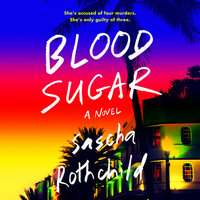
Blood Sugar (Audiobook) by Sascha Rothchild, Allyson Ryan: She Didn’t Kill Her Husband, But…

Blood SugarBlood Sugar

by Sascha Rothchild, Allyson Ryan (Narrator)

DETAILS:
Publisher: Penguin Audio
Publication Date: April 18, 2022
Format: Unabridged Audiobook
Length: 8 hrs., 38 min.
Read Date: August 31-September 1, 2022
Support Independent Bookstores - Visit IndieBound.org


This is one of those books that grabbed my interest and then I immediately forgot about it for months. Thankfully, the library system here had it in their audiobook catalog where I stumbled on it. Knowing what I know about it now, I’m pretty annoyed that I took this long to get to it.

The Hook

The book opens with the protagonist/narrator in a police interrogation room. Ruby Simon is being questioned about her husband’s death. She’s innocent–100% guiltless–it’s clear from the get-go, that she did not murder her husband.

But…there are three other people that Ruby has killed over the last couple of decades. She’s never even been looked at as a suspect in these deaths–they’d previously been judged to be accidental, in fact.

But after death #4, it’s hard to believe that with all this smoke, there might not be a fire.

What Comes After the Hook

The first part of the book focuses on the events in the interrogation room–the detective presses for details on these four deaths, and as Ruby dances around her answers, we get to see her life story in flashbacks. Her childhood (punctuated by a murder), her party days as a teen (punctuated by a murder), her college years and training as a psychologist (punctuated by a murder), and then her falling in love with her husband and beginning their life together (punctuated by his death by natural causes).

The rest of the book focuses on the legal battle that ensues–the investigation that follows, her eventual arrest, the decimation of her career and reputation that results, and the eventual resolution of it all.

Conflicting Impulses

Ruby is a completely horrible person, she’s a murderer–and in two of the three cases, it’s entirely unjustified. The motives behind those two are so…pointless is the best I can come up with. The third murder probably wasn’t necessary, Ruby could’ve found a non-lethal solution to the situation–but you can understand and appreciate why she did it. She deserves to be behind bars (at least), she needs to be tried, convicted, and punished. It’s the right thing.

And yet she’s innocent here. She loved her husband, would never have killed him, and shouldn’t be dragged through the mud over this. The reader/listener constantly finds themselves rooting for this character that in normal circumstances you want to be pursued by a dogged investigator.

It’s similar to Dexter or Hannibal–with them, we embrace their homicidal acts and desires while rooting for them. There’s part of you that wants Dexter to get away with it so he can take down another serial killer. A similar part of you wants Hannibal to slip away from custody because he’s disturbingly charming. But it’s different in Blood Sugar–we have an actual injustice, and we instinctually recoil from that and want her exonerated.

But…you can’t get away from the injustice of her getting away with the other murders.

At the same time, you resent Detective Jackson for doing his job. He’s absolutely wrong about Jason’s death and shouldn’t be in Ruby’s life. But in any other book/series, we’d be rooting for him. He might as well be Harry Bosch or a similar character–he’s got all these pieces before him and is assembling a case that’s 75% correct. He’s doing everything right, and has an actual killer in his sights–and you want him to fail. Not only that, you probably are angry with him and have some active distaste for him.

But if this book was told from his perspective? You’d love him and admire his ingenuity and intuitive leaps.

For a long-time reader of detective fiction, this is a great twist on the conventions.

Ruby’s Antagonist

Someone has to be behind all her problems right? Det. Jackson isn’t going to look into Jason’s death without someone or something prompting him. Once you figure that out–which will probably happen before the actual reveal–it’s delicious. This might be my favorite thing that Rothchild does in this book.

For a book that’s full of confusing impulses for the reader, it’s nice to have an adverse reaction to someone that’s straightforward and uncomplicated.

A Brief Thought about the Narration

Ryan did a great job of this–she made Ruby Simon a human being. Her portrayal helps you identify and embrace Ruby as the innocent–with a shady past. You want to believe her when she says that she’s not a sociopath.

There were a couple of scenes (with one of Ruby’s patients in particular, and some involving Ruby’s dog) where I was moved because of the narration. I don’t know if they’d have been as effective (or affective) if I’d read the book, but with Ryan’s work, I was absolutely gripped.

So, what did I think about Blood Sugar?

I thought this was a great listen–a great experience.

I relished this approach to the story and characters, and the way you were forced time and time again to re-evaluate the characters, their actions, and your reactions to them.

Do I want a steady diet of this? No. Do I hope that a future Rothchild novel is either more conventional–or tweaks conventions in a different way? Absolutely. I can see Rothchild being a Lisa Lutz-type of writer. With stand-alones where you never know what you’re going to get–other than some wry humor, deep characters, and an approach to Crime Fiction that you hadn’t considered before.

I strongly recommend you pick this up in audio or print.


4 Stars

This post contains an affiliate link. If you purchase from it, I will get a small commission at no additional cost to you. As always, the opinions expressed are my own.

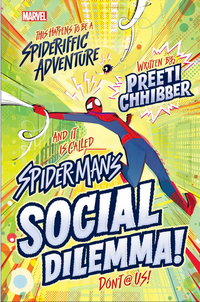
Spider-Man’s Social Dilemma by Preeti Chhibber: A Fun Time with Everyone’s Favorite Webhead

Spider-Man’s Social DilemmaSpider-Man’s Social Dilemma

by Preeti Chhibber

DETAILS:
Publisher: Marvel Press
Publication Date: July 26, 2022
Format: Hardcover
Length: 325 pg.
Read Date: September 6, 2022
Support Independent Bookstores - Visit IndieBound.org

What’s Spider-Man’s Social Dilemma About?

So this is a Peter Parker in High School story—he’s been Spider-Man for 6 months or so, he’s fought some bigger villains, but he’s still got a lot to learn. J. Jonah Jameson is campaigning against him. He’s learning how to balance school and web-slinging. It’s definitely set in 2022, and isn’t in a comic timeline or one from any of the movie universes. It feels a little like the early Ultimate Spider-Man, but MJ is closer to the MCU version.

Sandman and Beetle have attempted to steal a 100+-year-old device that is powered by something alien (or so rumor has it). But both of them are acting a little strangely lately—Peter can’t say what it is exactly, but they’re more violent, more determined. He’s still able to hold his own against them, but it’s a little work.

So, what did I think about Spider-Man’s Social Dilemma?

I really don’t have a lot to say about this—it’s a fun Spider-Man story. And who needs more than that? But let me try…

It’s fun and fast-paced, with good action. Chhibber combined tried-and-true Spider-Foes with a new threat, I appreciate mixing the two rather than just giving us one more ride with the Green Goblin—or someone we’re not at all familiar with. The action scenes are handled deftly and you can see them as clearly as if a Romita or a Bagley were bringing them to life.

Chhibber clearly knows this universe well and has a strong affection for the series—and that shines through. I may not have been able to keep up with the comics over the last decade or so, but Spider-Man has long* been my favorite, and to see him handled like this does my heart good.

* In this case, long = since 1980.

Yeah, this is targeted for an MG audience—but it didn’t feel that way. It felt more All-Ages to me. A classic Spider-Man story—with requisite numbers of laughs, action, and optimism. If Marvel Press has Chhibber return (and the stage is set here for a sequel), I’ll be first in line for this. It was a blast.


4 Stars

This post contains an affiliate link. If you purchase from it, I will get a small commission at no additional cost to you. As always, the opinions expressed are my own.
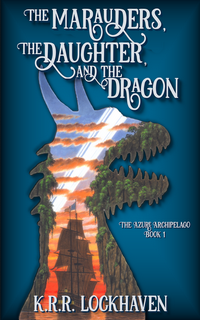
The Marauders, the Daughter, and the Dragon by K.R.R. Lockhaven: Adventure and Second Chances on the High Seas

The Marauders, the Daughter, and the DragonThe Marauders, the Daughter, and the Dragon

by K.R.R. Lockhaven

DETAILS:
Series: The Azure Archipelago, #1
Publisher: Shadow Spark Publishing
Publication Date: August 16, 2022
Format: eARC
Length: 331 pg.
Read Date: August 1-3, 2022

A Couple of Preliminary Matters

I was supposed to post something about this a couple of weeks ago in return for my advanced copy—August 23 was my plan—but I just didn’t like anything I wrote there (and have ended up deleting almost all of it, almost everything here is new today). It was one of those perfect-is-the-enemy-of-done situations. I want to apologize to Lockhaven for that, and stress that you should all do what I did: go buy a copy of this book and enjoy a bit of happiness. Also, go check out the Q&A we did about this book.

I’m still not crazy about this post, but it’s done. So it’s got that going for it. Here it is in a nutshell: this novel is appealing, sweet, and earnestly fun. You should read it.

What’s The Marauders, the Daughter, and the Dragon About?

The League of Islands has a new governor. He came to power by tapping into, and exacerbating, human prejudices against other species—orcs, ciguapas, fauns, and so on. One of those humans, is the co-owner of the Red Dragon Inn, John Brine. John’s daughter, Azure (yes, she’s “The Daughter”) is not a fan of the new governor or his “Human First” policies. Years ago, the two were incredibly close, but things have been increasingly strained for some time, her father deciding to close the Inn to accompany the governor on the ship he’s taking to his inauguration, was the last straw. The two have a major blow-up before he leaves.

Azure regrets things almost immediately and tries to catch him before he leaves. It doesn’t work, so she and her friend/companion/might-as-well-be-sister, Robin (a talking bird summoned from another dimension), finagle their way on board. Azure has to swallow her objections and pretend to be a supporter, so she can stay on board and try to patch things up. While there, Azure becomes convinced that there’s an ulterior motive for this voyage and tries to suss it out. Whatever it is, it’s going to be big and bad for a good portion of the populace of the League.

That doesn’t work and Azure and two non-humans on board are cast off and end up on an island. They encounter a group of quasi-pirates (the “Mauraders) who bring them on board and end up agreeing to help Azure put a stop to whatever the governor is up to.

And, yes, there’s a dragon along the way. But I don’t want to tell you anything about him.

The Daughter

It’s Azure’s status as “the Daughter” that provides the heart for the novel—without it, there wouldn’t be a story. She wouldn’t be the protagonist of anything—she’d have stayed home, working in the Inn. She’d likely have griped about the political situation, but wouldn’t have done anything beyond that.

But she loves her father, and can’t stand to see him taken in by this Governor. So she abandons the inn, pushes down her anxieties, and sallies forth to save her father and hopefully, their relationship.

There are other storylines, other emotional arcs—some you may appreciate more than this one. But none of them happens without this—and the novel doesn’t care about the rest as much as it does this one. It’s also incredibly relatable—sure, not every daughter (or son) who reads this will have that kind of relationship with their father (or mother), but there are very few of us who don’t have some sort of relationship they’ll risk everything for.

The Marauders

I do not know how someone couldn’t like this group. It’s a group of men and women who, for various and sundry reasons, have embraced life on the seas, of swashbuckling their days away (at least until they have to embrace responsibility or parenthood)—they’re not ambitious enough to make a serious effort at transporting passengers or cargo. They like the idea of a life of piracy but aren’t that into all the violence or theft and all that. They like to sail, have adventures, and sit around drinking, telling stories, and singing songs all night. If not for the fact I get seasick just thinking about getting on a boat, it sounds like a great life to me. Oh, and that no one should have to hear me sing.

The camaraderie of this group and the way they embrace Azure and the others is more attractive than their way of life. You can’t help but want a group of people like this to spend your days with.

I should mention their songs. I have little patience for songs/poetry/etc. in the middle of a novel. My brain just turns off when I encounter them, despite years of trying to do otherwise—it doesn’t matter how good they might be, I just can’t do them. But these songs? I actually read most of them on my first attempt. And I enjoyed them.

The Dragon

Yeah, this is too risky to talk about without spoilers. There’s a dragon, it flies around doing dragon-y things.

Comparing Lockhaven’s Works

Comparing this novel to Lockhaven’s previous novel is a classic case of comparing apples to oranges (making Zoth-Avarex’s Escape Plan a Clementine, I guess). The Conjuring of Zoth-Avarex was a comedy with a bit of satire. MD&D, is a humorous fantasy or maybe a light fantasy (last year, Lockhaven described it as “hopepunk” in our Q&A). The former went for as many laughs as it could while telling a story. This tells a story, and throws in a few laughs (or grins or chuckles) along the way. The comedy isn’t the focus, it’s the characters and their journey.

So, what did I think about The Marauders, the Daughter, and the Dragon?

I want to talk more about some of these characters and ideas—Elijah, the talking skeleton; Nargol and Orok, the orc couple; I don’t believe I’ve even heard of ciguapas before, and now I want them everywhere; Roger, the happy and nice crew member on the Governor’s ship—but in the interest of space, and of just getting something completed, I’m going to pass over it. But I assure you that this collection of characters is just fantastic and you’ll want to spend a lot of time with them.

There is a sweetness to this book that you just don’t find very often—particularly in Fantasy. There is that hope implied in the way Lockhaven described it, and an earnestness, a straightforwardness to almost every character and their motivation that fuels this hope and sweetness. It’s worth reading the novel just for this.

That’s also part of the problem—just about everything is too straightforward, there’s almost no nuance, no shades of anything, no complexity. I’m not saying the book or the characters needed to be complicated, obtuse, murky, or compromised, etc. But it leads to the book feeling shallow on occasion.

The magic system is intriguing—and I’m curious to see how it is expressed outside of the circumstances of this book. I don’t often encounter a multiverse in a fantasy novel, and that alone would almost be enough to bring me back.

While reading, I got caught up in the spirit of the book—that doesn’t happen that often—that hope and earnestness seeped into my subconsciousness and affected how I saw the world for a couple of days. I like this book—I heartily recommend it, and the overall impact more than makes up for any shortcomings (real or perceived). I’m eager to see what lies ahead for Azure and the rest.

Disclaimer: I received this eARC from the author in exchange for this post and my honest opinion.


4 Stars

Roses for the Dead by Chris McDonald: McDonald Ends This Trilogy with a Bang

Roses for the DeadRoses for the Dead

by Chris McDonald

DETAILS:
Series: DI Erika Piper, #3
Publisher: Red Dog Press
Publication Date: April 13, 2021
Format: Kindle Edition
Length: 206 pg.
Read Date: August 15, 2022
Support Independent Bookstores - Visit IndieBound.org

What’s Roses for the Dead About?

Seven years ago, Erika Piper is one of the detectives that arrested the rock star, Johnny Mayhem, for beating his wife to death with a baseball bat. It’s not one of those cases that haunts her, they had solid evidence, made a good arrest, and moved on.

But now, new evidence has been made public that casts doubt on that arrest. Enough doubt that Mayhem is released. He’s angry about the last seven years and the way “the real killer” got away with things, so he’s making not very subtle threats against those who were involved in his arrest and conviction—and the man who held onto that evidence until now.

Under the shadow of Mayhem’s release, Piper returns to work after maternity leave—to a nice, safe, and stultifyingly boring desk job. Which she’s going to make work, she’s committed to the idea—she regrets its necessity, but she wants to be a good mother, and she has plenty of evidence that the DI role is dangerous. But on her first day back—the new DCI offers her old DI position. She needs someone with the experience that only Piper has. Just mentioning the offer causes problems at home, her partner, Tom is dead set against it and makes that very clear. Eventually, she agrees—for one case, and then they’ll re-evaluate.

That one case? The death of Mayhem’s drug dealer—the man who held on to the evidence for all those years. There’s evidence at the scene that ties it to the death of Mayhem’s wife, too. Could this be her chance to redeem herself for the work on the original case?

This is the End?

At this point, the series feels lived in—we’re comfortable with all of the characters and this world. If McDonald hadn’t been making so much noise about returning to it lately, this is where I’d be complaining that he jumped off at the wrong time. We needed more time with Piper’s new boss and partner, and that it’d be good to see Piper functioning in a stable environment for a bit (like she was in the beginning of Whispers). But since it looks like he’s at least thinking of #4, I guess I can spare us all that.

So, what did I think about Roses for the Dead?

If I was ranking them, I’d put the second in the series, Whispers in the Dark, a little higher—and not just because of the shocking mid-book scene. But just a little—I’d have preferred a little more time spent with a couple of the threads in this book (and one more proofreading pass). Those are just quibbles, though. This is a gripping story and McDonald got me chasing a couple of red herrings—I was fully committed to one of them until the moment it became impossible.

I thought the conflict over Piper leaving the desk job for the DI role so soon was resolved a little too easily—but I do appreciate the way that McDonald handled it overall. I just wanted it fleshed out a little more, I think.

That’s twice I’ve said something along the same lines in this section—essentially, I guess what I’m saying is that I liked the book, but it was a bit too lean. Several scenes were a bit too brief, conversations could’ve gone on a little longer—especially the arguments over Piper’s work (and too often she and Tom are just repeating themselves). I’m not asking for another 100 pages, but maybe 20? This is the shortest of the three and it felt like it.

I cannot say enough for both the premise of Roses for the Dead and the resolution of that story. McDonald’s take on this idea was fresh enough to make it stand out among other procedurals. Even if it feels impossible to talk about without spoiling just about everything. The pacing is strong, I can’t get enough of these characters, and the investigation was well-executed—everything you want in a police procedural.

I’m glad I finally got to reading these books, and encourage crime readers out there to pick them up, too.


4 Stars
20 Books of Summer

This post contains an affiliate link. If you purchase from it, I will get a small commission at no additional cost to you. As always, the opinions expressed are my own.
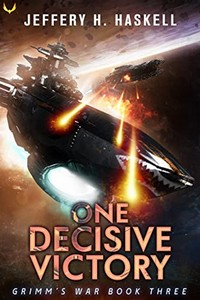
One Decisive Victory by Jeffery H. Haskell: The Trilogy’s Conclusion is Almost Nothing but Action

One Decisive VictoryOne Decisive Victory

by Jeffrey H. Haskell

DETAILS:
Series: Grimm's War, #3
Publisher: Aethon Books
Publication Date: June 21, 2022
Format: Kindle Edition
Length: 416 pg.
Read Date: August 10-12, 2022

What’s One Decisive Victory About?

After the calamitous events at the end of With Grimm Resolve, the Alliance Navy is raring to strike back, but the government has another plan. The last thing they want is another war—they’re still torn over the last one, and they’ll snatch any excuse to avoid the next.

Naval Intelligence’s Admiral DeBeck can’t believe this and can’t stand it. He knows he can’t do anything. But he has a plan that centers on Lt. Commander Jacob Grimm, but Grimm’s going to have to be sacrificed for it to work.

The Caliphate has struck a massive blow to the Alliance and they need to respond or DeBeck (and most of the Navy) is convinced that they’ll be emboldened to attack again and again—until it’s too late for the Alliance to effectively defend itself.

So they’re going to follow through on the plan to dismiss Grimm from the Navy when the Interceptor is taken out of service. Then Grimm is supposed to steal his former ship, head to Caliphate space, free a bunch of their slaves and wreak havoc on the planet that serves as the center of their slave trade. Then he’ll come home and spend the rest of his life in military prison.

It’s a plan so crazy that it just might work. Or it’ll go down in history as one of the dumbest things humans have tried. If it’s the latter, it’s good that only a handful of people will know about it.

Its Place in the Series

I talked about this with the last book, too, but I think I need to touch on it again.

So this is definitely the end of a trilogy—Haskell might have had an idea for a fourth book by this time, but it’s clearly the end of something. Yes, there’s a way for more stories to be told featuring at least some of these characters—I knew that had to be the case going in. But Haskell writes this in a way that you can’t take for granted that anyone is going to survive this book. You can’t guess how successful this mission is going to be until the closing pages.

This is a hallmark and a strength of the series so far—even coming to it when I did, with multiple books released/scheduled to be released, not knowing just how safe any character would be (arguably with the exception of the title character, but I don’t know that you can count on that).

So, what did I think about One Decisive Victory?

Ooh boy, this is about as action-packed as you can ask for. Not that the previous volumes were think-pieces. But One Decisive Victory is able to build on the work already done in establishing the world and doesn’t need a whole lot of new work to set up this novel. Once that little work is done, the brakes come off and it’s all action.

There’s a lot of good character work in the middle of it all—I’d argue it’s the best character work he’s done in the series—but this is about things happening. Grimm and the Interceptor have their work cut out for them and we don’t need to waste time with much else.

The novel was fast, the action was furious, and the story did exactly what you want. I was on the edge of my seat for almost the entire novel and I loved it. I did think the closing pages came close to being cheesy—but Haskell avoided it, and at this point, he’s earned a bit of cheese anyway.

This was a satisfying conclusion to the trilogy, and the fact it’s become a longer-running series is nothing but a positive. Jump on board.


4 Stars

20 Books of Summer

PUB DAY REPOST: Bark to the Future by Spencer Quinn: Bernie Goes Back to High School

Bark to the FutureBark to the Future

by Spencer Quinn

DETAILS:
Series: Chet and Bernie, #13
Publisher: Forge Books
Publication Date: August 8, 2022
Format: eARC
Length: 320 pg.
Read Date: July 25-28, 2022
Support Independent Bookstores - Visit IndieBound.org

Chet the Narrator

For roughly a decade now, Chet has been my favorite first-person narrator (at least among those being currently published). This K-9 school dropout is an engaging and personable narrator who will get the reader emotionally invested and charm you within the first few pages after you meet him. He’s optimistic, generally positive, and his unique perspective will make you chuckle frequently while you read a solid P.I. story.

At the same time, there’s an extra level of attention that needs to be paid to what he says so you can pick up what’s actually going on—Chet’s the best kind of unreliable narrator, he’s not being deceptive, he just doesn’t (and can’t) understand what he’s seeing and hearing. But he’s honest and thorough.

So, what I’m saying is, there’s little chance I’m not going to thoroughly enjoy a new Chet and Bernie novel. So going in, expect me to say nice things.

What’s Bark to the Future About?

Bernie’s approached by a panhandler while stopped at a light on a freeway off-ramp, who recognizes Bernie from high school and refuses to take his money. Life’s been harder on him than Bernie, who can’t recognize him at all. Bernie takes him for a burger, and tries to help him out a little—by this time, he’s identified himself. He’s an old baseball teammate, and the two shared a highlight or two of their careers. After their meal, Rocket Saluka has Bernie drop him off on the off-ramp.

But he’d said a thing or two that Bernie can’t stop thinking about, so he goes back the next morning to follow up. Rocket’s nowhere to be found, but someone else directs Bernie to a camp Rocket was staying at. He’s not there, either—and there’s almost no trace of him. Chet does find his distinctive switchblade buried under Rocket’s tent, however—and now Bernie’s even more curious, and he sets out to find his old teammate.

It turns out that there’s quite the history attached to this switchblade, and most of it was shared by other people who were associated with their high school (including one person Bernie knows but didn’t realize was from the same school). What starts off as a way to deal with some unnecessary guilt becomes a hunt for someone responsible for at least one murder—and hopefully, Rocket.

Weatherly and Trixie

I was a fan of Suzie Sanchez and didn’t like it at all when that relationship fell apart, and I wished for more time with the doctor Bernie dated. But now that Quinn has brought Weatherly into the series, I’m glad that things between them and Bernie ended.

Weatherly’s a great addition to the series period—someone in law enforcement that Bernie can talk shop with (who isn’t a former colleague) and who can pitch in when Bernie needs backup. And their romantic relationship is better than Bernie’s had before—there’s a trust, an honesty that was missing with Suzie. Bernie’s learned from his past mistakes and is making sure that he doesn’t make them again. It’s great to see.

I do feel back for Weatherly’s dog Trixie, Chet’s a jealous boy (we are learning), and he’s not doing well with a female counterpart with similar strengths (maybe stronger in a couple of ways than Chet). Yes, she scores a few wins over our narrator, but his feelings toward her color what we’re told about her, and she doesn’t come out looking so good.

We’ve seen something like this with Shooter, Chet’s son. But it’s a little different with Shooter because there’s a somewhat paternal aspect to Chet’s description of him.

We know that Chet can get along with other dogs—but the extended time with Trixie is showing us another side of his personality. You wouldn’t think you’d get that in a dog character, but it’s good to see that Quinn can give us that.

Bernie’s Notoriety

As he’s visiting fellow alumni and other people associated with the case, several people mention how they’d read/seen something about him because of the events of Of Mutts and Men (although one harkened back to Heart of Barkness. I’m glad that there are people out there who know that Bernie Little is out there, doing good work. Most of the time in PI fiction, you get the idea that outside of those close to a case, no one notices that the PI we’re so heavily invested in does anything of note.

But what’s better to me is that Bernie’s getting recognition for this case—one of the first things we learn about him 12 books ago is that he has very definite opinions about water usage and the local aquifer. From Chet, we get some ideas about other things that Bernie cares about, but from his own mouth, we know that he cares about Charlie, Chet, and water (and now, Weatherly). Of all the cases for him to get good PR for, this is the one that’s going to mean something to Bernie.

So, what did I think about Bark to the Future?

Not surprisingly, I liked it. I really did. We get a little character backstory here, we see Bernie as a good father (and a fumbling one), we see development in his relationship with Weatherly, we see the potential for a (small) income stream for Bernie outside the PI business, and there’s an intriguing mystery or two for our heroes to dig their teeth into (literally, for Chet).

Starting with Of Mutts and Men that Quinn’s found another gear. I can’t put my finger on it—I wish I could—but there’s something about the novels that have stepped up a notch or two. The series is always reliable, but these last few have been better than some of the previous. Bark to the Future continues that streak.

I heartily recommend this to you—if you haven’t tried one from this series before, don’t worry—they’re all good entry points. Jump in now, you’ll be glad you did.

Much like Chet and a Slim Jim, I’ve gulped this one down and am ready for my next one.

Disclaimer: I received this eARC from Macmillan-Tor/Forge via NetGalley in exchange for this post—thanks to both for this.


4 Stars

This post contains an affiliate link. If you purchase from it, I will get a small commission at no additional cost to you. As always, the opinions expressed are my own.
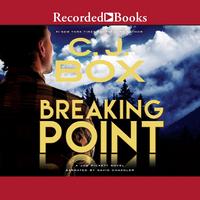
Breaking Point (Audiobook) by C.J. Box, David Chandler: Joe Finds Himself Between Some Rocks and a Hot Place

Breaking PointBreaking Point

by C. J. Box, David Chandler (Narrator)

DETAILS:
Series: Joe Pickett, #13
Publisher: Recorded Books
Publication Date: August 17, 2015
Format: Unabridged Audiobook
Length: 10 hrs., 37 min.
Read Date: July 13-15, 2022
Support Independent Bookstores - Visit IndieBound.org

What’s Breaking Point About?

Acquaintance and father of one of Lucy’s best friends, Butch Roberson, is in trouble—he’s been being harassed by some EPA agents and they’ve turned up dead. Joe was the last person to see him before he became a prime suspect in their murder and a subject of a manhunt. Which, in the perverse way that only bureaucrats can think, gets him in hot water.

Joe’s now tasked with helping some contractors track Butch through the wilderness—he really doesn’t want to do it, and almost quits over it. But the way these guys are acting, Joe figures that he’s the only one who can ensure that Butch is brought in alive and with a shot at a fair trial (especially if he can get him into local custody).

Joe’s been in hazardous wilderness conditions before—regularly, from the reader’s point of view—but I think it’s safe to say that these are the most dangerous he’s been in. And the humans (officially and unofficially) hunting for Butch are just making things worse.

Meanwhile, Marybeth is doing a little investigative work on the side for Joe while helping Butch’s wife and daughter through this time. She even sends up a flare hoping to get some help from Nate Romanowski.

There’s a whole lot of moving pieces in this novel, and hopefully, the Picketts and Robersons come out of things alive.

Federal Agencies

Outside of some FBI Agents (maybe only one), people who work for the Federal Government don’t come across well in these books. And Breaking Point is no exception

I don’t know—and really don’t care—how much of Box’s own politics are reflected in these books, but he does a great job of portraying the attitudes of people in Wyoming and Idaho (not that he does a lot of Idaho work, but there’s some). Federal Agents are inherently suspect and will wield their power to damage the way of life of citizens. Sure, there are exceptions, but on the whole, you can’t trust them to do the right thing.

It’s never comfortable reading these depictions of the Federal Government, but if nothing else, it’s good to be reminded of/exposed to the way hunters/ranchers/etc.out here think of them—and why they do.

The Sub-plots

The new head of Game and Fish, Lisa Greene-Dempsey (LGD) is a more interesting foil for Joe than the previous officious penny-pinchers. She’s trying to reshape the Agency in a way that Joe’s not comfortable with, and she’s clearly playing politics with him/his job. But the way she’s going about it—with good intentions, I think—makes her a better character and gives us more interesting reactions from Joe. It’s always better to have competing good intentions than having one side just out to hurt the other/improve themself alone. The whole arc there is one of the best Joe vs. The System stories Box has given us.

I don’t get the Marybeth story, it fizzled on all fronts for me. If it’s to underline the financial hardships the family has gone through, he’s done it more effectively before. If it’s laying the groundwork for something else, on the other hand, great—but I want to see it soon. Generally, Marybeth’s stories are a highlight of these novels but this one fell flat for me.

While Sheridan had a pivotal part to play here, it sort of seems to me that Box doesn’t know what to do with her anymore (ditto for her sisters, but Sheridan’s always shown the brightest among them, so it seems worse). I really hope he does something interesting with her soon, I’m not sure how long I’d have stuck with the series if not for her early on, and I don’t want to not enjoy her in the future.

That Death…

There’s a significant character death that shocked me—both in the manner, the function in the story, and the fact that it happened at all. Box treated the whole thing perfectly.

I’m not going to get into details, but it was a smart, gutsy move.

How’s the Narration?

Chandler has the characterizations down pat—every time he says something as McLanahan (and how great is it to see how things went for him between Force of Nature and this book?) I want to punch the guy in his nose. Which is more violent than I typically get, but that voice is perfectly grating—a wonderful match for McLanahan’s personality.

He’s great even when he doesn’t irritate me—Chandler has brought this series to life, and continues that work here. Really don’t have much else to say.

So, what did I think about Breaking Point?

There’s a great call-back to Savage Run, reminding the reader just how far Joe’s come, and some of the things he’s pulled off in his career.

Box delivers a great thriller here, as we’re used to—with some important character work for Joe—including a move that’ll change his professional life forever.

It’s the thirteenth book in a series, and it’s really difficult to come up with something to say. The storytelling isn’t getting stale, the characters are developing nicely, the premise of the novel rings true, and Box executes it well. It’s an incredibly consistent series, really—not getting much better (nor does it need to), it’s definitely not getting worse.

There’s not much more to say—if you’ve liked most of the previous twelve novels (like I have), you’ll like this one. If you’re intrigued by the idea of a Game Warden getting involved in criminal investigations while dealing with wilderness adventures, you’ll likely enjoy this one, even without the backstory.

Box knows what he’s doing at this point, and even with my quibbles, I figure he’s going to do something in the future to remove them. Give this one a try.


4 Stars

This post contains an affiliate link. If you purchase from it, I will get a small commission at no additional cost to you. As always, the opinions expressed are my own.

Bark to the Future by Spencer Quinn: Bernie Goes Back to High School

Bark to the FutureBark to the Future

by Spencer Quinn

DETAILS:
Series: Chet and Bernie, #13
Publisher: Forge Books
Publication Date: August 8, 2022
Format: eARC
Length: 320 pg.
Read Date: July 25-28, 2022
Support Independent Bookstores - Visit IndieBound.org

Chet the Narrator

For roughly a decade now, Chet has been my favorite first-person narrator (at least among those being currently published). This K-9 school dropout is an engaging and personable narrator who will get the reader emotionally invested and charm you within the first few pages after you meet him. He’s optimistic, generally positive, and his unique perspective will make you chuckle frequently while you read a solid P.I. story.

At the same time, there’s an extra level of attention that needs to be paid to what he says so you can pick up what’s actually going on—Chet’s the best kind of unreliable narrator, he’s not being deceptive, he just doesn’t (and can’t) understand what he’s seeing and hearing. But he’s honest and thorough.

So, what I’m saying is, there’s little chance I’m not going to thoroughly enjoy a new Chet and Bernie novel. So going in, expect me to say nice things.

What’s Bark to the Future About?

Bernie’s approached by a panhandler while stopped at a light on a freeway off-ramp, who recognizes Bernie from high school and refuses to take his money. Life’s been harder on him than Bernie, who can’t recognize him at all. Bernie takes him for a burger, and tries to help him out a little—by this time, he’s identified himself. He’s an old baseball teammate, and the two shared a highlight or two of their careers. After their meal, Rocket Saluka has Bernie drop him off on the off-ramp.

But he’d said a thing or two that Bernie can’t stop thinking about, so he goes back the next morning to follow up. Rocket’s nowhere to be found, but someone else directs Bernie to a camp Rocket was staying at. He’s not there, either—and there’s almost no trace of him. Chet does find his distinctive switchblade buried under Rocket’s tent, however—and now Bernie’s even more curious, and he sets out to find his old teammate.

It turns out that there’s quite the history attached to this switchblade, and most of it was shared by other people who were associated with their high school (including one person Bernie knows but didn’t realize was from the same school). What starts off as a way to deal with some unnecessary guilt becomes a hunt for someone responsible for at least one murder—and hopefully, Rocket.

Weatherly and Trixie

I was a fan of Suzie Sanchez and didn’t like it at all when that relationship fell apart, and I wished for more time with the doctor Bernie dated. But now that Quinn has brought Weatherly into the series, I’m glad that things between them and Bernie ended.

Weatherly’s a great addition to the series period—someone in law enforcement that Bernie can talk shop with (who isn’t a former colleague) and who can pitch in when Bernie needs backup. And their romantic relationship is better than Bernie’s had before—there’s a trust, an honesty that was missing with Suzie. Bernie’s learned from his past mistakes and is making sure that he doesn’t make them again. It’s great to see.

I do feel back for Weatherly’s dog Trixie, Chet’s a jealous boy (we are learning), and he’s not doing well with a female counterpart with similar strengths (maybe stronger in a couple of ways than Chet). Yes, she scores a few wins over our narrator, but his feelings toward her color what we’re told about her, and she doesn’t come out looking so good.

We’ve seen something like this with Shooter, Chet’s son. But it’s a little different with Shooter because there’s a somewhat paternal aspect to Chet’s description of him.

We know that Chet can get along with other dogs—but the extended time with Trixie is showing us another side of his personality. You wouldn’t think you’d get that in a dog character, but it’s good to see that Quinn can give us that.

Bernie’s Notoriety

As he’s visiting fellow alumni and other people associated with the case, several people mention how they’d read/seen something about him because of the events of Of Mutts and Men (although one harkened back to Heart of Barkness. I’m glad that there are people out there who know that Bernie Little is out there, doing good work. Most of the time in PI fiction, you get the idea that outside of those close to a case, no one notices that the PI we’re so heavily invested in does anything of note.

But what’s better to me is that Bernie’s getting recognition for this case—one of the first things we learn about him 12 books ago is that he has very definite opinions about water usage and the local aquifer. From Chet, we get some ideas about other things that Bernie cares about, but from his own mouth, we know that he cares about Charlie, Chet, and water (and now, Weatherly). Of all the cases for him to get good PR for, this is the one that’s going to mean something to Bernie.

So, what did I think about Bark to the Future?

Not surprisingly, I liked it. I really did. We get a little character backstory here, we see Bernie as a good father (and a fumbling one), we see development in his relationship with Weatherly, we see the potential for a (small) income stream for Bernie outside the PI business, and there’s an intriguing mystery or two for our heroes to dig their teeth into (literally, for Chet).

Starting with Of Mutts and Men that Quinn’s found another gear. I can’t put my finger on it—I wish I could—but there’s something about the novels that have stepped up a notch or two. The series is always reliable, but these last few have been better than some of the previous. Bark to the Future continues that streak.

I heartily recommend this to you—if you haven’t tried one from this series before, don’t worry—they’re all good entry points. Jump in now, you’ll be glad you did.

Much like Chet and a Slim Jim, I’ve gulped this one down and am ready for my next one.

Disclaimer: I received this eARC from Macmillan-Tor/Forge via NetGalley in exchange for this post—thanks to both for this.


4 Stars

This post contains an affiliate link. If you purchase from it, I will get a small commission at no additional cost to you. As always, the opinions expressed are my own.

The Deepest Grave by Harry Bingham: Shotguns and vellum. Churches and saints.

Self-Published Authors Appreciation Week

The Deepest GraveThe Deepest Grave

by Harry Bingham

DETAILS:
Series: Fiona Griffiths, #6
Publisher: Sheep Street Books
Publication Date: June 14, 2017
Format: Kindle Edition
Length: 488 pg.
Read Date: July 22-25, 2022

‘Suspicious circumstances, sir? I mean, what? An open window, something missing, that kind of thing?’

‘Well, I don’t know about the windows. That part hasn’t been reported to me. But the uniformed officer currently attending the scene did say that this woman appears to have been beheaded. I daresay there’ll need to be some further forensic work needed before we can be certain, but it appears that the weapon of choice was an antique broadsword. It’s obviously early days, but I’m going to stick my neck out and say that no, Gaynor Charteris probably did not slip on any stairs.’

What’s The Deepest Grave About?

It’s been 453 days since Fiona’s investigated anything to do with a murder, and she’s getting impatient for something interesting to do. She’s aware that’s a lousy way for a police detective to think, and really can’t find it in herself to care. The crime scene she’s sent to (along with a new DI who is going to make life difficult for her—and she’ll repay in kind) will likely make up for that. I’ll quickly note that this opening scene just might be the most entertaining opening in the series—and definitely one of the more entertaining I’ve read this year.

You don’t get much more interesting in the 21st century than finding a woman decapitated with three spearpoints thrust into her heart. It makes a bit more sense when they learn their victim is an archeologist and professor, specializing in ancient Wales—but only a little bit.

Her new DI wants to focus on “highly disturbed” locals, but Fiona knows that’s wasted time (she wastes it on command, but still). She finds some other crimes in nearby jurisdictions that involve the thefts of largely (monetarily) worthless historical artifacts and documents from about the same era as the dig that their victim was working. Fi doesn’t understand the link or ultimate target of the criminals, but she’s convinced there’s a link. Interrupting an armed individual in the midst of a similar crime only hardens her view.

Her DI isn’t yet convinced but gives her enough rope to hang herself.

And, well, what ensues is both unlike much of what you’ve read before yet exactly what you should expect from a Fiona Griffiths case.

Arthur

One thing that frequently bothers me when I read Crime Fiction is when a significant scientific breakthrough happens—like when Gideon Oliver is part of the discovery of something that alters the foundations of anthropology when Joe Pickett discovers a species hasn’t gone extinct after all, or when Robert Langdon does whatever it is that he does to get to the “real history” of something. When Fiona started messing around with Welsh burial sites and people digging around the legend of Arthur, well, that made me nervous.

However, what Bingham does with this setup is ingenious—we get all the research and history surrounding the legend that the above authors (and others) give. But the book isn’t about Arthur, it’s about looking into him, the artifacts surrounding him—and most importantly, those who are doing the research*.

* This group includes a vicar who is a simply delightful character. A better or more thorough blogger (or just one with better time management skills) would spend some time describing him. I’m going to pretend that I don’t so that you get all the joy of disCovery yourself. I’ll just say that he starts off being a kick and gets better.

A Different Encounter with Death

Was there a moment? I always wonder that. Is there ever an exact moment of death? One microsecond you’re there, the next you’re definitely not? People, even doctors, always talk as though that partition exists, but personally I doubt it. I suspect that death creeps over us more gradually than that: an ever- dimming sunset, not a sudden rush into night.

Readers of this series know that Fi has…an interesting perspective on death. This leads to a strange attachment that she develops to the murder victims in her cases. While investigating this particular murder, she befriends a woman with a degenerative and likely terminal illness.

Fiona reacts to this in a way that probably deserves a few paragraphs of analysis from better writers. It felt genuine and troubling—maybe frightening. Which led to some rewarding reflection on Fi’s part. In turn, this resulted in some choices on her part that show that Fi’s desire to be part of Planet Normal is within reach. It’s some of the best character development we’ve seen from her for a while.

The Author’s Note

There’s a great, great note after the novel about things like choosing to center so much of this on Arthur as well as describing the kind of mystery novel that Bingham is writing, and what kind of character Fi is, compared to others in the genre over the last century or so.

For those looking to really dig into the character of Fiona Griffiths, this is something you need to read (even if it’s the kind of thing you tend to skip).

So, what did I think about The Deepest Grave?

In addition to the main story, we get some resolution (some that is encouraging, some that isn’t) about some old cases and people throughout this book. Some of Fi’s relationships are changing and she’s changing with them.

This is both a very clever crime and the way that Fiona counters it is equally clever. There’s nothing about this part of the novel that I didn’t like (although there was one red herring that I’d have preferred some more resolution). When Bingham’s on his game, he’s really on it—and this book shows it.

It’s been a few years since this came out, which makes me worry that we’re not going to see another entry in the series—despite what the material at the end of the book suggests. If so, this is a fitting way to see the series end and it will go out on a high note. If Bingham returns to these, I’ll be more than ready—I’m not prepared to say goodbye to Fi just yet if I don’t have to.


4 Stars

20 Books of Summer

Whispers in the Dark by Chris McDonald: Is DI Piper a Match for this Cunning Killer?

Whispers in the DarkWhispers in the Dark

by Chris McDonald

DETAILS:
Series: DI Erika Piper, #2
Publisher: Red Dog Press
Publication Date: November 14, 2020
Format: eBook
Length: 311 pg.
Read Date: July 20, 2022
Support Independent Bookstores - Visit IndieBound.org

What’s Whispers in the Dark About?

DI Piper is pulled away from her partner Liam’s wedding reception to take over at the scene of a murder. A good friend of her DCI is one of the victims. DCI Clive Burston and a drug dealer have been shot and killed. The way it looks, if a gun had been recovered at the scene, she’d have concluded that Burston shot the dealer and then himself. But clearly, that can’t be the case.

Then another pair of bodies shows up—it also consists of a member of the same gang as the dealer and someone who has no connection to him—or crime at all.

Just what is going on? And how is she supposed to stop it?

DI Erika Piper

Piper’s still dealing with the trauma—physically and psychologically—from the events prior to A Wash of Black—and she’s picked up a little more on the psychological side. But she’s clearly in a better place than she was when we met her. There’s a confidence to her that wasn’t there in the last book—you can see it in both her interactions with her colleagues and the way she goes about the investigation. She’s not trying to prove that she’s ready to work anymore.

She still has work to do—no doubt about that—but she’s on the right path, and it’s nice to see McDonald showing that. It’s some subtle work and well done.

Now, how the events of this novel will set her up for whatever book 3 throws at her, I don’t know. I’m looking forward to seeing how she deals with it.

So, what did I think about Whispers in the Dark?

McDonald gives Erika and Liam some strong moments—individually and together—outside the case, and I was taken aback by how invested I was in these characters before the halfway point of their second book! There were some sweet moments, and a couple that got me a little misty (for both “positive” and “negative” reasons)—I was impressed at how efficiently he was at some of those, just two or three sentences that hit the emotions just right. And then there’s the scene that made me say things about McDonald that I should probably apologize to him for.

If he’s that good with the subplots, of course he’s going to nail the main story. This is a classic mystery—the killer, the motive, how the detective figures it out, how the killer comes into contact with the victims—it’s all tried and true, and McDonald delivers it well. But how the killer does it? I don’t think I’ve seen that before (eh, maybe something like it—but not as effectively portrayed). It’s a very clever take on this story. The personal stories and the way Piper and the others go through the investigation—the ups, downs, and the unexpected—that’s what separates these books from the rest.

It occurs to me, that if you removed the names and the personal subplots, and just told me the plot of this novel, I’d think you were describing one of Noelle Holten’s DC Maggie Jamieson. The twisty sort of mix of technology, motive, and execution behind the crimes fits in Maggie’s world as well as in Erika’s. Fans of one should definitely check out the other—although A Wash of Black wouldn’t have worked as well as a Maggie Jamieson book, so I’m not saying the two series are in lockstep—just that two of my recent favorites have some overlap.

Top-notch writing—there’s a couple of scenes that are so well described I feel like I was in the room with them—a great mystery, and some characters that’ll become favorites. Get your hands on this series, reader.


4 Stars
20 Books of Summer

This post contains an affiliate link. If you purchase from it, I will get a small commission at no additional cost to you. As always, opinions are my own.

Page 20 of 88

Powered by WordPress & Theme by Anders Norén