Author: HCNewton Page 149 of 609

LITERARY LOCALS: A Q&A About Writing in Idaho with Justin Reed

Literary Locals logo
I met Justin Reed at the Treasure Valley Indie Book Fair back in March and am really glad we’ve finally gotten our ducks in a row to be able to bring you this Q&A. By a strange stroke of coincidence, I should be starting his book today. So you’ll be hearing more about him soon. But for now, let’s introduce him.


Before we get into things, why don’t you give the reader a brief introduction to you and your work.
My name is Justin Reed. I live in Boise, and I am an author, publisher, consultant, software engineer, and investor. I have published one novel—However Long the Day—a historical adventure set in 1918 NYC about two young men who switch places for a day and nothing goes to plan (think The Prince and the Pauper meets A Tree Grows in Brooklyn). People can find me at justinreedwrites.com, and on Instagram (@justinreedwrites), Facebook (@JustinReedWritesNovels), and LinkedIn (@justinreedwrites). People can buy a hardcover copy of However Long the Day at Rediscovered Books in Boise and/or Caldwell; from my website (in which case I’ll personalize the inscription); and at online book retails (bookshop.org, B&N, and The Great Smiling Beast). You can also borrow a copy from most of the libraries in the Treasure Valley (though they share a few copies, so you might have to put a hold on it). The ebook is available here, and can also be borrowed from Treasure Valley libraries (any of the Lynx libraries, I believe). And you can listen to the audiobook on Audible, Apple Books, B&N, libro.fm, and on Overdrive (if you have a local library card).

Are you a native Idahoan? What is it about Idaho that keeps you here?
I am a native Idahoan, born and raised in Boise. I went to Capital High School, and graduated from Boise State University with a Computer Science degree. Beauty, freedom, and family keep my Idaho.

Are you tied into some sort of local author/bookish group/culture? If so, tell us about it and how it helps you as an author.
I run a writers workshop of sorts at the Lake Hazel branch of the Ada Community Library. I call it Group Therapy for Writers, and it gives us attendees an opportunity to support each other in our writing goals. It’s nice to talk about the writing process with others who care about the process of turning thoughts into words on the page, and words on the page into something compelling to read.

First, that’s a great name. Have others in your group gone down the publishing road yet, and have they been able to help you through it—or are you the group’s guinea pig?
It’s a great group. We’re a mix of folks who have published and those who haven’t. Everyone in the group is experimenting with their style, genre, etc., hence the need for outside perspective. We’re taking a break for the summer but plan to start back up in September.

What kind of events in the area do you attend—either to sell/promote your books or to network with authors? Are there any outside of this area that you hit regularly and wish we had something like it here?
I’ve attended the Indie Book Faire at the Nampa Public Library, and I’ve attended several events at both the Boise and Caldwell Rediscovered Books locations. I would enjoy attending more events like these, as well as other author get-togethers.

What’s the breakdown of your audience—do you have a strong local base, or are your readers from other parts of the world?
However Long the Day is my debut, so I’m still in the audience building phase. My focus is older teens and adults of all ages. Most of my readers are here in Idaho.

Do you have a plan on expanding that audience? Or are you in more of a “see what works” phase of life?
I am definitely more in the see what works phase in which I try a bunch of ways to grow my audience. As you might expect, most of these come to a deadend, but I’m certainly learning a lot in the process.

Do you think there are particular challenges or advantages to being a writer in the Treasure Valley? (possibly both)
Boise is geographically isolated, which is both a blessing and a curse. I would love to more easily visit other metros and talk books (including mine), but that isn’t as easy in the Treasure Valley as it is in other places. However, the isolation is part of what makes our town—and the rest of Idaho—such a great place to live. I’m not very connected to the writing culture here in the Treasure Valley, but I suspect that is more because of my introverted nature than anything. I suppose we all have the chance to build the writing community if we take it.

Do you bring Idaho (or some sort of Idaho-sensibility, assuming one exists) to your work? Whether or not anyone else sees it, can you look at some aspect of your writing and think “That’s Idaho” or “I would do ____ differently if I was a Kentuckian or from Illinois?”
The first novel was set in Idaho during the earliest part of our existence as a US territory (1864 gold rush era), so in that regard I bring Idaho into my work. Unfortunately, that novel hasn’t been published yet because I just can’t get it right. Even so, I bring my Idaho sensibilities into all my writing, both published and unpublished. I try to mute my voice as much as possible and let my characters speak for themselves, but complete silence is an impossible objective.

Thanks for your time and participation! Hope you enjoyed it!


Literary Locals logo

Some Questions About Cover Art With…Elizabeth Peiró and Shannon Knight

After Shannon Knight sent in that great Guest Post about the cover of her book Grave Cold, she asked if I’d be interested in doing a Q&A with her and one of her cover artists. The next thing I knew, I was in the middle of a conversation (or whatever you call it when you’re all interacting on a Google Doc) with Shannon and Elizabeth Peiró.

We end up talking about being a cover artist, hiring and working with one, AI, and more—with an eye to the snazzy cover to Wish Givers, the cover that Eli provided for Shannon’s upcoming re-release.

I typically call these posts “A Few Quick Questions”—but we leave “Few” and “Quick” in the rearview mirror. So I’m going with “Some” (because that’s as creative as I am today).


Wish Givers Wrap Around Cover
Shannon’s introduced herself to my readers already, so Eli, why don’t you give my readers a quick introduction to you and your work—including whatever titles, websites, links, etc. you’re in the mood to share
Hello, everyone! My name is Elizabeth, but I go by Eli for short. I’m a freelance artist from Spain working for different sorts of clients, from publishing to card games, tabletop RPGs, and briefly video games. I would describe my work as realistic fantasy, as it is the genre I mostly gravitate towards, and the things I like to focus on are storytelling with bold colors and light. You can check out my portfolio on my web page, Elizabethpeiro.com, and on Instagram and Twitter as @Elizabethpeiro. All my contact info is easy to find in any of those places.

Eli, how does someone get into the freelance cover design business (obviously that’s vague, so speak of your own experience—but if you can comment on what others have done, feel free)? I don’t imagine you just hang your shingle out there (virtual or otherwise) and start getting clients.
Getting in, at least to the point where it is sustainable, economically speaking, is hard, I’m not going to lie. It is not only about the skill level in terms of technique or speed (which is quite important; the faster you are, the better pay per hour you get), but also building a client list that keeps you busy all year long. I’ve only been working full-time as a freelancer since 2021. Before that, I had a non-art-related part-time job. That gave me a stable income while I kept improving and working for both private clients and publishers. When I saw things were going pretty well with art, I gave it a try at working as an artist full time and took a year off. Luckily, I haven’t stopped since. In my personal case, some years ago I painted a fan art of Vin, the main character from Brandon Sanderson’s trilogy Mistborn. That caught the attention of some small publishers and authors because it was highly shared in the fantasy literature community. My following grew, and, with time, more people found my work through that piece (and some others). So, many of my clients have found me, not the other way around. Like a lot of things in life, it is about being in the right place at the right time. You can’t have control over that, but you can keep sharing your work and improving to be prepared when the opportunity happens. As a freelancer, having a social media presence is important, but the numbers are not everything; getting to the right people is. Using hashtags, knowing your potential clients, and promoting your work in their circles—like in some subreddits, where you can find a different audience who might need an artist and don’t know where to look for one, or pages to offer your services like Reedsy. There are illustration agencies, cold emailing to publishers… Looking for work is a job in itself! There is a lot of rejection and ghosting, so you have to build a tough skin, but clients eventually show up if you are persistent.

Shannon, how did you set out to find an artist, and how did you come across Eli? Can you remember what it was about her work that made you interested?
I admired and followed Eli’s art long before I was in a position to choose my own cover artist. As a lifestyle choice, I enjoy following artists on social media.

In search of cover artists, I ramped up my art searches on Twitter. Artists share their own work and each others’ work there a lot, so it’s easy to dive into a lot of genre artwork.

Maybe years ago–I don’t remember when–the first work I saw by Eli was a piece called Strength of Ten, which depicts a woman hauling a Viking ship through ice and snow. I love so much about that painting: the colors, the lighting, the angles, the storytelling, the expression. Women in fantasy art have a long history of being depicted as sex objects. The woman in this painting is powerful and distinctive. She’s performing an amazing feat, straining her body. So many choices in this painting are commercially brave and interesting to me. I’ve watched Eli as an artist ever since I first saw that painting. [I just went to check out Strength of Ten, I can absolutely see why that would grab your attention]

For my Wish Givers cover, I needed an artist who painted skin tones that were not just white people. I’ve noticed many artists have a limited number of body types or skin tones they work with. Eli’s portfolio showed her skill there. I also wanted color, such as two different light sources with different colors, and Eli does that so well. Finally, I wanted a bold expression on my protagonist’s face rather than a neutral one. I know that’s hard, but once again, Eli’s portfolio proves her skills there.

The next step was to check her interest, availability, and prices to learn if we might be able to work together.

Eli, do you have any advice for those looking for an artist that Shannon didn’t mention? Obviously, the short answer is hiring you. But let’s pretend you can’t take on a client, what should they do?
Each project has different needs, and because of all the reasons Shannon listed, I was the right fit for her cover. She already knew what she wanted when she contacted me, so my advice to anyone who’s looking for an artist is to spend time thinking about what it is that they need their cover to convey, what style fits their story, and what will catch their audience’s attention the most. It’s not about your knowledge of art; you are hiring someone who’s a professional, who will bring your ideas to life, and who will help you make up your mind about what route you could take. But before any of that can happen, you need to be sure you are contacting someone who can do the kind of work you need. Also, having an idea of the timeframe and budget you have is ideal when you start your search. As for WHERE to start looking, places like ArtStation, Twitter, Instagram (well, any social media – Tumblr, LinkedIn, Reedsy…) or through hashtags- #Portfolioday, #Visiblewomen #DrawingWhileBlack… also Mari Naomi’s databases for POC, Queer or Disabled artists (to name one, there must be more out there). Those are also great places to find not only someone with the style you are looking for, but also people with sensibilities or knowledge about what you want.

Shannon, you’ve talked before to me about “standard fantasy cover expectations” and YA characteristics. how do you describe that kind of thing to Eli (or anyone) to make sure you’re on the same page?
You know, that’s an interesting question, H.C. It never even occurred to me to explain that to my cover artists. I assumed they would be even more deeply aware of conventions than I am. Also, I chose artists whose usual style matches the conventions I’m seeking.

Regarding expectations with Eli, I included a long description of what I had in mind for the cover, accompanied by reference images for each component. At the end of all that, I gave her a numbered list of my priorities for the artwork. Let me dig through my emails. Here it is:

My cover image priorities:
1) eye-catching image that makes a prospective reader stop and look
2) immediately identifiable as adult fantasy fiction
3) dark fantasy mood
4) Polynesian looking character
5) your specialties: color, light, character expression

Eli, any follow-ups to that? Any additional advice?
It’s pretty much what I said in the previous question: know what you want and analyze if that artist’s portfolio shows what you need.

Communication is so important from the beginning; artists know how to handle clients, how to turn ideas into images, and we know what we are doing. But for the process to be smooth, both parties need to be on the same page. If you are not sure about something, just ask (either if you are the artist or the client).

Shannon made her points very clear. She even had the references and made a rough sketch of her idea (which is not a must, but the more you provide to help the artist understand what you need, the better). On my side, I always want to be transparent from the beginning about the way I work, the process (I shared with Shannon the process of other cover pieces I’d done in the past), my schedule (because I work on various projects at the same time).

When pitching ideas, do you literally show existing covers by others and say “like this one, but without X” or “something that feels like/has the same vibe as this”? Or do you leave other peoples’ work out of the conversation?
Shannon: For Wish Givers, my cover design depended on the artist. When I considered different artists, I was considering different cover designs that matched their special skills. For Eli, I also had the mistaken expectation that I needed to arrive with a design, which I sketched (poorly) and accompanied with clarifying photos for each of the design elements.

Eli has been out-of-this-world from day one. She has continually offered and done more than I’ve expected on every level. Regarding design, she accepted my design and returned it to me in her style along with two other designs that matched the scene described. I got to look at three sketches by Eli and choose between them.

However, I do have a link to what you were asking about. The cover of Wish Givers includes ghosts. I didn’t know how to best handle them. When I was describing my ideas and possibilities, I included some existing paintings. One was a book cover from the 90s by Keith Parkinson for The Scions of Shannara [I remember that cover from when it came out in High School]. It has a stream of ghostly figures. Another was an ancestor painting by a Hawaiian artist called LeoHone with ghosts alongside their descendants. She’s painted a whole series of these, which are really cool–check them out! I also included a photo of an actor playing Maui standing in a dense mist. I wanted Eli to understand that I really didn’t have a set image in mind for how to handle this aspect of the painting, but I also felt I should share my general ideas. Then she could take it from there.

Eli: I always offer at least two options, even if, like in this case, Shannon already had a strong idea of what she wanted. It is a good way to see if that’s really the way to go, or to refine that initial concept with bits from the others. Each client and project is different; sometimes you have a lot of freedom, and sometimes there’s not so much room to explore. Neither is good nor bad, but it is always a team effort.

Shannon has talked about the ghosts, and they were the tricky point. The cover had to say “fantasy,” not “horror”. The character was the center point, but there were these big, human-size shapes above her, surrounding her, taking up a lot of space. So it was really challenging to make it all work out, and I thank Shannon for her patience with all the changes I made to them.

Something to have in mind as an artist as well is to keep it all under budget; that’s why the ghosts are more similar to The Scions of Shannara cover than to the LeoHone ones. Keeping them simple makes the cover work equally well (and even helps to keep the focus on Reva, the main character), and the price stays within her budget.

Shannon: Yes, when I shared the example paintings with Eli, I mentioned that as beautiful as the LeoHone style was, I didn’t think it would be within my budget for Eli to paint the cover in that style. I really appreciate being able to be transparent with ideas and also with my price range so that we could find a style that fit both.

Eli: As a professional, I find it important to be transparent about all that stuff, explain everything well, and try to find a middle ground that works for both me and the client.

Wish Givers Wrap Around Cover Image
Eli, are there genres that you won’t do/don’t think you can do at this stage of your career? Or are you at an “I’ll do anything” stage? Are there genres that you haven’t done a cover for that you’d like to try?
More than the genre, it is the subject that would make me say no to a project. For example, I’m not known for painting sci-fi, but last year I painted a few illustrations of the genre, and I really enjoyed them! But if you make me paint a cover where the only element is a starship, I would say no. There are plenty of people who would do a way better job than me, and I simply wouldn’t enjoy it. The same would happen if someone asked me to paint a fantasy illustration but with a really complicated composition and lots of characters. It is not my forte, so I should have all the details about what they need and think about whether it is something that I can really pull off. I’m lucky to be in a position in my career where I can choose (to an extent), and people usually approach me to paint things similar to what I show in my portfolio.

As for interesting projects, maybe something horror-related or with a pulp novel vibe would be fun to work on. But as I said, it is usually a matter of having an interesting concept to work with that fits my skills.
That makes a whole lot of sense–I’m used to thinking in terms of genre when talking to writers/readers or just thinking about books. But when it comes to great cover art, who cares about the genre of the book?

Are there examples of cover art/design recently that have made you stop and say, “I’d love to try something like that one day”
Shannon: I see all sorts of captivating covers. So many artists are doing amazing work. There are covers in styles I’ve long favored, and there are covers I see in new, distinctive styles that catch my eye. But mostly, my mind is on prospective stories rather than prospective covers.

I’ll do some name-dropping, though. Eleonor Piteir is a Portuguese artist I also considered for Wish Givers. Her style is really interesting. Carissa Susilo is a Canadian artist whose mixed media work is gorgeous.

Eli: I know Eleonor and she’s an amazing artist (and a great person too!). I love her style; it is one of those that makes me want to experiment and get out of my comfort zone. Carissa’s work is also really beautiful and inspiring to me.

There is beauty in variety, and I don’t prefer one style over another. (Well, I’ll be honest, I’m not a fan of big publishers doing those covers with a small stock photo on one side and a Helvetica Bold title on the other. Give me something! Haha!) 8-D

Shannon and HC: Haha!

Eli: Different stories and audiences connect better with certain things, and as an artist, I find inspiration everywhere.

Shannon: Yes, that’s true!

Eli: When reading the question, a cover that came to mind was the one for the illustrated edition of The Last Wish, the first book of the Geralt of Rivia saga, published by Tor Books. It is by Tommy Arnold, and the bold, red color in the background in contrast with the silhouette of the character, the dark and limited values… It is a mesmerizing piece, not only because I find it eye-catching, but also because it is magnificent from a technical perspective as well. [Assuming I just linked to the correct cover, that is an awesome cover, and I could spend too much time on Arnold’s website]

Shannon: Oh, Tommy Arnold! I loved his covers for Gideon the Ninth and Harrow the Ninth by Tamsyn Muir!

Eli: Same! He’s one of those artists who always end up in my reference boards.

Eli, could you walk us through the typical process (assuming there is one) of designing a cover? I wanted to break this down part by part, but I don’t think I know enough to try that. So I’m going to go with a broad question.
Things start with the typical approach of “I need an artist, here is what I want, are you interested?”

Ideally, the first contact email should contain enough information for me to be able to decide with that one email if I’m able to say yes or no. The main points are:
• Timeframe
• Budget
• Format/s (only front cover, full wrap, printed, e-book, etc.)
• Concept and elements of the cover

After the negotiation point and signing the contract, I usually ask for as many references as they can provide me, either quick sketches they can make, photos, other artworks, excerpts of the story… The more, the better. That way, I can make sure I understand their vision.

Then I would proceed to start drawing and send the sketches. Here, it varies from project to project, but I make at least a couple of sketches—sometimes black and white, sometimes in color, and once they pick one, I offer different color and light schemes. For Wish Givers, I sent Shannon three ideas in color, as the background and lighting were already discussed at the beginning.

Once one of them is approved, I start rendering. When things are taking shape, I send a WIP to the client to make sure I’m on the right track and apply changes if necessary. This can happen once, twice… It varies. The changes within the original budget are minor adjustments, if something major is needed, there’s an extra fee depending on the complexity. But that wasn’t the case here.

Once I find the work is done, I show it to the client, they approve it, and I send the final files.

For the payment, I usually ask for at least half in advance, that way, I make sure people won’t disappear halfway. But I’ve always had good experiences with clients and never had trouble with that.

Eli, obviously, the hot-button topic of the moment is the use of AI in art. For you, is it a blanket “no AI at all in my material”? Or is there a place for some limited use of it? How would you describe that use?
It is a complex topic because there are different kinds of AI and different uses for them.

One example of a good use is from the Into the Spider-verse film. It’s not my area of expertise, and I won’t use the right wording for sure, so here is a clip showing it: https://youtube.com/shorts/bskSiIdtjr0?feature=share
This helps artists with tedious work, and it is “trained” with material from the studio, not to steal but as a tool. That’s the point: for it to be a TOOL.

The kind of AI we are encountering on the internet that is gaining more and more notoriety is the “bad” one. The one that’s non-consensually trained with every dataset they find on the internet, and it is used as a way to create quick images (or texts, or whatever). Our society, our culture, is nourished by human experiences. This is how we evolve, in some ways. Literature, art, entertainment, etc. are mirrors and products of the time and place in which they are produced. If we let every mainstream piece of art be a regurgitated mix of already existing and stolen ideas, what value are we giving to our culture?

And besides all the jobs that will be potentially lost to this unless there’s regulation, there are so many terrible applications for that. Now, AI-generated images are (usually) easy to spot. But it is only a matter of time before it becomes hyper-photorealistic. Using people’s likeness to create fake photos, fake news supported by AI-generated images…

I don’t want to sound dramatic with all of this, but it is starting, and there should be laws regarding its use and how it is trained before it is too late.

I really appreciate the emphasis on AI as a tool. That’s the difference, really, isn’t it? Using it to aid and assist the human creative vs. using it instead of the human.

Shannon, do you have any follow-up thoughts on your side? Would you consider any kind of AI art on your books?
Generative AI is built on the theft of other people’s work, which is then reassembled according to the most common denominator. Consider all of the sentences used in a story inputted and selected based on which word combinations are most expected to be seen. Even with the magical thinking that systems built on theft would suddenly only contain work that has been ethically, in some dream manner, sifted through–that’s not quality. That’s not what art is about at all. I find it absolutely abhorrent on every level. Why would I ever want to produce something built of the averages of other people’s stolen work? I want no part of it.

Some writers have talked about using AI that has only been trained on their own work–a bit like the animation example Eli was sharing. But for writing, I don’t like that either. Each time I write, I aim to create something new. I also feel like I AM new. I’m not who I used to be–that’s how life works. Each story I write is made of something new that comes from inside of me.

Eli, there’s been a big backlash to AI art recently—but we know it’s already been used. After the initial fervor dies down, do you think AI is going to become an accepted element of covers? Are the ‘bots going to come along and take your job?
We live in a world where we are “disposable” as workers. The bigger the benefit, the better. I know there will always be people like Shannon, who appreciate human-made art. And I haven’t asked every person I know, but I highly doubt any of my acquaintances want to read or watch things written by an AI.

I want to think otherwise and not sound (or think) too depressing. I hope this is only a phase, and we will reach a point where this will be forgotten and used in ways that will really help people, such as applications outside of writing or painting.

Come to think of it, Shannon, that’s a fair question for you, too.
Generative AI is not the replacement for human creatives that some people imagine it to be. Capitalism presents the cheapest option of anything as the best. Misinformation, theft, and mediocrity are fine for capitalism. Biases are fed into the system and outputted even larger with the mind game that automation could only produce neutral content, so racism, sexism, etc. all get faux stamps of approval, and the status quo, with wealthy white guys on top, is further promoted. However, we are experiencing a major workers’ rights movement across many industries. It’s not a coincidence that these events are happening alongside a continuing pandemic and rising climate crisis. People are being crunched from all sides, with minorities and the poor facing the worst of it. All of us need to choose to take a stand together to protect each other and allow people to live in dignity. The alternative is not just a financial crisis and a rise in homelessness, but a deficit for all of us in the art that continues to be produced. Generative AI penalizes creatives in such a way that many fewer would commit to continuing to create in this hostile environment. Young people will be advised against building their skills and pursuing artistic careers. It’s not really a matter of replacing us. Generative AI as it currently stands does not even touch our skill levels. But already many writing and editing jobs are being presented as fixing the slop created by AI, paying hourly rates lower than those offered to work at my favorite grocery store. Corporations are refusing conservative pay raises for existing staff while offering hefty wages to AI specialists; these businesses would rather invest in problematic, experimental technology than their existing workforce. Meanwhile, students are submitting AI-generated homework. Why bother to learn how to think or write when discernment and critical thinking are not valued? Let’s not teach children that plagiarism is the path to the future. Undervaluing each other so that we can climb up each other’s backs is not the future we want. Pandora’s Box has been opened. Unless wide-ranging legal action is taken to inhibit generative AI, it will continue to be a criminal obstacle that artists must navigate so that wealthy tech bros can get richer off of stolen labor.

Eli: Shannon made excellent points here, I don’t think I have anything else to add. This is bigger than just “a computer making an image” or “writing a text”.

Absolutely. I think you two nailed it here…I’ve got nothing to add.

Thank you both so much for this. Hopefully, the readers like this as much as I did!
Wish Givers Front Cover Image


Elizabeth Peiró:

Eli PeiróMi nombre es Elizabeth Peiró, Eli para acortar, y soy una artista especializada en fantasía de Barcelona, España. Mis obras tienen como sujeto central los personajes y la narrative.

La mayor parte de mi aprendizaje ha sido de manera autodidacta, con libros o múltiples blogs, videos y recursos varios disponibles en internet, además de haber realizado una mentoría con el artista Donato Giancola. Tras ella me empecé a dedicar al arte a tiempo completo, trabajando mayormente para juegos de rol, cartas y el sector editorial, colaborando tanto con autores autoeditados, como Shannon Knight, como con grandes editoriales como Macmillan Publishers.

(in English) My name is Elizabeth Peiró, Eli for short, and I’m a fantasy artist from Barcelona, Spain. The main subjects in my work are characters with a focus on narrative.

Most of my learning process has been self-taught, through reading books, blogs, videos, and multiple resources I found on the Internet, on top of attending a mentorship with artist Donato Giancola, after which I started my full-time career as an illustrator. I’ve been working mostly for ttrpg, card games, and publishing, with clients such as self-published authors, like Shannon Knight, or bigger publishers, like Macmillan Publishers.

Shannon Knight:

Shannon KnightShannon Knight lives in the Pacific Northwest with her faithful feline, the best cat on this planet. Their adventurous lives include coffee, reading, ribbon games, and K-dramas. Prior to settling in the PNW, Shannon traveled to islands, living briefly on some and sailing from Java to Christmas Island on a small ketch. Much later, Shannon fell ill with the novel COVID-19 virus and became primarily bedbound for about two and a half years. The first thing she did upon regaining the ability to sit up all day was complete the publication of Wish Givers, Insiders, and Grave Cold.

Wish Givers can be purchased here.

A Few Quick Questions

Impossible Christianity by Kevin DeYoung: A Call for Assured Disciples

Impossible ChristianityImpossible Christianity:
Why Following Jesus Does Not Mean You Have to Change the World, Be an Expert in Everything, Accept Spiritual Failure, and Feel Miserable Pretty Much All the Time

by Kevin DeYoung

DETAILS:
Publisher: Crossway
Publication Date: August 15, 2023
Format: eARC
Length: 160  pg.
Read Date: July 23-30, 2023
Buy from Bookshop.org Support Indie Bookstores

What’s Impossible Christianity About?

On the one hand, the twenty-eight(!) words of the subtitle give a handy summary of what the book is about—but there’s still more to say. But it’s difficult to summarize outside of that without going on too long. Still, it’s worth a shot.

While exploring things like personal wealth, corporate guilt, and the call to individual holiness and sanctification, Kevin DeYoung reminds readers that our goal isn’t to change the world, it isn’t to achieve a perfection in behavior or ability, nor is it to wallow in our shortcomings and weaknesses. Rather, we are to press on when we stumble, ask God for forgiveness and help; keeping our eyes on our goal, see how far we’ve come; and rejoice in the work of grace in our lives—knowing that our Father is pleased with us.

There’s more to it than that (obviously, he spends eight chapters developing what I just used two sentences to convey). But that’s a decent thumbnail sketch.

The Highlights

In chapter 2, “Who Is It That Overcomes the World?,” we get an exploration of some of the more challenging material in 1 John. This treatment of 1 John and assurance is enough to justify picking the book up in the first place (for me, anyway. But I doubt I’ll be alone).

Where DeYoung will take these ideas from the epistle to encourage believers, to see signs of their faith and draw assurance from them, too many have taken the same words to use as tests of faith, to spur an attitude of “I must do more to earn God’s favor” or “I need to prove my devotion.”

While avoiding any kind of “cheap grace” (or whatever people call it today), DeYoung points to John’s heart in dealing with “little children” and encouraging their continuation in the faith.

He does something similar in Chapter 7 when reminding us of God’s Fatherhood and what the Scriptures tell us about Fatherhood. It’s an encouragement to fidelity and activity, not a whip to drive us to it. We’re called to virtues, not to-do lists—to reflect a character, not to change the world. The world (or at least things in our immediate vicinity) may be changed as a result, but that’s not our goal. Rather (as he argues in Chapter 8 ) is to live a quiet life of faithful discipleship.

I Could’ve Used a Bit More

DeYoung is known for frequently being on the pithy side with his books, and that’s certainly the case here. As it is characteristic of him, I don’t want to complain about that too much—I knew what I was getting into when I picked this book up.

Still, it felt a bit too brief. I wanted a little more from some of the chapters—a little more explanation, a little more depth, a little fuller idea of what he was trying to convey. It’s hard to explain while speaking broadly (and without citations because it’s an ARC), but I need 10-20% more of everything.

One thing, in particular, I wanted fleshed out was some criticisms he pointed at Christians who teach that we’re constant failures and should feel that weakness. I’d have appreciated less vagueness—direct citations, or at least references in a footnote would’ve been helpful so I could compare what he was arguing for to what he was arguing against.

So, what did I think about Impossible Christianity?

I think that’s my largest complaint—the book’s just a bit too brief. DeYoung was his typical engaging, clear (with the exception listed above), and helpful self in these pages. His illustrations and examples from his own life were amusing and helpful. If nothing else, I enjoyed reading the book.

On top of that criteria (in this type of book, it’s the least important), the book was helpful, encouraging, and gracious. Which is what it set out to be, so kudos for that. There was some material that was good to chew on, some healthy reminders of truths easy to forget or neglect, and a few moments to inspire a renewed activity.

Would I have appreciated more? Yes. Do I appreciate what DeYoung delivered? Also, yes. I’m afraid I come across as too critical, so let’s be clear—I wanted more of something helpful so it could’ve been more helpful.

From the smile-inducing opening illustration to the closing paragraphs of benediction (what a great addition to this book)—this was a pleasure to read. I do recommend this book and encourage others to pick it up.

Disclaimer: I received this eARC from Crossway via NetGalley in exchange for this post and my honest opinion—thanks to both for this.


4 Stars

This post contains an affiliate link. If you purchase from it, I will get a small commission at no additional cost to you. As always, the opinions expressed are my own.


Saturday Miscellany—8/5/23

Odds ‘n ends about books and reading that caught my eye this week. You’ve probably seen some/most/all of them, but just in case:
bullet The Gamification of Reading Is Changing How We Approach Books—”Since its inception in 2007, Goodreads has been a place where people can come together and rate their favorite books, find new authors, and more. This writer juggles the greater implications of the site with our current reading culture.”
bullet Online book clubs are exploding. Let’s find the right one for you.
bullet The Wrath of Goodreads: Authors are at the mercy of people who don’t bother reading their work.
bullet Hyperion Avenue to Debut New Marvel Crime Series—I initially rolled my eyes at this idea, the last thing i really need is more Marvel content. But then I read “S.A. Cosby…will tackle Luke Cage.” Also mentioned were Lisa Jewell (Jessica Jones) and Alex Segura (Daredevil). So I stopped the rolling and started waiting in anticipation. (Seanan McGuire and Mike Chen being tapped for the What If… series is also ensuring my interest).
bullet ‘Things started getting weird’: why my novel caused a storm in my small town—this literally sounds like the plot to a novel or three that I’ve read. And suddenly those seem a lot more plausible now🙂
bullet How Hardboiled Whodunits Have Given Way to the Psychological Thriller: Chris Narozny on trauma as mystery and the evolution of the genre.—hmmm.
bullet A brief cultural history of crying while reading.
bullet 21 Thoughts (Not Rules) About Reading Habits—even if you don’t agree with all of these, you’ll find yourself nodding with most of this list.
bullet To wrap up Self-Published Authors Appreciation Week (probably the last time I mention it this year),
bullet Witty and Sarcastic Book Club penned a nice A Letter to Self-Published Authors that I’d like to co-sign
bullet A Weird West Author Turns 54—Jonathan Fesmire looks back at his last year of writing
bullet Women Who Kill : links to reviews of twenty novels by thirteen authors—if you’re in the mood to read about a female killer, you’d do well to start browsing Mike Finn’s list
bullet If you like the idea of a young person who has caught the reading bug and is starting to blog about books be sure to check out Little Reader’s Favourite Books
bullet Your Paper Quest: a New Sort of Book Subscription Box—this is a great idea!

A Book-ish Related Podcast episode (or two) you might want to give a listen to:
bullet Person Behind the Pages JCM Berne Interview – Hopepunk, Optimstism, & Sawing in half a literary giant’s desk

Nice library. Is one of these a Trick book? How so? Like you pull it off the shelf and a hidden door opens. Oh. Yeah, all of them.

Stray Ally by Troy Lambert: Hang On To Your Hat During This Breakneck Thriller

This is part of my Literary Locals series. Be sure to check out this Q&A with the author about his thoughts on writing in Idaho.


Stray AllyStray Ally

by Troy Lambert

DETAILS:
Series: Dog Complex, #2
Publisher: Unbound Media
Publication Date: September 6, 2019
Format: Paperback
Length: 206 pg.
Read Date: July 7, 2023
Buy from Bookshop.org Support Indie Bookstores

What’s Stray Ally About?

Ex-Special Ops soldier, Todd Clarke, is on his way to an interview for a job he doesn’t need, but can’t turn down–to act as part of the security for the new governor of Idaho at a special event–when a tragedy on the freeway stops him. Next thing he knows, he’s being framed for murder.

Clarke escapes from custody and sets out to hide from the authorities while his wife’s high-priced attorneys do their job. But then a Colonel that Clarke had investigated for Aryan activities (and other malodorous actions) sets U.S. troops out to hunt him down and the gloves have to come off.

Accompanied only by a dog that befriended Clarke after the death of his former owner, he evades capture for a while. Then he realizes what’s going on and has to risk capture–and probably his life–to stop that Colonel and his allies.

The Unanswered Question

At some point, it starts to click with the reader that not only is Sparky a fantastically behaved dog–better than training alone could explain, but it’s fiction–roll with it. But every other dog behaves strangely, too. I’m not going to say more than that.

We are never given an explanation for that. I have a handful of theories–all half-baked and probably wrong. But Lambert really doesn’t even hint at an explanation.

And it works. All sorts of characters–white hats as well as black hats–recognize the behavior, and some even wonder about it. But they all just accept it as something that’s happening. This really helps the reader to roll with it, too. But more than that–the pacing of this book doesn’t really encourage reflection or consideration of plausibility. You’re just trying to hang on to the ride and not get thrown out at the next turn.

In most circumstances, I’d get annoyed and ask for a little more to be given to the reader. But Lambert’s adventure is one of the exceptions. I’d like to be told that one of my hare-brained notions was right–or to be definitively told I was wrong. But honestly? I don’t care. Dog Complex #2 doesn’t need to bother with explaining things–just give me another story like this.

The Most Unbelievable Thing

I’m very tempted to classify this book as a Fantasy novel more than anything else. Sure, there’s the very strange, nigh-unbelievable, and unexplained dog behavior (see above)–but you know what? It’s easy to suspend disbelief and roll with that.

But an African American being elected governor of Idaho in a contemporary story? Come on, Lambert…pull the other one. Add to that a large, multi-ethnic, progressive Christian group gathering to celebrate that election? In Boise? Next to that, it’s time to start talking about the gritty realism of a Terry Pratchett or Douglas Adams book.

Set this in 2070, and I could go with it. Although that’d still be hard to swallow. Set in a 2020-ish world? Forget it. I’m not saying that I’m against that kind of thing happening–I just can’t see it. Sorry.

So, what did I think about Stray Ally?

This was a fast and furious action thrill-ride. A protagonist with a murky past that you know is doing the morally right thing (even if you wonder about some of his methods) up against an obviously evil plan with the odds stacked against him by men on both sides of the law.

You can’t help but root for this guy and love every second of vigilante action.

Large parts of this book felt like a contemporary First Blood–the ex-special ops soldier taking on all-comers and finding a way to win. But then it shifts into just pure action-hero kind of area and is just fun.

Grab a bucket of popcorn and buckle in for a wild ride with Stray Ally.


3 Stars

This post contains an affiliate link. If you purchase from it, I will get a small commission at no additional cost to you. As always, the opinions expressed are my own.

Literary Locals logo

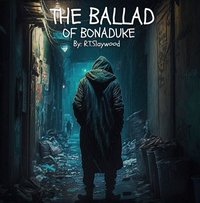
The Ballad of Bonaduke—Episode 30: Zero Game by R. T. Slaywood: Something’s Afoot!

The Ballad of BonadukeThe Ballad of Bonaduke—
Episode 30: Zero Game

by R.T. Slaywood

DETAILS:
Series: The Ballad of Bonaduke, #30
Format: Kindle Vella Story
Read Date: August 4, 2023

…whatever happens next you have to believe or we’re worse than dead.

The Story So Far…

A drunken Michael Bonaduke decides to use a grift (with maybe some sort of magic/magic-like “help”) to win on a scratch-off lottery ticket so he has money to buy more to drink. He pulls off whatever he did, gets his money and some booze and stumbles off into the darkness to drink himself into oblivion so he can start again the next day. He’s hit by dark memories (probably what’s driving him to the drinking) of fire, pleading, and screaming. There’s going to be a price to pay for his grift, and he’s trying to be ready.

He’s abducted by some representatives of a mysterious group who subject him to a test—if he passes, everything will be explained to him (and hopefully the reader, too). He passes—and is brought somewhere for answers, or maybe training, or maybe another test. Time will tell (or things are going to get really annoying). Answers aren’t quick to come—but the mysteries and questions keep piling up.

Things get hairy and Bonaduke leaves and finds himself back in the neighborhood he started from. He takes refuge in a homeless encampment shortly before a police raid. He’s apprehended and finds himself an interrogation room and shortly escapes after using his grift (but with results he didn’t quite intend). He finds himself by a group of squatters who seem to have strapped a woman to a chair for reasons that can’t be good. He attempts to rescue her before he even realizes what he’s doing, and seems to have succeeded—well, the two of them got away from the group anyway—breathing but bruised. They make their way to a fast-food taco joint and Bonaduke really needs to refuel to keep going. He tries, but fails to get food because he keeps passing out. Thankfully, the clerk is the same guy from the liquor store and he both recognizes him and gives him first aid.

What’s Zero Game About?

Before Bonaduke can get some food or come up with a decent plan for what to do next, the squatters find them and try to invade the restaurant to get the woman back (and probably punish Bonaduke). She wakes up, very conveniently, and takes charge—getting the clerk and Bonaduke to follow her lead pretty effortlessly (but not entirely willingly).

Then things get dangerous and weird.

So, what did I think about Zero Game?

Oh, ho. This is full of things happening. There’s zero naval-gazing or setup for later here (well, a little setup)—it’s about action and the story moving forward. This woman, apparently named Zero, is someone that I want to get to know better. And I think we’re going to get that chance.

Now I’m really annoyed that I took last week off because I could’ve been reading Episode 31 today otherwise. I really want to see what Zero does next.


4 Stars

The Friday 56 for 8/4/23: All the Sinners Bleed by S. A. Cosby

Had to take a break last week due to posting toooooo many things. But I’m back to my typical trickle 🙂

The Friday 56This is a weekly bloghop hosted by Freda’s Voice.

RULES:
The Friday 56 Grab a book, any book.
The Friday 56 Turn to Page 56 or 56% on your ereader. If you have to improvise, that is okay.
The Friday 56 Find a snippet, short and sweet.
The Friday 56 Post it.

from Page (55 and) 56 of:
All the Sinners Bleed

All the Sinners Bleed by S. A. Cosby

He’d put the phone back in the evidence bag after fighting the urge to put it under his front tire and roll over it five or six times, then set it on fire. Titus had seen his share of horrific things in his twelve years as an FBI agent. The ability of one human to visit depravity upon another was as boundless as the sea and as varied as there were grains of sand on a beach.

The images on [redacted]’s phone were the worst he’d ever seen.

He kept thinking about purification by immolation. It seemed like that was the only thing that could remove the stain of those images from his mind, his heart, his soul. Burn the phone. Scald his eyes with hot oil. Put [redacted] and [redacted] on a pyre and reduce them both to ashes, then scatter those ashes to the four winds. Erase all proof of their existence and the things they had done. But the children in those pictures deserved to have their story told. They deserved justice. Whatever that was these days.

Real Tigers by Mick Herron: Things Hit Close to Home for the Slow Horses

Real TigersReal Tigers

by Mick Herron

DETAILS:
Series: Slough House, #3
Publisher: Soho Crime
Publication Date: January 19, 2016
Format: Hardcover
Length: 343 pg.
Read Date: May 21-June 2, 2023
Buy from Bookshop.org Support Indie Bookstores

Real Tigers‘ Flap Copy

I don’t like what I’ve come up with to describe the book, so I’m just going to use the flap copy:

London: Slough House is the MI5 branch where disgraced operatives are reassigned after they’ve messed up too badly to be trusted with real intelligence work. The “Slow Horses,” as the failed spies of Slough House are called, are doomed to spend the rest of their careers pushing paper, but they all want back in on the action.

When one of their own is kidnapped and held for ransom, the agents of Slough House must defeat the odds, overturning all expectations of their competence, to breach the top-notch security of MI5’s intelligence headquarters, Regent’s Park, and steal valuable intel in exchange for their comrade’s safety. The kidnapping is only the tip of the iceberg, however—the agents uncover a larger web of intrigue that involves not only a group of private mercenaries but the highest authorities in the Secret Service. After years spent as the lowest on the totem pole, the Slow Horses suddenly find themselves caught in the midst of a conspiracy that threatens not only the future of Slough House, but of MI5 itself.

The Introduction

I absolutely love the way that Herron introduces Slough House and its denizens in each book. It reminds me of the way that Rex Stout’s Archie gives the rundown of Wolfe’s Brownstone and the routine in each book. But Herron’s unique approach to each introduction has really clicked with me and I look forward to this part of the books.

I can see just opening up one of these at random from time to time, reading the description of Slough House, and moving on with just a quick refreshing hit of Herron’s magic.

Roddy Ho

Roddy Ho is a great hacker—that’s clear. He’s probably almost as good as he thinks he is. The level of delusion he has about his desirability to women outdoes even Crais’ John Chen (and that’s saying something)—it’s a fun character trait, even if it is hard to believe that someone can be that clueless about themselves.*

* 5 minutes on social media reminded me of the power of self-delusion. Never mind.

That said…it’s easy between books to remember how fun it is to see him getting verbally smacked around by Lamb or River pressuring him to work, and how good he is at the technical stuff, etc.—but to forget just what wholly unpleasant person he is. I mentioned John Chen before, Chen is helpless and harmless (while being a misogynistic creep). Roddy doesn’t have that veneer of hapless charm that Chen carries—and is a bigger misogynistic creep. I just want to wash my hands after a scene focused on him if it shows him thinking or talking about women. He probably belongs in prison and would’ve ended up there if not for being employed by MI5.

Team Building?

I will say, for a bunch of misanthropic individualists, when it comes to one of their own, the Slow Horses are really good at teamwork. They spend so much time on their own, regretting their own mistakes that landed them in Slough House, dreaming and scheming their way back to Regent’s Park, etc. that they all have a serious bit of tunnel vision. They’re all focused on themselves to the exclusion of pretty much everyone else—but they’re becoming closer to a true team—particularly when one of them is in some sort of jeopardy.

It’s nice to see—and generally funny, because they’re so bad at teamwork. But the bits that they get right—either on the job or off—are heartwarming to see.

As heartwarming as this series gets, anyway.

So, what did I think about Real Tigers?

The way that this book deals with the Dead Lions-aftermath is the best part for me. Obviously, most of that has to do with Lousia, but it’s there for everyone to one degree or another. Yes, these books can be read as stand-alones, but there’s an impact to be felt from the previous novels. The MI5 and political machinations behind all the actions—the twists, double-twists, and triple-twists. I know that’s part-and-parcel for this series, so I’m not complaining about that. It felt off…overdone maybe? The Slow Horses doing their thing was entertaining enough. But the package as a whole felt like a letdown.

Still, I loved reading this book. Herron can put together a sentence like no one else. I can’t imagine there’s something I wouldn’t want to read him describe. Even when I didn’t really connect with the story, I couldn’t stop reading—that’s all down to Herron’s skill and the fantastic characters he fills his books with. I’m not just talking about the Horses, even the characters that you’re going to see for 1-2 chapters feel like they’ve got a depth to them that could sustain a novel.


4 Stars

This post contains an affiliate link. If you purchase from it, I will get a small commission at no additional cost to you. As always, the opinions expressed are my own.
July 2023 in Retrospect: What I Read/Listened to/Wrote About

I read 24 titles (7 down from last month, 9 down from last July), with an equivalent of 7,022+ pages or the equivalent (700ish down from last month), and gave them an average of 3.54 stars (.12 down from last month). That’s a lot of downs for one month. Huh. Didn’t feel like that in the middle of it.
On the other hand…I posted a lot more than usual (except on the review-y side). While my goal is always more than I accomplish…this month was a bit excessive. I wouldn’t expect that again anytime soon.

All in all, I thought this was a pretty good month on the blog. Here’s the breakdown of happened here in July.
Books/Novels/Novellas Read/Listened to

Pure of Heart The Curse of the Silver Pharaoh Dark Age
3.5 Stars 3 Stars 5 Stars
The Bitter Past Stray Ally Not Prepared
4 1/2 Stars 3 Stars 4 1/2 Stars
Chaos Choreography A Fatal Groove Silly Rhymes for Belligerent Children
4 Stars 3.5 Stars 3 Stars
The Marlow Murder Club I Will Build My Church The Biggest Story ABC
3 Stars 5 Stars 0 Stars
The Eternity Fund The Librarian of Crooked Lane The Frugal Wizard's Handbook for Surviving Medieval England
3.5 Stars 3 Stars 3 Stars
Proxies On Earth as It Is on Television Blue Like Me
3 Stars DNF 3.5 Stars
Eye of the Sh*t Storm Klone's Stronghold Final Heir
4 Stars 3.5 Stars 5 Stars
Barking for Business Impossible Christianity The Bullet That Missed
3 Stars 3.5 Stars 5 Stars
How Did the Hippopotamus Get There?
3 Stars

Still Reading

The Existence and Attributes of God God to Us A Mystery Revealed: 31 Meditations on the Trinity
All the Sinners Bleed Facing the Last Enemy Don't Hang Up

Ratings

5 Stars 4 2 1/2 Stars 0
4 1/2 Stars 2 2 Stars 0
4 Stars 2 1 1/2 Stars 0l
3.5 Stars 6 1 Star 0
3 Stars 9
Average = 3.54

TBR Stacks/Piles/Heaps

Audio E-book Physical Goodreads
Want-to-Read
End of
2022
5 45 42 143
1st of the
Month
5 50 56 145
Added 3 4 5 4
Read/
Listened
4 4 8 1
Current Total 4 50 53 148

Breakdowns:
“Traditionally” Published: 13
Self-/Independent Published: 11

Genre This Month Year to Date
Children’s 2 (8%) 21 (12%)
Fantasy 2 (8%) 16 (9%)
General Fiction/ Literature 1 (4%) 13 (7%)
Mystery/ Suspense/ Thriller 7 (29%) 51 (29%)
Non-Fiction 0 (0%) 13 (7%)
Science Fiction 5 (21%) 20 (11%)
Theology/ Christian Living 2 (8%) 17 (10%)
Urban Fantasy 3 (13%) 18 (10%)
“Other” (Horror/ Humor/ Steampunk/ Western/ Poetry) 2 (8%) 6 (3%)

Review-ish Things Posted

Other Things I Wrote
Other than the Saturday Miscellanies (1st, 8th, 15th, 22nd, and 29th), I also wrote:

Enough about me—how Was Your Month?


July Calendar

Grandpappy’s Corner: How Did the Hippopotamus Get There? by Sohrab Rezvan, Kyana Mitchell (Illustrator): A Question No Parent Wants to Ask

Grandpappy's Corner Logo

How Did the Hippopotamus Get There?

by Sohrab Rezvan, Kyana Mitchell (Illustrator)

DETAILS:
Publisher: Flat Mountain Publishing
Publication Date: Jun 29, 2023
Format: PDF
Length: 40 pg.
Read Date: July 31, 2023
Buy from Bookshop.org Support Indie Bookstores

What’s How Did the Hippopotamus Get There? About?

Sophia is playing outside on the day before her birthday when an escaped Hippopotamus wanders into her yard. Sophia leaps to the only obvious conclusion (for a child)—it’s a birthday gift that appeared a day early. She falls in love immediately—and her dog seems to like him, too—naming him Fred.

Her parents aren’t so sure about this and spend the rest of the book wondering how the hippopotamus got into their treehouse, kitchen, bathroom, fireplace, etc.

And the fun ensues.

Let’s Talk about the Art for a Minute

Kyana Mitchell’s characters are adorable. I started to list a few particulars and ended up naming the whole cast—Sophia, Fred, Sophia’s parents, and Sparky (the dog)—all of them are adorable and full of personality. The illustrations leap off the page and are lively and bright, the details are funny (especially for the 5 and under crowd). There’s no way that these drawings don’t hold a young person’s attention.

Sure, sometimes the perspective is a little wonky—always intentionally, to make the story work (Fred changes sizes all the time). But if you’re reading this book and worrying about things like that, you’re missing the point.

Here’s a sample from the Publisher’s page (there are others, there, too)—if you click on it, you’ll be taken to a larger version:
How Did the Hippopotamus Get There? Preview Page

How is it to Read Aloud?

This is great fodder for a parent who enjoys doing voices as they read—the parents in particular seem like a blast. The text is full of excited utterances and emotion, if you’re in the right mood, it’s going to be so much fun to read.

If you’re tired, you’re going to want to suggest that the child you read to finds something else, because this is going to take some effort to match the book (if you ask me).

So, what did I think about How Did the Hippopotamus Get There??

If Norman Bridwell taught us nothing else, he taught us that a little girl with an oversized pet interacting with normal-sized things is funny. And more funny if the parents aren’t necessarily on board with that. Rezvan and Mitchell have captured that spirit here.

There are no life lessons to be found, there’s no message, and there’s exactly 1 sweet line (and it really is sweet). The rest of it is just ridiculous fun. Which is the biggest thing I look for in a book like this, so color me satisfied.

Recommended.

Disclaimer: I received a copy of this book from the Author via BookSirens in exchange for this post and my honest opinion—thanks to both for this.


3 Stars

This post contains an affiliate link. If you purchase from it, I will get a small commission at no additional cost to you. As always, the opinions expressed are my own.
Grandpappy Icon

Page 149 of 609

Powered by WordPress & Theme by Anders Norén